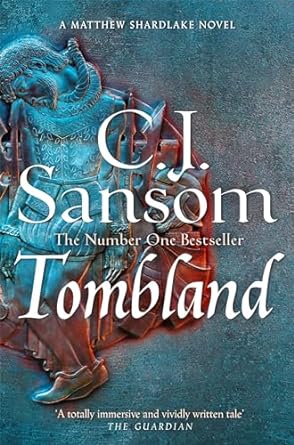
#BookReview ‘The Perfect Cornish Murder’ by Fiona Leitch #crime #cosycrime

After reading a series of dense historical novels, I turned to Fiona Leitch for some Cornish escapism. The Perfect Cornish Murder is third in her Nosey Parker series about Jodie Parker, ex-policewoman in London now caterer, living again in her hometown, Penstowan. Fiona Leitch
When a film crew rolls up, complete with famous soap star and sexy leading man, the whole village lines up to be cast as extras. Jodie, initially reluctant, accompanies mum Shirley and daughter Daisy. If the fictional actors remind you of real ones its because they are ‘of a type,’ not just the soap star but an ageing roué, young high maintenance American star with miniature dog, the handsome romantic lead. But as the story progresses, Jodie discovers the truth behind the actors’ masks.
The love triangle from the previous book continues, with Jodie torn between Cornish best friend Tony and incomer detective chief inspector Nathan. But briefly torn between Tony’s Mr Darcy impression in a wet shirt, and Nathan’s gorgeous smile, Jodie suddenly finds herself spending more time on the film set when the owner of the catering van has an accident. Taking over the cooking gives her opportunities to people watch. But Gino’s mishap is not the first, a series of unexplained accidents are waved away as a curse until one of the star actors dies. Which means Nathan visits the film set every day.
There are plenty of chuckle moments, my favourite is Shirley’s definition of the different types of love according to shoes.
This maturing series does what it says on the tin. The Perfect Cornish Murder is a cosy mystery that combines humour, romance and murder without violence. It’s heartwarming, funny and moreish.
CLICK HERE TO READ MORE ABOUT THIS BOOK AT AMAZON

And here are my reviews of the first books in the Nosey Parker series:-
The Cornish Wedding Murder #1NoseyParker
The Cornish Village Murder #2NoseyParker

If you like this, try:-
Or The Bull Kills You’ by Jason Webster #1MaxCamara
The Killing of Polly Carter’ by Robert Thorogood #2DeathinParadise
‘The Art of the Imperfect’ by Kate Evans #1ScarboroughMysteries

And if you’d like to tweet a link to THIS post, here’s my suggested tweet:
#BookReview THE PERFECT CORNISH MURDER by Fiona Leitch https://wp.me/p2ZHJe-7hE via @SandraDanby

COMING SOON… THE NEXT BOOK I REVIEW WILL BE:- John Boyne


#BookReview ‘Disobedient’ by Elizabeth Fremantle #historical #art

Knowing little of the life of seventeenth-century Italian painter Artemisia Gentileschi, reading a fictionalised account of her life in Disobedient by Elizabeth Fremantle was a delight. Elizabeth FremantleIt is an absorbing read. In Rome, 1511, Fremantle creates a fierce world in which teenager Artemisia lives with her father and three brothers. Expected to accept her fate as a lesser person – she is not taught to read and write, must defer to her drunken father and isn’t consulted about decisions that affect her life – she must assist her [lesser talented] artist father while secretly painting her own work.
When her friend Piero assess a work-in-progress and says ‘Apparently, you know more than you think you do about men’s desires,’ Artemisia replies, ‘I watch. And I listen.’ Her skill, her dedication to her art, her confidence and simple difference from other subservient women, is her strength and her weakness. Men feel threatened by her or attracted to her. When her father Orazio begins a search for a husband for her, he courts Agostino Tassi in the hope that as a painter he will allow Arti to continue to paint after marriage. But Tassi is not all he seems. Arti finds herself trapped in a nightmare. Fighting against the restrictions placed on women, her only rebellion is on canvas. She paints the most disturbing, violent, incisive art that has been seen, by a man let alone by a woman. Desperate to be free of Tassi, she has two options. Marriage, or the law court.
Disobedient is an unflinching portrayal of life for women in seventeenth-century Italy, and a portrayal of one artist who refused to submit. Artemisia Gentileschi was a real person, she painted the pictures depicted in Fremantle’s novel, she was raped and tried by torture. Around the historical facts, Fremantle has constructed a compelling, emotional, heart-rending story that is uplifting and at the same time difficult to read.
Excellent. The anger and sense of injustice pours off the page.

If you like this, try:-
The Silence of the Girls’ by Pat Barker
How to be Both’ by Ali Smith
Girl in Hyacinth Blue’ by Susan Vreeland

And if you’d like to tweet a link to THIS post, here’s my suggested tweet:
#BookReview DISOBEDIENT by Elizabeth Fremantle https://wp.me/p2ZHJe-7qz via @SandraDanby

COMING SOON… THE NEXT BOOK I REVIEW WILL BE:- Fiona Leitch

Great Opening Paragraph 134… ‘The Great Gatsby’ #amreading #FirstPara

“In my younger and more vulnerable years, my father gave me some advice that I’ve been turning over in my mind ever since.
‘Whenever you feel like criticizing anyone,’ he told me, ‘just remember that all the people in this world haven’t had the advantages that you’ve had.’ ” F Scott FitzgeraldFrom ‘The Great Gatsby’ by F Scott Fitzgerald

Here’s the #FirstPara of THE LAST TYCOON, also by F Scott Fitzgerald.

Try one of these #FirstParas & discover a new author:-
A Farewell to Arms’ by Ernest Hemingway 
Half of a Yellow Sun’ by Chimamanda Ngozi Adiche
Notes on a Scandal’ by Zoe Heller 

And if you’d like to tweet a link to THIS post, here’s my suggested tweet:
#Books #FirstPara THE GREAT GATSBY by F Scott Fitzgerald https://wp.me/p2ZHJe-79z via @SandraDanby

#BookReview ‘The Princess’ by Wendy Holden @Wendy_Holden #historical #royal

The early days of a young girl who is in love with the idea of being in love, with heroes, with paperback romances. Whatever love means. The Princess by Wendy Holden starts with two thirteen-year old girls, Diana Spencer and her friend Sandy, on the train going back to boarding school. Love, thinks Sandy, sounds ‘like a particularly delicious bath, deep and warm, with lots of bubbles.’ Wendy HoldenIt is Diana’s character that beams off the page. Packed with contemporary references, foods, music, expressions, we see what happens when the enthusiasm and can-do attitude of a teenage girl meets the tradition and rules of royal life. Through Diana’s voice and thoughts, through Sandy’s eyes and that of Stephen Barry, valet to the Prince of Wales, we see the young girl who is destined to become a queen. Holden has captured the exuberance as well as the shadows and emotional bruises of a broken family. But this isn’t a love story, it’s the story of old-fashioned matchmaking by two grandmothers.
The second part moves quicker than the first. I enjoyed the meetings between Diana and Princess Margaret. The pace, and sadness, picks up after the engagement when Diana moves into an empty, soulless Buckingham Palace; foreshadowing the days her body would lay at rest at St James’s Palace before her state funeral in 1997.
A poignancy hangs over this tale, the knowledge of the marriage’s failure and Diana’s death. Also the sadness of Charles, trapped in his role, unable to marry the woman he loves, forced into marriage by the need to marry and produce an heir. But The Princess is Diana’s story.
Though young and naïve in this book, she was also smart and not afraid to challenge the status quo. Her influence can be seen in the royal family today. Holden ends her story in 1992, the divorce was finalised in 1996. The book is packed with familiar incidences and quotations mixed in with many inventions. The story of how the famous photograph was taken of her in a transparent skirt at her nursery school in Pimlico, her sister Sarah saying, ‘Your face is on the tea towels,’ the Emmanuels taking in the waist of her wedding dress at every fitting.
Holden gets the tone of Diana’s voice spot-on. So familiar from page one from her public appearances and recordings, it is clear that the spoken words on the page, and the inner thoughts, belong to Diana.
Not as compelling as I expected, perhaps because the story is so well known. The Princess seems to end when it is just getting going.

And here’s my review of THE DUCHESS, also by Wendy Holden.

If you like this, try:-
Shrines of Gaiety’ by Kate Atkinson
The Forgotten Sister’ by Nicola Cornick
The Heiress’ by Molly Greeley

And if you’d like to tweet a link to THIS post, here’s my suggested tweet:
#BookReview THE PRINCESS by Wendy Holden @Wendy_Holden https://wp.me/p2ZHJe-7pI via @SandraDanby

COMING SOON… THE NEXT BOOK I REVIEW WILL BE:- Elizabeth Fremantle

#BookReview ‘The House of Doors’ by Tan Twan Eng #historical #Malaya

The House of Doors by Tan Twan Eng is a quiet tale, beautifully written, focussing on the life of one woman in Penang early in the 20th century. Tan Twan EngObserved partly through the eyes of Lesley Hamlyn in 1920s Malaysia and later in 1947 from South Africa, and partly through the voice of Willie Maugham, this is a tale of social class, the freedoms and restrictions on women at that time, Chinese revolutionaries and an Englishwoman charged with murder. Lesley is a society hostess at Cassowary House for her lawyer husband, Robert. Into their life comes the author W Somerset Maugham and his assistant Gerald. The interconnection of this coterie of British people living in an ex-pat community is unpeeled in microscopic detail as relationships, secrets, betrayals, risks and ruin are unveiled.
This novel is an exquisite slow burn. As Lesley suspects Robert of infidelity she begins to take risks, volunteering as a translator in the office of a Chinese dissident Dr Sun Yat Sen. Willie, under financial pressure to produce another bestselling novel, observes the society around him and sees things he did not expect, all the time taking notes. The action takes place in the most sublimely described setting.
This a beautiful novel that will stay with you long after it is finished. Fact mixed with fiction, some of the characters and events are real. Somerset Maugham did visit Penang and this visit inspired his collection of short stories, The Casuarina Tree. Sun Yat Sen’s struggle for modern China was true, as was the murder case of Ethel Proudfoot. Such is the quality of the writing, you sink into this world of colonial Malaya, the tensions beneath the polite surface, contrasting cultures and people.
Excellent.
CLICK HERE TO READ MORE ABOUT THIS BOOK AT AMAZON

Here are my reviews of other novels by Tan Twan Eng:-
THE GARDEN OF EVENING MISTS … and try the first paragraph of THE GARDEN OF EVENING MISTS here.
THE GIFT OF RAIN

If you like this, try:-
Quartet’ by Jean Rhys
Stanley and Elsie by Nicola Upson
Islands of Mercy’ by Rose Tremain

And if you’d like to tweet a link to THIS post, here’s my suggested tweet:
#BookReview THE HOUSE OF DOORS by Tan Twan Eng https://wp.me/p2ZHJe-7os via @SandraDanby

COMING SOON… THE NEXT BOOK I REVIEW WILL BE:- Wendy Holden

#BookReview ‘A Witness to Murder’ by @BrightVerity #cosymystery #crime

When the local MP dies in suspicious circumstances at a posh dinner at Farrington Manor, the local women’s political group comes knocking on Ellie’s door. Will she, they ask, stand at the by-election on a platform of women’s rights. In A Witness to Murder, third in the Lady Eleanor Swift 1920s detective series by Verity Bright, is based round Ellie’s electioneering and detecting. Because the MP is not the only one to die. Verity BrightDetermined to follow the advice of Detective Chief Inspector Seldon not to get involved in detecting again, Ellie changes her mind when Mrs Pitkin, the cook to Lord and Lady Farrington, is sacked and in disgrace after the fateful dinner. It was her chocolate fudge that is thought to have poisoned Arnold Aris, MP. Ellie’s job gets more difficult when Mrs Pitkin disappears and a second body is found. When Ellie and Clifford find clues to a dodgy land deal, they must discover who gains, who loses, and who is the most desperate.
Finally, the love triangle hinted at in the first two novels becomes more pointed when the second man’s intense looks at Ellie become more overt and at last the rather silly but charming Lord Lancelot Fenwick-Langham has a rival in love for Ellie’s attentions. Lancelot is getting more Wooster-ish with every book and I can’t help but think Ellie’s affection will turn elsewhere.
This series is becoming a firm favourite for me. The pages turn quickly, the mysteries are twisty and this time I didn’t correctly predict the murder. The identity of the murderer prompted possibilities in my mind that I hadn’t previously considered; about Ellie’s own origins, the death of her parents, and the role of her intriguing uncle.
The Twenties setting is charming, if at times suspiciously 21st century, and the by-election theme in A Witness to Murder adds a tougher edge to Ellie’s adventure. The tone is settling to a hybrid mixture of period crime/comedy/cosy mystery, any danger is lightweight and the most of the daft asides are funny [though Lancelot is too much for my taste]. Just the ticket for a quiet night in.

Read my reviews of other books in the Lady Eleanor Swift series:-
A VERY ENGLISH MURDER #1LADYELEANORSWIFT
DEATH AT THE DANCE #2LADYELEANORSWIFT
MURDER IN THE SNOW #4LADYELEANORSWIFT
MYSTERY BY THE SEA #5LADYELEANORSWIFT
MURDER AT THE FAIR #6LADYELEANORSWIFT
A LESSON IN MURDER #7LADYELEANORSWIFT
DEATH ON A WINTER’S DAY #8LADYELEANORSWIFT

If you like this, try:-
‘Agatha Raisin and the Vicious Vet’ by MC Beaton #2 AgathaRaisin
The Art of the Imperfect’ by Kate Evans #2 Scarborough Mysteries
‘Moonflower Murders’ by Anthony Horowitz #2SusanRyeland

And if you’d like to tweet a link to THIS post, here’s my suggested tweet:
#BookReview A WITNESS TO MURDER by @BrightVerity https://wp.me/p2ZHJe-6Yz via @SandraDanby

COMING SOON… THE NEXT BOOK I REVIEW WILL BE:- Tan Twan Eng

#BookReview ‘Each of us a Petal’ by Amanda Huggins @troutiemcfish #shortstories

All of human life is reflected in the perceptive short stories by Amanda Huggins and the focus of her latest anthology, Each of us a Petal, is Japan. From city streets and bars to the silence of snow-covered mountains, Huggins’ love and knowledge of the country shine clearly. It is her love song for Japan, its people, its heritage, countryside and traditions. Amanda HugginsThe Japanese lens brings a new flavour to themes familiar from earlier anthologies, of love and loss, being adrift and on the outside or left behind, and notions of identity. The small details are beautifully described. Ume, who collects champagne and oranges to start her day with a mimosa. Suzume who catches a glimpse of graceful cranes through a train window, ‘their black-tipped wings lit by the sun.’ Huggins has sat in the late night bars watching salarymen down glass after glass of whisky, she has walked the mountain paths where bears may lurk in shadows. As well as winning the Saboteur Award for Best Novella twice, prizes for poetry and the 2018 Costa Short Story Award runner-up award, she is also an award-winning travel writer. In Each of Us a Petal, these disciplines and insight are drawn together.
One of my favourite stories, one I found myself thinking about days later, is the shortest. ‘Sparrow Footprints’ is only one page, a brief tale as delicate as a bird’s footprints in the snow but the emotional message between the words is heavy and oh so familiar to anyone who has loved.
‘The Knife Salesman from Kochi’ is a longer tale with a shock at the end. Mr Omote is the knife salesman from Kochi who stays at the inn owned by Yumi, inherited from her mother. Huggins explores a depth of grief that, once the surface signs have faded, lurks deeply hidden from even those closest.
‘Stolen’ is about the illicit freedom that comes with anonymity, questioning how well you know yourself and the one that you are closest to. Anna and Keizo meet friends in the woodlands in moonlight, it is kitsune festival time and families picnic, children play, many wear masks. Keizo’s friends all wear traditional fox masks which cover the whole of the face, Anna and Keizo are given masks too. When couples begin disappearing into the woods, hand in hand, Keizo says they are taking advantage of the privacy offered by the trees.
Huggins is a master of condensing emotion into a few pages, focusing on one element and exploring it with precision and beauty. I finished the book and immediately started leafing through the pages again, searching for favourites to re-read. The title of the anthology is a quote from Huggins’ essay ‘Each of Us a Petal,’ included in this book, and refers to cherry blossom.
CLICK HERE TO BUY THE BOOK AT THE AUTHOR’S WEBSITE

Read my reviews of other work by Amanda Huggins:-
Novellas
ALL OUR SQUANDERED BEAUTY
CROSSING THE LINES
THE BLUE OF YOU
Short stories
AN UNFAMILIAR LANDSCAPE
BRIGHTLY COLOURED HORSES
SCRATCHED ENAMEL HEART
SEPARATED FROM THE SEA
Poetry
THE COLLECTIVE NOUNS FOR BIRDS

If you like this, try:-
‘A Town Called Solace’ by Mary Lawson
Himself’ by Jess Kidd
Anderby Wold’ by Winfred Holtby

And if you’d like to tweet a link to THIS post, here’s my suggested tweet:-
#BookReview EACH OF US A PETAL by Amanda Huggins @troutiemcfish https://wp.me/p2ZHJe-7h2 via @SandraDanby

COMING SOON… THE NEXT BOOK I REVIEW WILL BE:- Verity Bright
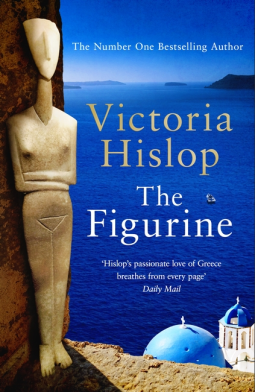
#BookReview ‘Viper’s Daughter’ by Michelle Paver #WolfBrother #YA #fantasy

After an eleven-year gap while writing other fiction, in 2020 Michelle Paver returned to her ‘Chronicles of Ancient Darkness’ YA series with the seventh installment, Viper’s Daughter. Torak and Renn’s peaceful life, living alongside Wolf, Darkfur and their cubs, is broken when Renn disappears without a word. Michelle PaverOnce again, the trio are catapulted into danger as they travel to the Far North, an unfamiliar land without trees, negotiating ice flows, ice bears, mammut and firey demons. Wearing claws strapped to their feet and shields over their eyes, their always sharp senses are minimised in this unfamiliar territory, oh so cold and without their normal forest prey for food. But the foe they seek is worse than they could ever have imagined.
The story is told in turn from Torak, Renn and Wolf’s viewpoints. As always, Wolf’s voice is a standout. The world created by Paver is so believable, based on a phenomenal amount of research and expeditions in Scandinavia, Siberia, Greenland and Alaska. She knows what she is talking about. And Wolf’s observations seem to clarify the differences between the trio’s home in the Forest and this eerie place of the ‘Great Hard Cold’ where the ground rumbles ‘like the earth talking to itself.’ Paver’s love for the natural world is behind every description and her imagination continues to thrill as this mature series continues to surprise and delight.
This is a great read, full of magic, love, loyalty, challenge and adventure. Such a pleasure to be back with such well-loved characters, though if you are new to the series Viper’s Daughter can also be read as a stand-alone novel.
Seventh in the fantastic ‘Chronicles of Ancient Darkness’ series, which started with Wolf Brother, with another two books, Skin Taker and Wolfbane, taking the series to nine. Don’t miss the audio series, narrated by Ian McKellan. Great for children and adults alike.

And read my reviews of two other novels by Michelle Paver:-
THE OUTSIDERS #1GODS&WARRIORS
THIN AIR
WAKENHYRST

If you like this, try:-
‘Holes’ by Louis Sachar
Gregor and the Prophecy of Bane’ by Suzanne Collins #2UnderlandChronicles
Insurgent’ by Veronica Roth #2Divergent

And if you’d like to tweet a link to THIS post, here’s my suggested tweet:
#BookReview VIPER’S DAUGHTER by Michelle Paver https://wp.me/p2ZHJe-7g8 via @SandraDanby

COMING SOON… THE NEXT BOOK I REVIEW WILL BE:- Amanda Huggins
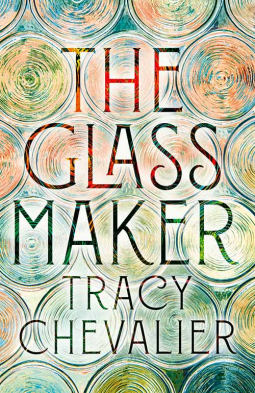
#BookReview ‘The Beasts of Paris’ by Stef Penney #historical #Paris #siege

Set in Paris in 1870 during the four-month siege of the city, part of the wider Franco-Prussian war, The Beasts of Paris by Stef Penney tells this 19th century wartime story through the eyes of three young people. Each is an outsider, each is in the process of finding out who they are. Stef PenneyCanadian photographer Lawrence Harper works at the Studio Lamy taking saucy pictures of naked women, in his own time he visits the nearby Menagerie and focusses on wild beasts. He is particularly drawn to the large cats, a lion Tancred and lioness Irma, Nero the panther and particularly Marguerite the Caspian tigress. Anne Petitjean, former inmate at the Salpêtrière asylum, is also drawn to the animal cages, especially Marguerite. The animals are special, indulged, worshipped, but when war comes to Paris even the animals go hungry, even the tiger is in danger. No-one is immune. Ellis Butterfield, an American in Paris and nephew of a US diplomat, is a surgeon with experience of the American Civil War a decade earlier. The last thing Ellis wants to do is operate again, to sever limbs, to see death at every turn.
Each of the three sees and does things they never dreamed they would. There are awful choices, hardships, separations and bereavements awaiting them and they must find the strength and wits to survive. As the city falls apart and the political classes and working-class Commune fall out, scores are settled, new laws introduced. And then the denunciations, arrests and shootings begin.
Penney’s three lead characters are so believable, distinct, each infuriating at times but always drawing our understanding. The supporting cast are convincing too, particularly assistant vet Victor Calmette and studio model Fanny Klein. Before the war, everyone has a job, a role, a place in society. But as the city descends into the chaos of siege, with no food, bombarded by shells, afraid to go out and afraid to stay indoors, everyone becomes equally imprisoned. War is a great leveller and the siege is cruelly intense as people strive to go about their ordinary daily lives as guns fire on the streets they know and love.
The knife edge of daily fear is sharpened by the lack of reliable information. The city is surrounded. There is no news, no communication, no mail service from outside. Scandal sheets spring up, written and printed inside the besieged city. They publish ‘news’ stories which are factually unproven. Rumour and gossip – such as the Amazons of the Seine, said to be a ladies battalion armed with hat pins dipped in prussic acid – not unlike unverified rumour on social media today. Distrust of anyone different, the colour of their skin, their accent, their behaviour dominates daily life and any journey outside the home. Besieged Paris is a microcosm of human’s best, and worst, attributes. A petrie dish for rebellion fuelled by emotion, anger, misinformation and wishful thinking. In the centre of this, Penney has placed a relationship, a romance that begins with friendship.
Not a thriller despite its wartime setting, this is a high-quality character-led drama. The best novel I’ve read so far this year. I loved Under a Pole Star, but this book is way better.
CLICK HERE TO READ MORE ABOUT THIS BOOK AT AMAZON

Read my review of UNDER A POLE STAR, also by Stef Penney.

If you like this, try:-
The Warlow Experiment’ by Alix Nathan
An Officer and a Spy’ by Robert Harris
Birdcage Walk’ by Helen Dunmore

And if you’d like to tweet a link to THIS post, here’s my suggested tweet:
#BookReview THE BEASTS OF PARIS by Stef Penney https://wp.me/p2ZHJe-7g1 via @SandraDanby

COMING SOON… THE NEXT BOOK I REVIEW WILL BE:- Michelle Paver

#BookReview ‘The Secret Shore’ by @liz_fenwick #WW2 #romance

It was only when I finished reading The Secret Shore by Liz Fenwick that I read the Author’s Note at the back and discovered it is based on real people and events in the Second World War from 1942-1945. What a cracking wartime romance this is, shedding light on the rarely mentioned mapmakers who enabled the military to plan and execute operations. Liz FenwickMerry, Dr Meredith Tremayne, was a geography lecturer at Oxford University before becoming a mapmaker in the War Office in London. In the first chapter there is a rather nice ‘meet cute’ with an American officer, involving a dropped copy of Gaudy Night by Dorothy L Sayers. This romantic suspense story parallels Merry’s experiences as a woman in a man’s world when even the course of wartime flirtation doesn’t run smoothly.
When Elise, Merry’s widowed French mother goes missing, she returns home to Cornwall, to Kestle, the family home on the Helford estuary. Her boss Commander Fleming has transferred her temporarily to a small seaborne unit operating out of a house called Ridifarne, on the opposite side of the Helford river to Kestle. She will train with them to learn what they require from maps when in enemy territory, experience she hopes to use when making maps later in the war. Still confident her artist mother has simply gone on an impromptu painting trip, Merry is disturbed to hear local gossip that Elise is a spy. Maps, as always for Merry, provide clues, answers and solace. ‘When things didn’t add up, I turned to maps. From the age of eight, I’d been mapping my life day by day since my father first taught me how to draw one.’ Like Sayers’ heroine Harriet Vane, Merry has a mystery to solve.
As a member of a university rowing crew, Merry fits easily into the male banter of the flotilla crew at Ridifarne who recover quickly from their mistaken expectation that Dr Tremayne would be male. Amongst the officers is an American, Jake Russell, the man Merry met over the dropped copy of Gaudy Night. Once they understand Merry’s knowledge of Helford, competence in a boat, fluency in French, Breton and reading maps, she is accepted. Flirtation with Jake is a light relief from the horror of war and the plight of her mother.
Merry is a strong woman who knows what she wants from life, even if at the beginning of the novel she doesn’t truly understand what she will be giving up. When that becomes apparent to her, the war has darkened and she has seen danger and death. She’s a great character – both Merry and Jake are fictional – her no-nonsense exterior drives the plot from training to active duty, from Cornwall to London and back again. Although surrounded by secrecy it becomes clear to Merry that the crew is sailing to Brittany with supplies for the Resistance, returning with men. This new knowledge makes her flirtation with Jake seem irresponsible in wartime so, in what seems quite a ‘male’ decision, she decides to live in the day, have fun and not worry about the future. But all the time a shadow is cast by the mysterious disappearance of her mother.
The cast of characters is rather long and at times I would have appreciated a list of names, ditto a map of the Helford River. I enjoyed the description of Cornwall, its nature, people and traditions, and the Sayers references. I expect to spot more of these on a second reading.
Atmospheric, full of tension and period detail, I really enjoyed The Secret Shore. It’s the first book I’ve read by this author, and will now explore the others.

If you like this, try:-
Life after Life’ by Kate Atkinson
One Moonlit Night’ by Rachel Hore
‘At Mrs Lippincote’s’ by Elizabeth Taylor

And if you’d like to tweet a link to THIS post, here’s my suggested tweet:
#BookReview THE SECRET SHORE by @liz_fenwick https://wp.me/p2ZHJe-7ek via @SandraDanby

COMING SOON… THE NEXT BOOK I REVIEW WILL BE:- Stef Penney