#BookReview ‘The Man in the Bunker’ by Rory Clements #thriller #WW2

The Man in the Bunker by Rory Clements gripped me from beginning to end. It starts at the end of the Second World War when spy Tom Wilde thinks real life is beginning again. But the dilemma is in the book’s title. Who was the dead man in the bunker in Berlin? Were the burnt remains really that of Hitler? If not, where is he? Rory ClementsThis is the sixth in Clements’ thriller series about American historian-turned-spy Wilde who spends the war working for the English and American secret services, and each of them has been unputdownable. It is now late summer 1945 and the European war is over. Germany is defeated, in ruins, starving and with millions of Holocaust survivors, displaced people and refugees. The country has been carved up between the allied forces to bring security and discipline but it is a world in which it is easy to disappear, to reinvent yourself. It is a world in which lies are told for survival. As in the previous Wilde books, it is difficult to know who is telling the truth, who is lying and why. Clements is a consummate thriller writer who writes with emotional depth, political intrigue and historical research.
The action starts at a running pace and never stops. Two men are killed on a remote road in southern Bavaria. In Cambridge, history professor Tom Wilde is anticipating the arrival of new undergraduates and his wife Lydia is applying to study medicine. Then three visitors arrive with an incredible request. Wilde must find Adolf Hitler. At first Wilde laughs, then he refuses. That night, Lydia says he will regret refusing. The next day Wilde changes his mind. First, he questions some German scientists who are imprisoned near Cambridge, their rooms bugged, their conversations and gossip recorded. A clue leads Wilde to Garmisch where he teams up with the unpredictable Lieutenant Mozes Heck, a Dutch Jew who hates the Nazis. As they identify Nazis who were close to Hitler, their progress is continually impeded by the conditions in defeated Germany; starvation, bomb damage, medical crisis and the flood of Holocaust survivors and misplaced citizens. And by Heck’s secret, personal mission.
The ending is particularly intriguing. Is The Man in the Bunker the final book of the Tom Wilde story or will it morph into a Cold War series?

Click the title to read my reviews of the other books in the Tom Wilde series:-
CORPUS #1TOMWILDE
NUCLEUS #2TOMWILDE
NEMESIS #3TOMWILDE

HITLER’S SECRET #4TOMWILDE
A PRINCE AND A SPY #5TOMWILDE
THE ENGLISH FUHRER #7TOMWILDE

And from the Sebastian Wolff series:-
MUNICH WOLF #1SEBASTIANWOLFF

If you like this, try:-
Exposure’ by Helen Dunmore
V2’ by Robert Harris
The Second Midnight’ by Andrew Taylor

And if you’d like to tweet a link to THIS post, here’s my suggested tweet:
#BookReview THE MAN IN THE BUNKER by Rory Clements https://wp.me/p5gEM4-5o5 via @SandraDanby
#BookReview ‘Underland’ by @RobGMacfarlane #nature #science #travel

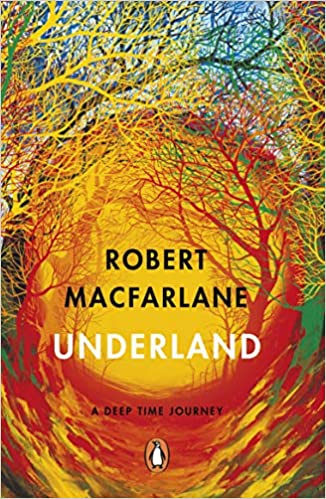
Robert Macfarlane is a nature writer who gives you so much more – science, geology, landscape, history, folklore, myth, environment, oral history. Tempted by the amazing cover – a detail of ‘Nether’ by Stanley Donwood – I bought Underland and was hooked from the first sentence. ‘The way into the underland is through the riven trunk of an old ash tree’. Robert MacfarlaneMacfarlane goes underground – into the catacombs of Paris, remote Arctic sea caves, down moulins in Greenland glaciers, follows underground rivers through the Karst in Slovenia, ending in Finland where a tomb is being constructed to house nuclear waste – discovering stories about our ancestors and the world they lived in. A wide-ranging book, informative as well as interesting, Macfarlane writes with a feeling for language that locks into your emotions. As the chapters progress – each setting is underground, extreme and challenging – Macfarlane consults experts and explores inaccessible places. Juxtaposed with the examination of nature and science, he writes a travel story involving caving, mountaineering, exploration and survival skills. He writes of places the reader is unlikely ever to visit. Such as the calving face of the Knud Rasmussen glacier in Greenland, ‘Birds gather on the silt blooms, feeding on their richness. They are the only scale-givers at this distance, and they are as small as flies.’
Definitely one for re-reading. Some chapters I expected to enjoy, others I was less sure about – but I enjoyed them all, some new territory for me. Such as ‘The Understorey’ about the ‘wood wide web’ of tree-fungus mutualism underground. Macfarlane weaves a story of multiple stories, asking the question – what sort of ancestors will we be?
Fascinating. A non-fiction book to be dwelled upon, rather than rushed.
CLICK HERE TO READ MORE ABOUT THIS BOOK AT AMAZON

If you like this, try:-
Wildwood: A Journey Through Trees’ by Roger Deakin
English Pastoral’ by James Rebanks 
The Wild Silence’ by Raynor Winn 

And if you’d like to tweet a link to THIS post, here’s my suggested tweet:
#BookReview UNDERLAND by @RobGMacfarlane https://wp.me/p5gEM4-4St via @SandraDanby

#BookReview ‘The Camomile Lawn’ by Mary Wesley #WW2

It’s many years since I first read The Camomile Lawn by  Mary Wesley. I remember liking it, and that one of the characters is called Calypso, but nothing else. So it was with delight that I read the wartime story of Calypso and her four cousins – Oliver, Polly, Walter and Sophy. It renewed my intention to re-read all Wesley’s novels. Mary WesleyThe story is enrichened by the mode of telling. It starts in Cornwall in the summer of 1939 as the cousins of assorted ages gather for what will be the last time. There is a poignancy hanging in the air as the run their ritual race, The Terror Run, along the clifftop path, joined by their neighbours, the Floyer twins.
The cousins are the children of the three Cuthbertson siblings – we see the parents only fleetingly, if not at all – but they are gathered at their Uncle Richard’s house and picnic on the camomile lawn. What follows are the piecemeal stories of individuals and how they overlap with each other as the war progresses. Overlaid, are short passages from the Eighties as they travel independently to Cornwall for a funeral. Drawn into the cousins’ stories are their neighbours, in Cornwall and London, wartime acquaintances, lovers, and refugees Max and Monika. Amidst the bombings, the rationing and the worries about loved ones fighting, Wesley tells a story of a family both united and separated, as individuals strike out on their own, liberated by wartime urgencies. There are affairs, unexpected babies, hints of underage sex, all without accusations of blame or betrayal. Each makes assumptions about the others, assumptions the reader may know are misplaced given we are privileged to see into the minds of each cousin, and sometimes assumptions which are proven right or wrong only at the very end of the novel.
Paths cross, diverge and cross again. Not everyone is nice, not everyone is honest. They are people getting through the war, trying to keep things together; some turn to drink and partying, one keeps guinea pigs, most feel emboldened by the openings presented to them by war. And all the time, fear lurks in the pit of their stomachs. And through it all, the house in Cornwall and memories of that last party on the camomile lawn, remind us of pre-war normality. At a time when ‘normal’ ceases to exist.
Very different from other wartime novels. Now a classic.

Read the first paragraph of THE CAMOMILE LAWN.

If you like this, try:-
‘The Guernsey Literary and Potato Peel Pie Society’ by Mary Ann Shaffer & Annie Barrows
Half of the Human Race’ by Antony Quinn
My Dear, I Wanted to Tell You’ by Louisa Young 

And if you’d like to tweet a link to THIS post, here’s my suggested tweet:
#BookReview THE CAMOMILE LAWN by Mary Wesley https://wp.me/p5gEM4-48g via @SandraDanby

#BookReview ‘The Dream Weavers’ by @Barbaraerskine #historical

I like the timeslip construction and so The Dream Weavers by Barbara Erskine caught my eye. Although well-established, she’s a new author for me as I explore more historical fiction. I admit to looking for more novels without technology and the mores of the modern world. A bit of escapism. Barbara ErskineSet in two different centuries – Anglo-Saxon England 788AD and the English/Welsh border in 2021 – The Dream Weavers is about the romance of a young English noblewoman and a Welsh prince who meet as Offa’s Dyke is being built. Eadburh and Elisedd are sent by their fathers to ride out along the construction line and report back on progress, but over a few days they fall in love. The dyke is a symbol throughout the book, of rivalries and divisions, of tribes seeking separation rather than acceptance of differences. Eadburh’s father King Offa meant it to be a permanent border line between the two countries but in the centuries after it was built it fell into disrepair. In the modern strand of the story – told by Beatrice Dalloway whose husband Mark is canon treasurer of nearby Hereford Cathedral – the dyke is a bit of a mystery, difficult to find, often missing or destroyed, invisible in the rural landscape.
I liked the history, the myths, the hunting down of secrets and particularly the exploration of how history’s perception of the past can be mistaken. Historians make judgements based on the information available to them at the time, but often they may be unaware that what they believe are historical facts are in reality assumptions, lies, cultural misunderstandings, political interpretations or written by chroniclers with personal agendas. This theme is embodied in the character of historian Simon Armstrong, a specialist in the Anglo-Saxon period, who has rented a cottage in the isolated countryside near the dyke to finish writing his latest book. But Simon has a problem, his cottage seems to have a ghost and his landlady calls Bea for help. Bea is a mystic who has an affinity with ghosts and has studied folklore and the supernatural, a hobby which sits uneasily alongside her husband’s job. As Bea investigates the mysterious voice and noises in and around the cottage, Simon’s two children arrive to stay. Teenager Emma seems delicately susceptible to the supernatural and is drawn into Bea’s dreaming. The connections between Bea and Emma with the Welsh borders of 788AD strengthen and both find it difficult to stay in the 21st century, at increasing danger to themselves.
This felt like a long read but when I finished it and checked I was surprised to see it is only 512 pages. Nowhere near the books I think of a ‘long read’ – Hanya Yanagihara’s A Little Life [737 pages], Kate Mosse’s Labyrinth [752] and itself a timeslip tale, or Ken Follett’s The Pillars of the Earth [a stonking 1104 pages]. The links between the timeslip sections became repetitive with Bea sitting down, falling asleep and dreaming a lot of times and at all times of day. This stop-start rhythm took me away from the historical story. I enjoyed all Eadburh’s sections, following her from the first meeting with Elisedd through their whirlwind romance to all that followed. So the modern-day sections of Bea seemed intrusive. But of course this is a timeslip story so it is set in two different time zones, and today’s accepted storytelling method is to introduce a threat to your key character. Bea’s modern-day strand features a cathedral volunteer who at first seems a nosy woman, interfering, disliking the new canon’s wife and possibly fancying Mark herself. But Sandra Bedford is not all she seems and her role towards the end was not what I was expecting.
I was held to the last page by the telling of a tragic love story set in Anglo-Saxon times. I wanted to know what happened to Eadburh and Elisedd – did their love last, did they meet again – and cared less for the other characters.
Having discovered a new author, I plan to go back to the beginning and read Erskine’s debut novel, The Lady of Hay.

If you like this, try:-
The Crows of Beara’ by Julie Christine Johnson
The Evening and the Morning’ by Ken Follett
The Ninth Child’ by Sally Magnusson

And if you’d like to tweet a link to THIS post, here’s my suggested tweet:
#BookReview THE DREAM WEAVERS by @Barbaraerskine https://wp.me/p5gEM4-5md via @SandraDanby

#BookReview ‘An Englishwoman’s Guide to the Cowboy’ by @june_kearns #romance

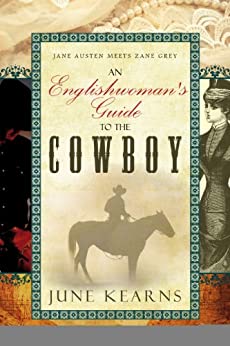
The opening chapter of An Englishwoman’s Guide to the Cowboy by June Kearns is a vibrant introduction to Annie Haddon, the Englishwoman of the title. She’s travelling from California to Texas in a stagecoach with her over-bearing aunt and superior cousin who both tell her what not to do. ‘Mustn’t, mustn’t’, Annie mutters to herself. She copes stoically until the bombshell is dropped that the real purpose for their journey across America is to meet Annie’s intended. June Kearns ‘Henry Chewton Hewell,’ thinks Annie. ‘Even his name sounded like something stuck between his teeth.’ Like all the best first chapters it introduces the key character, makes you care about her and then ends in the most unexpected way. Described as Jane Austen meets Zane Grey, Kearns has created a must-read story populated by a heroine to root for, a hero to swoon over and nasty characters to dislike. That’s where the romance formula ends. Kearns portrays an 1867 Texas full of desert dust, coyotes, unhappy Comanche and Sioux, the arrival of the railroad, arrogant cavalry and rowdy townsfolk; fresh and challenging circumstances for the ‘out of her comfort zone’ heroine. It’s a faraway world so alien from today in its customs and culture but surprisingly close in its emotions. An Englishwoman’s Guide to the Cowboy is about first impressions – the cast includes a silent native named Grey Eagle, Clarice the owner of a rowdy saloon, a puppy called Dog – challenging mistaken assumptions and long-held beliefs and prejudices.
What a visual film this would make. It made me chuckle out loud. If you need an escape from the stressful real world, try this. It doesn’t matter that you know how it will end, it is a romance after all and we love a happy ending, but it is the how and why that are intriguing and Kearns kept me guessing to the end.
Hilarious, joyful stuff.

Click the title to read my review of THE 20S GIRL, THE GHOST, AND ALL THAT JAZZ also by June Kearns.

If you like this, try:-
The House on the Shore’ by Victoria Howard
Butterfly Barn’ by Karen Powers
The Missing Pieces of Nancy Moon’ by Sarah Steele

And if you’d like to tweet a link to THIS post, here’s my suggested tweet:
#BookReview AN ENGLISHWOMAN’S GUIDE TO THE COWBOY by @june_kearns https://wp.me/p5gEM4-5m0 via @SandraDanby

#BookReview ‘The Rose Garden’ by @AuthorTracyRees #historical

I just loved The Rose Garden by Tracy Rees. The characters start off isolated from each other and are gradually threaded together as their separate challenges and crises become interlinked. When I finished it, I wanted to start reading it all over again. Tracy ReesThe Rose Garden is the story of Mabs, Ottie, Olive and Abigail. Four completely different women who live near Hampstead Heath as the 20th century approaches. It is a time of societal and family change when women are beginning to show strength in changing their lives but when traditional barriers erected by male society and assumptions still remain.
Mark is eighteen and works in the Regent’s Canal, moving huge lumps of ice from underground storage up to the fresh air. It is a dark, dangerous job. But Mark is really Mabs Daley, working to support her brothers and sisters and Pa, who hasn’t worked since being widowed. The family lives in one room, dirty and dishevelled, but with an underlying spirit that Mabs fears won’t last much longer. Things change when she hears of a job as a lady’s companion at a house on nearby Hampstead Heath. Mabs is full of hope and plans that at last she’ll be able to raise the fortunes of her family. But though her employer Mr Finch is sanguine about her lack of experience and unpolished manners, Mrs Finch locks Mabs out of the room.
When Olive Westallen, a single, educated, wealthy woman in her late twenties, decides to adopt a child from a nearby children’s home, even her liberal parents are concerned. She calls her new daughter Clover and for the first few weeks everything seems delightful until Clover’s behaviour inexplicably changes.
Twelve-year old Otty is bored. Stuck at home waiting to start her new school, her father is at work, her mother keeps to her room while her older brothers and sisters live their own lives. Recently moved to London from Durham, she has no friends so starts exploring the local area alone. In a spot of bother by the canal she’s rescued by Jim, a young ‘darkie’ who reveals himself to be Jill. As Jill explains the problems living as a black girl in the city, Otty struggles to understand the reasons for this inequality and prejudice.
To say how Mabs, Olive, Otty and Abigail become acquainted is to give away too much of the plot. Tracy Rees is wonderful at creating a small world with a world [as she did in the South Yorkshire mining villages in The House at Silvermoor] and populates them with struggling, flawed characters who you just want to succeed.
Ultimately a story of friendship, at the heart of The Rose Garden are women who want more to life than marrying a man and becoming his property. They want the freedom to make their own life choices, to work, to marry, to be educated, to move around freely and unthreatened, to own what is rightfully theirs. Independently and together, they fight back against injustice, control, expectations and the law of the time.
Don’t miss it.
CLICK HERE TO READ MORE ABOUT THIS BOOK

Click the title below to read my reviews of other novels by Tracy Rees:-
AMY SNOW
DARLING BLUE
THE ELOPEMENT
THE HOUSE AT SILVERMOOR

If you like this, try:-
Birdcage Walk’ by Helen Dunmore
The Orphan Twins’ by Lesley Eames
The Clergyman’s Wife’ by Molly Greeley

And if you’d like to tweet a link to THIS post, here’s my suggested tweet:
#BookReview THE ROSE GARDEN by @AuthorTracyRees https://wp.me/p5gEM4-5lW via @SandraDanby

#BookReview ‘The Rose Code’ by @Kate_Quinn #WW2 #Bletchley

The Rose Code by Kate Quinn is the first book I’ve read by this author. I was drawn in by the WW2 setting and promise of mystery, but it’s much more than that. There are two timelines; 1947 as the royal wedding of Princess Elizabeth approaches, and 1939 at the outbreak of war. At its centre are three young women who don’t quite fit into their worlds. War introduces something new to their lives. Opportunity. Advancement. Recognition. Friendship. Home. Kate QuinnMabs has grown up in Shoreditch but longs to escape. She follows her own plan of improvement – reading the classics, copying the accents of assistants in upper class shops – with the long-term aim of rescuing her younger sister Lucy from poverty. Osla is a Canadian society girl, rich, pretty, labelled as a dim deb who trains as a riveter to make Hurricanes. Both have mysterious interviews and are sent on a train journey to ‘Station X’. This turns out to be a large country mansion – Bletchley Park – where secret war work is undertaken. Both must sign the Official Secrets Act before they are admitted. At their lodgings, they meet Beth, downtrodden daughter of their strict religious landlady Mrs Finch.
Beth’s skill at crosswords is recognised and soon all three girls are working at ‘BP’. In their jobs – typing, translating, decoding – the three girls get to know each other and, despite the rules of secrecy, they learn how gossip inside ‘BP’ works. Soon they are promoted, learning top secret information before it is transmitted to government, before even Churchill. And with knowledge comes power, and danger.
We follow the three through romances – Osla with young naval officer, Prince Philip of Greece – and bombings. There is something to like and dislike about each woman making them realistic, rounded characters. Mab was my favourite, Osla slightly irritating, while Beth changes the most throughout the course of the book. The 1947 strand becomes a hunt for a traitor as the Cold War gets colder and a former WW2 ally becomes the enemy. The girls must revisit their wartime secrets to question the nature of truth and loyalty, to each other and to their country.
The Second World War is often thought of as a time of liberation for women doing the jobs of men and in some ways it was; but Quinn shows this was a transitory advantage – temporary, class driven, certain jobs only – and women were still ultimately dependant on a man in so many ways. As the women look back at their former lives we see how much, and how little, has changed for them.
Some of the coding puzzles went straight over my head but that didn’t really matter. The Bletchley setting is great, the gossip of the weekly scandal rag, the familiar names dropped – Alan Turing, Joan Clarke – the book club and 3am kidneys on toast. I’m not sure the 1947 royal wedding deadline adds much to the narrative, there’s enough threat without it. As I was getting towards the end of the book and was interrupted, I snatched up the book again at the next possible opportunity.

Here are my reviews of other novels by Kate Quinn:-
THE BRIAR CLUB
THE ROSE CODE

If you like this, try:-
Life After Life’ by Kate Atkinson
Another You’ by Jane Cable
Life Class’ by Pat Barker

And if you’d like to tweet a link to THIS post, here’s my suggested tweet:
#BookReview THE ROSE CODE by @Kate_Quinn https://wp.me/p5gEM4-5lQ via @SandraDanby

#BookReview ‘A Beautiful Spy’ by Rachel Hore @Rachelhore #WW2 #spies

Rachel Hore is one of my favourite go-to authors when I want well-written, thoughtful escapism. Her latest is A Beautiful Spy, a pre-Second World War spy story based on a real case involving the infiltration of a communist spy cell. Rachel HoreAt a garden party in the summer of 1928, Minnie Gray is bored. She’s there with her mother who is trying to fix up her up with another young man, when she notices a striking young woman. When the enigmatic Miss Pyle asks if Minnie would consider working for the government, Minnie recognises a chance to escape her mother’s suffocating attention and her boring job at the Automobile Association.
Minnie meets Captain Max Knight, ‘M’, and is recruited as a member of British Intelligence’s M Section with the code name M/12. She moves to London, finds a flat and a part-time secretarial job. Her first task is to attend meetings of the local Friends of the Soviet Union group and volunteer to help. Her new life must be kept a secret from her Tory-supporting family and boyfriend, Raymond.
What follows is Minnie’s progressive immersion in the British Communist Party. Always a self-reliant person, Minnie begins to struggle with the secrecy. Feeling she belongs nowhere, living her life in disconnected bubbles of people who are unaware of each other, she seeks out new friends at a hockey club that she can be herself with. Minnie’s career as a spy has a up and down trajectory, most of the time nothing happens, and she feels she is failing her bosses. But all the time she is cementing her reputation as a reliable, trustworthy secretary and this pays off when she is asked to take secret money to communist supporters in India. Minnie meticulously keeps records, writes reports for M and tries to be nosy while seeming disinterested. As the tension increases and she feels watched, the danger she is risking becomes real and not a game.
Hore added her own imagination to the factual story of real-life spy Olga Gray who spied for Maxwell Knight of British Intelligence and whose testimony helped to convict a number of communists in 1938 for treachery. Using a true story as the foundation of a novel has its advantages and disadvantages. At times the story pauses, for exposition or perhaps because there were periods in the real life Gray’s story when not a lot happened, and this means the flow of tension can seem stop-start.
I really enjoyed A Beautiful Spy. It’s the sort of novel I wish I could find more often. It certainly means I’ll be reading the non-fiction books mentioned by Hore in her Author’s Note at the end.

Click the title to read my reviews of other books by Rachel Hore:-
A WEEK IN PARIS
ONE MOONLIT NIGHT
THE HIDDEN YEARS
THE LOVE CHILD

If you like this, try:-
After the Party’ by Cressida Connolly
Midnight in Europe’ by Alan Furst
The Ways of the World’ by Robert Goddard

And if you’d like to tweet a link to THIS post, here’s my suggested tweet:
#BookReview A BEAUTIFUL SPY by Rachel Hore @Rachelhore https://wp.me/p5gEM4-5lL via @SandraDanby

#BookReview ‘Big Sky’ by Kate Atkinson #crime #Yorkshire

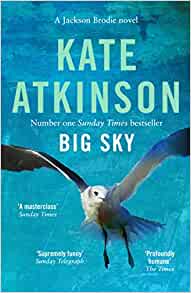
I hesitate to express some disappointment with Big Sky, the fifth Jackson Brodie instalment by Kate Atkinson, but the feeling grew as I read deeper into the book. I realize this disappointment is based on my incredibly, probably infeasibly high expectations of this author. Kate AtkinsonI have loved Jackson since his first outing in Case Histories. The darkly comic tone is the same in Big Sky but I struggle to pin down what is different this time. The crime is sex trafficking. The action is told through a wide variety of viewpoints. The cast list is very long and the tying up of ends involves characters I had long ceased to remember. Some of the ends were tied up quickly in the last thirty or so pages.
There are still many things to love. The Yorkshire Coast setting – Atkinson was born in York and clearly knows the area well – is at times both realistically beautiful and sordid. And there are so many rough diamond characters to spend time with: Crystal Holroyd; her stepson Harry; the wonderfully named drag queen Bunny Hops, Harry’s co-worker at the Palace Theatre; and the inept Vince Ives. Jackson has moved to the coast and is working as a private detective on a number of small seemingly irrelevant cases; staying with him are his ex-partner’s dog Dido, and their teenage son Nathan. The story is anchored in the historic sex crimes case of Bassani and Carmody. Bassani is dead but Carmody is rumoured to be about to spill some names. Various people are being threatened. Two police detectives are investigating the cold case and how it links to the ‘magic circle’ but they have little luck in finding answers. Two Polish girls arrive in England. Four friends play golf, and one of them feels like an outsider.
Halfway through, the two sides of the story come together as Brodie is employed by Crystal Holroyd to find out who is following her in a silver BMW. After their first meeting, a warning is left for Crystal: a photo of her young daughter. ‘Keep your mouth shut, Christina’. The first hint of a former life for the expensively polished wife of Tommy Holroyd. This is a book in which the present catches up with the past, where past horrors are finally acknowledged.
I finished this book with mixed feelings. Jackson is still a character I want to spend time with, but the plot this time didn’t work for me. Also I put my hand up to say that, as an East Yorkshire girl, I was bamboozled by Atkinson’s mangling of East Coast geography [which she admits in ‘Acknowledgements’ at the end] which took me away from the page but won’t matter a jot if you’ve never been to Brid. That said, Atkinson is one of our best living writers and Jackson Brodie is not a typical fictional detective.

Read my review of another Jackson Brodie book:-
DEATH AT THE SIGN OF THE ROOK #6JACKSONBRODIE

And here are my reviews of other novels by Kate Atkinson:-
A GOD IN RUINS
LIFE AFTER LIFE
SHRINES OF GAIETY
NORMAL RULES DON’T APPLY
TRANSCRIPTION

If you like this, try:-
‘Eeny Meeny’ by MJ Arlidge
The Art of the Imperfect’ by Kate Evans
The Vanished Bride’ by Bella Ellis

And if you’d like to tweet a link to THIS post, here’s my suggested tweet:
#BookReview BIG SKY by Kate Atkinson https://wp.me/p5gEM4-4Hq via @SandraDanby

#BookReview ‘Crossing the Lines’ by Amanda Huggins @troutiemcfish #novella

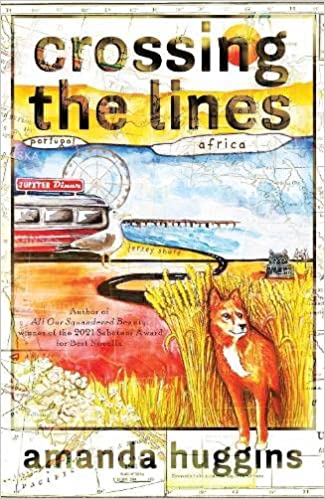
I read Crossing the Lines, the new novella by Amanda Huggins – whose previous book won the 2021 Saboteur Award for Best Novella – in one sitting. Based on Red, Huggins’ runner-up in the 2018 Costa Short Story Award, this is the fuller story of runaway Mollie and her dog, Hal. Amanda Huggins Fifteen-year old Mollie grows up on the New Jersey shoreline at Atlantic City but when her mother moves to boyfriend Sherman Rook’s home five states away in the west, Mollie goes too. She hasn’t even arrived at Oakridge Farm when she knows she’s made a mistake, and that her mother has too. At her new home she makes one friend, a stray dog. Then after weeks on edge waiting every night for the sinister Rook to stumble in from the bar and rattle the locked door of her bedroom, Mollie hears a gunshot in the henhouse and sees the body of a dead dog. She grabs $20, a road map and a sweater and sneaks out of the house. When she sees Rook’s pick-up with the keys in the ignition, she takes that too.
This is a road trip back east as Mollie faces situations and people unknown, strange, threatening and well-meaning. The driver whose daughter ran away. The store owner whose dog died. The biker who offers her a bed for the night.
Huggins is always a delightful author to read. This story is tightly controlled but her language roams free with some poetic turns of phrase and descriptions that make the emotions, and the dusty Seventies mid-America landscape, seem real. In 139 pages she gives us not only Mollie’s dilemma and the solution she pursues, but the viewpoints of characters she meets along the way and their impression of the girl with the dog. And underlaid beneath it all is Mollie’s past, her friends back east, her regrets, guilt and longing for father Phil and brother Angel. Life, she learns, should be lived forwards. Mollie greets every day as a surprise.

Read my reviews of other work by Amanda Huggins:-
Novellas
ALL OUR SQUANDERED BEAUTY
THE BLUE OF YOU
Short stories
AN UNFAMILIAR LANDSCAPE
BRIGHTLY COLOURED HORSES
EACH OF US A PETAL
SCRATCHED ENAMEL HEART
SEPARATED FROM THE SEA
Poetry
THE COLLECTIVE NOUNS FOR BIRDS

If you like this, try:-
Etta and Otto and Russell and James’ by Emma Hooper
The End of the Day’ by Bill Clegg
If I Knew You Were Going to be This Beautiful, I Never Would Have Let You Go’ by Judy Chicurel

And if you’d like to tweet a link to THIS post, here’s my suggested tweet:-
#BookReview CROSSING THE LINES by Amanda Huggins @troutiemcfish https://wp.me/p5gEM4-5nA via @SandraDanby