#BookReview ‘Howard’s End is on the Landing’ by @susanhillwriter #memoir

I selected this book off my to-read shelf where it has sat for at least two years and, on reading the first paragraph, knew I must read on. Howard’s End is on the Landing by Susan Hill is a gem of a memoir, a year in the life of a crime novelist who decides to read only the books on her bookshelves. But this is more than a review of books – it can be dipped in and out of, the chapters are conveniently short which makes you want to read ‘just another’ – because Hill attaches a personal story to each book, each author. Susan HillHill’s first novel was published when she was only eighteen, she lives an ordinary life but mixes with some breath-stopping names. She met and/or knew TS Eliot, EM Forster, Cecil Day Lewis, Penelope Fitzgerald, Ian Fleming, Iris Murdoch, Elizabeth Bowen; it is a mirror image of my reading list at university, except for the Bond. Above everything though, the book reveals Hill as a reader who devours everything from Dickens to WG Sebald, Anthony Trollope to Anita Brookner, John le Carre to Olivia Manning. Her bookshelves contain signed copies, first editions, expensive sets, anthologies and poetry, plus shabby cheap paperbacks bought at airports and train stations, or second hand in charity shops. She writes in her books, turns down the corners of pages, discovers things used years ago as bookmarks – bills, paid and unpaid; receipts; picture postcards; shopping lists. She is, like you and I, someone who loves reading books. I recognised her description of reading library books as a child.
“Although when I was a child and growing up I could borrow books every week from the library, there was a limit on the number to be taken at any one time and so, as there was not the money to buy many books either, I found myself reading, re-reading and re-reading again. If I liked a library book I simply got to the end, turned it round and began again. It was a bit like sweets. Until I was ten, sweets were rationed. I had a quarter of a pound a week and there were various ways in which they could be made to last. A sweet a day. Buy only boiled sweets which could be sucked for a long time. Suck half and re-wrap the rest until tomorrow. Occasionally I would have such a sugar-craving that I bought something that was gobbled up in a great burst of sweetness that exploded in the mouth like a firework and then was gone. Sherbet lemons were like that. Marshmallows did not last long.” I turned my library books round and began again, too. I also read my mother’s books. That’s how, as a young teenager, I discovered Mary Stewart.
This is a delightful slim paperback which made me want to re-read many novels first read forty years ago, and to try authors I have always meant to read such as Sebald and PG Wodehouse.

Read my reviews of the Simon Serrailler crime novels by Susan Hill:-
THE VARIOUS HAUNTS OF MEN #1SIMONSERRAILLER
THE PURE IN HEART #2SIMONSERRAILLER
THE RISK OF DARKNESS #3SIMONSERRAILLER
THE VOWS OF SILENCE #4SIMONSERRAILLER
THE SHADOWS IN THE STREET #5SIMONSERRAILLER
THE BETRAYAL OF TRUST #6SIMONSERRAILLER
A QUESTION OF IDENTITY #7SIMONSERRAILLER
THE SOUL OF DISCRETION #8SIMONSERRAILLER
THE COMFORTS OF HOME #9SIMONSERRAILLER
THE BENEFIT OF HINDSIGHT #10SIMONSERRAILLER
A CHANGE OF CIRCUMSTANCE #11SIMONSERRAILLER

If you like this, try:-
‘The Story’ ed. by Victoria Hislop
‘In the Midst of Winter’ by Isabel Allende
‘White Chrysanthemum’ by Mary Lynn Bracht

And if you’d like to tweet a link to THIS post, here’s my suggested tweet:
#BookReview HOWARD’S END IS ON THE LANDING by @susanhillwriter https://wp.me/p5gEM4-3t5 via @SandraDanby
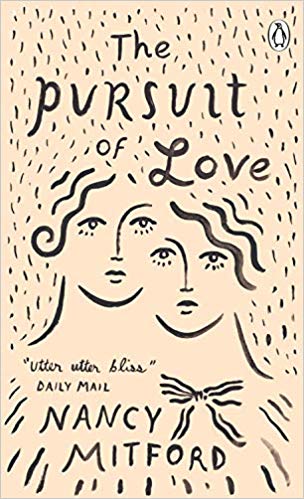
#BookReview ‘The Pursuit of Love’ by Nancy Mitford #romance

A slower, more meditative pace inhabits The Pursuit of Love by Nancy Mitford, less frenetic than her earlier novels. More fond, less satirical. Fanny Logan narrates this story of the Radlett family and, in particular, her cousin Linda’s pursuit of love. Nancy MitfordThe teenage Linda and sisters, and cousin Fanny who visits the Radletts at the fading freezing family pile, Alconleigh in the Cotswolds, want to grow up now. They are obsessed by sex and romance whilst being woefully ignorant of the practicalities. The reality, however, is more difficult and less romantic than they imagined. They form a secret society The Hons. When not out hunting, The Hons spend hours in a large warm cupboard gossiping about love and Fanny’s disreputable mother, ‘The Bolter’, who abandoned her daughter to pursue love. Fanny, raised by her Aunt Emily and stepfather Davey, spends all her holidays at Alconleigh with Uncle Matthew and Aunt Sadie and their family.
As with all Mitford novels there are many laugh-out-loud moments. Alconleigh is an eccentric world where Uncle Matthew rules his staff and family; he despises foreigners, Catholics, the nouveaux riche and people who say ‘perfume’ instead of ‘scent’. Desperate to find true love and not follow the family black sheep – The Bolter – into leapfrogging from affair to affair, the cousins are woefully naïve and unprepared for meeting men. Linda sums up true love, ‘it was like seeing somebody in the street who you think is a friend, you whistle and wave and run after him, and it is not only not the friend, but not even very like him. A few minutes later the real friend appears in view, and then you can’t imagine how you ever mistook that person for him.’
Published in 1945, the story starts in the Thirties and runs through the Spanish Civil War and the start of World War Two and The Blitz. The Radletts may be ‘hons’ but they suffer and slings and arrows of fortune in love. Fanny is the narrator of the family’s story and we are treated to occasional morsels about her own love and life. Like Nick Carraway in The Great Gatsby, the story therefore includes Fanny’s own interpretation of affairs as well as her recounting of Linda’s own stories.
This is a tale of lost aristocracy, and the levelling effects of love and war. Funny, witty and sharp featuring an absent parenting style completely alien today, The Pursuit of Love has at its heart a strong streak of sadness and tragedy. No matter who you are, love cannot always be found; if found, it cannot always be retained.
CLICK HERE TO READ MORE ABOUT THIS BOOK AT AMAZON

Read the first paragraph of THE PURSUIT OF LOVE here.

Read my reviews of these other novels by Nancy Mitford:-
CHRISTMAS PUDDING
HIGHLAND FLING
LOVE IN A COLD CLIMATE
PIGEON PIE
THE BLESSING
WIGS ON THE GREEN

If you like this, try these:-
‘Miss Pettigrew Lives for a Day’ by Winifred Watson
‘The Ballroom’ by Anna Hope
‘My Dear, I Wanted to Tell You’ by Louisa Young

And if you’d like to tweet a link to THIS post, here’s my suggested tweet:
#BookReview THE PURSUIT OF LOVE by Nancy Mitford https://wp.me/p5gEM4-3kq via @SandraDanby

Great Opening Paragraph 122… ‘The Heart’s Invisible Furies’ #amreading #FirstPara

‘Long before we discovered that he had fathered two children by two different women, one in Drimoleague and one in Clonakilty, Father James Monroe stood on the altar of the Church of Our Lady, Star of the Sea, in the parish of Goleen, West Cork, and denounced my mother as a whore.’ John BoyneFrom ‘The Heart’s Invisible Furies’ by John Boyne

Here’s my review of THE HEART’S INVISIBLE FURIES
… and read my reviews of these other novels by John Boyne:-
A HISTORY OF LONELINESS
A LADDER TO THE SKY
A TRAVELLER AT THE GATES OF WISDOM
ALL THE BROKEN PLACES
STAY WHERE YOU ARE & THEN LEAVE
WATER #1ELEMENTS
EARTH #2ELEMENTS

Try one of these #FirstParas & discover a new author:-
‘The Garden of Evening Mists’ by Tan Twan Eng 
‘The Children Act’ by Ian McEwan
‘Couples’ by John Updike

And if you’d like to tweet a link to THIS post, here’s my suggested tweet:
#Books #FirstPara THE HEART’S INVISIBLE FURIES by @JohnBoyneBooks https://wp.me/p5gEM4-3Jk via @SandraDanby

#BookReview ‘The Girl at the Window’ by Rowan Coleman #paranormal #mystery

The Girl at the Window by Rowan Coleman is a glorious mixture of ghosts, grief and the Yorkshire moors of the Brontës. With three timelines to juggle, the novel’s structure is held together by a real house, Ponden Hall, and its true links to Emily Brontë. Mixing historical fact with flights of imagination – the letters of a 17th century servant Agnes – there is a lot going on. Central are the themes of grief, the different types of love and mother/child relationships. Rowan ColemanTrudy Heaton’s husband Abe is missing presumed dead after a plane crash in South America, so she takes their son Will to her childhood home, Ponden Hall in Yorkshire. Tru’s return is wondrous and difficult, a return to the old house and moors she loved near Haworth, home to the Brontës; but also an awkward reunion with Ma, with whom she has not spoken for 16 years. When Tru finds a loose page from a diary written by Emily Brontë, who visited the house and used its library, and some 17th century documents by an Agnes Heaton, she starts a hunt for the truth. At the same time she must renovate the almost derelict house, and help Will negotiate his new life without his father in a strange place. Will likes Ponden Hall, the Granny he has never met before, and Mab the old retriever, but he acquires an imaginary friend. Also hovering on the scene is Marcus Ellis, house restorer and Brontë addict, who arrives to assess the repairs needed and grants available to save Ponden Hall. Ma doesn’t like Marcus’s neat blue jeans, Tru finds him unsettlingly calm, and Will likes the computer games and wi-fi at Marcus’s ultra-modern home.
And all the time, Will expects his father to return and asks his mother why she stopped looking for him. As both mother and son process their grief, the losses, brutality and bereavements of other generations at Ponden Hall are uncovered. Has Tru found a story previously uncovered only by Emily Brontë, and did Emily leave an unfinished second novel hidden somewhere at Ponden Hall?
The adventure and excitement of a bookish girl, searching for real… ‘the existence of a childhood dream come true, almost like finding a snowy forest at the back of a wardrobe.’
Another immersive read on holiday for me, 4* rather than 5* because of some unbelievable elements and impracticalities which took me away from the world on the page and made me wonder… ‘but’. To avoid spoilers I can’t be more specific but they are not ghost or Brontë-related.

Here are my reviews of four historical mystery novels by Rowan Coleman, writing as  Bella Ellis:-
THE VANISHED BRIDE #1BRONTEMYSTERIES
THE DIABOLICAL BONES #2BRONTEMYSTERIES
THE RED MONARCH #3BRONTEMYSTERIES
A GIFT OF POISON #4BRONTEMYSTERIES

If you like this, try:-
Yuki Chan in Brontë Country’ by Mick Jackson
Wakenhyrst’ by Michelle Paver
Love and Eskimo Snow’ by Sarah Holt

And if you’d like to tweet a link to THIS post, here’s my suggested tweet:
#BookReview THE GIRL AT THE WINDOW by Rowan Coleman https://wp.me/p5gEM4-460 via @SandraDanby

My Porridge & Cream read @marlaskidmore44 #books #JaneAusten

Today I’m delighted to welcome historical novelist Marla Skidmore. Her ‘Porridge & Cream’ read is Emma by Jane Austen.

“It was difficult to choose just one book for my Porridge and Cream read, as I have so many favourites. Anya Seton’s Katherine and Georgette Heyer’s An Infamous Army are very near the top of my list but if I have to pin it down to just one book, then it has to be Emma. It was at school, during a double Library period in the Summer of 1965, that my impressionable teenage self, became entranced by the world that Jane Austen created in her novels. Initially it was haughty Mr Darcy and feisty Lizzie Bennet in Pride and Prejudice, that caught my attention but then I discovered her wonderfully flawed, high spirited and delightfully managing heroine, Emma Woodhouse.

Marla Skidmore

Marla’s copy of Emma

‘Handsome, clever and rich,’ Emma has no responsibilities other than the care of her rather foolish, elderly father.When her close companion, the motherly Anne Taylor gets married and leaves her, Emma sets out on an ill-fated match-making career which focuses on the pretty but dim Harriet Smith. Emma manages to cause misunderstandings with every new tactic she employs. Cherished and spoilt, she is charming to all those around her but insensitive to their feelings, so it takes her some time to learn her lesson and profit from spending less time worrying about how other people should live their lives and more time redeeming herself in the eyes of Mr Knightly, the man who loves her dearly but who is also her sternest critic. The more I read Emma, the more I appreciate Jane Austen’s sharp wit; her subtle analysis of contemporary life in small town Regency England and her incisive portraits of characters such as Mrs Augusta Elton, who has £10,000 but is boasting, pretentious and vulgar and the  Frank Churchill, whose surface charm hides a manipulative self-centred nature, determined to ensure his secret engagement to Jane Fairfax remains undetected.”
Marla SkidmoreBUY THE BOOK

Marla’s Bio
Marla Skidmore grew up in a small medieval city in the Yorkshire Dales.   After living in Europe for a number of years, she returned home to become a mature student. Having completed her studies and gained dual Honours in English and History and a Master’s degree in Literature; Marla went on to become a College Lecturer. Her award-winning debut novel, Renaissance – The Fall and Rise of a King, is inspired by the discovery of King Richard III’s remains on the 25th August 2012. She is now researching and writing the sequel Renegade, the story of Francis Viscount Lovell – King Richard’s greatest and most loyal friend. When not immersed in her current writing project, Marla enjoys gardening, exploring ancient ruins and taking long walks with her West Highland Terrier in the countryside surrounding the Dales village where she now lives.

Marla’s Links
Website
Facebook
Twitter 
Goodreads
Instagram 

Marla’s latest book
Marla SkidmoreDeath is not always the end. King Richard III.  Betrayed, defeated and savagely slain but Fate is not quite finished with him. He regains consciousness on Bosworth’s bloody field and concludes that the Almighty has granted him another chance to fight for his throne. About to leave the battlefield to head North, Richard is forced to take cover by the arrival of Henry Tudor and his men who are searching for his body to put on display.  Suddenly the cry goes up ‘We have found the king!’ He sees Henry Tudor standing triumphant over a mauled and battered corpse and hears him whisper ‘It is done. England is mine.’ How could this be when he is not dead? Richard sidles closer; to his utter horror finds himself looking at his own body. The appearance of the mysterious monk Father Gilbert, convinces him that he is dead and now in Purgatory – and so begins Richard’s harrowing journey through the Hereafter. Through his recollections in the Afterlife, reader is witness to the key events that lead to his violent end. The man behind the myths is revealed, as is the torment of a soul who believes that his honour and reputation have been forever destroyed by the malign propaganda of the Tudors. When at last Richard learns that this has not reigned supreme through the ages, he faces a decision that will affect his soul throughout eternity.
BUY THE BOOK

What is a ‘Porridge & Cream’ book? It’s the book you turn to when you need a familiar read, when you are tired, ill, or out-of-sorts, where you know the story and love it. Where reading it is like slipping on your oldest, scruffiest slippers after walking for miles. Where does the name ‘Porridge & Cream’ come from? Cat Deerborn is a character in Susan Hill’s ‘Simon Serrailler’ detective series. Cat is a hard-worked GP, a widow with two children and she struggles from day-to-day. One night, after a particularly difficult day, she needs something familiar to read. From her bookshelf she selects ‘Love in A Cold Climate’ by Nancy Mitford. Do you have a favourite read which you return to again and again. If so, please send me a message.

Discover the ‘Porridge & Cream’ books of these authors:-
LM Milford’s choice is ‘4.50 From Paddington’ by Agatha Christie
Lexi Rees chooses ‘The Hitchhiker’s Guide to the Galaxy’ by Douglas Adams
Jane Eyre by Charlotte Bronte is chosen by Julie Stock

And if you’d like to tweet a link to THIS post, here’s my suggested tweet:
Why does historical novelist @marlaskidmore44 re-read EMMA by Jane Austen #books https://wp.me/p5gEM4-4hB via @SandraDanby

#BookReview ‘Olive, Again’ by Elizabeth Strout @LizStrout #contemporary

OliveAgain by Elizabeth Strout is a return to the town of Crosby, Maine, and the life of Olive Kitteridge. Strout does it, again. If you loved the first iteration of Olive you will love this one too, it is like slipping into a sloppy pair of comfortable slippers. Olive lives her life, day by day; irascible, impatient with indulgence and self-importance, unsympathetic on the surface; but with a keen eye for those who need help, a kind word, a supporting hand under the elbow. But she cannot stand pseuds and snobs, though she fears she may be the latter. Elizabeth StroutStrout has such a light touch when handling difficult, deep emotions, set amongst the picture frame of predictable daily life. There are thirteen connected stories. Each feature Olive; in some she is the protagonist, in others she appears in the periphery of someone else’s life, always at a time of turmoil, grief, divorce or trauma. Often the people featured are former pupils from her years as a maths teacher, often they are friends or neighbours. In the course of this book, Olive mourns the death of Henry and struggles alone in the house they built together. She sleeps downstairs on the large window seat though she spends most of each night awake, listening to a transistor radio she cradles to her ear. Jack Kerrison is mourning the loss of his wife, Betsy. Olive and Jack have an on-off friendship, hearing each other’s travails with their children. Olive worries she was a bad mother and that Christopher avoids her, and she doesn’t know what to do to put it right. She is so prickly on the outside, sometimes on the inside too; but she is also empathetic, determined to be herself in the face of frightening change and old age.
My favourite scene is the one where Olive attends a baby shower, reacting with incredulity then impatience as each present is unwrapped and circulated endlessly around the guests who ooh and aah. Olive has a way of cutting through the crap. ‘She thought she had never heard of such foolishness in her life.’
Another 5* book by Strout.

Read my reviews of these other books by Elizabeth Strout:-
AMY & ISABELLE
ANYTHING IS POSSIBLE
LUCY BY THE SEA
MY NAME IS LUCY BARTON
OH WILLIAM!
OLIVE KITTERIDGE
TELL ME EVERYTHING

If you like this, try:-
The Stars are Fire’ by Anita Shreve
A Thousand Acres’ by Jane Smiley
Barkskins’ by Annie Proulx

And if you’d like to tweet a link to THIS post, here’s my suggested tweet:
#BookReview OLIVE, AGAIN by Elizabeth Strout @LizStrout https://wp.me/p5gEM4-45V via @SandraDanby

#BookReview ‘The Second Midnight’ by @AndrewJRTaylor #WW2

In The Second Midnight, Andrew Taylor unpicks the connections between a group of people – a dysfunctional family, spies, ordinary people – before, during and after World War Two in England and Czechoslovakia. Essentially it is a novel of relationships wrapped up in the parcel of wartime spying, lies and romance. In its scope it reminds me of Robert Goddard’s Wide World trilogy, except Taylor covers the subject in one book rather than three. Andrew TaylorIt is 1939 and twelve year old Hugh Kendall is bullied by his father, sighed over by his harried mother, ignored by his older brother and manipulated by his older sister. Hugh retreats into imaginative games with his toy soldiers. His father, failing glass importer Alfred Kendall, is recruited by the Secret Services as a courier on a glass-buying trip to Czechoslovakia. In tow is Hugh, recently expelled from school, a nuisance to his father. Alfred is not a natural spy, though he thinks he is. When things get sticky and Alfred must return to England, the Czech Resistance keeps Hugh as collateral to ensure his father’s quick return. But Hugh finds himself alone in Prague after the German invasion, unsure who to trust, unsure if he will be rescued. He quickly learns to live on his wits. This for me was the best section of the book.
The thing that makes this story stand apart for me is Hugh. He makes an uncanny narrator, giving us a view of life in an occupied country, stranded from everything that is safe and familiar. Adept at languages, Hugh quickly becomes familiar with Czech and German allowing him to assume a false identity as Rudi Messner, a Czech-Hungarian boy.  Cared for by a German officer, Colonel Helmut Scholl, Hugh works as the gardener’s boy at Scholl’s mansion in Prague and meets the colonel’s children, Heinz and Magda. These relationships weave across the years and the pages into the post-war years and the fight against communism.
The significance of the title left me wondering if I had missed something. It is set up with an intriguing connection between two characters, then abandoned. The connection with the Prologue was also lost on me as it is only mentioned again at the end and I had forgotten what happened; ends neatly tied without adding understanding. Taylor knows how to tell a page turning story, I read this quickly. This is a fascinating read over a complex time period, but an enormous subject; I wish it had been given the space of three books to explore fully.
CLICK HERE TO READ MORE ABOUT THIS BOOK AT AMAZON

Read my reviews of Andrew Taylor’s ‘Marwood & Lovett’ series that starts on the night of the Great Fire of London:-
THE ASHES OF LONDON #FIREOFLONDON1… and read the first paragraph of THE ASHES OF LONDON.
THE FIRE COURT #FIREOFLONDON2
THE KING’S EVIL #FIREOFLONDON3
THE LAST PROTECTOR #FIREOFLONDON4
THE ROYAL SECRET #FIREOFLONDON5
THE SHADOWS OF LONDON #FIREOFLONDON6

If you like this, try:-
Corpus’ by Rory Clements
The Ways of the World’ by Robert Goddard
Five Days of Fog’ by Anna Freeman

And if you’d like to tweet a link to THIS post, here’s my suggested tweet:
#BookReview THE SECOND MIDNIGHT by @AndrewJRTaylor https://wp.me/p5gEM4-4gC via @SandraDanby

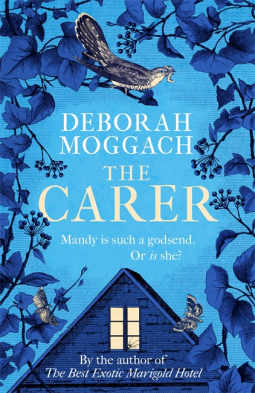
#BookReview ‘The Carer’ by Deborah Moggach #humorous #familydrama

At first I didn’t know what to make of The Carer by Deborah Moggach. She travels a fine comic line nudging towards simplistic or tasteless stereotypes. But then, as she did in These Foolish Things, the novel finds its stride. In two parts, Moggach takes her original portrayal of this family, shows it through different eyes, and turns it upside down. Deborah MoggachIn Part One we meet widower James Wentworth, OBE, 85, retired particle physicist, living downstairs in his home after breaking a hip; and his live-in carer Mandy, 50, from Solihull. ‘Mandy hummed show tunes as the kettle boiled. Blood Brothers was her favourite, about two boys separated at birth. She said she had seen it three times and blubbed like a baby.’ Mandy is fat, jolly, is a chatterer, and says it as she finds it.
Part One is told from the alternating viewpoints of James’ children. Unfulfilled artist Phoebe, 60, lives in a Welsh village in the area where she had many happy childhood holidays. Robert, 62, former City trader, is now writing a novel in his garden shed in Wimbledon, while married to a television newsreader. Our first impressions of their father, and of Mandy, are filtered through their middle class worries and prejudices. Both harbour resentments about their father’s absences when they were children when he travelled the world for work; resentments that straight-talker Mandy tells them they should have got over years ago.
Mandy is truly a catalyst of change, not just for James but for Robert and Phoebe too.
The situation is a believable one faced in today’s society as we all live longer. James in his eighties needs full-time care, his children are already retired. A succession of carers has come and gone, each unsatisfactory in one way or another. When Mandy arrives she seems an angel. Initially, Phoebe and Robert put aside the class differences as Mandy cares for their father so well. The daily walk to the nearby donkey sanctuary or trip to Lidl for pots of flavoured mousse, soon become day trips to Bicester Village and eating at Nando’s. Initially thriving under Mandy’s care with daily scratchcards and a chirping kitchen clock, James seems more forgetful so when Robert’s daughter sees the papers from James’ desk upstairs in a mess, they fear the worst. Why is Mandy looking in their father’s private documents. Can she be trusted. And what has prompted James’ sudden mental and physical decline. The twist which comes halfway through is masterful.
Part Two is James’ story, starting from his life as a young father and married to Anna. One day he attends a conference in Cardiff. What happens there affects the rest of his life, but in ways even he cannot have predicted. At the end there is one more twist, unexpected, that once again casts Robert and Phoebe’s understanding of their lives into a whirlwind.
At the heart of this novel is the question, can you ever really know someone. Whether with a stranger or a long-loved family member, don’t we all sub-consciously present different faces to different people. It is easy to assume we know someone because of the public face they present to the world, but the inner thoughts of other people, even our closest relatives – and often their marriages – are always a mystery.
Littered with throwaway quotes from Shakespeare, this is on the surface a quick, contemporary read (only 272 pages) which also casts a light on the prejudices, snobberies and problems of modern society. It is billed as a comic novel but it did not make me laugh. I was left feeling vaguely disappointed.
CLICK HERE TO READ MORE ABOUT THIS BOOK

Read my review of these other novels by Deborah Moggach:-
SOMETHING TO HIDE
THE BLACK DRESS
TULIP FEVER

Read the first paragraph of THESE FOOLISH THINGS [now THE BEST EXOTIC MARIGOLD HOTEL] here.

If you like this, try:-
Crow Blue’ by Adriana Lisboa
In the Midst of Winter’ by Isabel Allende
The Only Story’ by Julian Barnes

And if you’d like to tweet a link to THIS post, here’s my suggested tweet:
#BookReview THE CARER by Deborah Moggach https://wp.me/p5gEM4-45Q via @SandraDanby

A poem to read in the bath… ‘Dunt’ by Alice Oswald #poetry

‘Dunt: A Poem for a Dried-Up River’ by Alice Oswald won the Forward Prize for the best single poem in 2007. A water nymph tries unsuccessfully to conjure a river from limestone. Punctuated by the refrain ‘try again’ it feels like a wail against climate change and our changing rural landscapes. The water nymph is real, rather it is an artefact found by Oswald in a local West Country museum.

Alice Oswald

Alice Oswald [photo Pako Mera]

Because of copyright restrictions I am unable to reproduce the poem in full, but please search it out in an anthology or at your local library.

‘Very small and damaged and quite dry,
a Roman water nymph made of bone
tries to summon a river out of limestone

very eroded faded
her left arm missing and both legs from the knee down
a Roman water nymph made of bone
tries to summon a river out of limestone’

BUY THE BOOK

Alice Oswald

Read this interview in The Guardian as Oswald talks about this collection.

Read these other excerpts, and perhaps find a new poet to love:-
Winter Song’ by Wilfred Owen
My Heart Leaps Up’ by William Wordsworth
Tulips’ by Wendy Cope

And if you’d like to tweet a link to THIS post, here’s my suggested tweet:
A #poem to read in the bath: ‘Dunt’ by Alice Oswald https://wp.me/p5gEM4-3Rf via @SandraDanby

#BookReview ‘The Sleeping Beauty’ by Elizabeth Taylor #classic #love

Reading this novel is like taking a long deep breath of air when your lungs are bursting. The Sleeping Beauty by Elizabeth Taylor is about beauty and is loosely based on the fairy story – a man rescuing a woman – but with real people who have faults, irritations, fantasies and vanities, whose prejudices and past lives inconveniently do not go away. Elizabeth Taylor In the small seaside town of Seething, Vinny Tumulty visits an old friend, Isabella, whose husband has recently died. He wants to support her through difficult times, but Isabella fancies she is falling in love with him. Vinny, however, sees a stranger walking on the beach and, without seeing her clearly, knows she is beautiful. We learn later that Emily’s face has been reconstructed, plastic surgery necessary after a car accident caused by her drunken brother-in-law. Emily’s widowed sister Rose tells Vinny that, since her accident, Emily looks and behaves like a completely different person. To Rose, Emily’s face is untrue; to Vinny, it is beautiful.  He becomes obsessed with her. ‘My plans for today are to hang about hoping for a glimpse of her, to have my heart eaten away by the thought of her; to feel my blood bounding maddeningly, ridiculously, like a young boy’s; to despair; to realise the weight of my misery and hunger with each step I take.’
Vinny is in his fifties but behaves as if this is his first love. In contrast, Isabella’s son twenty-something Laurence picks up a girl at the cinema. Not knowing how to make the first move and kiss her, he experimentally takes Betty’s hand. ‘Her skin was rough, her nails so short that he wondered if she bit them, and hoped she did. He did not want a young lady too tranquil, too defined.’ This scene is mirrored later when Emily is top-and-tailing gooseberries; she puts her hand into the basket as Vinny does too, and they touch. ‘He felt the involuntary tremor before the tension, the shocked leap of her blood which she could not control. ‘Even her arms are blushing,’ he thought.’
Is Laurence falling in love with reality, and Vinny with an image? Neither knows the woman he is courting, has hardly had a conversation with her. It is halfway through the novel before Emily says more than a single sentence at a time. Taylor shows the gradual, patient steps that Vinny takes towards Emily; brief words exchanged, moments of silence stretching ahead. It is a cautious middle-aged love where hope of finding love has long passed. There is a sensuality, a thin seedling struggling to grow despite the aridity of the earth.
As usual, Taylor is excellent on everyday detail of people and things. ‘The streets were almost empty. An obviously betrothed couple stood looking in at the lighted window of a furniture shop at a three-piece suite labelled ‘Uncut Moquette’.’ And I loved the scene where Isabella and her friend Evalie are checking the racing results and doing tapestry badly, with their faces covered with clay face packs; and Laurence enters the room, bemused. This is a slow, contemplative novel, beautifully written, which in places made me stop and smile.
CLICK HERE TO READ MORE ABOUT THIS BOOK AT AMAZON

Read my reviews of other books by Elizabeth Taylor:-
A VIEW OF THE HARBOUR
A WREATH OF ROSES
ANGEL
AT MRS LIPPINCOTE’S
IN A SUMMER SEASON

If you like this, try:-
‘Mobile Library’ by David Whitehouse
‘A Life Between Us’ by Louise Walters
‘The Gustav Sonata’ by Rose Tremain

And if you’d like to tweet a link to THIS post, here’s my suggested tweet:
#BookReview THE SLEEPING BEAUTY by Elizabeth Taylor https://wp.me/p5gEM4-3ru via @SandraDanby