#Bookreview ‘After The End’ by Clare Mackintosh #drama #contemporary

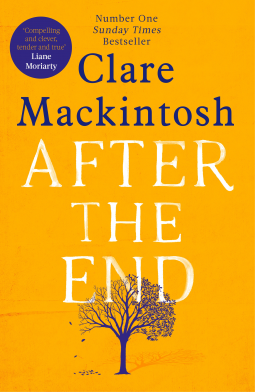
I read After the End by Clare Mackintosh in one day on holiday, it is compulsive reading. It begins in a courtroom as everyone awaits the verdict of the judge. Leila, and at this point we do not know what role she plays in this story, watches two parents hold hands as they await the verdict on their son’s fate. Clare MackintoshThis is a book of two halves. The first is compelling, telling the story of how Max and Pip Adams find themselves in the courtroom described in the Prologue. Their two and a half year old son Dylan has a terminal brain tumour, surgery has removed only part of the tumour. Max and Pip are a strong couple, committed to each other and to Dylan. So far, they have coped. That is, until the hospital says it recommends no further treatment as Dylan has no quality of life. The reactions of Max and Pip to this advice are different and traumatic. Should Dylan be allowed to die peacefully without further painful, disruptive medical intervention? Or should he be taken to America for cutting edge medical treatment which his NHS consultants warn is not suitable for him? As the court case approaches, trust is broken, a pro-life group gets involved, secrets are told to the media, and Pip and Max are on all the front pages.
Part two centres on what happens after the court case and this, for me, is the weaker half. In a kind of ‘Sliding Doors’ approach, Mackintosh alternates chapters for two different outcomes of the court case. For me the technique was confusing, perhaps better signposting in chapter headings might have helped. I realise she is making a comment about the randomness of life but the ‘after’ story would be emotionally stronger if one option was told.
The community of Dylan’s PICU unit was so well drawn it felt real. Reading the Author’s Note afterwards, it becomes clear that Mackintosh experienced her own real life tragedy. The small details make it oh so believable. The specialist nurses, the parents of other patients, and doctor Leila Khalili are so well drawn. In a novel so emotional and at times polarised, I think it was important to include the viewpoint of Leila. Mackintosh is so good at showing the emotions of people on the edge, living in an abnormal world centred on the four walls of a hospital room, separate from the outside world operating as normal.
Understandably this book has been a word-of-mouth hit but it comes with an advance warning for anyone suffering grief at the illness or loss of a child. At times it is difficult to read, but its bare honesty is refreshing.
CLICK HERE TO READ MORE ABOUT THIS BOOK

If you like this, try:-
Smash All The Windows’ by Jane Davies
The Warlow Experiment’ by Alix Nathan
The Children Act’ by Ian McEwan

And if you’d like to tweet a link to THIS post, here’s my suggested tweet:
#BookReview AFTER THE END by Clare Mackintosh https://wp.me/p5gEM4-45M via @SandraDanby
#BookReview ‘Spring’ by Ali Smith #SeasonalQuartet #contemporary

Spring is the third in the Seasons quartet by Ali Smith and the most experimental of the books so far. Set in today’s disorientating, chaotic times, Spring is at times both disorientating and chaotic. The most political of the three, it felt at times like the author was shouting. It left me feeling rather flat, which I didn’t expect as I am an Ali Smith fan. Ali SmithThe book is rather difficult to summarize, partly because so soon after reading it the story disappeared from my mind. Two story strands start off independently, inevitably merging and impacting on each other. In between are passages of social media language, phrases listed, nasty, full of bile and hatred; I can imagine Smith trawling Twitter, pencil in hand, making notes.
Richard Lease, a film producer, is contracted to make a film about Katharine Mansfield and Rainer Maria Rilke, but is struggling with the script. He holds imaginary conversations with his – professional, and sometime romantic – partner Paddy who died recently. Richard also holds conversations with an imaginary daughter. Both women test him with awkward questions about his behaviour.
Brittany is an officer at an SA4A immigrant detention centre, a predictable, challenging job in a depressing place. And then she meets Florence, a kind of wonder child. Florence is 12 years old. She achieves mythical status, of a kind with Greta Thunberg, by persuading the centre director to steam clean all the toilets. No one knows where she came from; is she a detainee, did she blag her way into the building? Brit and Florence go on a road trip to Scotland where they meet Richard Lease and Alda, driver of a coffee van, possibly member of an underground movement to rescue detainees from immigrant detention centres, possibly Florence’s mother. These four key characters meet in Edinburgh and agree to go to Culloden.
I was left feeling that Smith’s political message would be stronger if it wasn’t so confusing. She vents her anger and the words on the page read as if they poured from her mind without sub-editing. This interrupts the flow of Richard and Brittany’s stories, taking my mind off the page and away from the book. I didn’t feel close to any of the characters and consequently didn’t care about them.
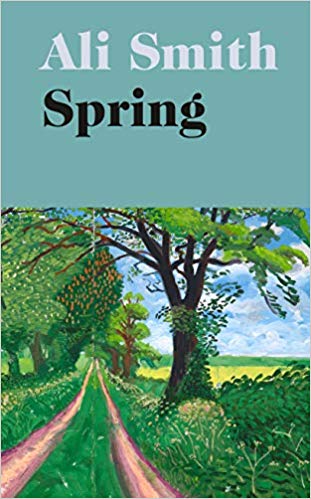
Ali Smith is one of the freshest, experimental voices we have today; reading one of her novels is not an easy read for the beach, they need concentration. So I will re-read Spring and hope for a smoother read. I await Summer, wondering if it will bring enlightenment on Spring’s storyline but not expecting it. To date, each novel is completely independent of each other. The only context for calling it a quartet are the titles, the seasonal themes. It is a difficult thing Smith is doing with this quartet; writing about a country in the process of cataclysmic political change – the anger, the depression, the fear – and writing quickly without the usual gap of years between writing and publication which allow a book to mellow. For me, Spring does not quite work. But I do love the Hockney cover art.

Click the title to read my reviews of other books by Ali Smith:-
AUTUMN #1SeasonalQuartet
WINTER #2SeasonalQuartet
SUMMER #4SeasonalQuartet
COMPANION PIECE #5SeasonalQuartet
HOW TO BE BOTH

If you like this, try:-
A Sudden Light’ by Garth Stein
A Thousand Acres’ by Jane Smiley
All My Puny Sorrows’ by Miriam Toews

And if you’d like to tweet a link to THIS post, here’s my suggested tweet:
#BookReview SPRING by Ali Smith https://wp.me/p5gEM4-44W via @SandraDanby

#BookReview ‘Touch Not The Cat’ by Mary Stewart #romance #suspense

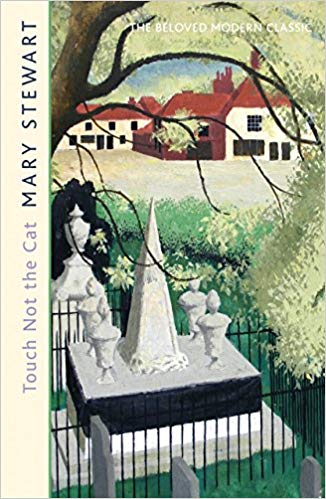
Published in 1976 – around the time I was borrowing my mother’s copies of Mary Stewart’s The Moon-Spinners and My Brother Michael and reading them voraciously – I had never read Touch Not the Cat until now. Like all Stewart’s novels, there is adventure and romance with a slice of the supernatural. I can’t think of any other novels like them. The Ashley family in Touch Not the Cat own Ashley Court and have an unusual gift running through the generations: they are telepathic with each other. Mary Stewart Narrator Bryony is working at a hotel in Madeira when she receives a telepathic message from her anonymous ‘lover’ to go to her father who is staying at a clinic in Germany. When Bryony arrives her father is dead, killed in a hit-and-run road accident. His last words to a friend, who wrote them down verbatim, are a warning to Bryony. ‘Tell Bryony. The cat, it’s in the cat on the pavement. The map. The letter. In the brook. Tell Bryony. My little Bryony to be careful. Danger.’ She returns home to Ashley Court in England to look for the answers but finds surprises and danger. I found the beginning an odd introduction to the Ashley family, the house, the history, coupled with a diary excerpt at the end of each chapter, dating from the nineteenth century. The significance of this becomes clear later, but for a long while I read it without getting a lot from it. There are a lot of mysteries, lies and contradictions to unravel. Even Bryony is not certain of the identity of her telepathic lover, though she knows it must be a blood relative so guesses it is one of her three cousins; twins Ellory and James, or their younger brother Francis. As Bryony unravels the meaning of her father’s warning, she realises the twins are not beyond committing murder in order to steal her inheritance. Could one of them be her telepathic lover?
The title of the novel is an old Scottish motto which Stewart gives to the fictional Ashley family. The cat is relevant but I didn’t guess the significance until the very end. A well-written novel; old-fashioned in that it starts slowly and builds gradually, but deserves patience. It includes gothic features such as churchyard scenes, shadowy figures, storm and flooding; which Bryony mocks, ‘Robed nuns and ancient houses and secret passages, the paraphernalia that Jane Austen had laughed at in Northanger Abbey.’ An unusual romantic mystery that makes me want to re-read all Stewart’s books, including the Arthurian series.
CLICK HERE TO READ MORE ABOUT THIS BOOK AT AMAZON

Click the title to read my reviews of other Mary Stewart novels:-
MY BROTHER MICHAEL
THE IVY TREE
THE GABRIEL HOUNDS
THIS ROUGH MAGIC
THORNYHOLD

If you like this, try these:-
The Vanishing of Audrey Wilde’ by Eve Chase
The Wicked Cometh’ by Laura Carlin
The Last of Us’ by Rob Ewing

And if you’d like to tweet a link to THIS post, here’s my suggested tweet:
#BookReview TOUCH NOT THE CAT by Mary Stewart https://wp.me/p5gEM4-3Vc via @SandraDanby

First Edition ‘Lucky Jim’ by Kingsley Amis #oldbooks #bookcovers

Kingsley Amis’s comic novel Lucky Jim, his debut novel, won the 1955 Somerset Maugham Award for Fiction. First published in the UK in 1953 by Victor Gollancz, followed in the US a year later. Famous for its slapstick set pieces, Lucky Jim regularly appears on ‘greatest novels’ lists.

The current edition by Penguin Modern Classics [below] dates from 2000.
BUY

Kingsley Amis

Penguin Modern Classics 2000 current ed

The story
Jim Dixon is a lecturer in medieval history at a red brick English university, he is on probation and afraid of losing his job. To establish his credentials he must publish a learned article but discovers that the editor, to whom he submitted it, has swiped it as his own and translated it into Italian. Jim’s on-off girlfriend Margaret tries emotional blackmail at a house party, a tactic which backfires when Jim takes a liking to another girl, Christine. The action climaxes at a lecture which Jim must give on ‘Merrie England’. Nervous, he has one too many drinks beforehand to calm his nerves, denounces arty pretentiousness, and passes out.

Other editions

And my copy? Here it is.

Kingsley Amis

Penguin Classics 1982 my copy

Films

Kingsley Amis

1957 film poster

Starring Ian Carmichael as Jim, the 1957 film of Lucky Jim was directed by John Boulting and also starred Terry Thomas and Hugh Griffith. The film received mixed reviews.
Watch this clip of the Madrigal scene.
BUY the DVD

Kingsley Amis

2003 film poster

In 2003 a television version was made starring Stephen Tomkinson as Jim and Keeley Hawes as Christine. Watch the trailer.

If you like old books, check out these:-
Jurassic Park’ by Michael Crichton
‘101 Dalmations’ by Dodie Smith
Mrs Dalloway’ by Virginia Woolf

And if you’d like to tweet a link to THIS post, here’s my suggested tweet:
First Edition LUCKY JIM by Kingsley Amis #oldbooks #bookcovers https://wp.me/p5gEM4-43w via @SandraDanby

My Porridge & Cream read Clare Rhoden @ClareER #books #Regency

Today I’m delighted to welcome dystopian sci-fi author Clare Rhoden. Her ‘Porridge & Cream’ read is The Talisman Ring by Georgette Heyer.

“I’m now onto my third copy of The Talisman Ring by Georgette Heyer. What’s that? There’s a copy in your local charity shop?! Let me at it!

Clare Rhoden

Clare’s copy of ‘The Talisman Ring’

“I first read this book as a teenager, home from school with a bad case of something or other. My big sister assured me I’d love it. As usual, she was right. I have since read all Heyer’s Regency romances, and own most of them. My little library of happy, witty, female-centred adventure books followed me through several house moves. Then, after a somewhat uneventful decade, I was stuck at home for a long recovery after surgery. Time for The Talisman Ring again!

“Imagine my surprise to discover that the book had changed. Well, of course it hadn’t changed, but I had. I recalled a dashing young couple diving headlong into adventure, assisted by an older cousin and a clever spinster. But no! Instead, thirty-year-old Sir Tristram and Sally Thane – unmarried in her late twenties – were actually the heroes in the story. I enjoyed it all the more.

“The long stint at home saw me re-read all of Heyer’s romances, and I realized that her style is not only polished in a Jane-Austen kind of way, but that she does indeed have sympathetic characters for readers of many ages. Her plots are neat, her heroes handsome, her leading ladies strong-willed and loving.”

Clare’s elevator pitch for The Talisman Ring: Lord Lavenham’s dashing young heir has fled the country, wrongly accused of murder. Can his cousin Eustacie find the missing heirloom which will prove his innocence?
Clare Rhoden BUY

Clare’s Bio
Clare Rhoden is an Australian author of historical, fantasy and science fiction novels, always centred on love and hope in dark times.

Clare’s links
Website
Facebook
Twitter
Instagram

Clare’s latest book Clare Rhoden
Clare’s most recent novel is the WWI romance The Stars in the Night 
Harry Fletcher is sure he will marry Nora, despite the opposition of their families. He’ll always protect Eddie, the boy his father saved from a Port Adelaide gutter.
Only the War to End All Wars might wreck Harry’s plans.
From Semaphore beach to Gallipoli, this is a story of love, brotherhood, and resilience.
BUY

What is a ‘Porridge & Cream’ book? It’s the book you turn to when you need a familiar read, when you are tired, ill, or out-of-sorts, where you know the story and love it. Where reading it is like slipping on your oldest, scruffiest slippers after walking for miles. Where does the name ‘Porridge & Cream’ come from? Cat Deerborn is a character in Susan Hill’s ‘Simon Serrailler’ detective series. Cat is a hard-worked GP, a widow with two children and she struggles from day-to-day. One night, after a particularly difficult day, she needs something familiar to read. From her bookshelf she selects ‘Love in A Cold Climate’ by Nancy Mitford. Do you have a favourite read which you return to again and again? If so, please send me a message.

Discover the ‘Porridge & Cream’ books of these authors:-
Jane Cable’s choice is ‘A Horseman Riding By’ by RF Delderfield
Rosie Dean chooses ‘Prudence’ by Jilly Cooper
Chocolat by Joanne Harris is chosen by Kate Frost

And if you’d like to tweet a link to THIS post, here’s my suggested tweet:
Why does dystopian sci-fi author @ClareER re-read THE TALISMAN RING by Georgette Heyer? #books https://wp.me/p5gEM4-47T via @SandraDanby

#BookReview ‘The Pearl Sister’ by Lucinda Riley #romance

I really enjoyed The Pearl Sister, the fourth in Lucinda Riley’s Seven Sisters adoption mysteries. While Maia, Ally and Star have already investigated their birth stories, Celaeno, CeCe, has shown no interest in her own. She is feeling sorry for herself, alone now that Star has become independent. Until her curiosity is piqued. Pa Salt’s lawyer tells her about a bequest, a large sum of money, and a photograph of two unidentified men. He advises CeCe to investigate Kitty Mercer from Broome in Australia. Lucinda RileyOn her journey to Australia, CeCe stops off in Thailand, staying at Railey Beach where she has holidayed in the past with Star. As she wonders why she is there alone, feeling envious of Star’s new home and new love in England, she meets a mysterious man on the beautiful beach. They bond over the morning sunrise, both are hurting – CeCe is missing Star and feeling betrayed by her sister’s newfound life, while Ace is hiding a big secret he cannot, or will not, explain. Riley hints that behind the beauty of Railey Beach there is a dark, sordid side. Could Ace be involved in drugs? Then when CeCe steps off the plane in Australia, she discovers Ace has been arrested and believes CeCe betrayed him to the press. As the journalists identify CeCe’s name and location, she runs away to Broome.
As with all the earlier novels in the series, the story of The Pearl Sister is told in two strands. CeCe is in 2008, Kitty Mercer’s story starts in 1906. The eldest daughter of a Edinburgh preacher, Kitty goes on a nine month trip to Australia as companion to the wealthy Mrs McCrombie. It changes Kitty’s life. She drinks alcohol for the first time, kisses a man, and acts immodestly in ways that would shock her clergyman father. Two men, twin brothers, pay attention to her. Drummond is the dangerous brother, the one who kisses her. But Kitty reverts to type by marrying the steady, safe, Andrew Mercer, and moves to Broome where he runs the family’s pearl fishing company for his father.
I found Kitty’s story enthralling, she is a true rebel at a time when women were finding their feet and their voices. She has a way of identifying people needing help. Along her life’s journey she collects waifs and strays, rescuing them from hunger, mistreatment, poverty and racism, giving them opportunities, security and winning their loyalty. Each of them comes to play a critical role in Kitty’s life; from Camira, the pregnant Aboriginal servant girl thrown from the house by her master, to Sarah, the fifteen year old orphan met on a boat from England who has a gift with the sewing needle.
Australia the country and the lives and customs of its Aboriginal people are a dominant presence throughout this novel. Be warned, it will make you want to visit. Throughout it all runs the enticing descriptions of Aboriginal art, by real artists such as Albert Namatjira who lived and worked at the Hermannsburg Lutheran Mission outside Alice Springs, which CeCe visits.
The loose ends come together in the end though Riley did keep me guessing on a couple of the links. The significance of Ace and CeCe’s time in Thailand was one such puzzle. These are all hefty books, but I read this one quickly. It’s my favourite of the series so far which seems to get better with every book.

Read my reviews of some of the other novels in Lucinda Riley’s ‘Seven Sisters’ series:-
THE SEVEN SISTERS #1SEVENSISTERS
THE STORM SISTER #2SEVENSISTERS
THE SHADOW SISTER #3SEVENSISTERS
THE MOON SISTER #5SEVENSISTERS
THE SUN SISTER #6SEVENSISTERS
THE MISSING SISTER #7SEVENSISTERS

… plus my reviews of these standalone novels, also by Lucinda Riley:-
THE BUTTERFLY ROOM
THE GIRL ON THE CLIFF
THE LOVE LETTER

If you like this, try:-
On a Night Like This’ by Barbara Freethy
You’ll Never See Me Again’ by Lesley Pearse
Fair Exchange’ by Michèle Roberts

And if you’d like to tweet a link to THIS post, here’s my suggested tweet:
#BookReview THE PEARL SISTER by Lucinda Riley https://wp.me/p5gEM4-45G via @SandraDanby

#BookReview ‘Olive Kitteridge’ by Elizabeth Strout @LizStrout #contemporary

There are some books you read and as soon as you finish them, you want to go back to the beginning. Olive Kitteridge by Elizabeth Strout made me feel like that. Strout’s writing style is at once beautiful and expressive, economical and un-wordy. She tells you enough detail to create the picture, not one word too many. Elizabeth StroutThe structure is not a linear narrative, instead Strout tells the story of Olive in a series of inter-connected stories set in the small town of Crosby, Maine, where Olive lives with husband Henry. Some stories are told from Olive’s viewpoint, others by by neighbours and people whose path crosses hers; her dry irascible tone made me smile often, but also frown. Olive can be caustic, she tells it as it is. She does not suffer fools and believes she is always correct, though recently her vision of herself has been challenged.  Living in one place for such a long time means she has left a trail through generations of friends, neighbours, shop owners, passers-by and the schoolchildren she once taught. Strout has created a realistic character who is imperfect of whom you warm to because of her faults and because she is as thoughtful and kind as she is prickly.
When the novel starts, Olive is already retired. This is the story of how she deals with ageing and the realisation that her life will have to adapt, her expectations tempered. Actually, Olive doesn’t deal with any of this well whether it is nosy acquaintances or nosy children, of the latter she says, ‘the child out to have her mouth washed out with soap.’ Unaware of the effect she has on others, particularly Henry and their son, Christopher, Olive ploughs on regardless. She seems angry all the time and I was curious about the source of this anger.
If you like novels with a clear straightline story, then this may not be for you. Strout compiles her novels with a patchwork of stories, Olive is the thread that holds everything together. You have to trust the author to tell you the story her way.
A 5* book for me.

Read my reviews of these other books by Elizabeth Strout:-
AMY & ISABELLE
ANYTHING IS POSSIBLE
LUCY BY THE SEA
MY NAME IS LUCY BARTON
OH WILLIAM!
OLIVE, AGAIN
TELL ME EVERYTHING

If you like this, try:-
The Stars are Fire’ by Anita Shreve
Gilead’ by Marilynne Robinson
The Goldfinch’ by Donna Tartt

And if you’d like to tweet a link to THIS post, here’s my suggested tweet:
#BookReview OLIVE KITTERIDGE by Elizabeth Strout @LizStrout https://wp.me/p5gEM4-3YZ via @SandraDanby

#BookReview ‘Staying Afloat’ by @SueWilsea #shortstories

Staying Afloat, the first anthology of short stories by Hull-based writer Sue Wilsea, has as its sub-text her experience teaching English in schools, colleges, prisons, libraries and community centres and this breathes life into her stories. She writes about lost children, bereaved children, struggling parents and struggling teachers with sincerity and a touch of humour. Sue WilseaI’ve chosen three of the 19 stories in Staying Afloat. You can read more of Wilsea’s stories in her second anthology, Raw Materials.
‘Shapes. Colours’ is the story of Stephen who loves his teacher Miss Anderson dearly but avoids her gaze every morning when she points to the thermometer chart and asks how everyone is feeling today. Stephen has a Worry that started “as just a tiny spider of anxiety, scuttling around in his head at night when he couldn’t sleep.” To avoid attention in class, Stephen usually chooses yellow or orange rather than a dark colour.
In ‘Two Ophelias and Me’, first published in QWF magazine, an unnamed narrator thinks of two friends, Lin and Lyndsey, who jumped off the Humber Bridge. “I like to think of their hair and clothes streaming out like twin Ophelias (the three of us went to see Hamlet once. I thought I wouldn’t understand a word and actually I didn’t, but it was brilliant all the same) as they drift down deep, deep onto the riverbed.”
‘Lost’ is a heart breaking story about loss and memory. It starts “I’d lost my mother and was therefore in somewhat of a tizz.” When her mother is not in her room at her care home or wandering around the garden, Alice takes to the streets to check her mother’s haunts. It is a short, poignant story with an unexpected ending.
The settings for Wilsea’s tales are primarily the North of England and East Yorkshire, her characters including a vicar who discovers his true vocation in his forties; and a schoolteacher whose mischievous and disruptive pupil uncannily echoes her own son. ‘Paper Flowers’ won a BBC radio competition and was read on air by Judi Dench.

If you like this, try these:-
‘The Story’ ed. Victoria Hislop
Scratched Enamel Heart’ by Amanda Huggins
‘Last Stories’ by William Trevor

And if you’d like to tweet a link to THIS post, here’s my suggested tweet:
#BookReview STAYING AFLOAT by @SueWilsea #shortstories https://wp.me/p5gEM4-3gu via @SandraDanby

Great Opening Paragraph 121… ‘For Whom the Bell Tolls’ #amreading #FirstPara

“He lay flat on the brown, pine-needled floor of the forest, his chin on his folded arms, and high overhead the wind blew in the tops of the pine trees. The mountainside sloped gently where he lay; but below it was steep and he could see the dark of the oiled road winding through the pass. There was a stream alongside the road and far down the pass he saw a mill beside the stream and the falling water of the dam, white in the summer sunlight.”
Ernest HemingwayFrom ‘For Whom the Bell Tolls’ by Ernest Hemingway

And here are the #FirstParas from other novels by Hemingway:-
A FAREWELL TO ARMS
THE OLD MAN AND THE SEA
TO HAVE AND HAVE NOT

Try one of these #FirstParas & discover a new author:-
Queen Camilla’ by Sue Townsend
Sacred Hearts’ by Sarah Dunant
Jack Maggs’ by Peter Carey

And if you’d like to tweet a link to THIS post, here’s my suggested tweet:
#Books #FirstPara FOR WHOM THE BELL TOLLS by Ernest Hemingway https://wp.me/p5gEM4-3JG  via @SandraDanby

#Bookreview ‘The Irish Inheritance’ by @WriterMJLee #history #genealogy

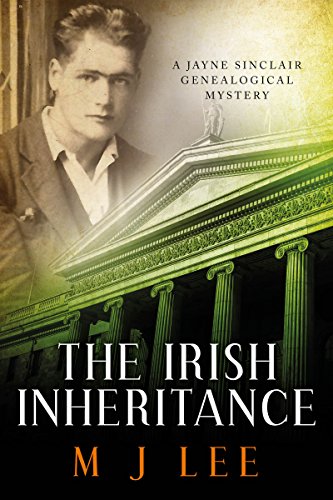
In 1921, a British soldier is killed on a hillside outside Dublin. In 2015, former police detective Jayne Sinclair, turned genealogy investigator, takes on a new client. The Irish Inheritance by MJ Lee is the first in the Jayne Sinclair series, weaving together stories of the Easter Rising in 1916 and the subsequent Irish War of Independence, with the unravelling of secrets kept for a century. MJ Lee Jayne’s client, John Hughes, was adopted and raised happily in America. Now elderly, frail and dying, he is desperate to find the truth about his birth and adoption. The key piece of evidence he has kept all his life, is a book; but he doesn’t know how he came to possess it. He kept it knowing it was a link to his birth family. Jayne must dig deep into records and think outside the box to put together the threads of John’s story. Meanwhile she is having problems at home, John Hughes’s nephew is pressuring her for results, and she has the odd feeling she is being watched.
The strongest part of this story is the Irish strand and the mystery increases as we see Jayne in 2015 researching one mundane document after another, and then read the 1920s strand telling the true story of the Irish people she is trying to discover. The questions of how war pits family and friends against each other, retained guilt, apologising for war misdeeds, truth and forgiveness, run throughout.
I wasn’t totally convinced by the threat to Jayne, it felt rather shoehorned in to add a ‘crime’ element. Perhaps not surprisingly, after the Jayne Sinclair series MJ Lee has gone on to write the Inspector Danilov series of historical crime fiction.
CLICK HERE TO READ MORE ABOUT THIS BOOK

If you like this, try:-
‘Beside Myself’ by Ann Morgan
‘The Indelible Stain’ by Wendy Percival
‘Deerleap’ by Sarah Walsh

And if you’d like to tweet a link to THIS post, here’s my suggested tweet:
#BookReview THE IRISH INHERITANCE by @WriterMJLee https://wp.me/p5gEM4-3Ex via @SandraDanby