Great Opening Paragraph 118… ‘The Whereabouts of Eneas McNulty’ #amreading #FirstPara

“In the middle of the lonesome town, at the back of John Street, in the third house from the end, there is a little room. For this small bracket in the long paragraph of the street’s history, it belongs to Eneas McNulty. All about him the century has just begun, a century some of which he will endure, but none of which will belong to him. There are all the broken continents of the earth, there is the town park named after Father Moran, with its forlorn roses – all equal to Eneas at five, and nothing his own, but that temporary little room. The dark linoleum curls at the edge where it meets the dark wall. There is a pewter jug on the bedside table that likes to hoard the sun and moon on its curve. There is a tall skinny wardrobe with an ancient hatbox on top, dusty, with or without a hat, he does not know. A room perfectly attuned to him, perfectly tempered, with the long spinning of time perfect and patterned in the bright windowframe, the sleeping of sunlight on the dirty leaves of the maple, the wars of the sparrows and the blue tits for the net of suet his mother ties in the tree, the angry rain that puts its narrow fingers in through the putty, the powerful sudden seaside snow that never sits, the lurch of the dark and the utter merriment of mornings.”
Sebastian BarryFrom ‘The Whereabouts of Eneas McNulty’ by Sebastian Barry

Read my reviews of these novels by Sebastian Barry:-
A LONG LONG WAY
A THOUSAND MOONS
DAYS WITHOUT END

OLD GOD’S TIME
THE WHEREABOUTS OF ENEAS MCNULTY

Try one of these #FirstParas & discover a new author:-
The Slaves of Solitude’ by Patrick Hamilton
Such a Long Journey’ by Rohinton Mistry
Sea Glass’ by Anita Shreve

And if you’d like to tweet a link to THIS post, here’s my suggested tweet:
#Books #FirstPara THE WHEREABOUTS OF ENEAS MCNULTY by Sebastian Barry  https://wp.me/p5gEM4-3Js via @SandraDanby

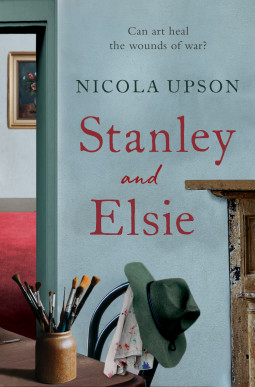
#BookReview ‘Stanley and Elsie’ by @nicolaupsonbook #art #historical

My knowledge of English artist Stanley Spencer was sketchy to say the least when I started reading Stanley and Elsie by Nicola Upson. This is a biographical novel that walks a difficult line between true fact and imagined conversation and walks it with skill, delicacy and drama. Definitely a novel for anyone who loves art. Nicola UpsonUpson takes us into the Spencer household at Chapel View, Burghclere after the Great War when Elsie Munday starts work as a housemaid. Stanley Spencer has been commissioned to paint the inside of a chapel; his wife Hilda, also a painter, minds their young daughter Shirin. Through Elsie’s eyes we see the lives of this family, their ups and downs, the artistic differences, the selfishnesses of Stanley and Hilda, smoothed by the tact, diplomacy and efficiency of Elsie. The title could make some people assume Stanley and Elsie were romantically attached but theirs is a master/servant relationship that deepened into mutual respect and friendship. Stanley, selfish, focussed, is a difficult master, a difficult husband, and Elsie finds herself caught in the middle of disputes between husband and wife. Often she is exasperated with both of them. Instead she becomes indispensable to the household.
Upson gives us an insight into the lives of this family, their daily tasks, the squabbles, the unexpected joys. She combines small inconsequential details of painting with, through Elsie’s growing appreciation of art, the big picture destruction, grief and lasting devastation of war on Stanley’s generation of men. Upson is excellent at portraying place; the Spencers move between Burghclere, Cookham and Hampstead Heath as their marriage disintegrates, a separation complicated by Stanley’s obsession with another woman. No one could have forseen the consequences of this obsession. Stanley is selfish and self-absorbed, Hilda also but to a lesser degree; both can be loving with their children one minute and dismissive the next. At times, neither are particularly likeable; Elsie is the one who picks up the pieces.
Elsie is the core of this story. As narrator we not only see the Spencers through her eyes, we also see her grow from young girl to competent, confident young woman.
The ending was under-whelming but I see it must have been difficult to know how and when to end the novel.
A delightful read. I particularly enjoyed picturing the paintings in my mind as I turned the pages. Reading Stanley and Elsie makes me want to visit Sandham Memorial Chapel near Newbury, Hampshire, now a National Trust property, and also to explore Upson’s other novels.
CLICK HERE TO READ MORE ABOUT THIS BOOK AT AMAZON

Read my review of AN EXPERT IN MURDER #1JosephineTey, also by Nicola Upson.

If you like this, try:-
The Gustav Sonata’ by Rose Tremain
The Goldfinch’ by Donna Tartt
Life Class’ by Pat Barker

And if you’d like to tweet a link to THIS post, here’s my suggested tweet:
#BookReview STANLEY AND ELSIE by @nicolaupsonbook https://wp.me/p5gEM4-3Zx via @SandraDanby

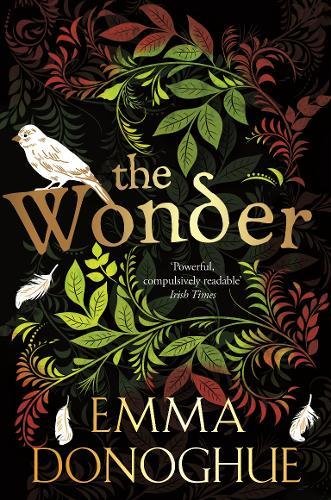
#BookReview ‘The Wonder’ by Emma Donoghue #Irish #faith

What a compulsive read this is, starting slowly until its questions had me sneaking a few pages when I should have been working. The premise of The Wonder by Emma Donoghue sounds straightforward: a nurse and a nun are employed to observe and accompany an eleven-year old girl in rural Ireland who is surviving on ‘manna from heaven’. Is she a miracle or a fraud? Emma DonoghueThis story is very far from straightforward. The task of Nurse Elizabeth Wright, who trained under Miss Nightingale at Scutari during the Crimean War, is to watch and and ensure no food is secretly passing the child’s lips. Strangely, for a nurse, Lib is not responsible for the health of the girl. A local committee, set-up to establish if Anna O’Donnell is secretly eating or if there is a religious wonder living in their village, pays the wages of two nurses, Lib and Sister Michael, for two weeks.
Accepting nothing until she can prove it herself, Lib approaches her task with professional thoroughness, observing, measuring, weighing. Feeling isolated in a cramped home, surrounded by a religion she does not practise or understand, Lib gets little help from local doctor Mr McBrearty or priest Mr Thaddeus. Not knowing who she can trust, she trusts no one; turning away visitors to the O’Donnell home who want to see the holy girl, visitors who donate alms to a collecting box near the door. When a journalist from Dublin says it is clearly a hoax and accuses Lib of speeding Anna’s death – that the all-day watch is denying her the morsels of food she must have been earlier fed – she is horrified and is forced to reassess her role.
The first half is a slow slow build but so worth it for the second half; with an ending I didn’t expect. This story has many layers. Lib, with her scientific approach to religion, is appalled at what she sees as inconsistencies and fantasies of the O’Donnell family’s Catholic beliefs. They accept and do not question. As the story progresses, Lib untangles Anna’s beliefs and in the process re-examines her own.
Not an easy read, The Wonder tackles the emotional subjects of religion and abuse set within the context of rural Ireland in the 1850s. Donoghue is an author who defies description; each novel is so different from its predecessor. With The Wonder, she has again confounded my expectations. Excellent.

Read my reviews of these other Donoghue novels:-
AKIN
FROG MUSIC
THE PULL OF THE STARS

Read the first paragraph of ROOM.

If you like this, try:-
‘Birdcage Walk’ by Helen Dunmore
‘Day’ by AL Kennedy
‘House of Names’ by Colm Tóibín

And if you’d like to tweet a link to THIS post, here’s my suggested tweet:
#BookReview THE WONDER by Emma Donoghue http://wp.me/p5gEM4-2Z1 via @SandraDanby

#BookReview ‘You’ll Never See Me Again’ @LesleyPearse #WW1 #romance

When a character in a film says ‘never’ it’s a sign that the impossible thing will definitely happen before the end. Such is the title of the new novel from Lesley Pearse,You’ll Never See Me Again. Lesley PearseIt is 1917 and a storm is thrashing the Devon coast at Hallsands. Betty Wellows is with her shell-shocked husband Martin at his mother’s home, safely up the cliffs. Martin no longer recognises Betty, he is a different man from the fisherman who went to war. Betty is working all hours to support her husband and his mother, putting up with insults, petty grievances, grief for the loss of her husband. As the storm becomes wild and dangerous, Agnes instructs her daughter-in-law to go to her own house beside the beach to rescue her belongings from the flood. Afraid, Betty escapes the older woman’s abuse and runs into the storm. As the waves crash into her home, Betty realises this is her chance to escape Hallsands, Agnes and Martin.
The dramatic opening grabbed my attention and my emotions. Betty is trapped in a life of poverty with a husband who no longer recognises her and a mother-in-law who takes her money and treats her like a skivvy. When she has the chance to escape, Betty takes it. I spent the whole novel chewing over Betty’s dilemma; was she right to run, should she have stayed. Pearse maintains this dilemma throughout the book as Betty goes to Bristol where she changes her name to Mrs Mabel Brook, a widow. You’ll Never See Me Again is the story of how a lone woman in the middle of the Great War is able to strive to improve her lot in life. Mabel suffers setbacks, encounters thieves and frauds, and sheds copious tears. There are moments where her life seems to have reached a settled, easier place; but, of course, more trauma lies ahead.
This is a cleverly plotted book that kept me guessing to the end. Mabel at times is her own worst enemy, and she finds it difficult to accept help. Then she accidentally discovers a talent she never knew she had. When she moves to Dorchester, Dorset, to be a live-in servant/housekeeper for illustrator Miss Clara May, Mabel’s life takes a new turn. Nearby is a prisoner of war camp and one of the inmates, Carsten, looks after Clara’s garden. Carsten and Mabel fall into a state of mutual liking when Spanish flu strikes at the camp; afraid for Carsten’s health, Mabel volunteers as a nurse.
Mabel ran away from Hallsands to be free, but her past travels with her. Finally she must confront her origins in order to move on with her life. Mabel has a strong sense of honesty and justice, which sounds odd given the way she ran away in chapter one. But she is unselfish, never turning away from difficult decisions and transforming herself in a short space of time into a beautiful, assured woman that her neighbours at Hallsands would not recognise.

Here’s my review of THE HOUSE ACROSS THE STREET, also by Lesley Pearse.

If you like this, try:-
One Step Too Far’ by Tina Seskis
Sometimes I Lie’ by Alice Feeney
The Girls’ by Lisa Jewell

And if you’d like to tweet a link to THIS post, here’s my suggested tweet:
#BookReview YOU’LL NEVER SEE ME AGAIN by @LesleyPearse https://wp.me/p5gEM4-3ZO via @Sandra Danby

#BookReview ‘Wakenhyrst’ by Michelle Paver #gothic #mystery

Wakenhyrst by Michelle Paver is a creepy atmospheric novel that has been described as a ghost story, but the only ghosts in it are in the minds of the people. Which of course makes them enormously powerful and frightening. I found myself eager to return to this book, resenting time away from it. Paver is a skilled storyteller and I am coming to anticipate her new books with relish. If you haven’t read her adult novels, you are in for a treat. Michelle PaverThe story starts with a newspaper article written in 1966 entitled ’The Mystery of Edmund Stearne’. The journalist, who has spoken to Stearne’s daughter Maud about the conviction of her father for murder in 1913, casts doubt on Maud’s version of events. Could Maud be the guilty one? The story is set at Wake’s End, a country house at Wakenhyrst, a village beside the Guthlaf’s Fen in Suffolk. Paver creates this setting with all the intensity and atmosphere with which she created the Arctic in Dark Matter and the Himalayas in Thin Air. The fens haunt every aspect of life at the house and on bad days, when the weather closes in and the mind is in turmoil, the fens invade the rooms too. The rotting stench. A scratching at the windows. Damp and infection. Edmund hates the fens and forbids Maud and her older brother Richard from crossing the bridge; Nurse too is full of scary stories of ferishes and hobby-lanterns that entice people to their death. Others are more pragmatic, depending on the fens for their living and for food.
When Maud’s mother dies in childbirth everything changes at Wake’s End. Richard is sent away to school and thirteen-year old Maud becomes housekeeper and then secretary for her father who is a medieval historian. Edmund’s odd behavior begins when he uncovers an ancient painting in the graveyard of local church St Guthlaf’s. He imagines that the eyes of the Doom, the painted devil, are staring at him with purpose, that the devil knows his secret. The Doom is restored and hung again in the church, but in a locked room. When Edmund kills Maud’s favourite magpie, Chatterpie, her dislike of her father becomes a mission to fathom the truth of his odd behavior.
This is a thoughtful mystery rather than a thriller, the danger and threats unfold at a steady pace and the questions continue until the end. What was Edmund’s crime and how far will he go to hide the truth? Why does he hate the fens so much? How exactly do the strands of waterweed appear on his pillow? Not so much a ghost story as a mystery of rational understanding clouded by folktale, medieval legend and tales of ancient witchcraft and superstition.
The story unfolds through Maud’s eyes and the excerpts she reads of her father’s diaries, plus Edmund’s translations of a medieval mystic Alice Pyett and The Life of St Guthlaf. Although Edmund is an unsympathetic character, I did pause at one point to wonder the reliability of Maud’s account. Maud is an impressive character; denied education because she is a girl she reads secretly and resents her father’s nightly use of her mother, multiple pregnancies which eventually lead to Maman’s death. Paver is good at drawing a picture of the community; fen-dweller Jubal Rede, assistant gardener Clem Walker, servant Ivy, rector Mr Broadstairs, Dr Grayson and village wisewoman Boddy Thrussel. Modern medicine beside folk remedies. Church of England beside centuries-old folklore.
So creepy is the story, so isolated is this house beside the fen, that the setting feels older than Edwardian England. It could easily be set in the 19thcentury, excepting the references to trains and telegraphs. The isolation of the community is key to the crimes committed; truth may disappear, be disguised and denied, but someone always sees, someone always knows. The fen holds the answers.
Excellent.

And read my reviews of other novels by Michelle Paver:-
THE OUTSIDERS #1GODS&WARRIORS
THIN AIR
VIPER’S DAUGHTER #7WOLFBROTHER

If you like this, try:-
The Witchfinder’s Sister’ by Beth Underdown
‘Deerleap’ by Sarah Walsh
The Confessions of Frannie Langton’ by Sara Collins

And if you’d like to tweet a link to THIS post, here’s my suggested tweet:
#BookReview WAKENHYRST by Michelle Paver https://wp.me/p5gEM4-3Yb via @SandraDanby

My Porridge & Cream read @carol_warham #books #romance

Today I’m delighted to welcome romance novelist Carol Warham. Her ‘Porridge & Cream’ read is The Shell Seekers by Rosamunde Pilcher.

“The paperback cover is creased and bent and its pages are yellowing, almost looking tobacco stained. But, this well-thumbed novel [below] has been on my book shelf for about twenty years. Nothing would induce me to discard my copy of The Shell Seekers by Rosamunde Pilcher, not even the offer of a brand new copy. Carol Warham

“This lovely story sustained me through the years of family stress and trauma – all thankfully over and everyone is very happy. When life was proving too much and I needed an escape this was my ‘go to’ book.

“The story revolves around Penelope Keeling, daughter of a well-known artist, and mother of three very different children. Olivia is both tough and vulnerable, Noel is careless and ruthless. The eldest daughter, Nancy, is embittered by greed and jealousy. Penelope’s most treasured possession is her father’s painting of ‘The Shell Seekers’ which depicts her as a child. This painting is now worth a small fortune and that knowledge throws her family into disarray.

“This gentle story follows the slightly bohemian Penelope and Antonia and Danus, the young people, who become central to her life. It moves between the beautiful county of Cornwall and busy London, as each chapter is given over to the different characters whose lives are woven around her. Eventually Penelope feels she must make the decision about the painting and where it should go.

“This is a novel, which I could escape into and gave me many hugs.”
BUY
Carol Warham’s Bio
Writing has been Carol’s love since childhood. She started by making small comics for her dolls, progressed to training as a journalist for a short while. Once the family had grown up Carol settled down to writing and published short stories, poems and holiday articles. In recent years she has become a judge in the short story section for the HysteriaUK competition and also for the RNA’s romance novel of the year. These days she is very involved volunteering for the Huddersfield Literature Festival and writing her second novel. Carol lives in Yorkshire, surrounded by some beautiful countryside, which is ideal for her other passion of walking, often with a dog called Sam. This lovely area is the location for her first novel, Resolutions.

Carol Warham’s links
Facebook
Twitter
Blog
Publisher

Carol Warham’s latest book
Carol WarhamCarly Mitchell returns to the small town of Yeardon in Yorkshire almost a year after running away on her wedding day. Now she wants to try to make amends with Steve, his family, and the townspeople who had prepared a huge party to celebrate her New Year’s Eve wedding. She intends to stay only for a few days at the Resolution Hotel. However, her plans change when Steve’s father is taken ill, and she steps in to help. This also means having to deal with Steve’s antagonism since he has never forgiven her for humiliating him. A further complication comes in the form of Ben Thornton, the local doctor, to whom Carly feels an immediate attraction. They enjoy getting to know each other and falling in love, until a famous model from Ben’s past arrives in the town, and stays at the hotel. Steve attempts to get his revenge on Carly by driving a wedge between her and Ben, and by threatening to reveal what he knows about Ben’s troubled past unless Carly leaves town. The resolution lies in Carly’s hands as she struggles between wanting to flee or staying with the man she loves.
BUY
What is a ‘Porridge & Cream’ book? It’s the book you turn to when you need a familiar read, when you are tired, ill, or out-of-sorts, where you know the story and love it. Where reading it is like slipping on your oldest, scruffiest slippers after walking for miles. Where does the name ‘Porridge & Cream’ come from? Cat Deerborn is a character in Susan Hill’s ‘Simon Serrailler’ detective series. Cat is a hard-worked GP, a widow with two children and she struggles from day-to-day. One night, after a particularly difficult day, she needs something familiar to read. From her bookshelf she selects ‘Love in A Cold Climate’ by Nancy Mitford. Do you have a favourite read which you return to again and again? If so, please send me a message.

Discover the ‘Porridge & Cream’ books of these authors:-
Julie Ryan’s choice is ‘The Magus’ by John Fowles
Simon Fairfax chooses ‘Heller with a Gun’ by Louis L’Amour
Night Watch’ by Terry Pratchett is chosen by Rhoda Baxter

And if you’d like to tweet a link to THIS post, here’s my suggested tweet:
Why does romance author @carol_warham re-read THE SHELL SEEKERS by Rosamunde Pilcher? #books https://wp.me/p5gEM4-3Z7 via @SandraDanby

#BookReview ‘On a Night Like This’ by @BarbaraFreethy #romance #contemporary

On a Night Like This is the first in The Callaways series by Barbara Freethy about the extended American-Irish Callaway clan in San Francisco. Freethy is a new author for me, a best-selling American author of romantic drama. I would class this as a feel-good holiday romance, so not my usual choice. Freethy is an expert at writing series, which lock the reader into the characters. Barbara FreethyThe basis of the story is the relationship between Aiden Callaway, smokejumper, and Sara Davidson, lawyer, who grew up next to each other in San Francisco. Aiden is an alpha-male, adventurous, a risk-taker, who has never taken a woman with him to his secret camping ground in the wilds north of Napa Valley. Sara is a workaholic New York lawyer who rarely lets anyone get emotionally close. This is a story of opposites attract. At times I found their connection unconvincing, as it seemed to be purely chemical and physical. Sara had a teenage crush on Aiden which re-emerges when she revisits her widowed father in her childhood home next door to the Callaways. When a fire damages the house and her father is in hospital, Sara and Aiden are thrown together. This is a light romance mixed with a little mystery: three weeks before the two meet, Aiden is involved in a tragic fire where his best friend and fellow smokejumper Kyle died. Aiden’s colleagues blame him for Kyle’s death but Aiden cannot remember what happened and so refuses to defend himself. His loyalty to Kyle is admirable, but misguided. Sara, as the clear-thinking lawyer, encourages him to question the facts of what happened.
The setting and storyline reminded me of Anita Shreve, but without the depth of story or emotional heft, and with too many sculptured abs. The longing of Sara for Aiden became repetitive and needy, they seem such an unlikely pairing. The storyline of Sara’s rift with her father, however, was worth more page space. So, this is a pleasant light romantic read. I enjoyed the interaction of the feisty Callaway family and wanted more of them; particularly fire investigator Emma and the story of the disappearing nun and burnt-down primary school [sadly, this storyline was left unresolved]. Freethy is a hugely popular author but this book felt rather as if she was writing by numbers.

If you like this, try:-
‘Butterfly Barn’ by Karen Power
59 Memory Lane’ by Celia Anderson
‘The Stars are Fire’ by Anita Shreve

And if you’d like to tweet a link to THIS post, here’s my suggested tweet:
#BookReview ON A NIGHT LIKE THIS by @BarbaraFreethy https://wp.me/p5gEM4-35f via @SandraDanby

#BookReview ‘Pattern of Shadows’ by Judith Barrow #historical #WW2

The first instalment of Judith Barrow’s Mary Howarth series is Pattern of Shadows, a historical romance set in World War Two Lancashire that explores the  challenges and new opportunities for women in wartime. Set against a male-dominated background where the aspirations of working class women have traditionally been put second, war brings change and some people adapt better than others. Judith BarrowMary is a nursing sister in the hospital attached to a prisoner of war camp, nursing German soldiers captured and injured in action. Some people find that challenging but for Mary it is a satisfying and fulfilling job. Things get complicated when she attracts the attention of two men who could not be more different. One night Mary meets Frank Shuttleworth, a guard at the POW camp and, thanks to a combination of unforeseen circumstances, runs to a shelter with him during a bombing raid. This evening has far-reaching consequences for Mary and her flighty younger sister Ellen. There are tensions at home too with her argumentative irascible father and defeated mother, as Tom her older brother is in prison as a conscientious objector and her younger brother, injured fighting, must now work as a coal miner. Meanwhile a new German doctor arrives at the hospital. With two choices in front of her, Mary must decide whether to do what is expected or defy convention, to be loyal to her family who are not always loyal to her, or to be selfish and do something for herself.
A well-paced story combining stalking, prejudice, domestic violence, homophobia, poverty and family strife, Mary is the only unselfish, balanced person in her family. Will she finally put herself first? This is at times a grim story set at a difficult time and at first I worried this was misery fiction and longed for an occasional bright light. But the setting and time period are so well researched I soon relaxed into the story as the character of Mary and her predicament drew me in. I admire her stubbornness, her selflessness and loyalty, above all her bravery. Sometimes she is misguided, always well-intentioned, I look forward to reading more about Mary in Changing Patterns, the sequel.

If you like this, try:-
After the Bombing’ by Clare Morrall
Homeland’ by Clare Francis
The Aftermath’ by Rhidian Brook

And if you’d like to tweet a link to THIS post, here’s my suggested tweet:
#BookReview PATTERN OF SHADOWS by Judith Barrow #books https://wp.me/p5gEM4-3Ul via @SandraDanby

First Edition: ‘Couples’ by John Updike #oldbooks #bookcovers

John Updike became popular for his Rabbit series about Harry ‘Rabbit’ Angstrom and the film of his book, The Witches of Eastwick, starring a devilish Jack Nicholson. But Couples, first published in 1968 in the USA by Knopf [below], is hailed as the novel which brought the Sixties sexual revolution to literary fiction. First editions of the Knopf hardback can be found on eBay for $15, and £15 on Amazon UK. Perhaps one to lay down for the future? Updike won the Pulitzer Prize for Fiction twice, in 1982 and 1991, for two of his Rabbit books.

John Updike

Couples Knopf 1968 1st ed

The current UK Penguin Classics edition [below] dates from 2007. Buy

John Updike

Couples Penguin Classics 2007 current ed

The story
It is 1962 in Tarbox, Massachusetts. Against a backdrop of real historical events – the loss of the USS Thresher in 1963, the Profumo Affair, the Kennedy assassination – a group of ten promiscuous couples struggle to reconcile modern sexual freedoms with established Protestant sexual behaviour. The lyrical descriptions of sex made the book rather notorious. When asked about the difficulties of writing about sex, Updike said, “They were no harder than landscapes and a little more interesting. It’s wonderful the way people in bed talk, the sense of voices and the sense of warmth, so that as a writer you become kind of warm also. The book is, of course, not about sex as such: It’s about sex as the emergent religion, as the only thing left.”

Other editions 

John Updike

Couples – my Penguin 1981 ed

Above is my edition of Couples, Penguin UK 1981 and, below, a variety of covers UK, US and international editions from 1968 to today.

Read the first paragraph of Couples.

If you like old books, check out these:-
‘The Moonstone’ by Wilkie Collins
‘1984’ by George Orwell
‘Mrs Dalloway’ by Virginia Woolf

And if you’d like to tweet a link to THIS post, here’s my suggested tweet:
First Edition: COUPLES by John Updike #oldbooks #bookcovers https://wp.me/p5gEM4-3HJ via @SandraDanby

#BookReview ‘The Invitation’ by Lucy Foley #romance #historical

A romance, almost an anti-romance, The Invitation by Lucy Foley is a poignant novel with two parallel stories of dangerous obsession and fantasy. Lucy FoleyHal, who has drifted to Rome after serving in the Royal Navy in World War Two, leads a cheap life, surviving on writing assignments, living in a cheap area, Trastevere. One day he accepts from a friend an invitation to a party, an invitation the friend is unable to use. Arriving in his dusty suit, Hal feels apart from the glamour and wealth on show, the jewels, the gowns, the dinner suits. There he sees an enchanting, puzzling young woman who appears icy, untouchable, out of reach.
They meet again when Hal is invited by the hostess of the Rome party, the Contessa, to be attached as journalist to the forthcoming promotional tour for her film, The Sea Captain. They are to sail along the coast to Cannes where the film will be premiered at the film festival. Invitations, accepted and refused, feature frequently throughout the novel, forcing decisions to be made, plans changed, opportunities grasped. The close proximity of the group of disparate passengers begins to unveil secrets, cracks in carefully-controlled behaviour, shameful secrets and lies. As well as Hal and the Contessa, on board are the ageing, artistic film producer; the ageing, drunk leading man; the glamorous siren-like leading lady; the pale beaten-down photographer; the husband and wife investors; and Roberto, the Contessa’s skipper.
Within this story of a coastal journey is a story-within-a-story, the love story on which The Sea Captain is based. A sea captain returning home from a victorious naval battle rescues a drowning figure. Once on board, it is realised it is a naked woman. The captain is captivated by her, his crew fear she is a witch and will bring bad luck. On land, the captain keeps the woman as his mistress, given everything she might wish, in a lavishly-decorated house. It is a morality tale of the perils of attempting to mould another person into something you want but which they are not. This tale of the gilded cage echoes throughout the novel. So will true life mirror the film version of the story, or the true story? Of course a film is fictional, the truth being manipulated for dramatic effect, something which cannot be done with true secrets which have a way of making themselves known.
A sad, subtle tale of warning about obsessive love, fantasy and longing.

Read my reviews of these other Lucy Foley novels:-
THE GUEST LIST
THE PARIS APARTMENT

If you like this, try:-
‘The Believers’ by Zoe Heller
‘The Tea Planter’s Wife’ by Dinah Jeffries
‘A Mother’s Secret’ by Renita d’Silva

And if you’d like to tweet a link to THIS post, here’s my suggested tweet:
#BookReview THE INVITATION by Lucy Foley https://wp.me/p5gEM4-3hU via @SandraDanby

SaveSave

SaveSave

SaveSave

SaveSave