#BookReview ‘Akin’ by Emma Donoghue #WW2 #contemporary

Noah Selvaggio, a widower and retired chemistry professor, is about to leave New York for Nice, France, on an 80th birthday trip to discover his childhood roots. He expects to travel alone. Except in Akin by Emma Donoghue, Noah finds himself in temporary charge of his 11-year old great nephew Michael. The trip to Nice goes ahead, the old man and the boy learn new things about themselves, each other, and about the world. Emma DonoghueThis is effectively a road trip in a book, more of a ‘holiday trip’. The unlikely travelling companions are quite sparky, irritating each other, each reacting wildly to the other’s strange cultural habits. Donoghue does an excellent job with the Nice setting, effortlessly bringing it alive; the gardens, the architecture, the food, the carnival, the French themselves. I loved the grumpiness that both characters demonstrate. Michael’s weary ‘dude’ when Noah tries to educate him about something – ‘it’s a selfie, dude’, ‘eyebleach, dude’; Noah’s repeated requests that Michael eat a proper meal that includes vegetables. Any adult who is not natural with children and who has spent uncomfortable time with an awkward teenager, will identify with Noah’s dilemma. Michael can be gentle, inquisitive, cocky, snide, exhausting and infuriating. Noah needs frequent naps, prefers education to circuses, but he makes an effort because Michael’s father is dead, his mother in prison, and his grandmother has just died. Noah is the nearest relative who can be found. It doesn’t matter that they have never met, and that Noah is 79. Michael is grieving for his grandmother, and the absence of his mother Amber; Noah is grieving for his wife Joan, who pops up occasionally with acid asides when his handling of Michael backfires.
The mismatch between these two males – their ages, education, class, life chances – sounds like a recipe for disaster but the mixture of two opposites causes a chemical reaction involving respect, support, empathy and disagreement about mobile phones. Noah left Nice at the age of four, leaving behind his mother who was caring for her photographer father, to join his father in the USA. When Margot arrived in New York after the war, nothing much was said about the war years. This trip is Noah’s chance to find some answers. So as they identify the locations in Margot’s photographs taken in Nice during the war, Noah and Michael attempt to piece together her life. Was she simply her father’s photography assistant, or something else? A member of the Resistance, a forger of documents for Jewish orphans; or a snitch who betrayed her neighbours to save her family. Is there anyone in Nice who can help Noah and Michael find the truth?
This is a slow-burn book about the relationship between an old man and a pre-teen boy from very different worlds, and is told exclusively from the adult viewpoint. It is about families across generations facing difficult choices, taking risks in the hope of helping family, paying the consequences if things don’t work out; and above all, about the similarities. ‘He and this boy were quite alien to each other, he decided. Yet, in an odd way, akin.’
For me, this is another Donoghue hit.

Read my reviews of these other Donoghue novels:-
FROG MUSIC
THE PULL OF THE STARS
THE WONDER

Read the first paragraph of ROOM.

If you like this, try:-
Days Without End’ by Sebastian Barry
The Ballroom’ by Anna Hope
Summertime’ by Vanessa Lafaye

And if you’d like to tweet a link to THIS post, here’s my suggested tweet:
#BookReview AKIN by Emma Donoghue https://wp.me/p5gEM4-436 via @SandraDanby
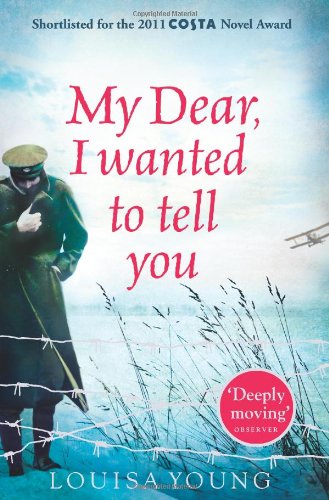
#BookReview ‘My Dear, I Wanted to Tell You’ by Louisa Young @rileypurefoy #WW1

My Dear, I Wanted to Tell You by Louisa Young is a Great War story of love/war, of duty/self-sacrifice, of denial of the truth and fear of change, of physical/mental scars. At the centre of the story is a lie told to protect. Louisa YoungRiley Purefoy and Nadine Waveney, children from different classes, meet in a London park. When war is declared, knowing the gulf in their backgrounds prevents them from marrying, Riley volunteers and goes off to war. In the trenches he meets commanding officer, Peter Locke, whose wife Julia and cousin Rose remain at home in Kent throughout the war. This is the story of these five people.
The first half of the book is a long set-up for the second half, when the interesting stuff begins. I made myself continue reading through the first half, and raced through the second. We see Riley and Nadine meeting, Riley’s transition from boy to teenager, his introduction to a new world. Nadine’s father is a famous conductor; their friends include musicians, writers and artists. He is taken under the wing of artist Sir Alfred who introduces him to art and music; good-looking Riley becomes a model for Sir Alfred and, fascinated by drawing and painting, leaves his old world behind. Peter deals with the trauma of the trenches by drinking and whoring, he is tight-lipped and distant with Julia who feels she must be doing something wrong to alienate him so.
I found Julia a most unsympathetic character; she has been encouraged to believe in her own prettiness, is unable to break away from her spoiled pre-war life and allows her mother to bully her and remove her baby from her care. Her plain cousin Rose trained as a nurse and, having worked at the front, is now based at the Queen’s Hospital in Sidcup. Rose, in danger of being a stereotype, later in the story faces a dilemma about patient confidentiality that elevates her character. Riley is promoted through the ranks, popular with the men, knowing the right thing to say, when to josh them along. He is fond of his CO, sees him safely home when he is drunk. One leave, he meets Nadine in London and their friendship is rekindled.
The turning point of the story is war injury and damage, and how everyone reacts to it. This is a serious book, not quite the romantic read it is billed. Particularly excellent are the passages about the Queen’s Hospital and the amazing work of surgeon Major Gillies in facial reconstruction. Some of the descriptive passages are clinical and shocking and are a stark contrast to Julia’s worries about beauty treatments. However there is a lot of internal monologue which became repetitive and I also found the constant swapping of viewpoint mid-paragraph a distraction from the fine historical setting.

If you like this, try:-
‘The Lie’ by Helen Dunmore
‘A Long Long Way’ by Sebastian Barry
‘Stay Where You Are and Then Leave’ by John Boyne

And if you’d like to tweet a link to THIS post, here’s my suggested tweet:
#BookReview MY DEAR, I WANTED TO TELL YOU by Louisa Young @rileypurefoy https://wp.me/p5gEM4-2Zg via @SandraDanby

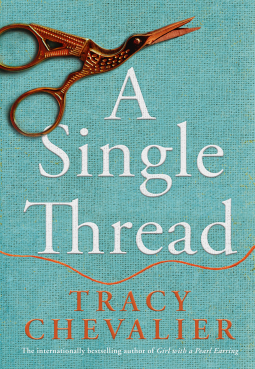
#BookReview ‘A Single Thread’ by Tracy Chevalier #historical

Winchester in 1932 is the setting for Tracy Chevalier’s latest novel, A Single Thread. Chevalier is the most reliable novelist I know, time and again she writes books I grow to love and to re-read. She is the true example of an iceberg novelist. The depth and detail of her research is invisible, hidden below the surface of the written word, but it is there nonetheless informing every sentence so the reader is confident that the description of various embroidery stitches is accurate. Chevalier has written about fossil hunters, weavers, runaway slaves, orchardists and a famous Dutch painter. In A Single Thread the story involves Winchester Cathedral, bell ringing and embroidery. Tracy ChevalierViolet Speedwell escapes her mother’s house in Southampton by getting a transfer to work in the Winchester office. Her mother is an emotional bully and Violet is desperate to get away, but not expecting it to be quite so difficult to survive alone on a typist’s salary. Lonely, desperate to make a success of her move, Violet looks for something to occupy her time so she does not have to sit with the other spinsters in the drawing room of her boarding house. One day she steps into the cathedral and finds her way blocked by an officious woman. Today, it is explained, is the Presentation of the Embroideries. Violet joins the broderers stitching kneelers and cushions for the hard benches, and meets two women who will be influential in her story; fellow borderer Gilda Hill, and genius embroidery designer Louisa Pesel.
Chevalier draws a picture of an English city in the years after the Great War, as families still grieve for their lost ones and women have to dance together for the shortage of male partners. And whilst the last war cannot be escaped, the shadow of fascism lurks in Europe. Violet is a surplus woman, her brother and fiancé killed in the war, but she rebels against the idea of devoting the rest of her life to caring for her bitter mother. Hence the move to Winchester. There she finds employment, friendship and, possibly, love. Both activities described in detail – the embroidery and the bell ringing – are detailed, complex and build slowly, layer on layer, each preceding stitch or note needing to be exact before the next one is attempted. This is reflected in Violet’s own life; only when she makes peace with her past, her mother’s grief for her lost son George, Violet’s own grief for her fiancé Laurence, the mind-numbing boredom of her job, can she move on to the next layer of her life.
Like all Chevalier’s novels, this is a thoughtful read about a time of great change involving women’s emancipation and independence, where women frown on other women who act against convention. If you like fast-moving stories then this may not be for you. I thought it was delightful and read it quickly, suspecting how it may end and – almost – being correct. But not quite.

Read my reviews of Tracy Chevalier’s other novels:-
AT THE EDGE OF THE ORCHARD
NEW BOY
THE GLASSMAKER
THE LAST RUNAWAY

If you like this, try:-
After the Party’ by Cressida Connolly
These Dividing Walls’ by Fran Cooper
Smash All the Windows’ by Jane Davies

And if you’d like to tweet a link to THIS post, here’s my suggested tweet:
#BookReview A SINGLE THREAD by https://wp.me/p5gEM4-40S via @SandraDanby

#BookReview ‘The Confessions of Frannie Langton’ by Sara Collins #historical

The Confessions of Frannie Langton by Sara Collins tells the story of a Jamaican woman enslaved as a child, exploited by two men and subsequently accused of murder in Georgian London. I am left with the feeling that this debut, though full of lush description and a distinctive heroine, is an ambitious story that would benefit from being given some air to breathe. Sara CollinsFrances Langton, house-slave at Paradise, a Jamaica sugar cane plantation. Frances Langton, housemaid in the home of a London scholar. Frances Langton, the mulatto murderess. Which is the real Frannie? A woman born into slavery in Jamaica then transported to London and gifted to another master, in each place she is studied and manipulated by two men who cannot agree on the pigment of negro skin, the intellectual capacity of blacks and whether they can be educated. There are hints about things that happened to Frannie in her past, things that she did to others – leading I think to the description of the book as ‘gothic’ – some of which are explained by the end, some of which remained vague to me.
This is Frannie’s story, told in her voice, written as she waits in gaol for her trial and written for her lawyer. But we never actually meet this lawyer, he remains a cardboard cut-out so Frannie’s version of the truth remains unverified.We read the sworn testaments of witnesses at her trial, are they the truth or spoken with prejudice and ulterior motives? The book is really two stories – Frannie’s exploitation at Paradise by two men who fancy themselves scientists, and her London lesbian love affair and the murder – that don’t fit together convincingly.
The best thing for me about the book is the character of Frannie, unlike anything I have read recently. The depth of research is evident in the detail but the pacing is unpredictable – Frannie’s voice in the beginning is spellbinding but the middle section is soggy – and I’m intrigued by the scientific exploration of racism. I wanted less of the laudanum addiction and romance between Frannie and her mistress and longed for the trial to be used as the spine on which to hang Frannie’s slave story. A slow read, but definitely an author to watch.

If you like this, try:-
The Mermaid and Mrs Hancock’ by Imogen Hermes Gowar
The Convenient Marriage’ by Georgette Heyer
The Cursed Wife’ by Pamela Hartshorne

And if you’d like to tweet a link to THIS post, here’s my suggested tweet:
#BookReview THE CONFESSIONS OF FRANNIE LANGTON by Sara Collins @mrsjaneymac https://wp.me/p5gEM4-3Us via @SandraDanby

A poem to read in the bath… ‘My Life’s Stem was Cut’ by Helen Dunmore #poetry

What a glorious, gentle, heartbreaking poem this is about dying. Helen Dunmore, novelist, poet, winner of the Orange Prize, died too soon on June 5, 2017. In a slim volume of poetry, Inside the Wave, I found ‘My Life’s Stem was Cut’. I defy you to read it without feeling a combination of sadness and hope.

Helen Dunmore

[photo: Caroline Forbes]

Because of copyright restrictions I am unable to reproduce the poem in full, but please search it out in an anthology or at your local library.

‘My life’s stem was cut,
But quickly, lovingly,
I was lifted up,
I heard the rush of the tap
And I was set in water
In the blue vase…’

Helen Dunmore


BUY

Read these other excerpts, and perhaps find a new poet to love:-
Because I Could Not Stop for Death’ by Emily Dickinson
Japanese Maple’ by Clive James
I Loved Her Like the Leaves’ by Kakinonoto Hitomaro

Read my reviews of Helen Dunmore’s novels, The Lie, Exposure, Birdcage Walk.

And if you’d like to tweet a link to THIS post, here’s my suggested tweet:
A #poem to read in the bath: ‘My Life’s Stem was Cut’ by Helen Dunmore https://wp.me/p5gEM4-428 via @SandraDanby

Great Opening Paragraph 119… ‘Peter Pan’ #amreading #FirstPara

“All children, except one, grow up. They soon know that they will grow up. And the way Wendy knew was this. One day when she was two years old she was playing in a garden, and she plucked another flower and ran with it to her mother. I suppose she must have looked rather delightful, for Mrs Darling put her hand to her heart and cried, ‘Oh, why can’t you remain like this for ever!” This was all that passed between them on the subject, but henceforth Wendy knew that she must grow up. You always know after you are two. Two is the beginning of the end.”
JM BarrieFrom ‘Peter Pan’ by JM Barrie

Try one of these #FirstParas & discover a new author:-
A Month in the Country’ by JL Carr 
These Foolish Things’ by Deborah Moggach 
‘I Capture the Castle’ by Dodie Smith

And if you’d like to tweet a link to THIS post, here’s my suggested tweet:
#Books #FirstPara PETER PAN by JM Barrie https://wp.me/p5gEM4-3Jw via @SandraDanby

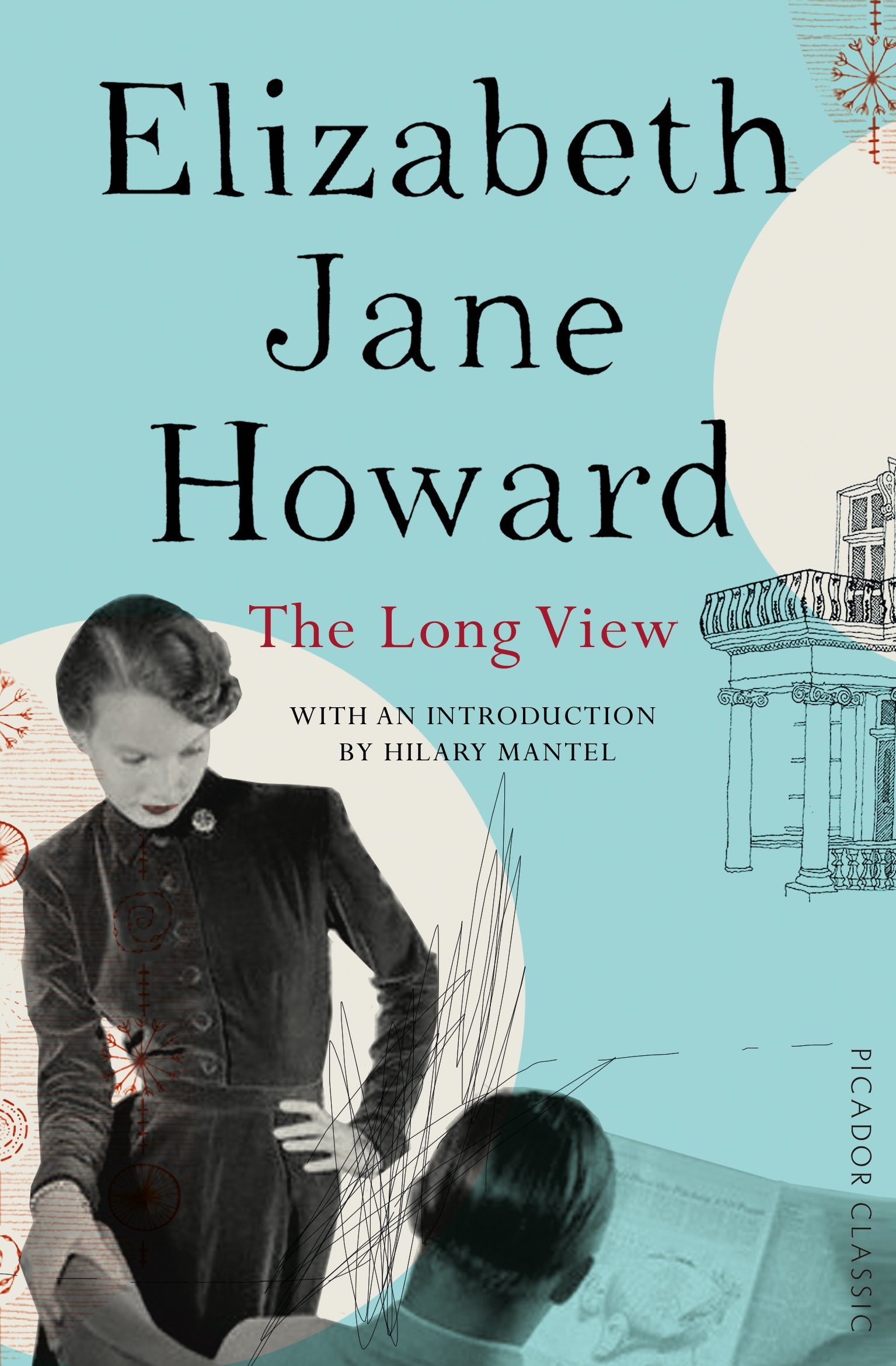
#BookReview ‘The Long View’ by Elizabeth Jane Howard #historical #marriage

The Long View by Elizabeth Jane Howard is not so much a ‘what happens next’ novel as ‘what has happened in the past to lead to this situation’ story. It is a novel about choices and where they can lead. Howard tells the story, backwards from 1950 to 1926, of the marriage of Antonia and Conrad Fleming. As the story starts, the marriage seems doomed and you cannot help but wonder how these two people ever got married in the first place. In fact, once I finished it I was tempted to read it again from back to front. Elizabeth Jane HowardThe first paragraph is a masterful example of scene setting. It opens with a dinner party to celebrate the engagement of Julian Fleming to June, who has secretly spent the afternoon alone at the cinema. As Antonia considers the complicated marital affairs of her son – and her daughter, Deirdre, who is pregnant by a man who does not love her – I wondered how her own marriage must have shaped her children’s handling of relationships and how hers, in turn, was shaped by her parents. I found Conrad an almost totally unsympathetic character, indeed in the first part he is referred to simply as Mr Fleming. ‘One of his secret pleasures was the loading of social dice against himself. He did not seem for one moment to consider the efforts made by kind or sensitive people to even things up; or if such notions ever occurred to him, he would have observed them with detached amusement, and reloaded more dice.’
This is very much a novel of its time in which middle-class women had limited choices. As a young woman, Antonia lacks the strength to break out. She is timid, feeling she has proved unsatisfactory for both her mother and father. ‘She grew up, therefore, feeling, not precisely a failure so much as an unnecessary appendage.’ Her mother bemoans her lack of interests [Antonia does have interests, simply not those of her mother] and her father her lack of intellect [but without stimulus of career or education]. We see the transition from hopeful, eager young girl experiencing first love, to weary, middle age when the ‘trees ahead so horribly resembled the trees behind, and the undergrowth of their past caught and clung and tore at them as they moved on.’
This is Howard’s second novel. I am most familiar with her later ‘Cazalet Chronicles’ series and there are some key comparisons to be made in the writing style. Sentences in The Long View are longer, paragraphs longer, and the style not as simple and nuanced as the later books. Viewpoint also shifts within paragraphs, a technique she changed for the Cazalets. This is not to say this spoiled my enjoyment of The Long View, it is perhaps an observation for writers rather than readers, but it shows an interesting development in the author’s writing style. And I particularly enjoyed the descriptions of Antonia’s horse rides in Sussex, countryside in which the Cazalet’s house, Home Place, is set.

Read my reviews of ‘The Cazalet Chronicles’, also by Elizabeth Jane Howard:-
THE LIGHT YEARS #1CAZALET 
MARKING TIME #2CAZALET
CONFUSION  #3CAZALET
CASTING OFF #4CAZALET
ALL CHANGE #5CAZALET

If you like this, try:-
‘The Past’ by Tessa Hadley
‘Offshore’ by Penelope Fitzgerald
‘Mothering Sunday’ by Graham Swift

And if you’d like to tweet a link to THIS post, here’s my suggested tweet:
#BookReview THE LONG VIEW by Elizabeth Jane Howard https://wp.me/p5gEM4-2ZS via @SandraDanby

A poem to read in the bath… ‘The Unaccompanied’ by Simon Armitage #poetry

The Unaccompanied is Simon Armitage’s first poetry collection in more than a decade during which he wrote drama, translation, travel articles and prose poetry. This collection doesn’t disappoint. It’s a mixture of familiar Yorkshire moors and sea, urban depression, Nature and human nature, globalisation and social media. His poems are accessible; at times witty and sad, they set the big questions of life against the small familiar details of every day.

Simon Armitage

Simon Armitage [photo: Paul Wolfgang Webster]

My favourite poem from this collection is ‘The Unaccompanied’. A walker at night stops to listen to the sound of singing, songs about mills and mines, myth and the mundane. It is a poem about heritage, about traditions spanning generations, from father to son, of the fathers that went before. It reminded me of traditional fishermen’s choirs, still popular on the East Yorkshire coast.

Because of copyright restrictions I am unable to reproduce the poem in full, but please search it out in an anthology or at your local library.

‘Wandering slowly back after dark one night
above a river, towards a suspension bridge,
a sound concerns him that might be a tune
or might not; noise drifting in, trailing off.’

Amazon

Simon Armitage


Read these other excerpts, and perhaps find a new poet to love:-
A thousand years, you said’ by Lady Heguri
Runaways’ by Daniela Nunnari
Digging’ by Seamus Heaney

And if you’d like to tweet a link to THIS post, here’s my suggested tweet:
A #poem to read in the bath: ‘The Unaccompanied’ by Simon Armitage https://wp.me/p5gEM4-3Rb via @SandraDanby

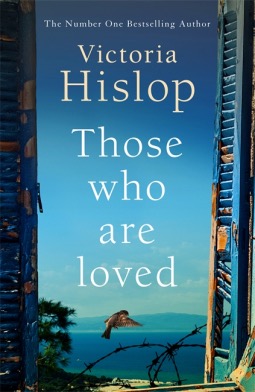
#BookReview ‘Those Who Are Loved’ by Victoria Hislop @VicHislop #Greece #historical

Those Who Are Loved by Victoria Hislop is the story of Themis Koralis from 1930 to 2016. Set in Greece it tells the troubled history of the country through the Second World War, occupation, Civil War and military dictatorship. They are harsh years; the country, its people and families are divided by beliefs, poverty and wealth. It is a long book, 496 pages, and a lot of history is covered. Victoria HislopThemis has two brothers – Panos and Thanasis – and a sister, Margarita; they live with their grandmother in the Athens district of Patissia. Their father is a merchant seaman and hardly comes home, their mother Eleftheria is in a psychiatric hospital; both appear briefly. Central to the home is Kyría Koralis. I enjoyed the descriptions of these early years in the apartment, the meals, the squabbling teenagers, Themis and her friendship with Fotini. But political beliefs are dividing the country and as the arguments grow in the Koralis apartment, they also divide the siblings. The divisions only get worse under German occupation, leading Panos and Themis to support the communists in the fight against the Nazis. Thanasis however becomes a policeman. Margarita, working in a dress shop, is secretly in love. Their political views, forged as teenagers, impact on the rest of their lives.
At times I struggled with this book, other sections I enjoyed. Perhaps this is because the linear narrative is driven by historical events which Hislop felt bound to include, and is not dynamic or character-driven. There are many peripheral characters who disappear without another mention and I found the middle section particularly slow, as if Themis is treading water before reaching the next phase of her life. The novel is effectively the life story of Themis, the history of Greece during her lifetime and its effect on her, and it includes a fascinating account of the post-WW2 communist rebellion in Greece, my knowledge of which was rather hazy. At times it is difficult reading and it is certainly thought-provoking; extreme views with two uncompromising sides unable to meet in the middle, quickly deteriorating to violence, cruelty and abhorrent behaviour.
Hislop is my go-to author for novels set in Greece. I finished Those Who Are Loved wishing she had chosen a specific phase of Themis’s life to concentrate on rather than the full 86 years. For me though, her subsequent novels cannot rival her debut The Island which I really must re-read again.

Read my reviews of other these books by Victoria Hislop:-
THE FIGURINE
THE STORY
THE SUNRISE

If you like this, try:-
Sweet Caress’ by William Boyd
Freya’ by Anthony Quinn
Quartet’ by Jean Rhys

And if you’d like to tweet a link to THIS post, here’s my suggested tweet:
#BookReview THOSE WHO ARE LOVED by Victoria Hislop @VicHislop https://wp.me/p5gEM4-40c via @SandraDanby 

My Porridge & Cream read Lexi Rees @lexi_rees #books #children

Today I’m delighted to welcome children’s author Lexi Rees. Her ‘Porridge & Cream’ read is The Hitchhiker’s Guide to the Galaxy by Douglas Adams.

“Thanks so much for inviting me to share my Porridge and Cream book. I actually have a special bookcase for my ‘permanent collection’ – the books I go back to over and over again – and it’s hard to narrow it down to just one but, for a pure comfort read, I’m going to go with Hitchhikers Guide to the Galaxy by Douglas Adams. I’m sure you know it: “So long, and thanks for all the fish” etc; but in a nutshell, Arthur Dent, in his dressing gown, gets whisked onto a spaceship when Earth is demolished for a hyperspace bypass.”Lexi Rees

“I vividly recall stumbling across the radio series on my way home from school one day in the 1980s. My dad and I sat in the car outside the house laughing our heads off so it has happy family memories, and it still makes me laugh. I listened to the rest of the series on the radio, then got a copy from the library. My own copy is from 1992. By the way, I also love the 2005 movie version – no book vs. movie arguments from me. It probably won’t surprise anyone, but Red Dwarf is my Porridge and Cream TV series. Why I don’t write sci-fi is a mystery!”
BUY
Lexi ReesLexi’s Bio
Lexi Rees writes action packed adventures for children. When not writing, she’s usually covered in straw or glitter, and frequently both. The first book in The Relic Hunters Series, Eternal Seas, was awarded a “loved by” badge from LoveReading4Kids and is currently longlisted for a Middle Grade readers award from Chanticleer. It’s best described as fantasy with a hint of dystopia. The sequel, Wild Sky, will be published in November and a Creative Writing Workbook will be out in October. She also runs a free club for kids designed to encourage a love of reading and writing.

Lexi’s links
Website
Facebook
Twitter
Instagram

Lexi’s latest book
Lexi ReesSuch a small parcel shouldn’t cause experienced smugglers much trouble. But, as Finn and Aria discover, this is the most dangerous delivery of their lives. Battered by storms and chased across the globe by an evil warlord, they enlist the help of a strange witch-doctor. Together, they struggle to solve the mystery while the fate of an ancient civilisation depends on them, and time is running out…
Eternal Seas [The Relic Hunters book 1] is a thrilling adventure for children aged seven to twelve.
BUY

What is a ‘Porridge & Cream’ book? It’s the book you turn to when you need a familiar read, when you are tired, ill, or out-of-sorts, where you know the story and love it. Where reading it is like slipping on your oldest, scruffiest slippers after walking for miles. Where does the name ‘Porridge & Cream’ come from? Cat Deerborn is a character in Susan Hill’s ‘Simon Serrailler’ detective series. Cat is a hard-worked GP, a widow with two children and she struggles from day-to-day. One night, after a particularly difficult day, she needs something familiar to read. From her bookshelf she selects ‘Love in A Cold Climate’ by Nancy Mitford. Do you have a favourite read which you return to again and again? If so, please send me a message.

Discover the ‘Porridge & Cream’ books of these authors:-
Toni Jenkins’ choice is ‘Eat Pray Love’ by Elizabeth Gilbert
Jane Davies chooses ‘The Prince of Tides’ by Pat Conroy
The Shell Seekers’ by Rosamunde Pilcher is chosen by Carol Warham

And if you’d like to tweet a link to THIS post, here’s my suggested tweet:
Why does children’s author @lexi_rees re-read THE HITCHHIKER’S GUIDE TO THE GALAXY by Douglas Adams? #books https://wp.me/p5gEM4-40i via @SandraDanby