My Porridge & Cream read @carol_warham #books #romance

Today I’m delighted to welcome romance novelist Carol Warham. Her ‘Porridge & Cream’ read is The Shell Seekers by Rosamunde Pilcher.

“The paperback cover is creased and bent and its pages are yellowing, almost looking tobacco stained. But, this well-thumbed novel [below] has been on my book shelf for about twenty years. Nothing would induce me to discard my copy of The Shell Seekers by Rosamunde Pilcher, not even the offer of a brand new copy. Carol Warham

“This lovely story sustained me through the years of family stress and trauma – all thankfully over and everyone is very happy. When life was proving too much and I needed an escape this was my ‘go to’ book.

“The story revolves around Penelope Keeling, daughter of a well-known artist, and mother of three very different children. Olivia is both tough and vulnerable, Noel is careless and ruthless. The eldest daughter, Nancy, is embittered by greed and jealousy. Penelope’s most treasured possession is her father’s painting of ‘The Shell Seekers’ which depicts her as a child. This painting is now worth a small fortune and that knowledge throws her family into disarray.

“This gentle story follows the slightly bohemian Penelope and Antonia and Danus, the young people, who become central to her life. It moves between the beautiful county of Cornwall and busy London, as each chapter is given over to the different characters whose lives are woven around her. Eventually Penelope feels she must make the decision about the painting and where it should go.

“This is a novel, which I could escape into and gave me many hugs.”
BUY
Carol Warham’s Bio
Writing has been Carol’s love since childhood. She started by making small comics for her dolls, progressed to training as a journalist for a short while. Once the family had grown up Carol settled down to writing and published short stories, poems and holiday articles. In recent years she has become a judge in the short story section for the HysteriaUK competition and also for the RNA’s romance novel of the year. These days she is very involved volunteering for the Huddersfield Literature Festival and writing her second novel. Carol lives in Yorkshire, surrounded by some beautiful countryside, which is ideal for her other passion of walking, often with a dog called Sam. This lovely area is the location for her first novel, Resolutions.

Carol Warham’s links
Facebook
Twitter
Blog
Publisher

Carol Warham’s latest book
Carol WarhamCarly Mitchell returns to the small town of Yeardon in Yorkshire almost a year after running away on her wedding day. Now she wants to try to make amends with Steve, his family, and the townspeople who had prepared a huge party to celebrate her New Year’s Eve wedding. She intends to stay only for a few days at the Resolution Hotel. However, her plans change when Steve’s father is taken ill, and she steps in to help. This also means having to deal with Steve’s antagonism since he has never forgiven her for humiliating him. A further complication comes in the form of Ben Thornton, the local doctor, to whom Carly feels an immediate attraction. They enjoy getting to know each other and falling in love, until a famous model from Ben’s past arrives in the town, and stays at the hotel. Steve attempts to get his revenge on Carly by driving a wedge between her and Ben, and by threatening to reveal what he knows about Ben’s troubled past unless Carly leaves town. The resolution lies in Carly’s hands as she struggles between wanting to flee or staying with the man she loves.
BUY
What is a ‘Porridge & Cream’ book? It’s the book you turn to when you need a familiar read, when you are tired, ill, or out-of-sorts, where you know the story and love it. Where reading it is like slipping on your oldest, scruffiest slippers after walking for miles. Where does the name ‘Porridge & Cream’ come from? Cat Deerborn is a character in Susan Hill’s ‘Simon Serrailler’ detective series. Cat is a hard-worked GP, a widow with two children and she struggles from day-to-day. One night, after a particularly difficult day, she needs something familiar to read. From her bookshelf she selects ‘Love in A Cold Climate’ by Nancy Mitford. Do you have a favourite read which you return to again and again? If so, please send me a message.

Discover the ‘Porridge & Cream’ books of these authors:-
Julie Ryan’s choice is ‘The Magus’ by John Fowles
Simon Fairfax chooses ‘Heller with a Gun’ by Louis L’Amour
Night Watch’ by Terry Pratchett is chosen by Rhoda Baxter

And if you’d like to tweet a link to THIS post, here’s my suggested tweet:
Why does romance author @carol_warham re-read THE SHELL SEEKERS by Rosamunde Pilcher? #books https://wp.me/p5gEM4-3Z7 via @SandraDanby

#BookReview ‘On a Night Like This’ by @BarbaraFreethy #romance #contemporary

On a Night Like This is the first in The Callaways series by Barbara Freethy about the extended American-Irish Callaway clan in San Francisco. Freethy is a new author for me, a best-selling American author of romantic drama. I would class this as a feel-good holiday romance, so not my usual choice. Freethy is an expert at writing series, which lock the reader into the characters. Barbara FreethyThe basis of the story is the relationship between Aiden Callaway, smokejumper, and Sara Davidson, lawyer, who grew up next to each other in San Francisco. Aiden is an alpha-male, adventurous, a risk-taker, who has never taken a woman with him to his secret camping ground in the wilds north of Napa Valley. Sara is a workaholic New York lawyer who rarely lets anyone get emotionally close. This is a story of opposites attract. At times I found their connection unconvincing, as it seemed to be purely chemical and physical. Sara had a teenage crush on Aiden which re-emerges when she revisits her widowed father in her childhood home next door to the Callaways. When a fire damages the house and her father is in hospital, Sara and Aiden are thrown together. This is a light romance mixed with a little mystery: three weeks before the two meet, Aiden is involved in a tragic fire where his best friend and fellow smokejumper Kyle died. Aiden’s colleagues blame him for Kyle’s death but Aiden cannot remember what happened and so refuses to defend himself. His loyalty to Kyle is admirable, but misguided. Sara, as the clear-thinking lawyer, encourages him to question the facts of what happened.
The setting and storyline reminded me of Anita Shreve, but without the depth of story or emotional heft, and with too many sculptured abs. The longing of Sara for Aiden became repetitive and needy, they seem such an unlikely pairing. The storyline of Sara’s rift with her father, however, was worth more page space. So, this is a pleasant light romantic read. I enjoyed the interaction of the feisty Callaway family and wanted more of them; particularly fire investigator Emma and the story of the disappearing nun and burnt-down primary school [sadly, this storyline was left unresolved]. Freethy is a hugely popular author but this book felt rather as if she was writing by numbers.

If you like this, try:-
‘Butterfly Barn’ by Karen Power
59 Memory Lane’ by Celia Anderson
‘The Stars are Fire’ by Anita Shreve

And if you’d like to tweet a link to THIS post, here’s my suggested tweet:
#BookReview ON A NIGHT LIKE THIS by @BarbaraFreethy https://wp.me/p5gEM4-35f via @SandraDanby

#BookReview ‘Pattern of Shadows’ by Judith Barrow #historical #WW2

The first instalment of Judith Barrow’s Mary Howarth series is Pattern of Shadows, a historical romance set in World War Two Lancashire that explores the  challenges and new opportunities for women in wartime. Set against a male-dominated background where the aspirations of working class women have traditionally been put second, war brings change and some people adapt better than others. Judith BarrowMary is a nursing sister in the hospital attached to a prisoner of war camp, nursing German soldiers captured and injured in action. Some people find that challenging but for Mary it is a satisfying and fulfilling job. Things get complicated when she attracts the attention of two men who could not be more different. One night Mary meets Frank Shuttleworth, a guard at the POW camp and, thanks to a combination of unforeseen circumstances, runs to a shelter with him during a bombing raid. This evening has far-reaching consequences for Mary and her flighty younger sister Ellen. There are tensions at home too with her argumentative irascible father and defeated mother, as Tom her older brother is in prison as a conscientious objector and her younger brother, injured fighting, must now work as a coal miner. Meanwhile a new German doctor arrives at the hospital. With two choices in front of her, Mary must decide whether to do what is expected or defy convention, to be loyal to her family who are not always loyal to her, or to be selfish and do something for herself.
A well-paced story combining stalking, prejudice, domestic violence, homophobia, poverty and family strife, Mary is the only unselfish, balanced person in her family. Will she finally put herself first? This is at times a grim story set at a difficult time and at first I worried this was misery fiction and longed for an occasional bright light. But the setting and time period are so well researched I soon relaxed into the story as the character of Mary and her predicament drew me in. I admire her stubbornness, her selflessness and loyalty, above all her bravery. Sometimes she is misguided, always well-intentioned, I look forward to reading more about Mary in Changing Patterns, the sequel.

If you like this, try:-
After the Bombing’ by Clare Morrall
Homeland’ by Clare Francis
The Aftermath’ by Rhidian Brook

And if you’d like to tweet a link to THIS post, here’s my suggested tweet:
#BookReview PATTERN OF SHADOWS by Judith Barrow #books https://wp.me/p5gEM4-3Ul via @SandraDanby

First Edition: ‘Couples’ by John Updike #oldbooks #bookcovers

John Updike became popular for his Rabbit series about Harry ‘Rabbit’ Angstrom and the film of his book, The Witches of Eastwick, starring a devilish Jack Nicholson. But Couples, first published in 1968 in the USA by Knopf [below], is hailed as the novel which brought the Sixties sexual revolution to literary fiction. First editions of the Knopf hardback can be found on eBay for $15, and £15 on Amazon UK. Perhaps one to lay down for the future? Updike won the Pulitzer Prize for Fiction twice, in 1982 and 1991, for two of his Rabbit books.

John Updike

Couples Knopf 1968 1st ed

The current UK Penguin Classics edition [below] dates from 2007. Buy

John Updike

Couples Penguin Classics 2007 current ed

The story
It is 1962 in Tarbox, Massachusetts. Against a backdrop of real historical events – the loss of the USS Thresher in 1963, the Profumo Affair, the Kennedy assassination – a group of ten promiscuous couples struggle to reconcile modern sexual freedoms with established Protestant sexual behaviour. The lyrical descriptions of sex made the book rather notorious. When asked about the difficulties of writing about sex, Updike said, “They were no harder than landscapes and a little more interesting. It’s wonderful the way people in bed talk, the sense of voices and the sense of warmth, so that as a writer you become kind of warm also. The book is, of course, not about sex as such: It’s about sex as the emergent religion, as the only thing left.”

Other editions 

John Updike

Couples – my Penguin 1981 ed

Above is my edition of Couples, Penguin UK 1981 and, below, a variety of covers UK, US and international editions from 1968 to today.

Read the first paragraph of Couples.

If you like old books, check out these:-
‘The Moonstone’ by Wilkie Collins
‘1984’ by George Orwell
‘Mrs Dalloway’ by Virginia Woolf

And if you’d like to tweet a link to THIS post, here’s my suggested tweet:
First Edition: COUPLES by John Updike #oldbooks #bookcovers https://wp.me/p5gEM4-3HJ via @SandraDanby

#BookReview ‘The Invitation’ by Lucy Foley #romance #historical

A romance, almost an anti-romance, The Invitation by Lucy Foley is a poignant novel with two parallel stories of dangerous obsession and fantasy. Lucy FoleyHal, who has drifted to Rome after serving in the Royal Navy in World War Two, leads a cheap life, surviving on writing assignments, living in a cheap area, Trastevere. One day he accepts from a friend an invitation to a party, an invitation the friend is unable to use. Arriving in his dusty suit, Hal feels apart from the glamour and wealth on show, the jewels, the gowns, the dinner suits. There he sees an enchanting, puzzling young woman who appears icy, untouchable, out of reach.
They meet again when Hal is invited by the hostess of the Rome party, the Contessa, to be attached as journalist to the forthcoming promotional tour for her film, The Sea Captain. They are to sail along the coast to Cannes where the film will be premiered at the film festival. Invitations, accepted and refused, feature frequently throughout the novel, forcing decisions to be made, plans changed, opportunities grasped. The close proximity of the group of disparate passengers begins to unveil secrets, cracks in carefully-controlled behaviour, shameful secrets and lies. As well as Hal and the Contessa, on board are the ageing, artistic film producer; the ageing, drunk leading man; the glamorous siren-like leading lady; the pale beaten-down photographer; the husband and wife investors; and Roberto, the Contessa’s skipper.
Within this story of a coastal journey is a story-within-a-story, the love story on which The Sea Captain is based. A sea captain returning home from a victorious naval battle rescues a drowning figure. Once on board, it is realised it is a naked woman. The captain is captivated by her, his crew fear she is a witch and will bring bad luck. On land, the captain keeps the woman as his mistress, given everything she might wish, in a lavishly-decorated house. It is a morality tale of the perils of attempting to mould another person into something you want but which they are not. This tale of the gilded cage echoes throughout the novel. So will true life mirror the film version of the story, or the true story? Of course a film is fictional, the truth being manipulated for dramatic effect, something which cannot be done with true secrets which have a way of making themselves known.
A sad, subtle tale of warning about obsessive love, fantasy and longing.

Read my reviews of these other Lucy Foley novels:-
THE GUEST LIST
THE PARIS APARTMENT

If you like this, try:-
‘The Believers’ by Zoe Heller
‘The Tea Planter’s Wife’ by Dinah Jeffries
‘A Mother’s Secret’ by Renita d’Silva

And if you’d like to tweet a link to THIS post, here’s my suggested tweet:
#BookReview THE INVITATION by Lucy Foley https://wp.me/p5gEM4-3hU via @SandraDanby

SaveSave

SaveSave

SaveSave

SaveSave

#BookReview ‘The Convenient Marriage’ by Georgette Heyer #Regency #Romance

This is my first Georgette Heyer novel and I thoroughly enjoyed it. The Convenient Marriage is a standalone Regency romance although Heyer wrote many historical romances and detective fiction; some as one-off novels others as series. I didn’t know what to expect from The Convenient Marriage but right from the off I loved Horry Winwood. She is cheeky and clever, charming and brave. Georgette HeyerThe story starts with the three Winwood sisters. The eldest Elizabeth has agreed to receive the attentions of Lord Rule, knowing he intends to propose. But Lizzie wants to marry her impoverished soldier beau Lieutenant Edward Heron. The Winwood family is destitute due to the gambling habit of their brother Pelham and Lizzie knows the marriage will save the family. Her sister Charlotte will not consider marrying Rule and Horatia, or Horry, is too young being only seventeen. Until Horry, so named after her godfather Horace Walpole, uses her initiative and visits Rule. She proposes that she marry him so Lizzie is free to marry Edward. And so the convenient marriage takes place.
The real story is what happens next. Horry is a bit of a minx, getting into trouble, playing cards and generally doing things a wife shouldn’t do. And despite always expecting the disapproval of Rule, she cannot seem to stop getting into trouble. Motivated by gossip about Rule’s mistress, Horry takes more risks but her gallant brother Pel is on hand to help.
If you like fizzing, humorous romances tossed together with convincing Regency details, you will love this; the dresses, the hair styles, the wigs, the manners, the food. Regency London seems full of chaotic parties with dancing, music, cards and flirting. An exuberant escapist book, ideal for transporting you to another time far away from your everyday life.

If you like this, try these:-
‘Christmas Pudding’ by Nancy Mitford
‘An Appetite for Violets’ by Martine Bailey
The Wicked Cometh’ by Laura Carlin

And if you’d like to tweet a link to THIS post, here’s my suggested tweet:
#BookReview THE CONVENIENT MARRIAGE by Georgette Heyer https://wp.me/p5gEM4-3zU via @SandraDanby

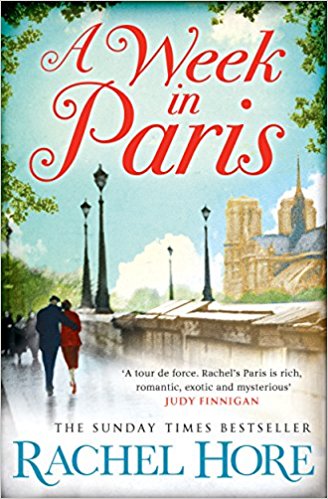
#BookReview ‘A Week in Paris’ by Rachel Hore @Rachelhore #mystery #WW2

I really enjoyed this book but can’t help feeling the title did it no favours. A Week in Paris by Rachel Hore is a story of hidden secrets, wartime Paris, resistance, collaboration, bravery and music. Because of the title I was expecting something more cosy and romantic; although there is a romantic strand to the story, this book is worth reading for so much more. Rachel HoreThe week in Paris in question happens in 1956 when teenager Fay goes on a school trip to Paris. Two significant things happen to her there. She meets a fanciable boy, Adam, and has a strange fainting episode triggered by the ringing of the bells at Notre Dame. Back home, she questions her mother Kitty who denies that Fay has ever been to Paris. But Fay cannot shake off the feelings of familiarity.
In 1961 Fay, now a professional violinist, has the chance to go to Paris for a series of performances. However her mother, always emotionally vulnerable, has taken an accidental overdose and is in St Edda’s Hospital. Before she leaves for Paris, Fay visits her mother who tells her to look at the bottom of a locked trunk at home. In it, Fay finds a small canvas rucksack. Attached to it is a label. On one side is written ‘Fay Knox, Southampton’, on the reverse, ‘Convent Ste-Cécile, Paris.’
‘She sat staring at the label for some time, while the faintest glimmer of a memory rose in her mind. Sunshine falling on flagstones, the blue robes of a statuette, and… but no, it was gone. It was as though a door had opened, just a chink, in her mind, before it shut again.’
The story is told in two strands, World War Two and afterwards, from the viewpoints of Kitty and Fay. Gradually the mysteries are unveiled. Fay has the unsettling feeling that her mother is keeping secrets, while Kitty knows she must some day explain everything to her daughter. For a long time, the reader keeps guessing.
In Paris, Fay sets off to find the convent mentioned on the label. There she slowly unravels the truth. How, despite denying to Fay that she has ever been to France, Kitty went to Paris in 1937 to study piano at the Conservatoire. What follows is an unveiling of a secret life during the Second World War, a time when Fay was a toddler, a time her mother told her they lived in a pretty cottage in Richmond. The real story of Kitty’s pre-war life in Paris, her meeting and love affair with Fay’s father Eugene, and what happened next, is fascinating. Again, Fay experiences feelings of déjà vu but this time she is old enough to seek the answers. She never imagined the truth she discovers.
I found myself picking up the book at every opportunity, just to read another couple of pages. It is a fascinating study of wartime secrets being kept from the next generation, not in an attempt to deny but as a way of pushing away the pain, grief and shame of what happened in an occupied city.

Click the title to read my reviews of other books by Rachel Hore:-
A BEAUTIFUL SPY
ONE MOONLIT NIGHT
THE HIDDEN YEARS
THE LOVE CHILD

If you like this, try these:-
‘The Ballroom’ by Anna Hope
‘The Book of Lies’ by Mary Horlock
‘In Another Life’ by Julie Christine Johnson

And if you’d like to tweet a link to THIS post, here’s my suggested tweet:
#BookReview A WEEK IN PARIS by @Rachelhore http://wp.me/p5gEM4-2RH via @SandraDanby

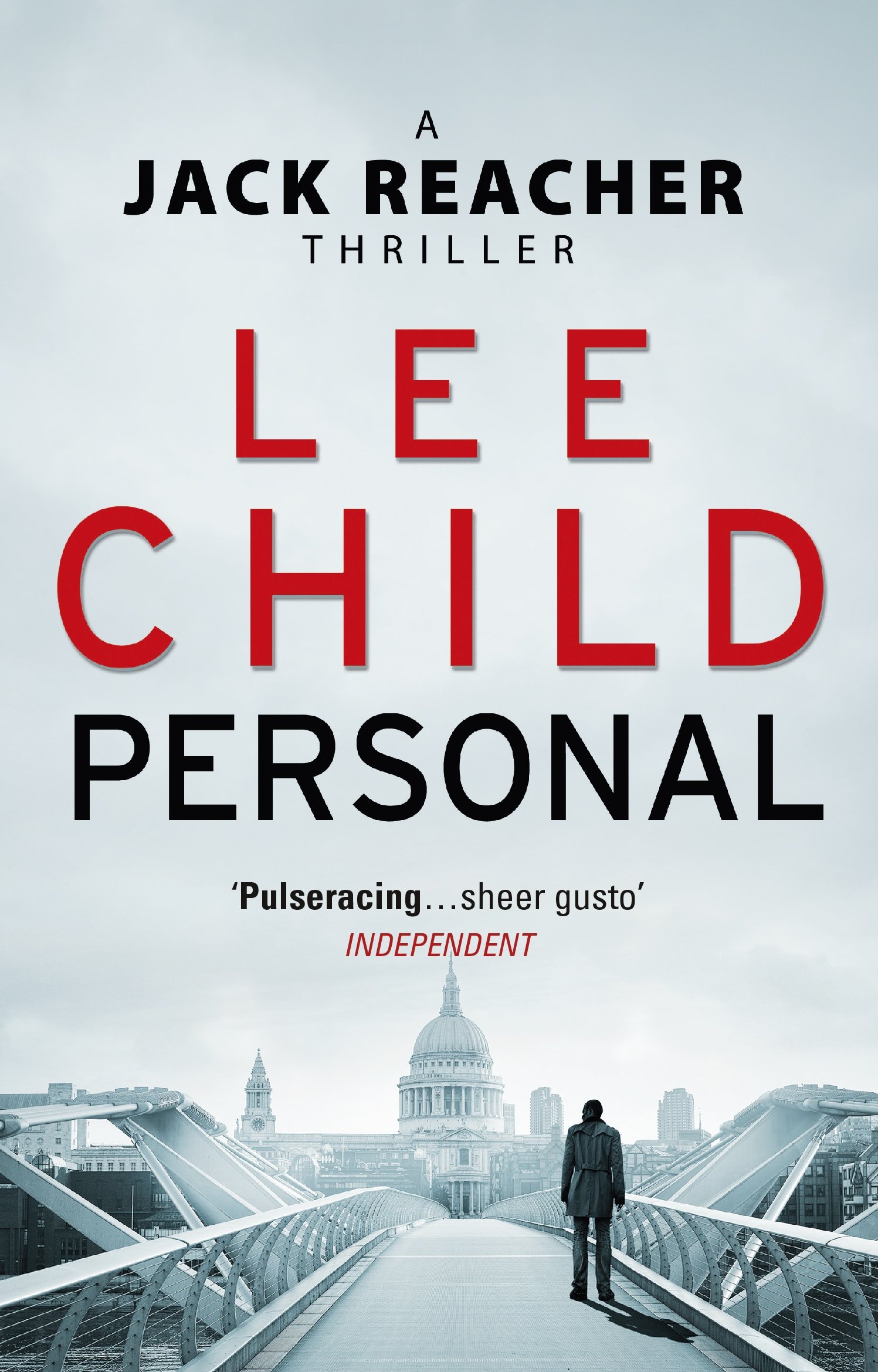
Great Opening Paragraph 117… ‘Personal’ #amreading #FirstPara

‘Eight days ago my life was an up and down affair. Some of it good. Some of it not so good. Most of it uneventful. Long slow periods of nothing much, with occasional bursts of something. Like the army itself. Which is how they found me. You can leave the army, but the army doesn’t leave you. Not always. Not completely.’
Lee ChildFrom ‘Personal’ by Lee Child

Try one of these #FirstParas & discover a new author:-
‘Sea Glass’ by Anita Shreve
‘The Curious Incident of the Dog in the Night-Time’ by Mark Haddon
‘American Psycho’ by Brett Easton Ellis

And if you’d like to tweet a link to THIS post, here’s my suggested tweet:
#Books #FirstPara PERSONAL by @LeeChildReacher https://wp.me/p5gEM4-3gI via @SandraDanby

#BookReview ‘Munich’ by @Robert___Harris #spies #WW2 #thriller

Robert Harris is a classy thriller writer at the top of his game. Munich is his re-telling of the September 1938 meetings between British Prime Minister Neville Chamberlain and German Chancellor Adolf Hitler. Both had public, and private, objectives. Chamberlain was a pragmatist; though he sought peace, he was prepared to accept a delay of war to enable our woefully-equipped armed forces to prepare. Hitler wanted all of Europe for Aryans, which meant war. All of this is well-documented. But Harris takes two fictional characters and places them into this real history, splicing their personal stories into the political drama. Robert HarrisHugh Legat and Paul von Hartmann met at Oxford in the early Thirties. In 1938, Legat is a junior private secretary to Chamberlain. Hartmann holds a similar position in the German government; he is also part of the anti-Hitler movement. They two men have not spoken or seen each other since a holiday in Munich with a girlfriend. We do not know why. Everyone in this story faces a personal decision of conscience: whether to be loyal to country, self, and family, or betray them. The costs are different for each person. For some; death. For others; isolation, loss of job, loss of family, loss of self-respect.
Chamberlain and Hitler meet in Munich with Mussolini and Daladier to settle the fate of the Sudetenland in Czechoslovakia. We are party to a fascinating game of chess as the diplomats and civil servants behind each of the leaders struggle to find a way through the opposition’s refusals and disagreements. The subtle tensions and pettiness within the teams, the one-upmanship, the jealousies, the cliques – which anyone who has worked in management will recognise – remind us that these politicians are ordinary people with an extra-ordinary job to do. If they fail, millions will die. Chamberlain is portrayed as a dedicated, workaholic who is desperate to avoid another war less than twenty years after the end of the Great War.
I read this over a weekend, the last pages flew by as Legat and Hartmann sneak around Munich, hiding secret documents and running from the Gestapo. This is a meticulously-researched literary thriller where the tension comes partly from our own knowledge of the outcome and our understanding that, whatever words the British present, Hitler’s mind is made up. Chamberlain will give his ‘peace in our time’ speech. But to find out what happens to the fictional Hugh and Paul, we must read to the end.

Read my reviews of these other thrillers, also by Robert Harris:-
AN OFFICER AND A SPY
V2

If you like this, try:-
‘The Travelers’ by Chris Pavone
‘Darktown’ by Thomas Mullen
‘The Long Drop’ by Denise Mina

And if you’d like to tweet a link to THIS post, here’s my suggested tweet:
#BookReview MUNICH by @Robert___Harris https://wp.me/p5gEM4-357 via @SandraDanby

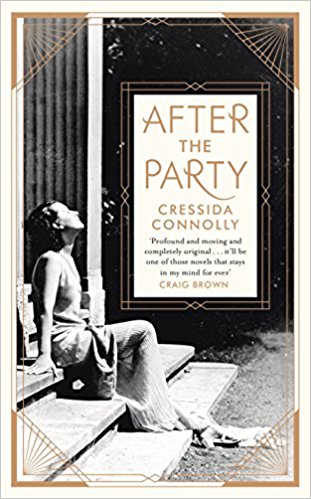
#BookReview ‘After the Party’ by Cressida Connolly #historical #Thirties

After the Party by Cressida Connolly is set in a difficult period of British history. It starts gently, lulling you into a sense that it is about three sisters, which it is, but it is also an uncomfortable story of pre-World War Two politics. From the first page, we know that Phyllis Forrester was in prison. In 1979, Phyllis looks back cryptically at what happened to her and her sisters, Patricia and Nina, in the Thirties. Why she was imprisoned is the question that made me keep reading. All we know is that someone died. Cressida ConnollyIn 1938, Phyllis and her husband Hugh return to live in England after years working abroad. They settle in West Sussex near Nina and Patricia. At a loose end, Phyllis is drawn into the peace camps organised by Nina; it is something to do over the summer, there are educational talks to attend and activities for the children. Nina is an organiser with a clipboard. Phyllis revels in their rented house at Bosham beside the sea, until Hugh buys a patch of land on which to build a house. At a dinner party thrown by Patricia, Phyllis meets a new friend, Sarita Templeton. “She said her ‘esses’ softly, so that ‘crazy’ sounded like ‘craissy’ and ‘is like ‘iss’.” Phyllis and Hugh are drawn into the circle of The Party, which the author has still not named. It is only the appearance of ‘The Leader’ or the ‘Old Man’ that tells us what we suspect, this is Oswald Mosley and The Party is the British Union of Fascists. Sarita does not appear much, but she is a key influence on Phyllis.
All is not well with the sisters, demonstrated by Connolly with concise words and a slight of hand. The three women have driven from Sussex to Buckinghamshire to visit their father who is in hospital after a fall, his future is uncertain as is that of their weak dependant mother. “Before they arrived at the hospital Patricia brought out her lipstick and compact and dabbed her nose with powder. Even from the back of her head Phyllis could tell that this small display of vanity was annoying to Nina. ‘Will I do?’ she asked Phyllis, turning her head. ‘No smudges?’ In actual fact she had applied the powder more thickly on one side of her nose, but Phyllis did not say so.”
The titular party is held by Sarita and Fergus Templeton. Sarita loves parties, Phyllis hasn’t been to one for years and Hugh, her husband, hates them. So a scene of conflict approaches, set amongst a background of Oswald Mosley and the British Union of Fascists. Why is Phyllis in prison? Did she murder someone? One of her sisters? Her husband? Mosley?
This is not a thriller but there are obfuscations which are misleading, especially at the beginning, which affect the pace of the story and left the second half slower to read. Is the delay in mentioning Oswald Mosley intended to add tension, or because the author feared it may deter people from reading the novel? The light hand with which the British Union of Fascists is portrayed was difficult to read, partly because I never understood Phyllis’ motivation for joining The Party. She seems to drift into it, but could she really be that naïve? Much better I think to address it head-on rather than have Phyllis refer to ugly incidents in passing.
I expected to enjoy After the Party more than I did. Perhaps the time was so vile that writing about it in an entertaining way is impossible. The novel is awkward but perhaps that reflects the character of Phyllis, as she is our narrator. It does make you think ‘what would I have done if I was her?’ The ending, though is an anti-climax, given the stakes were raised so high on the second page. “Had it not been for my weakness, someone who is now dead could still be alive. This is what I believed and consequently lived with every day in prison.”
A thought-provoking novel.

If you like this, try:-
‘Wigs on the Green’ by Nancy Mitford
‘Corpus’ by Rory Clements
‘Our Friends in Berlin’ by Anthony Quinn 

And if you’d like to tweet a link to THIS post, here’s my suggested tweet:
#BookReview AFTER THE PARTY by Cressida Connolly https://wp.me/p5gEM4-3sU via @SandraDanby