Tag Archives: 17th century novels

#BookReview ‘The Other Gwyn Girl’ by Nicola Cornick @NicolaCornick #historical

I loved The Other Gwyn Girl by Nicola Cornick. More specifically, I loved the character of Rose, sister of the more famous Nell Gwyn. Cornick has written a wonderful timeslip novel piecing together the story of the real Rose Gwyn from scarce historical documents and combining it with a modern story mirroring the major themes. Love, celebrity, betrayal, royalty, loyalty and jewellery. Nicola CornickIn 1671, famed royal mistress Nell Gwyn has come a long way from selling oranges. Her older sister however is not so lucky in love. Rose Cassells, nee Gwyn, is in prison for the third time in her life; the first time for stealing a loaf of bread, the second as a debtor. Her third imprisonment is for treason; entangled by her highwayman husband into joining a plot to steal the Crown Jewels. The plot fails. Rose is caught and imprisoned in the infamous Marshalsea prison.
The present day story is about another pair of sisters. Jess Yates, sister of TV reality star Tavy, is newly single again after separating from her boyfriend who is now in prison for fraud. Jess needs a clean break while she works out what to do with her life. She accepts Tavy’s offer of moving to Fortune Hall as housekeeper. Tavy bought this rundown mansion as the setting for her new reality television series. Longing for peace and quiet, Jess steps into a whirlwind of celebrity life. Tavy is filming a new episode and is surrounded by cameramen and hangers-on. Her team includes loyal assistant Ed and physic Francesca, Jess and Tavy’s mother Una, and Tavy’s model boyfriend Hunter. Whilst Tavy broadcasts on social media the smallest intimate details of her life at Fortune Hall where she pretends to live – she dislikes the house, regrets buying it and is away from home as often as possible – librarian and archivist Jess retreats to the house’s dusty old library. Like Nell and Rose, Jess and Tavy are personality opposites.
Connections between the two storylines seem miles apart at the beginning, though some parallels become clear quite quickly, which presents even more possibilities and increases the tension. There are satisfying flirtations and hints of romance, handsome heroes, dastardly villains and at the centre of it all, two impressive mansions.
The spine of the 17th century strand is historical truth. The two Gwyn sisters, unalike in character but bonded by blood and shared childhood, raised by a drunken widowed mother in poverty. The theft of the Crown Jewels in a plot organised by Sir Thomas Blood with the help of thief John Cassells. Blood is later mysteriously pardoned by King Charles II, lover of Nell Gwyn. John Cassells disappears. Little is known of Rose Gwyn and Cornick has used this vacuum to create a page-turning mystery with satisfying tension, betrayals, rescues, love, sacrifices and murder. The historical setting is fascinating and Cornick writes sensitively about grief, loss and regret, but also about the things women had to do at that time to survive.
The ending is surprising, satisfying, with the correct element of mystery and the receiving of just desserts. This is a wonderful read about, for me, an unfamiliar period of history.

Read my reviews of these other novels by Nicola Cornick:-
THE FORGOTTEN SISTER
THE FOURTH QUEEN
THE LAST DAUGHTER
THE SECRETS OF THE ROSE
THE WINTER GARDEN

If you like this, try:-
‘The Wicked Cometh’ by Laura Carlin
‘Disobedient’ by Elizabeth Fremantle
‘The Photographer’s Wife’ by Suzanne Joinson

And if you’d like to share a link:
#BookReview THE OTHER GWYN GIRL by Nicola Cornick @NicolaCornick https://wp.me/p2ZHJe-81n via @SandraDanby

COMING SOON… THE NEXT BOOK I REVIEW WILL BE:- Percival Everett

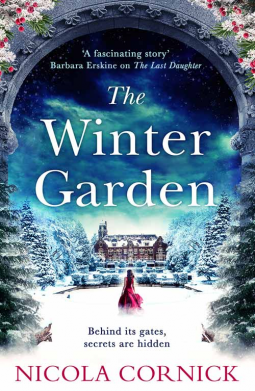
#BookReview ‘The Winter Garden’ by Nicola Cornick @NicolaCornick #historical

A timeslip novel that slips effortlessly between now and 1605, The Winter Garden by Nicola Cornick is an intriguing mixture of the Gunpowder Plot, garden history, archaeology and spookiness. Nicola CornickLucy, recovering from a viral illness that has forced her to give up her career as a professional violinist, is recuperating at Gunpowder Cottage, home of her absent Aunt Verity. Verity has commissioned a garden archaeologist to investigate links to the original house on the land, said to have belonged to Robert Catesby, one of the Gunpowder plotters, and his wife Catherine. Lucy, weak and depressed, is upset to find her bolthole is not as isolated as she expected. But she soon becomes pulled into the mystery of the garden and the story of the Catesbys. When Lucy gets the chills and sees the figure of a woman in a cloak and the outline of a beautiful winter garden full of snow and frost, she’s unsure if she is hallucinating and on medication that doesn’t agree with her. As Finn, the architect, and Johnny his assistant, explain more about their discoveries, Lucy finds herself pulled into the mystery and becomes a researcher of historical documents. More visions, and a dead bouquet left threateningly in her kitchen, add to the tension.
In both time narratives there is personal grief, loss and the togetherness of family and friends. Lucy is in limbo, emotional and full of indecision. Just like Catherine Catesby. Following the clues, Lucy regains her emotional strength as she asks difficult questions, faces opposition and rediscovers her bravery.
In 1605, Anne Catesby must pick up the pieces after the sudden deaths of her husband William, daughter-in-law Catherine and eldest grandson William. Her grieving son Robert, always a flighty, strong-willed boy, leaves his youngest son Robbie with his mother and disappears to London. Anne, already short of money because of fines imposed on Catholic families such as the Catesbys by King James I, struggles to live from day to day. And in the background is Anne’s brooding brother-in-law Thomas Tresham, Robert’s godfather, who is involved in the mysterious Order of the Knights Hospitallers of St John of Jerusalem. There are hints of lost treasure, which may, or may not, be buried in the garden.
I found the clues at times sketchy and unrealistic and the names of the various houses and estates added to this confusion, though Cornick is constrained at times by historical fact.
An unusual story which kept me returning to the book to read more. There’s a particularly strong cast of supporting characters including Lucy’s sister Cleo, Finn the architect with his dog Geoffrey, and brooding siblings Gabriel and Persis. The two timelines melt into each other as the mystery progresses and I didn’t, as is often the case with dual narrative novels, prefer one story to the other. Cornick is a wonderful novelist who tells a good fictional story built on strong historical foundations and doesn’t allow her historical knowledge to bully its way into the reader’s mind.

Read my reviews of these other novels by Nicola Cornick:-
THE FORGOTTEN SISTER
THE FOURTH QUEEN
THE LAST DAUGHTER
THE OTHER GWYN GIRL
THE SECRETS OF THE ROSE

If you like this, try:-
‘Plague Land’ by SD Sykes #1OSWALDDELACY
‘The Lady of the Ravens’ by Joanna Hickson #1QUEENSOFTHETOWER
‘The French Lesson’ by Hallie Rubenhold

And if you’d like to share a link:
#BookReview THE WINTER GARDEN by Nicola Cornick @NicolaCornick https://wp.me/p2ZHJe-6w1 via @SandraDanby

COMING SOON… THE NEXT BOOK I REVIEW WILL BE:- Patricia M Osborne
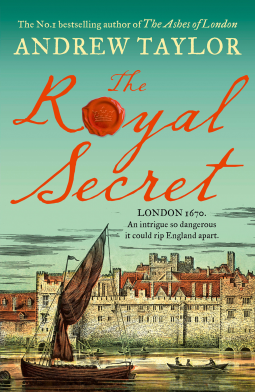
#BookReview ‘The Royal Secret’ by Andrew Taylor @AndrewJRTaylor #Historical

The Royal Secret is another excellent instalment in the historical drama series by Andrew Taylor that started in 1666 with the Fire of London. I hesitate to call The Royal Secret a thriller as these books cross historical sub-genres and are consequently fulfilling on a number of levels. Crime, political intrigue, social commentary, architecture, strong characterization and a dash of romance all set in the post-Restoration excess, poverty and turmoil of Charles II’s rule. Andrew TaylorEvery successful thriller needs a villain to hate and Dutchman [or is he?] Henryk van Riebeeck certainly gives James Marwood the run-around. Marwood, now working for Secretary of State Lord Arlington, is charged with investigating the disappearance of top secret papers and the sudden death of a palace clerk. As Marwood follows the trail across London via a gambling club and Smithfield meat market, Cat Hakesby pursues success as an architect. Having completed a successful commission – a rather grand poultry house – her next project is a bigger, grander poultry house for a French aristocrat who is also sister of King Charles. Nothing is as it seems in this series so when Cat travels to France to show her plans to her client, we know she must unwittingly be caught up in a political intrigue. But what exactly? And how does this connect with Marwood’s pursuit of missing state papers which threaten a diplomatic treaty being negotiated between the English and the French? Is van Riebeeck a villain or a hero?
Based on the machinations of a real treaty between France and England, Taylor has once again combined a sharp plot with colourful characters [one gentleman is a collector of exotic animals] and, of course, Marwood and Cat. The will-they-won’t-they thread which runs throughout this series faces a chasm here not helped by copious misunderstandings, jealousy, Cat’s stubborn independence and Marwood’s dedication to the secrecy of his employment.
Excellent. Bring on the next one.

Read my reviews of the other books in this series:-
THE ASHES OF LONDON #1FIREOFLONDON… and try the #FirstPara of THE ASHES OF LONDON
THE FIRE COURT #2FIREOFLONDON
THE KING’S EVIL #3FIREOFLONDON
THE LAST PROTECTOR #4FIREOFLONDON
THE SHADOWS OF LONDON #6FIREOFLONDON

And a World War Two novel by the same author:-
THE SECOND MIDNIGHT

If you like this, try:-
‘The Doll Factory’ by Elizabeth Macneal
‘The Taxidermist’s Daughter’ by Kate Mosse
‘The French Lesson’ by Hallie Rubenhold

And if you’d like to tweet a link to THIS post, here’s my suggested tweet:
#BookReview THE ROYAL SECRET by Andrew Taylor @AndrewJRTaylor https://wp.me/p5gEM4-5fe via @SandraDanby

#BookReview ‘The Fire Court’ by Andrew Taylor @AndrewJRTaylor #historical

In order to fully appreciate The Fire Court by Andrew Taylor, you need to read The Ashes of London first. Otherwise, references and subtleties will pass you by. This is definitely a trilogy to read in order. The threats and risks are not always clear on the page and I had a couple of ‘oh, now I get it’ moments. But as with the first book, Taylor writes about post-Fire London with all the smoke, heat and rotting smells vivid on the page. Andrew TaylorThe first chapter sets up the central mystery to be solved. James Marwood’s elderly confused father wanders in the city and follows a woman he believes to be Rachel, his deceased wife. He is brought home by a kindly roadsweeper. Marwood listens to his father’s confused ramblings and fears his wits are disappearing. The next day, Nathaniel Marwood is dead and his son attempts to recreate his father’s movements to see if there was truth in his ramblings; into the heart of the rookery at Clifford’s Inn to see if there really is a chamber of the ant and inside it, a sinful woman. Instead he meets an objectionable man called Gromwell.
Two women are key to Marwood’s story. Jemima, Lady Limbury, stays close to the house and struggles to be familiar with her husband Philip who is busy with affairs of business. Except the wealth of the marriage belongs to Jemima and Philip unfortunately lets money slip through his fingers. Jemima dislikes the company he keeps, particularly a slimy lascivious man called Gromwell. The second woman is Catherine Lovett, my favourite character from The Ashes of London. We first see her sitting in the chamber at the Fire Court, the chamber set up to resolve legal, property and construction issues between freeholders, leaseholders and tenants with the aim of rebuilding London fast. Cat is taking shorthand notes, practicing her skill, though really she longs to design buildings for her mentor, the infirm Simon Hakesby. Jemima and Cat do not meet for most of the novel when the two sides of the mystery finally become entangled. I admit to being impatient about this, I found Jemima’s storyline less than captivating though at the end I wished I had grasped her significance a little earlier. Taylor’s novels move fast but are dense with detail and I need to read both these books again before attempting the third.
At the centre of the story is the rebuilding of London after the Great Fire. Amongst the rubble there is destitution, opportunity, greed and hopelessness. It is a toxic mix, a dangerous place in which to start asking awkward questions. Which is exactly what James Marwood does. In the first book he was asking questions for two masters, in The Fire Court he seeks answers to his father’s puzzle. And when his life is in danger, he realises there must truth woven in his father’s nonsense words after all.
No word yet on when book three will follow, but I will definitely be reading it. Taylor is a new author for me and I look forward to exploring his other books. He is a historical writer rich in his period but with the twists and turns of a thriller. He creates mysteries that you want to puzzle out.

Read my reviews of the other books in this series:
THE ASHES OF LONDON #1FIREOFLONDON… and try the #FirstPara of THE ASHES OF LONDON
THE KING’S EVIL #3FIREOFLONDON
THE LAST PROTECTOR #4FIREOFLONDON
THE ROYAL SECRET #5FIREOFLONDON
THE SHADOWS OF LONDON #6FIREOFLONDON

And a World War Two novel by the same author:-
THE SECOND MIDNIGHT

If you like this, try:-
‘The Last Hours’ by Minette Walters #1BLACKDEATH
‘Dark Aemilia’ by Sally O’Reilly
‘Under a Pole Star’ by Stef Penney

And if you’d like to tweet a link to THIS post, here’s my suggested tweet:
#BookReview THE FIRE COURT by Andrew Taylor @AndrewJRTaylor https://wp.me/p5gEM4-3re via @SandraDanby

#BookReview ‘The Ashes of London’ by Andrew Taylor @AndrewJRTaylor #Historical

1666 and a fire starts in London, soon to devastate the medieval City of London. Watching the flames, a young man notices a boy in a ragged shirt who is standing so close as to risk to his life. When he pulls the boy to safety, he finds it is not a boy but a young woman. She bites him and escapes, though he intends only to help. And so are introduced the two key characters in The Ashes of London by Andrew Taylor. Andrew TaylorThis is not a novel about the Fire of London, rather a political mystery involving murder in the turbulent years following the execution of King Charles I, the English Civil War, the Commonwealth and subsequent Restoration of King Charles II. In the ruins of St Paul’s a body is found, differing from other mortalities for its thumbs tied together behind the man’s back. This is the sign of those who committed Regicide by signing the death warrant of Charles I. Though in hiding, these traitors are still active, lurking in the shadows.
The account of London burning is written vividly, so vivid I could imagine myself there, smell the charred timber and smoke. We see it through the eyes of two people. James Marwood, clerk, son of a traitor, is required by his superiors to investigate on their behalf. Catherine Lovett, a wealthy young woman lodges with the family of her mother but secretly searches for her father, a Regicide. Her position becomes precarious when her uncle seeks to marry her to a suitable man, one she detests. She flees and, at risk of discovery, Cat hides her identity with a false name. She is a bright woman who adapts to her changing circumstances, has a great presence of mind and is not afraid to defend herself when threatened. I particularly enjoyed her interest in architecture, something which brings her into the wider circle of Master Hakesby and Dr (Christopher) Wren as the new design for St Paul’s takes shape. She has a skill of fine draughtsmanship, and helps Master Hakesby who suffers from the ague.
We learn the story as seen by Marwood and Cat; the author controls what we know and don’t know. As they are aware of other things happening outside their circle, but not of the detail – of surviving traitors helping each other, of powerful men borrowing and lending money, of the scientifically-minded Charles II and his circle of influencers – so the reader realizes more is going on behind the scenes than is written on the page. Which adds to the mystery. This was a complex political time. We watch Marwood tread a delicate path as he tries to protect his elderly weak-witted Regicide father from persecution whilst also obeying his employer, Master Williamson, editor of The London Gazette. It is a time of whispers, gossip in the coffee houses, of secret meetings and spies standing behind screens the better to eavesdrop.
The paths of Marwood and Cat almost cross a number of times and as neither knows the true identity or intentions of the other, the reader is in a privileged position. When they do meet, the outcome is unexpected.
This is not a page-turning thriller or a crime novel, more a historical mystery. Taylor takes time to develop his characters and to show his location, the Restoration context is fascinating. Though a slow-burn I read this book quickly, finishing it and wanting to read its sequel, The Fire Court. That is always a good sign.

Try the #FirstPara of THE ASHES OF LONDON here.

Read my reviews of the next books in this series:
THE FIRE COURT #2FIREOFLONDON
THE KING’S EVIL #3FIREOFLONDON
THE LAST PROTECTOR #4FIREOFLONDON
THE ROYAL SECRET #5FIREOFLONDON
THE SHADOWS OF LONDON #6FIREOFLONDON

And a World War Two novel by the same author:-
THE SECOND MIDNIGHT

If you like this, try:-
‘The Witchfinder’s Sister’ by Beth Underdown
‘The Last Hours’ by Minette Walters #1BLACKDEATH
‘The Western Wind’ by Samantha Harvey

And if you’d like to tweet a link to THIS post, here’s my suggested tweet:
#BookReview THE ASHES OF LONDON by Andrew Taylor @AndrewJRTaylor https://wp.me/p5gEM4-3p2 via @SandraDanby