Tag Archives: American writers

#BookReview ‘The Folded Leaf’ by William Maxwell #historical #classic

The world in The Folded Leaf by William Maxwell is of another age when childhood lasted longer than it does now. Teenage boys wear breeches, naked youths jump into a pool at a school swimming lesson and teachers call their pupils Mister in this story of male friendship in 1920s mid-America. William MaxwellThe storytelling is easy, languid, introducing us to two boys. Lymie Peters, skinny, clever, on the edge of things and living with his absent widowed father. Newcomer Spud Latham, strong, angry, a boxer. Both dissatisfied with their lives. Their unlikely friendship grows from the late school years to college in Indiana, through fighting, bullying and a rather barbaric initiation by humiliation into a school fraternity, to discovering girls. Today the boys’ friendship may be viewed through a same-sex lens but there seems a group acceptance of ambiguity in this male group where girls are admitted infrequently to the fraternity’s grotty basement apartment where they take it in turns to dance to the shaky sounds of the victrola. It is a group innocence that feels rather alien today. This balance is upset when Sally enters their lives.
Maxwell’s prose is a delight, so simple, never over-stating, building slowly. First published in 1945, The Folded Leaf is Maxwell’s third novel. He was fiction editor at The New Yorker for 39 years, working with writers including Nabokov, Updike, Cheever and Salinger. A story set in the last century but still familiar today.
The Folded Leaf is a story of youthful shyness and arrogance, mis-communications, silence and assumptions, and what can happen when feelings are unexpressed. A thoughtful read that stays with you.

See my reviews of other novels by William Maxwell:-
BRIGHT CENTER OF HEAVEN
THEY CAME LIKE SWALLOWS
TIME WILL DARKEN IT

And read the first paragraphs of TIME WILL DARKEN IT and THE CHATEAU.

If you like this, try:-
‘The Goldfinch’ by Donna Tartt
Brooklyn’ by Colm Tóibín
Some Luck’ by Jane Smiley #1LastHundredYears

And if you’d like to tweet a link to THIS post, here’s my suggested tweet:
#BookReview THE FOLDED LEAF by William Maxwell https://wp.me/p2ZHJe-7c6 via @SandraDanby

COMING SOON… THE NEXT BOOK I REVIEW WILL BE:- Elodie Harper
#BookReview ‘Lucy by the Sea’ by Elizabeth Strout @LizStrout #contemporary

Elizabeth Strout never writes a bad novel. When I started to read Lucy by the Sea, her latest, I was taken aback to find it is set during the pandemic; something I have avoided. But I was soon immersed in the life of Lucy Barton and her relocation from New York to a small seaside town in Maine. Elizabeth StroutMy misgivings about lockdown were reduced because this is a Strout novel. She doesn’t write about the pandemic – apart from occasional mentions of masks and vaccines – she writes about people. This is a finely-judged story about ageing, about grief [new and long-lived], about secrets within families and self-denial of difficult truths. Lucy moves into a large house outside the town of Crosby, not because she planned it, but because her ex-husband William persuades her it will be safer than the city. There they discover new and old acquaintances and reacquaint themselves with each other. William is recently separated; Lucy was widowed a year earlier. Both feel their age and are anxious about the subtle changes, but don’t like admitting it to themselves or anyone else.
Through Lucy’s eyes as she reflects on her own life, and that of her children and family, we see how childhood poverty never leaves you even if you leave that poverty behind. How marriage turbulence is sometimes negotiable, and sometimes terminal. How education saved her but didn’t save her sister or brother, and how she was for years blind to that inequality. It is thought-provoking stuff. Honest. Painful. It makes you consider your own life and how you see it through blinkers gained through your personal experience.
Strout’s novels are all inter-twined through character and place, but always with a light touch. If this is the first Strout book you pick up, please read it. This is not a series, there is no first and last book to be read in order. It is an ensemble. If it were theatrical, it would be a repertory company. The pandemic-forced move to Crosby takes Lucy out of her comfort zone, away from friends, and she rubs shoulders with people she wouldn’t normally meet. As we see Lucy age from novel to novel, Lucy by the Sea highlights her new vulnerability and anxiety as she and William work out how to handle the awkward elements of getting old.
This is a more political novel than any of Strout’s previous work. The pandemic setting makes this inevitable. There is a shadow of mask v anti-mask, resident v incomer, plus brief mentions of George Floyd and storming of the Capitol on January 6. But this is not overt and always put into Lucy’s context. Strout places her characters in a time of disruption, fear and death. For everyone who lived through it, the surreal isolation forced by pandemic lockdown was an opportunity for consideration, re-evaluation and truth. A gift for a novelist with the powers of Elizabeth Strout.
Excellent.

Read my reviews of these other books by Elizabeth Strout:-
AMY & ISABELLE
ANYTHING IS POSSIBLE
MY NAME IS LUCY BARTON
OH WILLIAM!
OLIVE KITTERIDGE
OLIVE, AGAIN

If you like this, try:-
Curtain Call’ by Anthony Quinn
A Traveller at the Gates of Wisdom’ by John Boyne
Shrines of Gaiety’ by Kate Atkinson

And if you’d like to tweet a link to THIS post, here’s my suggested tweet:
#BookReview LUCY BY THE SEA by Elizabeth Strout @LizStrout https://wp.me/p2ZHJe-65D via @SandraDanby

COMING SOON… THE NEXT BOOK I REVIEW WILL BE:- Frances Brody

#BookReview ‘Ladder of Years’ by Anne Tyler #contemporary #family

Ladder of Years is another fine character-led drama by Anne Tyler, one of my favourite authors. It is the story of Delia Grinstead who, in a moment of dissatisfaction with her life and relationships, goes for a walk on the beach and keeps on walking. Finding a niche in a small town, with hardly any money and possessions, Delia starts again. And when her family catch up with her and ask her why she left, she cannot find a way to explain. It is twenty-eight years since Ladder of Years was first published. It was chosen by Time magazine as one of the ten best books of 1995. Tyler had already been a Pulitzer Prize finalist in 1986 with The Accidental Tourist and won it in 1989 for Breathing Lessons. All her novels stand the test of time and can be read as if the action takes place today, so accurately is her finger on the portrayal of human emotion.
Adrift from her husband and three almost-adult children in Baltimore and not understanding why, Delia finally tips over the edge while on holiday. She finds herself in Bay Borough, the sort of small town where everyone knows everyone else’s business. She finds a job and a room to rent, buys a couple of secondhand work dresses and a nifty gadget to heat water in a cup so she can make an early morning cup of tea. Delia knows she should let her family know she is safe but is disinclined to do so, feeling she has been taken for granted. Inevitably, one of her sisters arrives on the doorstep. What follows is the story of a woman free for the first time, having married as a teenager and worked all that time as her doctor husband’s receptionist. Free from the expectations of others, she makes a circle of friends on her own terms.
This is a novel about middle-aged stasis and escape, about admitting the truth of one’s own life, choices and possibilities, and that there are no easy answers. Tyler’s characters are always so well-drawn and believable and her observations so wise and true, sometimes uncomfortably so. Here’s an example; ‘Didn’t it often happen, she thought, that aged parents die exactly at the moment when other people (your husband, your adolescent children) have stopped being thrilled to see you coming? But a parent is always thrilled, always dwells so lovingly on your face as you are speaking. One of life’s many ironies.’ Of course, Delia encounters other parent/child combinations in Bay Borough which challenge this theory.
Tyler’s novels deceive; seemingly about small domesticities and passage-of-life-events, they are really about the big, difficult questions we all face as we pass through different phases of life.
Excellent.

Read my reviews of these other books by Anne Tyler:-
A SPOOL OF BLUE THREAD
CLOCK DANCE
FRENCH BRAID
REDHEAD BY THE SIDE OF THE ROAD
VINEGAR GIRL

And read the first paragraphs of:-
DINNER AT THE HOMESICK RESTAURANT 
BACK WHEN WE WERE GROWN UPS

If you like this, try:-
Olive Kitteridge’ by Elizabeth Strout
Mothering Sunday’ by Graham Swift
The Stars are Fire’ by Anita Shreve

And if you’d like to tweet a link to THIS post, here’s my suggested tweet:
#Bookreview LADDER OF YEARS by Anne Tyler https://wp.me/p5gEM4-49S via @SandraDanby

#BookReview ‘Oh William!’ by @LizStrout #contemporary

What a gifted writer Elizabeth Strout is. Oh William! sees the return of Lucy Barton as she meets again her first husband, William, and reflects on love, loss, friendship and the fact that life can seem bewildering. Lucy’s voice is so real it seemed as if we were having a real conversation, face-to-face. Elizabeth StroutThis is the stream-of-consciousness story – complete with ums, ahs, meanderings and distractions – of a few months in Lucy’s life, after the death of her second husband David and when William’s latest wife, Estelle has just left him. Lucy and William were married for twenty years and have two daughters; that’s a lot of baggage. The connections that bind a married couple do not disappear after they are divorced, memories and experiences are inextricably linked. William, now 71, came home one day to find the flat looking odd, with gaps where things should be, and a note from his wife Estelle saying she had moved out. As he explains to Lucy, now a successful writer in her sixties, what has happened, she relives the moment she also left William, how she felt at the time and how she feels now. She calls him Pillie, he calls her Button. They spend more time together and their daughters ask if they are getting back together. In fact, they are investigating a family secret recently revealed when William is given the gift of an ancestry records service. As they travel back into the past of William and of his mother, Catherine Cole, Lucy recalls her own childhood, the neglect, the poverty, and considers how this shaped who she is today.
Strout has written a short, elegant story with hidden depths that draw you in. She explores the affections, regrets, irritations and resentments of a couple, once married, now sort-of friends. They are an everyman couple who loved each other, who were at times thoughtless, cruel, unforgiving and impatient but now show moments of heart-stopping fondness. Lucy recounts the road trip undertaken into William’s past except it is also a journey into her own past as the revelations of someone else’s secrets shed new insight into her own desperately sad childhood.
A novel about human flaws that shows how it’s almost impossible to know ourselves as others see us, as we can never thoroughly know someone else.
This is a companion novel to My Name is Lucy Barton, the first ever book by Strout I read, but each novel can be read independently.
CLICK HERE TO READ MORE ABOUT THIS BOOK AT AMAZON

Read my reviews of these other books by Elizabeth Strout:-
AMY & ISABELLE
ANYTHING IS POSSIBLE
LUCY BY THE SEA
MY NAME IS LUCY BARTON
OLIVE KITTERIDGE
OLIVE, AGAIN

If you like this, try:-
Mum & Dad’ by Joanna Trollope
A Little Life’ by Hanya Yanagihara
In Another Life’ by Julie Christine Johnson

And if you’d like to tweet a link to THIS post, here’s my suggested tweet:
#BookReview OH WILLLIAM! by @LizStrout https://wp.me/p5gEM4-5pB via @SandraDanby

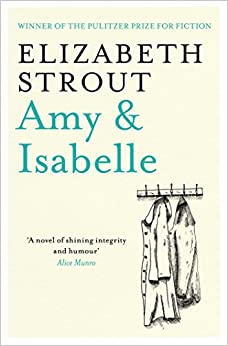
#BookReview ‘Amy & Isabelle’ by Elizabeth Strout @LizStrout #contemporary

The mother and daughter portrayed in Amy & Isabelle by Elizabeth Strout are at odds with each other. The events of one long sweltering summer in Shirley Falls are simple, familiar across the ages, but are told with a hefty emotional punch. So strong is this book it’s difficult to see that it was Strout’s first novel, published in 2000 to be followed only eight years later by her Pulitzer Prize-winning Olive Kitteridge. Strout is adept at peeling away the layers of character and events to show the raw emotion, shame, guilt and pain beneath. Elizabeth StroutWhen Isabelle Goodrow arrived in Shirley Falls with her baby daughter, she took a job at the local mill. Now, in a time that feels like 1970s America, Amy is sixteen and has a summer job in the same office as her mother. They sit and fume at each other, barely talking, brushing past each other without a word. Amy, who has fallen in love with her maths teacher, believes her upright, unemotional mother, has no idea of what she is feeling right now. Isabelle despairs of her daughter’s behaviour. Told in absorbing detail, switching between the two viewpoints, the trauma of the two women is revealed. Shirley Falls is an evocative setting, an industrial town with a river flowing through it. As the temperature rises, the river begins to stink adding to the stresses not just on the Goodrows but on the small community in which they exist. Strout excels at portraying the circle of characters which make the world of a novel so believable – Amy’s friend Stacy, Fat Bev and Dottie Brown at the mill, Isabelle’s boss Avery Clark.
Isabelle finds it difficult to fit in, has always felt like an outsider. As she judges others, she assumes others judge her. This is more about her own experience and inadequacies than about anyone else. As the summer days plod on and Amy’s affair unravels, we see hints of the truth of Isabelle’s past that go some of the way to explaining why she is as she is.
Difficult to put down, I enjoyed Amy & Isabelle very much. Both women are so real, their situations are real, you want to slap them both and hug them both. Strout writes in an extraordinarily perceptive manner about ordinary people in ordinary places, so real you feel you are in the room too.

Read my reviews of these other books by Elizabeth Strout:-
ANYTHING IS POSSIBLE
LUCY BY THE SEA
MY NAME IS LUCY BARTON
OH WILLIAM!
OLIVE KITTERIDGE
OLIVE, AGAIN

If you like this, try:-
‘If I Knew You Were Going to be This Beautiful, I Never Would Have Let You Go’ by Judy Chicurel
The Museum of You’ by Carys Bray
When All is Said’ by Anne Griffin

And if you’d like to tweet a link to THIS post, here’s my suggested tweet:
#BookReview AMY & ISABELLE by Elizabeth Strout @LizStrout https://wp.me/p5gEM4-5id via @SandraDanby

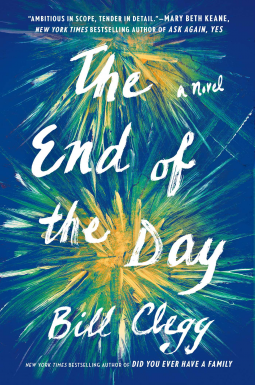
#BookReview ‘The End of the Day’ by Bill Clegg #contemporary

Three girls grow up living near each other in Wells, Connecticut. Dana. Jackie. Lupita. Each in a different social class. With or without wealth. With or without expectations. Privilege, no privilege. One betrayal touches their lives and has ramifications for the next generation. The End of the Day by Bill Clegg is about the fragility of loyalty when teenage bonds are tested by love, jealousy, indiscretions, secrets and lies. ‘To end a friendship, it just takes someone willing to throw it away.’ Because when a decision is taken, more than one life is affected. Bill CleggClegg has written a genealogical story wrapped up in two timelines, the years not defined but basically the Sixties and the Noughties. An elderly woman, frail and confused, sets out from New York on an excursion. Another old woman wakes in her family home to a beautiful passage of memories. A taxi driver in Hawaii ignores the repeated messages left on her mobile phone. These three are connected by a youthful flirtation, a pregnancy, arrangements made and lies told, assumptions made. A fascinating story, characters so believable, but the details lacking in clarity – perhaps because so many lies have been told. In the Noughties are mother and son Alice and Hap. Hap’s life takes two momentous turns when his father is seriously ill in hospital, the same hospital where his wife has just given birth to their baby daughter. A little girl still, significantly, without a name.
The first half is a slow read with beautiful writing that at times edged towards the self-indulgent. The book, though not long, felt long. I wanted occasional clarity of story and shorter paragraphs. I was unclear about the different houses featured – the childhood homes of Jackie and Dana and the area in which they lived. Perhaps the author knows it so well he forgot to be clear for the reader. The story moves location and year without specification which can be disorientating.
In re-reading the notes I wrote after finishing the book, I found I had twice written ‘lacking clarity’. The story is a sad one, of connections made, lost, and unknown, but for me it could be more touching with a clearer narrative spine. That said, the story stayed with me days after I finished it – always a good sign. The parallels between the generations, the vulnerability of a baby dependent on adults for the truth of its origins, the duty to protect and the urge to run from an old life. An okay story wrapped up in exquisite writing.

Here’s my review of DID YOU EVER HAVE A FAMILY?, Bill Clegg’s first novel.

If you like this, try:-
A Sudden Light’ by Garth Stein
Summertime’ by Vanessa Lafaye
We Are Water’ by Wally Lamb

And if you’d like to tweet a link to THIS post, here’s my suggested tweet:
#BookReview THE END OF THE DAY by Bill Clegg https://wp.me/p5gEM4-523 via @SandraDanby

#BookReview ‘Clock Dance’ by Anne Tyler #contemporary #family

Every novel by Anne Tyler is a treat, I save them up, anticipate them. For me as a reader, she tells stories that seem ordinary but have exceptional depth, gentle stories which make me want to continue reading on into the night. For me as a writer, it is her I aim to emulate; her economy of word and scene, achieving depth without unnecessary diversion. So, to Clock Dance. Anne Tyler Told in three parts – 1967, 1977 and 2017 – this is the story of an ordinary woman, Willa Drake, to whom things outside normal life don’t happen. The three key events in her life – the disappearance of her mother, a marriage proposal, being widowed at 41 – are passive acts. Willa is not a proactive person. We meet her first as an eleven year-old, at home with her family; her emotionally-erratic mother, her passive, lovely father, her awkward younger sister Elaine. Willa takes on the motherly role, making a chocolate pudding, observing the ups and downs of her parents’ relationship with acute asides. At college, her boyfriend proposes to her and expects her to give up college and move across the country. In 2017, a confused phone call from the neighbour of her son’s ex-girlfriend sets in motion a chain of events that sees Willa gain a substitute grand-daughter but endanger her own marriage. Each time, Willa reacts to other people.
In Baltimore Willa and her second husband Peter move in with Denise who has been shot, and Denise’s nine-year-old daughter Cheryl and dog Airplane. It is an everyday story of a household, hospital visits, neighbours and community. Tyler’s observations of daily life are so spot-on, she tells the story in a way that makes it seem real, not a literary invention involving toil, plotting and rewriting. Without you noticing, time passes and people change so subtly it is impossible to put a finger on the point when the change started. Simple, complex, hugely perceptive.
This is a novel about meekly accepting your place in the world until the day arrives that you realise life is passing you by. Does Willa have the courage to find a new life? I was urging her on all the way. A 5* book for me.

Read my reviews of these other books by Anne Tyler:-
A SPOOL OF BLUE THREAD
FRENCH BRAID
LADDER OF YEARS
REDHEAD BY THE SIDE OF THE ROAD
VINEGAR GIRL

And read the first paragraphs of:-
DINNER AT THE HOMESICK RESTAURANT 
BACK WHEN WE WERE GROWN UPS

If you like this, try:-
‘Autumn’ by Ali Smith
‘The Stars are Fire’ by Anita Shreve
‘The Gustav Sonata’ by Rose Tremain

And if you’d like to tweet a link to THIS post, here’s my suggested tweet:
#BookReview CLOCK DANCE by Anne Tyler https://wp.me/p5gEM4-3J9 via @SandraDanby

#BookReview ‘The Stars are Fire’ by Anita Shreve #contemporary

I haven’t read anything by Anita Shreve for a very long time and I wonder why, because I thoroughly enjoyed The Stars are Fire. It is a fine example on how to write about someone experiencing difficult times, who is trapped and feels powerless, without being depressing. Anita Shreve It is 1947 and the summer heat is blazing. Then the heat turns to drought and the drought turns to wildfire. On the coast of Maine, Grace Holland, five months pregnant, without a car and at home with her two toddlers, must run as the fire threatens to engulf her village. Her husband Gene is with other men, making a fire break. Grace, with her best friend Rosie and her children, run from the fire, taking refuge overnight at the beach. The next morning, their houses are ash, their village is burned. They are homeless, penniless and, though Rosie’s husband returns, Gene doesn’t.
Grace must cope and in doing so she finds a new world opening up. A world which she had no idea existed. She becomes decisive and brave, she finds a home, a job and learns to drive. All of this validates her worth. With her mother, they fashion themselves a new life. But it is a life with a temporary feeling about it because Grace dare not think Gene is dead. Theirs was a difficult relationship, suffocating, Gene is an emotional bully. She revels in her new freedoms until one day everything she has built, the gains she have made, are lost. Her gamble backfires.
This is a woman’s story of its time, when men were the providers and expected their wives to fulfil their wifely duties. Grace and Gene married young because she was pregnant and this sets the tone for their marriage. His mother wanted better for Gene and has never welcomed Grace. Grace’s dissatisfaction with her claustrophobic life grows. Gene is a good provider but they have little emotional connection, and so Grace envies Rosie’s close and sensual relationship with her husband Tim.
Shreve’s writing style is simple and descriptive. Gene sometimes calls Grace ‘Dove’. “She has never been Gracie. Only Grace. And then Dove, with Gene. Grace doesn’t feel like a dove, and she’s sure she doesn’t look anything like a dove, but she knows there’s a sweetness in the nickname. She wonders if it means something that she doesn’t have a fond or funny name for her husband.” The story is told, however, from Grace’s viewpoint. Gene’s thoughts are left unsaid.

If you like this, try:-
‘We Are Water’ by Wally Lamb
‘The Photographer’s Wife’ by Suzanne Joinson
‘Did You Ever Have a Family’ by Bill Clegg

And if you’d like to tweet a link to THIS post, here’s my suggested tweet:
#BookReview THE STARS ARE FIRE by Anita Shreve via @SandraDanby http://wp.me/p5gEM4-2sq

#BookReview ‘Time Will Darken It’ by William Maxwell #historical #classic

Two families, the one from the South visits the one in the North. America before the Great War, class divides, manners, family duty, the race question and, beneath the politeness, love is turbulent. This is the world of Time Will Darken It. I don’t know why I have never discovered William Maxwell before now, but I will certainly seek out his other books. William Maxwell Draperville, Illinois, is the setting for this observation of manners which at times reminded me of Austen. Draperville is based on Maxwell’s own hometown of Lincoln, Illinois. In 1912, the Potter family from Mississippi visit the family of their foster son. Austin King, lawyer in Draperville, struggles to live up to the reputation of his father Judge King. The interaction and resulting effects of the King and Potter families over four weeks and three days, is detailed in a way reminiscent of Austen. And the detail is fascinating. The interaction between the generations, the expectations of the men and women, norms of behaviour and what happens when those norms are broken. This pre-war period teeters on the verge of war, and all the changes that will soon be brought about.
This is a wise book about relationships and how one’s own self-perspective, and that of your parents, changes over time and with experience. “…the history of one’s parents has to be pieced together from fragments, their motives and character guessed at, and the truth about them remains deeply buried, like a boulder that projects one small surface above the level of smooth lawn, and when you come to dig around it, proves to be too large ever to move, though each year’s frost forces it up a little higher.”

Try my reviews of these other novels by William Maxwell:-
BRIGHT CENTER OF HEAVEN
THE FOLDED LEAF
THEY CAME LIKE SWALLOWS

And read the first paragraphs of TIME WILL DARKEN IT and THE CHATEAU.

If you like this, try:-
Some Luck by Jane Smiley
A Spool of Blue Thread by Anne Tyler
‘Summertime’ by Vanessa Lafaye

And if you’d like to tweet a link to THIS post, here’s my suggested tweet:
#BookReview TIME WILL DARKEN IT by William Maxwell via @SandraDanby http://wp.me/p5gEM4-1I1

#BookReview ‘Purity’ by Jonathan Franzen #mystery #contemporary

I admit to feeling disappointed by Purity by Jonathan Franzen. The root of this disaffection is partly my high expectations, having loved The Corrections and Freedom, and partly the subject matter. Unlike his previous two novels, which focussed on an extended family, the central narrative of Purity is a young woman’s search for her father, a search which brings her into contact with some seriously dodgy people. Jonathan FranzenA large chunk of the novel is about Andreas Wolfe whose Sunlight Project brings light to the world by leaking secrets. His backstory as a young man in East Germany as the Wall crumbles is historically interesting but I found his character unpleasant. On his first foray into West Berlin, Wolfe meets a young American journalist, Tom Aberant, who becomes another constant throughout the book. Great chunks of the book are dedicated to Wolfe and Aberant’s relationships with, respectively Annagret and Annabel, who confusingly merged together in my mind.
So what kept me reading? Pip, the Purity of the title, a young woman burdened by student debt and a curiosity about the identity of her father, is lured to Bolivia to work for the Sunlight Project, in the belief that she will find out the name of her father. Pip’s story inevitably becomes entwined with Wolfe and Aberant but at times it seemed as if Franzen was writing two separate novels, I wanted to skip the Wolfe parts and get back to Pip.
Purity is not just Pip’s real name, it is the big theme. Purity in terms of information freedom, in terms of intentions and objectives, and old-fashioned secrets and lies; and there are a lot of the latter two. All the characters are hiding something, or avoiding someone, or longing for someone, or seeking something unattainable; and all must consider whether, in seeking the truth, they actually want to hear it when they find it.
This is not a bad book, Franzen couldn’t write one, and parts of it are written beautifully. He has a wonderful economy of phrase sometimes which encapsulates a big observation in a few well-chosen words. Unfortunately for me, other parts of it were stodgy and over-long and I skipped over some paragraphs.
Is it an epic book? It is certainly big [576 pages, but not the 736 pages of Hanya Yanagihara’s A Little Life] but that is not in itself a problem, I like reading big books – big in terms of length, and subject matter. My real problem was that I didn’t engage with the characters, I didn’t care about them and found them at times over-the-top, verging on hysterical. I don’t need to like them, but I do need to care about them.
A full-fat novel with extra sugar and extra caffeine.

Read the #FirstParas of these two novels by Jonathan Franzen:-
FREEDOM
THE CORRECTIONS

If you like this, try:-
‘A Little Life’ by Hanya Yanagihara
‘A Spool of Blue Thread’ by Anne Tyler
‘Some Luck’ by Jane Smiley

And if you’d like to tweet a link to THIS post, here’s my suggested tweet:
#BookReview PURITY by Jonathan Franzen via @SandraDanby http://wp.me/p5gEM4-1Sq