Tag Archives: book review

#BookReview ‘The Distance Between Us’ by Maggie O’Farrell #contemporary

Two strangers, both with troubled personal lives, are thousands of miles apart. The Distance Between Us by Maggie O’Farrell is about Stella in London and Jake in Hong Kong and how these two people so far distant, geographically and emotionally, can come together. This novel is basically a romance with two layers of mystery intertwined. Maggie O’FarrellIt starts at Chinese New Year when Jake is caught in a horrendous crowd crush with his girlfriend Mel and her friend Lucy. Mel is badly injured, Lucy is dead. When a doctor tells Jake that Mel will not live through the night, he agrees to her wish to marry.
In London, Stella is walking home across Waterloo Bridge when she sees a solitary figure walking towards her, a red-haired man. The sight of him triggers a flight instinct and she flees home to Scotland. Not to her family in Edinburgh and Musselburgh, but to work in a remote country hotel. She avoids the telephone calls from her sister Nina. The truth behind Stella’s panic and the significance of the red-haired man is a long time coming, too long really.
In Hong Kong, Mel survives and Jake travels to the UK with her to stay with her family. Jake thinks this is a visit, planning to return to his job in Hong Kong as a film production assistant. But Mel wants a white wedding. Saying he wants to travel to Scotland to research the identity of his father, he was raised in Hong Kong by his British mother, Jake heads north in search of a village called Kildoune. His mother gave him this surname, named after the father he has never known. Kildoune, it turns out, is not a village but a hotel. The hotel where Stella now works. And so the two storylines come together. As with any romance, the two main characters come together, step away, and dance around each other as Stella’s history is unveiled.
A note about the chapter-less structure. The storyline skips back and forth from viewpoint to viewpoint, present day to past, so quickly I felt dizzy at times. It was confusing for the first third or so of the book and I wished for conventional chapters, after that it remained mildly irritating.
The Distance Between Us is O’Farrell’s third novel but it feels more like an earlier novel, perhaps written before her successful debut After You’d Gone. The storyline of Jake’s hunt for his father is left unfinished; the character development of Nina is thin which makes her behaviour as an adult difficult to understand; and I lost track of the family histories of both Jake and Stella with parents, grandparents and friends making a total of too many characters that don’t contribute to the main narrative.
CLICK HERE TO READ MORE ABOUT THIS BOOK

Read the first paragraph of AFTER YOU’D GONE.

If you like this, try these:-
‘The Roundabout Man’ by Clare Morrall
‘Another You’ by Jane Cable
Summertime’ by Vanessa Lafaye

And if you’d like to tweet a link to THIS post, here’s my suggested tweet:
#BookReview THE DISTANCE BETWEEN US by Maggie O’Farrellhttps://wp.me/p5gEM4-3×9 via @SandraDanby

#BookReview ‘The Testimony of Taliesin Jones’ by @Rhidianbrook #books

A small quiet book in which an eleven year old Welsh boy asks questions fundamental to life. The Testimony of Taliesin Jones by Rhidian Brook is the story of Taliesin and his questions about how God fits into his life. “At night the questions come: why am I here and not there? Why am I me and not them? Before I was me, where was I?” It is a novel about growing up, about change, uncertainty and belief, set in Cwmglum, a small rural community in West Wales. Rhidian BrookTaliesin’s father is a sheep farmer, his older brother Jonathan has recently gained a girlfriend and learned how to swear convincingly. Their mother left home last year and now lives in West Haven with Toni the hairdresser. “The events of last year linger around the rooms in petrified time. When Taliesin’s mother left, the clocks in the house all stopped. It was she who set the pendulum swinging and it was always her who turned the key of the carriage clock that ticked a furious little tick on the mantelpiece in the sitting room.” Everything that was safe and predictable in Taliesin’s life is suddenly different. And warts are growing all over his hands.
Influenced by the books he reads – his latest book is Lord of the Flies – he asks questions, his thoughts peppered with quotes from books he has read. He is anxious, bullied at school, and must find a way to tell his piano teacher Billy Evans that he can’t read music and has been pretending while muddling through by listening. And then he sees Billy, who is also a healer, straighten the back of a bent old woman. When Billy makes Taliesin’s warts disappear, Taliesin wants to heal too and sets up a group at school called The Believers.
I fell for this book from the first page in which Taliesin explores his latest book, an atlas, sent by his mother for his birthday. “He opens the book and releases a smell of paper, a fresh smell that reminds him of exercise books distributed at the beginning of a new school year: green for Geography, pink for Biology, grey for Religious Education.”
This is a book about faith, but it is about so much more. A boy looking for his place in the world, trying to make sense of things, as we all do. It is a simple story, sometimes touching, sometimes funny, with a depth that makes it stay with you afterwards.

Read my review of another Rhidian Brook novel:-
THE AFTERMATH

If you like this, try:-
Love is Blind’ by William Boyd
The Museum of You’ by Carys Bray
‘Rush Oh!’ by Shirley Barrett

And if you’d like to tweet a link to THIS post, here’s my suggested tweet:
#BookReview THE TESTIMONY OF TALIESIN JONES by @Rhidianbrook https://wp.me/p5gEM4-3Pw via @SandraDanby

#BookReview ‘The Glass House’ by Eve Chase #historical #mystery

This story takes place in a forest and I could smell the humus rich soil, see the ferns, hear the rustlings of small mammals and imagine the blending of shadows and sunlight. In The Glass House by Eve Chase, the mysterious happenings in a forest have ramifications across the decades. Shame, deceit, secrets and love are bound-up together in a group of people whose lives are coloured forever by what happened in the Forest of Dean in 1971. Eve ChaseWhen nanny Big Rita drives her boss’s wife, Jeannie Harrington and Jeannie’s two children Hera and Freddy to their country house in the West of England, they enter a different world. Leaving behind Jeannie’s husband Walter at their sugar-white stucco house in Primrose Hill, and her own unhappy memories, Rita is cautious about the mysterious forest with its rustling noises and the feeling of being watched. She spends every hour with the children while Jeannie, recovering after the loss of a baby, spends her time in bed. And then Hera finds a baby girl abandoned in the woods. This is the catalyst for a number of things happening at once, things that upset the status quo and challenge Rita’s place in the Harrington family and what she wants for her own life. Most disturbing to her equilibrium is local woodsman Robbie Rigby.
The second timeline is set now and is told by Sylvie who has just left her husband and moved into a flat beside a canal in Kensal Town. Sylvie is taking time to find her feet away from husband Steve and teenage daughter Annie who is staying with her grandmother beside the sea in Devon. But two incidents quickly challenge Sylvie’s perceptions about what actually matters to her.
And there is a delicious hint in the short Prologue – a report in a Gloucestershire newspaper in 1971 about a body found in the forest near Foxcote Manor.
I found the structure slightly messy with varying pace which at times was rather slow. I was longing for some connections to be made so the story could move on. Looking back at my review of Chase’s The Vanishing of Audrey Wilde, I made a similar comment. The last scenes seemed to tie up loose ends rather too quickly and neatly in comparison with the earlier speed of the story, but that’s just my personal preference. Eve Chase writes a great sense of place; Foxcote Manor seems a real house set in a real forest.
As Robbie explains to Rita, ‘when a giant tree crashes down in a forest, light and air rush into the cleared space, dormant seeds flower, and new life scrambles up, taking its chance.’ That’s basically what happens to the people in The Glass House.
Incidentally, the glass house mentioned in the title, and featured on the lovely cover, refers to a terrarium. Rita owns one in 1971 and her care of the plants living in it – she gives them names – mirrors her care of the two children, but also symbolises the fragility and transparency of the lives of the Harrington family at Foxcote Manor.

Read my reviews of these other novels by Eve Chase:-
THE BIRDCAGE
THE VANISHING OF AUDREY WILDE

If you like this, try:-
Good Me Bad Me’ by Ali Land
The Doll Funeral’ by Kate Hamer
The Invitation’ by Lucy Foley

And if you’d like to tweet a link to THIS post, here’s my suggested tweet:
#BookReview THE GLASS HOUSE by Eve Chase https://wp.me/p5gEM4-4KW via @SandraDanby

#BookReview ‘The Rescue Man’ by Anthony Quinn #WW2 #historical

The Rescue Man, debut novel of Anthony Quinn, is slow moving tale of a man changed by war. Set in Liverpool throughout World War Two, it is clearly a love letter to the city by Liverpool-born Quinn. It focusses on a love triangle between a historian and two photographers. Anthony Quinn Tom Baines is a quiet architectural historian in his late thirties. He lives in the past, researching a book about Liverpool’s buildings which he somehow never manages to finish. In 1939, his mentor recommends he research a misunderstood Liverpool architect, Peter Eames who mysteriously committed suicide leaving his work never properly recognised.
When war breaks out Baines volunteers as a rescue man, working in teams to extract people and bodies from the bombed buildings he was supposedly cataloguing for his book. This experience, and the people he works with, have a profound impact and slowly his life changes. His language coarsens, thanks to mixing with the men on his team, and in response to his publisher’s request to speed up his research of the city’s buildings before they are destroyed by bombs, he meets husband and wife photographers Richard and Bella.
The romance is a long time coming and the first half of the book seems to meander along without urgency, Tom is a quiet, academic unassuming man and I had to work at sticking with the book. I wondered what there was in him which attracted the bright flower, Bella.
Tom Baines says, ‘It was only when war came and I started doing rescue woke that I sort of… woke up.’ Unfortunately the book is a third through before we reach 1940 and the bombing of Liverpool and two-thirds through before the pace picks up. There is a sense of time being suspended until the final quarter of the book is reached and, as the brutality of the bombing clears street after Liverpool street and many of the historic buildings Baines was meant to catalogue are reduced to rubble, Tom hits crisis point.
The pace is not helped as the story of Peter Eames is told via diary extracts which are stop start with substantial gaps. The themes of wartime destruction – not only of buildings, but of trust between family, lovers and friends – are mirrored between the Eames and Baines timelines. Architect Eames builds, rescue man Baines negotiates the rubble left by the Luftwaffe’s bombing raids. And both are key players in love triangles where trust is betrayed and marriage vows broken.
This is Anthony Quinn’s debut novel and though thoughtful like his later books, it lacks their narrative pace. If you are familiar with Liverpool, which I’m not, it will be a more fulfilling read. There is no doubt about Quinn’s beautiful writing, simply that the subject – and the perhaps over-use of the Liverpool setting – did not hold me. Not his best book but well worth reading if you know his later work such as Freya.

Read my reviews of these other books by Anthony Quinn:-
CURTAIN CALL
FREYA
HALF OF THE HUMAN RACE
MOLLY & THE CAPTAIN
OUR FRIENDS IN BERLIN
THE STREETS

If you like this, try:-
The Slaves of Solitude’ by Patrick Hamilton
‘Homeland’ by Clare Francis
Life After Life’ by Kate Atkinson

And if you’d like to tweet a link to THIS post, here’s my suggested tweet:
#BookReview THE RESCUE MAN by Anthony Quinn https://wp.me/p5gEM4-4Gx via @SandraDanby

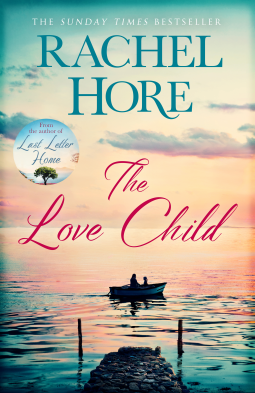
#BookReview ‘The Love Child’ by Rachel Hore @Rachelhore #historical #romance

The Love Child by Rachel Hore is not just an adoption story of birth mother and daughter, it is a story of women’s lives between the wars when shame and public expectation, not love, governed family decisions. Rachel HoreIn 1917 Alice Copeman, a 19-year old nurse, falls in love with a soldier home on leave. They expect to marry but he is killed. No one else knows of their relationship, it is wartime and everything happened so quickly. But Alice is pregnant.
Mourning for Jack, Alice is forced by her father and stepmother to give the child up for adoption. In the Essex seaside town of Farthingsea, Edith and Philip Burns long for their own child. When they adopt a baby girl Irene, they expect their family to be happily complete. But Irene feels different from her parents and grows frustrated at the lies told about her birth; in particular she struggles to connect with her mother Edith and often feels rejected. At school she is bullied. At home she feels second rate to her younger brother, conceived by Edith and Philip after they adopted Irene. Things improve for Irene when she makes friends with a boy from the disreputable artistic part of town; Tom lives with his single mother and he too is different. Both Tom and his mother are positive influences on Irene.
This is a story told in two strands – Alice and Irene – first as each makes her own way in the world, and then as their paths come closer together. Alice’s story – qualifying as a doctor and working as a GP – is fascinating and a glimpse of a time when female doctors were starting to appear. Irene is also independent, leaving Farthingsea to work in London at an art gallery. In these inter-war years it was still difficult for independent women to make their own way. Old-fashioned standards and expectations prove a challenge for both Alice and for Irene and often at the hands of other women.
A little slow to start, not helped as the storyline jumps around from year to year, it settled down halfway through. At times I confused Irene’s adoptive mother Edith with Alice’s stepmother Gwen, both are sharp-edged women whose words can wound.
This is a novel of love, separation, shame and mother and daughter dynamics; it ultimately shows how the road to love can take many diversions and twists along the way. Both Alice and Irene are rather self-contained and defensive, afraid of being hurt, but they are also capable of being loved if they allow their self-protection to drop. This is a reflective and sensitive portrayal of the adoption dilemma when the hunger of one individual for the truth may cause pain to others.
A note about the cover; I could see no link between the story and a rowing boat at sunset.

Click the title to read my reviews of two other books by Rachel Hore:-
A BEAUTIFUL SPY
A WEEK IN PARIS
ONE MOONLIT NIGHT
THE HIDDEN YEARS

If you like this, try:-
‘The Collaborator’s Daughter’ by Eva Glyn
‘The Last Day’ by Claire Dyer
The House on the Shore’ by Victoria Howard 

And if you’d like to tweet a link to THIS post, here’s my suggested tweet:
#BookReview THE LOVE CHILD by Rachel Hore @Rachelhore https://wp.me/p5gEM4-4xa via @SandraDanby

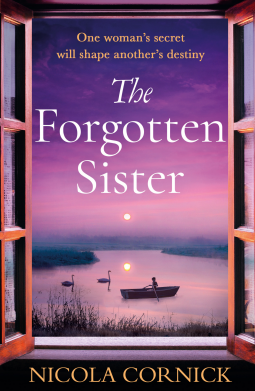
#BookReview ‘The Forgotten Sister’ by @NicolaCornick #historical

The Forgotten Sister by Nicola Cornick is a retelling of the Tudor love triangle of Queen Elizabeth I, Robert Dudley and Dudley’s wife Amy Robsart. The death of Amy has intrigued historians for centuries: did she fall downstairs, or was she pushed? Did her husband arrange her murder so he could marry the queen? Tudor history is mashed together with time travel and all kinds of mystical goings-on. Nicola CornickCornick has fun with her explanation of events, telling the story in dual timelines and mirroring Tudor characters with a contemporary circle of celebrities. At first, I found this irritating and was diverted from the story by trying to match up modern personalities with their Tudor equivalent. But when I stopped doing that, I sank into this easy-to-read story which I read over a weekend.
Lizzie Kingdom is a television personality with a clean-cut image. Her best friend is Dudley Lester, wild boy and former boy band member of Call Back Summer. When Dudley’s wife Amelia falls down the stairs to her death at their country house, Oakhanger Hall, Lizzie is suspected of having an affair with Dudley. Her ‘good girl’ image is in tatters and the press is hunting her. Lizzie’s story races along, she quickly discards her sycophantic group of followers and retreats to a country house she inherited but has rarely visited. And there we start to understand the mystical ability which Lizzie possesses connecting her with events in the past simply by touching an object – known as psychometry, or token object reading.
The romantic sub-plot sparks into life when Lizzie accidentally touches Arthur Robsart, the quiet rather stolid older brother of Amelia. Never before has her psychometric ability worked on a person. Arthur and his sister Anna suspect Lizzie of responsibility for the disappearance in odd circumstances of their younger brother Johnny. With the police seeking her again, this time for possible murder, Lizzie must choose whether to use the ability she has previously used only to remember her dead mother. To say more will give away the plot.
This was a fun read though populated with some unpleasant characters who were difficult to like. I was left wondering what the story would have been like if the viewpoints had been expanded to four. Cornick tells the story only via Amy Robsart and Lizzie Kingdom and shows us nothing of the events as experienced by Queen Elizabeth I [Lizzie’s equivalent] or Amelia Lester [Amy’s modern-day equivalent]. After Amelia’s death, Lizzie is crucified on social media, I was left wondering if Queen Elizabeth knew, or cared about, the gossip surrounding Dudley’s, and her own, guilt in Amy’s death.
A note on the cover, yet again another cover design which, though attractive, bears little connection with the story.

Read my reviews of these other novels by Nicola Cornick:-
THE LAST DAUGHTER
THE OTHER GWYN GIRL
THE WINTER GARDEN

If you like this, try:-
Kings and Queens’ by Terry Tyler
The Lady of the Rivers’ by Philippa Gregory
Last Child’ by Terry Tyler

And if you’d like to tweet a link to THIS post, here’s my suggested tweet:
#BookReview THE FORGOTTEN SISTER by @NicolaCornick https://wp.me/p5gEM4-4JT via @SandraDanby

#BookReview ‘The 20s Girl, The Ghost, and All That Jazz’ by June Kearns @june_kearns #romance

The 20s Girl, The Ghost, and All That Jazz by June Kearns is a fizzing giggly historical romance that makes you feel as if you’re drinking a bottle of Prosecco on holiday. In Gerardine Chiledexter it has a delicate-looking heroine who has inherited the kick-ass nature, and the debts, of her late Aunt Leonie. There’s a loyal friend, a crumbling bookshop, a psychic cat, shiverings and whisperings in the dark, an effete beau and a distinct lack of marriageable men in 1924 England after the Great War. Oh, and there’s a tall brooding cowboy with an enormous ranch in Texas. June Kearns Kearns has a wonderful flowing style, telling her story with wit and charm and without a glimpse of the author’s feet paddling below the water keeping the story and the characters tip-top. All the romantic conventions are here. A heroine, down on her luck but with an endless wardrobe of floaty Twenties couture dresses. A suitor, willing but uninspiring. An English village, green, damp, without eligible men. A crumbling mansion with an elderly crumbling workforce. Into this walks Coop, a cowboy with a drawl, a hatred of the wet, and a real impatient manner. Aunt Leonie, it appears, has left her half-share of a cattle ranch in Texas to Gerry. Coop owns the other half and he wants Gerry to sell it to him. Now. Immediately. Which of course she doesn’t.
Determined to find out what elegant fun-loving Leonie was doing in Texas, Gerry travels to the Circle-O Ranch in the middle of nowhere. There she finds a number of other romantic ingredients: an uppity neighbouring young lady who says she is engaged to Coop; a will-o-the-wisp teenager called Scoot; a staff of cowhands and Mexican servants with whom she is unable to communicate and horses she must ride. What Gerry doesn’t find is her luggage which has gone missing en route, so she is forced into a selection of Coop’s old trousers and shirts. The Texas section is something of a closed room scenario mixing together a number of unlikely characters, adding a financial mystery and people not being what they seem to be. And though Coop seems desperate for Gerry to sign the sale papers and leave, she remains determined to discover Leonie’s mystery.
There were a couple of times when the pace slowed and I wanted it to speed up again, but Kearns slowed things down at exactly the right romantic moments. Oh, and I loved the quotes for young ladies from 1920s handbooks, a new one at the head of each chapter. For example, from Advice to Miss All-Alone [1924], ‘Try not to become shabby, shallow or sour. Rather, read improving books and drink cocoa.’ Needless to say, Gerry does not take this advice.
This book really surprised me, it made me chuckle out loud. I’ll definitely be looking for other books by this author. One thing, I wish the title was different. Shorter, perhaps including something about the cowboy?

If you like this, try these:-
‘Love and Eskimo Snow’ by Sarah Holt
Forever Fredless’ by Suzy Turner
Pigeon Pie’ by Nancy Mitford 

And if you’d like to tweet a link to THIS post, here’s my suggested tweet:
#BookReview THE 20S GIRL, THE GHOST, AND ALL THAT JAZZ by June Kearns @june_kearns https://wp.me/p5gEM4-3wq via @SandraDanby

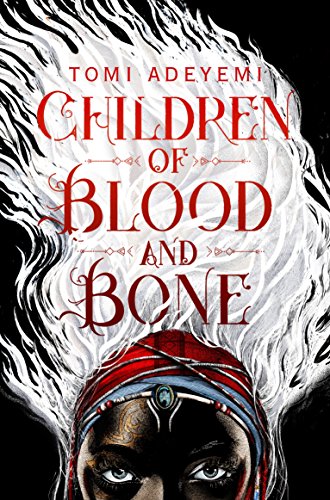
#Bookreview ‘Children of Blood and Bone’ by Tomi Adeyemi #YoungAdult #Fantasy

I picked up Children of Blood and Bone by Tomi Adeyemi, the first of a new ‘young adult’ series, when I was emotionally and intellectually exhausted. It is an assault on the senses, rather like a sniff of smelling salts. Tomi AdeyemiA West African tale of magic, Children of Blood and Bone tackles racially-charged violence, state-led racism and injustice, all wrapped-up in a magical quest. The Author’s Note at the end explains Adeyemi’s inspiration. “I kept turning on the news and seeing stories of unarmed black men, women and children being shot by the police. I felt afraid and angry and helpless, but this book was the one thing that made me feel like I could do something about it.”
Children of Blood and Bone is set in the nation of Orïsha where magic was banished in The Raid years earlier when the king ordered the death of all maji. The story is told by four teenage characters, two brother and sister pairings. Zélie’s maji mother was killed in The Raid and she is herself a diviner; her white hair marks her out as magical, but her magic is buried deep and unused. A chance meeting with runaway princess Amari sets the two girls on the trail of cherished objects which will enable Zélie to conjure the return of magic. Along the way, aided by Zélie’s sporty brother Tzarin, Zélie’s magic grows as she struggles to accept the power within her and how to control it. The appearance of the handsome prince Inan complicates things.
The book is not perfect, but this is a good debut by a young author with much promised for the rest of the series. Tzarin is a sketchy character crying out for more development, hopefully that will come in the next book, and Inan was inconsistent and therefore unbelievable. But the world building and depth of cultural reference is impressive. The pace is rather frantic and, during the first few chapters, I did wish for a stroll rather than a sprint. It takes a while to settle into a new world, to appreciate the subtleties of word and behaviour, the surroundings, the threats and opportunities. So many new magical phrases were thrown in at the beginning that I felt rather lost and almost abandoned the book. I didn’t. If you feel like I did, I urge you to continue reading and forgive any confusion or inconsistency. I wonder how much more powerful the beginning could be if the early pace were reduced by twenty per cent. When the romance became intense, I had to remind myself that they are teenagers.
The ending is a cliffhanger that I didn’t see it coming.

If you like this, try:-
The Queen of the Tearling’ by Erika Johansen
The Magicians’ by Lev Grossman
The Bear and the Nightingale’ by Katherine Arden

And if you’d like to tweet a link to THIS post, here’s my suggested tweet:
#BookReview CHILDREN OF BLOOD AND BONE by @tomi_adeyemi https://wp.me/p5gEM4-3vD via @SandraDanby

#BookReview ‘The Orphan’s Gift’ by @RenitaDSilva #historical #India

The Orphan’s Gift by Renita D’Silva tells the stories of two women, Alice and Janaki, and moves across four decades between India and England. It is a deceptive tale of love and loss and the mystery of how these two young women are connected at a time when certain love was forbidden. It is an unforgiving world where broken rules may be punished by death, isolation and poverty and where the sanctions may come from those closest to you. Renita D’SilvaWe first meet Alice, aged four, living a privileged life in the house of her parents, surrounded by beauty, warmth, and servants. But there are shadows too. Alice’s parents are distant and she finds love and companionship with her Ayah and Ayah’s son, Raju. Alice’s mother is delicate and spends all her time in a shadowed bedroom, her father is Deputy Commissioner of the British Government in India. Alice’s story starts in 1909 when the first agitations of Indian independence begin.
Janaki’s story begins in 1944 when she is raised by nuns in an Indian orphanage, she was left there as a tiny baby, wrapped in a hand-made green cardigan. Desperate for love, Janaki learns a difficult lesson; that even when love is found, there is no insurance against future pain.
The lives of both women are coloured by their early years and their differing experiences of love. Each story on its own is fascinating, but the fascination comes from how the two women are linked. Occasionally we see a tantalising glimpse of the elderly Alice in India in 1986, as an unknown visitor arrives. Hints are given in the Prologue which of course I read then forgot about as I became enthralled in the world of the book. Only as the book approaches its end does the significance of the Prologue become clear. D’Silva’s theme is how life turns on a sixpence. ‘It takes so little to change a life.’
I particularly enjoyed Janaki’s life at the orphanage, her friendship with Arthy, the pact the two girls make to study as doctors after meeting Mother Theresa and seeing one of their friends die because of the orphanage’s inability to pay for a doctor. Janaki’s story jumps forwards to the 1960s when she is a trailblazing doctor of gynaecology, at a time when female doctors are rare and given many column inches, but when she feels at her loneliest.
Love, and its subsequent loss, is not always fair; it hurts and can be unjust. This is a story of the ripple of consequences, it is also about the strength and truth of unselfish love which transcends prejudice, poverty and status. This book is full of the colours and scents of India but at its heart is a darkness and sadness which jabs an emotional punch. D’Silva is my go-to author for novels about India; she creates a sensory world which never fails to delight but into this setting she weaves stories tackling moral and heart-breaking themes.

Read my reviews of these other novels by Renita D’Silva:-
A DAUGHTER’S COURAGE
A MOTHER’S SECRET
BENEATH AN INDIAN SKY
THE GIRL IN THE PAINTING
THE SPICE MAKER’S SECRET
THE WAR CHILD

If you like this, try:-
At First Light’ by Vanessa Lafaye
The Sapphire Widow’ by Dinah Jeffries
Fatal Inheritance’ by Rachel Rhys

And if you’d like to tweet a link to THIS post, here’s my suggested tweet:
#BookReview THE ORPHAN’S GIFT by @RenitaDSilva https://wp.me/p5gEM4-4Fw via @SandraDanby

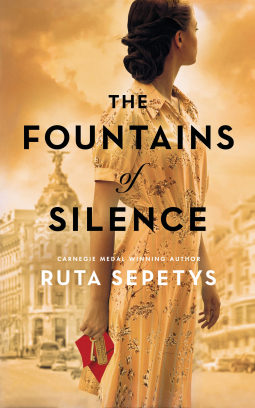
#BookReview ‘The Fountains of Silence’ by @RutaSepetys #historical #YA

Ruta Sepetys is a new author for me and I was drawn to The Fountains of Silence because it is set in the Spanish Civil War. Only after finishing the book did I realise Sepetys is a Young Adult author though this does not mean she backed away from tackling difficult subjects or that the book lacks emotional depth. Basically, this is a tale of young love in politically sensitive times. Ruta SepetysThe story starts in 1957 when teenager Daniel Matheson arrives in Madrid, Spain, with his parents. Daniel, a talented photographer, wants to go to J-School to study as a photojournalist; his father wants him to work at the family oil company. Playing diplomat between them is Daniel’s mother, who was born in Spain. The family stays at the Castellana Hilton where they are assigned an assistant, Ana. While Daniel takes photos, his father tries to close an oil deal. Only when Daniel meets Ben Stahl from the Madrid bureau of the New York Herald Tribune, does he understand his father’s deal involves meetings with General Franco.
As Ana and Daniel grow closer, hiding their relationship and sneaking precious moments together, Sepetys shows the dark side of life under Spain’s dictator. Truths are hidden, atrocities are committed every day, desperate poverty is normal and people live under daily fear of the Guardia Civil, Franco’s police force. Ana’s cousin Pura, who works at the Inclusa orphanage, has a curious mind and is puzzled by some of the things she sees at the orphanage and its associated clinics and hospital. Ana’s brother Rafa and his friend Fuga work as gravediggers where they bury many tiny coffins. Then Fuga discovers that some of them are empty. There are many unanswered questions that are dangerous to investigate; Rafa and Fuga hope Daniel’s photographs will reveal the truth.
Fuga’s lifelong ambition is to be a bullfighter and, wearing a borrowed traje de luces [a suit of lights, worn by bullfighters in the ring], he gets his first chance. In exchange for driving Fuga to the location of the fight, Daniel takes photos. Fuga and Daniel make an uneasy truce.
I was left wanting to know more from certain characters; particularly Fuga, and Julia, Ana’s sister, so critical to the plot but whose voice is hardly heard. Although the viewpoint switches around often, the bulk of the narration is by Daniel. The cast list is long, too long perhaps, which adds to the slightly disjointed feeling of chunks of story remaining untold. Some of the language sounded contemporary rather than post-Civil War Spain – ‘father-son dynamic’ – but Sepetys weaves in Spanish phrases and this adds authenticity and worked well.
Septeys is skilled at describing 1957 Madrid, she creates a totally believable picture. If you know nothing about the Franco dictatorship, this book is a good place to start. I was left wanting to know more; perhaps this is the difference between a YA novel and one written for adults.

If you like this, try:-
Midnight in Europe’ by Alan Furst
The Tuscan Secret’ by Angela Petch
Our Friends in Berlin’ by Anthony Quinn

And if you’d like to tweet a link to THIS post, here’s my suggested tweet:
#BookReview THE FOUNTAINS OF SILENCE by @RutaSepetys https://wp.me/p5gEM4-4IC via @SandraDanby