Tag Archives: book review

#BookReview ‘A Single Thread’ by Tracy Chevalier #historical

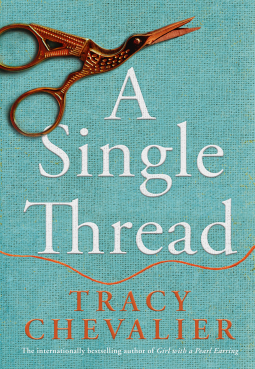
Winchester in 1932 is the setting for Tracy Chevalier’s latest novel, A Single Thread. Chevalier is the most reliable novelist I know, time and again she writes books I grow to love and to re-read. She is the true example of an iceberg novelist. The depth and detail of her research is invisible, hidden below the surface of the written word, but it is there nonetheless informing every sentence so the reader is confident that the description of various embroidery stitches is accurate. Chevalier has written about fossil hunters, weavers, runaway slaves, orchardists and a famous Dutch painter. In A Single Thread the story involves Winchester Cathedral, bell ringing and embroidery. Tracy ChevalierViolet Speedwell escapes her mother’s house in Southampton by getting a transfer to work in the Winchester office. Her mother is an emotional bully and Violet is desperate to get away, but not expecting it to be quite so difficult to survive alone on a typist’s salary. Lonely, desperate to make a success of her move, Violet looks for something to occupy her time so she does not have to sit with the other spinsters in the drawing room of her boarding house. One day she steps into the cathedral and finds her way blocked by an officious woman. Today, it is explained, is the Presentation of the Embroideries. Violet joins the broderers stitching kneelers and cushions for the hard benches, and meets two women who will be influential in her story; fellow borderer Gilda Hill, and genius embroidery designer Louisa Pesel.
Chevalier draws a picture of an English city in the years after the Great War, as families still grieve for their lost ones and women have to dance together for the shortage of male partners. And whilst the last war cannot be escaped, the shadow of fascism lurks in Europe. Violet is a surplus woman, her brother and fiancé killed in the war, but she rebels against the idea of devoting the rest of her life to caring for her bitter mother. Hence the move to Winchester. There she finds employment, friendship and, possibly, love. Both activities described in detail – the embroidery and the bell ringing – are detailed, complex and build slowly, layer on layer, each preceding stitch or note needing to be exact before the next one is attempted. This is reflected in Violet’s own life; only when she makes peace with her past, her mother’s grief for her lost son George, Violet’s own grief for her fiancé Laurence, the mind-numbing boredom of her job, can she move on to the next layer of her life.
Like all Chevalier’s novels, this is a thoughtful read about a time of great change involving women’s emancipation and independence, where women frown on other women who act against convention. If you like fast-moving stories then this may not be for you. I thought it was delightful and read it quickly, suspecting how it may end and – almost – being correct. But not quite.

Read my reviews of Tracy Chevalier’s other novels:-
AT THE EDGE OF THE ORCHARD
NEW BOY
THE GLASSMAKER
THE LAST RUNAWAY

If you like this, try:-
After the Party’ by Cressida Connolly
These Dividing Walls’ by Fran Cooper
Smash All the Windows’ by Jane Davies

And if you’d like to tweet a link to THIS post, here’s my suggested tweet:
#BookReview A SINGLE THREAD by https://wp.me/p5gEM4-40S via @SandraDanby

#BookReview ‘The Confessions of Frannie Langton’ by Sara Collins #historical

The Confessions of Frannie Langton by Sara Collins tells the story of a Jamaican woman enslaved as a child, exploited by two men and subsequently accused of murder in Georgian London. I am left with the feeling that this debut, though full of lush description and a distinctive heroine, is an ambitious story that would benefit from being given some air to breathe. Sara CollinsFrances Langton, house-slave at Paradise, a Jamaica sugar cane plantation. Frances Langton, housemaid in the home of a London scholar. Frances Langton, the mulatto murderess. Which is the real Frannie? A woman born into slavery in Jamaica then transported to London and gifted to another master, in each place she is studied and manipulated by two men who cannot agree on the pigment of negro skin, the intellectual capacity of blacks and whether they can be educated. There are hints about things that happened to Frannie in her past, things that she did to others – leading I think to the description of the book as ‘gothic’ – some of which are explained by the end, some of which remained vague to me.
This is Frannie’s story, told in her voice, written as she waits in gaol for her trial and written for her lawyer. But we never actually meet this lawyer, he remains a cardboard cut-out so Frannie’s version of the truth remains unverified.We read the sworn testaments of witnesses at her trial, are they the truth or spoken with prejudice and ulterior motives? The book is really two stories – Frannie’s exploitation at Paradise by two men who fancy themselves scientists, and her London lesbian love affair and the murder – that don’t fit together convincingly.
The best thing for me about the book is the character of Frannie, unlike anything I have read recently. The depth of research is evident in the detail but the pacing is unpredictable – Frannie’s voice in the beginning is spellbinding but the middle section is soggy – and I’m intrigued by the scientific exploration of racism. I wanted less of the laudanum addiction and romance between Frannie and her mistress and longed for the trial to be used as the spine on which to hang Frannie’s slave story. A slow read, but definitely an author to watch.

If you like this, try:-
The Mermaid and Mrs Hancock’ by Imogen Hermes Gowar
The Convenient Marriage’ by Georgette Heyer
The Cursed Wife’ by Pamela Hartshorne

And if you’d like to tweet a link to THIS post, here’s my suggested tweet:
#BookReview THE CONFESSIONS OF FRANNIE LANGTON by Sara Collins @mrsjaneymac https://wp.me/p5gEM4-3Us via @SandraDanby

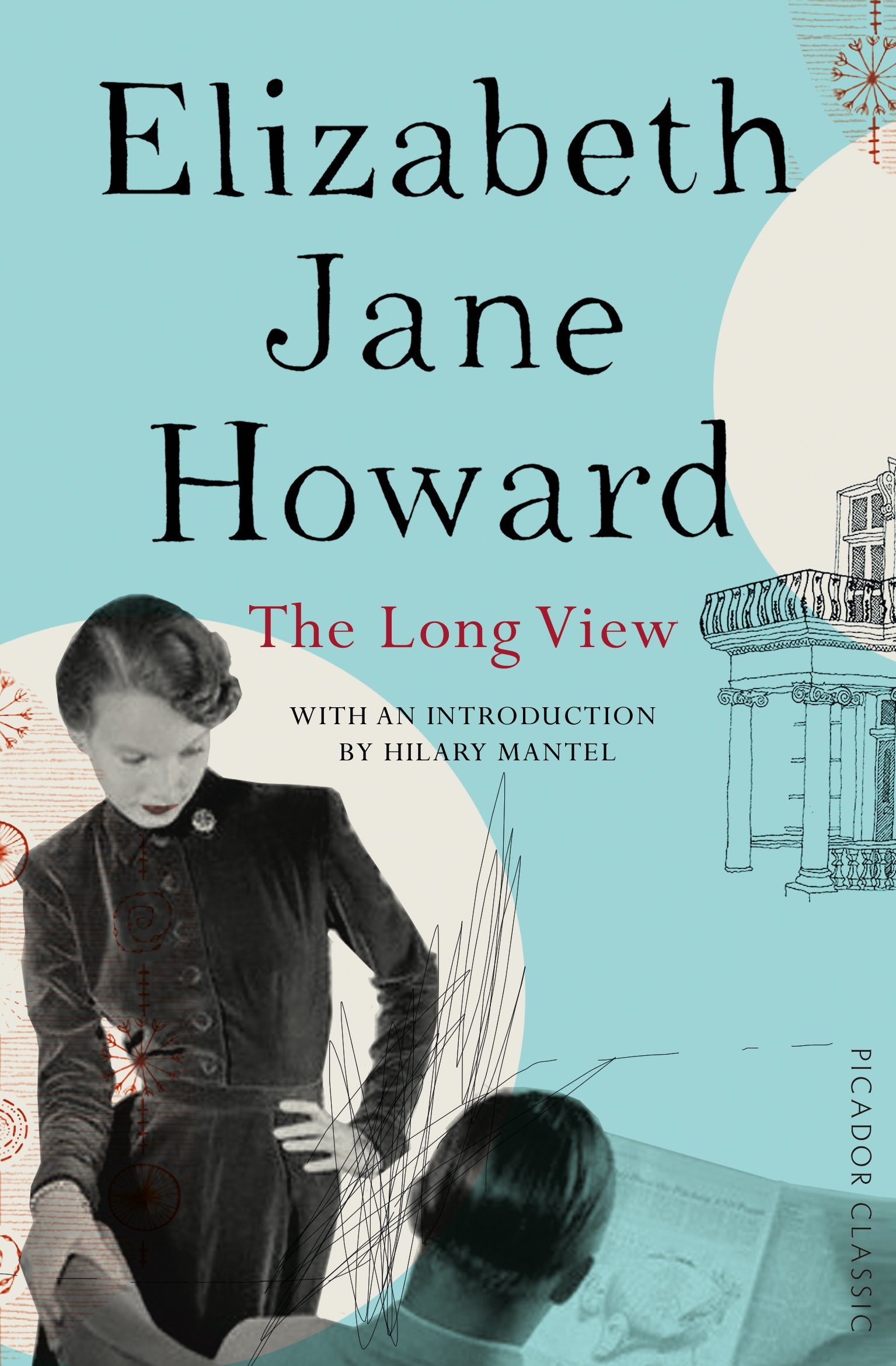
#BookReview ‘The Long View’ by Elizabeth Jane Howard #historical #marriage

The Long View by Elizabeth Jane Howard is not so much a ‘what happens next’ novel as ‘what has happened in the past to lead to this situation’ story. It is a novel about choices and where they can lead. Howard tells the story, backwards from 1950 to 1926, of the marriage of Antonia and Conrad Fleming. As the story starts, the marriage seems doomed and you cannot help but wonder how these two people ever got married in the first place. In fact, once I finished it I was tempted to read it again from back to front. Elizabeth Jane HowardThe first paragraph is a masterful example of scene setting. It opens with a dinner party to celebrate the engagement of Julian Fleming to June, who has secretly spent the afternoon alone at the cinema. As Antonia considers the complicated marital affairs of her son – and her daughter, Deirdre, who is pregnant by a man who does not love her – I wondered how her own marriage must have shaped her children’s handling of relationships and how hers, in turn, was shaped by her parents. I found Conrad an almost totally unsympathetic character, indeed in the first part he is referred to simply as Mr Fleming. ‘One of his secret pleasures was the loading of social dice against himself. He did not seem for one moment to consider the efforts made by kind or sensitive people to even things up; or if such notions ever occurred to him, he would have observed them with detached amusement, and reloaded more dice.’
This is very much a novel of its time in which middle-class women had limited choices. As a young woman, Antonia lacks the strength to break out. She is timid, feeling she has proved unsatisfactory for both her mother and father. ‘She grew up, therefore, feeling, not precisely a failure so much as an unnecessary appendage.’ Her mother bemoans her lack of interests [Antonia does have interests, simply not those of her mother] and her father her lack of intellect [but without stimulus of career or education]. We see the transition from hopeful, eager young girl experiencing first love, to weary, middle age when the ‘trees ahead so horribly resembled the trees behind, and the undergrowth of their past caught and clung and tore at them as they moved on.’
This is Howard’s second novel. I am most familiar with her later ‘Cazalet Chronicles’ series and there are some key comparisons to be made in the writing style. Sentences in The Long View are longer, paragraphs longer, and the style not as simple and nuanced as the later books. Viewpoint also shifts within paragraphs, a technique she changed for the Cazalets. This is not to say this spoiled my enjoyment of The Long View, it is perhaps an observation for writers rather than readers, but it shows an interesting development in the author’s writing style. And I particularly enjoyed the descriptions of Antonia’s horse rides in Sussex, countryside in which the Cazalet’s house, Home Place, is set.

Read my reviews of ‘The Cazalet Chronicles’, also by Elizabeth Jane Howard:-
THE LIGHT YEARS #1CAZALET 
MARKING TIME #2CAZALET
CONFUSION  #3CAZALET
CASTING OFF #4CAZALET
ALL CHANGE #5CAZALET

If you like this, try:-
‘The Past’ by Tessa Hadley
‘Offshore’ by Penelope Fitzgerald
‘Mothering Sunday’ by Graham Swift

And if you’d like to tweet a link to THIS post, here’s my suggested tweet:
#BookReview THE LONG VIEW by Elizabeth Jane Howard https://wp.me/p5gEM4-2ZS via @SandraDanby

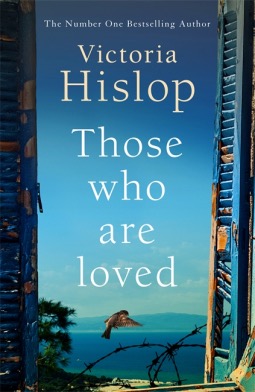
#BookReview ‘Those Who Are Loved’ by Victoria Hislop @VicHislop #Greece #historical

Those Who Are Loved by Victoria Hislop is the story of Themis Koralis from 1930 to 2016. Set in Greece it tells the troubled history of the country through the Second World War, occupation, Civil War and military dictatorship. They are harsh years; the country, its people and families are divided by beliefs, poverty and wealth. It is a long book, 496 pages, and a lot of history is covered. Victoria HislopThemis has two brothers – Panos and Thanasis – and a sister, Margarita; they live with their grandmother in the Athens district of Patissia. Their father is a merchant seaman and hardly comes home, their mother Eleftheria is in a psychiatric hospital; both appear briefly. Central to the home is Kyría Koralis. I enjoyed the descriptions of these early years in the apartment, the meals, the squabbling teenagers, Themis and her friendship with Fotini. But political beliefs are dividing the country and as the arguments grow in the Koralis apartment, they also divide the siblings. The divisions only get worse under German occupation, leading Panos and Themis to support the communists in the fight against the Nazis. Thanasis however becomes a policeman. Margarita, working in a dress shop, is secretly in love. Their political views, forged as teenagers, impact on the rest of their lives.
At times I struggled with this book, other sections I enjoyed. Perhaps this is because the linear narrative is driven by historical events which Hislop felt bound to include, and is not dynamic or character-driven. There are many peripheral characters who disappear without another mention and I found the middle section particularly slow, as if Themis is treading water before reaching the next phase of her life. The novel is effectively the life story of Themis, the history of Greece during her lifetime and its effect on her, and it includes a fascinating account of the post-WW2 communist rebellion in Greece, my knowledge of which was rather hazy. At times it is difficult reading and it is certainly thought-provoking; extreme views with two uncompromising sides unable to meet in the middle, quickly deteriorating to violence, cruelty and abhorrent behaviour.
Hislop is my go-to author for novels set in Greece. I finished Those Who Are Loved wishing she had chosen a specific phase of Themis’s life to concentrate on rather than the full 86 years. For me though, her subsequent novels cannot rival her debut The Island which I really must re-read again.

Read my reviews of other these books by Victoria Hislop:-
THE FIGURINE
THE STORY
THE SUNRISE

If you like this, try:-
Sweet Caress’ by William Boyd
Freya’ by Anthony Quinn
Quartet’ by Jean Rhys

And if you’d like to tweet a link to THIS post, here’s my suggested tweet:
#BookReview THOSE WHO ARE LOVED by Victoria Hislop @VicHislop https://wp.me/p5gEM4-40c via @SandraDanby 

#BookReview ‘Bright Center of Heaven’ by William Maxwell #historical #classic

This is the first novel by William Maxwell, author of Pulitzer finalist So Long, See You Tomorrow and fiction editor of The New Yorker magazine. He was there from 1936-1975 and worked with Cheever, Updike, Salinger and Nabokov, among others. Not a novel published singly, I found Bright Center of Heaven in an American anthology of Maxwell’s early work. This is a quiet read though ambitious in its subject matter, and well worth spending time with before reading Maxwell’s later works. William Maxwell He follows the time-honoured structure of placing a group of people in one place over a limited time period and observing what happens. It is a contemplative novel and, although it does work to a climax, it is more an insight into the mind of each character as events unfold.
Widow Mrs West and her two teenage sons Thorn and Whitey live at Meadowland, a dilapidated farm that they can no longer afford to run, with her husband’s sister Amelia and her son Bascomb, German cook Johanna and farmer Gust. Thorn feels close to the land to the ten-acre field gifted to him by his father on his sixth birthday. Now Thorn helps Gust to work the fields. Gust is all that remains of the farm in its agricultural days when talk around the dinner table was of crop yields and mechanisation. Whitey runs errands for his mother ‘Muv’ and tends to his canoe. Into this quiet rural world come the summer lodgers – a teacher, artist, pianist and actress – and with it the dinner conversation changes. It changes again when Mrs West’s invitation becomes known; Jefferson Carter, a Harvard-educated New York intellectual who is black, is coming to visit.
It took me a while, at least halfway through, before I figured out the relationships and identities. Each person’s viewpoint is shown, their outward behaviour explained by inner worries. There is an intricate network of connections between them as well as individual stories, invisible from the outside, which Maxwell reveals piece by piece. Carter does his job as the catalyst for trouble around the dinner table. First he is blanked by Amelia, a hypochondriac Southern lady, old before her time; next, he argues with teacher Paul. Carter’s bewilderment and growing anger at this group of people serves to add a voice from outside Meadowland, another view of the world; he is as convinced he is correct about racial equality, as they are. “These seven people,” he thinks, “had no meaning beyond themselves, which was to say that they had no meaning at all. They did not express the life of the nation. They had no visible work. They were all drones and winter would find them dead.”
Bright Center of Heaven was published in 1934 [the same year as F Scott Fitzgerald’s Tender is the Night], before Maxwell joined The New Yorker, and was out of print for almost 70 years until this Library of America edition published in 2008. It is the beginning of Maxwell the novelist, a sensitive writer who takes his time and needs to be read without hurry. His are delicate stories without shouting. Maxwell was later unimpressed by Bright Center of Heaven, describing it as“hopelessly imitative” and “stuck fast in its period.” In The Paris Review he said, “My first novel… is a compendium of all the writers I loved and admired.” Virginia Woolf is a particular influence. Ten years after the novel’s publication, he reread it and wrote, “I… discovered to my horror that I had lifted a character—the homesick servant girl—lock, stock, and barrel from To the Lighthouse.”

Try my reviews of these other novels by William Maxwell:-
THE FOLDED LEAF
THEY CAME LIKE SWALLOWS
TIME WILL DARKEN IT

And read the first paragraphs of TIME WILL DARKEN IT and THE CHATEAU.

If you like this, try:-
‘Barkskins’ by Annie Proulx
‘Housekeeping’ by Marilynne Robinson
‘A Thousand Acres’ by Jane Smiley

And if you’d like to tweet a link to THIS post, here’s my suggested tweet:
#BookReview BRIGHT CENTER OF HEAVEN by William Maxwell https://wp.me/p5gEM4-3vV via @SandraDanby

#Bookreview ‘File under Fear’ by Geraldine Wall #genealogy #mystery

Second in the series about probate researcher turned genealogy detective Anna Ames, File Under Fear by Geraldine Wall takes off running from where the previous book left off. This is a well-written, page-turning series that combines family history, crime, family and secrets. But for me, the touchstone that makes it special is the sub-plot of Anna’s home life and her husband Harry’s dementia. If you haven’t read book one in the series, I suggest you start there to see the full emotional depth. Geraldine Wall Anna’s new contract sounds boring: to write a business report on Draycotts, the company which makes Drakes lurid orange and green drink, analysing how the family members coordinate together to run a successful business. But there is a secret element to her contract, to locate a missing person for CEO Gerald Draycott. This case sees Anna physically and emotionally intimidated and encompasses bullying, illegal smuggling and rape. An intense story with red herrings and wrong assumptions made about family members, the actual crimes being committed and in which Anna questions who to trust. Backing her up are her very likeable family and the multi-talented more-than-workmate Steve. Some of the resolutions fall into place a little conveniently at the fast-paced ending, but this is a satisfying tale.
What makes this series so different, and adds the emotional depth in spades, is Harry’s illness and how the family and friends cope. Sometimes they struggle but ultimately they manage the reality of their life with compassion, humour and love. This series is maturing nicely.

Here’s my review of the first in this series by Geraldine Wall:-
FILE UNDER FAMILY #1ANNAAMES

If you like this, try:-
Run’ by Ann Patchett
Shadow Baby’ by Margaret Forster
Deadly Descent’ by Charlotte Hinger

And if you’d like to tweet a link to THIS post, here’s my suggested tweet:
#BookReview FILE UNDER FEAR by Geraldine Wall https://wp.me/p5gEM4-3Ue via @SandraDanby

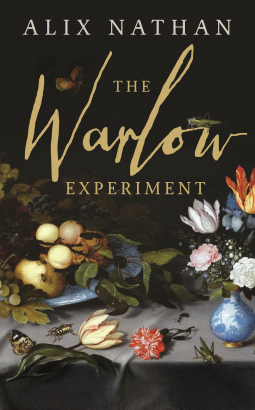
#BookReview ‘The Warlow Experiment’ by Alix Nathan #historical

This is a story of two men. One plays at being a god. The other grabs a chance to escape poverty. The Warlow Experiment by Alix Nathan is about power, ambition, control, the disintegration of respect and vanishing of common sense. What a breath of fresh air this book is; it is so unusual. The country gentleman who conducts the experiment, Powyss, is an isolated character. He has no family and, when he has the idea of experimenting with the life of another man, thinks he is doing good by supporting the man’s family. In truth he seeks the approbation of the Royal Society. Alix NathanWarlow is a farm labourer who scrapes a living at the edge of starvation, struggling to feed this family. When he sees an advertisement asking for a man to take part in Powyss’s experiment, he sees it as an escape. So what is the experiment? Powyss is a man who experiments with exotic seedlings and plants. He sources them from abroad and studies them, experimenting with conditions – soil, temperature, water – to see which flourish in the climate of the Marches climate. It is a short step for him to wonder how a man would fare without seeing a human face for seven years. A cellar is converted in Powyss mansion, furnished with carpets, bedstead and comfortable mattress, an organ, books, writing equipment and a dumb waiter lift which is the only means of communication with above. He is forbidden to talk to anyone; his needs are communicated by notes sent up in the lift. But Powyss forgets to vary Warlow’s conditions, whose surroundings remain the same. He is below ground with no natural light; the only sign of changing daylight and season is from the frogs that find their way into his cellar via a grating. At the beginning both men are happy with the scheme; both think they benefit. Powyss makes his observations; Warlow escapes his grinding life of work and poverty. He was knocked around by his father, and now knocks around his own kids. He longs for something better and decides that when he gets out, he will have earned enough money not to work and so will drink all day instead. Neither man realise what they have undertaken.
The story is told by three people; Powyss, Warlow and Catherine, a servant in the Powyss household. I would also like to have heard the first hand story of Mrs Warlow, who has quite a part to play. The beginning of Warlow’s viewpoint reminds me of Emma Donoghue’s Room; the repetition of simple detail as he studies his surroundings, he focuses on the functional. He is barely literate but, as Powyss impresses on him that it is part of his job to write a journal, Warlow begins to write. Nathan’s portrayal of the early attempts of this uneducated man to write, the bad spelling, the stumbling expression, are convincing; later I wanted his stream of consciousness ramblings to be more concise. The imprisonment represents only the first part of the story; there is more to tell than the experiment itself. The servants in Powyss household become uncomfortable with their part in the proceedings, they also observe Mrs Warlow as she visits the house to receive the payment from Powyss promised as part of Warlow’s contract. Unknown to her, Mrs Warlow becomes the subject of a secondary report into the ‘lateral effects’ on the man’s family.
A sub-plot sets this story in its time. Revolution rumbles on in France and there are demonstrations in London against the King and prime minister Pitt. Head gardener Abraham Price is a rebel who seduces housemaid Catherine with talk of improvement, of rights, of freedom without masters. This country mansion in the Marches reflects the class tensions in the country – rich/poor, vote/no vote. Powyss receives the latest information about politics and uprisings in letters from his London correspondent. In exchange for boxes of fruit, Fox is the only voice Powyss hears from outside his insular world. He questions the morality of the experiment but Powyss refuses to listen; he also fails to see how the servants observe the experiment with dislike. He is a naïve man who fails to understand he is destined to be part of the experiment too.
This is such an unusual subject and in an Author’s Note, Nathan explains where she got the idea. She read a report of a man in 1797 who conducted such an experiment as that of Powyss. She was intrigued and wrote two short stories, one from the viewpoint of each man. After that, she realised there was a bigger story to tell. I’m glad she did. It is an unusual, absorbing read. It deserves time to be read, so please don’t rush it.

If you like this, try:-
The Quick’ by Lauren Owen
The Night Child’ by Anna Quinn
Master of Shadows’ by Neil Oliver

And if you’d like to tweet a link to THIS post, here’s my suggested tweet:
#BookReview THE WARLOW EXPERIMENT by Alix Nathan https://wp.me/p5gEM4-3UJ via @SandraDanby

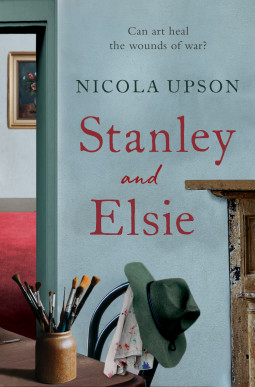
#BookReview ‘Stanley and Elsie’ by Nicola Upson @nicolaupsonbook #art #historical

My knowledge of English artist Stanley Spencer was sketchy to say the least when I started reading Stanley and Elsie by Nicola Upson. This is a biographical novel that walks a difficult line between true fact and imagined conversation and walks it with skill, delicacy and drama. Definitely a novel for anyone who loves art. Nicola UpsonUpson takes us into the Spencer household at Chapel View, Burghclere after the Great War when Elsie Munday starts work as a housemaid. Stanley Spencer has been commissioned to paint the inside of a chapel; his wife Hilda, also a painter, minds their young daughter Shirin. Through Elsie’s eyes we see the lives of this family, their ups and downs, the artistic differences, the selfishnesses of Stanley and Hilda, smoothed by the tact, diplomacy and efficiency of Elsie. The title could make some people assume Stanley and Elsie were romantically attached but theirs is a master/servant relationship that deepened into mutual respect and friendship. Stanley, selfish, focussed, is a difficult master, a difficult husband, and Elsie finds herself caught in the middle of disputes between husband and wife. Often she is exasperated with both of them. Instead she becomes indispensable to the household.
Upson gives us an insight into the lives of this family, their daily tasks, the squabbles, the unexpected joys. She combines small inconsequential details of painting with, through Elsie’s growing appreciation of art, the big picture destruction, grief and lasting devastation of war on Stanley’s generation of men. Upson is excellent at portraying place; the Spencers move between Burghclere, Cookham and Hampstead Heath as their marriage disintegrates, a separation complicated by Stanley’s obsession with another woman. No one could have forseen the consequences of this obsession. Stanley is selfish and self-absorbed, Hilda also but to a lesser degree; both can be loving with their children one minute and dismissive the next. At times, neither are particularly likeable; Elsie is the one who picks up the pieces.
Elsie is the core of this story. As narrator we not only see the Spencers through her eyes, we also see her grow from young girl to competent, confident young woman.
The ending was under-whelming but I see it must have been difficult to know how and when to end the novel.
A delightful read. I particularly enjoyed picturing the paintings in my mind as I turned the pages. Reading Stanley and Elsie makes me want to visit Sandham Memorial Chapel near Newbury, Hampshire, now a National Trust property, and also to explore Upson’s other novels.

Read my reviews of these other books by Nicola Upson:-
AN EXPERT IN MURDER #1JOSEPHINETEY
ANGEL WITH TWO FACES #2JOSEPHINETEY

If you like this, try:-
The Gustav Sonata’ by Rose Tremain
The Goldfinch’ by Donna Tartt
Life Class’ by Pat Barker #1LIFECLASS

And if you’d like to tweet a link to THIS post, here’s my suggested tweet:
#BookReview STANLEY AND ELSIE by Nicola Upson @nicolaupsonbook https://wp.me/p5gEM4-3Zx via @SandraDanby

#BookReview ‘The Wonder’ by Emma Donoghue #Irish #faith

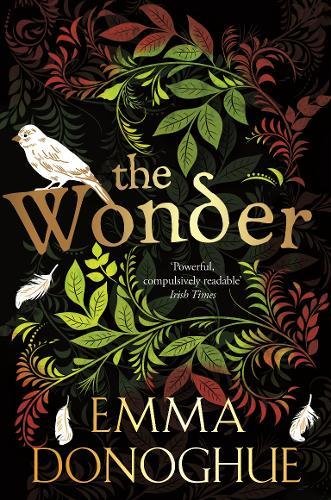
What a compulsive read this is, starting slowly until its questions had me sneaking a few pages when I should have been working. The premise of The Wonder by Emma Donoghue sounds straightforward: a nurse and a nun are employed to observe and accompany an eleven-year old girl in rural Ireland who is surviving on ‘manna from heaven’. Is she a miracle or a fraud? Emma DonoghueThis story is very far from straightforward. The task of Nurse Elizabeth Wright, who trained under Miss Nightingale at Scutari during the Crimean War, is to watch and and ensure no food is secretly passing the child’s lips. Strangely, for a nurse, Lib is not responsible for the health of the girl. A local committee, set-up to establish if Anna O’Donnell is secretly eating or if there is a religious wonder living in their village, pays the wages of two nurses, Lib and Sister Michael, for two weeks.
Accepting nothing until she can prove it herself, Lib approaches her task with professional thoroughness, observing, measuring, weighing. Feeling isolated in a cramped home, surrounded by a religion she does not practise or understand, Lib gets little help from local doctor Mr McBrearty or priest Mr Thaddeus. Not knowing who she can trust, she trusts no one; turning away visitors to the O’Donnell home who want to see the holy girl, visitors who donate alms to a collecting box near the door. When a journalist from Dublin says it is clearly a hoax and accuses Lib of speeding Anna’s death – that the all-day watch is denying her the morsels of food she must have been earlier fed – she is horrified and is forced to reassess her role.
The first half is a slow slow build but so worth it for the second half; with an ending I didn’t expect. This story has many layers. Lib, with her scientific approach to religion, is appalled at what she sees as inconsistencies and fantasies of the O’Donnell family’s Catholic beliefs. They accept and do not question. As the story progresses, Lib untangles Anna’s beliefs and in the process re-examines her own.
Not an easy read, The Wonder tackles the emotional subjects of religion and abuse set within the context of rural Ireland in the 1850s. Donoghue is an author who defies description; each novel is so different from its predecessor. With The Wonder, she has again confounded my expectations. Excellent.

Read my reviews of these other Donoghue novels:-
AKIN
FROG MUSIC
THE PULL OF THE STARS

Read the first paragraph of ROOM.

If you like this, try:-
‘Birdcage Walk’ by Helen Dunmore
‘Day’ by AL Kennedy
‘House of Names’ by Colm Tóibín

And if you’d like to tweet a link to THIS post, here’s my suggested tweet:
#BookReview THE WONDER by Emma Donoghue http://wp.me/p5gEM4-2Z1 via @SandraDanby

#BookReview ‘Wakenhyrst’ by Michelle Paver #gothic #mystery

Wakenhyrst by Michelle Paver is a creepy atmospheric novel that has been described as a ghost story, but the only ghosts in it are in the minds of the people. Which of course makes them enormously powerful and frightening. I found myself eager to return to this book, resenting time away from it. Paver is a skilled storyteller and I am coming to anticipate her new books with relish. If you haven’t read her adult novels, you are in for a treat. Michelle PaverThe story starts with a newspaper article written in 1966 entitled ’The Mystery of Edmund Stearne’. The journalist, who has spoken to Stearne’s daughter Maud about the conviction of her father for murder in 1913, casts doubt on Maud’s version of events. Could Maud be the guilty one? The story is set at Wake’s End, a country house at Wakenhyrst, a village beside the Guthlaf’s Fen in Suffolk. Paver creates this setting with all the intensity and atmosphere with which she created the Arctic in Dark Matter and the Himalayas in Thin Air. The fens haunt every aspect of life at the house and on bad days, when the weather closes in and the mind is in turmoil, the fens invade the rooms too. The rotting stench. A scratching at the windows. Damp and infection. Edmund hates the fens and forbids Maud and her older brother Richard from crossing the bridge; Nurse too is full of scary stories of ferishes and hobby-lanterns that entice people to their death. Others are more pragmatic, depending on the fens for their living and for food.
When Maud’s mother dies in childbirth everything changes at Wake’s End. Richard is sent away to school and thirteen-year old Maud becomes housekeeper and then secretary for her father who is a medieval historian. Edmund’s odd behavior begins when he uncovers an ancient painting in the graveyard of local church St Guthlaf’s. He imagines that the eyes of the Doom, the painted devil, are staring at him with purpose, that the devil knows his secret. The Doom is restored and hung again in the church, but in a locked room. When Edmund kills Maud’s favourite magpie, Chatterpie, her dislike of her father becomes a mission to fathom the truth of his odd behavior.
This is a thoughtful mystery rather than a thriller, the danger and threats unfold at a steady pace and the questions continue until the end. What was Edmund’s crime and how far will he go to hide the truth? Why does he hate the fens so much? How exactly do the strands of waterweed appear on his pillow? Not so much a ghost story as a mystery of rational understanding clouded by folktale, medieval legend and tales of ancient witchcraft and superstition.
The story unfolds through Maud’s eyes and the excerpts she reads of her father’s diaries, plus Edmund’s translations of a medieval mystic Alice Pyett and The Life of St Guthlaf. Although Edmund is an unsympathetic character, I did pause at one point to wonder the reliability of Maud’s account. Maud is an impressive character; denied education because she is a girl she reads secretly and resents her father’s nightly use of her mother, multiple pregnancies which eventually lead to Maman’s death. Paver is good at drawing a picture of the community; fen-dweller Jubal Rede, assistant gardener Clem Walker, servant Ivy, rector Mr Broadstairs, Dr Grayson and village wisewoman Boddy Thrussel. Modern medicine beside folk remedies. Church of England beside centuries-old folklore.
So creepy is the story, so isolated is this house beside the fen, that the setting feels older than Edwardian England. It could easily be set in the 19thcentury, excepting the references to trains and telegraphs. The isolation of the community is key to the crimes committed; truth may disappear, be disguised and denied, but someone always sees, someone always knows. The fen holds the answers.
Excellent.

And read my reviews of other novels by Michelle Paver:-
THE OUTSIDERS #1GODS&WARRIORS
THIN AIR
VIPER’S DAUGHTER #7WOLFBROTHER

If you like this, try:-
The Witchfinder’s Sister’ by Beth Underdown
‘Deerleap’ by Sarah Walsh
The Confessions of Frannie Langton’ by Sara Collins

And if you’d like to tweet a link to THIS post, here’s my suggested tweet:
#BookReview WAKENHYRST by Michelle Paver https://wp.me/p5gEM4-3Yb via @SandraDanby