Tag Archives: book review

#BookReview ‘The Corners of the Globe’ by Robert Goddard #WW2 #thriller

The Corners of the Globe is a very fast-moving sequel by Robert Goddard, second in his Wide World series. There’s a Scotland to London train chase complete with spies, a captured German warship, murder, kidnapping, secret codes and jumping on and off trains which would rival The 39 Steps [which Goddard playfully has one of his characters read in the restaurant car of one of the trains]. Robert GoddardGreat War flying hero James Maxted is in London, convinced that the death of his father [in the first book] is not as simple as it appeared. His investigations take him further into danger, into the dark and deadly preview of the Second World War. You really do need to read book one first [see the link below for my review] although there is a little exposition at the beginning in the form of a Secret Service report, but to be honest it functions more as a recap for the reader who has read the first book than as an introduction for a newcomer.
I failed to guess the ending of the first book, did I guess the ending of this one correctly? No.

Read my reviews of Goddard’s other books:-
THE WAYS OF THE WORLD #1 THE WIDE WORLD TRILOGY
THE ENDS OF THE EARTH #3 THE WIDE WORLD TRILOGY
PANIC ROOM
THE FINE ART OF INVISIBLE DETECTION #1UMIKOWADA
THIS IS THE NIGHT THEY COME FOR YOU #1SUPERINTENDENTTALEB

If you like this, try:-
Corpus’ by Rory Clements
The Second Midnight’ by Andrew Taylor
Noonday’ by Pat Barker

And if you’d like to tweet a link to THIS post, here’s my suggested tweet:
#BookReview THE CORNERS OF THE GLOBE by Robert Goddard via @SandraDanby http://wp.me/p5gEM4-19H
#BookReview ‘The Hidden Assassins’ by @RobWilsonwriter #crime #Spain

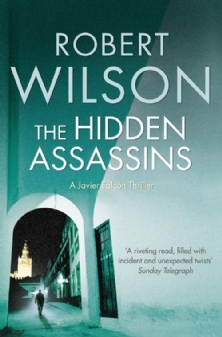
The pace of The Hidden Assassins by Robert Wilson does not stop. The setting: Seville, Spain. The beginning: a mutilated corpse is found on a rubbish dump. The first turning point: an explosion at a block of flats turns out to be a terrorism attack on the mosque in the basement. Or is it? Detective Javier Falcón is swept along by the media circus and political panic as fear of a widescale attack on Andalucía grips Spain. Robert WilsonThis is the third of Robert Wilson’s four-book series about Falcón and the story twists and turns relentlessly. The plotting is excellent, I challenge you to work out the answers. As Javier unravels the knots you don’t know what to believe and neither does he.
I am fascinated by the insight into Falcón’s life provided by glimpses of his cooking. His housekeeper leaves his food in the fridge for him to prepare in the evening. He is something of a cook. “Encarnación had left him some fresh pork fillet. He made a salad and sliced up some potatoes and the meat. He smashed up some cloves of garlic, threw them into the frying pan with the pork fillet and chips. He dashed some cheap whisky on top and let it catch fire from the gas flame. He ate without thinking about the food and drank a glass of red rioja to loosen up his mind.” And then he goes out to work again. It is 10pm.
I will not give away the plot details, but there are sub-plots too involving characters who featured in books one and two: Javier’s ex-wife Inés and her husband the judge Esteban Calderón, his ex-girlfriend Consuelo, his sister Manuela.
As always, Seville is an additional character. Its streets, the heat, the lifestyle. It makes me want to go there now.

Here are my reviews of the other books in the Javier Falcón series:-
THE BLIND MAN OF SEVILLE #1FALCÓN
THE SILENT AND THE DAMNED #2FALCÓN
THE IGNORANCE OF BLOOD #4FALCÓN

If you like this, try:-
‘Liar Liar’ by MJ Arlidge #4HelenGrace
Lord John and the Private Matter’ by Diana Gabaldon
The Various Haunts of Men’ by Susan Hill #1Simon Serrailler

And if you’d like to tweet a link to THIS post, here’s my suggested tweet:
#BookReview THE HIDDEN ASSASSINS by @RobWilsonwriter via @SandraDanby http://wp.me/p5gEM4-Zq

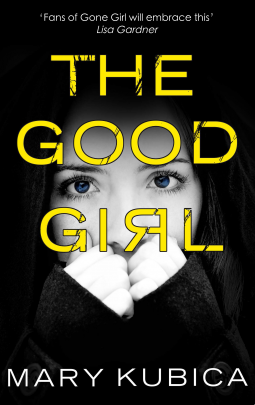
#BookReview ‘The Good Girl’ by @MaryKubica #suspense

The Good Girl by Mary Kubica starts with a missing girl, woman really, though we first hear the news of the disappearance of Mia Dennett from her mother’s point of view. And to her mother, Mia is still a girl though she is a schoolteacher. Detective Gabe Hoffman is bemused that Mia’s parents don’t seem to visit their daughter’s apartment. And then, the time shifts and it is after Mia’s return and we are with Mia and her parents on the way to psychiatrist. Amnesia. Mia cannot remember what happened. Mary KubicaAnd so the story is pieced together. Mia’s kidnap is told from multiple viewpoints; before, during and after the event over a winter in Chicago. Everyone in this dysfunctional family seems to have their own agenda. But Mia cannot remember what happened in that cabin where she was held captive by a man called Owen for three months.
The setting of the Minnesota cabin in winter is so clearly drawn I could be there, a mixture of beautiful, intimidating and claustrophobic. The eerie quiet, the ice fishing, the extreme cold. The feeling of being trapped, in more ways than one. Mary Kubica handles the transition of the kidnap relationship so well, two people sharing an intimate space for so long, and how the emotions and stresses play out.
Kubica has plotted a page-turning story, sort of a kidnap version of Gone Girl, though she may hate the comparison.
CLICK HERE TO READ MORE ABOUT THIS BOOK AT AMAZON

Read my reviews of two other novels by Mary Kubica:-
DON’T YOU CRY
PRETTY BABY

If you like this, try:-
An Uncertain Place’ by Fred Vargas
The Blood Detective’ by Dan Waddell
The Accident’ by CL Taylor

And if you’d like to tweet a link to THIS post, here’s my suggested tweet:
#BookReview THE GOOD GIRL by @MaryKubica via @SandraDanby http://wp.me/p5gEM4-1a6

#BookReview ‘The Beekeeper’s Daughter’ by @SantaMontefiore #summer #contemporary

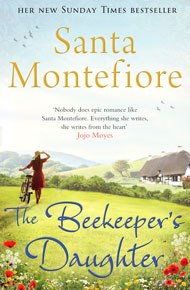
I haven’t read a book by Santa Montefiore before, and if I’d seen the cover of The Beekeeper’s Daughter in a bookshop I doubt I would have picked it up. Flowers, soft focus woman in a flowing dress, all a bit twee for me. But I didn’t see the cover, I downloaded the book on impulse. Which goes to show how a cover can deter as well as attract, because I enjoyed the book. In a ‘I need an unchallenging read for a hot summer day when my brain isn’t fully-functioning’ kind of way.
Santa MontefioreThe bees are drawn beautifully, the description of bees, the beekeeping, their role in Grace’s life. I could not say the same for the World War Two strand, in which war was a distant event: the women take over work at the Hall, and they have plenty of vegetables to eat. Likewise the Seventies, lightly drawn with sweeping pencil strokes. That’s why for me, the book is a lightweight read although it examines heavyweight topics and the characterization is strong. So I guess this will be labelled as Romance Genre.
Will I read another Montefiore novel? Maybe, it would be immensely comforting if I was ill or was facing an endless plane flight. If you hate romance, this is not for you. There’s lots of youthful longing, love won and lost, sad adultery and mature longing of long-lost loves. I can see why her novels sell by the bucket-load.
CLICK HERE TO READ MORE ABOUT THIS BOOK AT AMAZON

If you like this, try:-
Butterfly Barn’ by Karen Power
The Audacious Mendacity of Lily Green’ by Shelley Weiner
One Step Too Far’ by Tina Seskis

And if you’d like to tweet a link to THIS post, here’s my suggested tweet:
#BookReview THE BEEKEEPER’S DAUGHTER by @SantaMontefiore via @SandraDanby http://wp.me/p5gEM4-19W

#BookReview ‘The Ways of the World’ by Robert Goddard #WW2 #thriller

I’ve been a fan of Robert Goddard since reading his first novel Past Caring in 1986. He is a hard-working author producing regular novels, and I admit I got out of the habit of buying them. Until I picked up The Corners of the Globe which I quickly realised was part two of a series. So to book one, The Ways of the World. I wasn’t disappointed. Not for nothing is Robert Goddard called ‘the king of the triple-cross.’ Robert GoddardThe setting is post-Great War, pre-World War Two. Max, aka James Maxted, goes to Paris to investigate the strange circumstances of his father’s death. He stumbles into a melee of Government secrets, inter-war political wrangling, love affairs and assassinations. I warmed to Max straight away and just as quickly disliked his brother. It is a time of high politics, politicians are jostling to make their mark, and there is already a sense that war may come again.
Suffice to say, that by the end of book 1, various ends are left untied, new questions posed, and I was left wanting to read more. So after finishing this, I quickly started reading The Corners of the Globe again.

Read my reviews of Goddard’s other books:-
THE CORNERS OF THE GLOBE #2WIDEWORLD
THE ENDS OF THE EARTH #3WIDEWORLD
PANIC ROOM
THE FINE ART OF INVISIBLE DETECTION
THIS IS THE NIGHT THEY COME FOR YOU

If you like this, try:-
A Hero in France’ by Alan Furst
The Aftermath’ by Rhidian Brook
Dominion’ by CJ Sansom

And if you’d like to tweet a link to THIS post, here’s my suggested tweet:
#BookReview THE WAYS OF THE WORLD by Robert Goddard http://wp.me/p5gEM4-19t via @SandraDanby 

#BookReview ‘One False Move’ by @HarlanCoben #crime #basketball

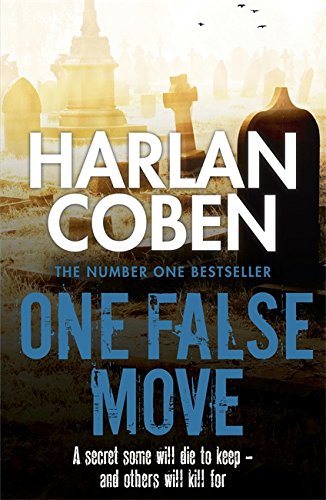
A strapline across the top of the front cover says ‘A Myron Bolitar novel’. It meant nothing to me. I have never heard of Myron Bolitar. I have heard of Harlan Coben though, but know nothing about him except that he writes crime books and is extremely popular. His name sounds Scandinavian, but this is US crime not Scandi-crime. The book’s been sitting on my bookshelf for ages, a charity shop purchase, waiting for the battery of my Kindle to flicker and die. It died, so I picked up One False Move and read it in two days. Harlan CobenMr Coben knows how to make you turn the pages. He nails a character description in a few sparse lines: “Norm Zuckerman was approaching seventy and as CEO of Zoom, a megasize sports manufacturing conglomerate, he had more money than Trump. He looked, however, like a beatnik trapped in a bad acid trip… Che Guevara lives and gets a perm.” So we have Norm’s name, job, professional standing, age, physical description, financial worth and personal style – in three sentences.
Bolivar is a sports agent. There seemed to be all sorts of back story going on which meant nothing to me and didn’t affect my enjoyment of the story. Next time my Kindle flickers and dies, I will pick up another book by Harlan Coben. Bolivar’s new client runs into trouble – it reminded me of my father who used to watch the opening titles of The Rockford Files, the one where Jim’s answerphone clicks on a leaves a message saying there’d been a murder or someone had disappeared. Dad used to say, “It is dangerous being a friend of Rockford, everyone he knows gets murdered.” It seems that everyone Myron Bolitar knows runs into trouble too.
The fact that the context of the story is basketball wasn’t what drew me to the book, but the sport didn’t matter. I wanted to know what happened to the characters. It’s the fifth novel in the series.
This is a roundabout way of saying, I enjoyed One False Move.

Read my review of a young adult novel by Harlan Coben:-
FOUND #3MICKEYBOLITAR

If you like this:-
‘Snow White Must Die’ by Nele Neuhaus
‘Jellyfish’ by Lev D Lewis
‘Dead Simple’ by Peter James

And if you’d like to tweet a link to THIS post, here’s my suggested tweet:
#BookReview ONE FALSE MOVE by @HarlanCoben http://wp.me/p5gEM4-18o via @SandraDanby

#BookReview ‘The Knife with the Ivory Handle’ by Cynthia Bruchman #historical

A black man takes shelter in a train carriage amongst the animals. He has been shot and has no tongue. Two children are travelling from a Brooklyn orphanage to Illinois to start a new life on a farm. All three are on the same train. And so begins The Knife with the Ivory Handle, a lyrical tale by Cynthia Bruchman, of Illinois in 1900 which knits together the stories of Annette and Jonathan, Casper and priest Father Kelly. Cynthia BruchmanIt is clear from the first chapter that the author has intimate knowledge of this period in history. The Brooklyn orphanage is a real place on the page – the nuns, daily routine and quiet corridors – as is St Bede’s Abbey later in the book. The Spring Valley Race Riot of 1903 did happen, and the locations from Bureau, LaSalle and Kane Counties are real places. Cynthia Bruchman [below] writes with confidence, placing her story and characters in a setting she researched for her Masters degree. But do not think I mean that the book is full of unnecessary historical detail, the research is not a heavy presence but colours the story of Annette, Jonathan, Casper and Father Kelly. It is the characters I care about. Will Jonathan become an artist? What do the old woman’s cards of fortune mean and what does the future hold for Annette? Does Father Kelly’s destiny lie in the priesthood? And will Casper ever get home to his wife and son Clementine and Petey? There is just enough exposition to help us understand the characters, with enough left unsaid to create intrigue.
The children are particularly well-drawn. Jonathan knows his sister is hungry. “He knew all of her moods by observing her eyes and hands and feet. These parts expressed how she felt inside quite thoroughly, although she was unaware of it.” Annette and her brother were left at the orphanage by their father when she was four, their mother had died during childbirth. Annette tries to remember that day. “Her father rippled in her mind like a gray shirt on a clothes line.”
This is a period of American history of which I know little and I read this novel quickly. It is an intricate tale told with subtlety and enough twists to be surprising.

If you like this, try:-
Summertime’ by Vanessa Lafaye
An Appetite for Violets’ by Martine Bailey
Rush Oh!’ by Shirley Barrett

And if you’d like to tweet a link to THIS post, here’s my suggested tweet:
#BookReview THE KNIFE WITH THE IVORY HANDLE by Cynthia Bruchman http://wp.me/p5gEM4-17s via @SandraDanby 

#BookReview ‘The Miniaturist’ by Jessie Burton #historical #Amsterdam

The Miniaturist by Jessie Burton is an intriguing treasure box of a story. Eighteen-year-old Nella starts her new life as a married woman at her husband’s home in Amsterdam. He is a wealthy merchant and it is an arranged marriage. But Nella finds herself in a world she did not expect: a husband never at home, an abrupt and unwelcoming sister-in-law, two servants who behave as if life on the Herengracht is full of secrets. Nella feels always at a disadvantage. Jessie BurtonJohannes Brandt’s wedding gift to his wife is a cabinet, a kind of empty doll’s house for a young woman, a miniature of their home intended to be used by a young woman to learn how to run a home. “The accuracy of the cabinet is eerie, as if the real house has been shrunk, its body sliced in two and its organs revealed.” It frightens her but she is unable to formulate why. There is other disturbing imagery to suggest life in the house is not as it first appears. On the dark walls there are paintings of dead animals and at Nella’s first public outing as a wife, to the Silver Guild dinner, Nella meets Agnes Meermans. Agnes wears pearls in her hair, “The pearls are the same size as milk teeth.” Odd.
Nella orders her first miniature objects from a craftsman, a miniaturist, and the story burst into life after a slowish start. First, the three objects Nella orders are chosen as symbols of defiance against her new life. Secondly, the package is delivered by the intriguing Jack Philips of Bermondsey. Who is Jack, is he the miniaturist? Or does the title of the book refer to Nella? How else does the miniaturist know what is happening in Nella’s home, and her mind?
One thing is clear, everything in this book – and in the house on the Herengracht – is not as it seems. I raced through this.

Read my review of THE CONFESSION, also by Jessie Burton.

If you like this, try:-
Rush Oh!’ by Shirley Barrett
The Penny Heart’ by Martine Bailey
The Knife with the Ivory Handle’ by Cynthia Bruchman

And if you’d like to tweet a link to THIS post, here’s my suggested tweet:
#BookReview THE MINIATURIST by Jessie Burton via @SandraDanby http://wp.me/p5gEM4-17B

#BookReview ‘The Unfinished Symphony of You and Me’ by Lucy Robinson #romance

The Unfinished Symphony of You and Me by Lucy Robinson is about Sally Howlett, wardrobe mistress at the Royal Opera House, who sings opera… in the wardrobe. Lucy RobinsonSally grows up on a council estate in Stourbridge, decidedly not a centre of opera appreciation. Playing on the radio she hears an aria from Madame Butterfly and is entranced. It is the beginning of a lifelong obsession which leads to her not singing opera at the Royal Opera House but there working as a wardrobe mistress. The story of Sally’s life story is told by weaving together the strands of her childhood with her emotionally-repressed family, her life as a wardrobe mistress, a short visit to New York to work costumes for a production at The Met, and now as Sally begins to study opera. I found the combination of chick-lit and girl-about-town bad language and the opera strand to be rather strange. What kept me reading? The storyline, I wanted to know what happens in New York to make Sally study opera at the RCM when she can’t get beyond singing in the wardrobe.
What are the big themes trying to get out? A few life lessons. That helping others is all well and good, but you must do things for yourself and not simply to please someone else. That family loyalty is important, but you also owe a duty to yourself. To never give up. And finally, Sally learns that it is not just her that struggles for self-belief, everyone does. When she understands this, she becomes an adult and an opera singer.
A page-turning read for your summer holiday suitcase.
CLICK HERE TO READ MORE ABOUT THIS BOOK AT AMAZON

If you like this, try:-
The Audacious Mendacity of Lily Green’ by Shelley Weiner
‘The Art of Baking Blind’ by Sarah Vaughan
Butterfly Barn’ by Karen Power

And if you’d like to tweet a link to THIS post, here’s my suggested tweet:
#BookReview THE UNFINISHED SYMPHONY OF YOU AND ME by Lucy Robinson via @SandraDanby http://wp.me/p5gEM4-13g

#BookReview ‘Elizabeth is Missing’ by Emma Healey #crime #dementia

Can there be a more unreliable narrator than an 81-year old woman with dementia? Elizabeth is Missing by Emma Healey is a brilliant debut. Emma HealeyMaud lives on her own, she has carers visiting, they leave prepared food for her and tell her not to use the cooker. But she does love toast. There is a rebelliousness about Maud which immediately made me connect with her. She reminded me of my mother, who suffered from dementia. I was impressed with the way Maud’s condition is portrayed, in convincing detail, slowly deteriorating as the story progresses. Maud writes herself notes, as memory prompts, and keeps them in her pockets and around the house. The note she re-reads most often is ‘Elizabeth is missing’. Elizabeth is Maud’s friend, and she is not at her house. The story has a cyclical motion as Maud finds the note, goes out to hunt for Elizabeth, and then is told by someone that Elisabeth is not missing, that she is fine. And then Maud finds the note again, and the cycle re-starts.
Interwoven with Maud’s search for Elizabeth, is a narrative strand set in 1946 when she lives with her parents and lodger Douglas. People are displaced as a population comes to terms with the end of the conflict, a poor economy, returning soldiers who are not the husbands they were when they went away to fight. Post-war rationing makes meals difficult, people grow vegetables, forage for fruit, make their own clothes. Maud’s older sister Sukey is good at dressmaking and she gives Maud items to wear. The sisters are close. And then Sukey disappears, no-one knows where she has gone, including her husband Frank.
I am a little unsure how a reader will react if they have no experience of dementia. Maud’s thought processes are, by the nature of her illness, repetitive. But her memories are key to understanding the mystery of Sukey’s disappearance. You, I, the reader, is the detective. It is up to us to sift through the clues, keeping them and discarding them.
In the background, throughout the novel, is the attitude of people towards dementia sufferers. The impatience, the lack of empathy, the unwillingness to understand someone obviously not in their full senses, and also the kindness, gentleness, the fondness, the helpfulness of strangers. For example the police sergeant who repeatedly takes down the information when Maud reports Elizabeth as missing.
“‘Same as usual?’ he says, his voice sounding metallic through the speakers.
‘Usual?’ I say.
‘Elizabeth, is it?’ He nods, as if encouraging me to say a line in a play.
‘Elizabeth, yes,’ I say, amazed. Of course, that’s what I’ve come for. I’ve come for her.”
It is a nice touch that he appears at the end of the story, closing the circle.

And read my review of WHISTLE IN THE DARK, also by Emma Healey.

If you like this, try:-
‘Etta and Otto and Russell and James’ by Emma Hooper
‘Yuki Chan in Bronte Country’ by Mick Jackson
The Girls’ by Lisa Jewell

And if you’d like to tweet a link to THIS post, here’s my suggested tweet:
#BookReview ELIZABETH IS MISSING by Emma Healey http://wp.me/p5gEM4-11S via @SandraDanby