Tag Archives: book review

#BookReview ‘The Lie’ by Helen Dunmore #WW1 #historical

I found this to be an unbelievably poignant novel. In The Lie by Helen Dunmore, Daniel Branwell has returned home to Cornwall from The Great War. The stories of his childhood, his war, and his return are interwoven seamlessly. It is also the story of all the lost men who returned from fighting in 1918 and didn’t know where to go or what to do. They faced their futures alone, unsure if they were mad, if their memories of war were correct or whether they were strong enough to resist the memories of carnage. Dan’s life unfolds like a thriller, with mysteries and suspicions, so that I turned the pages looking for answers and before I knew it I had reached the end. Helen DunmoreDunmore is an accomplished novelist and poet who handles her emotionally explosive subject with sure hands, juxtaposing the daily reality of post-war Cornwall with Dan’s memories, perhaps true, perhaps confused, of battle. Truth is the unknown. The war is in every move Dan makes, every thought, every dream. Needing food, he digs the earth to plant vegetables but cannot escape the battlefield: “It was the smell of earth. Not clean earth, turned up by spade or the fork, to be sunned and watered. This earth had nothing to do with growth. It was raw and slimy, blown apart in great clods, churned to greasy, liquid mud that sucked down men or horses. It was earth that should have stayed deep and hidden, but was exposed in all its filth, corrosive, eating away at the bodies that had to live in it. It breathed into me from its wet mouth.”
Soil is an important presence throughout the book. Dan is a gardener, a skill he soon finds on joining the army will not exempt him from fighting as it does the blacksmiths, chefs and mechanics. “Skilled men had their hands full, and weren’t likely to find themselves in the fire-trench. But there wasn’t any call for a gardener. You’d be marched through a village which had been knocked to bits by shelling, and all there’d be left of a hundred gardens was a bit of green straggling out of a gash in a wall.” Instead, Dan digs. Fields don’t look the same as the fields in Cornwall. “Once you got near the line, there wasn’t much you could recognise as a field, any more than the woods were woods. It was all a jumble.”
His childhood in Cornwall with his best friend Frederick, and Frederick’s sister Felicia, resonates throughout the book. Their differences – poor boy and rich boy, the squaddie and the officer – are at the centre of the book. Dan visits their large house with its library full of shiny red-leather bound volumes, smuggling out one book at a time up his jumper. He reads and memorizes: “I hoarded new words and brought them out like coins.” Frederick, who is sent to private school, has no mind for books and envies Dan’s photographic memory. But when war comes, Frederick is sent to officer school and Dan to basic camp.
In Belgium, before the night-time trench raid which changes their lives, Frederick asks Dan to recite a poem. The prospects of the two men are so fragile that the juxtaposition of war and the poem by Matthew Arnold cannot help but be moving:
“And we are here as on a darkling plain
Swept with confused alarms of struggle and flight,
Where ignorant armies clash by night.”
When Dan returns to Cornwall he has nowhere to go. As he struggles to survive, shunning company, preferring solitude, he meets Felicia again. The memories come flooding back and he struggles to repel them.

Read my reviews of two other novels by Helen Dunmore:-
BIRDCAGE WALK
EXPOSURE

If you like this, try:-
‘Wake’ by Anna Hope
A Long Long Way’ by Sebastian Barry
The Bone Church’ by Victoria Dougherty

And if you’d like to tweet a link to THIS post, here’s my suggested tweet:
#BookReview THE LIE by Helen Dunmore http://wp.me/p5gEM4-Lw via @SandraDanby
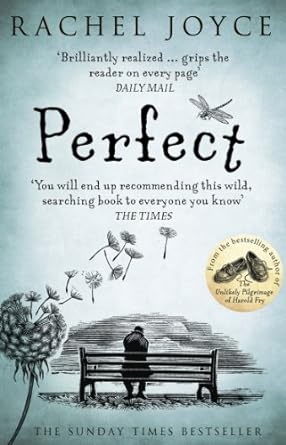
#BookReview ‘Perfect’ by Rachel Joyce #contemporary #time

In 1972, two seconds were added to time because it was Leap Year and because time was ‘out of joint’ with the movement of the Earth. It is the addition of these two seconds which causes such upheaval in the life of Byron Hemmings, an imaginative 11-year old boy, and his school friend James. Perfect by Rachel Joyce is about the impact of those two seconds, one stiflingly hot summer. Who would have thought that such a small stumble in time could disrupt so many lives? Rachel Joyce Joyce is an accomplished storyteller with a simple style which is deceptively complex. She weaves together Byron’s story with Jim’s, a troubled man who cleans tables in a supermarket café whilst battling his inner demons. Not once does she explain the link between these two stories, allowing the reader’s imagination to suggest possibilities, until right at the end when she surprises us with the truth. Car accidents feature in both strands, but neither car accident is what it seems. Both accidents are catalysts for what comes next.
The voice of the boy/almost teenager Byron is an interesting choice which allows Joyce to show us the inside of his parents’ marriage, without Byron fully understanding what he is seeing. At once he has both a child’s perception, and an adult’s. Joyce trusts the reader to believe or not believe Byron’s interpretation of things.
She has a similarly subtle approach to observation, hinting at the differences between Byron’s mother Diana, and Diana’s new friend Beverley, by how they walk. Diana’s ‘slim heels’ go “clip clip”. Beverley’s sandals follow with a “slap slap.” Diana is a wisp of a character, light, graceful and young, young in comparison with her son. Very young compared with her husband Seymour who dominates the house, despite his absence during the week, with his stern rules of do’s and don’ts. Diana’s car, a Jaguar he bought for her as a means of demonstrating his success, comes to symbolise his power over her. First she accedes to his control, then chafes against it and finally rebels.
Byron watches this with discomfort and uncertainty, unsure who this new mother, this new Diana, is. As his mother grows more mentally frail, he begins unconsciously to echo his father. He doesn’t like Beverley calling his mother ‘Di’ for example. “It was like cutting her in half.” As Diana leaves household tasks undone, he does them for her.
Joyce has a deft way of handling the mood. One moment, light-hearted, then with a sentence she twists the heartstrings and adds another small touch of mystery.  Jim learns that having a friend means laughing at things and seeing them through the friend’s eyes, as if the friend is “the part of themselves that is missing.” Do we all have something missing, which is provided by our friends and loved ones, or is it just Jim? And what happened to Jim to mess him up like this?
Perfect is about the nature of time, starting with the extra seconds and moving onto Diana’s abandonment of clocks. An exploration of whether time can heal a painful past.

Read my reviews of these other novels by Rachel Joyce:-
MAUREEN FRY AND THE ANGEL OF THE NORTH
MISS BENSON’S BEETLE
THE LOVE SONG OF MISS QUEENIE HENNESSY

And read here the first paragraph of THE UNLIKELY PILGRIMAGE OF HAROLD FRY

If you like this, try:-
‘Somewhere Inside of Happy’ by Anna McPartlin
The Language of Others’ by Clare Morrall
Mobile Library’ by David Whitehouse

And if you’d like to tweet a link to THIS post, here’s my suggested tweet:
#BookReview PERFECT by Rachel Joyce via @SandraDanby http://wp.me/p5gEM4-KD

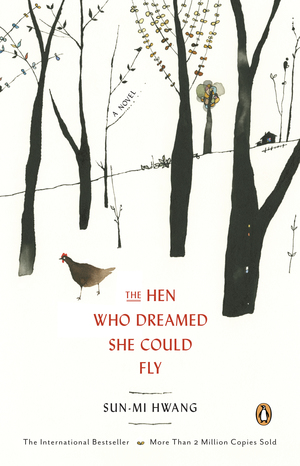
#BookReview ‘The Hen who Dreamed she could Fly’ by Sun-Mi Hwang #historical #birds

The Hen who Dreamed she could Fly by Sun-Mi Hwang is definitely a book that you will want to buy spare copies of to give to your friends. Sun-Mi HwangA South Korean fable, it tells the story of Sprout, a hen whose sole purpose in life is to lay eggs. She is an egg machine. From her coop she watches the hens and ducks in the yard with their babies, and longs for a chick of her own, to cuddle it and take care of it, sleeping safely in the warm barn at night. Then one day she realises she will never have her own chick because the farmer takes all her eggs. Her motivation to eat disappears, she becomes eggless, scrawny and weak and so is culled from the coop.
I loved Sprout, she is a brave female heroine who shows the bullies that they cannot beat her. Like all fables, there is a message. This story warns against watching what others have and thinking they have it better than you do. Sprout longs for the greener grass, but when she finds herself living in that green grass she learns the realities. It is about being brave, about being proactive, about getting out there and making something of your life even if people tell you it will never happen.  Along the way it also deals with motherhood, adoption, racism, prejudice and rejection, but it is a simple story to read. She is, after all, a hen.
Suitable for all ages, it’s one of those books that has a narrative for children and adults alike. The line drawings, which illustrate each new chapter, are beautiful too. A gem of a little book.

If you like this, try:-
‘The Choice’ by Claire Wade
‘Paper Cup’ by Karen Campbell
‘Doppler’ by Erlend Loe

And if you’d like to tweet a link to THIS post, here’s my suggested tweet:
#BookReview THE HEN WHO DREAMED SHE COULD FLY by Sun-Mi Hwang http://wp.me/p5gEM4-JB via @SandraDanby

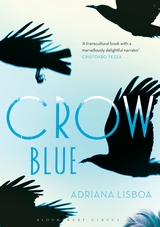
#BookReview ‘Crow Blue’ by Adriana Lisboa #contemporary

Crow Blue by Adriana Lisboa is a story of a teenage girl unravelling the mysteries of her identity. Vanja is 13, newly arrived in Colorado from Brazil, living with a man called Fernando about whom we know nothing. “I was 13. Being 13 is like being in the middle of nowhere. Which was accentuated by the fact that I was in the middle of nowhere.” Vanja’s mother dies and she leaves behind the ‘crow blue’ shells of Copacabana beach for the USA. Adriana LisboaHer voice grabbed me from the beginning and, although at times I was a little lost with the narrative drive of her story with lots of side roads telling Fernando’s history as a freedom fighter in Brazil, Vanja’s voice kept me reading. I wanted to know the answers to the questions she was chasing on her road trip from Colorado to New Mexico.
She is on the cusp of womanhood and this gives her some nice observations of American society, words from the mouth of an innocent who is starting to see the world and people around her in a more adult way. “A woman passing my chair as she returned from the pool said I had a nice tan. When she smiled, her eyes disappeared into the folds of fat that covered her face. She looks like a feather pillow, I thought.” To Vanja, swimming pools in Colorado mean large bikinis and full-piece bathing suits; swimming pools at Copacabana, where she grew up, meant butt cheeks.
The sections on guerrilla warfare left me cold, I’m afraid. I had no idea of the history of Brazil at this time, which probably would have helped me, and I didn’t identify with the characters and their confusing code names. These sections were an intrusion into Vanja’s story.
As the road trip comes to a close and Vanja approaches her 14th birthday, she considers what it will mean to become an adult. “Fourteen was at least a nose in the adult world. And I had to unlearn all the codes I had learned to make way for others. Curiosity, for example: children had a gift for curiosity. Adults kept it chained up.  In adults, curiosity shook paws, fetched balls and played dead.”
Lisboa was named on Granta’s list of ‘Best of Young Brazilian Novelists’ in 2012, she has written numerous novels and won prizes. But her name is relatively unknown here. To be fair, this book is set in the USA and is as much a comment on American society as Brazilian. It reflects our modern multi-cultural world and is a hopeful tale about finding your place in the world, finding your identity, and making a home wherever you are.
CLICK HERE TO READ MORE ABOUT THIS BOOK AT AMAZON

If you like this, try:-
‘Freya’ by Anthony Quinn
‘Angel’ by Elizabeth Taylor
‘Girl Runner’ by Carrie Snyder

And if you’d like to tweet a link to THIS post, here’s my suggested tweet:
#BookReview CROW BLUE by Adriana Lisboa via @SandraDanby http://wp.me/p5gEM4-DN

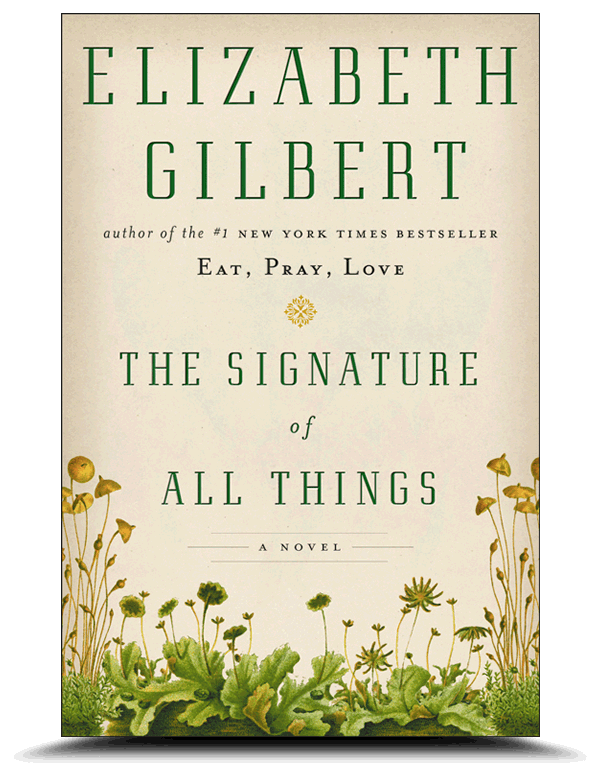
#BookReview ‘The Signature of all Things’ by @GilbertLiz #historical

I’ve never read Eat Pray Love, never seen the film, and didn’t know what to expect from The Signature of all Things by Elizabeth Gilbert, not having read any reviews. I don’t know why, but I half expected not to like it. Very unfair of me, and completely wrong. Elizabeth GilbertFirst it’s a historical novel, not what I anticipated at all, starting with 18th century luckster, thief and botanist Henry Whittaker and later moving onto his daughter Alma. Born near Kew Gardens in London, son of a poor horticulturalist, Henry lifts himself out of poverty thanks to Jesuit’s bark, the newly-discovered treatment for malaria. He makes one fortune at home in Kew, stealing plants from Kew Gardens and selling them to wealthy protectors, he makes another fortune in the Far East by commercially cultivating Jesuit’s bark, and makes a third fortune in America where he imports medicinal plants from around the world, then raises native American plants and exports them abroad, so the holds of his ships never sail empty.
The opening paragraph of the book tells us of the birth of Henry’s daughter Alma, and then she is not mentioned again until part two. Alma is born to Henry and his Dutch wife Beatrix when they are settled into Philadelphia, he becomes the richest man in town and the third richest in the western hemisphere. The Dutch connection is important, but how important is not discovered until much later in the book. The Whittakers do not have much time for society and society doesn’t much like them, finding their manners a little coarse and their pedigree poor.
Alma grows up, encouraged to question everything, note everything down, and at an early age she will not let go of a question until she has an answer. “She wanted to understand the world, and she made a habit of chasing down information to its last hiding place, as though the fate of nations were at stake in every instance. She demanded to know why a pony was not a baby horse. She demanded to know why sparks were born when she drew her hand across her sheets on a hot summer’s night.” Henry encourages this precociousness, Beatrix schools her in Dutch pragmatism.
Plants are the background to the story of this family, plants are their life, their business, and fill their appreciation every day. As a nine-year old, Alma learns one summer to tell the time by the opening and closing of the flowers. At 7am the dandelions bloom, at 3pm they fold. She must be home with her hands washed when the globeflower closes and the evening primrose begins to open.
Alma is the heart and soul of this novel, a pragmatic and at times challenging woman. Despite this, I quickly warmed to her and her life’s investigation of mosses. Moss, and Alma’s inability to stop asking questions, leads her around the globe in a story that entranced me. I didn’t know where it would lead next.

If you like this, try:-
Barkskins’ by Annie Proulx
A Sudden Light’ by Garth Stein
Summertime’ by Vanessa Lafaye

And if you’d like to tweet a link to THIS post, here’s my suggested tweet:
#BookReview THE SIGNATURE OF ALL THINGS by @GilbertLiz via @SandraDanby http://wp.me/p5gEM4-DG

#BookReview ‘A Long Long Way’ by Sebastian Barry #Irishhistory #WW1

A Long Long Way by Sebastian Barry is the story of Willie Dunne, an innocent, who goes away to war not understanding fully what is involved but determined to do his bit. Written in 2005 and nominated for the Booker Prize, it is the tender tale of a young Irish man who volunteers for the British army and ends up in Belgium. Sebastian Barry Set against the background of the Easter Rising, Willie does not fully understand the political implications of what is happening around him. He is born in Dublin, as a baby “he was like the thin upper arm of a beggar with a few meagre bones shot through him, provisional and bare.” Barry’s language throughout is a delight, something I didn’t expect when the book is about the worst of trench warfare. Barry does not spare punches, at times the action and conditions he describes brought me close to tears, but I read on, pulled forwards by Willie’s life force.
He travels to new places, “ravished by the simple joy of seeing new places of the earth.” This joy unravels when arrives at the trenches. “The biggest thing there was the roaring of Death and the smallest thing was a man. Bombs not so far off distressed the earth of Belgium, disgorged great heaps of it, and did everything except kill him immediately, as he half-expected them to do.” And all the time he longs from Gretta, his girl at home. “He was in love with Gretta like a poor swan was in love with the Liffey and cannot leave it.”
I will be reading more by Sebastian Barry.

Read my reviews of these books also by Sebastian Barry:
A THOUSAND MOONS
DAYS WITHOUT END
OLD GOD’S TIME
THE WHEREABOUTS OF ENEAS MCNULTY

If you like this, try:-
The Lie’ by Helen Dunmore
Life Class’ by Pat Barker
Wake’ by Anna Hope

And if you’d like to tweet a link to THIS post, here’s my suggested tweet:
#BookReview A LONG LONG WAY by Sebastian Barry http://wp.me/p5gEM4-Bx via @SandraDanby

#BookReview ‘An Officer and a Spy’ by @Robert_Harris #thriller

Robert Harris is a master storyteller. Whether he turns his attention to a volcano exploding, ghost writing the memoirs of a questionable politician, the deathly politics of Rome’s Senate, or the Nazis winning the Second World War, you know you can rely on him to tell a rollicking tale based on sound handling of the historical facts. An Officer and a Spy has so many echoes of today it is uncanny. Robert HarrisThe true story on which this novel is based too place in 1895. Don’t let the historical basis of the story deter you; this is a good old-fashioned spy story complete with forgeries, eavesdropping, surveillance and murder.The spy of the title is Captain Alfred Dreyfus, convicted as a military spy and sent to Devil’s Island. The captain is Georges Picquart, who witnesses the humiliation of Dreyfus in front of a baying mob. Picquart, who after this opening scene is promoted to run the Statistical Section of France’s Ministry of War, discovers evidence that puts Dreyfus’ conviction in doubt. His superiors dismiss his concerns and tell him to forget them. He doesn’t forget, instead undertaking his own investigations which uncover evidence of a new spy. His efforts lead him to a prison cell.
Aghast at the army’s willingness to accept a miscarriage of justice rather than the upset of a retrial, Dreyfus doesn’t stop fighting for justice. “For the first time in my life I carry hatred inside me. It is an almost physical thing, like a concealed knife. Sometimes, when I am alone, I like to take it out and run my thumb along its cold, sharp blade.”
Underlying the spy story is the fact that Dreyfus is a Jew. The anti-semitism in the French army portrayed by Harris is deeply disturbing in the light of rising right-wing extremism in Europe today against minorities.
The cause of Dreyfus is taken up by luminaries of the time, including the novelist Emile Zola, who uses the power of the press in the fight to bring Dreyfus home for re-trial. To Picquart , the army’s refusal to admit its mistake “really, it is beyond hypocrisy; it is beyond even lying; it has become a psychosis.”

Read my reviews of these other thrillers, also by Robert Harris:-
MUNICH
V2

If you like this, try:-
‘The Ways of the World’ by Robert Goddard
‘Homeland’ by Clare Francis
‘Dominion’ by CJ Sansom

And if you’d like to tweet a link to THIS post, here’s my suggested tweet:
#BookReview AN OFFICER AND A SPY by @Robert_Harris via @SandraDanby http://wp.me/p5gEM4-Cm

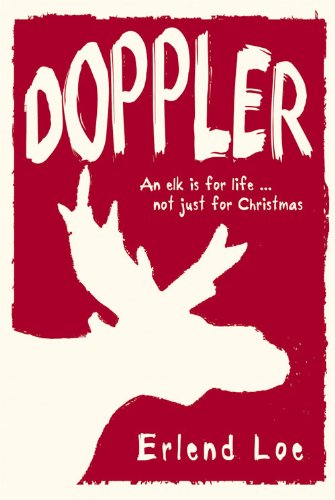
#BookReview ‘Doppler’ by @erlendloe #contemporary

Doppler by Erlend Loe defies description, but I’ll have a go. It’s about Doppler, a Norwegian guy who after the death of his father has an accident on his bike and subsequently turns his back on civilization to live in the forest. Erlend LoeDoppler’s sole companion is Bongo, an elk calf which he feels responsible for having shot Bongo’s mother for food. The conversations with Bongo made me smile. It’s a tale about family, grief, alienation and a gradual warming towards civilization again, or so you think. No matter how much Doppler wants to be alone, he seems to attract people around him.
It’s a charming tale with a cutting edge. Doppler is happy in the forest but is a keen observer of the society he has rejected. Forced to communicate again with his pregnant wife and two children, he struggles to cope with modern society and his responsibilities, Teletubbies add Bob the Builder included. His teenage daughter Nora, named after an Ibsen character of course, insists on talking to him in elfish. His son Gregus forgets the television and instead helps him carve a totem pole, intended as a memorial to Doppler’s father but which comes to represent the three male generations of Dopplers and Bongo.
I read it quickly and wished it was longer, a book that will yield more for re-reading I think.

If you like this, try:-
I Refuse’ by Per Petterson
Wolf Winter’ by Cecilia Eckback
Burial Rites’ by Hannah Kent

And if you’d like to tweet a link to THIS post, here’s my suggested tweet:
#BookReview DOPPLER by @erlendloe http://wp.me/p2ZHJe-yD via @SandraDanby

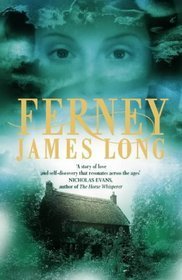
#BookReview ‘Ferney’ by James Long #romance #timetravel

I missed Ferney by James Long when it was first published in 1998 and so came to it with some anticipation. I was not disappointed. Set on the Somerset/Dorset border, Ferney tells the interlinking tale of Gally, her husband Mike and elderly countryman Ferney. James LongIt’s a difficult book to review without giving away too much of the story, suffice to say it combines modern and ancient love stories in a setting so evocative of this mythical magical part of the world. It makes you believe in the power of true love.
Young couple Mike and Gally find a rundown cottage at Penselwood and move into an old caravan next door while the builders renovate. The countryside seems to dispel Gally’s nightmares and her sadness at a miscarriage, in fact the countryside seems to be a character in itself and is an integral part of the story. History, folklore and nature are woven into a love story across the centuries.
I know I will read it again and again, it is an uplifting story stuffed with history from Saxon times via witchcraft and rebellions. Just when you think you have worked it out, something unexpected happens. It is tender, touching, and right up until the last page you wonder how the story will be resolved.

Read my review of the sequel to Ferney, THE LIVES SHE LEFT BEHIND.

If you like this, try:-
Master of Shadows’ by Neil Oliver
The Beekeeper’s Daughter’ by Santa Montefiore
In Another Life’ by Julie Christine Johnson

And if you’d like to tweet a link to THIS post, here’s my suggested tweet:
#BookReview FERNEY by James Long http://wp.me/p5gEM4-yA via @SandraDanby

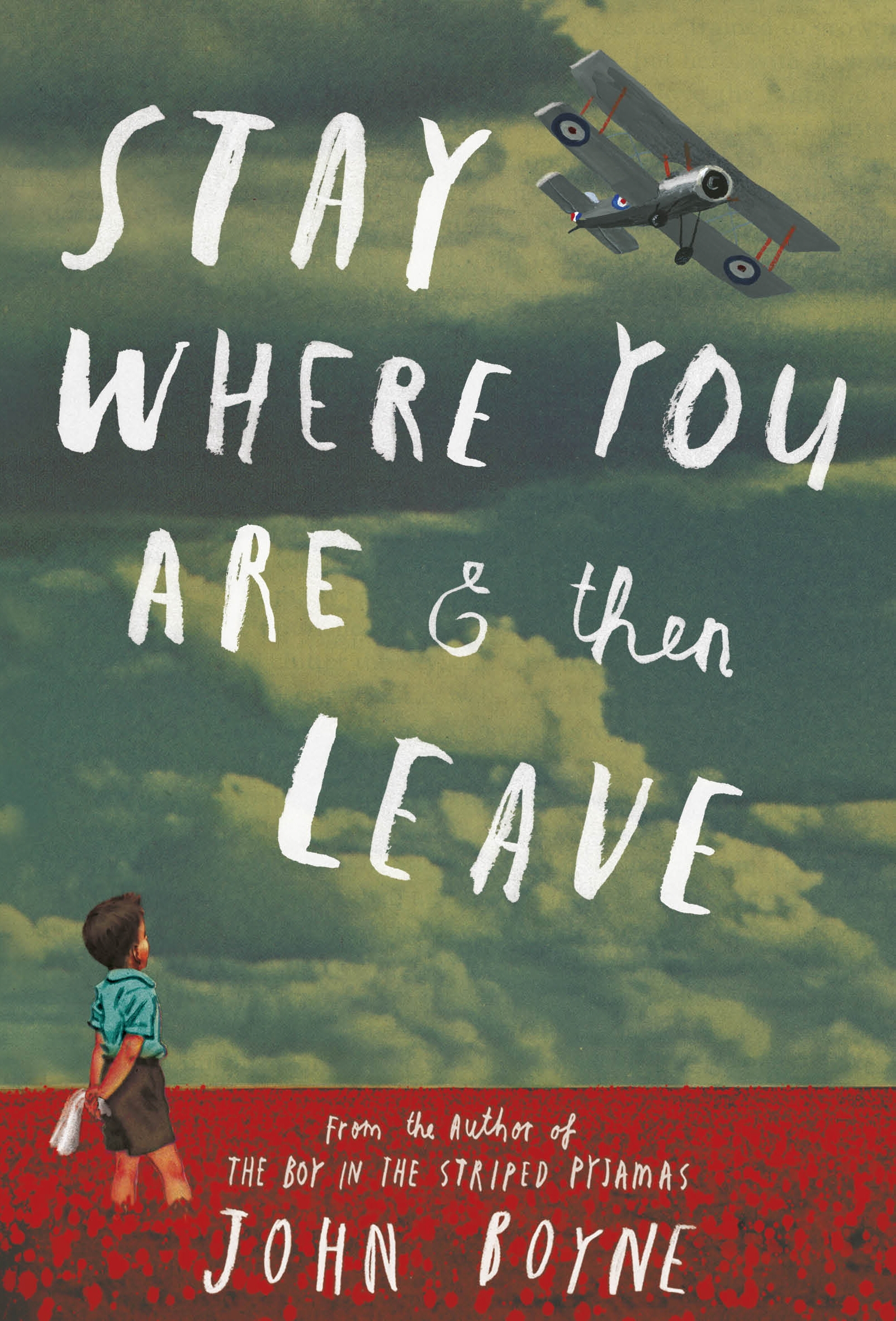
#BookReview ‘Stay Where You Are & Then Leave’ by John Boyne @JohnBoyneBooks #WW1

I’m sure Stay Where You Are & Then Leave will be the first of many books about the First World War which I will read over the next two years [written in 2013], and what a one to start with. Written by John Boyne, probably best known for The Boy in the Striped Pyjamas, this is a touching story of a boy’s determination to help his soldier father. John BoyneDestined to become a children’s classic, it is a tough tale with a tender touch. Boyne doesn’t shy away from the difficult subjects of enemy aliens, conscientious objectors, loss, injury, death and fear. On July 28th 1914, war is declared. It is also Alfie Summerfield’s fifth birthday. His biggest wish is to go one morning with his father Georgie on the milk cart with his horse Mr Asquith. Life changes for Alfie and his mother without Georgie. As the years pass, Alfie stops believing the grown-ups who say the war ‘will be over by Christmas’. Then his father’s letters stop arriving. Alfie’s mother says Georgie is ‘on a special mission and cannot write’ but Alfie doesn’t believe her. He doesn’t like being treated as a child, so he decides to do something about it.
This is a story about belief, empowerment, and the strength of children in adversity.

Read my reviews of these other novels by John Boyne:-
A HISTORY OF LONELINESS
A LADDER TO THE SKY
A TRAVELLER AT THE GATES OF WISDOM
ALL THE BROKEN PLACES
THE HEART’S INVISIBLE FURIES… Curious? Read the first paragraph of THE HEART’S INVISIBLE FURIES here.
WATER #1ELEMENTS
EARTH #2ELEMENTS

If you like this, try:-
‘Himself’ by Jess Kidd
‘Ghost Moth’ by Michele Forbes
‘Nora Webster’ by Colm Tóibín

And if you’d like to tweet a link to THIS post, here’s my suggested tweet:
#BookReview STAY WHERE YOU ARE AND THEN LEAVE by John Boyne @JohnBoyneBooks https://wp.me/p2ZHJe-4bh via @SandraDanby