Tag Archives: books

#BookReview ‘Death at the Dance’ by @BrightVerity #cosymystery #crime

What will Ellie do when the man she is keen on is arrested as a murderer? Death at the Dance is second in the Lady Eleanor Swift series of 1920s historical cosy crime novels by Verity Bright. The first novel, A Very English Murder, set the scene and introduced the characters but Death at the Dance hits the ground running and is better for it. Verity BrightThe theme of acting runs throughout. Ellie, who feels she is still learning the role of a ‘lady,’ joins the local amateur dramatic society where she has trouble learning her lines. One of the suspects in A Very English Murder plays a key part in the play and turns out to be a very good actor. The death referred to in the title of this book coincides with a jewel theft, both take place at a fancy dress dance where everyone is in costume – a pirate, a harlequin, a Cleopatra, a bird of paradise. The pirate, Lord Lancelot Fenwick-Langham, is accused of theft and murder. There have been major jewel thefts in the area and a notorious gang is said to be responsible. Detective Chief Inspector Seldon, Ellie’s old nemesis, locks up Lancelot in the local police station.
Once again Ellie teams up with her logical, analytical and practical butler, Clifford, to prove Lancelot’s innocence. To gather evidence she goes out on the town with his friends, the Bright Young Things, including an Indian prince, two sisters, a quiet artist and a glamorous party boy. Apart from horrible hangovers and sore feet, Ellie gathers little proof except the sense that they are hiding something. Time is running out. Lancelot’s trial approaches and no evidence is found to prove his innocence. If convicted, he will hang.
There are some satisfying plot twists, surprises, suspicions that prove true, questionable decisions taken by Ellie and surprising talents shown by Clifford. All backed up with the excellent snuffling of Gladstone the bulldog, and tasty picnic food and breakfasts provided by Mrs Trotman, Henley Hall’s cook.
In my review of A Very English Murder I mentioned the lack of 1920 social, cultural and political references, but there are plenty in Death at the Dance. Suffragism, the partying Bright Young Things, drink and drug abuse.
Faster moving than the first instalment of the series, I’m loving the relationship between Ellie and her butler, the sparring with Clifford is fast, witty and funny.
Bring on the third in the series, A Witness to Murder.

Read my reviews of other books in the Lady Eleanor Swift series:-
A VERY ENGLISH MURDER #1LADYELEANORSWIFT
A WITNESS TO MURDER #3LADYELEANORSWIFT
MURDER IN THE SNOW #4LADYELEANORSWIFT
MYSTERY BY THE SEA #5LADYELEANORSWIFT
MURDER AT THE FAIR #6LADYELEANORSWIFT
A LESSON IN MURDER #7LADYELEANORSWIFT
DEATH ON A WINTER’S DAY #8LADYELEANORSWIFT

If you like this, try:-
Fortune Favours the Dead’ by Stephen Spotswood [#1 Pentecost & Parker]
‘A Death in the Dales’ by Frances Brody [#7 Kate Shackleton]
The Cornish Wedding Murder’ by Fiona Leitch [#1 Nosey Parker]

And if you’d like to tweet a link to THIS post, here’s my suggested tweet:
#BookReview DEATH AT THE DANCE by @BrightVerity https://wp.me/p2ZHJe-6XT via @SandraDanby

COMING SOON… THE NEXT BOOK I REVIEW WILL BE:- Hazel Gaynor

#BookReview ‘My Brother Michael’ by Mary Stewart #mystery #WW2

‘Nothing ever happens to me,’ writes Camilla Haven on a postcard at the beginning of My Brother Michael by Mary Stewart. Longing for excitement on her solitary holiday in Greece, the inevitable happens. A case of mistaken identity takes Camilla to Delphi where statues of gods are found around every corner and ghostly lights move at night on the hills of Mount Parnassus. Mary StewartStewart has written a page-turning tale of death, art, handsome Greek gods [alive and stone], caves and smuggling. At the root of it all is what happened on these hills during the Second World War when Greek partisans were fighting the Nazis, and each other. Published in 1959, the story is set fourteen years after the war ended. This is pre-tourism Greece with goatherds on the slopes and donkeys following hillside tracks that have been used for thousands of years at a time, but when war’s mark is still evident daily. This is not a political post-war novel about a trouble, divided country, instead Stewart focuses on the people, their motivations and how history, ancient and recent, should never be forgotten.
Camilla is a cautious character in the first few chapters but as she, and we the readers, are drawn into adventure and mystery, her sense of right and wrong leads her onward towards risk and violence.
What a magical tale of mystery this is by a master storyteller. I read this first in the Seventies and this time around was just as gripped, reading into the night.
CLICK HERE TO READ MORE ABOUT THIS BOOK AT AMAZON

Click the title to read my reviews of other Mary Stewart novels:-
THE GABRIEL HOUNDS
THE IVY TREE
THIS ROUGH MAGIC
THORNYHOLD
TOUCH NOT THE CAT

If you like this, try these:-
‘THE COLLABORATOR’S DAUGHTER’ BY EVA GLYN
‘THOSE WHO ARE LOVED’ BY VICTORIA HISLOP
THE CAMOMILE LAWN’ BY MARY WESLEY

And if you’d like to tweet a link to THIS post, here’s my suggested tweet:
#BookReview MY BROTHER MICHAEL by Mary Stewart https://wp.me/p2ZHJe-789 via @SandraDanby

COMING SOON… THE NEXT BOOK I REVIEW WILL BE:- Verity Bright
#BookReview ‘Before the Fall’ by Noah Hawley #thriller #suspense

The premise for Before the Fall by Noah Hawley, also writer and producer of the Fargo television series, has a real hook. A private plane crashes into the sea and there are two survivors, JJ Bateman, a four-year old boy, and a man who rescues JJ and swims miles to reach land. Noah HawleyThis is a private jet plane in an alternate world of seriously wealthy, important people. The boy is the sole heir to his father’s huge media company. Scott, who rescues JJ, is a struggling artist. Also on board was a dodgy businessman about to be indicted for a criminal offence. Pressured to fill 24 hours of live news broadcasting, David Bateman’s own reporters start speculating about the crash, was it an accident or a terrorist attack. They also bug phones. News anchor Bill Milligan preys on the vulnerable. Scott, because his is poor, turns overnight from hero to suspect. Why was he on the plane in the first place? JJ is unable to talk, his Aunt Eleanor [his mother’s sister] who is caring for him refuses to talk to the press. The air and sea search for wreckage continues without success. The problem for the television channels is the void of things to say while rescuers search the seas. And so Milligan starts making things up, ‘…what we’re talking about here is nothing less than an act of terrorism, if not by foreign nationals, then by certain elements of the liberal media. Planes don’t just crash, people. This was sabotage. This was a shoulder-fired rocket from a speedboat. This was a jihadi in a suicide vest on board the aircraft, possibly one of the crew. Murder, my friends, by the enemies of freedom.’
Before the Fall is about suspicions, the spreading of false news online and television by disreputable media, the suppositions made by modern news gatherers and the public’s demand for salacious gossip, whether it is proven or not. And all of this amid tragedy.
Told from multiple viewpoints, the story of the flight from Martha’s Vineyard to New York gradually unfolds and some of the worst assumptions made by the media, and by people who thrive on gossip, turn out to be wrong. Some may be correct.
A character-led suspense thriller that I read in three days, racing through to the rather limp ending. Some of the phrasing is overtly American and I skipped the sections about American sport, but the emotions are universal. A morality tale for the modern world; beware the conspiracy theorists and television channels which run news stories based on speculation not fact. Often the simplest answer is the true one.

If you like this, try:-
Never’ by Ken Follett
Panic Room’ by Robert Goddard
The Partisan’ by Patrick Worrall

And if you’d like to tweet a link to THIS post, here’s my suggested tweet:
#BookReview BEFORE THE FALL by Noah Hawley https://wp.me/p2ZHJe-77I via @SandraDanby

COMING SOON… THE NEXT BOOK I REVIEW WILL BE:- Mary Stewart

#BookReview ‘Sparrow’ by James Hynes #historical #RomanEmpire

Sparrow by James Hynes is a unique novel. It is a harsh and unrelenting story, often harrowing to read, about a slave boy in a brothel in a Spanish city on the edge of the fading Roman Empire. It is a slow burner told in retrospective by the grown boy, now a man called Jacob. So, we know he survives but we don’t know how. James HynesIn the city of New Carthage [now Cartagena in Spain] towards the end of the Roman Empire, Pusus, the slave name for ‘boy,’ is growing up in Helicon, a taberna with a brothel upstairs. Pusus thinks this is the name he was given by his parents, until he learns that slave names refer to the job done by that slave. His nickname in the household is Mouse. He lives a hard life but the women of the taberna, particularly cook Focaria and wolf Euterpe [one of the whores] try to shield him. Euterpe tells him stories, in part to distract him, in part to educate him but as Pusus sees more of the world outside Helicon he’s unsure if her stories are true or not. As he is exposed to the harsh realities of slave life he begins to resent her untruthfulness.
One day Euterpe tells a story about a small bird, a sparrow, and Pusus realises he is like a sparrow who is ‘not excellent at anything, but just good enough at everything.’ Being a slave means his body, his time, his privacy and everything about him belongs to his Dominus, his master, and Audo, the bully who manages the brothel. Only his thoughts are still his own. So Pusus imagines himself as a sparrow flying high, flying free, up high in the sky, looking down at life in the taberna and the small thin slave boy below.
His first job is as house boy, scrubbing floors. The taberna and its enclosed garden are his world, he’s not allowed beyond the heavy wooden door to the street. Next, he is sent out to the local fountain to fill the heavy water buckets. Then he is trusted with money to visit local merchants and buy bread and fish and deliver dirty sheets to the laundry. With each new freedom comes a wakening awareness of the wider world of Carthago Nova. Until the day comes when Pusus is renamed Antinous and moves upstairs into his own cell amongst the wolves.
The story moves slowly, tiny detail built on tiny detail. It is told retrospectively by the elderly Jacob, how old he is we don’t know, as he reflects on the ups and downs of his life at Helicon. Jacob is educated, he reads the philosophers and histories and reflects on his life as a boy. The Roman Empire ended in AD476 but Sparrow’s life speaks also about today’s class distinctions, racism, selfishness and corruption. The detail of life in Carthago Nova is honest and tough, the sophistication of the mansions, the grinding poverty of the slaves and the free people who live hand to mouth. The neighbours of the taberna, tradesmen such as fullers and bakers, are often customers of the wolves upstairs. There is a clear strata to society which reminds me of the 1966 Frost Report sketch ‘I Know My Place’ featuring John Cleese, Ronnie Barker and Ronnie Corbett. Watch it at You Tube.
There is much pain, mental and physical, and always the threat that if Pusus doesn’t pick himself up he will be sold at the slave market. There is also sex, friendship, betrayal, abuse, violence, ambition and corruption. I honestly can’t say I enjoyed this story, it is too brutal for that, but it tells a story of a time long ago, and a time that is now.

If you like this, try:-
The Wolf Den’ by Elodie Harper #1WolfDen
A Traveller at the Gates of Wisdom’ by John Boyne
‘The Silence of the Girls’ by Pat Barker

And if you’d like to tweet a link to THIS post, here’s my suggested tweet:
#BookReview SPARROW by James Hynes https://wp.me/p2ZHJe-76L via @SandraDanby

COMING SOON… THE NEXT BOOK I REVIEW WILL BE:- Noah Hawley
#BookReview ‘Fahrenheit 451’ by Ray Bradbury #scifi #fantasy #classic

Another classic I haven’t read before, Fahrenheit 451 by Ray Bradbury is a paperback that, like The War of the Worlds by HG Wells, I picked up in bookshop attracted by its distinctive cover. I’m so pleased I did. Ray BradburyEerily prophetic, first published in 1952, in the post-war American consumer boom, Bradbury is uncannily far-sighted. Guy Montag is a fireman who doesn’t put out fires, he lights them. In this world, houses have been fireproofed to such an extent that they are inflammable. People don’t read books any more, they’re the enemy. Fiction, fact, non-fiction, history, religious works, imagination, all must be destroyed. If the fire service receives a tip-off that a person is in possession of books, the firemen burn the house, the books and sometimes the guilty book-owner.
We see this world through Montag’s observations of his daily life and home. The ‘televisors’ that project entertainment programmes onto the walls of his house’s ‘parlour,’ a diet of sugar-crystal and saccharine combined with advertisements. Montag’s wife, Mildred, lives her life indoors, driven by a timetable of programmes with her ‘family’ – the characters in regular programming that replaces relationships with real people – their artificial likes and love hearts become more important than everyday talk with her husband.
There are echoes of Orwell’s 1984 but the politics are different, Big Brother surveillance and political messages replaced by constant advertisements, ear worms, enticements to buy things, things made elsewhere in countries unknown to Montag. ‘Denham’s Dentifrice, Denham’s Dandy Dental Detergent, Denham’s Dentifrice Dentifrice Dentifrice, one two, one two three, one two, one two three.’ It is an intellectually and emotionally stunting life. People’s curiosity has disappeared.
Until one day, Montag has a brief encounter with a young neighbour, Clarisse McClellan, a strange young girl who sees the world differently. So the next time he attends a fire, he is horrified at what he is doing. He hides a book in his jacket and takes it home. Fearing discovery, of bringing harm to his wife, their home and way of life, he doesn’t hesitate to step over the line. Meanwhile war, according to the ‘seashell radio’ which fits in his ear, is coming.
There is a hinterland of rebels, secretive people who still believe in freedom of thought, who live in fear of discovery, who believe books are not the problem but the solution. Books can be intriguing, challenging, disturbing, exciting. They invite imagination, exploration, curiosity. But in the world of Fahrenheit 451, life is superficial. People live a routine without stopping to look at the sky, listening to birdsong, watching the clouds change shape. It’s the difference between looking at a flower’s beauty then forgetting it, and looking at a flower, seeing its beauty, drawing it, writing a poem about it, studying its biology, sowing seeds, noticing other plants and their role in the natural world.
Thought-provoking. Sad. A must read.

If you like this, try:-
The War of the Worlds’ by HG Wells
In Ark’ by Lisa Devaney
Dark Earth’ by Rebecca Stott

And if you’d like to tweet a link to THIS post, here’s my suggested tweet:
#BookReview FAHRENHEIT 451 by Ray Bradbury https://wp.me/p2ZHJe-73F via @SandraDanby

COMING SOON… THE NEXT BOOK I REVIEW WILL BE:- James Hynes

#BookReview ‘The Girl Who Escaped’ by Angela Petch #WW2

World War Two drama The Girl Who Escaped by Angela Petch is a heartbreaking slow-burner that had me reading late at night to finish it. Angela PetchThe story about four friends in the small Italian town of Urbino begins with a Prologue set in 1988. Enrico, waiting for a reunion with his childhood friends, looks at a photograph of them taken fifty years earlier, before the war, on a mountain hike. Young. Carefree. Unsuspecting.
In 1940 in Urbino, 20-year-old medical student Devora Lassa is struggling to accept how her movements, as a Jew, are now limited by law. She is unable to study, is seen as different. Sabrina Merli, who has a long-standing crush on Conte Enrico di Villanova, is jealous at a party when Enrico greets Devora with a kiss on both cheeks. Luigi Michelozzi, a civil servant, watches, quiet and thoughtful.
After the party, Devora’s world is thrown into chaos when her father explains the hard truth. Tomorrow, Italy will enter the war on the side of Germany and the racial laws applying to Jewish people will again be changed. Her parents, who were born in Germany but are Italian citizens, must leave in the morning for an internment camp near Arezzo. Their Jewish neighbours, not Italian citizens, are being deported. As Devora and her two younger twin brothers were born in Italy they are able to stay in the family home in Urbino but now Devora, helped by their maid Anna Maria, must become parents to the boys.
This the story of Devora, whose life within a matter of hours changes out of all recognition. She is the girl who escapes a multitude of times, but in wartime Italy it is difficult to know where is safe, who is trustworthy, strangers who help, friends who change sides, neighbours who spy, Italians who are fascists or partigianos (resistance fighters), German soldiers who are fascists and torturers or world-weary soldiers missing their own families. Every decision Devora makes affects not just herself but those closest to her. When Luigi warns her to leave Urbino, the three siblings are reunited with their parents at Villa Oliveto, the internment camp turned into a Jewish community by its inmates, with gardening, theatre, medical treatment. But is anywhere safe?
Devora runs and runs again, and comes to hate herself for not turning and fighting. When she joins the resistenza, she needs every ounce of bravery, ingenuity and intelligence to survive. But in Urbino, no-one can predict who will betray you, who wants to help, who is setting a trap. She is a fantastic heroine, we live with her day-by-day as she begins to understand what is happening to her country, as she grows from indignant student to strong fighter. She must learn to move in the shadows, how to act a role, when to keep quiet and when step forwards. Her character development is compelling. Luigi is fascinating too, his job registering births and deaths allows him to falsify records to protect people. We see a little of Enrico, an arrogant, flashy personality who I had no time for, and even less of Sabrina. I needed to know more about Sabrina’s behaviour throughout the war, to understand her experiences. She blows with the wind, supporting whoever she thinks will be of advantage to her, her loyalty is an enigma. Some people fight to survive, others stay quiet and collaborate.
The Girl Who Escaped portrays the reality of wartime Italy, focussing on one town and the four friends. At times its not an easy read, the plight of ordinary people persecuted for no other reason than their religion is not new but Petch maintains the suspense to the end so we don’t know who betrays who.

Here are my reviews of other novels also by Angela Petch:-
THE POSTCARD FROM ITALY
THE TUSCAN SECRET

If you like this, try:-
Day’ by AL Kennedy
The Garden of Angels’ by David Hewson
The Bird in the Bamboo Cage’ by Hazel Gaynor

And if you’d like to tweet a link to THIS post, here’s my suggested tweet:
#BookReview THE GIRL WHO ESCAPED by Angela Petch https://wp.me/p2ZHJe-74A via @SandraDanby

COMING SOON… THE NEXT BOOK I REVIEW WILL BE:- Ray Bradbury
#BookReview ‘The Wolf Den’ by @Elodie_Harper #historical #Pompeii

The Wolf Den by Elodie Harper, first in the Wolf Den trilogy, is a visceral portrait of Pompeii, the wealth, the poverty, the luxury, the corruption, the art and culture. Set in a brothel, this is the story of Amara, a young Greek middle class woman sold into slavery and shipped to Italy. Amara’s story, and of her fellow she-wolves, is not pretty but this is such a dynamic tale, foul-smelling, full of abuse and also love and hope. Elodie HarperI loved the female dynamic. The strength and vulnerability of the women who live and work in the wolf den who band together as sisters, loving, bickering, competitive, supportive. But there is also mistrust and rivalry, dissembling about their real backgrounds.
Pompeii is a city of excess where there is everything to gain or lose and with that goes violence, secrecy, feuds, revenge and betrayal. Between the wealthy, between the brothel owners, the sybarites, the money lenders, the organised crime gangs. Through this minefield, the women of the wolf den must step carefully to survive, to find customers, watching each other’s backs, always searching for a man who is kind but at best not violent. It is a city of feast days, each excessive in their own way; Vinalia, the wine festival, and Saturnalia, celebrating agricultural god Saturn, are both key in the timelines of the novel. The Wolf Den is a fascinating glimpse into the life in Pompeii, Harper writes with such visceral clarity, detailing the violence and beauty with equal brightness. The novel is set in AD74, only five years before the eruption of Vesuvius destroys the city.
Negotiating the path to life improvement, one step at a time, Amara’s life is a pendulum, swinging one day good, the next bad. When bad can mean injury, cruelty, murder and good can mean a word of kindness, a gift of a necklace, a day in the brothel when the cruel master is absent. She makes tiny steps in improving her lot, making sacrifices along the way, always with a clear eye on her goal. To become a freewoman. Along the way, she learns compromise, pragmatism and loyalty, but will she find true love to guarantee survival. It’s a cruel and unequal world that Amara must navigate.
I’m so glad I stumbled upon this trilogy, it’s a rollercoaster emotional read.

Here are my reviews of the first two novels in the ‘Wolf Den’ series by Elodie Harper:-
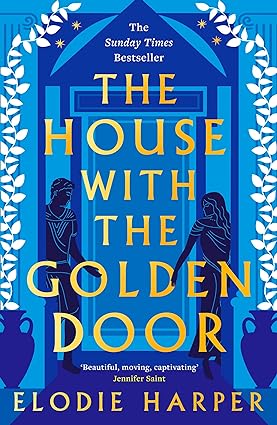
THE HOUSE WITH THE GOLDEN DOOR #2WOLFDEN
THE TEMPLE OF FORTUNA #3WOLFDEN

If you like this, try:-
Frog Music’ by Emma Donoghue
The Fair Fight’ by Anna Freeman
A Dangerous Business’ by Jane Smiley

And if you’d like to tweet a link to THIS post, here’s my suggested tweet:
#BookReview THE WOLF DEN by @Elodie_Harper https://wp.me/p2ZHJe-736 via @SandraDanby

COMING SOON… THE NEXT BOOK I REVIEW WILL BE:- Angela Petch
#BookReview ‘An Expert in Murder’ by @nicolaupsonbook #JosephineTey #crime #mystery

An Expert in Murder by Nicola Upson is an intriguing concept and the first in a series. A historical crime novel based on a real person – mystery novelist Josephine Tey, pseudonym of author Elizabeth MacKintosh – Upson places Tey in London’s theatreland where her successful play Richard of Bordeaux is drawing the crowds. This stage success happened for real, but Upson adds a murder. Or two. Nicola UpsonHow will a writer of crime and mystery novels deal with murder so close, so threatening? Will her creative imagination help friend Detective Inspector Archie Penrose find the murderer. And what happens when someone you know becomes a suspect. More a character-led mystery than a detective or crime story.
A mixture of fact and fiction – Tey was real, the role of John Terry was in reality played by John Gielgud – the story is slow to get going after the initial death. Partly this is the curse of the first instalment of a series, characters must be drawn, relationships established, clues laid for storylines which will run throughout future novels. The 1930s theatre setting is full of colourful characters though not much action actually happens in the New Theatre itself. The story kept me guessing but at times I lost track of the labyrinthine connections between people dating from the Great War and worried that I had missed something. In places there is so much new information I had to re-read. I particularly wanted to know more about Archie Penrose but perhaps that will come in the next book.
The period between the two world wars is a fascinating time with enormous social change but still retaining a straitjacket of Edwardian social conventions, which is fertile territory for a novelist. However there were moments when language and behaviour seemed a little too modern for the Thirties setting.
This is a slow to start to the series but intriguing enough to make me want to give it another chance. Perhaps I’ll try a novel later in the series [at the time of writing there are 11]. Ultimately, more a mystery than a detective or crime story.

Read my reviews of these other books by Nicola Upson:-
ANGEL WITH TWO FACES #2JOSEPHINETEY
STANLEY AND ELSIE

And here’s my review of BRAT FARRAR by the real-life author Josephine Tey.

If you like this, try:-
Curtain Call’ by Anthony Quinn
Shrines of Gaiety’ by Kate Atkinson
Fortune Favours the Dead’ by Stephen Spotswood #1Pentecost&Parker

And if you’d like to tweet a link to THIS post, here’s my suggested tweet:
#BookReview AN EXPERT IN MURDER by @nicolaupsonbook https://wp.me/p2ZHJe-71K via @SandraDanby

COMING SOON… THE NEXT BOOK I REVIEW WILL BE:- Elodie Harper

#BookReview ‘The Rector’s Wife’ by Joanna Trollope #familysaga #contemporary

No-one writes a small village saga like Joanna Trollope. Though the main character of The Rector’s Wife is the said wife, the tensions within her marriage, family and community are universal. The independence of the woman, the stifling controlling behaviour of an uncommunicative husband, the disapproval of outsiders making judgements on the family with no knowledge of the truth. Joanna TrollopeFirst published in 1991, The Rector’s Wife is about a priest’s wife struggling to rediscover her own identity, a feeling of self that faded on marriage and has been swamped since by the competing needs of husband, children, church and village. The flower committee, the Sunday School, the newsletter, the endless teas and cakes to bake. The silent expectation that she will do this without payment. It is a sad story about a struggling marriage where communication is limited and the three children – Charlotte, Luke and Flora – observe in fear, confusion and ultimately in rebellion, in their own individual ways. How can they know who they are if their father rarely talks and their mother is having her own identity crisis. But it is also a heartwarming story about family love and adaptation.
Anna Bouverie’s rebellion begins when her husband Peter fails to be awarded promotion to archdeacon. ‘He would be changed by this; he couldn’t avoid that. Even the gradual assimilation of his disappointment would leave scars and blights, like a landscape after fire.’ Anna wonders if he will become even more difficult. Peter retreats into himself, leaving Anna to deal with the family’s financial problems. Son Luke wants to drive to India in an old van with friends, but doesn’t have the money. Flora is being bullied at her comprehensive and longs to go to the convent school. Oldest child Charlotte, away at university, avoids going home. Anna’s solution is pragmatic. To the scandalous whispers of the village women, she takes a job as a shelf-stacker at Pricewells supermarket. To her surprise, she enjoys the work. Her husband is scandalised. Two newcomers to the village, a rich businessman, and the brother of the new archdeacon, observe the upheaval and watch Anna with interest.
As Anna faces down her husband’s sullen disapproval, her mother and mother-in-law rebel in their own small ways and navigate their own choppy waters with resilience. There are asides which raise a chuckle, particularly old villager Mr Biddle, and some of Flora’s pronouncements. I finished the book feeling indignant at how the men in Anna’s life, no matter how well-meaning, seem to treat her as an appendage to themselves rather than seeing Anna the person.
The ending is satisfactory, not neat but realistic. “I married the man, not the job,” Anna tells a parishioner. “I’m not an outboard motor, I’m another boat.”
CLICK HERE TO READ MORE ABOUT THIS BOOK AT AMAZON

Read my reviews of other novels by Joanna Trollope:-
A PASSIONATE MAN
A VILLAGE AFFAIR
MUM & DAD
THE CHOIR

If you like this, try:-
‘We Are Water’ by Wally Lamb
The Language of Others’ by Clare Morrall
‘The Last Day’ by Claire Dyer

And if you’d like to tweet a link to THIS post, here’s my suggested tweet:-
#BookReview THE RECTOR’S WIFE by Joanna Trollope https://wp.me/p2ZHJe-70O via @SandraDanby

COMING SOON… THE NEXT BOOK I REVIEW WILL BE:- Nicola Upson

#BookReview ‘The Collaborator’s Daughter’ by Eva Glyn @JaneCable #WW2 #Croatia

Modern-day grief and the turmoil of a wartime past are entangled for Fran in The Collaborator’s Daughter by Eva Glyn. Looking for a new start after the death of her beloved adoptive father, Fran leaves wintery England for the warmer streets of Dubrovnik. Feeling alone, vulnerable and anxious, Fran searches for the strength to look for answers. Eva GlynBrought from Yugoslavia to England as a baby at the end of the Second World War, Fran was raised by her mother to believe her father was a war hero. But Fran has recently discovered the name of Branko Milisic on a list of Nazi collaborators executed by partisan fighters in 1944. Unable to rationalise her gentle, loving mother Dragica as having loved a Nazi, Fran visits Croatia for the first time, taking small steps in discovering the history of the city where she was born. Her life is drifting. Having nursed her mother then father in their last years, raised her son and cared for grandchildren, Fran now realises she needs time for herself. But after a life of caring, being selfish is not as easy as it sounds. In her sixties, she lacks confidence and feels old, unattractive and shy.
Fran’s rebirth as an independent woman unfolds slowly, sometimes tortuously, as she treads the warm streets of Dubrovnik, shyly meeting the locals, learning their language, baking local delicacies and plucking up the courage to ask questions about her mysterious father. Fran is an introspective character and she spends a lot of time re-examining her motives, asking what-if, worrying about what she will find, summoning courage to take the next step, to ask the next question. As the grief at the recent loss of her father begins to lessen, she becomes bolder, finding strength with the new friends she has made in the beautiful city. Glyn’s descriptions of Dubrovnik are pictorial, so much so that the city almost becomes a character with a personality.
This is a compassionate telling of an emotional story about grief, about the fear of the past and ultimately about forgiveness. The truth about Branko and Dragica’s life during the Second World War seems deeply hidden, impossible to find, records lost, witnesses dead. As Fran struggles with the idea that her father was a traitor, perhaps a murderer, she is introduced to a local man who fought in the more recent Balkan War. Jadran knows what war is really like, the fear, the shame, the horror, the impossible choices, the loyalties and betrayals. Glyn cleverly juxtaposes the different wartime experiences as Fran tries to forgive a father who possibly did terrible things.
At times Fran is overcome with the enormity of what she is attempting. But with the help of her new Croatian friends, and bolstered by rallying Skype sessions with best friend Parisa back home in England, she investigates the truth, one small step at a time.
An original storyline in a country whose wartime story is read little in fiction.

Read my reviews of these other books by Eva Glyn:-
THE CROATIAN ISLAND LIBRARY
THE MISSING PIECES OF US

Eva Glyn is the pen name of author Jane Cable, here are my reviews of some of Jane’s other novels:-
ANOTHER YOU
ENDLESS SKIES
THE CHEESEMAKER’S HOUSE

If you this, try:-
‘The Last Hours in Paris’ by Ruth Druart
The Book of Lies’ by Mary Horlock
The Camomile Lawn’ by Mary Wesley

And if you’d like to tweet a link to THIS post, here’s my suggested tweet:
#BookReview THE COLLABORATOR’S DAUGHTER by Eva Glyn @JaneCable https://wp.me/p2ZHJe-6Zl via @SandraDanby

COMING SOON… THE NEXT BOOK I REVIEW WILL BE:- Joanna Trollope