Tag Archives: books

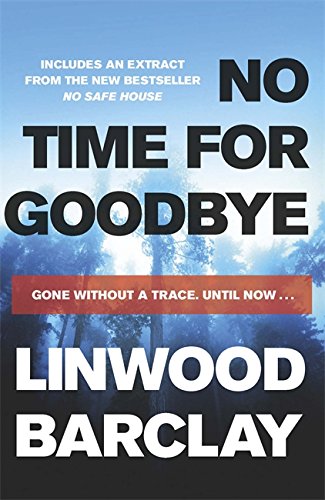
#BookReview ‘No Time for Goodbye’ by @linwood_barclay #thriller #crime

No Time for Goodbye by Linwood Barclay had me sitting up late at night, reading just one more chapter, and one more. Linwood BarclayWhen Cynthia Bigge is fourteen, her parents and older brother disappear from the house, never to be seen again. No bodies are found, no signs of foul play. It is as if they just walked away. But if they weren’t murdered, why did they leave? Did they hate her so, to abandon her? Twenty five years later, Cynthia takes part in a television programme to publicize cold cases. She could never have imagined what would happen next.
First, there is a mysterious letter. Then a phone call, an e-mail. Suggesting something is going to happen, hinting her family is still alive. Cynthia questions her own sanity, her husband [and the main part of the story is told from his point of view] questions it too, and their daughter Grace is seemingly untroubled except she looks through her telescope every night before bedtime to check there is no asteroid heading for earth to destroy their world.
This is a classic thriller. Who to believe? Is Cynthia’s family dead or alive? Who is contacting her now, the murderer? Is Cynthia so stressed that she is fabricating things? As the clock ticks, the police seem suspicious and there are more deaths, until a clue, something so ordinary it has been overlooked, suggests the truth.

If you like this, try:-
‘Gone Girl’ by Gillian Flynn
One False Move’ by Harlan Coben
‘Chosen Child’ by Linda Huber

And if you’d like to tweet a link to THIS post, here’s my suggested tweet:
#BookReview NO TIME FOR GOODBYE by @linwood_barclay http://wp.me/p5gEM4-2dJ via @SandraDanby

#BookReview ‘The Slaves of Solitude’ by Patrick Hamilton #WW2 #wartimefamily

Patrick Hamilton is a new author for me. The Slaves of Solitude, published in 1947, is a novel about wartime in which war is deep background. The setting is Thames Lockden, a small town in the Home Counties, which Hamilton based on Henley-upon-Thames. It tells the story of Miss Roach – Enid, though hardly anyone knows this is her first name – and her life at a boarding house, The Rosamund Tea Rooms. Patrick HamiltonThis is a war novel with a difference, focussing on the people at home, not fighting but getting on with their lives in a world turned upside down, managing on a day-to-day basis, life is dreary and bare. Miss Roach, former schoolmistress, is single, 39, and fiercely independent. She has been bombed out of her London flat and has fled from the bombing. Life is dark. ‘The earth was muffled from the stars; the river and the pretty eighteenth-century bridge were muffled from the people; the people were muffled from each other. This was war late in 1943.’
Hamilton is a wonderful observer of human behaviour, he shows the nasty politeness between the residents at The Rosamund Tea Rooms, the bullying, the toadying, the power struggles and how the quiet ones are trampled over by the arrogant bullies. It is fascinating to see how the war makes things which seemed impossible before the war, possible. Miss Roach is a quiet, gentle woman, who over-thinks situations and constantly revisits things that happened and what she might have said. She is bullied at her shared dining room table by the odious Mr Thwaites who dislikes her democratic values, mistreated by ‘her’ American, the inept Lieutenant Pike, and stabbed in the back by her supposed ‘friend’ Vicki Kugelmann. Mr Thwaites is a clever portrayal of a man secure in the knowledge that he is always right and everyone else is wrong and inferior, reinforcing this position by snide comments to Miss Roach which, not wanting a confrontation, she sidesteps. The appearance in her life of the Lieutenant briefly gives Miss Roach’s confidence a boost, until she realizes that his compliments are always spoken in moments of drunkenness. She so longs to believe his protestations but is wary of his inconsequence so, when Vicki sets her sights on the Lieutenant, Miss Roach doesn’t know whether to be jealous or relieved.
Hamilton is a fine writer. He writes about the detail of everyday boring life and enlivens it with observations of human behaviour which are spot-on. The ending is satisfying and realistic.

For a taster of this novel, click here to read the first paragraph of THE SLAVES OF SOLITUDE.

Read my review of HANGOVER SQUARE by the same author.

If you like this, try:-
‘The Paying Guests’ by Sarah Waters
‘At Mrs Lippincote’s’ by Elizabeth Taylor
‘The Heat of the Day’ by Elisabeth Bowen

And if you’d like to tweet a link to THIS post, here’s my suggested tweet:
#BookReview THE SLAVES OF SOLITUDE by Patrick Hamilton http://wp.me/p5gEM4-2AH via @SandraDanby 

#BookReview ‘Anything is Possible’ by Elizabeth Strout @LizStrout #contemporary

Anything is Possible by Elizabeth Strout is an extraordinary book about normal people living normal lives. On the outside, people live private, God-fearing lives, they get by, they smile, they work. Inside, they hide secrets, horror, misgivings, sadness and love. With the same vision and delicacy she displayed in My Name is Lucy Barton, Strout tells us about the people of Amgash, Illinois, the small rural town where Lucy Barton grew up. Elizabeth StroutIn Anything is Possible, as in real life, threads of small town life are tangled together, generation after generation, each seemingly isolated but all connected by invisible tendrils of family, neighbourhood, school, farming. The shared history of living together through the years in close proximity, a community where everyone knows everyone else, their shame, their success, their failure, their betrayal and loyalty, is a community it is impossible to escape. Where adolescent misdemeanours, which may or may not have happened, are remembered as fact and decades of distrust attached. But as well as secrets and shame, there is redemption and love for those who face change and find a way to the other side.
This is more a collection of inter-connecting stories rather than a novel with a single narrative spine, but it is finely written with care and grace. A companion novel to My Name is Lucy Barton, it is not essential to have read that novel first but in some ways it does help.
There are nine chapters each focussing on one character and each, you realize at the end, are firmly entwined like the roots of a closely-planted grove of trees. In the first we see Tommy Guptill, elderly now, but once the caretaker at Lucy’s school. In the second, school counsellor Patty Nicely is insulted by student Lila Lane, daughter of Lucy’s sister Vicky. And so the stories keep coming as you gradually build up a picture of the Amgash citizens. After seventeen years away, writer Lucy is drawn back to the dirt-poor family farm where her brother Petie still lives. There, like the other characters in this novel, she discovers how your history cannot be left behind because it is hard-wired within you.
In her portrayals of these straightforward straight-talking Amgash citizens, Strout poses questions for the reader and does not give answers, expect to do some work yourself when reading her novels.

Read my reviews of these other books by Elizabeth Strout:-
AMY & ISABELLE
LUCY BY THE SEA
MY NAME IS LUCY BARTON
OH WILLIAM!
OLIVE KITTERIDGE
OLIVE, AGAIN
TELL ME EVERYTHING

If you like this, try:-
‘A Thousand Acres’ by Jane Smiley
‘The Stars are Fire’ by Anita Shreve
‘Barkskins’ by Annie Proulx

And if you’d like to tweet a link to THIS post, here’s my suggested tweet:
#BookReview ANYTHING IS POSSIBLE by Elizabeth Strout @LizStrout http://wp.me/p5gEM4-2TA via @SandraDanby

My Porridge & Cream read: Graeme Cumming

Today I’m delighted to welcome thriller writer Graeme Cumming. His ‘Porridge & Cream’ read is Eagle in the Sky by Wilbur Smith.

“My Porridge & Cream book is Eagle in the Sky by Wilbur Smith. I can’t remember exactly when I first read it, but suspect around 1977. I’d started reading him after seeing Shout at the Devil at the cinema. A week later, I spotted the book in my local library (remember those?), picked it up and became hooked on Smith for years after. Eagle in the Sky was just another I picked up to read, but it’s the one that stayed with me.
Graeme Cumming“I don’t read it often, probably once every five or six years, the last time about three years ago. I remember being surprised at how dated some of the dialogue came across, but it was written in the early ‘70s! Even so, I still enjoyed it. There are no particular circumstances that prompt me to read it, but, unusually for me, once in a while I like to go back to it: I know I’m going to love it, and I’ve usually forgotten enough to be surprised. I have bought this book as a present more than any other.

The one thing that ultimately draws me back to it is the emotion I feel at the end. I’ve even been known to pick it up and read only the final few pages. The same feelings I had as a teenager reading it for the first time come flooding back to me. And then more flooding starts, and the print blurs.

The plot: A reckless young man with a passion for flying uses his skills helping the Israeli army in their war to gain favour with a girl he loves. A terrorist attack and an horrific crash thrust the reality of conflict tragically into his personal life, leaving him to rebuild everything he previously took for granted.”

Graeme Cummings’ Bio
Graeme Cumming lives in Robin Hood country. He has wide and varied tastes when it comes to fiction so he’s conscious that his thrillers can cross into territories including horror, fantasy and science fiction as well as more traditional arenas. When not writing, Graeme is an enthusiastic sailor (and, by default, swimmer), and enjoys off-road cycling and walking. He is currently Education Director at Sheffield Speakers Club. Oh yes, and he reads (a lot) and loves the cinema.

Graeme Cummings’ links
Website
Facebook
Twitter
Goodreads

Graeme Cummings’ latest book
Graeme CummingMartin Gates left the village fifteen years ago because he didn’t belong any more. Now he’s back, and looking for answers. The problem is, no one wants to hear his questions. Well, maybe Tanya McLean, but she has an ulterior motive and her husband won’t like it. In the meantime, a horrific accident leaves a farm worker fighting for his life; a brutal killing triggers a police investigation; and even the locals are falling out amongst themselves. Is Martin’s arrival more than a coincidence? Do the villagers really want reminding of the past? And why are ravens gathering in Sherwood Forest?
‘Ravens Gathering’ by Graeme Cumming [UK: Matador]

What is a ‘Porridge & Cream’ book?

Graeme CummingIt’s the book you turn to when you need a familiar read, when you are tired, ill, or out-of-sorts, where you know the story and love it. Where reading it is like slipping on your oldest, scruffiest slippers after walking for miles. Where does the name ‘Porridge & Cream’ come from? Cat Deerborn is a character in Susan Hill’s ‘Simon Serrailler’ detective series. Cat is a hard-worked GP, a widow with two children and she struggles from day-to-day. One night, after a particularly difficult day, she needs something familiar to read. From her bookshelf she selects ‘Love in A Cold Climate’ by Nancy Mitford. Do you have a favourite read which you return to again and again? If so, please send me a message here.

Graeme Cumming


‘Eagle in the Sky’ by Wilbur Smith [UK: Pan]

Discover the ‘Porridge & Cream’ books of these authors:-
Shelley Weiner
Lev D Lewis
Margaret Skea

And if you’d like to tweet a link to THIS post, here’s my suggested tweet:
Why does thriller #author @GraemeCumming63 re-read EAGLE IN THE SKY by Wilbur Smith? https://wp.me/p5gEM4-32g via @SandraDanby #amreading

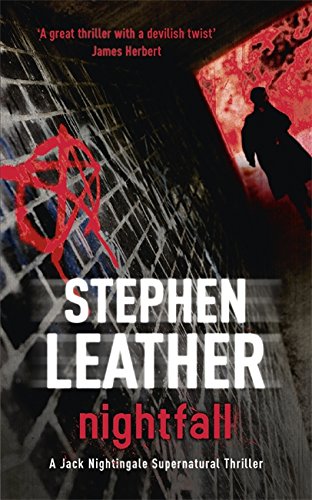
#BookReview ‘Nightfall’ by Stephen Leather #supernatural #thriller #crime

The first page was really intriguing and locked me into the character of Jack Nightingale, a police negotiator turned private detective. He is a troubled man, troubled by what he has seen through the course of his job though nowadays he earns his living from following unfaithful spouses. Nightfall by Stephen Leather is the first of the Jack Nightingale series, described as a ‘supernatural thriller.’ Stephen LeatherThis is a different kind of detective story, which begins when Jack is told he has inherited a mansion from a man who claimed to be Jack’s natural father. That’s not all, his ‘father’ leaves a warning: at Jack’s birth his soul was sold to the devil and a devil will come to claim it on his thirty-third birthday. That’s only three weeks away. So Jack is in a race against time to find out the truth. Was he really adopted? Who is Ainsley Gosling? What is going on? Is he suffering from stress? Hearing things? Imagining things? Is he going to lose his soul? Or is it one big con? When people around him start to die, Jack begins to lose his sense of perspective. ‘You are going to hell, Jack Nightingale’ are the last words he heard at the end of his career as a police negotiator but now he hears those words again, said to him by strangers.
A page-turning thriller with a fresh angle on the crime novel. Not what I was expecting at all, if I’d been offered the chance to read a ‘supernatural thriller’ I would have said ‘no thanks.’ But I enjoyed this. Why? Stephen Leather knows how to keep the story moving, he really works the trick of finishing a chapter in a way which makes you read the next even though it is midnight. And I like the main character, Jack Nightingale. For once he is not a tortured depressed detective with relationship issues, and that made this book a refreshing read. The supernatural detective thing is very different, the most similar crime book I’ve read is The Silent Twin by Caroline Mitchell where the detective is sensitive to the spiritual vibes of recent murder victims.

If you like this, try:-
‘The Silent Twin’ by Caroline Mitchell
‘Wilderness’ by Campbell Hart #1ARBOGAST
‘Snow White Must Die’ by Nele Neuhaus

And if you’d like to tweet a link to THIS post, here’s my suggested tweet:
#BookReview NIGHTFALL by Stephen Leather via @SandraDanby http://wp.me/p5gEM4-2dE

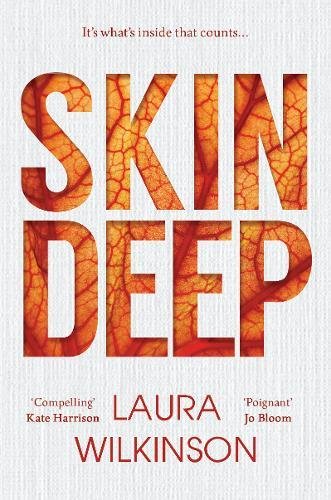
#BookReview ‘Skin Deep’ by Laura Wilkinson #contemporary

Skin Deep by Laura Wilkinson is a thoughtful, difficult book to read about modern-day notions of beauty, ugliness and society’s fascination with appearance. At times it made me feel uncomfortable. It is the sort of book which you find yourself thinking about long after you have finished reading it. It will make you think about your own attitudes to others, do you unconsciously leap to judgement based on their outward appearance, and how much do you worry about your own looks? Laura WilkinsonHulme, Manchester, 1984. Students Diana and Linda start university, Diana is studying art, Linda art history. Diana is keen to make her mark for something she can do with her hands, rather than how she looks. A former child model, people stare at her in the street such is her beauty. Via Jim, Linda’s boyfriend, Diana meets Cal, a four-year old boy neglected by his drug addict parents. He has a severe facial disfigurement and is kept from sight. He does not know a normal life. ‘Normal’ is a word which crops up often. In the child, Diana finds someone dealing with a mirror image of her own challenge: as Cal hides his face from strangers, Claire tried to avoid people ogling her beauty. I found the beginning a little slow and the story takes off once Diana is inspired by Cal to create a different kind of art.
Throughout time, artists have had muses. Cal becomes Diana’s muse, unwittingly at first when he is a child. The book treads a difficult, uncomfortable line. Diana loves Cal and tries to do the best, but what if her best is wrong? Of course, that is the thought process the author wants the reader to explore. As Diana’s success as an artist grows and Cal becomes a teenager, he starts to resent being ‘used’. Is she ultimately any different from her mother, Bunny, who forced her to enter beauty competitions, to refuse biscuits because they would make her fat?
The viewpoint switches between Diana and Cal and jumps around in time, particularly in the second half, which was disorientating. The main voice is Diana’s. I found her exploitative and unlikeable and would have liked to hear more from the adult Cal and the child Diana. Nonetheless this is a powerful, difficult read with underlying imagery of decay hidden by beauty.

If you like this, try:-
‘Orphans of the Carnival’ by Carol Birch
‘Life Class’ by Pat Barker
‘The Museum of You’ by Carys Bray

And if you’d like to tweet a link to THIS post, here’s my suggested tweet:
#BookReview SKIN DEEP by Laura Wilkinson http://wp.me/p5gEM4-2PG via @SandraDanby

#BookReview ‘How To Stop Time’ by @matthaig1 #humour

How To Stop Time is another hugely inventive novel by Matt Haig with a thoughtful message about identity. Tom Hazard is a history teacher with a difference. He can talk authoritatively about the Great Fire of London, because he was there; about Shakespeare, because he met him; about witchfinders, because he was terrorised by one. Tom Hazard is 439 years old but he looks forty one. Matt HaigWhen he was thirteen, the process of ageing slowed down. Tom and his mother are protestant Huguenot refugees in England when their life falls apart; his impossibly youthful looks draw accusations of witchery. We see snapshots of Tom’s past life as he teaches history to bored teenagers in London. And all the time he struggles with the past, so much so that he is unable to live in the present. So he exists, rather than lives, changing his identity to survive and losing sight of who he is.
This is a fascinating study of humankind, our development through history and inability to learn from what went before. Tom encounters threats and suspicions in the 21st century. Is he safe? Is a sinister bio-tech company searching for albas – short for ‘albatross,’ ie. long-lived – to use for experiments? And is the mysterious Hendrich, founder of The Albatross Society, a mentor or a threat? At the core of the novel is Tom’s love for his wife Rose, a mayfly – ie. short-lived – who dies of the plague, and their daughter Marion, an alba. Where is Marion now? Will Tom become reconciled with his past enough to live his life to the full, whether it be a long life or short, and will he ever feel free enough to love again?
A philosophical novel about making the best of what you have now without dwelling on the past, which cannot be changed, or worrying about the future, which cannot be predicted.

Read my reviews of these other Matt Haig novels:-
THE HUMANS
THE MIDNIGHT LIBRARY

If you like this, try:-
‘Burial Rites’ by Hannah Kent
‘The Photographer’s Wife’ by Suzanne Joinson
‘Pod’ by Laline Paull

And if you’d like to tweet a link to THIS post, here’s my suggested tweet:
#BookReview HOW TO STOP TIME by @matthaig1 http://wp.me/p5gEM4-2Ts via @SandraDanby

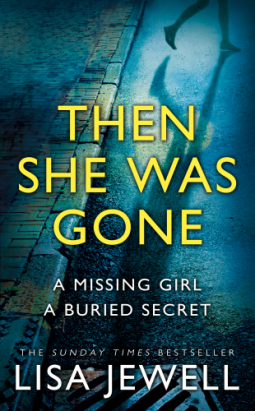
#BookReview ‘Then She Was Gone’ by Lisa Jewell @lisajewelluk #thriller

Then She Was Gone by Lisa Jewell is a delight, the page-turning story of a disappeared teenager whose experience was something I did not expect. An excellent un-thriller; that’s a phrase I use after giving it some thought. This is not a psychological thriller in that it is frightening. It didn’t make my pulse race with a sense of danger, but it did make me very curious. Lisa JewellEllie Mack is fifteen the day she fails to come home from the library, she is due to take her GCSE examinations the following week. She is a clever student, a golden girl. But she disappears, never to be seen again. Life goes on. Except it doesn’t for her family, each being trapped in some way by Ellie’s absence. Until ten years later when Ellie’s mum Lauren, now divorced, meets a nice bloke in a café. Her ex, Paul, has a new partner and so do Ellie’s siblings. Laurel is the one who is really stuck, visiting her elderly mother bed-ridden after a stroke. Then she meets Floyd and his daughters Poppy and SJ, and she blossoms.
I would like to say from the beginning I had unsettling feelings of the ‘that’s not quite right’ variety, but I didn’t. Instead the doubts crept in stealthily until the full truth dawned on me at 72% on my Kindle. And then it hit with a sledgehammer.
This is a clever book written by an author who has matured enormously over the years in the subjects she tackles.
Then She Was Gone doesn’t set out to be frightening, at least I don’t think that is the author’s primary intent. I think she started with a ‘what if’ scenario and let it unfold from there. It is a puzzle involving characters so real you feel you know them, that it could be happening to you; and that’s what makes it so powerful.

And here are my review of two other thrillers by Lisa Jewell:-
I FOUND YOU
THE GIRLS

If you like this, try:-
‘The Good Girl’ by Mary Kubica
‘Chosen Child’ by Linda Huber
‘Stolen Child’ by Laura Elliot

And if you’d like to tweet a link to THIS post, here’s my suggested tweet:
#BookReview THEN SHE WAS GONE by Lisa Jewell @lisajewelluk http://wp.me/p5gEM4-2Td via @SandraDanby

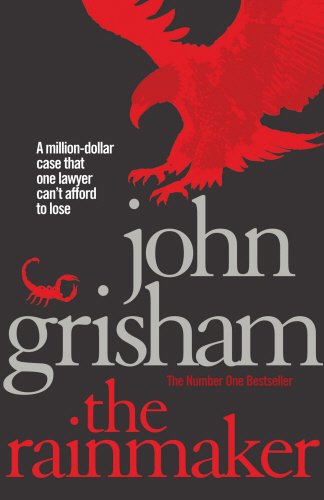
Great Opening Paragraph 104… ‘The Rainmaker’ #amreading #FirstPara

“My decision to become a lawyer was irrevocably sealed when I realized by father hated the legal profession. I was a young teenager, clumsy, embarrassed by my awkwardness, frustrated with life, horrified of puberty, about to be shipped off to a military school by my father for insubordination. He was an ex-Marine who believed boys should live by the crack of the whip. I’d developed a quick tongue and an aversion to discipline, and his solution was simply to send me away. It was years before I forgave him.”
John Grisham From ‘The Rainmaker’ by John Grisham 

Read these #FirstParas also by John Grisham:-
THE LAST JUROR
THE PELICAN BRIEF

Try one of these #FirstParas & discover a new author:-
‘Death in Summer’ by William Trevor
‘Lord Jim’ by Joseph Conrad
‘A Severed Head’ by Iris Murdoch

And if you’d like to tweet a link to THIS post, here’s my suggested tweet:
#Books #FirstPara THE RAINMAKER by @JohnGrisham http://wp.me/p5gEM4-1Vd via @SandraDanby

#BookReview ‘Anderby Wold’ by Winifred Holtby #historical

I was a teenager when I first read South Riding by Winifred Holtby but, until now, hadn’t read her earlier novels. Anderby Wold is her first; published in 1923 it is a portrayal of a Yorkshire Wolds village in the first years of the twentieth century. I was struck by the similarity to Jane Austen: both focus on the personalities, tensions, the pettiness, resentments and emotions of small communities, and both combine acute social observations with sharp humour. Winifred HoltbyThe novel opens with a family party at the farm, Anderby Wold, as Mary Robson and John, her husband of ten years and also her cousin, are celebrating a decade of hard work and penny pinching to clear the mortgage on the farm they had inherited. We are introduced to Mary and the family from the viewpoint of John’s sister, the spiteful Sarah. If ever there was a negative first chapter that makes you think the story is going to be full of unlikeable characters, this is it. It is, perhaps, a sign of its times; I am not sure a novel would be published today with such an ill-feeling introduction. But do persist, this novel is worth reading.
We are slowly introduced to each key character with their own viewpoint and take on their agricultural world, where hard toil, tough weather and difficult land unites – and separates – the community. Mary thinks of herself as a considerate benevolent mistress, she sits with sick people, visits the old, supports the school, and distributes gifts at Christmas. But she is unaware that some of the farm labourers resent what they see as her Mrs Bountiful role, a vision of her behaviour to which she is blind. She feels dissatisfaction with the minutiae of her life, dissatisfaction she pragmatically ignores. At a gathering of the village ladies, she listens to the gossip, ‘Mary shivered. They were as lifeless as the uprooted trees, carried from the wold side and laid in the back garden of the farm, awaiting destruction for firewood. Their talk was as meaningless as the rustle of dry leaves on brittle twigs.’
Into this fragile world where people speak bluntly and behaviour can be brusque, comes a writer from Manchester. He is researching the lot of the agricultural labourer with an eye on social change. When he comes into conflict with Mary, the beliefs and assumptions of both are challenged in an Austen-esque manner. As an outsider, David Rossitur is treated first with silence, then with suspicion. The innkeeper’s wife worries about his motivations, ‘Mrs Todd, being a personal of small imagination, had divided mankind into two classes, those who had designs on Victoria [her daughter], those who had designs on her Beer. Last night she had come to the regrettable conclusion that David had no true appreciation of Beer.’ A trade union for agricultural workers is formed, followed inevitably for a strike. At harvest time. Anderby Wold will be changed forever.

Click the title to read my review of POOR CAROLINE, also by Winifred Holtby.

If you like this, try:-
‘The Ballroom’ by Anna Hope
‘Time Will Darken It’ by William Maxwell
‘Under a Pole Star’ by Stef Penney

And if you’d like to tweet a link to THIS post, here’s my suggested tweet:
#BookReview ANDERBY WOLD by Winifred Holtby https://wp.me/p5gEM4-353 via @SandraDanby