Tag Archives: books

#BookReview ‘The Escape’ by CL Taylor @callytaylor #thriller

The Escape by CL Taylor fairly gallops along without time to take a deep breath. It is a tale of escape, pursuit, lies, vulnerability, long-hidden secrets and selfishness. At times I didn’t know which character to believe and I didn’t particularly like any of them. I wanted to sit them down at the kitchen table with a mug of tea and a plate of biscuits, and bang their heads together. There appear to be so many lies it is difficult to sift out the truth, which became a little frustrating after a while. In the end, there are many types of escape. CL TaylorJo and Max have a toddler daughter Elise. Max, an investigative journalist, has just completed a long-running story which resulted in a conviction, and he is jubilant. Jo, who became agoraphobic after the loss of their first child Henry, lives from day to day, her small world surrounding Elise. Jo feels Max is less sympathetic to her condition than he used to be. Max tries to be patient but is finding it increasingly difficult. Into this fragile world steps Paula, a stranger, who threatens Jo and Elise. The first crack appears as Max doubts Jo’s judgement of the threat. Is she panicking again, exaggerating it, imagining it?
Faced with danger to her child, Jo runs. That is the escape of the title. The agoraphobia which made it a trial to take her daughter to nursery every day fades as, driven by her maternal defence mechanism, she packs Elise into her car and flees to Ireland. Ireland, we know vaguely, is where her mother came from years ago but of which she will not speak. More mystery. As she runs, Jo appears more unbalanced, sees threats on all sides and is forever planning escape routes. But where is the danger actually coming from? Is she seeing clearly, could it be that some of the lies which frighten her are actually the truth? And vice-versa. Is she a reliable witness? The need for flight seems to over-ride all historic connections of love and trust, she runs from the people who try to help her. So, is she misguided, confused? Or correct? And in escaping with Elise, in all good intentions to protect her daughter, is she putting her two-year-old daughter in further danger of her life?
This is a psychological thriller which asks some difficult questions. About how we react to stress, how our judgement of others can be influenced, and when to trust your own deep-seated instincts.

Read my reviews of these other thrillers by CL Taylor:-
THE ACCIDENT
THE LIE

If you like this, try:-
‘One Step Too Far’ by Tina Seskis
‘The Accident’ by Chris Pavone
‘The Last of Us’ by Rob Ewing

And if you’d like to tweet a link to THIS post, here’s my suggested tweet:
#BookReview THE ESCAPE by CL Taylor @callytaylor http://wp.me/p5gEM4-2Tj via @SandraDanby
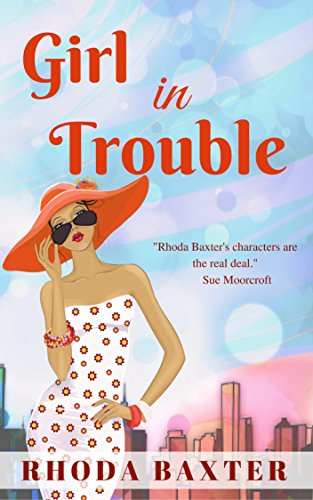
#BookReview ‘Girl in Trouble’ by Rhoda Baxter @RhodaBaxter #romance

Funny, sad and believable: Girl in Trouble by Rhoda Baxter is the third in her Smart Girls series and, though some of the characters have cameo appearances throughout the series, can be read alone. Which is what I did, quickly, particularly enjoying the second half of the story. I was worried that the first chapter, in which we meet Olivia at a stag night, meant the book would be too chick lit for me but as the story progresses the themes become darker and complex. Rhoda BaxterOlivia is thirty, relationship-phobic and surrounded by friends. She is quite independent, thank you very much and does not need a man to look after her. She has never been in love, never allowed herself to be in love and knows this dislike/distrust of men can be traced back to her father who left her and her mother when she was a child. She also has a health issue that makes pregnancy a big risk, though to be honest I was a little in the dark about the specifics of this. Instead she is a serial one-night girlfriend. When she falls accidentally pregnant, Olivia thinks the decision to have an abortion is straightforward and sensible. Of course life gets in the way, in two ways. Firstly her absent landlord Walter, who lives in the upstairs flat, returns home and is hot and funny and makes her feel comfortable in a cosy sexy way; a first for Olivia. And then her absent father arrives on her doorstep.
This is a fast-paced well-written novel which runs the gamut of emotions from chuckles to tears to pain. Relationships within broken families, as the years pass, are not simple and Baxter explores the unresolved tension and anger of Olivia and her mother Liz towards her father Trevor. Graham, her stepfather, has been a calm and loving influence on Olivia since her teens, but she only starts to appreciate this once Trevor returns to the scene. The father/daughter theme is echoed also in Walter’s storyline. His divorced wife Charlotte is to remarry and take their daughter, Emily, to live in America. Walter, absent because of work through many of Emily’s baby years, realises what he has missed just as he is about to lose it.
If you like your girls to be girly then Olivia does not fit that profile. She keeps her thoughts to herself and is quite complex in her behaviour. She does not want children and, in discussions with her friend Ruchi, the for/against options for abortion are explored with Ruchi, at first, unhappy at her friend’s viewpoint. So although the cover design is bright and cheerful, Girl in Trouble touches on some serious topics in a balanced and thoughtful manner. I would have liked to know more about Olivia’s work life as a solicitor though, in fact Walter’s career as a marine biologist is explained in much more detail.
If you’re going on holiday, or a long train journey, you will devour this.

Read my review of PLEASE RELEASE ME, also by Rhoda Baxter.

If you like this, try:-
‘Butterfly Barn’ by Karen Power
‘One Step Too Far’ by Tina Seskis
‘Stormy Summer’ by Suzy Turner

And if you’d like to tweet a link to THIS post, here’s my suggested tweet:
#BookReview GIRL IN TROUBLE by Rhoda Baxter @RhodaBaxter http://wp.me/p5gEM4-2Wf via @SandraDanby

A poem to read in the bath… ‘Tulips’

Anyone who enjoys gardening understands this poem, the feeling of planning for a garden of the future, digging, sowing, hoping, and then the temporary feeling of joy when the flowers appear. To be replaced again by the annual cycle of planning, digging and sowing. Wendy Cope obviously has a garden.

Wendy Cope

[photo: Stevie McGarrity Alderdice]

Because of copyright restrictions I am unable to reproduce the poem in full, but please search it out in an anthology or at your local library.

‘Tulips’
Months ago, I dreamed of a tulip garden,
Planted, waited, watched for their first appearance,
Saw them bud, saw greenness give way to colours,
Just as I’d planned them.

Wendy Cope


If I Don’t Know’ by Wendy Cope [UK: Faber] 

Read these other excerpts, and perhaps find a new poet to love:-
‘The Boy Tiresias’ by Kate Tempest
‘The Roses’ by Katherine Towers
‘Elegy of a Common Soldier’ by Dennis B Wilson

And if you’d like to tweet a link to THIS post, here’s my suggested tweet:
A #poem to read in the bath: ‘Tulips’ by Wendy Cope http://wp.me/p5gEM4-2Uo via @SandraDanby

SaveSave

#BookReview ‘The Travelers’ by Chris Pavone #thriller

What a non-stop ride this is. I resented everything which made me put this book down. The Travelers by Chris Pavone is a spy thriller about an ordinary guy doing an ordinary job who finds himself in an extraordinary position. It reminded me a little of Robert Redford in the film Three Days of the Condor. Chris PavoneTravel writer Will works for New York-based Travelers, a luxury travel magazine. Married to Chloe, who works as a freelance for the same magazine, they live in a rundown money-pit in Brooklyn. Things change in a short space of time. On a press trip in France, Will flirts outrageously with an Australian journalist and goes home, relieved he didn’t succumb to temptation. But on his next press trip to the wine area of Argentina, Elle is there again and this time they do have sex. Except Elle isn’t what she says she is, her name isn’t Elle and she isn’t Australian. She gives Will a choice. Cooperate, supply information about his contacts and people he writes about, or else he will be exposed to his boss Malcolm and to Chloe. And so he cooperates.
The action is rapid. Some sections – identified only by the location, not the person – are only half a page and for the first third of the book this is disorientating. I couldn’t work out who was spying and who was being spied upon. A man in an office sits at a computer terminal and monitors targets, the flights they take, the hotels and rental cars they book. An un-named woman goes to Capri to kill a man. An American man wants to disappear. Malcolm has a hidden office with secret files.
The threads are tangled thoroughly. The answer is not one I predicted. It is impossible to explain the plot without giving away secrets, but the ending in Iceland will make a great action sequence in a film.

And here’s my review of another thriller by Chris Pavone:-
THE ACCIDENT

If you like this, try:-
‘Dominion’ by CJ Sansom
‘The Killing Lessons’ by Saul Black
‘An Officer and a Spy’ by Robert Harris

And if you’d like to tweet a link to THIS post, here’s my suggested tweet:
#BookReview THE TRAVELERS by Chris Pavone via @SandraDanby http://wp.me/p5gEM4-2lT

My Porridge & Cream read: Margaret Skea

Today I’m delighted to welcome historical novelist Margaret Skea. Her ‘Porridge & Cream’ read is Anne of Green Gables by LM Montgomery.

“When I was a child, the lady next door had a wonderful library of children’s books and I could borrow as many as I wanted. So over about 18 months I read lots of full sets, including all 12 Swallows and Amazons and the 10 ‘Anne’ books. Both series have remained favourites, but if I have to make a choice of just one it has to be the first of the ‘Anne’ books.
Margaret Skea“We used to foster children, and Anne of Green Gables was a wonderful story either to read to them or watch with them. It has so many resonances for their circumstances and such a positive ending. I vividly remember one child stopping me half-way through, saying, ‘Please tell me this ends well, or I can’t bear to hear any more.’

The plot involves an elderly couple who, intending to adopt a boy to help on their farm, are sent a girl instead. Despite their initial misgivings and her capacity for getting into scrapes, they keep her.

I usually re-read the book or watch the film every year and I still get a lump in my throat when we come to a particular point. (Anyone who has read the book will know the incident I’m referring to. For anyone who hasn’t, you’ll recognize it when you come to it.) That it still moves me after all these years and many re-reads, is a testament to the emotional power of the story.

The central character is key to my love of the book. Perhaps because, aside from her situation and her red hair, in many ways growing up I was Anne. I’ve done the equivalent of smashing a slate on Gilbert Blythe’s head, and rarely, if ever, refused a dare – including walking along the ridge of a garage roof. I only stopped talking when I was reading, spent a lot of time living within my imagination and wished I had a more exotic name!”

Margaret Skea’s Bio
Margaret Skea grew up in Northern Ireland during the ‘Troubles’, but now lives in Scotland. Her passion is for authentic, atmospheric fiction, whether historical or contemporary. An award-winning novelist and short story writer, her credits include the Beryl Bainbridge Award for Best 1st Time Novelist 2014 (Turn of the Tide), and a longlisting in the Historical Novel Society New Novel Award 2016 (A House Divided). Her short stories have won or been placed in a number of competitions, including: Fish, Mslexia, Winchester, Rubery and Neil Gunn.

Margaret Skea

Margaret Skea’s latest book
Katharina: Deliverance is Margaret’s first work of biographical fiction. It is based on the early life of Katharina von Bora, the escaped nun who became Martin Luther’s wife, and seeks to bring this influential, but little-known character out of the shadows in which she has remained hidden for five hundred years.
‘Katharina’ by Margaret Skea [UK: Sanderling Books]

Margaret Skea’s links
Website
Facebook
Twitter
Amazon UK / Amazon US
Goodreads

What is a ‘Porridge & Cream’ book?

Margaret SkeaIt’s the book you turn to when you need a familiar read, when you are tired, ill, or out-of-sorts, where you know the story and love it. Where reading it is like slipping on your oldest, scruffiest slippers after walking for miles. Where does the name ‘Porridge & Cream’ come from? Cat Deerborn is a character in Susan Hill’s ‘Simon Serrailler’ detective series. Cat is a hard-worked GP, a widow with two children and she struggles from day-to-day. One night, after a particularly difficult day, she needs something familiar to read. From her bookshelf she selects ‘Love in A Cold Climate’ by Nancy Mitford. Do you have a favourite read which you return to again and again? If so, please send me a message here.

Discover the ‘Porridge & Cream’ books of these authors:-
Helen Christmas
Rachel Dove
Catherine Hokin

Margaret Skea


‘Anne of Green Gables’ by LM Montgomery [UK: Puffin Classics]

And if you’d like to tweet a link to THIS post, here’s my suggested tweet:
Why does #author @margaretskea1 re-read ANNE OF GREEN GABLES by LM Montgomery once a year? https://wp.me/p5gEM4-2Zx via @SandraDanby #amreading

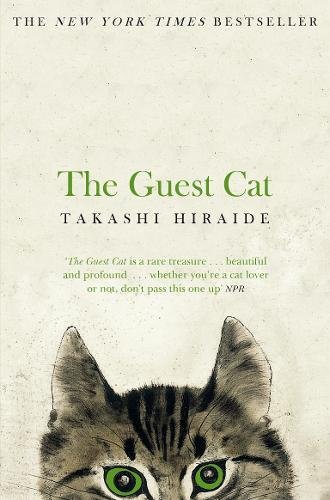
Great Opening Paragraph 103… ‘The Guest Cat’ #amreading #FirstPara

“At first it looked like low-lying ribbons of clouds just floating there, but then the clouds would be blown a little bit to the right and next to the left.”
Takashi Hiraide From ‘The Guest Cat’ by Takashi Hiraide 

Try one of these #FirstParas & discover a new author:-
‘Couples’ by John Updike
‘Queen Camilla’ by Sue Townsend
‘Jamrach’s Menagerie’ by Carol Birch

And if you’d like to tweet a link to THIS post, here’s my suggested tweet:
#Books #FirstPara THE GUEST CAT by Takashi Hiraide http://wp.me/p5gEM4-2xk via @SandraDanby

#BookReview ‘A Life Between Us’ by Louise Walters @Louisewalters12 #mystery

Survivor’s guilt, revenge, memory tricks, childhood friendship and rivalry are at the centre of this family drama. In A Life Between Us by Louise Walters, forty-something Tina visits the grave of twin sister Meg each week and holds conversations with her. Louise WaltersTina has buried a secret so deep even her husband doesn’t know it. Only one other person was there when Meg died, the twins’ Aunt Lucia. But this is a complicated family with so many stories of betrayal, flight, lies, secrets and denials that until the end I was waiting for someone else to appear as a witness.
The first half was a slow-burn and I longed to get to the first turning point of the story, which when it came was not a surprise. This slow-burn means this is not a psychological thriller but a study of the long-term effects on children violently bereaved, survivor guilt, misplaced memory and grief. We are told the story via multiple viewpoints: Tina, then and now; Tina’s childhood letters; Tina’s husband Keaton who loves his wife but struggles to cope with her depression and guilt; and Aunt Lucia, then and now. For me, this was too many viewpoints and too many characters, making it rather involved and at times repetitive.
Walters’ story involves a large family and perhaps the story would be stronger with less siblings. Certainly the absent Robert and jailbird Ambrose added little to Tina’s story, and her parents are virtually invisible. The device of Tina’s childhood letters to cousin Elizabeth in California became repetitive and irritating, it is so difficult to write in the voice of a child. I also found myself sympathising with Aunt Lucia who is portrayed as something of a harridan in a dysfunctional family, though she too has experienced difficult times which she has kept secret.
An at times long-winded story which, at its heart, explores something deep, difficult and sensitive.

Here’s my review of MRS SINCLAIR’S SUITCASE also by Louise Walters.

If you like this, try:-
‘Please Release Me’ by Rhoda Baxter
‘The Stars are Fire’ by Anita Shreve
‘Sometimes I Lie’ by Alice Feeney

And if you’d like to tweet a link to THIS post, here’s my suggested tweet:
#BookRreview A LIFE BETWEEN US by Louise Walters @LouiseWalters12 http://wp.me/p5gEM4-2Tw via @SandraDanby

#BookReview ‘Autumn’ by Ali Smith #SeasonalQuartet #contemporary

Uplifting, enlightening, funny, clever, depressing, sad and heartwarming. The mischievous Autumn by Ali Smith is an ingenious novel, the first of the ‘Seasonal Quartet’ telling the story of the UK fragmented after the post-Brexit vote in 2016, when ugliness and prejudice rose to the surface setting brother against sister, friend against friend, dividing streets, neighbourhoods and towns, a binary split with each side convinced it is right and the other, wrong. Ali SmithDaniel Gluck is 101 years old and in a nursing home, we see from his wonderful lyrical dreams that he teeters on the edge of death. Smith builds her world around Mr Gluck and Elisabeth Demand who, with her mother Wendy, lived next door to Daniel when Elisabeth was a child. Their relationship starts in 1993. Elisabeth, aged eight, must interview a neighbour for a homework project. Her mother is not keen and tries to bribe her to invent a neighbour instead. The following day Elisabeth meets Mr Gluck and, despite her mother’s misgivings (single man, dodgy, must be gay, might be unsafe etc) they become firm friends. Now he is 101 and she tells a lie to the nursing home – yes, she is his grand-daughter – in order to gain a visitor’s pass. She sits by his bed and reads Brave New World.
Smith compares and contrasts modern life with past times in the twentieth-century, we see modern life through Elisabeth’s storyline countered by Daniel’s memories and dreams, and his interpretations of books, art and song for the child Elisabeth. The story wings its way through contemporary references from television antiques programmes and passport applications to celebrity Christine Keeler, sculptor Barbara Hepworth and pop artist Pauline Boty.
This is all very interesting but, with the lightest of hands, Smith gives a warning about the danger of nationalism, populism and the easy appeal of accepting political lies rather than asking difficult questions of the politicians and ourselves. One passage in particular underlines it all: Daniel’s younger sister Hannah is captured in Nice, France, in 1943 despite carrying papers which identify her as Adrienne Albert.
Running throughout are the themes of truth v lies [juxtaposed often, with lies often being throwaway and easy whilst truth can be awkward and difficult to say] and identity. There is a hilarious passage where Elisabeth tries to renew her passport application at the Post Office, an all-too-believable portrayal of officialdom. Some of the historical sections, particularly about Keeler and Boty, seemed rushed and I would have liked more of Daniel’s songwriting background which was mentioned fleetingly.
Short, at 272 pages, Autumn can be read in one sitting. It is a joy to read. Next in the quartet comes Winter.
Autumn was shortlisted for the 2017 Booker Prize.

Click the title to read my reviews of other books by Ali Smith:-
WINTER #2SeasonalQuartet
SPRING #3SeasonalQuartet
SUMMER #4SeasonalQuartet
COMPANION PIECE #5SeasonalQuartet
HOW TO BE BOTH

If you like this, try:-
‘Moon Tiger’ by Penelope Lively
‘Darktown’ by Thomas Mullen
‘Shelter’ by Sarah Franklin

And if you’d like to tweet a link to THIS post, here’s my suggested tweet:
#BookReview AUTUMN by Ali Smith http://wp.me/p5gEM4-2SX via @SandraDanby

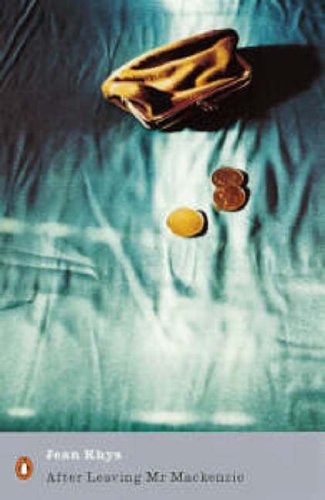
#BookReview ‘After Leaving Mr Mackenzie’ by Jean Rhys #historicalfiction

A slim novel, After Leaving Mr Mackenzie is the second novel by Jean Rhys, published in 1931. Semi-autobiographical, it tells the story of a young woman [if a woman in her mid-thirties can be called young] who faces up to the realities of life after a love affair ends. The title is not strictly true because Julia did not leave Mr Mackenzie, he left her. Jean Rhys She moves to a cheap hotel room where the furnishings are faded and the only decoration is a poor painting which she assumes must have been left in lieu of debt by a previous tenant. Where Rhys excels is her description of the small details, drawing a picture of Julia’s surroundings and her moods. ‘She found pleasure in memories, as an old woman might have done. Her mind was a confusion of memory and imagination. It was always places that she thought of, not people. She would like thinking of the dark shadows of houses in a street white with sunshine; or of trees with slender black branches and young green leaves, like the trees of a London square in spring; or of a dark-purple sea, the sea of a chromo or of some tropical country that she had never seen.’ Like the title of the novel, it is not always clear what is true and what is imagination.
After the death of her baby and the breakdown of her marriage, which is not really explained, Julia survives in Paris thanks to the men she dates. They give her cash, buy her clothes, pay for her lodging; in this, Julia is similar to Marya in Rhys’ first novel Quartet. This novel takes a step further in that when her maintenance payments stop, Julia takes action to help her situation. After unsuccessfully asking Mr Mackenzie for cash, she is helped by a stranger, Mr Horsfield. Julia buys new clothes and a train ticket to London where she visits her sister who cares for their dying mother.
This is a study of one woman’s desperate situation and her dependency on others. Julia is a sad woman with a past, shabby, as if wearing a sign around her neck saying ‘trouble’. The delight in reading this book is how Rhys tells Julia’s story, as much as the story itself.
CLICK HERE TO READ MORE ABOUT THIS BOOK AT AMAZON

Here’s my review of another novel by Jean Rhys:-
QUARTET

If you like this, try:-
Orphans of the Carnival’ by Carol Birch
Birdcage Walk’ by Helen Dunmore
‘The Duchess’ by Wendy Holden

And if you’d like to tweet a link to THIS post, here’s my suggested tweet:
#BookReview AFTER LEAVING MR MACKENZIE by Jean Rhys via @SandraDanby http://wp.me/p5gEM4-2d7 

My Porridge & Cream read: Toni Jenkins

Today I’m delighted to welcome novelist Toni Jenkins. Her ‘Porridge & Cream’ read is Eat Pray Love by Elizabeth Gilbert.

“My sister-in-law heard about a book in early 2008 she thought I might like and gave me a copy of Eat Pray Love, by Elizabeth Gilbert. It has become a precious companion and the book that I turn to most. It always spurs me on to make courageous decisions in my life.
Toni JenkinsIt’s about an American woman in her thirties who decides her perfectly normal life is unfulfilling and leaves her husband and home to find herself abroad, travelling to Italy to find love in food, to India for enlightenment, and to Bali for love and peace. I re-read it, or at least parts of it, at least once a year. It’s one of those books where you feel as if you’re reading your own thoughts. There’s a real comfort in reading again how Elizabeth overcame her challenges. I also love the way she uses language so I get a double-whammy of the feel-good factor every time I delve back in.

I particularly enjoy the first third of the book as it’s based in Italy, my favourite country. It’s also where she’s just starting out on her journey to re-create her new life and you can feel the rawness coming through in her words. I particularly love the way she personifies Depression and Loneliness. She writes:
I say to them, “How did you find me here? Who told you I had come to Rome?”
Depression, always the wise guy, says, “What – you’re not happy to see us?”
“Go away,” I tell him.
Loneliness, the more sensitive cop, says, “I’m sorry, ma’am. But I might have to tail you the whole time you’re traveling. It’s my assignment.”

Toni Jenkins’ Bio
Toni Jenkins was born in New Zealand in 1970. After graduating with a BA Honours degree in Education, she bought a one-way ticket to the UK and so began her love affair with the northern hemisphere. She has been writing all her life, beginning with poetry, short stories and quotes and later moving into novels. Toni wrote her first novel in her early thirties, with her second being penned in an Italian village during her ‘mature gap year’. The Sender is her third and the first to be published. She is currently working on two further novels – The Gift is at editing stage and Benevolence is under development.

Toni Jenkins’ links
Twitter
Facebook
Website
Linked In

Toni Jenkins’ books
Toni Jenkins

The Sender follows the journey of a mysterious and inspiring unsigned card, linking the lives of four women from different backgrounds and cities who are all facing unique adversities. The card instructs each woman to hold it in their possession for six months before choosing another woman in need of its empowering quality to send it to, and invites them all to meet in Edinburgh two years from the date of its inception. The card seems to hold an extraordinary quality that helps the women face their challenges head-on, though none of them can imagine who the anonymous sender is or why they were the chosen ones.
‘The Sender’ by Toni Jenkins [UK: New Generation]

What is a ‘Porridge & Cream’ book?

Toni JenkinsIt’s the book you turn to when you need a familiar read, when you are tired, ill, or out-of-sorts, where you know the story and love it. Where reading it is like slipping on your oldest, scruffiest slippers after walking for miles. Where does the name ‘Porridge & Cream’ come from? Cat Deerborn is a character in Susan Hill’s ‘Simon Serrailler’ detective series. Cat is a hard-worked GP, a widow with two children and she struggles from day-to-day. One night, after a particularly difficult day, she needs something familiar to read. From her bookshelf she selects ‘Love in A Cold Climate’ by Nancy Mitford. Do you have a favourite read which you return to again and again? If so, please send me a message via the contact form here.
Discover the ‘Porridge & Cream’ books of these authors:-
Renita d’Silva
Linda Huber
Judith Field

Toni Jenkins


‘Eat Pray Love’ by Elizabeth Gilbert [UK: Bloomsbury]

And if you’d like to tweet a link to THIS post, here’s my suggested tweet:
Why does @tonijenkinsauth love EAT PRAY LOVE by @GilbertLiz http://wp.me/p5gEM4-2Sf via @SandraDanby #amreading