Tag Archives: books

My Porridge & Cream read: Catherine Hokin

Today I’m delighted to welcome historical novelist Catherine Hokin. Her ‘Porridge & Cream’ read is Wise Children by Angela Carter.

“I am not a great re-reader of books, I have enough trouble keeping up with the growing list of ones I still haven’t got round to, but Wise Children is a wonderful exception. I first encountered Angela Carter when someone gave me a copy of The Magic Toyshop at university and I fell in love with her off-centre way for looking at the world. When Wise Children came out in 1991 I was newly at home with my first child, somewhat in shock and needing an escape route to a world very different from the one I was muddling my way through.Catherine HokinThe novel focuses on the twin Chance sisters, Dora and Nora, their mad theatrical family and their romp through musical hall, early Hollywood and aging disgracefully. It combines fairy tales, Shakespeare, magical realism and brilliant characters and is funny, sad and wicked in equal measure. I have read it many times, it is so multi-layered there is always something new to find, and am usually drawn back to it when I want to be reminded how good writing can play with the reader. Dora and Nora are beautifully-written, wicked women but it is also the setting I love: the early days of Hollywood were an entrancing time. I also taught the novel which is a testament to the writing – any book that can survive the kind of dissection that A level teaching requires and not make you want to throw it through the window after the fifth time is a great story. Interestingly I taught it a couple of times in a boys’ school and was advised against it as the boys wouldn’t get it, it’s too female. They loved it – it’s pretty rude.

This was Carter’s last novel before she died, far too soon. That is heart-breaking because this is a writer clearly at a peak but it is a rich legacy and I thank her for that.”

Catherine Hokin’s Bio
Catherine is a Glasgow-based author whose fascination with the medieval period began during a History degree which included studies into witchcraft, women and the role of political propaganda. This sparked an interest in hidden female voices resulting in her debut novel, Blood and Roses which brings a feminist perspective to the story of Margaret of Anjou (1430-1482, wife of Henry VI) and her pivotal role in the Wars of the Roses. Catherine also writes short stories – she was a finalist in the Scottish Arts Club 2015 Short Story Competition and has been published by iScot magazine – and regularly blogs as ‘Heroine Chic’.

Catherine Hokin’s books

Catherine Hokin

Blood and Roses tells the story of Margaret of Anjou (1430-82), wife of Henry VI and a key protagonist in the Wars of the Roses. This is a feminist revision of a woman frequently imagined only as the shadowy figure demonised by Shakespeare – Blood and Roses examines Margaret as a Queen unable to wield the power and authority she is capable of, as a wife trapped in marriage to a man born to be a saint and as a mother whose son meets a terrible fate she has set in motion. It is the story of a woman caught up in the pursuit of power, playing a game ultimately no one can control…
‘Blood and Roses’ by Catherine Hokin [UK: Yolk Publishing]

Catherine Hokin’s links
Author website
The History Girls blog
Facebook
Twitter

Catherine Hokin

What is a ‘Porridge & Cream’ book? It’s the book you turn to when you need a familiar read, when you are tired, ill, or out-of-sorts, where you know the story and love it. Where reading it is like slipping on your oldest, scruffiest slippers after walking for miles. Where does the name ‘Porridge & Cream’ come from? Cat Deerborn is a character in Susan Hill’s ‘Simon Serrailler’ detective series. Cat is a hard-worked GP, a widow with two children and she struggles from day-to-day. One night, after a particularly difficult day, she needs something familiar to read. From her bookshelf she selects ‘Love in A Cold Climate’ by Nancy Mitford. Do you have a favourite read which you return to again and again? If so, please send me a message via the contact form here.

Discover the ‘Porridge & Cream’ books of these authors:-
Linda Huber
Kate Frost
Rhoda Baxter

Catherine Hokin


‘Wise Children’ by Angela Carter [UK: Vintage]

And if you’d like to tweet a link to THIS post, here’s my suggested tweet:
Why does @cathokin love WISE CHILDREN by Angela Carter? via @SandraDanby #amreading http://wp.me/p5gEM4-2HR

#BookReview ‘The Ice’ by Laline Paull @LalinePaull #contemporary #thriller

The Ice by Laline Paull is a climate change thriller which takes place partly in the Arctic and partly in a courtroom in Canterbury. Sean and Tom met as students when Tom attended a meeting of the exclusive Lost Explorers’ Society and Sean was a waiter. They became friends because of their shared fascination for the Arctic. Both go on to forge careers revolving around the Arctic; Tom becomes an environmental campaigner, Sean a businessman. Their friendship, agreements and arguments are key to this novel. When, in chapter one, Tom’s body is revealed by an iceberg calving from a glacier it is the catalyst for all that follows. Laline PaullTom was known to be dead, having died in an accident in an ice cave on Svalbard three years earlier, an accident which Sean survived. An inquest is called, Sean’s business partners fly in to give evidence and to support Sean who is seeing visions of Tom around every corner. It becomes clear that Sean, now divorced and living with one of his investors, Martine, is not hands-on with his business in Svalbard. Midgard Lodge is an exclusive retreat where businessmen and politicians can meet to do deals. Sean’s upfront motivation is to encourage the capitalists to see the Arctic surrounding them, the polar bears, whales and glaciers, and convert them to environmentalism. With this in mind, he recruited Tom to the business. His partners however – the odious Joe Kingsmith and irritating Radiance Young – set my alarm bells ringing very early on. What exactly goes on at Midgard Lodge and why doesn’t Sean, supposedly the CEO, find out? And how could Tom not ask more questions before signing his contract?
There are some big topics touched on here: the opening of shipping channels over the North Pole, the political and military ramifications, the melting of the ice, the wealthy tourists who demand to see the polar bear they were promised in the holiday brochure, business executives who take the money and avoid asking difficult questions because that’s the easiest and most convenient thing to do. To reduce it to essentials, this is a novel about greed and love. How greed can destroy everything: not just business, but friendships, families and ultimately the ice.
I enjoyed The Ice but was left feeling vaguely dissatisfied. A day after I finished reading it, I realized why: it feels like it started out as a thoughtful novel about climate change, but at a later draft was turned into a thriller. The environmental message seemed preachy at times, the business sections were factual and dry, both of which took the edge off the suspense. Told from Sean’s viewpoint, the lack of Tom’s voice for me made the novel weaker. Perhaps it would have been more thrilling if various viewpoints had been juggled so the lies, risks, double-crossing and betrayals happen in real time, rather than the past.

Read my review of POD, also by Laline Paull.

If you like this, try:-
‘The Surfacing’ by Cormac James
‘Under a Pole Star’ by Stef Penney
‘Thin Air’ by Michelle Paver

And if you’d like to tweet a link to THIS post, here’s my suggested tweet:
#BookReview THE ICE by Laline Paull @LalinePaull http://wp.me/p5gEM4-2zZ via @SandraDanby

A poem to read in the bath… ‘The Boy Tiresias’

You may have heard of Kate Tempest [below], the rapper born in South East London, who has gone on to write poetry and plays and perform at Glastonbury.

Kate Tempest

[photo picador.com]

‘The Boy Tiresias’ is one poem from Hold Your Own, a collection about youth and experience, sex and love, wealth and poverty.

Because of copyright restrictions I am unable to reproduce the poem in full, but please search it out in an anthology or at your local library.

‘The Boy Tiresias’
Watch him, kicking a tennis ball,
keeping it up
the boy on the street in his sister’s old jumper.
Watch him,
Absorbed in the things that he does.
Crouched down,
Observing the worms and the slugs.

He’s shaping their journeys
placing his leaves in their paths,
playing with fate.
Godcub.
Sucking on sherbet.
Riding his bike in the sunlight.
Filmic.
Perfect.’

There is a sadness at the heart of Hold Your Own, it is clear that Tempest draws on her own childhood for her poetry which is simple and at the same time rich.

For more about Kate Tempest’s poetry and music, visit her website.
Read a review of Hold Your Own, published in The Guardian.

Kate Tempest


Hold Your Own’ by Kate Tempest [UK: Picador]

Read these other excerpts, and perhaps find a new poet to love:-
‘Digging’ by Seamus Heaney
‘Poems’ by Ruth Stone
‘Winter Song’ by Wilfred Owen

And if you’d like to tweet a link to THIS post, here’s my suggested tweet:
A #poem to read in the bath: ‘The Boy Tiresias’ from HOLD YOUR OWN by @katetempest via @SandraDanby http://wp.me/p5gEM4-2tV

SaveSave

#BookReview ‘The Distant Hours’ by Kate Morton #historical #romance #WW2

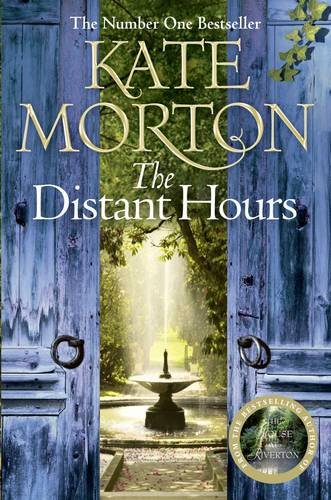
If ever there was a novel in which a house plays the role of a character, this is it. The Distant Hours by Kate Morton is told in two strands, World War Two and the Nineties, involving the three Blythe sisters in Kent at Milderhurst Castle and a South London mother and daughter, Meredith and Edie. They all are connected by the war, the house, and the truth of what really happened when Juniper Blythe was abandoned by her lover in 1941. Kate Morton This is a brick of a book [678 pages], like Morton’s other novels. A little too long for me, the story meanders at times through past and present until it works towards the final mystery. What a mystery, an ingenious storyline and an unpredictable final twist. The story starts when a letter arrives for Edie’s mother, a letter lost for decades, a letter dating from wartime when Meredith was a schoolgirl evacuated to Kent. Edie is fascinated by her mother’s history, but her mother does not talk of it. They are not close, and Edie feels unable to press for information. So she sets off to investigate on her own.
At the centre of the story is the house, and what a house it is: beautiful, crumbling, representative of a time past. When Edie visits the castle in 1992 for the first time, she thinks: ‘Have you ever wondered what the stretch of time smells like? I can’t say I had, not before I set foot inside Milderhurst Castle, but I certainly know now. Mould and ammonia, a pinch of lavender and a fair whack of dust, the mass disintegration of very old sheets of paper. And there’s something else, too, something underlying it all, something verging on rotten or stewed but not. It took me a while to work out what that smell was, but I think I know now. It’s the past.’ Living there, Edie finds the three Blythe sisters, alone after the death of their father.
Morton writes brilliantly about the war years, conjuring up life at this vast castle and in the village of the same name. Running throughout is a mysterious, ghostly, spooky thread based on Raymond Blythe’s best-selling book The True History of the Mud Man. ‘The moat has begun to breathe. Deep, deep, mired in the mud, the buried man’s heart kicks wetly.’
Is the book set at Milderhurst Castle? Is the Mud Man based on a true story? The book is yet another connection between Edie and the castle, she loved it as a child after being given a library copy when ill by her mother. And so the concentric circles tighten.
CLICK HERE TO READ MORE ABOUT THIS BOOK AT AMAZON

And here’s my review of another novel by Kate Morton:-
THE CLOCKMAKER’S DAUGHTER

If you like this, try these books with atmospheric houses:-
‘A Sudden Light’ by Garth Stein
A Traveller at the Gates of Wisdom’ by John Boyne
‘The Other Eden’ by Sarah Bryant

And if you’d like to tweet a link to THIS post, here’s my suggested tweet:
#BookReview THE DISTANT HOURS by Kate Morton http://wp.me/p5gEM4-1YD  via @SandraDanby

#BookReview ‘How to be Human’ by @CocozzaPaula #mystery #suspense

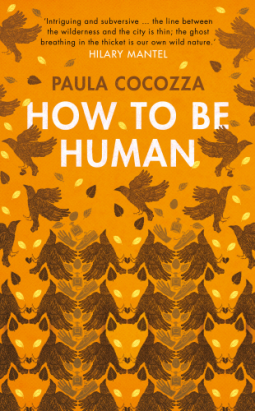
Paula Cocozza has written a strange but compelling novel about relationships. In How to Be Human, she questions where the lines lie between sanity and obsession, love and infatuation, delusion and self-awareness. Beneath the surface of our intellect, sophistication and technology, we are still animals. Paula CocozzaMary lives alone in a house in East London which backs onto woods, land which other neighbours complain is a unpalatable wilderness of weeds, rubbish and foxes. To Mary, it is the countryside. One day she sees a fox in her garden and believes he has visited her, that the gifts he leaves her are his way of communicating with her. She interprets his movements and snuffles as communication to her, and so validates her belief he understands her as no-one else does. As her relationship with the fox grows, her interactions with other people – her ex-boyfriend Mark, her neighbours Eric and Michelle, her mother, her boss – begin to disintegrate. At the beginning she has some semblance that her friendship with the fox is not usual but she persuades herself that animal specialists do talk to animals so she is not alone in doing this. It is other people who do not understand him. She experiments with different names for the fox – Red, Sunset – but finally abandons this attempt to humanize him.
This is a strange novel, part-psychological thriller, part-study of how wild and domesticated live side-by-side, part-portrayal of emotional disturbance [Mary’s breakdown and Michelle’s post-natal depression]. It is a portrayal of Mary’s two relationships, both controlling, both involving elements of stalking, both where one partner overwhelms the other with claustrophobic caring. Except one relationship is between a man and a woman, the other between a woman and a fox. Events are told mostly from Mary’s point of view and partly from the fox’s, though I found the latter unsatisfactory, stilted and romanticized. Significantly, the fox’s viewpoint disappears towards the end. Some passages of description were too long for me, too indulgent of Mary’s inner world, pushing the boundaries of her madness into psychotic episodes, pushing the boundaries of veracity. It is a strange, unsettling novel, like nothing else I have read. The slow descent of Mary into her fox world is at first believable while being weird but gets stranger as the story progresses. The story did take a while to get going, I almost abandoned it twice. It is a long time before the first line – ‘There was a baby on the back step’ – is explained, so long that its significance is muted and not what I first expected it to be.

If you like this, try:-
‘The Bear’ by Claire Cameron
‘The Ship’ by Antonia Honeywell
‘Pretty Is’ by Maggie Mitchell

And if you’d like to tweet a link to THIS post, here’s my suggested tweet:
#BookReview HOW TO BE HUMAN by @CocozzaPaula http://wp.me/p5gEM4-2HM via @SandraDanby

#BookReview ‘The Ghost of Lily Painter’ by Caitlin Davies #genealogy #mystery

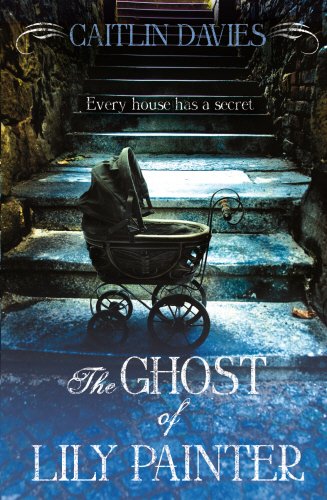
Caitlin Davies blends fact and fiction in The Ghost of Lily Painter, an unusual story sparked from the author’s interest in her own house in Holloway, North London. In 2008, Annie Sweet moves into 43 Stanley Road with her husband and daughter. The house is chilly, the dog won’t stop barking, and her husband leaves her. Is there a bad spirit in the house which is bringing bad luck? Annie begins to explore the house’s history and discovers a music hall performer, Lily Painter, lived there briefly at the beginning of the twentieth century. What happened to her? Why does she disappear? Caitlin DaviesThis is a well-researched historical story about turn-of-the-century music hall, the dilemma facing unmarried pregnant women, baby farms and modern-day family history research. It’s a fascinating tangle of three viewpoints across a century: Annie Sweet and her actress daughter Molly, Inspector William George who lived at 43 Stanley Road in 1901; and one of his lodgers, Miss Lily Painter. The baby farms narrative is based on the real lives of Amelia Sach and Annie Walters, the first women to be hanged at Holloway Prison in 1902. They were baby farmers, women offering a lying-in service where women could deliver their babies then pay for their children to be adopted by ‘ladies’. Many of the babies never made it to their new homes. A terrible true story.
My only disappointment is that the ends are tied together rather too neatly, with a coincidence easily-spotted rather early in the story.

If you like this:-
‘A Sudden Light’ by Garth Stein
Shadow Baby’ by Margaret Forster
Pale as the Dead’ by Fiona Mountain

And if you’d like to tweet a link to THIS post, here’s my suggested tweet:
#BookReview THE GHOST OF LILY PAINTER by Caitlin Davies via @SandraDanby http://wp.me/p5gEM4-29C

My Porridge & Cream read: Linda Huber

Today I’m delighted to welcome thriller novelist Linda Huber. Her ‘Porridge & Cream’ read is A Cry in the Night by Mary Higgins Clark.

“I have a few ‘Porridge & Cream’ books, but I think the creamiest has to be A Cry in the Night by Mary Higgins Clark. It came out in the early 80s, so I must have bought it then – I devoured all the Mary Higgins Clark books as soon as they were published. At that time, I was young physiotherapist, living in Switzerland, far away from ‘home’ in Glasgow. The main character in this book really struck a chord in my heart – Jenny, a devoted mum to her girls, trying to do her best for them under impossible circumstances.
Linda HuberI suppose I re-read this book when I feel the need for a little mother-love in my life! My own mum is gone now and I’m mum myself to two boys – and still in Switzerland, which is now ‘home’. The thing about having two home countries is, you have neither 100%. I have dual nationality, I speak two languages, my life is here in the middle of Europe – but Scotland still has a corner of my heart. Yet the Scotland I left in the 80s exists no longer; times change and so do places.
In A Cry in the Night, Jenny is searching for home too. Maybe that’s what resonates. She has an aura of love around her, a fierce longing to protect her little family and keep them all together. When she meets Erich, it seems as if her problems are over, but soon Jenny is fighting for the lives of her children. I’ve no idea how many times I’ve read this book, but I know I’ll pick it up again. And again…”

Linda Huber’s Bio
Linda Huber grew up in Glasgow, Scotland, but went to work in Switzerland for a year aged twenty-two, and has lived there ever since. Her day jobs have included working as a physiotherapist in hospitals and schools for handicapped children, and teaching English in a medieval castle, but she now writes full-time. Her books are psychological suspense novels, and she had also published a charity collection of feel-good short stories.

Linda Huber’s links
Linda’s Amazon Author page
Buy Baby Dear
Facebook
Twitter
Website

Linda Huber’s books
Linda HuberBaby Dear is Linda’s latest novel, published in May 2017 by Bloodhound Books. Set in Scotland, it follows three women through a turbulent summer. Caro longs for a child to love, but her husband is infertile. Sharon is eight months pregnant and unsure if she really wants to be a mother. Julie, a single mum with a baby and a small boy, is struggling to make ends meet. Then there’s Jeff, Caro’s husband. All he wants is a happy wife with a baby – but how far is he prepared to go to achieve this?
Linda has written six psychological thrillers, read my review of Chosen Child.
‘Baby Dear’ by Linda Huber [UK: Bloodhound Books]

Linda HuberWhat is a ‘Porridge & Cream’ book? It’s the book you turn to when you need a familiar read, when you are tired, ill, or out-of-sorts, where you know the story and love it. Where reading it is like slipping on your oldest, scruffiest slippers after walking for miles. Where does the name ‘Porridge & Cream’ come from? Cat Deerborn is a character in Susan Hill’s ‘Simon Serrailler’ detective series. Cat is a hard-worked GP, a widow with two children and she struggles from day-to-day. One night, after a particularly difficult day, she needs something familiar to read. From her bookshelf she selects ‘Love in A Cold Climate’ by Nancy Mitford. Do you have a favourite read which you return to again and again? If so, please send me a message via the contact form here.

Linda Huber


‘A Cry in the Night’ by Mary Higgins Clark [UK: Simon & Schuster]

Discover the ‘Porridge & Cream’ books of these authors:-
Helen J Christmas
Shelley Weiner
Renita d’Silva

And if you’d like to tweet a link to THIS post, here’s my suggested tweet:
Why does @LindaHuber19 love A CRY IN THE DARK by Mary Higgins Clark? http://wp.me/p5gEM4-2Cm via @SandraDanby #reading

First Edition: The Moonstone

Before Philip Marlowe, Sherlock Holmes and Adam Dalgliesh. Before Hercule Poirot and Miss Marple. The first full-length detective novel ever published was The Moonstone by Wilkie Collins. First serialised in Charles Dickens’ magazine All the Year Round, the story revolves around the theft of a precious stone. A diamond, actually, not a semi-precious moonstone. The title page of the first edition [below] shows the publisher as Tinsley Brothers, Catherine Street, The Strand, London in 1868. Wilkie CollinsThe story
On her 18th birthday, Rachel Verinder inherits a large Indian diamond as a legacy from her uncle, a corrupt British army officer serving in India. However the diamond is not only valuable but has great religious significance, and so three Hindu priests dedicate their lives to recovering it. At her birthday party Rachel wears the Moonstone on her dress for all to see. Later the same night, the diamond is stolen. The Moonstone follows the attempts of Rachel’s cousin Franklin Blake to identify the thief, trace the stone and recover it.

The first edition
Of course there are many ‘first editions’ and not all date from the original publication, they may simply be the first printing by a particular publisher. Although I could find online a first edition of Collins’ The Woman in White, dated 1860 and costing £2,500, I could find no similar edition of The Moonstone. I wonder where they are and who owns them? Fans of crime fiction? Wilkie CollinsThis first edition dates to 1959 and was published in the USA by the New York Heritage Press. George Macy’s Heritage Press reprinted classic volumes previously published by the more exclusive Limited Editions Club. Bound in red Morocco leather and including colour lithographs, it costs £450 at rare bookseller Peter Harrington.

The current UK edition
Wilkie Collins There are many editions of The Moonstone now listed at Amazon, many are self-published and take advantage of the lack of copyright. Above is the current Penguin Classics edition.

The films

There have been many television, radio and film adaptations, including in 1997 a BBC/Carlton TV production featuring Greg Wise as Franklin Blake and Keeley Hawes as Rachel Verinder. Watch at You Tube below.


Watch the trailer here for the most recent BBC mini-series in 2016 [below].

Other editions
Cover designs for older editions of The Moonstone tend to be romanticized, often featuring details from larger classical paintings.

My copy of The Moonstone [below] is a Penguin Popular Classics edition dating back to 1994. The cover shows a detail of ‘The Honeymoon’ by Alfred Joseph Woolmer [below]. wilkie collins wilkie collins ‘The Moonstone’ by Wilkie Collins [UK: Penguin Classics] Buy now
If you like old books, check out these:-
‘Watership Down’ by Richard Adams
‘The Sea The Sea’ by Iris Murdoch
‘The French Lieutenant’s Woman’ by John Fowles

And if you’d like to tweet a link to THIS post, here’s my suggested tweet:
First Edition: THE MOONSTONE by Wilkie Collins #oldbooks via @SandraDanby http://wp.me/p5gEM4-2sF

#BookReview ‘Miss Pettigrew Lives for a Day’ by Winifred Watson #historical

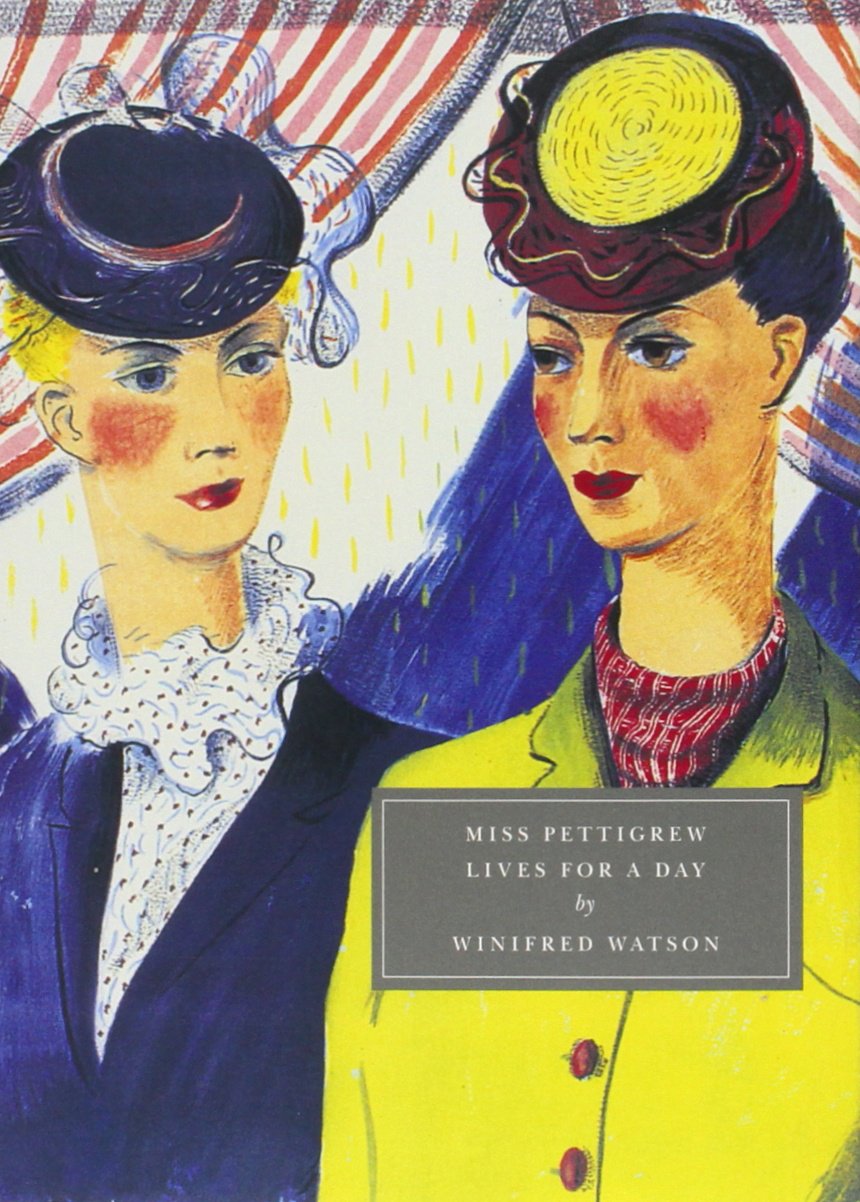
Why have I never heard of this book before? First published in 1938, Miss Pettigrew’s day starts when her employment agency sends her to the wrong address. What follows is twenty-four hours of epiphanies in which she learns about life, courtesy of a nightclub singer. Miss Pettigrew Lives for a Day by Winifred Watson was a revelation and has quickly claimed its place as one of my favourite novels. Winifred WatsonMiss Pettigrew is a governess, not a very good one, and finds herself forced to take jobs as a housemaid or looking after children she would rather not know. Then one day an error leads her to the apartment of Delysia LaFosse, a nightclub singer with a complicated love life. She tries to tell Miss LaFosse she has come about the job, but Miss LaFosse does not listen. As the story progresses, no children appear, but by now Miss Pettigrew is proving adept at solving Delysia’s small difficulties.
On the surface, this is a frothy story of gowns, flirting, lipstick, negligées and men, suitable and unsuitable. Beneath the surface, it is a novel about throwing away the bounds of class and venturing into the unknown. It is about taking a deep breath and being brave in order to change your life. I was rooting for Guinevere Pettigrew and was particularly pleased with the ending, as I am sure she was too.
My enjoyment of the novel was supplemented by gorgeous line drawings by Mary Thomsom in my Persephone edition.

If you like this, try:-
‘Angel’ by Elizabeth Taylor
‘Curtain Call’ by Anthony Quinn
‘A Death in the Dales’ by Frances Brody #7KateShackleton

And if you’d like to tweet a link to THIS post, here’s my suggested tweet:
#BookReview MISS PETTIGREW LIVES FOR A DAY by Winifred Watson http://wp.me/p5gEM4-2oe via @SandraDanby

Great Opening Paragraph 98… ‘Armadillo’ #amreading #FirstPara

“In these times of ours – and we don’t need to be precise about the exact date – but, anyway, very early in the year, a young man not much over thirty, tall – six feet plus an inch or two – with ink-dark hair and a serious-looking, fine-featured but pallid face, went to keep a business appointment and discovered a hanged man.” William Boyd From ‘Armadillo’ by William Boyd 

Try this #FirstPara from A GOOD MAN IN AFRICA also by William Boyd.

Read my reviews of these other books by William Boyd:-
ANY HUMAN HEART
LOVE IS BLIND
NAT TATE: AN AMERICAN ARTIST 1928-1960
ORDINARY THUNDERSTORMS
SWEET CARESS
THE BLUE AFTERNOON
THE DREAMS OF BETHANY MELLMOTH
TRIO
WAITING FOR SUNRISE

Try one of these #FirstParas & discover a new author:-
‘A Change of Climate’ by Hilary Mantel
‘Jack Maggs’ by Peter Carey
‘Half of a Yellow Sun’ by Chimamanda Ngozi Adiche

And if you’d like to tweet a link to THIS post, here’s my suggested tweet:
#Books #FirstPara ARMADILLO by William Boyd http://wp.me/p5gEM4-2qA via @SandraDanby