Tag Archives: books

#BookReview ‘The Good People’ by Hannah Kent #historical #folklore

The Good People by Hannah Kent is a powerful second novel from a writer whose debut was outstanding. It is a tale of rural people in a poor community where superstition and folklore become entangled with one woman’s grief, with tragic results. Conflicting systems of thought come into play – folklore, religion, medicine and legal – and fail to make sense of what happens to Nóra Leahy. The power of the story lies not in black versus white, or logic and education versus peasant superstition, it lies in its characters. Hannah KentCounty Kerry, Ireland, 1826. An isolated village, where gossip goes around and around, where people survive on milk and potatoes and burn turf on the fire. A place where petty grievances are not forgotten, there is no money to pay the doctor, but there are still random acts of kindness. In such a poor community, what happens when the unthinkable happens, where the doctor and priest have no explanation or solution?
The Good People is based on true events, a court case which did happen. In the same year in which her daughter died, Nóra’s husband drops dead in the field leaving her alone to care for her four-year-old grandson Micheál. He cannot walk or speak and neither the doctor nor the priest can offer hope. So Nóra keeps him hidden from the village gossips in the fear that his deformities may be an indication of fairy interference. Unable to cope alone, Nóra employs 14-year-old Mary to milk the cow and fetch the water, and principally to care for Micheál. Soon Mary hears the whispers at the well, that the unnatural child of Nóra Leahy is to blame for the poor harvest, the hens not laying, the thin milk. So Nóra asks Nance Roche for help. Nance is the wise woman of the valley, she knows the plants, the cures, and she talks to the Good People… the fairies.
When Nance suggests the screaming, fitting, feeble child is not really Micheál but a changeling left in his place by the fairies, the three women become embroiled in cures to banish ‘the fairy’. The darkness of the cures attempted on a disabled and sick child is disturbing and, ultimately tragic. The events unfold slowly through the stories of Nóra, Mary and Nance. The writing is beautiful and every page is steeped in the folklore of rural Ireland, this bleak village where poor people live at the edge of survival. It is impossible not to connect with the three women, each so different, while at the time seeing the inevitability of what is to come.
A little historical context. In 1801 the Act of Union was enacted which ended a separate parliament in Dublin with government switching to Westminster. In 1823 in Ireland, Daniel O’Connell began to set up Catholic associations around the country, seeking a repeal of the Act of Union. In 1826 an ‘old woman of very advance age’ known as Anne/Nance Roche was indicted for the wilful murder of Michael Kelliher/Leahy at the summer Tralee assizes in Co. Kerry.
A compelling read.

Read my reviews of Hannah Kent’s two other novels:-
BURIAL RITES
DEVOTION

If you like this, try:-
‘The Western Wind’ by Samantha Harvey
‘Master of Shadows’ by Neil Oliver
‘All the Birds, Singing’ by Evie Wyld

And if you’d like to tweet a link to THIS post, here’s my suggested tweet:
#BookReview THE GOOD PEOPLE by Hannah Kent via @SandraDanby http://wp.me/p5gEM4-2×7

#BookReview ‘The Stars are Fire’ by Anita Shreve #contemporary

I haven’t read anything by Anita Shreve for a very long time and I wonder why, because I thoroughly enjoyed The Stars are Fire. It is a fine example on how to write about someone experiencing difficult times, who is trapped and feels powerless, without being depressing. Anita Shreve It is 1947 and the summer heat is blazing. Then the heat turns to drought and the drought turns to wildfire. On the coast of Maine, Grace Holland, five months pregnant, without a car and at home with her two toddlers, must run as the fire threatens to engulf her village. Her husband Gene is with other men, making a fire break. Grace, with her best friend Rosie and her children, run from the fire, taking refuge overnight at the beach. The next morning, their houses are ash, their village is burned. They are homeless, penniless and, though Rosie’s husband returns, Gene doesn’t.
Grace must cope and in doing so she finds a new world opening up. A world which she had no idea existed. She becomes decisive and brave, she finds a home, a job and learns to drive. All of this validates her worth. With her mother, they fashion themselves a new life. But it is a life with a temporary feeling about it because Grace dare not think Gene is dead. Theirs was a difficult relationship, suffocating, Gene is an emotional bully. She revels in her new freedoms until one day everything she has built, the gains she have made, are lost. Her gamble backfires.
This is a woman’s story of its time, when men were the providers and expected their wives to fulfil their wifely duties. Grace and Gene married young because she was pregnant and this sets the tone for their marriage. His mother wanted better for Gene and has never welcomed Grace. Grace’s dissatisfaction with her claustrophobic life grows. Gene is a good provider but they have little emotional connection, and so Grace envies Rosie’s close and sensual relationship with her husband Tim.
Shreve’s writing style is simple and descriptive. Gene sometimes calls Grace ‘Dove’. “She has never been Gracie. Only Grace. And then Dove, with Gene. Grace doesn’t feel like a dove, and she’s sure she doesn’t look anything like a dove, but she knows there’s a sweetness in the nickname. She wonders if it means something that she doesn’t have a fond or funny name for her husband.” The story is told, however, from Grace’s viewpoint. Gene’s thoughts are left unsaid.

If you like this, try:-
‘We Are Water’ by Wally Lamb
‘The Photographer’s Wife’ by Suzanne Joinson
‘Did You Ever Have a Family’ by Bill Clegg

And if you’d like to tweet a link to THIS post, here’s my suggested tweet:
#BookReview THE STARS ARE FIRE by Anita Shreve via @SandraDanby http://wp.me/p5gEM4-2sq

A poem to read in the bath… ‘The Roses’

The Remedies is the second poetry collection by Katharine Towers. Such an economy of words, beautiful, never a superfluous thought. Concise, moving, piercingly beautiful. Katharine TowersMy favourite is ‘The Roses’. Because of copyright restrictions I am unable to reproduce the poem in full, but please search it out in an anthology or at your local library.

‘The Roses’

Because my father will not stand again
beneath these swags of Himalayan Mush
nor stare for hours to see which stems are safe…

This poem is about remembering, about loss, about family. And roses.

Read more about Katherine Towers’ poetry at her website.

Katharine Towers

‘The Remedies’ by Katharine Towers [UK: Picador] 

Read these other excerpts and find a new poet to love:-
‘Sometimes and After’ by Hilda Doolitte
‘Elegy of a Common Soldier’ by Dennis B Wilson
‘Lost Acres’ by Robert Graves

And if you’d like to tweet a link to THIS post, here’s my suggested tweet:
A #poem to read in the bath: ‘The Roses’ by Katharine Towers via @SandraDanby http://wp.me/p5gEM4-2rI

SaveSave

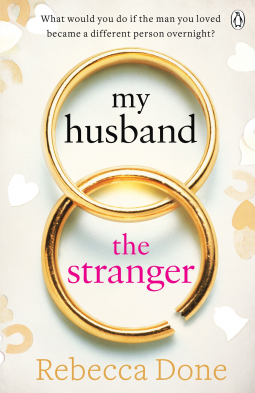
#BookReview ‘My Husband the Stranger’ by Rebecca Done #contemporary

My Husband the Stranger by Rebecca Done is a difficult, depressing story about how the life of a newly married couple is changed when Alex, the husband, has an accident which changes his behaviour. Rebecca DoneAlex’s wife Molly finds herself living with a stranger who looks like the man she loved. This is a study of the emotional aftermath of living with someone with a brain injury. It is not a romance [as the cover style suggests] or a psychological thriller [as the cover blurb hints].
The story is told in alternating sections, Molly and Alex, then and now, as the story is told of how they met, married, their plans for a life together, and then the accident. The first half is slow reading, sometimes repetitive and emotionally-charged. The only thing that kept me reading was the belief that something had to happen soon. The story follows their daily life as Molly deals with a bullying boss and an ex-girlfriend of Alex’s who flirts with him and sends him text messages. Molly feels isolated but is too proud to admit it.
When Alex sets fire to the kitchen he is rescued by a neighbour, an elderly lady who asks Molly how she is coping; she explains how she cared for her husband who had dementia and recognises the difficulties Molly is facing. As Molly mourns the man she fell in love with, she struggles to dutifully care for Alex. She wants to take care of him and brushes off well-meaning offers of help from friends and family. Alex’s twin brother Graeme is a little creepy, and Molly’s parents are too good to be true and crass in the way they pressure her to start a family. Meanwhile, her employer in London is offering her old job back. Should she move Alex away from Norfolk, away from the village where he grew up? Or should she leave him behind and go on her own?
A couple of things jarred with me: contradictions in the portrayal of what Alex is capable of on a day-to-day basis. He has a temper tantrum in an electrical store, but is okay going to a noisy pub or finding his way to the golf club on his own.
This is a tale about the realities of life and how romance can be lost in the most brutal way.

If you like this, try:-
‘Good Me Bad Me’ by Ali Land
‘Did You Ever Have a Family’ by Bill Clegg
‘Summerwater’ by Sarah Moss

And if you’d like to tweet a link to THIS post, here’s my suggested tweet:
#BookReview MY HUSBAND THE STRANGER by Rebecca Done via @SandraDanby http://wp.me/p5gEM4-2rE

Great Opening Paragraph 97… ‘The Curious Incident of the Dog in the Night-Time’ #amreading #FirstPara

“It was 7 minutes after midnight. The dog was lying on the grass in the middle of the lawn in front of Mrs Shears’ house. Its eyes were closed. It looked as if it was running on its side, the way dogs run when they think they are chasing a cat in a dream. But the dog was not running or asleep. The dog was dead. There was a garden fork sticking out of the dog. The points of the fork must have gone all the way through the dog and into the ground because the fork had not fallen over. I decided that the dog was probably killed with the fork because I could not see any other wounds in the dog and I do not think you would stick a garden fork into a dog after it had died for some other reason, like cancer for example, or a road accident. But I could not be certain about this.”
Mark Haddon From ‘The Curious Incident of the Dog in the Night-Time’ by Mark Haddon 

Try one of these #FirstParas & discover a new author:-
‘Brighton Rock’ by Graham Greene
‘Spies’ by Michael Frayn
‘Bel Canto’ by Anne Patchett

And if you’d like to tweet a link to THIS post, here’s my suggested tweet:
#Books #FirstPara THE CURIOUS INCIDENT OF THE DOG IN THE NIGHT-TIME by Mark Haddon http://wp.me/p5gEM4-2qu via @SandraDanby

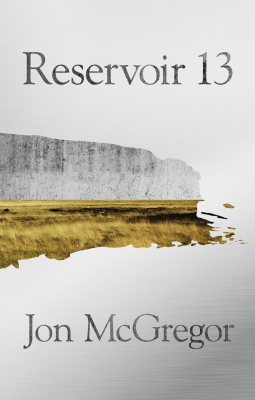
#BookReview ‘Reservoir 13’ by Jon McGregor #contemporary

Reservoir 13 by Jon McGregor is a thoughtful, intelligent telling of what happens to a village when a person goes missing. Told after the event, it brings a new angle of understanding to the post-event trauma of those on the outer circles of tragedy. Jon McGregorA girl goes missing in a village surrounded by moors, caves and reservoirs. ‘The girl’s name was Rebecca, or Becky, or Bex.’ At no point do we hear the viewpoint of the girl, her parents, or the investigating police. Slowly the story unfolds as we are told the life of the village through the years after it happened by an omniscient narrator, disconnected from the action.
I loved the way McGregor recounts the daily comings and goings of the village, the farmers, the vicar, the schoolchildren. The rhythm of life and nature is mesmeric, the message is ‘life goes on’. Love affairs start and end, babies are born as are lots of sheep, cows are milked, allotments tended. The village sits within the natural world of peaks, woods and rivers and, sometimes only in a single sentence, we are told of the hatching of butterflies, the unfurling of new leaves, the water running beneath the bridge. The writing style is sparse and all the more beautiful for that. The action switches from one person’s life to the next, sometimes in a simple factual sentence such as ‘this happened’. But as the action moves from one local to another, the story is slowly, painstakingly pieced together of a village which struggles to leave behind the mystery of what happened to Rebecca/Becky/Bex.
At the beginning I was unsure how the story would unfold: murder, missing person, runaway teenager, abduction? It is this not knowing which casts a shadow over everyone in the village.

Read my review of LEAN FALL STAND, also by Jon McGregor.

If you like this, try:-
‘Smash All the Windows’ by Jane Davis
‘Himself’ by Jess Kidd
‘The Museum of You’ by Carys Bray

And if you’d like to tweet a link to THIS post, here’s my suggested tweet:
#BookReview RESERVOIR 13 by Jon McGregor via @Sandra Danby http://wp.me/p5gEM4-2qa

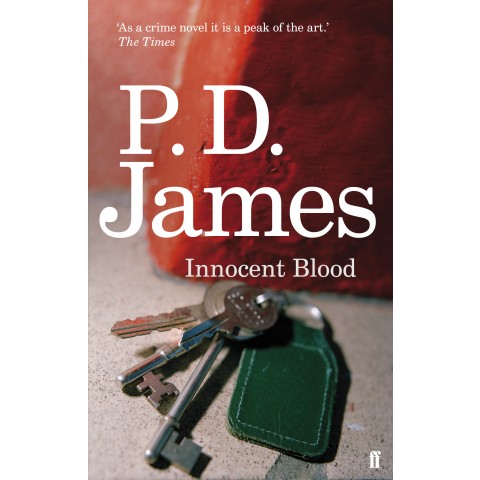
#BookReview ‘Innocent Blood’ by PD James #thriller #adoption

If you are a PD James fan, I should say up front that Innocent Blood is very different from the Adam Dalgliesh detective series. It is a psychological thriller, a slow-building mystery which starts with little steps then, as the odd details start to make sense, the tension builds. It is the story of a young woman who knows she is adopted, who exercises her right to know the names of her birth parents, and finds something she never in a million years expected. PD JamesPhilippa Palfrey is 18, about to go up to Cambridge, until she decides to find out the truth of her adoption. Her birth father is dead, her mother though is still alive. Philippa’s adoptive father warns caution, tells her to do her research and think carefully before contacting her mother but Philippa, driven by the need to know who she is and where she came from, goes ahead anyway. With the arrogance and naivety of youth, she embarks on a complicated path full of moral dilemma, tragedy and loss.
It is a novel of family blood and relationships, violence, redemption, revenge and acceptance. Is there a threat, real or imagined, and where/who does that threat come from? As the story progresses, that threat advances and retreats, reforming in another shape. Is Philippa right, or should she have listened to Maurice’s warnings?

Read my reviews of the Adam Dalgliesh mysteries:-
COVER HER FACE [#1 ADAM DALGLIESH]
A MIND TO MURDER [#2 ADAM DALGLIESH]
UNNATURAL CAUSES [#3 ADAM DALGLIESH]
SHROUD FOR A NIGHTINGALE [#4 ADAM DALGLIESH]
THE BLACK TOWER [#5 ADAM DALGLIESH]
DEATH OF AN EXPERT WITNESS [#6 ADAM DALGLIESH]
A TASTE FOR DEATH [#7 ADAM DALGLIESH]
DEVICES AND DESIRES [#8 ADAM DALGLIESH]
ORIGINAL SIN [#9 ADAM DALGLIESH] … read the first paragraph HERE
A CERTAIN JUSTICE [#10 ADAM DALGLIESH]
DEATH IN HOLY ORDERS [#11 ADAM DALGLIESH]
THE MURDER ROOM [#12 ADAM DALGLIESH] … read the first paragraph HERE
THE LIGHTHOUSE [#13 ADAM DALGLIESH]
THE PRIVATE PATIENT [#14 ADAM DALGLIESH]

Here are my reviews of the two Cordelia Gray mysteries:-
AN UNSUITABLE JOB FOR A WOMAN #CGRAY1
THE SKULL BENEATH THE SKIN #CGRAY2

And one other book by PD James:-
TIME TO BE IN EARNEST

If you like this, try:-
‘Shadow Baby’ by Margaret Forster
‘The Marriage Certificate’ by Stephen Molyneux
‘The Blood Detective’ by Dan Waddell

And if you’d like to tweet a link to THIS post, here’s my suggested tweet:
#BookReview INNOCENT BLOOD by PD James http://wp.me/p5gEM4-1Yi via @SandraDanby

#BookReview ‘The Outsiders’ by Michelle Paver #YA #fantasy

I came to this Michelle Paver series late, years after reading the award-winning ‘Chronicles of Ancient Darkness’ series which starts with the wonderful Wolf Brother. Doubtful that any character could be as admirable as Torak, it was a joy to read about The Outsiders, first in the ‘Gods and Warriors’ series. Hylas, like Torak, is an outsider. Michelle PaverThe Outsiders starts at a run from the first page and doesn’t slow up. Hylas has been attacked, his dog is dead, his sister missing and a fellow goatherd killed. And the killers are after him. Adrift at sea, disorientated, Hylas fears he must die. And then there follows a glorious section about dolphins. I won’t give away any more of the plot. The narrative is a shape familiar from Wolf Brother – wild boy in trouble, on the run, not sure who is friend or foe, sets off on a quest where he makes new alliances – but that doesn’t mean this is not an entertaining read with new characters, a new setting, and different myths and gods.
Michelle Paver’s books for children and young adults are set in mystical places but are based on solid research about the way our ancestors lived and survived in wild lands, the animals they hunted, the gods they worshipped and the monsters they feared. The Outsiders is set in the Mediterranean in the Bronze Age.
All the outdoors things inaccessible to today’s children – unsupervised by adults, expected to be self-sufficient at the age of twelve, adventuring to unfamiliar places, making a den, lighting a fire, navigating, foraging, analysing geography, weather and threats. Her child characters have respect for their world, they are brave, adventurous and learn quickly from their mistakes. If they don’t, they will die: these are not gentle stories but they are a preparation for the real world where children must learn for themselves how to survive.

And read my reviews of these other novels by Michelle Paver:-
RAINFOREST
THIN AIR
VIPER’S DAUGHTER #7WOLFBROTHER
WAKENHYRST

If you like this, try:-
‘Gregor the Overlander’ by Suzanne Collins #1UNDERLANDCHRONICLES
‘The Bear and the Nightingale’ by Katherine Arden #1WINTERNIGHT
‘Divergent’ by Veronica Roth #1DIVERGENT

And if you’d like to tweet a link to THIS post, here’s my suggested tweet:
#BookReview THE OUTSIDERS by Michelle Paver http://wp.me/p5gEM4-2c5 via @SandraDanby

#BookReview ‘The Long Drop’ by Denise Mina #crime

Glasgow, 1950s. Three men meet in bar. One leaves. The remaining two men talk and drink until the early hours. They are unlikely drinking companions. A businessman, and a criminal. What are they talking about? Which one is telling the truth, or are they both lying? The Long Drop by Denise Mina is her fictional version of the night of Monday December 2, 1957 and the subsequent murder trial. Denise MinaIt is a chilling story. Peter Manuel was a real murderer in Glasgow and the Burnside Affair happened, which makes this such an unsettling read. A woman, her sister and daughter have been killed, the girl was also raped: this is William Watt’s family, his wife, his daughter, his sister-in-law.
Manuel, a known criminal, writes to Laurence Dowdall, Watt’s solicitor, to say he knows the location of the murder weapon, a gun, and so Dowdall arranges the meeting at Whitehall’s Restaurant/Lounge. Suspected by police of murdering his own family, William Watts meets criminal Manuel desperate for answers. But for a naïve, boasting businessman, he is keeping strange company. All is not as it seems.
Mina populates her story with living/breathing Glasgow in the 1950s. If you have been to Glasgow, Mina’s words bring it alive. It you don’t know Glasgow, your imagination conjures up a crystal clear picture. “This city is commerce unfettered. It centres around the docks and the river, and it is all function. It dresses like the Irishwomen: had to toe in black, hair covered, eyes down.” Dowdall drives a maroon Vauxhall Velox.
This is the first book by Denise Mina which I have read. I really like her writing style. Concise, why use six words in a sentence when one or two conveys the meaning?

Read the #FirstPara of THE LONG DROP here.

If you like this, try:-
‘An Uncertain Place’ by Fred Vargas #8COMMISSAIREADAMSBERG
‘Little Boy Blue’ by MJ Arlidge #5HELENGRACE
‘The Nationalist’ by Campbell Hart #2ARBOGAST

And if you’d like to tweet a link to THIS post, here’s my suggested tweet:
#BookReview THE LONG DROP by Denise Mina http://wp.me/p5gEM4-2pR via @SandraDanby 

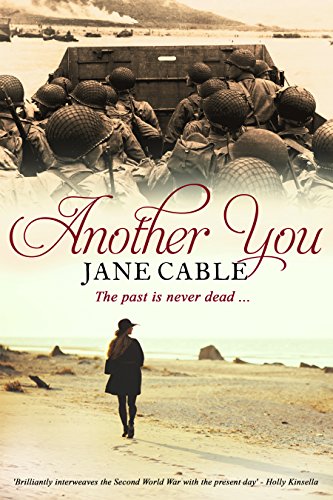
#BookReview ‘Another You’ by @JaneCable #contemporary #romance

Novels rooted in a particular area where the place and scenery come alive off the page are favourites of mine. Studland Bay in Dorset, England is a beautiful part of the country, a dramatic coastline which is an ideal for a dramatic story. In Another You, Jane Cable uses the place to great effect. Key action scenes take place at the looming chalk cliffs, the Old Harry rocks, the sand dunes and heath. Jane CableThe time in which the story is set is cleverly chosen too, the sixtieth anniversary of preparations for the D-Day landings, preparations which took place along the south coast of England. It is a time full of memories, grief, regret and gratitude.
In this place and time, Cable sets her story. Marie is chef at The Smugglers, the pub she owns with her husband Stephen, from whom she is separated. Jude their son, a student, lives at the pub and helps out. Despite its popularity, the pub’s finances are not good and there is not enough cash to pay suppliers. Marie doesn’t understand what is happening and is stressed by this and having to deal with her difficult husband. This human story plays out alongside rehearsals for a commemorative re-enactment of Exercise Smash, the exercises conducted to rehearse for the Normandy landings. There are strangers in town, in the pub, soldiers, tanks, tourists. One day walking among the dunes, Marie meets an American soldier Corbin. Entranced by his old-fashioned manners, Marie looks for Corbin again but his presence is unpredictable, he appears and disappears. Marie also meets George, an elderly local gentleman who actually fought at D-Day, and his businessman son Mark; and then there is Paxton, another American serviceman based at a nearby tank museum, who entrances Marie and with whom she starts an affair.
Will Marie self-destruct before she confronts her husband? Will she ask Paxton why he can’t sleep at night, or Jude why he is so unhappy. Her frequent migraines and love of a glass of brandy make her an unreliable narrator, at times she is unable to see the way forward from her situation or question some of her wilder assumptions. Throughout this time, the voice of reason belongs to George. At times I found the story disorientating. In the middle of a migraine, Marie’s sense of the real is blurred, is she remembering real things, having visions, hallucinating, seeing ghosts, blacking out? Mark is a breath of fresh air in the midst of this emotional turmoil. When Marie first meets him, he is tying up his sailing dinghy. Somehow the sea, the waves and wind symbolise a freedom from the troubles on land.
A strong recurring theme throughout Jane Cable’s fiction is the way past and present inter-connect, decisions made years earlier are re-visited, things which happened to an older generation has significance today. This check-and-balance keeps the pages turning quickly.

Read my reviews of Jane’s other books:-
THE CHEESEMAKER’S HOUSE
ENDLESS SKIES

Also by Jane Cable, writing as Eva Glyn:-
THE COLLABORATOR’S DAUGHTER
THE CROATIAN ISLAND LIBRARY
THE MISSING PIECES OF US

If you this, try:-
‘In Another Life’ by Julie Christine Johnson
‘Sweet Caress’ by William Boyd
‘Freya’ by Anthony Quinn

And if you’d like to tweet a link to THIS post, here’s my suggested tweet:
#BookReview ANOTHER YOU by @JaneCable via @SandraDanby http://wp.me/p5gEM4-2ke