Tag Archives: contemporary fiction

#BookReview ‘Redhead by the Side of the Road’ by Anne Tyler #literary

Anne Tyler is one of my favourite writers, so elegantly understated, so spot-on with her characters. Her latest Redhead by the Side of the Road is slim, at 180 pages, but a delight. Why? Because she writes about what it is like to be human, the everyday things, the ticks, the habits, the way we are and the subtle ways we change. Anne TylerHers are not plot-driven page-turning books, they are thoughtful portraits of people who seem to be like us – they chop vegetables and mop the kitchen floor, like Micah Mortimer, an unmarried 44 year old self-employed IT specialist and janitor of his apartment block. His family teases him about his finicky household habits and he accepts the teasing with good grace. He is infinitely patient with his elderly clients, going round to reboot computers and routers. No scene is wasted in this novella. I particularly loved Micah’s visit to new client Rosalie Hayes who has inherited a house, and computer, from her grandmother. Rosalie cannot find her grandmother’s passwords and is tearing her hair out. This is how we see Micah’s world, through his interactions with neighbours, family, clients, girlfriend Cass and a stranger who turns up on his doorstep – the student son of Micah’s old college girlfriend. Brink’s arrival precipitates change.
Because we see and come to understand Micah’s thought processes, we see how he misunderstands Cass and fails to say the right thing. And we see him find the right thing to say to student Brink who knocks on Micah’s door under a misapprehension and stays because of a problem he cannot express. It is Micah’s gentle nature which finally reveals Brink’s difficulties. Anne Tyler is brilliant at creating characters who, whether you love them or hate them, make you want to read about their story.
A definite 5*. A book you will read and enjoy, wanting to get to the end while at the same time wishing it would last longer.

Read my reviews of these other books by Anne Tyler:-
A SPOOL OF BLUE THREAD
CLOCK DANCE
FRENCH BRAID
LADDER OF YEARS
VINEGAR GIRL

And read the first paragraphs of:-
DINNER AT THE HOMESICK RESTAURANT 
BACK WHEN WE WERE GROWN UPS 

If you like this, try:-
A Wreath of Roses’ by Elizabeth Taylor
Brooklyn’ by Colm Tóibín
A Sudden Light’ by Garth Stein

And if you’d like to tweet a link to THIS post, here’s my suggested tweet:
#BookReview REDHEAD BY THE SIDE OF THE ROAD by Anne Tyler https://wp.me/p5gEM4-4Di via @SandraDanby

#BookReview ‘On a Night Like This’ by @BarbaraFreethy #romance #contemporary

On a Night Like This is the first in The Callaways series by Barbara Freethy about the extended American-Irish Callaway clan in San Francisco. Freethy is a new author for me, a best-selling American author of romantic drama. I would class this as a feel-good holiday romance, so not my usual choice. Freethy is an expert at writing series, which lock the reader into the characters. Barbara FreethyThe basis of the story is the relationship between Aiden Callaway, smokejumper, and Sara Davidson, lawyer, who grew up next to each other in San Francisco. Aiden is an alpha-male, adventurous, a risk-taker, who has never taken a woman with him to his secret camping ground in the wilds north of Napa Valley. Sara is a workaholic New York lawyer who rarely lets anyone get emotionally close. This is a story of opposites attract. At times I found their connection unconvincing, as it seemed to be purely chemical and physical. Sara had a teenage crush on Aiden which re-emerges when she revisits her widowed father in her childhood home next door to the Callaways. When a fire damages the house and her father is in hospital, Sara and Aiden are thrown together. This is a light romance mixed with a little mystery: three weeks before the two meet, Aiden is involved in a tragic fire where his best friend and fellow smokejumper Kyle died. Aiden’s colleagues blame him for Kyle’s death but Aiden cannot remember what happened and so refuses to defend himself. His loyalty to Kyle is admirable, but misguided. Sara, as the clear-thinking lawyer, encourages him to question the facts of what happened.
The setting and storyline reminded me of Anita Shreve, but without the depth of story or emotional heft, and with too many sculptured abs. The longing of Sara for Aiden became repetitive and needy, they seem such an unlikely pairing. The storyline of Sara’s rift with her father, however, was worth more page space. So, this is a pleasant light romantic read. I enjoyed the interaction of the feisty Callaway family and wanted more of them; particularly fire investigator Emma and the story of the disappearing nun and burnt-down primary school [sadly, this storyline was left unresolved]. Freethy is a hugely popular author but this book felt rather as if she was writing by numbers.

If you like this, try:-
‘Butterfly Barn’ by Karen Power
59 Memory Lane’ by Celia Anderson
‘The Stars are Fire’ by Anita Shreve

And if you’d like to tweet a link to THIS post, here’s my suggested tweet:
#BookReview ON A NIGHT LIKE THIS by @BarbaraFreethy https://wp.me/p5gEM4-35f via @SandraDanby

#BookReview ‘The Believers’ by Zoe Heller #contemporary

The Believers by Zoe Heller is the story of a New York family and how serious illness challenges each person to consider in what they believe. The Litvinoffs are a Jewish family used by Heller as a prism to question our beliefs, not just religious but also motherhood, fidelity and politics. Zoe HellerThe story starts with the meeting of English student Audrey and American lawyer Joel, at a party in London in the Sixties. The action then shifts swiftly to 2002. Audrey and Joel live in New York, he is a prominent and outspoken radical lawyer, she does good works. They have two daughters, Rose and Karla, and adopted son Lenny. On the day he is due to appear in court representing a controversial defendant, Joel has a stroke. As he lays in a coma, Heller shows each of the family confronting the situation, its impact on their own lives, or not as the case may be. None of the characters are particularly likeable, and the storyline can be difficult in places, but I found the pages turned quickly as I wanted to know the ending. Of course, like life, there is no neat finale only more life to follow as the stories of the family continue.
Audrey is a deliciously outspoken and brutal mother to her daughters, though she mollycoddles her son to a ridiculous degree. Rosa is re-discovering her Jewish roots, having been raised in a non-observant Jewish family. We follow her exploration of the oddities of Orthodoxy, as she wrestles with the concept of accepting things she doesn’t understand. Karla, unhappily married and trying for a baby, is the recipient most frequently of Audrey’s caustic tongue. Not looking for an affair, she nevertheless stumbles into one, and has difficulty believing and accepting her suitor could possibly be attracted to her. Lenny is a drug addict who believes in nothing except his next hit. Meanwhile, Joel in his hospital bed is the cog of the wheel around which they all move.
I was left loving Heller’s writing, she has a wonderful turn of phrase. ‘Depression, in Karla’s experience, was a dull, inert thing – a toad that squatted wetly on your head until it finally gathered the energy to slither off. The unhappiness she had been living with for the last ten days was quite a different creature. It was frantic and aggressive. It had fists and fangs and hobnailed boots. It didn’t sit, it assailed. It hurt her.’
But, I finished the book dissatisfied with the story. Audrey’s Englishness did not come into play, except in the first chapter which feels unrelated to the rest of the book, and she seems unnecessarily harsh and unfair without real justification. What made her so bitter? Something which happened between the Prologue in 1962, and the main story in 2002? The big surprise, when it comes, is perhaps predictable to everyone except Audrey.

Read the opening paragraph of NOTES ON A SCANDAL, also by Zoe Heller.

If you like this, try:-
Purity’ by Jonathan Franzen
‘A Spool of Blue Thread’ by Anne Tyler
‘A Little Life’ by Hanya Yanagihara

And if you’d like to tweet a link to THIS post, here’s my suggested tweet:
#BookReview THE BELIEVERS by Zoe Heller http://wp.me/p5gEM4-2BZ via @SandraDanby 

#BookReview ‘The Last Day’ by @ClaireDyer1 #contemporary

Love is complicated, modern families are complicated, and a line cannot be drawn before and after. Whenever there is a last day, there is a first day too. That’s the theme of The Last Day by Claire Dyer, a deftly managed part-study of grief and mourning, part-teaser about how past events always affect the present. Claire DyerBoyd and Vita were married, now separated; Boyd owns an estate agency, Vita paints portraits of pets. Both have new relationships. Added to the mix is Boyd’s elderly mother irascible mother. When Boyd has a big tax bill, he and his girlfriend move back in with Vita. The collision of these three people has unforeseen results. So much of what we see at the beginning of this novel is unexplained, unravelling as the pages turn. It is tightly written with a minimal cast of characters. When you think you’ve got it worked out, there is another twist. Everyone is hiding something.
At the heart of the book is Honey Mayhew, except that’s not her real name. She is the catalyst of change. Wearing charity shop clothes and a smiling assured attitude, she goes for an interview at Harrison’s Residential and gets the job. Her connection with Boyd, as they sit in the car as it goes through a car wash, is transforming. Dangling in front of her is the temptation of a new life with an older man. Conformity. Security. Love. But Honey, addicted to horoscopes and superstition, a young twenty-seven year old, is mercurial. At times she seems more like the feisty troublesome teenager she was not so long ago. What happens to Honey as she is thrown into the very adult world of Boyd and Vita’s romance/marriage/separation/amicable friendship changes everything; it wouldn’t be a novel if it didn’t.
Living together, none of the three have bargained for the re-stirring of old memories in the house, and the tugging of anger and regret. Honey, because she is young and inexperienced; Boyd, because he is emotionally blocked; and Vita, because she considers she has moved on with her painting and her convenient relationship with Colin next door. Dyer is good at portraying the small details, the daily things. How Honey sits upstairs in bed in the morning, hearing Boyd and Vita reassume their old morning habit of coffee and crossword clues. How Boyd buys his mother some handkerchiefs for Christmas. How Vita watches families play in the park, and her bones feel heavy in her body.

Read my review of Dyer’s THE PERFECT AFFAIR and her poetry anthology YIELD.

If you like this, try:-
‘The Last Days of Rabbit Hayes’ by Anna McPartlin
‘Etta and Otto and Russell and James’ by Emma Hooper
‘Please Release Me’ by Rhoda Baxter

And if you’d like to tweet a link to THIS post, here’s my suggested tweet:
#BookReview THE LAST DAY by @ClaireDyer1 https://wp.me/p5gEM4-38t via @SandraDanby

#BookReview ‘Anything is Possible’ by Elizabeth Strout @LizStrout #contemporary

Anything is Possible by Elizabeth Strout is an extraordinary book about normal people living normal lives. On the outside, people live private, God-fearing lives, they get by, they smile, they work. Inside, they hide secrets, horror, misgivings, sadness and love. With the same vision and delicacy she displayed in My Name is Lucy Barton, Strout tells us about the people of Amgash, Illinois, the small rural town where Lucy Barton grew up. Elizabeth StroutIn Anything is Possible, as in real life, threads of small town life are tangled together, generation after generation, each seemingly isolated but all connected by invisible tendrils of family, neighbourhood, school, farming. The shared history of living together through the years in close proximity, a community where everyone knows everyone else, their shame, their success, their failure, their betrayal and loyalty, is a community it is impossible to escape. Where adolescent misdemeanours, which may or may not have happened, are remembered as fact and decades of distrust attached. But as well as secrets and shame, there is redemption and love for those who face change and find a way to the other side.
This is more a collection of inter-connecting stories rather than a novel with a single narrative spine, but it is finely written with care and grace. A companion novel to My Name is Lucy Barton, it is not essential to have read that novel first but in some ways it does help.
There are nine chapters each focussing on one character and each, you realize at the end, are firmly entwined like the roots of a closely-planted grove of trees. In the first we see Tommy Guptill, elderly now, but once the caretaker at Lucy’s school. In the second, school counsellor Patty Nicely is insulted by student Lila Lane, daughter of Lucy’s sister Vicky. And so the stories keep coming as you gradually build up a picture of the Amgash citizens. After seventeen years away, writer Lucy is drawn back to the dirt-poor family farm where her brother Petie still lives. There, like the other characters in this novel, she discovers how your history cannot be left behind because it is hard-wired within you.
In her portrayals of these straightforward straight-talking Amgash citizens, Strout poses questions for the reader and does not give answers, expect to do some work yourself when reading her novels.

Read my reviews of these other books by Elizabeth Strout:-
AMY & ISABELLE
LUCY BY THE SEA
MY NAME IS LUCY BARTON
OH WILLIAM!
OLIVE KITTERIDGE
OLIVE, AGAIN

If you like this, try:-
‘A Thousand Acres’ by Jane Smiley
‘The Stars are Fire’ by Anita Shreve
‘Barkskins’ by Annie Proulx

And if you’d like to tweet a link to THIS post, here’s my suggested tweet:
#BookReview ANYTHING IS POSSIBLE by Elizabeth Strout @LizStrout http://wp.me/p5gEM4-2TA via @SandraDanby

#BookReview ‘Skin Deep’ by Laura Wilkinson #contemporary

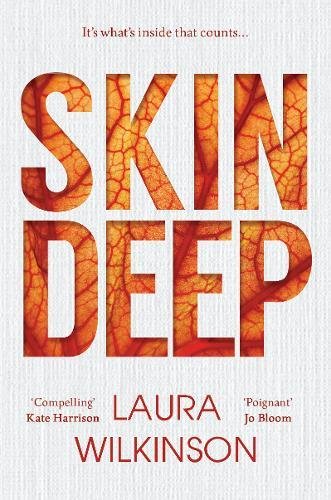
Skin Deep by Laura Wilkinson is a thoughtful, difficult book to read about modern-day notions of beauty, ugliness and society’s fascination with appearance. At times it made me feel uncomfortable. It is the sort of book which you find yourself thinking about long after you have finished reading it. It will make you think about your own attitudes to others, do you unconsciously leap to judgement based on their outward appearance, and how much do you worry about your own looks? Laura WilkinsonHulme, Manchester, 1984. Students Diana and Linda start university, Diana is studying art, Linda art history. Diana is keen to make her mark for something she can do with her hands, rather than how she looks. A former child model, people stare at her in the street such is her beauty. Via Jim, Linda’s boyfriend, Diana meets Cal, a four-year old boy neglected by his drug addict parents. He has a severe facial disfigurement and is kept from sight. He does not know a normal life. ‘Normal’ is a word which crops up often. In the child, Diana finds someone dealing with a mirror image of her own challenge: as Cal hides his face from strangers, Claire tried to avoid people ogling her beauty. I found the beginning a little slow and the story takes off once Diana is inspired by Cal to create a different kind of art.
Throughout time, artists have had muses. Cal becomes Diana’s muse, unwittingly at first when he is a child. The book treads a difficult, uncomfortable line. Diana loves Cal and tries to do the best, but what if her best is wrong? Of course, that is the thought process the author wants the reader to explore. As Diana’s success as an artist grows and Cal becomes a teenager, he starts to resent being ‘used’. Is she ultimately any different from her mother, Bunny, who forced her to enter beauty competitions, to refuse biscuits because they would make her fat?
The viewpoint switches between Diana and Cal and jumps around in time, particularly in the second half, which was disorientating. The main voice is Diana’s. I found her exploitative and unlikeable and would have liked to hear more from the adult Cal and the child Diana. Nonetheless this is a powerful, difficult read with underlying imagery of decay hidden by beauty.

If you like this, try:-
‘Orphans of the Carnival’ by Carol Birch
‘Life Class’ by Pat Barker
‘The Museum of You’ by Carys Bray

And if you’d like to tweet a link to THIS post, here’s my suggested tweet:
#BookReview SKIN DEEP by Laura Wilkinson http://wp.me/p5gEM4-2PG via @SandraDanby

#BookReview ‘Autumn’ by Ali Smith #SeasonalQuartet #contemporary

Uplifting, enlightening, funny, clever, depressing, sad and heartwarming. The mischievous Autumn by Ali Smith is an ingenious novel, the first of the ‘Seasonal Quartet’ telling the story of the UK fragmented after the post-Brexit vote in 2016, when ugliness and prejudice rose to the surface setting brother against sister, friend against friend, dividing streets, neighbourhoods and towns, a binary split with each side convinced it is right and the other, wrong. Ali SmithDaniel Gluck is 101 years old and in a nursing home, we see from his wonderful lyrical dreams that he teeters on the edge of death. Smith builds her world around Mr Gluck and Elisabeth Demand who, with her mother Wendy, lived next door to Daniel when Elisabeth was a child. Their relationship starts in 1993. Elisabeth, aged eight, must interview a neighbour for a homework project. Her mother is not keen and tries to bribe her to invent a neighbour instead. The following day Elisabeth meets Mr Gluck and, despite her mother’s misgivings (single man, dodgy, must be gay, might be unsafe etc) they become firm friends. Now he is 101 and she tells a lie to the nursing home – yes, she is his grand-daughter – in order to gain a visitor’s pass. She sits by his bed and reads Brave New World.
Smith compares and contrasts modern life with past times in the twentieth-century, we see modern life through Elisabeth’s storyline countered by Daniel’s memories and dreams, and his interpretations of books, art and song for the child Elisabeth. The story wings its way through contemporary references from television antiques programmes and passport applications to celebrity Christine Keeler, sculptor Barbara Hepworth and pop artist Pauline Boty.
This is all very interesting but, with the lightest of hands, Smith gives a warning about the danger of nationalism, populism and the easy appeal of accepting political lies rather than asking difficult questions of the politicians and ourselves. One passage in particular underlines it all: Daniel’s younger sister Hannah is captured in Nice, France, in 1943 despite carrying papers which identify her as Adrienne Albert.
Running throughout are the themes of truth v lies [juxtaposed often, with lies often being throwaway and easy whilst truth can be awkward and difficult to say] and identity. There is a hilarious passage where Elisabeth tries to renew her passport application at the Post Office, an all-too-believable portrayal of officialdom. Some of the historical sections, particularly about Keeler and Boty, seemed rushed and I would have liked more of Daniel’s songwriting background which was mentioned fleetingly.
Short, at 272 pages, Autumn can be read in one sitting. It is a joy to read. Next in the quartet comes Winter.
Autumn was shortlisted for the 2017 Booker Prize.

Click the title to read my reviews of other books by Ali Smith:-
WINTER #2SeasonalQuartet
SPRING #3SeasonalQuartet
SUMMER #4SeasonalQuartet
COMPANION PIECE #5SeasonalQuartet
HOW TO BE BOTH

If you like this, try:-
‘Moon Tiger’ by Penelope Lively
‘Darktown’ by Thomas Mullen
‘Shelter’ by Sarah Franklin

And if you’d like to tweet a link to THIS post, here’s my suggested tweet:
#BookReview AUTUMN by Ali Smith http://wp.me/p5gEM4-2SX via @SandraDanby

#BookReview ‘The Stars are Fire’ by Anita Shreve #contemporary

I haven’t read anything by Anita Shreve for a very long time and I wonder why, because I thoroughly enjoyed The Stars are Fire. It is a fine example on how to write about someone experiencing difficult times, who is trapped and feels powerless, without being depressing. Anita Shreve It is 1947 and the summer heat is blazing. Then the heat turns to drought and the drought turns to wildfire. On the coast of Maine, Grace Holland, five months pregnant, without a car and at home with her two toddlers, must run as the fire threatens to engulf her village. Her husband Gene is with other men, making a fire break. Grace, with her best friend Rosie and her children, run from the fire, taking refuge overnight at the beach. The next morning, their houses are ash, their village is burned. They are homeless, penniless and, though Rosie’s husband returns, Gene doesn’t.
Grace must cope and in doing so she finds a new world opening up. A world which she had no idea existed. She becomes decisive and brave, she finds a home, a job and learns to drive. All of this validates her worth. With her mother, they fashion themselves a new life. But it is a life with a temporary feeling about it because Grace dare not think Gene is dead. Theirs was a difficult relationship, suffocating, Gene is an emotional bully. She revels in her new freedoms until one day everything she has built, the gains she have made, are lost. Her gamble backfires.
This is a woman’s story of its time, when men were the providers and expected their wives to fulfil their wifely duties. Grace and Gene married young because she was pregnant and this sets the tone for their marriage. His mother wanted better for Gene and has never welcomed Grace. Grace’s dissatisfaction with her claustrophobic life grows. Gene is a good provider but they have little emotional connection, and so Grace envies Rosie’s close and sensual relationship with her husband Tim.
Shreve’s writing style is simple and descriptive. Gene sometimes calls Grace ‘Dove’. “She has never been Gracie. Only Grace. And then Dove, with Gene. Grace doesn’t feel like a dove, and she’s sure she doesn’t look anything like a dove, but she knows there’s a sweetness in the nickname. She wonders if it means something that she doesn’t have a fond or funny name for her husband.” The story is told, however, from Grace’s viewpoint. Gene’s thoughts are left unsaid.

If you like this, try:-
‘We Are Water’ by Wally Lamb
‘The Photographer’s Wife’ by Suzanne Joinson
‘Did You Ever Have a Family’ by Bill Clegg

And if you’d like to tweet a link to THIS post, here’s my suggested tweet:
#BookReview THE STARS ARE FIRE by Anita Shreve via @SandraDanby http://wp.me/p5gEM4-2sq

#BookReview ‘Reservoir 13’ by @jon_mcgregor #contemporary

Reservoir 13 by Jon McGregor is a thoughtful, intelligent telling of what happens to a village when a person goes missing. Told after the event, it brings a new angle of understanding to the post-event trauma of those on the outer circles of tragedy. Jon McGregorA girl goes missing in a village surrounded by moors, caves and reservoirs. ‘The girl’s name was Rebecca, or Becky, or Bex.’ At no point do we hear the viewpoint of the girl, her parents, or the investigating police. Slowly the story unfolds as we are told the life of the village through the years after it happened by an omniscient narrator, disconnected from the action.
I loved the way McGregor recounts the daily comings and goings of the village, the farmers, the vicar, the schoolchildren. The rhythm of life and nature is mesmeric, the message is ‘life goes on’. Love affairs start and end, babies are born as are lots of sheep, cows are milked, allotments tended. The village sits within the natural world of peaks, woods and rivers and, sometimes only in a single sentence, we are told of the hatching of butterflies, the unfurling of new leaves, the water running beneath the bridge. The writing style is sparse and all the more beautiful for that. The action switches from one person’s life to the next, sometimes in a simple factual sentence such as ‘this happened’. But as the action moves from one local to another, the story is slowly, painstakingly pieced together of a village which struggles to leave behind the mystery of what happened to Rebecca/Becky/Bex.
At the beginning I was unsure how the story would unfold: murder, missing person, runaway teenager, abduction? It is this not knowing which casts a shadow over everyone in the village.
CLICK HERE TO READ MORE ABOUT THIS BOOK AT AMAZON

Read my review of LEAN FALL STAND, also by Jon McGregor.

If you like this, try:-
Smash All the Windows’ by Jane Davis
‘Himself’ by Jess Kidd
‘The Museum of You’ by Carys Bray

And if you’d like to tweet a link to THIS post, here’s my suggested tweet:
#BookReview RESERVOIR 13 by @jon_mcgregor via @Sandra Danby http://wp.me/p5gEM4-2qa

#BookReview ‘The Perfect Affair’ by @ClaireDyer1 #romance #contemporary

This is a deceptive read. It is a meandering tale of two love affairs – one today, one in the Sixties – which unfolds slowly, step-by-step, as these things do in life. The Perfect Affair by Claire Dyer is about love, how it appears and grows, and how it fades. Claire DyerRose has divided her house into two flats, she lives upstairs and rents the downstairs space to Myles, a writer of detective novels. Rose’s regular visitor, Eve, is like the grand-daughter she never had, and is a connection to Rose’s past. In the Sixties, Rose shared a house with Eve’s grandmother Verity. One day Eve and Myles meet. There is a spark of attraction which shocks them both and makes each examine the state of their own marriage. As they come to terms with what this means, Rose watches from afar. In love and seeking the perfect love affair, Rose remembers when she fell in love in the Sixties. Finally a decision must be made.
Dyer writes with a gentle hand, small details showing her understanding of the emotions involved. After meeting Eve for the first time, Myles is disorientated: ‘He’d been OK when he’d left home earlier but now he feels mostly unsettled, as though a fault line has positioned itself under his feet and he knows it’s there and it knows it’s there too.’ Alongside the sense of inevitability, danger lurks. An emotional novel, skilfully written.

Click the title to read my review of Dyer’s novel THE LAST DAY and her poetry anthology YIELD.

If you like this, try:-
‘Please Release Me’ by Rhoda Baxter
‘A Mother’s Secret’ By Renita D’Silva
‘One Step Too Far’ by Tina Seskis

And if you’d like to tweet a link to THIS post, here’s my suggested tweet:
#BookReview THE PERFECT AFFAIR by @ClaireDyer1 http://wp.me/p5gEM4-2h0 via @SandraDanby