Tag Archives: Hazel Gaynor

Great Opening Paragraph 137… ‘The Last Lifeboat’ #amreading #FirstPara

“Mid-Atlantic. 17 September 1940.
Alice can’t breathe. The wind snatches her breath away, leaving her gasping for air as she half jumps, half stumbles into the lifeboat and falls, face down, against the boards. She tries to pull herself up, but the lifeboat pitches violently as another monstrous wave smashes into them and throws Alice into a woman beside her. The woman loses her grip on the rain-slicked mast and tumbles, with extraordinary grace, into the dark ocean, her white nightdress unfurling around he as she spins and twirls like a ballerina in a pirouette. Too shocked to respond, Alice can’t look away.”
Hazel GaynorFrom ‘The Last Lifeboat’ by Hazel Gaynor

Click the title to read my review of THE LAST LIFEBOAT

… and these other novels by Hazel Gaynor:-
THE BIRD IN THE BAMBOO CAGE
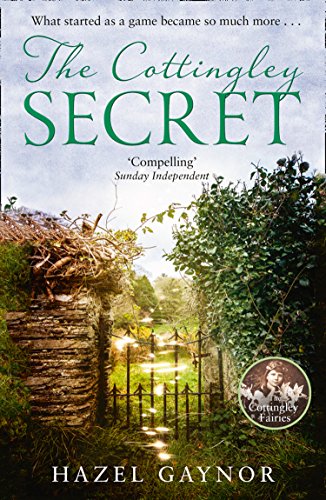
THE COTTINGLEY SECRET

Try one of these #FirstParas & discover a new author:-
Beloved’ by Toni Morrison
‘The Curious Incident of the Dog in the Night-Time’ by Mark Haddon
‘Tipping the Velvet’ by Sarah Waters

And if you’d like to tweet a link to THIS post, here’s my suggested tweet:
#Books #FirstPara THE LAST LIFEBOAT by @HazelGaynor https://wp.me/p2ZHJe-7UL via @SandraDanby

#BookReview ‘The Last Lifeboat’ by @HazelGaynor #WW2

What an emotional rollercoaster this book is. I’ve read a lot of fiction set during World War Two but The Last Lifeboat by Hazel Gaynor is a new take on wartime conflict and its effect on ordinary people. Children are being evacuated on ships, sent to safety in Canada, travelling in convoy across the Atlantic where German u-boats wait to attack. When the worst happens, Gaynor asks what does it take to survive?Hazel GaynorEngland 1940. After a short first chapter set in the lifeboat immediately after the u-boat attack, the story tracks back four months earlier. Alice King is a schoolteacher-now-librarian in Kent, a quiet job in a quiet place, but she longs to do something with her life. In London, widow Lily Nicholls considers the hard decision to send her two children, Georgie ten and younger brother Arthur, on an evacuation ship to Canada. Invasion threatens and the Blitz is just beginning. Lily struggles with competing fears, that her children may be killed in the bombing expected in London or that having sent them away for their safety they may die en-route or stay in Canada so she will never see them again. Lily is a daily help at a household in Richmond. Her employer Mrs Carr has already sent her two eldest children privately to Canada and the third, Molly, will go as soon as she’s recovered from a horse-riding accident. Deciding to register Georgie and Arthur and decide nearer the time, Lily queues next to a woman who introduces herself as mother of five Ada Fortune.
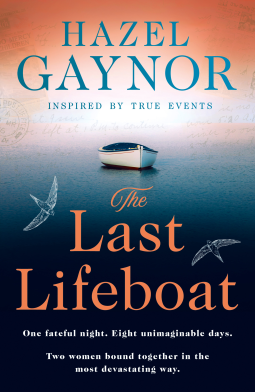
When Lily says goodbye to her children, she hands them into the care of ‘Auntie Alice,’ an escort with the Children’s Overseas Reception Board [CORB]. It is Alice’s first journey and she is excited, nervous, and worried about her pregnant sister Kitty left home alone. When the ship is torpedoed at night by a German u-boat there is enormous confusion. It is dark, disorientating, most people are asleep, distress drills forgotten. Alice finds herself the lone woman in a lifeboat of men and seven children, some from her own group, others are strangers. Thirty-five souls.
The story unfolds – and we already know Alice will be adrift in a lifeboat – through the eyes of Alice and Lily. It’s a slow mover at first as the scene is set but after the sinking, both women are waiting. One is hoping for rescue not daring to think of the alternative, the other hopeful then despairing, finally angry. Gaynor is especially good at writing the children, their characters, their influence on the adults, their bravery and ability to look beyond the horrible present up to the stars in the sky.
Inspired by the real life sinking in September 1940 of a vessel carrying ‘seavacuees,’ child refugees, Gaynor has brought new air to a story that made headlines and generated many letters of complaints when it happened, but is unfamiliar today. I’ve not been disappointed by a novel by Hazel Gaynor yet, she’s fast becoming one of my must-read authors.

Try the #FirstPara of THE LAST LIFEBOAT.

Read my reviews of these other novels by Hazel Gaynor:-
THE BIRD IN THE BAMBOO CAGE
THE COTTINGLEY SECRET

If you like this, try:-
The Collaborator’s Daughter’ by Eva Glyn
The Garden of Angels’ by David Hewson
A Beautiful Spy’ by Rachel Hore

And if you’d like to tweet a link to THIS post, here’s my suggested tweet:
#BookReview THE LAST LIFEBOAT by @HazelGaynor https://wp.me/p2ZHJe-7au via @SandraDanby

COMING SOON… THE NEXT BOOK I REVIEW WILL BE:- Suzanne Collins
#BookReview ‘The Cottingley Secret’ by @HazelGaynor #historical #fairies

I won a signed paperback of The Cottingley Secret by Hazel Gaynor in a Twitter promotion on #NationalNorthernWritersDay and it’s been sitting on my to-read shelf for a while. I picked it up one weekend when searching for a comforting, absorbing read, and that’s what it is. Hazel GaynorTold in dual timeline, it is partly based on the true story of the two young girls who photographed fairies at the bottom of their garden, combined with a fictional imagining of a 21st century bookbinder who inherits a bookshop in Ireland. The story is slow to start and it’s a while before the fairy connection between the two strands is established. But hang in there.
In 1917, Frances Griffiths and her mother travel from South Africa to Cottingley, Yorkshire. They will stay with Frances’ aunt, uncle and cousin while her father goes off to fight the Great War. Frances soon settles into life with her older cousin Elsie and together the two play imaginary games. Until one day Frances sees fairies beside the beck at the back of the house, ‘…the first flash of emerald, then another of blue, then yellow, glimpsed out of the corner of my eye. Not dragonflies. Not butterflies. Something else.” After confiding in Elsie, Frances blurts out her secret to her mother who doesn’t believe her. None of the adults do. What follows is an innocent attempt to prove the adults wrong, an attempt which spirals out of control. Soon Mr Arthur Conan Doyle, creator of Sherlock Holmes, is involved and the possibility of confessing their secret becomes impossible.
In present day Ireland, Olivia Kavanagh arrives in her hometown of Howth on a sad journey. Her grandfather Pappy has died. Olivia feels helpless as she visits grandmother Nana, who suffers from dementia and lives in a local nursing home. But Pappy has left a letter and a surprise for Olivia. He has left her his secondhand bookshop, Something Old, and Bluebell Cottage. But Olivia lives and works in London as a rare book restorer and is due to marry fiancé Jack in a few weeks.
This is a novel about the need for hope at a time of upheaval and uncertainty, both in the midst of war in 1917 and for Olivia in the 21st century. ‘If we believe in fairies, perhaps we can believe in anything,’ says Frances’ mother. If they can believe in the end of the war, they can believe in the return of loved ones and the resumption of normal life.
As a childhood lover of Cicely Mary Barker’s Flower Fairies, I found this novel to be a wonderful read. Gaynor knits together the wonder of the fairies with the darker themes of world war, and the modern challenges facing Olivia who is lost but doesn’t know it.

Read my reviews of these other novels by Hazel Gaynor:-
THE BIRD IN THE BAMBOO CAGE
THE LAST LIFEBOAT … and try the #FirstPara of THE LAST LIFEBOAT.

If you like this, try:-
The Mermaid and Mrs Hancock’ by Imogen Hermes Gowar
The Good People’ by Hannah Kent
The Ninth Child’ by Sally Magnusson

And if you’d like to tweet a link to THIS post, here’s my suggested tweet:
#BookReview THE COTTINGLEY SECRET by @HazelGaynor https://wp.me/p2ZHJe-6nz via @SandraDanby

#BookReview ‘The Bird in the Bamboo Cage’ by @HazelGaynor #WW2

What an engrossing story this is if you’re looking for a world to lose yourself in, a world more horrific and frightening than we can ever imagine. A war story that is at times both traumatic and heart-warming, The Bird in the Bamboo Cage by Hazel Gaynor tells the story of a teacher and pupil interned in China during World War Two, a story often forgotten and seldom told. Hazel GaynorBased on the true story of a real school – the China Inland Mission’s Chefoo School in Yantai, Shandong province in northern China – as the Japanese army invades and school life is changed overnight. Gaynor tells her fictionalised story through the viewpoints of teacher Elspeth Kent and pupil Nancy ‘Plum’ Plummer. Elspeth is struggling to write a letter of resignation, intending to return home and join the war effort, when war arrives at the school gates. At first Chefoo School proudly continues to operate under armed guard but after the Japanese attack of Pearl Harbour in December 1941 and the entry of America into the war, the school is moved to Temple Hill internment camp and later to Weihsien. At each step, privations, hardships, hunger, threat and sexual exploitation threaten teachers, pupils and the wider camp community.
Elspeth and Plum offer different perspectives on what is happening and we see the growing friendship and respect between the two women, because Plum starts off a child and grows as a woman unable to remember her mother, unsure if she will ever see her parents again. The teachers truly are ‘in loco parentis’ when the school is relocated and the children learn to support each other, to endure hardship by recognising there is always someone worse off than you and that everyone is a person in their own right [pupils, teachers, guards, fellow internees, night soil women] with their own hopes, dreams and fears. They face hunger, theft and personal attack. Gaynor portrays the school’s protestant ethic with a light hand, instead making Elspeth Brown Owl of Chefoo’s Guides and using the Girl Guide Handbook’s mottos as a thematic skeleton. For each new challenge they meet there is a guiding motto to help them face what must be done.
I am not a lover of all ends being neatly tied and certainly this book is not perfect – chunks of time pass in brief summary paragraphs and at times the action seems delayed with detail of the school day – but Gaynor has created a world of prisoners and enemy that made me want to read on. Of course, we know how the war ended but we so want to know what happens to each pupil and teacher.
Essentially this is a novel about the strength and value of friendship and loyalty, the love that binds people together and enables them to survive horrific situations.

Read my reviews of these other novels by Hazel Gaynor:-
THE COTTINGLEY SECRET
THE LAST LIFEBOAT … and try the #FirstPara of THE LAST LIFEBOAT.

If you like this, try:-
White Chrysanthemum’ by Mary Lynn Bracht
The Translation of Love’ by Lynn Kutsukake
The Gift of Rain’ by Tan Twan Eng

And if you’d like to tweet a link to THIS post, here’s my suggested tweet:
#BookReview THE BIRD IN THE BAMBOO CAGE by @HazelGaynor https://wp.me/p5gEM4-4ZN via @SandraDanby