Tag Archives: historical fiction

#BookReview ‘Gone are the Leaves’ by Anne Donovan #historical

I had a shaky start with Gone are the Leaves by Anne Donovan. It is written in Scottish dialect which I could simply not ‘hear’ in my head. The thought of reading a whole book in this language was intimidating so when I got to the first, short section in the voice of the music master I welcomed it with relief. I kept having to stop and re-read a sentence, to work out what it said. I persevered, and the voice slowly started to settle in my ear. I’m glad I didn’t give up but I’m not convinced about the wisdom of writing 80% of the book in dialect. I fear a lot of readers will be lost along the way. Anne DonovanA young French boy meets a young Scottish girl. Deirdre is a seamstress at a laird’s house in Scotland. “My father was neither owermuckle nor poor, and we were all in the service of our Laird and His Lady one way or anither, our lives thirled to theirs.” She is destined to use her skills in the convent embroidering church vestments. Feilamort is an orphan who can sing like an angel. Both must make difficult decisions about their futures. She is 13, with growing limbs which seem too big for her body; he doesn’t know his age or his beginnings.
Part I is set in Scotland, a Scotland dead and drab according to the Laird’s Lady and Signor Carlo, the Italian music master. Deirdre on the other hand celebrates the countryside, seeing beyond the dullness to the beauty and recognising the signs of life in death. She sees a fallen tree, the wood torn and splintered. “Yet its branches had put out shoots which were growing in the sun; some tiny, others starting tae open. The buds on other trees were pink and green but these were greeny-grey, like sage leaves, ghostly and unhealthy looking, drab and straggly as if unlike tae live, but living. By some miracle, a deid tree deprived of roots and water, had put forth shoots and, in its dying breath, desired tae pour out life.”
Deirdre’s mother considers the options for her daughter, the nunnery or marriage to a local lad. “Some [folk] need tae be close by others all the time; they intertwine like the ivy, grow where they touch. And some, like the clow that grows on the rocks above the sea, need space, they maun be in the open and feel the wind and rain and sun on them. And that is like you, Deirdre.”
Nature is at the heart of this novel. Action is not in the nature of Father Anthony, the priest who is such a significant influence on the lives of both children. “He was a craft designed for a gently flowing river on a delightful summer’s day, “ writes Donovan [above], “lacking the strength and stamina for storm-tossed waters.”
The plot has some twists and turns along the way, and the weather is used to symbolise Deirdre’s churning emotions. “Frae where we stood I couldna see the watter only hear the clash and scud of the waves, imagine the sweel and sway of it. The lighting was above us noo, shooting lang witchy fingers of siller across the sky, a gowtsie sky, the green of a sick plant, violet-edged.”
This book rewards patient reading, so choose the right time to read it.

If you like this, try:-
An Appetite for Violets’ by Martine Bailey
Girl in Hyacinth Blue’ by Susan Vreeland
Dark Aemilia’ by Sally O’Reilly

And if you’d like to tweet a link to THIS post, here’s my suggested tweet:
#BookReview GONE ARE THE LEAVES by Anne Donovan https://wp.me/p2ZHJe-YN via @SandraDanby

#BookReview ‘Frog Music’ by Emma Donoghue #historical

I came to Frog Music knowing nothing about it other than it was written by Emma Donoghue who wrote Room. So it was something of a surprise to discover Frog Music is a historical crime story set in San Francisco in 1876 and loosely based on true events. Emma DonoghueI loved it. Every page pulses with the colour of the time. In the summer of 1876, San Francisco is a vibrant and bustling city living through an intense heatwave and smallpox epidemic. Donoghue starts her story with the murder of Jenny Bonnet, frog-catcher, who is shot through an open window. Her friend Blanche Beunon, a burlesque dancer, must find the murderer and avoid being killed herself, whilst tracking down her own missing baby. The pace is fast and San Francisco is portrayed as a third character; switching from the bawdy House of Mirrors where Blanche dances, to smelly noisy Chinatown where she lives.
The notion of chance is explored. What if the two women had never met. One day, Blanche is knocked down in the street by a young man on a bicycle. “Black anterlish handbars, that’s all she has time to glimpse before the gigantic spokes are swallowing her skirts.” Except it is not a young man, it is a young woman wearing trousers. Jenny continues to dress this way despite being pursued by the law and attracting disapproval wherever she goes. To the end, Jenny remains a bit of a mystery to Blanche and to the reader, “…As if Jenny has a prickly city self who gets into slanging matches in bars, and a country self who’s at rest, somehow.”
Donoghue tells the story in two parallel threads which alternate. First is the story of Jenny’s death at San Miguel Station, a dusty settlement outside the city, and Blanche’s struggle to identify the murderer. The second narrative tells how the two women met and the events which occurr before they arrive at the rural saloon where the murder takes place. Blanche is not an amateur detective, she is simply a woman who sees her friend murdered. She is determined to find the murderer, before the murderer kills her.
Blanche moves in a world on the edge of society, just a day’s work from hunger or homelessness. The line between hunger and honesty, deceit or crime and a full stomach, is one Blanche becomes familiar with. She wants a better life, as a woman she is ambitious and saves her money, but her life choices make her vulnerable and her decisions come back to haunt her.
This is a very assured creation of a colourful period in history, peppered with French influence, dialect and songs.

Read my reviews of these other Donoghue novels:-
AKIN
THE PULL OF THE STARS
THE WONDER

Read the first paragraph of ROOM.

If you like this, try:-
Barkskins’ by Annie Proulx
The Last Runaway’ by Tracy Chevalier
Summertime’ by Vanessa Lafaye

And if you’d like to tweet a link to THIS post, here’s my suggested tweet:
#BookReview FROG MUSIC by Emma Donoghue http://wp.me/p5gEM4-TH via @SandraDanby

#BookReview ‘The Quick’ by Lauren Owen @pioneers_o #historical

The Quick by Lauren Owen is a gothic tale about a brother and sister from Yorkshire. The story moves between Aiskew Hall – where we first meet Charlotte and James as children – and London; both settings atmospheric, both drawn so clearly you can smell the air. This book will reward re-reading: only after I had finished the last page did I go back to the beginning and appreciate the menace of the first sentence, “There were owls in the nursery when James was a boy.” Lauren Owen Aiskew is ever-present. When they are older and far from home, Charlotte reminds James “… how the air smelled green in spring, and smoke-grey in autumn, how on April mornings the mists would lift slowly, leaving a blue haze behind.”
This book has a really slow build. It starts with a prologue, an excerpt from 1890, which I read and then immediately forgot. I enjoyed Part One about the childhood of James and Charlotte at Aiskew, their mother dead, their father absent, Charlotte teaching James his alphabet by chalking the letters onto flagstones, playing games in the secrets of the big house. When the siblings are parted as James goes to university and then to London, the story starts to move a little quicker. I started to feel expectant, waiting for something to happen. Which of course, it does, and it is creepy and not what I was expecting. For me the story really gets going when Charlotte comes to London. After that, the action comes thick and fast. The tension in the second half is more like a film, making the first part of the book feel as if the author was feeling her way into the story.
Definitely one to read again. And I can see it on television.
CLICK HERE TO READ MORE ABOUT THIS BOOK AT AMAZON

If you like this, try:-
Frog Music’ by Emma Donoghue
The Penny Heart’ by Martine Bailey
Orphans of the Carnival’ by Carol Birch

And if you’d like to tweet a link to THIS post, here’s my suggested tweet:
#BookReview THE QUICK by Lauren Owen @pioneers_o via @SandraDanby http://wp.me/p5gEM4-Rj

#BookReview ‘The Lie’ by Helen Dunmore #WW1 #historical

I found this to be an unbelievably poignant novel. In The Lie by Helen Dunmore, Daniel Branwell has returned home to Cornwall from The Great War. The stories of his childhood, his war, and his return are interwoven seamlessly. It is also the story of all the lost men who returned from fighting in 1918 and didn’t know where to go or what to do. They faced their futures alone, unsure if they were mad, if their memories of war were correct or whether they were strong enough to resist the memories of carnage. Dan’s life unfolds like a thriller, with mysteries and suspicions, so that I turned the pages looking for answers and before I knew it I had reached the end. Helen DunmoreDunmore is an accomplished novelist and poet who handles her emotionally explosive subject with sure hands, juxtaposing the daily reality of post-war Cornwall with Dan’s memories, perhaps true, perhaps confused, of battle. Truth is the unknown. The war is in every move Dan makes, every thought, every dream. Needing food, he digs the earth to plant vegetables but cannot escape the battlefield: “It was the smell of earth. Not clean earth, turned up by spade or the fork, to be sunned and watered. This earth had nothing to do with growth. It was raw and slimy, blown apart in great clods, churned to greasy, liquid mud that sucked down men or horses. It was earth that should have stayed deep and hidden, but was exposed in all its filth, corrosive, eating away at the bodies that had to live in it. It breathed into me from its wet mouth.”
Soil is an important presence throughout the book. Dan is a gardener, a skill he soon finds on joining the army will not exempt him from fighting as it does the blacksmiths, chefs and mechanics. “Skilled men had their hands full, and weren’t likely to find themselves in the fire-trench. But there wasn’t any call for a gardener. You’d be marched through a village which had been knocked to bits by shelling, and all there’d be left of a hundred gardens was a bit of green straggling out of a gash in a wall.” Instead, Dan digs. Fields don’t look the same as the fields in Cornwall. “Once you got near the line, there wasn’t much you could recognise as a field, any more than the woods were woods. It was all a jumble.”
His childhood in Cornwall with his best friend Frederick, and Frederick’s sister Felicia, resonates throughout the book. Their differences – poor boy and rich boy, the squaddie and the officer – are at the centre of the book. Dan visits their large house with its library full of shiny red-leather bound volumes, smuggling out one book at a time up his jumper. He reads and memorizes: “I hoarded new words and brought them out like coins.” Frederick, who is sent to private school, has no mind for books and envies Dan’s photographic memory. But when war comes, Frederick is sent to officer school and Dan to basic camp.
In Belgium, before the night-time trench raid which changes their lives, Frederick asks Dan to recite a poem. The prospects of the two men are so fragile that the juxtaposition of war and the poem by Matthew Arnold cannot help but be moving:
“And we are here as on a darkling plain
Swept with confused alarms of struggle and flight,
Where ignorant armies clash by night.”
When Dan returns to Cornwall he has nowhere to go. As he struggles to survive, shunning company, preferring solitude, he meets Felicia again. The memories come flooding back and he struggles to repel them.

Read my reviews of two other novels by Helen Dunmore:-
BIRDCAGE WALK
EXPOSURE

If you like this, try:-
‘Wake’ by Anna Hope
A Long Long Way’ by Sebastian Barry
The Bone Church’ by Victoria Dougherty

And if you’d like to tweet a link to THIS post, here’s my suggested tweet:
#BookReview THE LIE by Helen Dunmore http://wp.me/p5gEM4-Lw via @SandraDanby

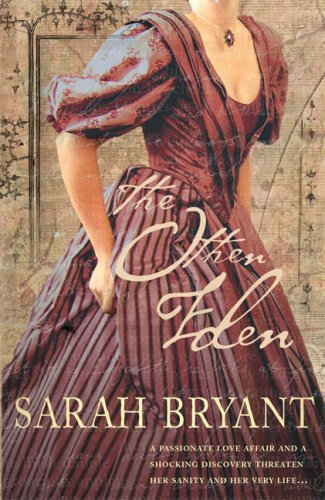
#BookReview ‘The Other Eden’ by Sarah Bryant #romance #historical

The Other Eden by Sarah Bryant is best described as a Gothic romance/horror story, interleaved with the American South setting in Louisiana and piano music it is an unusual mixture which produces quite a page-turner. Sarah BryantI admit to finding the two sisters Eve and Elizabeth confusing at times but that did not interfere with my enjoyment of the story. By the end of the book I was still unsure which sister was which.
The descriptions of the two houses, Eden and the house on the hill, are luscious. My one quibble is that I found the characters oddly difficult to place in time. The prologue about the two sisters is dated 1905 which means the following story about Eleanor is set in the 1920s, but it seems more 19th century to me. Maybe that’s down to the old-fashioned Louisiana setting. I don’t think the cover of my edition helped that confusion, the style is oddly similar to Philippa Gregory. But don’t let my doubts put you off reading what is a rollicking Gothic mystery complete with faintings, dreams, symbolism, mysterious foreign men and beautiful piano music.

If you like this, try:-
‘Summertime’ by Vanessa Lafaye
‘Barkskins’ by Annie Proulx
‘Housekeeping’ by Marilynne Robinson

And if you’d like to tweet a link to THIS post, here’s my suggested tweet:
#BookReview THE OTHER EDEN by Sarah Bryant via @SandraDanby https://wp.me/p2ZHJe-4aY

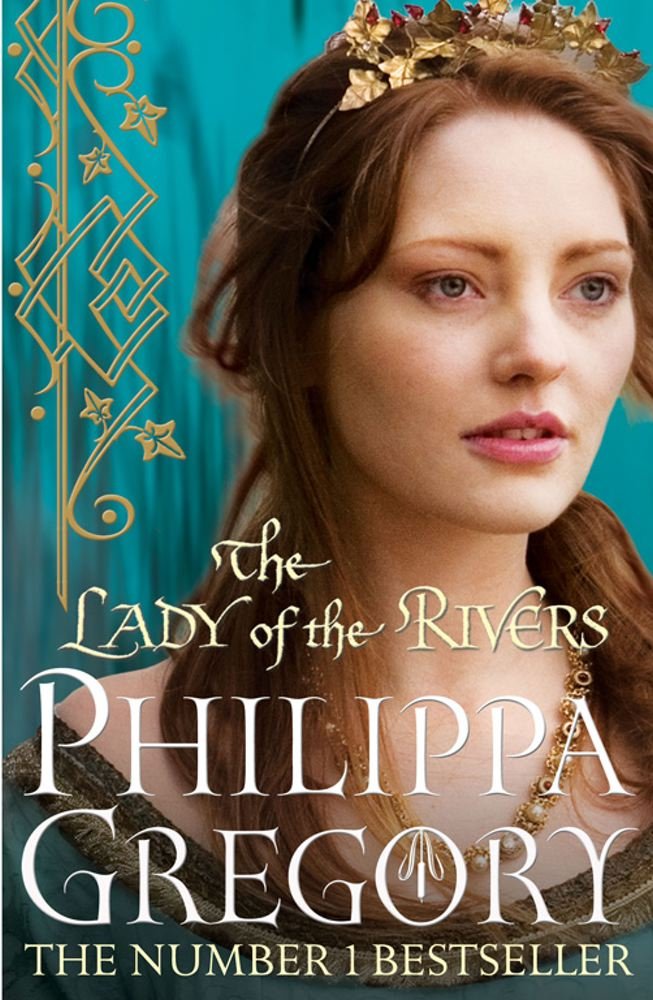
#BookReview ‘The Lady of the Rivers’ by Philippa Gregory #Tudor

Yet again, Philippa Gregory brings history alive. The Lady of the Rivers is the story of Jacquetta of Luxembourg, from her first encounter with Joan of Arc, kept me riveted. She is so attuned to the period and the language that her writing is seamless. At no point does the research show itself. And there is a lot of research, Gregory herself admits she does four months of solid research before starting to write. She also says that she often finds the idea for a different novel when she is researching another. Philippa GregoryIt may seem to the outsider that Gregory re-invents the same story – ‘what another Tudor woman?’ But this could not be further from the truth. Witchcraft is an intriguing story thread throughout this book, something introduced in The White Queen about Jacquetta’s daughter Elizabeth Woodville. Women are obliged to hide their knowledge and skills in order to survive, knowledge that today we would think of as alternative medicine and gardening by the phases of the moon. My knowledge of the period, the Wars of the Roses, the various kings and factions, is definitely improving though I was concerned that the reverse-telling of the Cousins’ War series would eliminate some of the tension. After all we know the fate of many of the characters, but her plotting and the scheming of the characters kept me reading.
I do think, though, that the titles and cover design is getting a little repetitive and lends confusion. I have been given duplicate copies as gifts, because of confusion between The Red Queen and The White Queen.

Read my reviews of these other Philippa Gregory novels:-
THE LITTLE HOUSE
THREE SISTERS THREE QUEENS

Read the #FirstPara of THE OTHER BOLEYN GIRL, also by Philippa Gregory.

If you like this, try:-
‘Dark Aemilia’ by Sally O’Reilly
‘A Column of Fire’ by Ken Follett #3KINGSBRIDGE
‘Kings and Queens’ by Terry Tyler

And if you’d like to tweet a link to THIS post, here’s my suggested tweet:
#BookReview THE LADY OF THE RIVERS by Philippa Gregory https://wp.me/p2ZHJe-4aC via @SandraDanby