Tag Archives: historical fiction

#BookReview ‘The Bone Fire’ by @SD_Sykes #historical #mystery

I read The Bone Fire by SD Sykes in three days. Fourth in the Oswald de Lacy 14th century series, it’s a classic closed room murder mystery set at the time of the plague in Britain. A disease that everyone feared but no-one understood. SD SykesThirteen years after the Black Death the plague has returned to Britain. Oswald, now married with a son, decides to take his family to a castle on an isolated island in the Kent marshes. When the gates are closed for the duration of the winter, he hopes, they will be safe from infection. But one by one, the inhabitants of the gloomy, isolated castle, are killed. Murdered. And with each death, Oswald’s suspects reduce in number. The winter of 1361 turns out to be a long one. The castle is cold, the air is fetid, the food supplies are dwindling, and the temptation to venture beyond the walls into the fresh air of the marshes and woodland are overwhelming. But the risk of infection from plague, even in this empty place, are enormous.
Oswald is a complex detective. He is an uncompromising interviewer, persistent in his questioning, unafraid to threaten. But he is quick to jump to possible conclusions. At the same time he has empathy for all creatures, weak and vulnerable, human and animal, and this a strength and a weakness. Wanting to do the right thing, he brings danger to those closest to him.
This series is improving with every book. The characters are settled, the risks are higher for Oswald now he is a father and husband. There is less scene setting, the action is quicker. Sykes mixes familiar characters – Oswald’s curt selfish mother and son Hugh from Oswald’s first marriage, plus his wife and valet – with the other occupants in the castle on the Isle of Eden. Each brings their own counsel and assistance to Oswald’s investigations, sometimes useful, sometimes misguided. But one of them is a murderer.
I raced through The Bone Fire, a much quicker read than the preceding novels. The teenage Oswald has matured into a complex, mature man living through one of the most difficult times in our history who invariably chooses to take the right path rather than the easy one.
A page turner.
CLICK HERE TO READ MORE ABOUT THIS BOOK

Click the title to read my reviews of the first three books in this series:-
PLAGUE LAND
THE BUTCHER BIRD
CITY OF MASKS

If you like this, try:-
The Swift and the Harrier’ by Minette Walters
The Key in the Lock’ by Beth Underdown
The Ashes of London’ by Andrew Taylor

And if you’d like to tweet a link to THIS post, here’s my suggested tweet:
THE BONE FIRE by @SD_Sykes #bookreview https://wp.me/p2ZHJe-63C via @SandraDanby

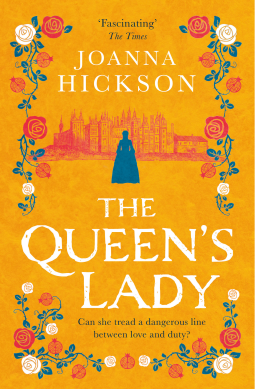
COMING SOON… THE NEXT BOOK I REVIEW WILL BE:-Joanna Hickson
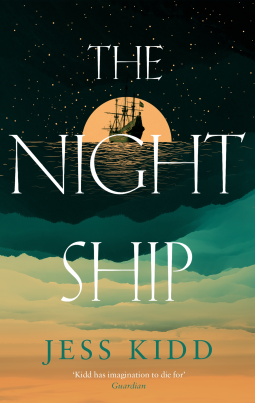
#BookReview ‘The Night Ship’ by @JessKiddHerself #historical #Batavia

The Night Ship by Jess Kidd is a strange compelling story about two orphaned children separated, but connected, by 361 years. Each thinks they see ghosts, learns legends and fights monsters. Both want to be scared, to seek out the unknown. Jess KiddIn 1628, nine-year old Mayken is aboard the magnificent Batavia, one of a fleet of ships heading from Holland to Batavia in Dutch East India (now Indonesia). She travels with her nursemaid Imke. Mayken’s mother has died of ‘the bloody flux’ and she travels to live with her father, a senior executive in the Dutch East India Company. Mayken has never met him but knows he grows red and white roses at his marble mansion, has chestnut stallions and dapple mares.
In 1989 after the death of his mother, nine-year old Gil goes to live with his grandfather who is a fisherman on the remote Beacon Island off the coast of Australia. It’s a stark place. Gil, who has only the vaguest childhood memories of both his grandfather Joss and of Beacon Island, has never known his father.
Both children explore their new surroundings, making adventures in their limited worlds. The warning ‘don’t go there’ or ‘don’t do that’ becomes an invitation to do exactly that. Both are explorers, brave in the face of the unknown, outsiders living in worlds limited in space bounded by the sea. When brutality strikes, how can they escape. Both are haunted by legend and scary stories, both make unlikely allies and enemies. Mayken discards her rich dress and wears breeches to venture below decks and, as ship’s boy Obbe, assumes a new identity. There she makes friends and enemies amongst the soldiers and sailors; these connections are vital later in the story. Gil knows he cannot leave the island without his grandfather’s permission. He finds a friend in his tortoise Enkidu and dresses up in clothes from Granny Ada’s wardrobe. When he finds a boat, inspired by stories about a shipwreck many years ago and the finds by an archaeological team digging on the island, he dreams of escape.
I loved the fond relationship between Mayken and Imke, particularly the recurring question about how Imke lost her fingertips as Mayken’s suggestions get more bizarre and gruesome. This is a welcome distraction from the bizarre and gruesome things that begin to happen aboard. Is someone making mischief, is it simply sailor’s superstitions or is there a monster aboard? Gil struggles to connect with his silent, brusque grandfather, and becomes the target of the island’s bullies. Each storyline is told only from the child’s viewpoint. Are Mayken and Gil to be trusted as reliable witnesses or has the real world become lost in their imaginations.
The Night Ship is based on the real seventeenth-century story of the voyage, shipwreck and mutiny aboard the treasure-laden ship Batavia. The fictional accounts of Mayken’s life aboard ship and then on the island they call Batavia’s Graveyard and Gil’s life on Beacon Island, the same place, explore community within and the social breakdown of small groups of people.
Slowly, slowly, this story grew on me. First, it seemed simply strange. But then the echoes in the lives of the two children begin to build and I wanted to know their endings. Beautifully-written and born from a wild imagination. This is the third book by Jess Kidd that I’ve read, each so different and impossible to predict. Sometimes a difficult read, this is also a hopeful, magical story with ultimately a positive message about the resilience of human love and kindness in the face of violence, evil and exploitation.
CLICK HERE TO READ MORE ABOUT THIS BOOK

Read my reviews of two other novels by Jess Kidd:-
HIMSELF
THE HOARDER

If you like this, try:-
Dangerous Women’ by Hope Adams
The Ship’ by Antonia Honeywell
Devotion’ by Hannah Kent

And if you’d like to tweet a link to THIS post, here’s my suggested tweet:
#BookReview THE NIGHT SHIP by @JessKiddHerself https://wp.me/p2ZHJe-5Tw via @SandraDanby

COMING SOON… THE NEXT BOOK I REVIEW WILL BE:-Dinah Jefferies

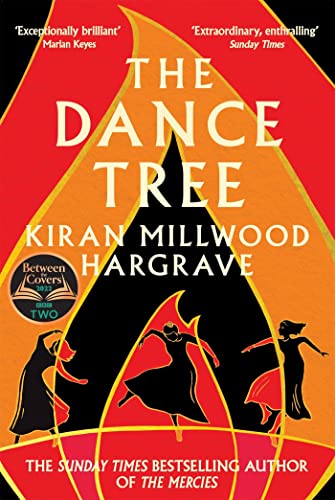
#BookReview ‘The Dance Tree’ by Kiran Millwood Hargrave #historical

The Dance Tree by Kiran Millwood Hargrave is compelling and emotional. I read it in two long sittings, unwilling to put it down. Kiran Millwood HargraveBased on a true historical event in Strasbourg in 1518 when, one hot summer, one woman started to dance and didn’t stop. Others followed. Set at a time of extreme heat, hunger, intense religious belief and superstition, The Dance Tree takes the historical event and tells the story of a group of women and their secrets.
Lisbet, heavily pregnant with her thirteenth child, having lost the previous twelve, lives on the family farm with husband Henne and mother-in-law Sophey. They scratch a living from their bees, selling honey and beeswax. They await the arrival of the baby, and of Henne’s sister Agnethe returning from seven years of punishment at a nunnery. Many things are unspoken. Lisbet, feeling secrets are kept from her, finds support with her best friend Ida. But always she feels as if the Wilers blame her for bringing bad luck to the farm, bad luck because Lisbet was born on the day of a comet, a comet which bought bad luck and starvation to the land.
So many things are unspoken. What happened before Lisbet married Henne and joined the Wiler family. What shame did Nethe commit to deserve her banishment and, now she is returned, why is there such hatred between her and Ida. Lisbet, feeling estranged from her husband and mother-in-law, struggles to make sense of what is happening. What is the family hiding from her, and why. The family has so many secrets, including the secrets Lisbet is hiding about her mother’s death.
The power balance at the Wiler house changes as the three women are left alone. Henne travels to Heidelberg to give evidence in court that their bees are free creatures in nature and are not wilfully stealing nectar from the wildflowers at the monastery. Meanwhile in town women begin dancing. First one, trance-like, hearing music that those watching cannot hear. More join in, at first a spectacle for the town’s inhabitants. But then, as more people join in, fear begins to circulate. Are they ill, are they mad. And how will the church control the hysteria.
Into the Wiler home come two lodgers, two musicians paid by the church to play music to drive the devil from the dancing women. And so the power balance shifts again in the Wiler household, especially as one of the men is a Turk, an infidel. The power of religious belief and superstition is overwhelming. Heat, poverty, hunger all increase the pressure to conform. Judgement against those who do not fit in or whose behaviour is judged sinful or simply different is uncompromising. Those wielding the power, the Twenty One, are strong men filled with pomposity and arrogance. They are quick to judge and will not hear evidence or allow people to make witness. Women’s voices are not heard.
Lisbet’s place of sanctuary is a linden tree, hidden deep in the forest in an impenetrable tangle of bushes. There she can be herself, remember her mother and grieve for her lost babies. Her mother had a tree like this near Lisbet’s childhood home, it was called a dance tree. When Lisbet visits her tree she finds peace in its solitude. At every visit she leaves a small offering, a pebble, a feather, a flower. She feels safe there but in truth there is safety nowhere. When the Twenty One sees the dancing women, decisions about what to do – to punish the women or care for them – are made individually according to the woman’s standing and position in society, obedient or sinner.
Like Hargrave’s previous novel The Mercies, this is a powerful mesmerising novel tight with tension, betrayal and threat leavened by snatches of love and togetherness. Excellent.
CLICK HERE TO READ MORE ABOUT THIS BOOK AT AMAZON

Click the title to read my review of THE MERCIES, also by Kiran Millwood Hargrave.

If you like this, try:-
Orphans of the Carnival’ by Carol Birch
The Wicked Cometh’ by Laura Carlin
Gone are the Leaves’ by Anne Donovan

And if you’d like to tweet a link to THIS post, here’s my suggested tweet:
#BookReview THE DANCE TREE by Kiran Millwood Hargrave https://wp.me/p2ZHJe-5Tk via @SandraDanby

COMING SOON… THE NEXT BOOK I REVIEW WILL BE:-
Jess Kidd

#BookReview ‘My Name is Yip’ by Paddy Crewe #historical

Through the course of his story, Yip Tolroy founds out who he is and who he isn’t. My Name is Yip by Paddy Crewe is a historical novel with a difference, a first person narrative about an extraordinary, ordinary, boy and what he learns about friendship. Paddy CreweYip is 4 ft 8 in tall and unable to speak. His father disappeared on the night of Yip’s birth and so he and his mother muddle along together. He is assumed by everyone who lives in Heron’s Creek to be slow, with no understanding of what is going on around him. But the opposite is true. Yip watches and learns. He is a great observer. He is fifteen when old gentleman Shelby Stubbs recognises Yip’s intelligence, teaches him to read and write and presents him with a portable slate and chalk which Yip uses to communicate. A new world opens up before him but he must find the courage to take the first step.
The voice at first seemed awkward, but by the third or fourth page I knew this was Yip’s own voice and the awkwardness disappeared. Yip has a clear sense of right and wrong, of kindness and cruelty. As a growing child, he sits on a stool beneath a tree outside his mother’s store and watches the world go by. Until events conspire to change his world. Set in Georgia in 1830, gold is discovered near Heron’s Creek, a man disappears and Yip commits a crime. He goes on the run with a newcomer in town, Dud Carter; a man Yip has only seen once before. ‘A tall gangly figure with a crop of hair what the rain had plastered to his short forehead.’ These unlikely companions go on a road trip, with Yip’s constant horse Gussie, facing trials and danger, learning about themselves, each other and the things man is capable of doing to man.
This is an original story with an everyman message about being true to yourself. As Yip says at the end, ‘You got to keep yourself whole & be who it was you was set here to be.’
Very different. Don’t miss it.

If you like this, try:-
Barkskins’ by Annie Proulx
At the Edge of the Orchard’ by Tracy Chevalier
Days Without End’ by Sebastian Barry

And if you’d like to tweet a link to THIS post, here’s my suggested tweet:
#BookReview MY NAME IS YIP by Paddy Crewe https://wp.me/p5gEM4-5S4 via @SandraDanby

#BookReview ‘City of Masks’ by @SD_Sykes #historical

It is 1358 and Lord Somershill, Oswald de Lacy, is in Venice with his mother on route to the Holy Land. But Venice is at war with Hungary and the pair are stranded in this city of secrets. City of Masks, third in the Oswald de Lacy medieval mystery series by SD Sykes, sees the young lord investigating the death of a friend. SD SykesVenice is a wonderful setting for Oswald’s detecting. A closed city with its own rules, customs, prejudices and culture, it is a minefield for a stranger seeking information. Oswald relies on acquaintances and new friends for help. But all is not as it seems. Not all deceivers wear a traditional grotesque Venetian mask, some are in full sight. Oswald’s mother continues to be an irritant to him but is full of surprises and there is tension in the house of their hosts, John Bearpark and his young wife, who is due to give birth. As Oswald’s investigations progress, so do strange happenings at the Bearpark house. Plus, Oswald has the feeling he is being followed everywhere he goes. Even to the dangerous military complex, the Arsenale, to the island of lepers and to the gambling dens where he wins, and loses, money.
In this instalment we learn more of Oswald’s inner devils. He is accompanying his mother on this pilgrimage not because he shares her beliefs but because he is running from a bad memory at home. This dark shame within him will not be repressed and as he closes in on the murderer, his thought processes become fickle and his decision-making unreliable. As the days pass, Oswald must solve the murder or an innocent woman will be executed. And Oswald owes money he doesn’t have, money lost at cards, to a thug named Vittore. Venice is portrayed as a repressive, autocratic society with abuse of the poor and infirm. The surface glitters with beautiful houses but beneath, the foundations are rotting. Each island in the lagoon is a separate territory, outsiders are watched, exploited, killed.
Oswald is an impetuous investigator. He assumes possibilities are fact and pursues numerous wild goose chases. He is not an ideal detective. He stumbles on truths and walks straight into danger. He is emotional and naïve. But hidden in his to-ing and fro-ing around Venice and other islands in the Venetian Lagoon, are hints of the real crime, the real culprits. Venice is riddled with deception and Oswald must learn to see beyond the disguises and dissembling, to apply scepticism to everyone and everything around him.
CLICK HERE TO READ MORE ABOUT THIS BOOK

Click the title to read my reviews of the first two books in this series:-
PLAGUE LAND
THE BUTCHER BIRD

If you like this, try:-
The Almanack’ by Martine Bailey
The Leviathan’ by Rosie Andrews
Dangerous Women’ by Hope Adams

And if you’d like to tweet a link to THIS post, here’s my suggested tweet:
CITY OF MASKS by @SD_Sykes #bookreview https://wp.me/p5gEM4-5RO via @SandraDanby

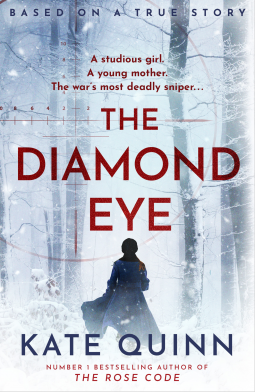
#BookReview ‘The Diamond Eye’ by Kate Quinn @Kate_Quinn #WW2

What a wonderful book is The Diamond Eye by Kate Quinn. The fictionalised story of a real Soviet female sniper fighting in what is now Ukraine in the early years of the Second World War, this is a novel I didn’t want to put down. Kate QuinnThe life of Kiev resident Mila Pavlichenko, young mother and history student, changes when the Nazis invade. Already an accomplished shot with a rifle, she leaves her young son Slavka with her mother and goes off to war. In the 18 months of her time on the frontline as a sniper, the real Mila scored 309 official ‘kills’. She is injured fighting in Sevastapol and, once recovered, is ordered to join a diplomatic mission to the USA to persuade the Americans to join the European war. The action in America is probably the most fictionalised part of The Diamond Eye which is based in part on Mila’s memoir. Quinn states in her Author’s Note that parts of the memoir are clearly Mila’s own voice, other entries seem like Soviet propaganda.
This is not just a war story with guns and death and trenches. Quinn tells the story of a young woman, torn from all that is familiar, who finds strength inside herself and with her comrade snipers, to do what must be done. Some of her fellow soldiers have brief times at her side; others, the most skilled snipers, survive. She discovers how difficult it is, when you know you may die tomorrow, to open yourself up to friendship, or love. She acquires a nickname, ‘Lady Death,’ and spurns the frequent attentions of her senior officers. Her girlfriends also volunteer, her estranged husband turns up as a combat surgeon, but there are few light moments in her life. Her primary motivation is to defend her homeland, that is the only thing keeping her away from home. Between missions she gathers leaves and sends them to Slavka, she carries her dissertation with her and takes it from her backpack to read to remember the life she once had. Quinn alternates the dark story of Mila’s fighting, first at Odesa and then at Sevastapol, with her later trip to Washington in 1942 plus excerpts from the diary of the First Lady, Eleanor Roosevelt, who Mila met on that trip.
This is a shocking story and a compelling one. The sections about sniper technique and tactics are not for the faint-hearted but the current war in Ukraine adds a reality check and there are light-hearted moments in Washington as Mila meets the American press, not alerting her hosts to the fact that she can speak English. Also lightly woven through the fighting sections are snippets of Russian folklore, a reminder that Mila’s country has roots and traditions much older than the Soviet Union.
Quinn creates a heroine we care for. Brave and determined with a sharp edge of sarcasm, this is Mila’s story as imagined by the author. The two parts of the story – the fighting, the subsequent trip to America – are key to the growth of an unusual and exceptional young woman. So what if the final section lurches into ‘thriller’ territory, it made the pages turn even faster.
Highly recommended.

Here are my reviews of other novels by Kate Quinn:-
THE ALICE NETWORK
THE BRIAR CLUB
THE ROSE CODE

If you like this, try:-
‘The Bear and the Nightingale’ by Katherine Arden #1WINTERNIGHT
Midnight in Europe’ by Alan Furst
Corpus’ by Rory Clements #1TOMWILDE

And if you’d like to tweet a link to THIS post, here’s my suggested tweet:
#BookReview THE DIAMOND EYE by Kate Quinn @Kate_Quinn https://wp.me/p5gEM4-5QW via @SandraDanby

#BookReview ‘The Drowned City’ by KJ Maitland #historical #crime

The Drowned City by KJ Maitland is first in the Daniel Pursglove historical crime series. Maitland is a new author for me and the premise is fascinating. KJ MaitlandAfter the Gunpowder Plot in 1605, King James I is nervous of Catholic rebellion. Pursglove is plucked from prison and offered amnesty if he tracks down an elusive Catholic conspirator, Spero Pottingar, believed to be in Bristol. While there, Daniel must also prove if the recent deadly Bristol flood was a natural disaster or witchcraft. I enjoyed the Jacobean setting, unusual in historical crime novels, but found it slow to get going. Daniel’s introduction – we first meet him imprisoned in Newgate – is negative. Why he’s imprisoned isn’t explained, nor do we learn about his life prior to being locked up. But we do know he’s a magician and this sleight of hand proves useful as the story unfolds. I finished the book with no clear idea who Daniel Pursglove is.
The description of the Bristol flooding – a true event – is well done, visceral and moving. Death, destruction, disease, loss of livelihood. Maitland doesn’t spare the reader in her descriptions of violence and rotting corpses. People simply disappeared – drowned, safely embarked on a ship before the flood, or slipped away to start afresh somewhere new. Daniel has no idea if Pottingar is a real person or an invention. He may be in Bristol, have fled, or never been there at all. This gives wonderful opportunities for fictional twists and turns and when the twist came at the end, I was surprised.
The Drowned City is steeped in historical detail but at the expense of plot and character development, possibly because this is the first in the series. More is sure to be unveiled in further books but as the first book, this failed to keep me interested. Daniel’s reason for being in Bristol got lost at times in detailed description and the convoluted factions, with so many clues and red herrings that I got lost and the tension left the page. The middle section was particularly slow.
So, not a page-turner for me but if you like dense historical crime mysteries it may suit you.

If you like this, try:-
Winter Pilgrims’ by Toby Clements #1Kingmaker
Cecily’ by Annie Garthwaite
The Silver Wolf’ by JC Harvey #1Fiskardo’sWar

And if you’d like to tweet a link to THIS post, here’s my suggested tweet:
#BookReview THE DROWNED CITY by KJ Maitland https://wp.me/p5gEM4-5QM via @SandraDanby

#BookReview ‘The Duchess’ by Wendy Holden @Wendy_Holden #historical #royal

The Duchess by Wendy Holden turned out to be a surprising read. After all, we all know the story of the Duke and Duchess of Windsor, don’t we? I started the book half-expecting not to finish it, unsure whether I could empathise with Wallis Simpson. But having read Wendy Holden’s first novel – Simply Divine, published in 1999 – and many since, I was curious about her subject matter. I finished it wanting to go back to the beginning again, reading it with fresh eyes. Wendy Holden Holden, a former journalist, has done her research to portray the middle-aged American divorcee. Wallis arrives in London in 1928 with her second husband Ernest, determined to be a part of the party scene. Scrimping and saving, and with the quick mind and equally quick tongue of her mother, she learns to deal with the snubs, putdowns, cold shoulders and snobbishness, all the time backed by her steady husband. After a difficult childhood raised alone by her mother without much money, followed by an abusive first marriage, Wallis now reads the Court Circulars and newspaper stories about the parties of the Bright Young Things and longs to have fun. But she hadn’t bargained on the British class system. With her own sense of chic and by altering cheap dresses herself, Wallis catches the eye of Coco Chanel who offers some salutary advice.
The dual timeline, always from Wallis’s viewpoint, alternates between the Duke of Windsor’s funeral in 1972, and Wallis’s life in England from 1928-1936. After a lot of hustling, scrimping, spending money they don’t have, the Simpsons meet the Prince of Wales and are invited to his home at Fort Belvedere, Windsor, for the weekend. There we see the divisions between the prince’s public role and private political views. Holden juxtaposes the freedom and ‘what if’ American approach to life with the stuffy 1930s British ‘not possible’ view. This culminates finally in the Abdication. The final twist is intriguing.
The first few pages are a slow read and felt more like a historical record – there is a lot of emotional and historical baggage wrapped up in this story – but the story gets going once Wallis is in London. She struggles to be accepted, hosting cocktail ‘open evenings’ that no one attends, always being sparkling and entertaining despite Ernest’s misgivings. We see her vulnerabilities as the difficulties of her childhood, and her first marriage, are revealed. I finished the book with new-found respect for Ernest Simpson.
I read The Duchess in two days on holiday. Compulsive, wicked, sad and funny, I was left with a feeling of regret about the Windsors, and for Ernest, though with the obvious footnote that this is a fictional account not a biography. Even taken with a large pinch of salt, I came to empathise with Wallis; simultaneously head over heels in love but also exasperated, despairing, trapped, powerless, lonely and maligned.
Definitely food for thought. A compulsive fictional take on royal history

And here’s my review of THE PRINCESS, also by Wendy Holden.

If you like this, try:-
The Glass House’ by Eve Chase
The Orphan’s Gift’ by Renita D’Silva
The Cottingley Secret’ by Hazel Gaynor

And if you’d like to tweet a link to THIS post, here’s my suggested tweet:
#BookReview THE DUCHESS by Wendy Holden @Wendy_Holden https://wp.me/p5gEM4-5Qe via @SandraDanby

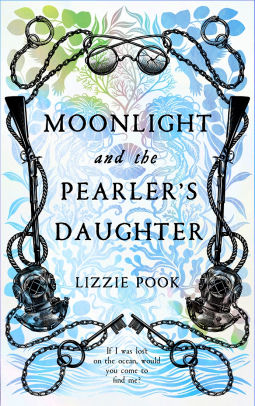
#BookReview ‘Moonlight & the Pearler’s Daughter’ by Lizzie Pook #historical

Moonlight and the Pearler’s Daughter, the debut historical mystery by Lizzie Pook, is a surprise, full of twists and turns with a determined female lead character who defies 19th century conventions to find the murderer of her father. Lizzie PookThe gritty, sometimes disgusting descriptions of the pearler’s living conditions are vivid and not for the faint-hearted. Set in an 1896 at Bannin Bay, a poor Australian pearl fishing settlement on the edge of the coast, the settlers are surrounded by indigenous people and their lands. When her father’s pearling lugger, the White Starling, returns from a long sea trip without him, Eliza Brightwell is told her father Charles disappeared from his boat overnight and is assumed drowned. Her brother Thomas, under pressure to keep the family business out debt, departs immediately to the nearby town of Cossack to sell his catch to traders. Alone, Eliza refuses to accept her father is dead but when she asks questions, is advised to accept the inevitable.This is a raw town of crime, racism, jealousy, blackmail and abuse. A detailed examination of the available facts, and a mysterious note she finds in her father’s diary, lead Eliza to places she cannot go. Fettered by conventions of the time, Eliza soon realises she needs a male companion to enter the disreputable parts of town. An outsider herself she chooses another outsider, German itinerant worker Axel Kramer, to help her. He can gain admittance to places where she should not be seen or is barred from entering. Alternating with Eliza’s investigations are two other passages – the hunt for Aboriginal crewman Balarri who is automatically assumed guilty of murder, and passages from her father’s diary in which he writes nature observations and notes about his pearl shelling business.
The murder story takes place in 1896 but we also see flashbacks ten years earlier to 1886 when the Brightwell family – Eliza, her parents and brother, plus Uncle Willem and Aunt Martha – arrive in Bannin Bay from England, planning to become wealthy fishers of pearl shell. Pook places clues everywhere so don’t ignore these shorter sections.
I didn’t settle into this story until the second half. The first part establishes the setting – the village of Bannin Bay – with such gritty realism that the descriptions of the climate, mould, insects, smells and unpleasant people dominated everything else. There are also intricate descriptions of the industry of pearl fishing. This meant I was slow to connect with Eliza, other than that she is unconventional. But when she and Axel take a lugger to search the remote islands beyond Bannin Bay, to the Lucettes, Cockatoos, Rosellas and Nevermores, the story becomes more dynamic. Moving the action away from smelly Bannin adds air to story and removes conventions from Eliza and Axel. Knife, their young crewman, is also an intriguing character who is under-used.
This is a complex and ambitious story for a debut and Pook is an author worth watching. It’s a pity that at times the story felt weighed down by Australian history and the treatment of the indigenous population. The book is clearly founded on solid historical research but at times it felt that the pace of the story and the characterisation suffered in need of a lighter hand with research.

If you like this, try:-
Rush Oh!’ by Shirley Barrett
The Pearl Sister’ by Lucinda Riley
The Night Child’ by Anna Quinn

And if you’d like to tweet a link to THIS post, here’s my suggested tweet:
#BookReview MOONLIGHT AND THE PEARLER’S DAUGHTER by Lizzie Pook https://wp.me/p5gEM4-5Q6 via @SandraDanby

#BookReview ‘Shrines of Gaiety’ by Kate Atkinson #historical

Shrines of Gaiety by Kate Atkinson is a sparkling portrayal of London in the 1920s, a heady mixture of madly-themed nightclubs, teenage runaways and the Bright Young Things. It is 1926 and the generation most damaged by the War to End All Wars is dancing to forget. But 1920s London is not as glittering it seems. Though the nightclubs sparkle by night, they are dank and dowdy in daylight. London has a dark, dangerous underbelly. Kate AtkinsonWhen veteran gangland boss Ma Coker is released from Holloway prison, a train of events is set in place. Her six children jostle for her attention, approval and power. The police at Bow Street station are either in her pay or are trying to convict her. Meanwhile, others are plotting the takeover of her rich kingdom – the five nightclubs the Amethyst, the Sphinx, the Crystal Cup, the Pixie and the Foxhole. Each is carefully targetted at specific clientele, each is managed by one of her five eldest children. The Amethyst is the jewel in the crown but Nellie, post-prison, is acting oddly and has taken to sitting alone in the immaculate, unoccupied, pink-decorated flat above the Cup. Is she losing it?
Two young women arrive in the closed world of the Coker family and will change things forever. Fourteen-year-old Freda Murgatroyd has run away from York with her bovine friend Florence, desperate to dance on the stage in London. Gwendolen Kelling, a former librarian and also from York, follows them to London with the aim of returning them to their families. Though Gwendolen’s tweed skirt and plain cardigan may suggest timidity, she is not what she seems.
What a wonderful read this is, this hybrid part-historical, part-literary, part-mystery novel. Atkinson juggles a huge cast and given this it takes a while to settle into the story, but as the pages turn the parties become more hysterical and people begin to die. There are three main viewpoints – Nellie Coker, Gwendolen and Freda – supplemented by Inspector John Frobisher and Nellie’s three eldest children Edith, Niven and Ramsay. But always Atkinson reminds us of the dark side. The Bright Young Things dazzle at the beginning of the evening in beautiful extravagant costumes, but their syringes and drugs become visible at twilight. Meanwhile, Nellie seems to be losing her iron grip on the clubs. When Gwendolen is recruited by Frobisher to visit the Amethyst undercover one night, with a policeman as her dance partner, things spin out of control. There is no sign of Flora or Florence, Gwendolen’s dance partner disappears, a fight breaks out and her beautiful dress from Liberty is covered in blood. The identity of her saviour is unexpected.
The story has been described as Dickensian and I can see why. Atkinson never wastes a sentence and, with a sure hand, she directs this complicated plot full of richly-drawn characters, criminal gangs, two-faced policemen and blotto partygoers. The historical detail stretches from the richest to the poorest, plus there’s a touch of romance and plenty of wry and witty anecdotes to make you chuckle. Some of the minor characters are classics to delight in, particularly Vanda and Duncan aka The Knits.
Excellent.

Click the title to read my reviews of these other books by Kate Atkinson:-
A GOD IN RUINS
BIG SKY #5JACKSONBRODIE
DEATH AT THE SIGN OF THE ROOK #6JACKSONBRODIE
LIFE AFTER LIFE
NORMAL RULES DON’T APPLY
TRANSCRIPTION
… and try the #FirstPara of EMOTIONALLY WEIRD

If you like this, try:-
‘Fatal Inheritance’ by Rachel Rhys
Freya’ by Anthony Quinn
The Light Years’ by Elizabeth Jane Howard #1CazaletChronicles

And if you’d like to tweet a link to THIS post, here’s my suggested tweet:
#BookReview SHRINES OF GAIETY by Kate Atkinson https://wp.me/p5gEM4-5PO via @SandraDanby