Tag Archives: mystery fiction

#BookReview ‘Rainforest’ by Michelle Paver #suspense #mystery

Set in Mexico in the 1970s, Rainforest by Michelle Paver is an intoxicating mixture of unrequited love, tropical rainforest, Mayan culture, drugs and obsession. When Simon Corbett joins a scientific expedition in the South American jungle, he takes with him a strange talisman to remind him of a former love. Michelle PaverOstensibly, Simon joins the team as entomologist, a specialist in insects, keen to find new species of mantids. He wants to get his life back, get his career on track again, face up to his demons. Really, he is running way from guilt. He feels responsible for the death of Penelope, a woman with whom he formed an attachment, though she died in a car accident when Simon was miles away. Gradually his backstory is revealed as Simon writes a journal, explores the rainforest and gets to know his fellow explorers. They’re a strange bunch with odd habits and secrets, just like Simon himself. He sees the rainforest, and his mantids, as his saviours. ‘If only I too could believe that I can contact the dead. That I could see her, touch her one last time. If only, if only, if only. That’s why I can’t sleep. That’s why I need the jungle. If anything can save me, it’s my mantids. We’re in this together, my beauties. It’s you and me against the world.’ It takes a while for the full story of Simon’s relationship with Penelope to become clear and we only ever have his side of the story.
Paver’s description is beautiful, but always one step away, hidden by a leaf, a shadow, there is an unknown threat. Perhaps a snake, a nest of fire ants, a bullet ant, howler monkeys, a caiman, a Mayan shaman, the ghost of the shaman’s dead brother. The worst threats are in Simon’s mind, his dreams at night, his imagination. Paver has written an eerie tale encompassing unrequited love, stalking, paranoia, loneliness, social isolation and ineptness. Simon’s nightmares are so real the line begins to blur so that I question is it really happening or is he imagining everything. The rainforest is an unreal world, unsettling, easy to lose oneself in, even if you’re healthy. And Simon is definitely vulnerable. But decidedly stubborn.
Underlying it all is the how the way of life of indigenous peoples is being threatened by westerners invading their rainforest environment. At best it is a thoughtless, arrogant disregard for the native people, at worst an exploitative, abusive motivation that threatens not just the people who live in the deep jungle but the natural world, its fauna and flora, no matter how beautiful or strange. Trees are felled, habitat destroyed, artefacts stolen.
I loved the rainforest setting, the description is faultlessly fabulous. I found it more difficult to connect with Simon. At times I felt a little in despair of his self-destructive streak, a compulsion to indulge in his painful memories, always choosing the path of pain rather than the one towards recovery. Like poking a wound with a needle. Where is the threat? In the rainforest surrounding the camp on all sides, or inside Simon?
How far will a man go to avoid bad memories? The truth is wherever you go, the memories go with you and so does the danger. When you’re lost in the rainforest, something beautiful can kill you, or something invisible, or something inside your head. Michelle Paver writes brilliant ghost stories set in extreme physical conditions. The Arctic in Dark Matter and the Himalayas in Thin Air, both are 4* books for me; and the 5* Wakenhyrst set beside the bleak East Anglian fens. All of them play with the concept of what is real and what is imagined. If it’s not real, does that means it’s not dangerous?
Very good. Though I didn’t particularly like Simon, I was still thinking about him days after finishing the book.

And read my reviews of these other novels by Michelle Paver:-
THE OUTSIDERS #1GODS&WARRIORS
THIN AIR
VIPER’S DAUGHTER #7WOLFBROTHER
WAKENHYRST

If you like this, try:-
‘The Snakes’ by Sadie Jones
‘The Hoarder’ by Jess Kidd
The Ice’ by Laline Paull

And if you’d like to tweet a link to THIS post, here’s my suggested tweet:
#BookReview RAINFOREST by Michelle Paver https://wp.me/p2ZHJe-8uH via @SandraDanby

COMING SOON… THE NEXT BOOK I REVIEW WILL BE:- Harriet Constable

#BookReview ‘The Stranger’s Companion’ by Mary Horlock #mystery #suspense

A fascinating premise. A small, isolated island, the abandoned clothes of a man and a women found on a beach, no missing people. The Stranger’s Companion by Mary Horlock, set on the island of Sark, starts with a mystery based on true fact but merges into a blend of Mary Stewart and Agatha Christie. Mary HorlockThe Stranger’s Companion is a ghost story set in a place where folklore is just below the surface, a story of two teenagers who meet again as adults and the history that lies between them, a disappearance story that spreads from regional to national newspapers. The story is unveiled in two timelines, 1923 and 1933, that uneasy inter-war period occupied by ghosts of the Great War and premonitions of 1939. Sark’s bleak geography adds to this; towering cliffs that fall to the sea, stark weather, empty space, the island almost divided in two by La Coupée, a thin isthmus of rock connecting Big Sark and Little Sark, a dangerously exposed footpath.
The start is slow, confusing because the two timelines involve the same two teenagers, Phyll and Everard, and it all swirls into one so 1923 and 1933 merge. The voice switches back and forth between different people, adding to the feeling of disorientation and the uncertainty about what is real. There is an undisputed oddness to the tale, things sensed, people glimpsed, strange noises, unexplained happenings. There are rumours of witches. And then there is the tale of the Stranger Woman, a female ghost always dressed in white.
It took a while to separate out the omniscient narrator from the various 1923 and 1933 voices. Phyll is an observer, at the edge of things, as a teenager she loves stories, true stories, ghost stories, her own inventions. As an adult she writes stories, news and fictional. I was less clear about Everard, a visitor rather than resident, but who clearly has secrets to hide. At times the disappearance of the unidentified couple, the owners of the clothes, is lost in the spooky atmosphere, vanishings, unexplained appearances, old stories. As the narrator says, ‘Doesn’t everyone love a ghost story? It means the ending is never that, because life continues, just in a new shape or form. We could argue that every story is a ghost story, because once a tale is told, it is over, it is past. All we can do is keep going back over it, to for from the end back to the start.’
I found the mystery more intriguing than the characters and remained slightly confused to the end about the historical connections and who was who. Perhaps too difficult themes are tackled in too many sub-plots, but at its heart is a most surprising secret. Sark is probably the most important presence in the book. A great promotion of the island. Despite its ghostly history, this novel made me want to visit the real place.

Here’s my review of THE BOOK OF LIES, also by Mary Horlock.

If you like this, try:-
The Lamplighters’ by Emma Stonex
Foxlowe’ by Eleanor Wasserberg
Thornyhold’ by Mary Stewart

And if you’d like to tweet a link to THIS post, here’s my suggested tweet:
#BookReview THE STRANGER’S COMPANION by Mary Horlock https://wp.me/p2ZHJe-8rQ via @SandraDanby

COMING SOON… THE NEXT BOOK I REVIEW WILL BE:- Verity Bright

#BookReview ‘Night Train to Marrakech’ by @DinahJefferies #mystery #Morocco

Night Train to Marrakech is last in the ‘Daughters of War’ trilogy by Dinah Jefferies and it, sort of, squares the circle. Its two years since I read the first, Daughters of War, and I was a little rusty on the three sisters, Hélène, Élise and Florence, who lived in the Dordogne during World War Two. Night Train to Marrakech is set in Morocco in 1966 and tells the story of fashion student Vicky Baudin, daughter of Élise, as she travels on the night train to meet her previously unknown grandmother. Oh, and to meet Yves St Laurent. Dinah JefferiesWhen Vicky arrives at the Kasbah du Paradis in the Atlas mountains she is puzzled by the cool welcome she receives from her grandmother Clemence. Determined to meet her fashion guru, and dismissing Clemence’s warnings to be wary of trouble, Vicky heads for the night lights. Morocco is politically unstable and while various factions fight, and foreign powers spy on the fighting, the Marrakech beautiful set including Yves St Laurent, John Paul Getty and Tabitha Pol seem to float above reality. Vicky soon sees the horrifying reality for herself and becomes entangled in situations she doesn’t understand.
Yes, Vicky and Bea, her cousin, are annoyingly naïve at times but their impulsive decisions drive the plot along and take the reader through the twists and knots of Clemence’s past and the mysteries of Vicky’s family. Reference to Victor, Vicky’s father, relate back to the first book in the trilogy. Although its possible to read Night Train to Marrakech as a standalone novel, many back references will be missed. A foreword explaining the trilogy, including summary of action and list of characters, would help.
I admit to being more fascinated by the life of Clemence than Vicky, and wish there had been more focus on her story. The second half of the novel went quicker for me, partly because of the number of secrets revealed. Marrakech is colourfully described and the Kasbah reminded me of Mary Stewart’s The Gabriel Hounds, set in a rundown Lebanese palace.
I enjoyed Daughters of War most of the trilogy, perhaps a case of one good novel being stretched too far. The three books are at heart about family, the visible and hidden connections that link relatives together, and how that familial link survives through war, distress and violence. Incidentally, and disappointingly, the train of the title features only on the front cover and in the Prologue of Night Train to Marrakech. The Kasbah du Paradis and Marrakech city have more importance to the story than the train and neither Vicky nor Clemence stand in sand dunes.

Click the title to read my reviews of the first two books in this trilogy:-
DAUGHTERS OF WAR #1DAUGHTERSOFWAR
THE HIDDEN PALACE #2DAUGHTERSOFWAR

And here are my reviews of other novels by Dinah Jefferies:-
THE TEA PLANTER’S WIFE
THE SAPPHIRE WIDOW
THE TUSCAN CONTESSA

If you like this, try:-
The Gabriel Hounds’ by Mary Stewart
The Photographer’s Wife’ by Suzanne Joinson
Summertime’ by Vanessa Lafaye

And if you’d like to tweet a link to THIS post, here’s my suggested tweet:
#BookReview NIGHT TRAIN TO MARRAKECH by @DinahJefferies https://wp.me/p2ZHJe-7uT via @SandraDanby

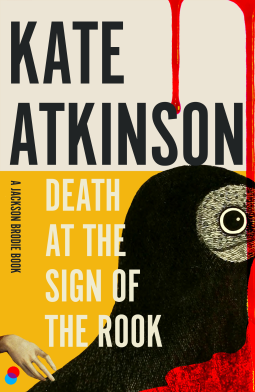
COMING SOON… THE NEXT BOOK I REVIEW WILL BE:- Kate Atkinson

#BookReview ‘One Moonlit Night’ by Rachel Hore @Rachelhore #WW2

Life can turn on a sixpence and that’s what happens to Maddie and her two small daughters in the Blitz. One Moonlit Night by Rachel Hore doesn’t start with a glimpse of the main character’s ordinary life before the change happens. It starts with a shock… a family made homeless by a bomb. Rachel HoreAlone in the midst of chaos, her husband Philip has been missing for ten months since the British army’s retreat from Dunkirk, Maddie takes Sarah and Alice to Knyghton in Norfolk to stay with Philip’s elderly Aunt Gussie. Maddie is caught in limbo, unable to grieve for Philip, unable to make decisions, not accepting his probable death, while living in an isolated country house – where Philip spent his childhood – which is the focus of long-held rumour and superstition in the nearby village.
Trying to make a living as a book illustrator, Maddie is seldom without a pencil and paper. But when she draws the face of an unfamiliar young girl, enigmatic, mysterious, she doesn’t know where her inspiration came from. Instinctively she keeps her drawing secret, not wanting to upset the fragile atmosphere at Knyghton. A secret is being kept, by Aunt Gussie, Philip’s cousin Lyle who runs the Knyghton farm, by family retainers, the Fleggs, and Maddie is sure it surrounds this mysterious young woman.
Bookended by a Prologue and Epilogue both set in 1977, Hore tells the stories of Maddie and Philip during World War Two with a flashback to their meeting in 1934. Many of the book’s themes are established in this pre-war section. Wild animals, painted by Maddie, but shot by Philip; children raised while parents are absent; the sharing of some secrets and the keeping of others. It is a complex, emotional story as Maddie, who flees to Knyghton seeking sanctuary instead finds unexplained silences, whispers and rumours she fears are aimed at Philip. Meanwhile Philip, having survived a massacre of British troops by the German army, attempts to find a way home. Philip’s sections are tense, forlorn and at times hopeless, a vivid portrayal of soldiers fleeing through Occupied and Vichy France.
This is a slow-burning story which rewards the reader’s perseverance as tension in the final third picks up and Maddie finally finds some answers. It’s a book which rewards further reading as layers of information, missed on first reading, become significant.

Click the title to read my reviews of two other books by Rachel Hore:-
A BEAUTIFUL SPY
A WEEK IN PARIS
THE HIDDEN YEARS
THE LOVE CHILD

If you like this, try:-
‘The Book of Lies’ by Mary Horlock
The Tuscan Secret’ by Angela Petch
The Skylark’s Secret’ by Fiona Valpy

And if you’d like to tweet a link to THIS post, here’s my suggested tweet:
#BookReview ONE MOONLIT NIGHT by Rachel Hore @Rachelhore https://wp.me/p5gEM4-5PJ via @SandraDanby

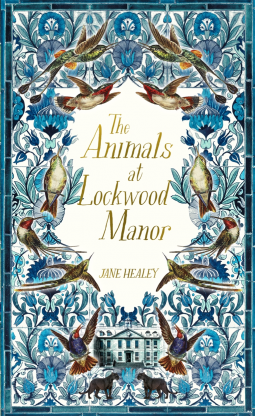
#BookReview ‘The Animals at Lockwood Manor’ by Jane Healey @Healey_Jane #mystery #WW2

As soon as I read the premise of The Animals at Lockwood Manor by Jane Healey, I was intrigued. It is 1939, war is declared, and a decision is taken to move the exhibits from the Natural History Museum to safety. Hetty Cartwright is charged with moving the mammal collection to a country house where they, and she, will stay for the duration of the war. Jane HealeyLockwood Manor is one of those atmospheric houses in literature that will stay with you after you read it. Crumbling, dusty and dirty, it has rats and secret rooms, ghost stories and scandal. It is an extra character in this story and in fact has a clearer presence than some of the peripheral characters who perhaps could have been deleted. Hetty arrives with her cargo of taxidermy animals in display cases plus catalogues and samples to find a mixed welcome from the manor’s servants who see the new arrivals as extra work. The irascible lord of the manor welcomes them then disappears, he is seen briefly at mealtimes and when ushering his latest girlfriend from the house. At first Hetty, charged with the care of the mammals, is kept busy arranging, cleaning and organising. Then she finds an ally in the lord’s daughter, Lucy, who though mentally fragile, finds peace amongst the animals. Hetty and Lucy, with their vulnerabilities and lack of confidence, have almost inter-changeable voices.
Then Hetty hears noises at night and starts to find animals not in their correct place in the morning. So when a case of hummingbirds is opened and the tiny stuffed treasures disappear, it becomes clear that something sinister lurks in the house. Is it a ghost, a mischief maker or a burglar? The odious Lord Lockwood and the equally unlikeable housekeeper are dismissive of Hetty’s fears, adding to her feeling of incompetence. This is part ghost mystery, part love affair, part family history. Hetty suspects everyone, first of mischief but she soon comes to realise it is something altogether more dangerous. Feeling vulnerable in her own job and not wanting to admit she can’t cope, she vascillates over writing to her boss in London. The delay is costly.
I remained conflicted about this book to the end. The clever idea is hindered by a slow pace and repetitive description, there are many beautiful passages which do not add to the plot. The final quarter raced along well enough though I still skipped some paragraphs, but I was left feeling I had read a nineteenth century Gothic story set in the Victorian era not World War Two. The absence of war from Lockwood Manor is such that the story might have been set at another time, the wartime setting is wasted. The introduction of a voice from outside the house would rectify this omission, perhaps from someone at the museum, adding conflict, moving the plot along and strengthening the feeling that Lockwood Manor exists in an abnormal bubble.
Read it for the descriptions of the house, the brooding atmosphere and for the way Hetty likens everyone she meets to an animal. ‘Lucy had been called a dove by her father but, as a mammal lover, I thought that she rather reminded me of a cat somehow, in her glamour and warm smiles’.

If you like this, try:-
The Wicked Cometh’ by Laura Carlin
‘The Hoarder’ by Jess Kidd
Whistle in the Dark’ by Emma Healey

And if you’d like to tweet a link to THIS post, here’s my suggested tweet:
#BookReview THE ANIMALS AT LOCKWOOD MANOR by Jane Healey @Healey_Jane https://wp.me/p5gEM4-4EE via @SandraDanby

#BookReview The Indelible Stain by Wendy Percival #genealogy #mystery

When the key character of a novel goes on holiday or visits a picturesque place, you know something is going to happen. Genealogist Esme Quentin in The Indelible Stain by Wendy Percival goes to Devon to help a friend archive the records of a local charity for underprivileged children. Second in the Esme Quentin genealogical mysteries, this is an enjoyable story of convict history set in a beautiful Devon location. But beneath that beauty lurk fraud, lies and revenge. Hatred and bitterness reach from the past to the current day. Wendy PercivalUp early on her first morning, Esme takes a walk on the wild beach and finds a body. The woman, just alive, seems to have fallen from the cliffs. Her last words, spoken to Esme, are key to the mystery which follows. “I lied,” she says. Beside her body is an old sepia photograph. The police don’t take seriously Esme’s concerns that the woman’s last words combined with the mystery photograph indicate foul play, so Esme decides to identify the family in the photograph.
Meanwhile, Neave Shaw is worrying about her mother who has disappeared after sending a confused, possibly drunken, email. Worried and not understanding her grandmother’s dismissive attitude to Bella’s disappearance, Neave presses for answers but is interrupted by a knock on the door. It is the police. Neave arrives in Warren Quay and asks Esme for help in understanding why her mother died. Esme quickly puts a name to one of the people in the sepia photograph: Sarah Baker, a thief who was transported as a convict in 1837. Sarah’s story adds a fascinating layer of history to this whodunnit and whydunnit mystery. But what is Sarah’s link to Neave’s dead mother? And did Bella fall or was she pushed? Esme’s research into Sarah’s convict history is helped by the presence of the Mary Ann, a restored nineteenth-century sailing ship with an on-board museum about the history of convict transportation.
The last few pages move at top speed as Esme discovers hidden identities and double-crossings and races to find Neave to warn her of danger. She knows that whoever killed Bella to protect the secret will not hesitate to kill again. I would have liked to read more about Sarah Baker’s journey on a convict ship to Australia and her life there, showing some of the facts rather than having Esme discover them in a dry record search. So much tantalising history lies beneath the surface of this story. I found some elements confusing at times as the story moves so fast and also because of the number of aliases and marriages; this might have been eased by merging or dropping some minor characters, for example Ruth/Maddy, Dan/Felix. But Percival’s characterisation of some minor characters was spot on; I particularly liked retired schoolteacher Miss Hodge and Neave’s irascible grandmother Gwen.
This is a well-paced genealogical thriller enriched by its Australian and Irish links and demonstrating how the resentment of wrongdoing can persevere across the generations.

Here’s my review of the first in the Esme Quentin series, BLOOD-TIED.

If you like this, try these:-
The Seven Deaths of Evelyn Hardcastle’ by Stuart Turton
Foxlowe’ by Eleanor Wasserberg
‘The Witchfinder’s Sister’ by Beth Underdown

And if you’d like to tweet a link to THIS post, here’s my suggested tweet:
#BookReview THE INDELIBLE STAIN by Wendy Percival https://wp.me/p5gEM4-3xs via @SandraDanby

#BookReview ‘Whistle in the Dark’ by Emma Healey #mystery #suspense

Whistle in the Dark by Emma Healey begins with an ending; a sixteen-year old girl, lost in the Peak District, has been found and is in hospital with her parents. Healey tells the story of the aftermath as Jen, Lana’s mother, tries desperately to unravel the truth of what happened to her daughter. In the face of Lana’s reluctance to speak, Jen’s desperation evolves into obsession and the story circles into myth, obfuscation and misunderstanding. For the reader, there is a lot to unravel. Emma HealeyTold entirely from Jen’s POV, by halfway through I was beginning to question Jen’s state of mind and whether she was an unreliable narrator. There is a lot of smoke and shadows in the telling of this story, interwoven with the crystals of Jen’s friend Grace, the fibs of Lana’s schoolfriend Bethany, the pragmatic questioning and Instagram comments by Jen’s mother Lily, and Jen’s fertile imagination. There were times when it felt a little like being whizzed around in a washing machine. But through it all shines Healey’s ability to draw pictures with words, “The heavy summer foliage that lined the motorway seemed to have taken on its own light, as if the sun had splintered into a thousand pieces and hung, glowing, on the trees. The whites of things, of dresses and china cups and tablecloths, was dazzling.”
I admit there were times in the final third when I just wanted the story to get on with it, to find out where Lana had been for those four missing days. I became as mystified as Jen and could understand her distraction, her inability to judge the truth of what was happening around her as Healey loads on the mysteries. Did Lana return home with an invisible friend? Or a ghost? Jen reads speculation online that something mystical had happened to Lana; she was abducted by aliens, had taken the stairs down to Hell, or stepped into a time circle. This was coupled with my feeling of indulgence on the part of the author, that some short anecdotes were included because they were interesting rather than essential. And then comes a wonderful snippy sentence that brings you back to the heart of everything; for example, when Jen is driving north, “Well, if she cried enough, Jen thought, at least she might not need to wee again for another forty miles.”
An interesting read. A study of the parental difficulties caring for a troubled teenager, where the line stands between caring and invasion of privacy, of how and when to trust a troubled adolescent and when to step in. A veritable minefield. Lana has a history of cutting and an overdose attempt before the disappearance; post-disappearance, Jen alternates between anger and frustration, and treading on eggshells. The online stalking, the shadowing on the walk to school, the listening at the bedroom door, all reinforce the lesson that a snooper often finds something unexpected, something worse, something that should remain private until revealed. A reminder that often the most simple explanation is true.
An interesting read and competent second novel, but not a compelling page-turner like Healey’s wonderful debut Elizabeth is Missing. 

And read my review of ELIZABETH IS MISSING, also by Emma Healey.

If you like this, try:-
‘Reservoir 13’ by Jon McGregor
‘Himself’ by Jess Kidd
‘Doppler’ by Erlend Loe

And if you’d like to tweet a link to THIS post, here’s my suggested tweet:
#BookReview WHISTLE IN THE DARK by Emma Healey https://wp.me/p5gEM4-3hx via @SandraDanby

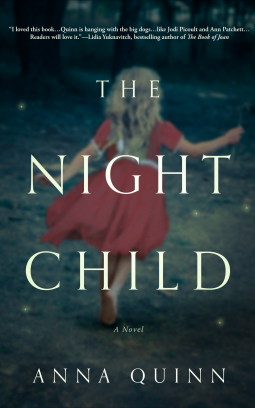
#BookReview ‘The Night Child’ by Anna Quinn #mystery

The Night Child by Anna Quinn caught me by surprise and took off racing from the first page so that I read half the book at my first sitting. But it is not a thriller, it was simply that I didn’t want to stop reading. I confess to selecting the book on my Kindle having forgotten the book blurb; perhaps I should do that more often. Anna QuinnNora Brown teaches teenagers about Shakespeare and poetry; so she knows about the imagination, imagery and dreams. Then one day at work, floating in front of her she sees the face of a blue-eyed girl, a face without a body. Quinn writes about Nora’s fear, panic, guilt, shame, with an insight into the private mind and this made me believe Nora from page one. Seeking answers, she talks to a psychiatrist and so starts an unravelling of Nora’s past, a past buried so deep she had no idea of its existence. As the revelations pick up pace, she must deal with a damaged teenager at school, decide whether to confront her unfaithful husband Paul, and reassure her six-year-old daughter Fiona. Stress layered on top of stress, which makes the child’s face appear more often. Soon she hears the accompanying voice too.
Why have Nora’s difficulties started now? Is there a connection with Fiona, who has just celebrated her sixth birthday? Is the trigger to do with Nora’s own sixth birthday? At the root of it all, perhaps not surprisingly, is the death of her mother and the subsequent abandonment by her father. The only constant in her life is her younger brother James. Raised by their grandfather in Ireland, Irish myths and Catholic saints are woven throughout Nora’s story. The present day action takes place between Thanksgiving in November 1996 and February 1997.
This is the sort of book which makes you think ‘please not that’ and turn the page to see if you have guessed correctly. The subject is not new but Quinn approaches it from a fresh angle which shows how the impact of childhood unhappiness can be repressed only to reappear with a vengeance decades later. I liked Nora. She is not a victim. At first she is afraid she is going ‘crazy’. Her primal instinct is to protect her own child, she constantly reassures Fiona that she loves her ‘beyond the stars and back’. But as the memories begin to return thick and fast in her sessions with psychiatrist David, things also unravel at home as Paul accuses her of being ‘a zombie’. David reminds her that she is in control but to ‘be careful not to scare yourself’. Where will the memories lead her and will she be able to cope?
I really enjoyed this book. It came as a bolt out of the blue after having read a series of historical novels. It is a powerful and sensitive portrayal of emotional damage and a person’s capacity to face it and recover. This is a debut, but I would never have guessed, it is written with a steady hand and full heart. The juxtaposition of Quinn’s beautiful prose, and her subject matter, is startling.
CLICK HERE TO READ MORE ABOUT THIS BOOK

If you like this, try:-
‘The Hoarder’ by Jess Kidd
‘The Crows of Beara’ by Julie Christine Johnson
‘Something to Hide’ by Deborah Moggach

And if you’d like to tweet a link to THIS post, here’s my suggested tweet:
#BookReview THE NIGHT CHILD by Anna Quinn https://wp.me/p5gEM4-36G via @SandraDanby

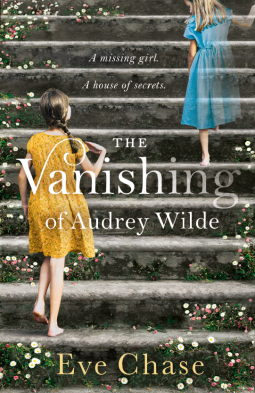
#BookReview ‘The Vanishing of Audrey Wilde’ by Eve Chase #mystery

A tale of sisters, secrets and the teenage years of confusion and temptations on the brink of adulthood. The Vanishing of Audrey Wilde by Eve Chase is about two groups of sisters, unrelated, who live decades apart in the Cotswold house of Applecote Manor. Overhanging everything is the mysterious disappearance of a twelve-year-old girl, Audrey Wilde, from the same house in the Fifties. Eve ChaseJessie and Will move to Applecote Manor, a rundown doer-upper, with their toddler Romy and Will’s teenage daughter Bella. Jessie is seeking a country life, Will hopes to step back from his logistics business. Almost as soon as they arrive, things change. Will’s business partner leaves and causes the sale of the company so, while he negotiates this, Jessie is left in the run-down house with the two girls. Romy fearlessly explores the potentially dangerous land, including river, pool, woods and well. Bella sullenly resents Jessie for not being her own mother, who was killed in a road accident. And then they learn about the disappearance of Audrey Wilde.
Is there something intrinsically wrong with the house and the land surrounding it? Why are the neighbours shunning Jessie and her two daughters? Who is the woman with the two black dogs who often stops and stares at the house? Why don’t local labourers want to work there? There are lots of things going on in this book, almost too many.
The second story strand focuses on four cousins of Audrey who, years after her disappearance, spend the summer of 1959 at Applecote Manor with their still grieving aunt and uncle. The girls, who are knitted together as a tight unit when they arrive, are teased apart by the arrival of two local boys, Harry and Tom. As the flirting and laden glances become more meaningful, the story darkens and some of the truth is revealed.
I enjoyed this book despite the occasionally dense plotting. There are many twists and turns, some of which could have been stripped out to give air to the central mystery. I particularly enjoyed the 1959 section and the inter-action of the four sisters, shadowed at every step by their memories of Audrey. The message: if you don’t face up to tragedy when it happens, it can reverberate through the years and never dies.

Click the title below to read my reviews of two other novels by Eve Chase:-
THE BIRDCAGE
THE GLASS HOUSE

If you like this, try:-
‘Freya’ by Anthony Quinn
‘Shelter’ by Sarah Franklin
‘The Distant Hours’ by Kate Morton

And if you’d like to tweet a link to THIS post, here’s my suggested tweet:
#BookReview THE VANISHING OF AUDREY WILDE by Eve Chase http://wp.me/p5gEM4-2T9 via @SandraDanby

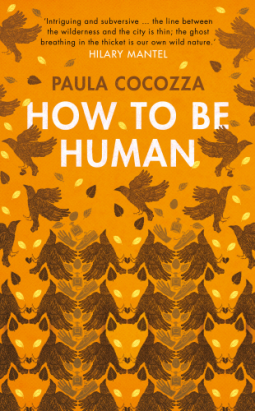
#BookReview ‘How to be Human’ by @CocozzaPaula #mystery #suspense

Paula Cocozza has written a strange but compelling novel about relationships. In How to Be Human, she questions where the lines lie between sanity and obsession, love and infatuation, delusion and self-awareness. Beneath the surface of our intellect, sophistication and technology, we are still animals. Paula CocozzaMary lives alone in a house in East London which backs onto woods, land which other neighbours complain is a unpalatable wilderness of weeds, rubbish and foxes. To Mary, it is the countryside. One day she sees a fox in her garden and believes he has visited her, that the gifts he leaves her are his way of communicating with her. She interprets his movements and snuffles as communication to her, and so validates her belief he understands her as no-one else does. As her relationship with the fox grows, her interactions with other people – her ex-boyfriend Mark, her neighbours Eric and Michelle, her mother, her boss – begin to disintegrate. At the beginning she has some semblance that her friendship with the fox is not usual but she persuades herself that animal specialists do talk to animals so she is not alone in doing this. It is other people who do not understand him. She experiments with different names for the fox – Red, Sunset – but finally abandons this attempt to humanize him.
This is a strange novel, part-psychological thriller, part-study of how wild and domesticated live side-by-side, part-portrayal of emotional disturbance [Mary’s breakdown and Michelle’s post-natal depression]. It is a portrayal of Mary’s two relationships, both controlling, both involving elements of stalking, both where one partner overwhelms the other with claustrophobic caring. Except one relationship is between a man and a woman, the other between a woman and a fox. Events are told mostly from Mary’s point of view and partly from the fox’s, though I found the latter unsatisfactory, stilted and romanticized. Significantly, the fox’s viewpoint disappears towards the end. Some passages of description were too long for me, too indulgent of Mary’s inner world, pushing the boundaries of her madness into psychotic episodes, pushing the boundaries of veracity. It is a strange, unsettling novel, like nothing else I have read. The slow descent of Mary into her fox world is at first believable while being weird but gets stranger as the story progresses. The story did take a while to get going, I almost abandoned it twice. It is a long time before the first line – ‘There was a baby on the back step’ – is explained, so long that its significance is muted and not what I first expected it to be.

If you like this, try:-
‘The Bear’ by Claire Cameron
‘The Ship’ by Antonia Honeywell
‘Pretty Is’ by Maggie Mitchell

And if you’d like to tweet a link to THIS post, here’s my suggested tweet:
#BookReview HOW TO BE HUMAN by @CocozzaPaula http://wp.me/p5gEM4-2HM via @SandraDanby