Tag Archives: mystery

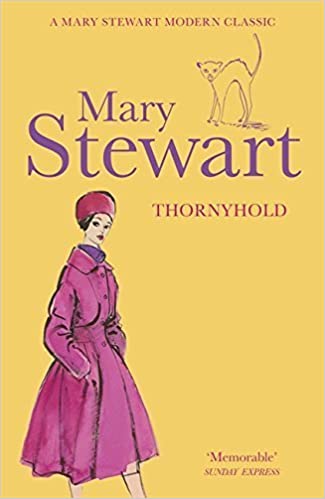
#BookReview ‘Thornyhold’ by Mary Stewart #romance #mystery

Browsing at the library I came upon a Mary Stewart novel I hadn’t heard of. Thornyhold. Of course, I couldn’t resist picking it up and putting it on top of my To-Read pile. It’s a small novel, only 212 pages and I read it in two sittings. Published in 1988, Thornyhold is one of Stewart’s last – her first was Madam, Will You Talk? in 1955 – and this is very different from the romantic suspense stories for which she is known and loved. Mary Stewart Gilly Ramsey inherits Thornyhold, a remote cottage, from her mysterious godmother Geillis. Now alone after the recent death of her father, Gilly plans to start a new life at Thornyhold. As she explores the cottage – its mysterious attic which doubles as a pigeon loft, a still room for drying herbs and making herbal cures – she learns more about her benefactor. There are more questions than answers. As a child, Gilly had always found Geillis enigmatic; she appeared when Gilly seemed to need her, one time producing a crystal ball from her bag. Now, as she meets her new neighbours, Gilly learns the history of the house and her godmother’s reputation as a herbal healer. But was she more, a witch or wise woman? Although odd dreams, a barking dog and strange messages sent by carrier pigeon, unsettle her, Gilly has an inner belief that she belongs at Thornyhold. Nothing will make her leave.
Having recently a read a lot of contemporary novels with dense repetitive emotional description and complicated plots, reading Thornyhold felt like drinking a tall glass of water when desperately thirsty. Such a wonderful turn of phrase, clever and thoughtful, but accurate and never over-done. Gilly meets a neighbour who she describes as having smooth rosy cheeks and ‘the wrong red too thick on a small mouth,’ and I know exactly what she means.
Beautifully written, not a word out of place, not a character too many. Delightful. An instant favourite.

Click the title to read my reviews of other Mary Stewart novels:-
MY BROTHER MICHAEL
THE IVY TREE
THE GABRIEL HOUNDS
THIS ROUGH MAGIC
TOUCH NOT THE CAT

If you like this, try these:-
The Diabolical Bones’ by Bella Ellis
Ferney’ by James Long
The Good People’ by Hannah Kent

And if you’d like to tweet a link to THIS post, here’s my suggested tweet:
#BookReview THORNYHOLD by Mary Stewart https://wp.me/p5gEM4-5Rn via @SandraDanby

#BookReview ‘The Birdcage’ by Eve Chase #mystery

Three half-sisters, an artist father, a crumbling house on a cliff in Cornwall and a mystery event in their past which no-one discusses. The Birdcage by Eve Chase is about fractured families, the unity and division of a shared secret and the need to acknowledge the past in order to face the future. Eve ChaseTold in two timelines – 2019 and 1999 – the story unfolds slowly and takes a while to settle down. The story of the mystery is a long time coming. Three half-sisters – Lauren, Flora, Kat – are summoned to their father’s summer home in Cornwall. Artist Charlie Finch has a chequered history with women, demonstrated by assorted female nude sketches his daughters find in his studio. Charlie is cagey about the reason for summoning them to Rock Point; is he ill, dying, retiring, moving house? As well as trying to work out what’s going on with their father, the three sisters must also unravel their own demons. Lauren is mourning the death of her mother Dixie. Flora, accompanied by two-year old son Raff, struggles beneath the suffocating control of her husband. Kat’s relationship has broken up and her business is in trouble. Add in Charlie’s art studio assistant Angie, former cleaning lady Viv and a mysterious stranger who walks a black dog on the nearby cliffs, and there’s a lot going on.
Everything hangs on an incident twenty years earlier. In 1999, the three teenage sisters are gathered at their grandparents’ house Rock Point for summer with their father who is painting in his studio. The sisters live with their mothers and see each other rarely. It is the summer of the total eclipse of the sun on August 11, a true event. Chase makes much of the strange atmosphere that day, something in the air, the sense that something was going to happen. The story takes a while to get to the secret which is at the root of the constant sibling sniping and jealousy, but this is a journey the sisters personally must travel in order to understand how it made them into the complex adults of 2019.
By the end of the book I still wasn’t one hundred per cent clear which mother belonged to which daughter. The timeline jumps around and many peripheral characters are mentioned lightly and either never or infrequently appear at Rock Point. The final section, after the big reveal, takes a long time to wrap up. Curiously, the Cornish location is incidental. Rock Point, which could be situated on an isolated cliff anywhere, is the strong point. With its idiosyncratic furnishings, aviary of birds, creaks and rumbles, what secrets does this house have to tell?
An atmospheric read – weather plays a big part plus anonymous notes, a dark stranger, talking parrot and slashed car tyre – and the 1999 eclipse at its heart.

Click the title below to read my reviews of two other novels by Eve Chase:-
THE GLASS HOUSE
THE VANISHING OF AUDREY WILDE

If you like this, try:-
Birdcage Walk’ by Helen Dunmore
My Husband the Stranger’ by Rebecca Done
Whistle in the Dark’ by Emma Healey

And if you’d like to tweet a link to THIS post, here’s my suggested tweet:
#BookReview THE BIRDCAGE by Eve Chase https://wp.me/p5gEM4-5Re via @SandraDanby

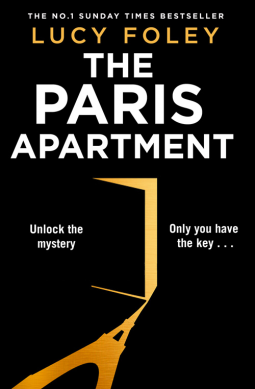
#BookReview ‘The Paris Apartment’ by Lucy Foley #thriller

I read The Paris Apartment, the latest thriller by Lucy Foley, in two sittings. It kept me guessing nearly to the end, with some unexpected twists along the way. Lucy FoleyWhen penniless Jess arrives in Paris to spend some time with her half-brother, he has disappeared. What follows is a page-turning story of the apartment block where Ben has been living, its inhabitants and the confusing discoveries Jess makes as she tries to find him. It makes her question if she really knows her brother and why he has been so distant from her. This is a book about secrets, small ones, shameful ones, old and new secrets. And one huge one. Jess, at times vulnerable at times recklessly brave, attempts to be pleasant to Ben’s neighbours in this surprisingly elegant old Parisian apartment block. The snobbish couple in the penthouse, the two young women sharing on the fourth floor, a thug and his wife, the silent concierge plus Ben’s old university friend, Nick. The viewpoint swaps quickly between Jess and the other residents as Foley pushes the action quickly from event to event. The chapters are short and snappy and this makes it easy to read just one more, and one more. As Jess struggles to make a connection with these neighbours, she doesn’t know who to trust; and neither did I. I didn’t like any of them and Jess herself is difficult to connect with. But the mystery led me on.
The apartment block offers a kind of ‘closed room’ setting, well-used in crime stories, and it does its job well. It is grand yet mysterious with hidden doors and stairs, spooky attic and cellar, a cranky old lift and a C-shaped construction around a courtyard allowing residents to observe each other. I had a clear picture of it in my head.
Where is Ben? Did someone see him leave? Why hasn’t he answered his phone? And why is he living in Paris anyway? Nick offered him the flatshare but the two men haven’t been in touch for years. Given we don’t see Ben’s viewpoint except a brief Prologue, some things are hidden until the very end. The lines between current time and flashbacks at times seemed blurred and I got a little irritated with Jess’s naivety. A couple of scenarios I thought might be possible turned out to be wrong, but it was fun guessing.
Lucy Foley uses glamorous Paris alongside the sinister apartment building, riots on the streets, juxtaposing Parisian elegance with the seedier side streets and alleys, clubs and bars. As Jess considers each of her neighbours, trying to work out who knows what, shuffling up and down stairs trying to eavesdrop, she inevitably lands in trouble.
A satisfying fast read, helped by short chapters in different viewpoints which gradually construct the mystery like layers of filo pastry.

Click the title to read my reviews of two other novels by Lucy Foley:-
THE GUEST LIST
THE INVITATION

If you like this, try:-
These Dividing Walls’ by Fran Cooper
Smash All the Windows’ by Jane Davis
The Quarry’ by Iain Banks

And if you’d like to tweet a link to THIS post, here’s my suggested tweet:
#BookReview THE PARIS APARTMENT by Lucy Foley https://wp.me/p5gEM4-5Pk via @SandraDanby

#BookReview ‘The Missing Sister’ by Lucinda Riley #romance

Well, what I thought would be the final book, the seventh in the wonderful Seven Sisters series by Lucinda Riley, turns out not to be the last after all. The Missing Sister will be followed later this year by Atlas: The Story of Pa Salt. So, I finished this latest book with many questions remaining. This is an example of a family saga that you want to run and run. The publication of the eighth book sadly follows Lucinda Riley’s death in 2021, so the forthcoming eighth book will be based on Lucinda’s draft and completed by her son Harry Whittaker. Lucinda RileyThe seven sisters of the myth were Maia, Alcyone, Asterope, Celaeno, Taygete, Electra, and Merope. Their parents were Atlas, a Titan commanded by the god Zeus to hold up the earth, and Pleione, the mythical protectress of sailors. The Missing Sister is the story of Merope – Mary, or Merry, as she is called in the book – though it’s unclear whether she is lost, or simply ‘missing’ from the family because Pa Salt didn’t adopt her. The confusion over the first name adds to the twists in a book packed with twists and turns when the missing D’Aplièse sister is identified as either a mother and daughter, both called Mary. The pursuit begins with the announcement by the family lawyer that the missing sister is in New Zealand. Mary can be identified by the distinctive diamond and emerald ring she wears.
The story is told in various timelines. In the present day we hear the voices of recently-widowed Merry McDougal who leaves New Zealand on a Grand Tour around the world, of her daughter Mary-Kate left at home to run the prize-winning winery, and of the six D’Aplièse sisters who follow the clues. Plus two historical timelines – of Nuala Murphy, a farmer’s daughter in the West of Ireland in July 1920, a critical time in Irish independence; and of Mary O’Reilly starting in October 1955 in the Irish valley of Argideen.
Riley, herself Northern Irish, tells of a chapter in Irish history with a fascinating insight into the impact on a small rural community, the bravery, secrecy, divisions, the betrayals and deprivations. New to me was the ‘Cumann na mBan’, the Irish women’s volunteer movement, and its role not simply in feeding and clothing the fighting men but as couriers delivering not only messages but weapons. An inspiration to the Irish is Michael Collins, from Clonakilty in West Cork, close to where Riley sets her story. ‘The Big Fellow’ rose to be director of intelligence for the Irish Republican Army. Another real person appearing in the story is local Clogagh fighter Charlie Hurley.
My mind swirled with all the options. First of all, is Pa Salt really dead? If he’s alive, why lie to everyone and put them through so much grief? The concept of the adopted sisters raises multiple questions: who is this man, Pa Salt, who collected babies from around the world to care for them. And why does the story of Merope feel different from the others? So many new hints are dropped in this seventh novel, things that don’t add up. Most certainly this is a book to read having read the rest of the series – read as a standalone it will only disappoint.
I finished it with mixed feelings. It’s a long book [the hardcover is 816 pages] with scenes included that might have been shortened or deleted. I found the sisters’ determined pursuit of Mary at best eager but often selfish and inconsiderate. But the Irish sections are wonderful. It’s clear these were close to Riley’s heart which adds emotional depth and understanding. If you enjoy dual-timeline historical fiction combined with the globetrotting glamour of Penny Vincenzi, please pick up The Seven Sisters and start reading this series.

Read my reviews of some of the other novels in Lucinda Riley’s ‘Seven Sisters’ series:-
THE SEVEN SISTERS
THE STORM SISTER
THE SHADOW SISTER
THE PEARL SISTER
THE MOON SISTER
THE SUN SISTER

… plus my reviews of these standalone novels by Lucinda Riley:-
THE LOVE LETTER
THE GIRL ON THE CLIFF
THE BUTTERFLY ROOM

If you like this, try:-
The House on the Shore’ by Victoria Howard
Brooklyn’ by Colm Tóibín 
On a Night Like This’ by Barbara Freethy

And if you’d like to tweet a link to THIS post, here’s my suggested tweet:
#BookReview THE MISSING SISTER by Lucinda Riley https://wp.me/p5gEM4-5qu via @SandraDanby

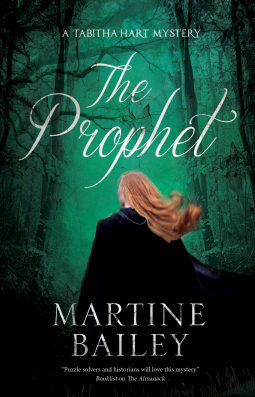
#BookReview ‘The Prophet’ by @MartineBailey #historical #mystery

When a dead body is found at the foot of an ancient oak, a tense plot begins. The Prophet is the second Martine Bailey novel to feature the characters of Tabitha and Nat De Vallory, first seen in The Almanack. The oak tree in question is not just any tree; it is the Mondren Oak, and nearby an evangelist preacher and his community have made an encampment in ancient woodland belonging to Nat’s father. Martine BaileyEighteenth-century England was a place of superstition and myth, of religious fervour and persecution. It was also a time of scientific study and enlightenment. The body of a young woman is found on May Day, 1753. The date is significant and the novel’s action winds up slowly in pace and tension towards Midsummer’s Day, coincidentally the due date for the arrival of Tabitha and Nat’s first baby. Baptist Gunn and his growing number of followers believe a new saviour will be born close to the oak tree on Midsummer’s Day. Gunn, a ‘sleeping prophet’, is gathering his congregation, and money, in preparation to sail for a new life in America.
Tabitha is a likeable protagonist, happy to be married and living in the place where she grew up, but challenged by the new monied life she leads. Her colourful background comes in handy when she determines to seek the woman’s murderer. Heavily pregnant, she makes an eye-catching amateur detective. Advised by her doctor to avoid shock, surprise, and the night-time attentions of her husband, Tabitha feels distanced from Nat. She distrusts the claims of Baptist Gunn and fears he is a fraudster. Meanwhile Nat seeks the preacher’s company, keen to run a scientific experiment studying the veracity of prophecies. Eager to support his ailing father and needing to establish his authority in the community as heir to the estate, Nat takes risks that Tabitha fears endanger their lives.
Are our lives governed by fate and can this be forseen by a privileged few? Why do some people trustingly accept claims and predictions without examination, while others demand proof and evidence? Bailey’s novel is a historical reminder to the 21st century not to believe everything you hear without an analysis of motivation, fact and context.
The Prophet is an unusual historical mystery rooted in an ancient Cheshire woodland. Bailey has created an authentic rural community which lightly bears the depth of her historical research. Watch out for the plot surprises, the secrets and lies.

And here are my reviews of other novels by Martine Bailey:-
THE ALMANACK #1 TABITHAHART
AN APPETITE FOR VIOLETS
THE PENNY HEART

If you like this, try this:-
The Wicked Cometh’ by Laura Carlin
The Confessions of Frannie Langton’ by Sara Collins
The Wonder’ by Emma Donoghue

And if you’d like to tweet a link to THIS post, here’s my suggested tweet:
#BookReview THE PROPHET by @MartineBailey https://wp.me/p5gEM4-5er via @SandraDanby

#BookReview ‘The Glass House’ by Eve Chase #historical #mystery

This story takes place in a forest and I could smell the humus rich soil, see the ferns, hear the rustlings of small mammals and imagine the blending of shadows and sunlight. In The Glass House by Eve Chase, the mysterious happenings in a forest have ramifications across the decades. Shame, deceit, secrets and love are bound-up together in a group of people whose lives are coloured forever by what happened in the Forest of Dean in 1971. Eve ChaseWhen nanny Big Rita drives her boss’s wife, Jeannie Harrington and Jeannie’s two children Hera and Freddy to their country house in the West of England, they enter a different world. Leaving behind Jeannie’s husband Walter at their sugar-white stucco house in Primrose Hill, and her own unhappy memories, Rita is cautious about the mysterious forest with its rustling noises and the feeling of being watched. She spends every hour with the children while Jeannie, recovering after the loss of a baby, spends her time in bed. And then Hera finds a baby girl abandoned in the woods. This is the catalyst for a number of things happening at once, things that upset the status quo and challenge Rita’s place in the Harrington family and what she wants for her own life. Most disturbing to her equilibrium is local woodsman Robbie Rigby.
The second timeline is set now and is told by Sylvie who has just left her husband and moved into a flat beside a canal in Kensal Town. Sylvie is taking time to find her feet away from husband Steve and teenage daughter Annie who is staying with her grandmother beside the sea in Devon. But two incidents quickly challenge Sylvie’s perceptions about what actually matters to her.
And there is a delicious hint in the short Prologue – a report in a Gloucestershire newspaper in 1971 about a body found in the forest near Foxcote Manor.
I found the structure slightly messy with varying pace which at times was rather slow. I was longing for some connections to be made so the story could move on. Looking back at my review of Chase’s The Vanishing of Audrey Wilde, I made a similar comment. The last scenes seemed to tie up loose ends rather too quickly and neatly in comparison with the earlier speed of the story, but that’s just my personal preference. Eve Chase writes a great sense of place; Foxcote Manor seems a real house set in a real forest.
As Robbie explains to Rita, ‘when a giant tree crashes down in a forest, light and air rush into the cleared space, dormant seeds flower, and new life scrambles up, taking its chance.’ That’s basically what happens to the people in The Glass House.
Incidentally, the glass house mentioned in the title, and featured on the lovely cover, refers to a terrarium. Rita owns one in 1971 and her care of the plants living in it – she gives them names – mirrors her care of the two children, but also symbolises the fragility and transparency of the lives of the Harrington family at Foxcote Manor.

Read my reviews of these other novels by Eve Chase:-
THE BIRDCAGE
THE VANISHING OF AUDREY WILDE

If you like this, try:-
Good Me Bad Me’ by Ali Land
The Doll Funeral’ by Kate Hamer
The Invitation’ by Lucy Foley

And if you’d like to tweet a link to THIS post, here’s my suggested tweet:
#BookReview THE GLASS HOUSE by Eve Chase https://wp.me/p5gEM4-4KW via @SandraDanby

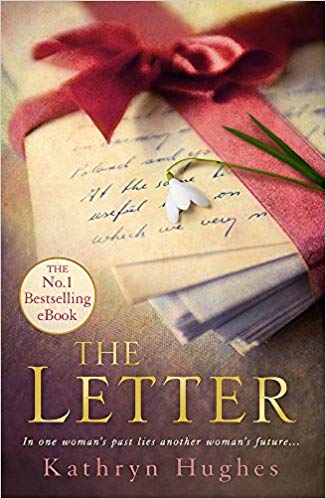
#BookReview ‘The Letter’ by Kathryn Hughes #mystery #adoption

The idea for The Letter by Kathryn Hughes is enticing; the lives of two women, forty years apart, linked by a letter found in the pocket of an overcoat at a charity shop. What follows is a dual storyline – about an abused wife and her road to freedom, and a young woman in love for the first time as war breaks out. Kathryn HughesThis is a story about two couples. In 1974, Tina Craig works in an office during the week and on Saturdays she volunteers at a charity shop to get out of the house, away from her abusive husband Rick. Staying, though she knows she must leave, Tina listens to the advice of friends but continues to excuse and forgive Rick’s behaviour. Until a mysterious letter found in the pocket of coat sets her off on the trail of the people involved. The letter is sealed and stamped but never posted. Why. When she opens and reads the letter she starts to think about Billy, who wrote the letter in 1939 as war broke out, and about Chrissie, the woman who never received his letter.
In the summer of 1939, Chrissie and Billy fall in love in the last days of peace. As Billy is called up, Chrissie faces the cultural judgements of the day combined with her bullying father.
Tina’s pursuit for the truth of the letter leads her across Manchester and to Ireland. Hughes tackles heart breaking subjects – forced adoption, Irish nunneries, bullying parents, domestic abuse – perhaps too many. The ending is predictable via a number of coincidences, facts fall into place and old hurts forgotten. Despite its frustrations, I enjoyed this story though I did long for more showing and less telling.
If you like your endings neatly tied up, you will enjoy this. A good read for holidays.

If you like this, try:-
‘The House on the Shore’ by Victoria Howard
‘The House Across the Street’ by Lesley Pearse
‘Touch Not The Cat’ by Mary Stewart

And if you’d like to tweet a link to THIS post, here’s my suggested tweet:
#BookReview THE LETTER by Kathryn Hughes https://wp.me/p5gEM4-4CH via @SandraDanby

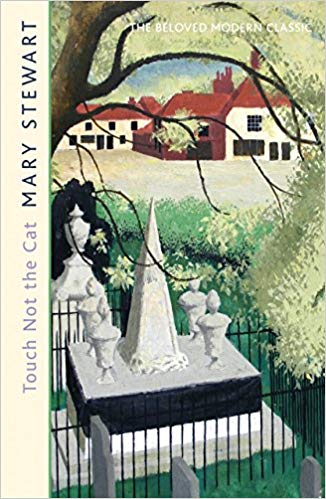
#BookReview ‘Touch Not The Cat’ by Mary Stewart #romance #suspense

Published in 1976 – around the time I was borrowing my mother’s copies of Mary Stewart’s The Moon-Spinners and My Brother Michael and reading them voraciously – I had never read Touch Not the Cat until now. Like all Stewart’s novels, there is adventure and romance with a slice of the supernatural. I can’t think of any other novels like them. The Ashley family in Touch Not the Cat own Ashley Court and have an unusual gift running through the generations: they are telepathic with each other. Mary Stewart Narrator Bryony is working at a hotel in Madeira when she receives a telepathic message from her anonymous ‘lover’ to go to her father who is staying at a clinic in Germany. When Bryony arrives her father is dead, killed in a hit-and-run road accident. His last words to a friend, who wrote them down verbatim, are a warning to Bryony. ‘Tell Bryony. The cat, it’s in the cat on the pavement. The map. The letter. In the brook. Tell Bryony. My little Bryony to be careful. Danger.’ She returns home to Ashley Court in England to look for the answers but finds surprises and danger. I found the beginning an odd introduction to the Ashley family, the house, the history, coupled with a diary excerpt at the end of each chapter, dating from the nineteenth century. The significance of this becomes clear later, but for a long while I read it without getting a lot from it. There are a lot of mysteries, lies and contradictions to unravel. Even Bryony is not certain of the identity of her telepathic lover, though she knows it must be a blood relative so guesses it is one of her three cousins; twins Ellory and James, or their younger brother Francis. As Bryony unravels the meaning of her father’s warning, she realises the twins are not beyond committing murder in order to steal her inheritance. Could one of them be her telepathic lover?
The title of the novel is an old Scottish motto which Stewart gives to the fictional Ashley family. The cat is relevant but I didn’t guess the significance until the very end. A well-written novel; old-fashioned in that it starts slowly and builds gradually, but deserves patience. It includes gothic features such as churchyard scenes, shadowy figures, storm and flooding; which Bryony mocks, ‘Robed nuns and ancient houses and secret passages, the paraphernalia that Jane Austen had laughed at in Northanger Abbey.’ An unusual romantic mystery that makes me want to re-read all Stewart’s books, including the Arthurian series.
CLICK HERE TO READ MORE ABOUT THIS BOOK AT AMAZON

Click the title to read my reviews of other Mary Stewart novels:-
MY BROTHER MICHAEL
THE IVY TREE
THE GABRIEL HOUNDS
THIS ROUGH MAGIC
THORNYHOLD

If you like this, try these:-
The Vanishing of Audrey Wilde’ by Eve Chase
The Wicked Cometh’ by Laura Carlin
The Last of Us’ by Rob Ewing

And if you’d like to tweet a link to THIS post, here’s my suggested tweet:
#BookReview TOUCH NOT THE CAT by Mary Stewart https://wp.me/p5gEM4-3Vc via @SandraDanby

#Bookreview ‘File under Fear’ by Geraldine Wall #genealogy #mystery

Second in the series about probate researcher turned genealogy detective Anna Ames, File Under Fear by Geraldine Wall takes off running from where the previous book left off. This is a well-written, page-turning series that combines family history, crime, family and secrets. But for me, the touchstone that makes it special is the sub-plot of Anna’s home life and her husband Harry’s dementia. If you haven’t read book one in the series, I suggest you start there to see the full emotional depth. Geraldine Wall Anna’s new contract sounds boring: to write a business report on Draycotts, the company which makes Drakes lurid orange and green drink, analysing how the family members coordinate together to run a successful business. But there is a secret element to her contract, to locate a missing person for CEO Gerald Draycott. This case sees Anna physically and emotionally intimidated and encompasses bullying, illegal smuggling and rape. An intense story with red herrings and wrong assumptions made about family members, the actual crimes being committed and in which Anna questions who to trust. Backing her up are her very likeable family and the multi-talented more-than-workmate Steve. Some of the resolutions fall into place a little conveniently at the fast-paced ending, but this is a satisfying tale.
What makes this series so different, and adds the emotional depth in spades, is Harry’s illness and how the family and friends cope. Sometimes they struggle but ultimately they manage the reality of their life with compassion, humour and love. This series is maturing nicely.

Here’s my review of the first in this series by Geraldine Wall:-
FILE UNDER FAMILY #1ANNAAMES

If you like this, try:-
Run’ by Ann Patchett
Shadow Baby’ by Margaret Forster
Deadly Descent’ by Charlotte Hinger

And if you’d like to tweet a link to THIS post, here’s my suggested tweet:
#BookReview FILE UNDER FEAR by Geraldine Wall https://wp.me/p5gEM4-3Ue via @SandraDanby

#BookReview ‘The Girl on the Cliff’ by Lucinda Riley #mystery #romance

This is a tale of complicated choices, tragedy and mental instability combined with all the bad luck life can throw at you. Told simply at the beginning, the emotional intensity of The Girl on the Cliff by Lucinda Riley tightens and tightens like an old screw turned so hard it can’t be loosened. Until finally it gives way. Lucinda RileyVisiting her family in Ireland, Grania Ryan is running from pain. She has just miscarried and is upset with her boyfriend, Matt, for an unexplained reason. At home she sees a young girl walking on the cliffs and is curious about her. Aurora Devonshire is eight years old, she lives in the big house beside the sea, raised by an accumulation of governesses, nannies and household staff during the absence of her father Alexander. Grania is transfixed by the child, but her mother Kathleen is worried by any contact made with ‘that family.’ The Girl of the Cliff is the story of three generations of women in the two families, their loves, losses, sacrifices, cruelties and grudges. And throughout it all runs the mystery of why Grania cannot return to New York to her grieving and confused boyfriend.
Does history repeat itself? Can bad luck be passed genetically from generation to generation? Are some people just unlucky? And are some families destined to be intertwined across the centuries? This story of the Ryan and the Lisle families includes troubled love, ballet, wealth, poverty and orphaned children. Will the worldly-wise Aurora figure out the connections? Riley keeps the secrets of her characters, revealing each titbit carefully so you want to read ‘just one more page.’

Read my reviews of the first seven novels in Lucinda Riley’s ‘Seven Sisters’ series:-
THE SEVEN SISTERS #1SEVENSISTERS
THE STORM SISTER #2SEVENSISTERS
THE SHADOW SISTER #3SEVENSISTERS
THE PEARL SISTER #4SEVENSISTERS
THE MOON SISTER #5SEVENSISTERS
THE SUN SISTER #6SEVENSISTERS
THE MISSING SISTER #7SEVENSISTERS

… plus my reviews of these standalone novels, also by Lucinda Riley:-
THE BUTTERFLY ROOM
THE LOVE LETTER

If you like this, try:-
‘Butterfly Barn’ by Karen Power
‘The Crows of Beara’ by Julie Christine Johnson
‘Please Release Me’ by Rhoda Baxter

And if you’d like to tweet a link to THIS post, here’s my suggested tweet:
#BookReview THE GIRL ON THE CLIFF by Lucinda Riley http://wp.me/p5gEM4-2P4 via @SandraDanby