Tag Archives: Rachel Hore

#BookReview ‘The Hidden Years’ by Rachel Hore @Rachelhore #WW2 #Sixties

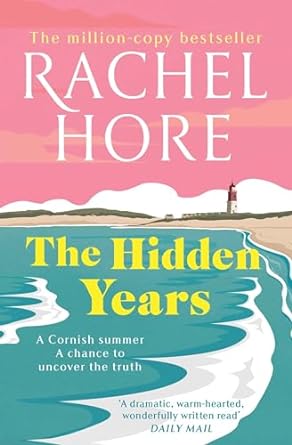
The Hidden Years by Rachel Hore is a dual-timeline story set in and around a Cornish country mansion, Silverwood, during World War Two and twenty years later. Events that occur in the Forties have long tentacles and, although the Sixties feels a free and liberated time, the after-effects of the war are very real. Rachel HoreWhen nineteen-year old Belle falls for a musician, she leaves university without sitting her last exam and travels with him to Cornwall to an artistic commune near Falmouth and the Helford Estuary. Despite feeling the odd one out at Silverwood, Belle cannot contemplate leaving because she has fallen in love with Gray. And then she stumbles on a number of coincidences which trigger questions about her own background. An unexplained conversation overheard, a photo of a strange woman holding a baby, a shabby box containing the belongings of a nurse.
In the wartime strand we meet Imogen Lockhart, on her way to Cornwall by train. Her role is as a responsible adult accompanying two young brothers travelling to their school which has been evacuated to a country house, Silverwood. Though intending to return home, Imogen finds herself remaining at St Mary’s School where the matron has been taken ill. In fact she stays in Cornwall, completes her nursing training and works in a hospital. The Hidden Years is about Belle and Imogen and the connection between them.
This is a story of mystery, romance and relationships, rather than a story of war. Despite the threat of bombing, I found it slow and repetitive in places and skipped paragraphs which summarised things I’d already read. I was underwhelmed rather than disappointed. At times I was exasperated with Belle and the 1966 strand and would have been happier if the novel concentrated on Imogen’s story. Much of the important action at the end of the book is reported, not shown happening in real time, and so I felt distant from the secret when it was finally revealed. Cornwall is the hero of this book, it really steps off the pages and becomes true. The descriptions of Silverwood, during the war and in the Sixties, make it seem a real house.
Rachel Hore is a favourite author for me and, despite thinking The Hidden Years could be so much better, there are still plenty of her books for me to read. So far, my favourite is A Beautiful Spy.

Click the title to read my reviews of other books by Rachel Hore:-
A BEAUTIFUL SPY
A WEEK IN PARIS
ONE MOONLIT NIGHT
THE LOVE CHILD

If you like this, try:-
‘The Secret Shore’ by Liz Fenwick
‘Another You’ by Jane Cable
After the Bombing’ by Clare Morrall

And if you’d like to tweet a link to THIS post, here’s my suggested tweet:
#BookReview THE HIDDEN YEARS by Rachel Hore @Rachelhore https://wp.me/p2ZHJe-7BP via @SandraDanby

COMING SOON… THE NEXT BOOK I REVIEW WILL BE:- Tim Pears

#BookReview ‘One Moonlit Night’ by Rachel Hore @Rachelhore #WW2

Life can turn on a sixpence and that’s what happens to Maddie and her two small daughters in the Blitz. One Moonlit Night by Rachel Hore doesn’t start with a glimpse of the main character’s ordinary life before the change happens. It starts with a shock… a family made homeless by a bomb. Rachel HoreAlone in the midst of chaos, her husband Philip has been missing for ten months since the British army’s retreat from Dunkirk, Maddie takes Sarah and Alice to Knyghton in Norfolk to stay with Philip’s elderly Aunt Gussie. Maddie is caught in limbo, unable to grieve for Philip, unable to make decisions, not accepting his probable death, while living in an isolated country house – where Philip spent his childhood – which is the focus of long-held rumour and superstition in the nearby village.
Trying to make a living as a book illustrator, Maddie is seldom without a pencil and paper. But when she draws the face of an unfamiliar young girl, enigmatic, mysterious, she doesn’t know where her inspiration came from. Instinctively she keeps her drawing secret, not wanting to upset the fragile atmosphere at Knyghton. A secret is being kept, by Aunt Gussie, Philip’s cousin Lyle who runs the Knyghton farm, by family retainers, the Fleggs, and Maddie is sure it surrounds this mysterious young woman.
Bookended by a Prologue and Epilogue both set in 1977, Hore tells the stories of Maddie and Philip during World War Two with a flashback to their meeting in 1934. Many of the book’s themes are established in this pre-war section. Wild animals, painted by Maddie, but shot by Philip; children raised while parents are absent; the sharing of some secrets and the keeping of others. It is a complex, emotional story as Maddie, who flees to Knyghton seeking sanctuary instead finds unexplained silences, whispers and rumours she fears are aimed at Philip. Meanwhile Philip, having survived a massacre of British troops by the German army, attempts to find a way home. Philip’s sections are tense, forlorn and at times hopeless, a vivid portrayal of soldiers fleeing through Occupied and Vichy France.
This is a slow-burning story which rewards the reader’s perseverance as tension in the final third picks up and Maddie finally finds some answers. It’s a book which rewards further reading as layers of information, missed on first reading, become significant.

Click the title to read my reviews of two other books by Rachel Hore:-
A BEAUTIFUL SPY
A WEEK IN PARIS
THE HIDDEN YEARS
THE LOVE CHILD

If you like this, try:-
‘The Book of Lies’ by Mary Horlock
The Tuscan Secret’ by Angela Petch
The Skylark’s Secret’ by Fiona Valpy

And if you’d like to tweet a link to THIS post, here’s my suggested tweet:
#BookReview ONE MOONLIT NIGHT by Rachel Hore @Rachelhore https://wp.me/p5gEM4-5PJ via @SandraDanby

#BookReview ‘A Beautiful Spy’ by Rachel Hore @Rachelhore #WW2 #spies

Rachel Hore is one of my favourite go-to authors when I want well-written, thoughtful escapism. Her latest is A Beautiful Spy, a pre-Second World War spy story based on a real case involving the infiltration of a communist spy cell. Rachel HoreAt a garden party in the summer of 1928, Minnie Gray is bored. She’s there with her mother who is trying to fix up her up with another young man, when she notices a striking young woman. When the enigmatic Miss Pyle asks if Minnie would consider working for the government, Minnie recognises a chance to escape her mother’s suffocating attention and her boring job at the Automobile Association.
Minnie meets Captain Max Knight, ‘M’, and is recruited as a member of British Intelligence’s M Section with the code name M/12. She moves to London, finds a flat and a part-time secretarial job. Her first task is to attend meetings of the local Friends of the Soviet Union group and volunteer to help. Her new life must be kept a secret from her Tory-supporting family and boyfriend, Raymond.
What follows is Minnie’s progressive immersion in the British Communist Party. Always a self-reliant person, Minnie begins to struggle with the secrecy. Feeling she belongs nowhere, living her life in disconnected bubbles of people who are unaware of each other, she seeks out new friends at a hockey club that she can be herself with. Minnie’s career as a spy has a up and down trajectory, most of the time nothing happens, and she feels she is failing her bosses. But all the time she is cementing her reputation as a reliable, trustworthy secretary and this pays off when she is asked to take secret money to communist supporters in India. Minnie meticulously keeps records, writes reports for M and tries to be nosy while seeming disinterested. As the tension increases and she feels watched, the danger she is risking becomes real and not a game.
Hore added her own imagination to the factual story of real-life spy Olga Gray who spied for Maxwell Knight of British Intelligence and whose testimony helped to convict a number of communists in 1938 for treachery. Using a true story as the foundation of a novel has its advantages and disadvantages. At times the story pauses, for exposition or perhaps because there were periods in the real life Gray’s story when not a lot happened, and this means the flow of tension can seem stop-start.
I really enjoyed A Beautiful Spy. It’s the sort of novel I wish I could find more often. It certainly means I’ll be reading the non-fiction books mentioned by Hore in her Author’s Note at the end.

Click the title to read my reviews of other books by Rachel Hore:-
A WEEK IN PARIS
ONE MOONLIT NIGHT
THE HIDDEN YEARS
THE LOVE CHILD

If you like this, try:-
After the Party’ by Cressida Connolly
Midnight in Europe’ by Alan Furst
The Ways of the World’ by Robert Goddard

And if you’d like to tweet a link to THIS post, here’s my suggested tweet:
#BookReview A BEAUTIFUL SPY by Rachel Hore @Rachelhore https://wp.me/p5gEM4-5lL via @SandraDanby

#BookReview ‘The Love Child’ by Rachel Hore @Rachelhore #historical #romance

The Love Child by Rachel Hore is not just an adoption story of birth mother and daughter, it is a story of women’s lives between the wars when shame and public expectation, not love, governed family decisions. Rachel HoreIn 1917 Alice Copeman, a 19-year old nurse, falls in love with a soldier home on leave. They expect to marry but he is killed. No one else knows of their relationship, it is wartime and everything happened so quickly. But Alice is pregnant.
Mourning for Jack, Alice is forced by her father and stepmother to give the child up for adoption. In the Essex seaside town of Farthingsea, Edith and Philip Burns long for their own child. When they adopt a baby girl Irene, they expect their family to be happily complete. But Irene feels different from her parents and grows frustrated at the lies told about her birth; in particular she struggles to connect with her mother Edith and often feels rejected. At school she is bullied. At home she feels second rate to her younger brother, conceived by Edith and Philip after they adopted Irene. Things improve for Irene when she makes friends with a boy from the disreputable artistic part of town; Tom lives with his single mother and he too is different. Both Tom and his mother are positive influences on Irene.
This is a story told in two strands – Alice and Irene – first as each makes her own way in the world, and then as their paths come closer together. Alice’s story – qualifying as a doctor and working as a GP – is fascinating and a glimpse of a time when female doctors were starting to appear. Irene is also independent, leaving Farthingsea to work in London at an art gallery. In these inter-war years it was still difficult for independent women to make their own way. Old-fashioned standards and expectations prove a challenge for both Alice and for Irene and often at the hands of other women.
A little slow to start, not helped as the storyline jumps around from year to year, it settled down halfway through. At times I confused Irene’s adoptive mother Edith with Alice’s stepmother Gwen, both are sharp-edged women whose words can wound.
This is a novel of love, separation, shame and mother and daughter dynamics; it ultimately shows how the road to love can take many diversions and twists along the way. Both Alice and Irene are rather self-contained and defensive, afraid of being hurt, but they are also capable of being loved if they allow their self-protection to drop. This is a reflective and sensitive portrayal of the adoption dilemma when the hunger of one individual for the truth may cause pain to others.
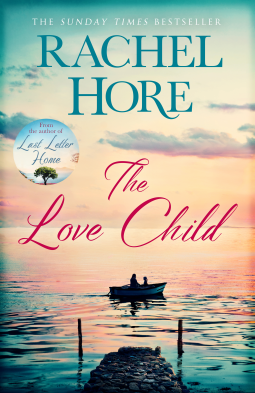
A note about the cover; I could see no link between the story and a rowing boat at sunset.

Click the title to read my reviews of two other books by Rachel Hore:-
A BEAUTIFUL SPY
A WEEK IN PARIS
ONE MOONLIT NIGHT
THE HIDDEN YEARS

If you like this, try:-
‘The Collaborator’s Daughter’ by Eva Glyn
‘The Last Day’ by Claire Dyer
The House on the Shore’ by Victoria Howard 

And if you’d like to tweet a link to THIS post, here’s my suggested tweet:
#BookReview THE LOVE CHILD by Rachel Hore @Rachelhore https://wp.me/p5gEM4-4xa via @SandraDanby

#BookReview ‘A Week in Paris’ by Rachel Hore @Rachelhore #mystery #WW2

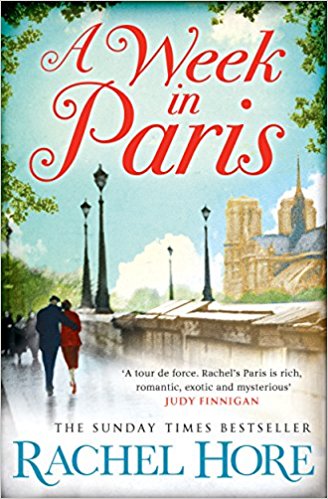
I really enjoyed this book but can’t help feeling the title did it no favours. A Week in Paris by Rachel Hore is a story of hidden secrets, wartime Paris, resistance, collaboration, bravery and music. Because of the title I was expecting something more cosy and romantic; although there is a romantic strand to the story, this book is worth reading for so much more. Rachel HoreThe week in Paris in question happens in 1956 when teenager Fay goes on a school trip to Paris. Two significant things happen to her there. She meets a fanciable boy, Adam, and has a strange fainting episode triggered by the ringing of the bells at Notre Dame. Back home, she questions her mother Kitty who denies that Fay has ever been to Paris. But Fay cannot shake off the feelings of familiarity.
In 1961 Fay, now a professional violinist, has the chance to go to Paris for a series of performances. However her mother, always emotionally vulnerable, has taken an accidental overdose and is in St Edda’s Hospital. Before she leaves for Paris, Fay visits her mother who tells her to look at the bottom of a locked trunk at home. In it, Fay finds a small canvas rucksack. Attached to it is a label. On one side is written ‘Fay Knox, Southampton’, on the reverse, ‘Convent Ste-Cécile, Paris.’
‘She sat staring at the label for some time, while the faintest glimmer of a memory rose in her mind. Sunshine falling on flagstones, the blue robes of a statuette, and… but no, it was gone. It was as though a door had opened, just a chink, in her mind, before it shut again.’
The story is told in two strands, World War Two and afterwards, from the viewpoints of Kitty and Fay. Gradually the mysteries are unveiled. Fay has the unsettling feeling that her mother is keeping secrets, while Kitty knows she must some day explain everything to her daughter. For a long time, the reader keeps guessing.
In Paris, Fay sets off to find the convent mentioned on the label. There she slowly unravels the truth. How, despite denying to Fay that she has ever been to France, Kitty went to Paris in 1937 to study piano at the Conservatoire. What follows is an unveiling of a secret life during the Second World War, a time when Fay was a toddler, a time her mother told her they lived in a pretty cottage in Richmond. The real story of Kitty’s pre-war life in Paris, her meeting and love affair with Fay’s father Eugene, and what happened next, is fascinating. Again, Fay experiences feelings of déjà vu but this time she is old enough to seek the answers. She never imagined the truth she discovers.
I found myself picking up the book at every opportunity, just to read another couple of pages. It is a fascinating study of wartime secrets being kept from the next generation, not in an attempt to deny but as a way of pushing away the pain, grief and shame of what happened in an occupied city.

Click the title to read my reviews of other books by Rachel Hore:-
A BEAUTIFUL SPY
ONE MOONLIT NIGHT
THE HIDDEN YEARS
THE LOVE CHILD

If you like this, try these:-
‘The Ballroom’ by Anna Hope
‘The Book of Lies’ by Mary Horlock
‘In Another Life’ by Julie Christine Johnson

And if you’d like to tweet a link to THIS post, here’s my suggested tweet:
#BookReview A WEEK IN PARIS by @Rachelhore http://wp.me/p5gEM4-2RH via @SandraDanby