Tag Archives: romance

#BookReview ‘A Village Affair’ by Joanna Trollope #familysaga #rereading

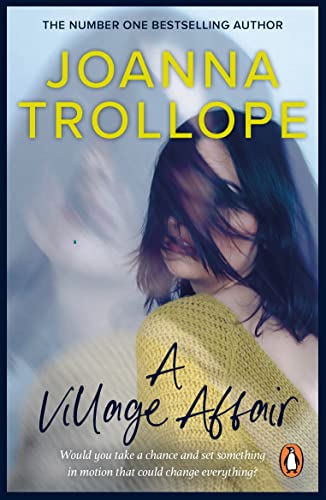
The title of this Joanna Trollope novel is so clever. Yes, A Village Affair is about a love affair that takes place in a village. It’s also about a woman’s love for that village, a comfortable middle-class lifestyle and a house, and the reverberations of her subsequent love affair on such a small claustrophobic community. Joanna TrollopeWhen Alice Jordan moves to The Grey House in Pitcombe she knows at last she is living a beautiful life. The house is old and stylish, her husband successful, her three children adorable. She wishes for nothing more and fits comfortably into village routines. So why does it feel as if something is missing. When she falls in love with Clodagh Unwin, daughter of their richest neighbours, the whole village apple cart is upset and Alice’s life is suddenly the opposite of idyllic. ‘Once you had stopped letting things happen and started to make them happen, you couldn’t go back.’
Trollope charts the changes in Alice’s life through the descriptions of her homes. The stifling suburban home where she grew up, her first married home with Martin to the glorious Grey House. It is clear as she bounces from one home and one relationship to another – from smothering mother and silent father, to boring husband Martin, and Cecily, Martin’s cool garden designer mother – that Alice doesn’t know who she is or what she wants. She has fallen in love with a picture postcard image of marriage, but has married the wrong person. When she realises this and becomes open to change, making choices she has never considered before, she then must face the consequences good and bad. Her choices now affect more than just her.
First published in 1990, the story about a gay love affair has dated somewhat awkwardly. The neighbours all have a judgement about the Jordan’s marriage but that is what villages are like, everyone knows everyone else even if they don’t know them well or particularly like them. One village character feels so strongly about what’s happened that she weeps over and over again but ‘couldn’t quite describe what it was that she felts so strongly about.’ Another believes he understands more about poetry than life because, ‘life was often just too peculiar to take in.’
I first read this book thirty years ago and enjoyed again Trollope’s skill at characterization, the small details. Clodagh, in distress, becomes ‘an exotic broken bird with tattered, gorgeous plumage and splintered frail bones showing through.’ Toddler Charlie ‘who had fitted a raspberry on his finger like a thimble and was regarding it with wonder.’
It is possible to feel affronted at the now old-fashioned portrayal of a relationship between two women but this story is really about love full stop. Alice loves Clodagh but also loves her children, her parents and in some way still loves her husband. Love is never simple.

Here are my reviews of other Trollope novels:-
A PASSIONATE MAN
MUM & DAD
THE CHOIR
THE RECTOR’S WIFE

If you like this, try:-
‘The Lie of the Land’ by Amanda Craig
‘The Perfect Affair’ by Claire Dyer
‘Something to Hide’ by Deborah Moggach

And if you’d like to tweet a link to THIS post, here’s my suggested tweet:
#BookReview A VILLAGE AFFAIR by Joanna Trollope https://wp.me/p2ZHJe-6jI via @SandraDanby

COMING SOON… THE NEXT BOOK I REVIEW WILL BE:- Mick Herron

#BookReview ‘Molly & the Captain’ by Anthony Quinn #historical #art

Three timelines, three studies of artist families. Molly & the Captain by Anthony Quinn is the story of one painting via three families across three centuries. It starts in Georgian Bath with the artist William Merrymount and his two daughters. His portrait of the two girls, ‘Molly & the Captain,’ intrigues through the centuries and ends up in North London in the current time. Anthony QuinnEach of the three parts stands alone, the connections revealing themselves in the final pages. In 1758, Merrymount is a renowned artist. His elder daughter Laura is a promising student and it is she who tells the family’s story through letters to her cousin. When her emotionally brittle sister Molly falls in love with the man Laura had thought to marry, their lives change. Things are not as they appear, secrets are well-hidden even within their household and Laura discovers facts she perhaps would prefer to remain unknown.
In 1889, artist Paul Stransom makes a living painting pictures of his local area, preferring to paint landscapes in parks rather than portraits. Tempted to venture abroad, perhaps to Normandy where colleagues are having success, his plans change when in Kensington Gardens he sees a mother and two young daughters, all dressed in white. When he approaches them, they disappear. Meanwhile his sister Maggie is faced with choosing to marry a man with the means to support her, or the poor man she loves.
In modern-day North London, artist Nell is preparing for an exhibition, a retrospective of her work which should bring long-overdue recognition. Her actress daughter Billie meets a young musician who she is to work with in a film. Horrified by the squat where Robbie lives, Billie suggests her mother take him into her house to replace the lodgers currently moving out of her loft. The consequences impact on all their lives.
This is a book about families, love and loyalty, about how creativity impinges on the privacy of family members and how the conflicts of success are just as difficult to deal with now as in Georgian times. Life – romance, loyalty, self-sacrifice, betrayal, opportunities, failure – always seem to get in the way.
It took me longer to read than I expected although it is not a particularly long book. The pace is slow, Quinn takes times to describe his settings with characteristic care of detail. Essentially this is a gentle mystery, a question runs throughout the three sections: what happened to the painting ‘Molly & the Captain’?
The ending has a wonderful, but gentle, twist. A thoughtful read and one I expect to gain more from on re-reading.

Read my reviews of these other novels also by Anthony Quinn:-
CURTAIN CALL
FREYA
HALF OF THE HUMAN RACE
OUR FRIENDS IN BERLIN
THE MILLIONAIRE WALTZ
THE MOUTHLESS DEAD
THE RESCUE MAN
THE STREETS

If you like this, try:-
‘The Doll Factory’ by Elizabeth Macneal
‘The Mermaid and Mrs Hancock’ by Imogen Hermes Gowar
‘The Ballroom’ by Anna Hope

And if you’d like to share a link:
#BookReview MOLLY & THE CAPTAIN by Anthony Quinn https://wp.me/p2ZHJe-6if via @SandraDanby

COMING SOON… THE NEXT BOOK I REVIEW WILL BE:- Renita D'Silva

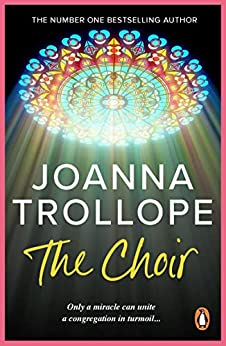
#BookReview ‘The Choir’ by Joanna Trollope #familysaga #rereading

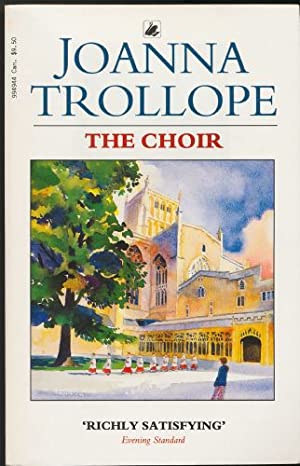
The Choir was the first book by Joanna Trollope that I read, in 1988, and the first published under her own name. Prior to that, she had written historical novels as Caroline Harvey. After reading and enjoying Mum & Dad in 2020, I decided to revisit my old Trollope paperbacks. Joanna TrollopeI never liked the phrase ‘aga saga,’ coined to describe Trollope’s style of novel – community-based, middle class, family trauma, forbidden romance – finding it over-simplistic and belittling of Trollope’s work. The Choir is about a limited time period in the life of a small community, the cathedral and choir school at Aldminster, and what happens when the stonework begins to crumble. Money must be found or saved, cuts must be made, unthinkable changes are considered. This is a story of small-world politics, the interaction of personalities domineering, clever, manipulative, naïve, well-meaning, defeated.
When the Dean of Aldminster Cathedral investigates the building’s dodgy lighting system, he finds stone erosion that will cost a fortune to fix. He first considers sell the headmaster’s magnificent listed house to the council for use as a community centre. There are social divisions within the town and the cathedral’s quarter is seen by some as superior and unwelcoming, a new social centre may help redress the balance. When the true cost of the renovation becomes apparent, Dean Hugh Cavendish considers closing the cathedral’s choir. The latter idea is abhorrent to headmaster Alexander Troy and organist Leo Beckford. Personalities ally themselves to one side of the argument or the other. Caught in the middle is chorister Henry Ashworth whose absent father lives in Saudi Arabia and whose mother Sally is dallying on the edge of an affair. Trollope is excellent at drawing this cast of characters, each fully rounded, each of which is engaging even when they are being awful. Like Ianthe, the Dean’s rebellious daughter, who fancies herself in love with Leo despite a lack of encouragement from him.
When a money-raising scheme is suggested that involves some of the Cathedral Close’s most unlikely characters, it is expected to fail. Henry becomes an unexpected star. One event leads to another, decisions must be made, marriages falter and professional courtesies are forgotten. In this small community, they all know each other’s business, politics becomes all-consuming; the finances of the cathedral, its place in the town, the accessibility of the choir to children from less advantaged families, and the rivalry around the town council boardroom table.

Joanna Trollope

My original copy of ‘The Choir’

This novel is 35 years old but that doesn’t matter. I enjoyed it immensely.

Read my reviews of other novels by Joanna Trollope:-
A PASSIONATE MAN
A VILLAGE AFFAIR
MUM & DAD
THE RECTOR’S WIFE

If you like this, try:-
‘A Single Thread’ by Tracy Chevalier
‘The Gustav Sonata’ by Rose Tremain
‘We Are Water’ by Wally Lamb

And if you’d like to tweet a link to THIS post, here’s my suggested tweet:
#BookReview THE CHOIR by Joanna Trollope https://wp.me/p2ZHJe-68K via @SandraDanby

COMING SOON… THE NEXT BOOK I REVIEW WILL BE:- Sebastian Barry

#BookReview ‘The Hidden Palace’ by Dinah Jefferies @DinahJefferies #WW2 #Malta

The Hidden Palace by Dinah Jefferies, second in the ‘Daughters of War’ trilogy, wasn’t quite what I expected. I felt disconnected from the first book which means it’s perfectly possible to be read as a standalone novel. Dinah JefferiesFlorence Baudin, one of the three Baudin sisters featured in Daughters of War, first in the series, has fled France leaving her sisters behind. It is 1944 and she is in England at the isolated Devon cottage of Jack, the English SOE agent who led her through France and Spain to safety. Florence is finally reunited with her mother Claudette who had stayed in England for the war. As sharp and feisty as ever, Claudette doesn’t make her daughter feel welcome but has a surprising request. Will Florence find her younger sister Rosalie who ran away from the family home in Paris in 1925? Florence, desperate to be closer to her mother, agrees despite the absence of clues, despite it being wartime.
This is a dual timeline story. 1944 with Florence, and 1925 with Rosalie Delacroix who flees Paris and goes to Malta where she finds work as a dancer. Rosalie is a more dynamic character than Florence, she makes things happen. Rosalie swaps career from dancer to journalist, publishing editor to campaigner, not all of which felt natural for her character. This is a novel of two separate stories – of aunt and niece, two decades apart – linked by genes but not impacting on each other.
Basically this tells of the search for a missing person. From the book blurb I anticipated a story set during the WW2 siege of Malta but it was late coming; at 70% through the novel Rosalie was still in 1930s. When war does come, I wanted to know more about Malta at this time. It was such a dramatic period in history and is seldom written about in fiction. Rosalie’s work as a plotter in the underground control centre during the defence of Malta is good, but slim pickings. Jefferies contrasts well the beauty of Malta with a darker underlying menace, prostitution, trafficking of women. This is an island invaded and settled by foreigners over many centuries with the looming threat of another world war. The hidden palace of the book’s title is a mesmerising maze of a building, like something out of an exotic Mary Stewart suspense novel. Is it a sanctuary or a prison. It’s a mysterious setting I was hoping would be used as a sanctuary during the war or perhaps a secret military headquarters.
The theme of unity and divisions between sisters shows how misunderstandings, if not addressed, can become impenetrable division. The deepest of bad feelings are better aired and faced, than deeply buried. Running away does not leave the old trouble behind, but also causes new problems.
I like to be immersed in characters and prefer long sections so I become emotionally involved. This story jumps around a lot between timelines which can be disorientating. The use of a cliffhanger at the end of each chapter is meant to add tension to keep the reader reading, but there needs to be a worthy pay-off each time. When chunks of years were skipped in Rosalie’s story, I wanted to know what was missing. It was like looking at a family photo album with pages torn out.
So, a bit of a curate’s egg. It didn’t advance the story of the three Baudin sisters, as I was expecting. But Rosalie’s story in Malta kept my attention.

Here are my reviews of the other books in the series:-
DAUGHTERS OF WAR #1DAUGHTERSOFWAR
NIGHT TRAIN TO MARRAKECH #3DAUGHTERSOFWAR

And here are my reviews of some of Dinah Jefferies’ other novels:-
THE TEA PLANTER’S WIFE
THE SAPPHIRE WIDOW
THE TUSCAN CONTESSA

If you like this, try:-
‘The Gabriel Hounds’ by Mary Stewart
‘The Postcard from Italy’ by Angela Petch
‘The Last Hours in Paris’ by Ruth Druart

Here’s a link to share THIS post:
#Books THE HIDDEN PALACE by Dinah Jefferies @DinahJefferies https://wp.me/p2ZHJe-63n via @SandraDanby

COMING SOON… THE NEXT BOOK I REVIEW WILL BE:- SD Sykes
#BookReview ‘A Lady’s Guide to Fortune-Hunting’ by Sophie Irwin #romance

Just what I needed after finishing a more weighty and time-consuming read, A Lady’s Guide to Fortune-Hunting by Sophie Irwin propelled me along on a wave of flirting and social waltzing. And I gulped it down like a mug of hot chocolate on an icy day.Sophie Irwin

Kitty Talbot is in need of a husband, quickly. After the deaths of first her mother then her father, Kitty, as the eldest of five girls, is left with the financial and caring responsibilities of her younger sisters and a huge debt. With 12 weeks to pay the money owed or vacate their childhood home Netley Cottage, Kitty decides a husband with the right amount of wealth must be sought. The twenty-year old problem solver, always pragmatic, heads to London with bookish sister Cecily in tow, to stay with an old friend of their mother. Aunt Dorothy is not their aunt and, Kitty fears, her history may not withstand close examination. But Kitty’s plan is to gain admittance to the London season – specifically the circle of ‘the ton’, the wealthiest and most aristocratic of London’s social scene – and find a man richer than is available to her in Dorsetshire. He must wipe out the Talbot debt and ensure the financial security of the five sisters. Aunt Dorothy is the only person Kitty knows, despite never having met the lady, who might help them.
A combination of scheming Becky Sharp and witty Elizabeth Bennet, Kitty occupies the fine line between being a fortune-seeker, a flirt and a liar. She is sharp-witted, charming, eager to learn and brave. The latter quality comes in useful as she must enter ballrooms full of people she knows she recently offended due in part to her lack of knowledge of social conventions and in part to the delicate sensitivities and prejudices of the offended. The social mores of ‘the ton’ are unpredictable, difficult to predict and often silly. So she holds her head high and seeks help from the most unlikely places. Lord Radcliffe, the elder brother of one of Kitty’s first flirtations, becomes an unwilling mentor. In a deal to ensure Kitty will not engage with his younger, naïve brother Archie, Radcliffe agrees to give Kitty guidance on London’s social minefield. Neither is wholly satisfied with their deal. Kitty, because Radcliffe is often unable to give her the most helpful information [how deep or shallow a curtsey should be to people of differing ranks, for example] and Radcliffe because he fears he will never be rid of her.
Funny and entertaining, complete with unpredictable siblings who get into trouble, embarrassing beaux, flirtations and elopements, gambling and pistols, I enjoyed this immensely. The plot moves on swiftly and, though the language and detail sometimes slips from period accuracy, I decided to ignore that and go with the fun.

If you like this, try:-
‘The Convenient Marriage’ by Georgette Heyer
‘The 20s Girl, The Ghost, and All That Jazz’ by June Kearns
‘The Girl at the Window’ by Rowan Coleman

And if you’d like to tweet a link to THIS post, here’s my suggested tweet:
#BookReview A LADY’S GUIDE TO FORTUNE-HUNTING by Sophie Irwin https://wp.me/p5gEM4-5Sq via @SandraDanby

#BookReview ‘Thornyhold’ by Mary Stewart #romance #mystery

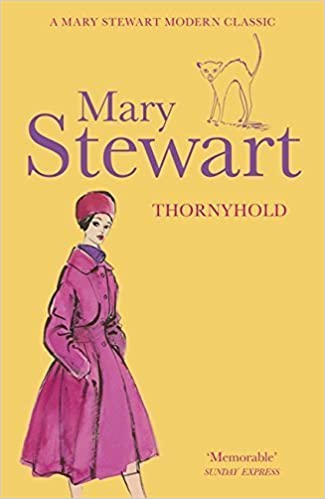
Browsing at the library I came upon a Mary Stewart novel I hadn’t heard of. Thornyhold. Of course, I couldn’t resist picking it up and putting it on top of my To-Read pile. It’s a small novel, only 212 pages and I read it in two sittings. Published in 1988, Thornyhold is one of Stewart’s last – her first was Madam, Will You Talk? in 1955 – and this is very different from the romantic suspense stories for which she is known and loved. Mary Stewart Gilly Ramsey inherits Thornyhold, a remote cottage, from her mysterious godmother Geillis. Now alone after the recent death of her father, Gilly plans to start a new life at Thornyhold. As she explores the cottage – its mysterious attic which doubles as a pigeon loft, a still room for drying herbs and making herbal cures – she learns more about her benefactor. There are more questions than answers. As a child, Gilly had always found Geillis enigmatic; she appeared when Gilly seemed to need her, one time producing a crystal ball from her bag. Now, as she meets her new neighbours, Gilly learns the history of the house and her godmother’s reputation as a herbal healer. But was she more, a witch or wise woman? Although odd dreams, a barking dog and strange messages sent by carrier pigeon, unsettle her, Gilly has an inner belief that she belongs at Thornyhold. Nothing will make her leave.
Having recently a read a lot of contemporary novels with dense repetitive emotional description and complicated plots, reading Thornyhold felt like drinking a tall glass of water when desperately thirsty. Such a wonderful turn of phrase, clever and thoughtful, but accurate and never over-done. Gilly meets a neighbour who she describes as having smooth rosy cheeks and ‘the wrong red too thick on a small mouth,’ and I know exactly what she means.
Beautifully written, not a word out of place, not a character too many. Delightful. An instant favourite.

Click the title to read my reviews of other Mary Stewart novels:-
MY BROTHER MICHAEL
THE IVY TREE
THE GABRIEL HOUNDS
THIS ROUGH MAGIC
TOUCH NOT THE CAT …and try the #FirstPara of TOUCH NOT THE CAT

If you like this, try these:-
‘The Diabolical Bones’ by Bella Ellis #2BRONTEMYSTERIES
‘Ferney’ by James Long
‘The Good People’ by Hannah Kent

And if you’d like to tweet a link to THIS post, here’s my suggested tweet:
#BookReview THORNYHOLD by Mary Stewart https://wp.me/p5gEM4-5Rn via @SandraDanby

#BookReview ‘The Postcard from Italy’ by Angela Petch #WW2

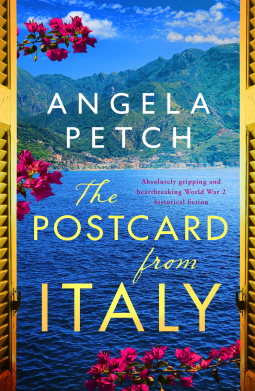
I’ve never been to Puglia in Italy, the south-eastern coast down to the heel, except in the pages of The Postcard from Italy by Angela Petch. Vividly she brings to life the coastline, the stone-built trulli houses, the caves. It is a magical setting. Stretching backwards from today to the closing months of the Second World War, this is an enthralling family story of love and separation.  Recognising love when it’s there, but also understanding when it’s absent. Angela PetchIn 1945, Puglia, a young man awakes, injured, disorientated. He doesn’t know who he is or how he came to be in a trullo, a rural stone house, cared for by strangers. The teenage boy Anto explains how his grandfather Domenico saw him fall from a warplane. Called ‘Roberto’ by his rescuers, his memory stubbornly refuses to return. He can speak English and Italian but knows nothing about fishing or farming. As he helps them in their daily routines, gathering food, catching fish, tending vegetables, repairing the trullo, his nights are full of confusing dreams.
In present day Hastings, England, Susannah mourns the recent death of her father Frank and the descent of her grandmother, Elsie, into the clouds of dementia. Clearing Elsie’s house, Susannah finds a yellowing postcard of a beautiful farmhouse in Puglia and a message of love. Realising this is the same farmhouse in a painting by her father but unaware of family links with Italy, she can’t reconcile this message of love with her brittle, acidic grandmother who always preferred Susannah’s blonde-haired younger sister Sybil. So, while a friend looks after her antique bric-a-brac shop at home, Susannah takes a holiday in Puglia. Determined to find the house in her father’s painting, she learns to heal herself, to speak a little Italian and in so doing falls for two handsome men.
Petch uses conventional wartime story themes – amnesia, separation of loved ones, the vulnerability of loneliness and grief, and the fear of those who exploit war for gain – and adds the twists and turns of flirting and love. Petch has written four novels set in Tuscany, so Puglia is a new setting for her but her knowledge of Italy shines on every page. Susannah’s holiday is extended as she turns detective but the clues, when she finds them, bring more questions rather than answers.
Susannah is the spine of the story but my favourite character was Anto, so complex, so brave, so intriguing. This is a wonderful book to sink into, a perfect holiday or weekend read.

Here are my reviews of other novels also by Angela Petch:-
THE GIRL WHO ESCAPED
THE LOST GARDEN
THE SICILIAN SECRET
THE TUSCAN SECRET

If you like this, try:-
‘Another You’ by Jane Cable
‘The War Child’ by Renita d’Silva
‘The Tuscan Contessa’ by Dinah Jefferies

And if you’d like to tweet a link to THIS post, here’s my suggested tweet:
#BookReview THE POSTCARD FROM ITALY by Angela Petch https://wp.me/p5gEM4-5Qk via @SandraDanby

#BookReview ‘Dear Mrs Bird’ by AJ Pearce #WW2 #romance

Sometimes I hear about a book when it is launched but somehow miss the tide. Dear Mrs Bird by AJ Pearce was published in 2018 and two weeks later became a Sunday Times top ten bestseller. In 2019 it was selected for the Richard and Judy Book Club. The first few pages are fresh and engaging, light humour at a time when people when people were living day to day in the Blitz. My only doubt was that I would find the jolly tone too much if it continued for the whole novel. AJ PearceIt is 1941 in London and Emmy Lake applies for a job as a war correspondent and  instead finds herself typing up letters for the problem page of a distinctly faded women’s magazine, Woman’s Friend. The premise is fascinating. The tone is full-on jolly which at times is irritating. The strength of the book for me lies in the second half.
Emmy lives with her friend Bunty on the top floor of Bunty’s grandmother’s house. Both girls have daytime war jobs and volunteer in the evenings. Emmy is frustrated by her boss Mrs Bird’s dismissive rules about letters from emotional young women and starts to reply directly to the women, hiding the letters and posting her replies in secret. When she doesn’t get found out, she becomes bolder, and prints one of her replies in the magazine. Dumped by telegram by her boyfriend, Emmy agrees to go out with Bunty and her boyfriend William and finds herself set up with a blind date. As Emmy’s love life takes a turn for the better, the girls’ friendship is tested as it has never been tested before. Inevitably, Emmy’s letter writing catches up with her in spectacular fashion and she is sent home.
The book is at its best when examining the relationship between Emmy and Bunty, the depth of their loyalty, and what happens when cracks begin to appear. This is a lightweight, cozy war romance which takes a serious tone towards the end. An easy weekend read.

If you like this, try:-
‘Please Release Me’ by Rhoda Baxter
‘You’ll Never See Me Again’ by Lesley Pearse
‘One Step Too Far’ by Tina Seskis

And if you’d like to tweet a link to THIS post, here’s my suggested tweet:
#BookReview DEAR MRS BIRD by AJ Pearce https://wp.me/p5gEM4-49f via @SandraDanby

#BookReview ‘Love in a Time of War’ by @adriennechinn #WW1

Love in a Time of War by Adrienne Chinn is the story of three sisters during wartime, how the inconveniences of war can shatter dreams and promises, disguise lies, hide secrets and offer opportunities previously unimagined. Adrienne ChinnIn 1913, Cecilia Fry, eldest of the three Fry sisters, is nineteen when this story starts. She has fallen in love with her young German teacher and must decide whether to spend the summer with Max in Germany or in London working for the suffragist movement. Eighteen-year old Jessie is studying at nursing school and has been offered an amazing opportunity of which her mother disapproves. Jessie’s twin Etta visits the Summer Exhibition at the Royal Academy of Arts where she meets an Italian artist. All three sisters have dreams for the future, but those dreams are to be thrown into disarray by the Great War.
Love in a Time of War starts with a Prologue set in Italy in 1891. A young Englishwoman called Christina, visiting her Italian family on the island of Capri, falls in love with a young tourist. What happens during this Italian summer reaches through every page of this novel with its themes of the life of women at the dawn of the twentieth century, the new possibilities for women, promising independence, a voice and freedom of expression, weighed down by society’s traditional expectations of their role and behaviour. This is a view of a prosperous middle-class family, though the plight of working-class women is glimpsed via Milly, the Fry’s maid of all work who leaves to work in a munitions factory, and Jessie’s nursing friend Ivy. The three sisters choose completely contrasting paths in life and their stories are followed as war is declared and the family separates. Each in turn faces a difficult choice and then must learn to live the life they have chosen. Little do they realise how their own decisions echo the choices their mother also faced at a similar age.
Towards the end there are number of coincidences which enable the tying up of loose ends, these felt awkward and abrupt. But the Acknowledgements at the end explains how the novel was inspired by the author’s own three great-aunts and grandmother who lived in Britain, Canada and Egypt. So perhaps real life does provide coincidences that are presumed good, or bad, luck.
A gentle, romantic war story, ideal for reading on holiday. As the first book in a family saga series, ‘The Three Fry Sisters’, this book ends as life after war begins and the sisters face the new lives they have chosen. Book Two will cover the Twenties and Thirties, while Book Three will span World War Two into the Seventies.

If you like this, try:-
‘Waiting for Sunrise’ by William Boyd
‘The Inheritance of Solomon Farthing’ by Mary Paulson-Ellis
‘My Dear, I Wanted to Tell You’ by Louisa Young

And if you’d like to tweet a link to THIS post, here’s my suggested tweet:
#BookReview LOVE IN A TIME OF WAR by @adriennechinn https://wp.me/p5gEM4-5Pd via @SandraDanby

#BookReview ‘Tea for Two at the Little Cornish Kitchen’ by Jane Linfoot @janelinfoot #romance

I’m not a great reader of novels described as ‘heartwarming’, particularly with cheerful pastel-coloured covers. But as an impulse read for a winter day when I was feeling under the weather and in need of comfort, Tea for Two at the Little Cornish Kitchen by Jane Linfoot proved to be a bit of a surprise. Jane LinfootSecond in the Little Cornish Kitchen series, I hesitate to call this a ‘cosy romance’ but it is fun, flirty and funny. Novels set in Cornwall are almost a genre of their own and the fictional seaside village of St Aidan with its pastel-coloured houses set on steep windy streets leading to the beach is ideal for a ‘community’ novel with a strong list of characters.
There are lots of alliterations, hashtags and cute names starting with Cressida Cupcake, the social media name for hit online baker Cressy Hobson. Dog and apartment-sitting for her brother Charlie [owner of the Little Cornish Kitchen Cafe and star of the first book in Linfoot’s series, one of a collection set in St Aidan] Cressy will be at Seaspray Cottage for six weeks. She’s glad to escape London and the embarrassing fallout after an online baking disaster. She’s trending on social media as #CrappyCupcake, her book deal has fallen through, her blog sponsors have disappeared and she is short of cash. But when confronted with her sister-in-law’s circle of best friends, she hides the truth and is determined to work things out on her own.
Inevitably she is soon pulled into the community and joins the fundraising plans for the financially-struggling Kittiwake Court community care home. Cressy’s private baking parties take off, as do her sales of bake boxes via the local Facebook group. Add in a meeting with her handsome teenage crush, assorted sheep to be fed and eggs to be collected, a collection of adorable cats and dogs, various cute children and babies, and the scene is set for Cressy to lurch from disaster to triumph to embarrassment and disaster again and again. There are serious themes too – miscarriage and infertility being the main two – but in general there’s a light hand when it comes to the reality of seaside living, seasonal unemployment, online hate, poverty and the struggles of an ageing population. This is romantic comedy, a getaway from the real world. In this pastel-coloured village, reality is pushed firmly to one side.
Not my normal reading but great for the time when a Bakewell tart blondie is preferable to a single digestive. Oh, and if you enjoy baking there are some great recipes at the end.

If you like this, try:-
‘Girl in Trouble’ by Rhoda Baxter #3SMARTGIRLS
‘Butterfly Barn’ by Karen Power
’59 Memory Lane’ by Celia Anderson

And if you’d like to share a link, try:
#BookReview TEA FOR TWO AT THE LITTLE CORNISH KITCHEN by Jane Linfoot @janelinfoot https://wp.me/p5gEM4-5wE via @SandraDanby