Tag Archives: thriller

#BookReview ‘Dead Lions’ by Mick Herron #spy #thriller

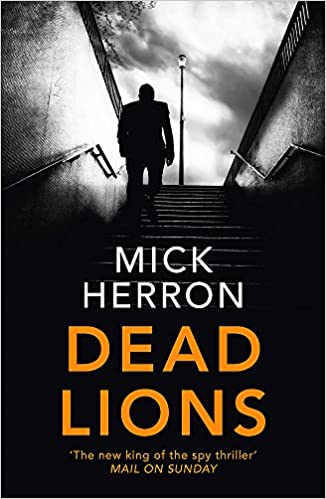
No tuxedos, no superheroes, no gadgets. The Slough House spy thrillers by Mick Herron feature the spies who, having messed up, have been consigned to a dead-end department [in London, not Slough, but that’s the joke]. Dead Lions is second in the series. The title is taken from a kids’ party game, ‘You have to pretend to be dead. Lie still. Do nothing.’ Mick HerronWhen elderly retired streetwalker Dickie Bow, a spy good at following people on the street and discovering their secrets, turns up dead on a train near Oxford no-one takes much notice. Except Jackson Lamb, Slough House boss and pragmatist. The bloody-minded Lamb considers whether an old Soviet cold war tactic, planting sleeper agents in a foreign country to activate at a future date, is again being used. But who by, and why? What is there to gain? Herron populates his stories with many layers and in that they are John le Carré like. Le Carré had his own alcoholic, shambling agent in Alec Leamas and Jackson Lamb, like Leamas, is good at talking his way into unlikely places, places others would never expect to find answers. He also has a cynical sense of humour, rather like Len Deighton’s Harry Palmer.
While Lamb is checking up on Dickie Bow, his team of misfits at Slough House continue to do their day jobs – boring data input and administration, checking identity profiles, chained to their desks – not very well. It doesn’t take much to distract them. IT guy and social inadequate Roderick Ho has spotted a girl he fancies and is building an unflattering fake online profile for her boyfriend in the hope she will fall for Ho instead. Except Ho hasn’t spoken to her and doesn’t know he exists. Min Harper and Louisa Guy have been seconded by Spider Webb, a ‘suit’ from Regent’s Park MI5 headquarters, to do a security audit ahead of a meeting he has with a Russian oil billionaire at ‘The Needle’. Building survey, exits and entrances, surveillance, risks and threats. Basically, they have to write a report. Webb, who keeps the purpose of the meeting a secret, will handle the exciting stuff himself.
River Cartwright, visiting his former spy grandfather ‘the OB’, shares the news about Bow’s death. The OB recounts the story of Alexander Popov, a fake Russian who MI6 regarded as an invention to spread disinformation to the West. “If Moscow Centre said ‘Look at this’, the sensible thing was to look in the opposite direction,” says the OB. Lamb’s number two Catherine Standish, former alcoholic, avoids the temptation of the bottle by considering why a bald man on a rainy station platform would leave his hat on a train. Downstairs in a pokey office, Slough House’s two newest recruits Shirley Dander and Marcus Longridge, considered by the old lags as a spy for ‘Lady’ Di Taverner, irritate each other and resent their demotions. And so, the spies worry about being spied upon.
This is a wonderful smoke and mirrors story where nothing is at it seems. It starts with a death which the mainstream spies at the Park dismiss as irrelevant, but which Lamb’s band of rejects set out to solve. Herron’s plot mixes together the ambitious intelligence officers with the misguided and often not bright slow horses, so you won’t know who is on the right track.
Different. Wonderful. Difficult to put down.

Click the title to read my reviews of the other books in the Slough House series:-
SLOW HORSES #1SLOUGHHOUSE
REAL TIGERS #3SLOUGHHOUSE
SPOOK STREET #4SLOUGHHOUSE
LONDON RULES #5SLOUGHHOUSE
JOE COUNTRY #6SLOUGHHOUSE
SLOUGH HOUSE #7SLOUGHHOUSE
BAD ACTORS #8SLOUGHHOUSE

If you like this, try:-
Waiting for Sunrise’ by William Boyd
The Museum of Broken Promises’ by Elizabeth Buchan
The Secrets We Kept’ by Lara Prescott

And if you’d like to tweet a link to THIS post, here’s my suggested tweet:
#BookReview DEAD LIONS by Mick Herron https://wp.me/p5gEM4-5oF via @SandraDanby

#BookReview ‘The Man in the Bunker’ by Rory Clements #thriller #WW2

The Man in the Bunker by Rory Clements gripped me from beginning to end. It starts at the end of the Second World War when spy Tom Wilde thinks real life is beginning again. But the dilemma is in the book’s title. Who was the dead man in the bunker in Berlin? Were the burnt remains really that of Hitler? If not, where is he? Rory ClementsThis is the sixth in Clements’ thriller series about American historian-turned-spy Wilde who spends the war working for the English and American secret services, and each of them has been unputdownable. It is now late summer 1945 and the European war is over. Germany is defeated, in ruins, starving and with millions of Holocaust survivors, displaced people and refugees. The country has been carved up between the allied forces to bring security and discipline but it is a world in which it is easy to disappear, to reinvent yourself. It is a world in which lies are told for survival. As in the previous Wilde books, it is difficult to know who is telling the truth, who is lying and why. Clements is a consummate thriller writer who writes with emotional depth, political intrigue and historical research.
The action starts at a running pace and never stops. Two men are killed on a remote road in southern Bavaria. In Cambridge, history professor Tom Wilde is anticipating the arrival of new undergraduates and his wife Lydia is applying to study medicine. Then three visitors arrive with an incredible request. Wilde must find Adolf Hitler. At first Wilde laughs, then he refuses. That night, Lydia says he will regret refusing. The next day Wilde changes his mind. First, he questions some German scientists who are imprisoned near Cambridge, their rooms bugged, their conversations and gossip recorded. A clue leads Wilde to Garmisch where he teams up with the unpredictable Lieutenant Mozes Heck, a Dutch Jew who hates the Nazis. As they identify Nazis who were close to Hitler, their progress is continually impeded by the conditions in defeated Germany; starvation, bomb damage, medical crisis and the flood of Holocaust survivors and misplaced citizens. And by Heck’s secret, personal mission.
The ending is particularly intriguing. Is The Man in the Bunker the final book of the Tom Wilde story or will it morph into a Cold War series?

Click the title to read my reviews of the other books in the Tom Wilde series:-
CORPUS #1TOMWILDE
NUCLEUS #2TOMWILDE
NEMESIS #3TOMWILDE

HITLER’S SECRET #4TOMWILDE
A PRINCE AND A SPY #5TOMWILDE
THE ENGLISH FUHRER #7TOMWILDE

And from the Sebastian Wolff series:-
MUNICH WOLF #1SEBASTIANWOLFF

If you like this, try:-
Exposure’ by Helen Dunmore
V2’ by Robert Harris
The Second Midnight’ by Andrew Taylor

And if you’d like to tweet a link to THIS post, here’s my suggested tweet:
#BookReview THE MAN IN THE BUNKER by Rory Clements https://wp.me/p5gEM4-5o5 via @SandraDanby

#BookReview ‘Waiting for Sunrise’ by William Boyd #WW1 #spy

Determined to deal with my overflowing to-read shelf, I picked up Waiting for Sunrise by William Boyd. Thoughtful with a twisty plot, we follow actor Lysander Rief from Vienna to the trenches as he tries to identify a traitor passing war secrets to the enemy. William BoydIt is Vienna 1913. Actor Lysander Rief has gone to Vienna seeking help for an intimate problem. In the waiting room he encounters two people who will determine the course of Rief’s life in the forthcoming Great War. Rief falls head over heels in lust with Hettie Bull but when Rief is thrown into prison charged with rape, he feels abandoned. He is extricated from Austria thanks to the help of a shadowy British government officer and Rief’s own ingenuity. But he owes a debt and is drawn into the shadowy world of wartime spies. Someone is sending coded messages about essential infrastructure, supply and troop movements to the enemy, and Rief is charged with hunting down the traitor.
Boyd is one of my favourite writers, his writing flows and there are multiple layers to consider long after finishing the book. All concocted with a skilful touch of humour in the right place. It all starts in the consulting room of Dr Bensimon who suggests that Rief’s delicate problem, based on an unfortunate but funny episode in his youth, can be solved not by drugs or hypnosis but by his own theory of Parallelism. Rief must revisit his memory of the incident and reconstruct the story of what happened so that today his dreams are about the changed story and his little problem stops happening. Smoke and mirrors. Rief, as an actor, is adept at pretending to be what he is not and there are countless characters he meets who do the same. He is good at spotting some people who are acting, but misses others. But unlike on stage, missing the clues can lead to hurt, separation and death. And at stake in the bigger picture of the war are the lives of allied soldiers.
This is a book about deception; lies to others, lies told to oneself. Small lies told for convenience. Big lies told to disguise treason. Along the way, people get hurt.
So much more than a conventional spy thriller from a master author. 4* for me rather than 5* because of the slow beginning. It pays to be patient.

Here are my reviews of other books by William Boyd:-
ANY HUMAN HEART
LOVE IS BLIND
NAT TATE: AN AMERICAN ARTIST 1928-1960
ORDINARY THUNDERSTORMS
SWEET CARESS
THE BLUE AFTERNOON
THE DREAMS OF BETHANY MELLMOTH
TRIO
… and try the first paragraph of ARMADILLO.

If you like this, try:-
Wake’ by Anna Hope
The Lie’ by Helen Dunmore
Corpus’ by Rory Clements #1TOMWILDE

And if you’d like to tweet a link to THIS post, here’s my suggested tweet:
#BookReview WAITING FOR SUNRISE by William Boyd https://wp.me/p5gEM4-5hB via @SandraDanby

#BookReview ‘The Royal Secret’ by @AndrewJRTaylor #Historical

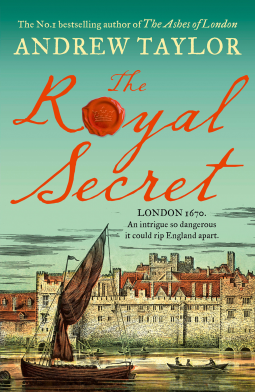
The Royal Secret is another excellent instalment in the historical drama series by Andrew Taylor that started in 1666 with the Fire of London. I hesitate to call The Royal Secret a thriller as these books cross historical sub-genres and are consequently fulfilling on a number of levels. Crime, political intrigue, social commentary, architecture, strong characterization and a dash of romance all set in the post-Restoration excess, poverty and turmoil of Charles II’s rule. Andrew TaylorEvery successful thriller needs a villain to hate and Dutchman [or is he?] Henryk van Riebeeck certainly gives James Marwood the run-around. Marwood, now working for Secretary of State Lord Arlington, is charged with investigating the disappearance of top secret papers and the sudden death of a palace clerk. As Marwood follows the trail across London via a gambling club and Smithfield meat market, Cat Hakesby pursues success as an architect. Having completed a successful commission – a rather grand poultry house – her next project is a bigger, grander poultry house for a French aristocrat who is also sister of King Charles. Nothing is as it seems in this series so when Cat travels to France to show her plans to her client, we know she must unwittingly be caught up in a political intrigue. But what exactly? And how does this connect with Marwood’s pursuit of missing state papers which threaten a diplomatic treaty being negotiated between the English and the French? Is van Riebeeck a villain or a hero?
Based on the machinations of a real treaty between France and England, Taylor has once again combined a sharp plot with colourful characters [one gentleman is a collector of exotic animals] and, of course, Marwood and Cat. The will-they-won’t-they thread which runs throughout this series faces a chasm here not helped by copious misunderstandings, jealousy, Cat’s stubborn independence and Marwood’s dedication to the secrecy of his employment.
Excellent. Bring on the next one.
CLICK HERE TO READ MORE ABOUT THIS BOOK AT AMAZON

Read my reviews of the other books in this series:
THE ASHES OF LONDON #FIREOFLONDON1… and try the first paragraph of THE ASHES OF LONDON.
THE FIRE COURT #FIREOFLONDON2
THE KING’S EVIL #FIREOFLONDON3
THE LAST PROTECTOR #FIREOFLONDON4
THE SHADOWS OF LONDON #FIREOFLONDON6

And a World War Two novel by the same author:-
THE SECOND MIDNIGHT

If you like this, try:-
The Doll Factory’ by Elizabeth Macneal
The Taxidermist’s Daughter’ by Kate Mosse
The French Lesson’ by Hallie Rubenhold

And if you’d like to tweet a link to THIS post, here’s my suggested tweet:
#BookReview THE ROYAL SECRET by @AndrewJRTaylor https://wp.me/p5gEM4-5fe via @SandraDanby

#BookReview ‘The Fine Art of Invisible Detection’ by Robert Goddard #thriller

I always look forward to a new Robert Goddard book but wasn’t sure what to expect from his latest, The Fine Art of Invisible Detection. Partly, I think, because the blurb seemed more a detective novel than a thriller. Actually, this is both. Goddard has creative a heart-warming, realistic new hero, Umiko Wada, known simply as Wada. I raced through this book, full of Goddard’s clever twisty plotting, emotional dilemmas, should-I-shouldn’t-I moments. Robert GoddardWada is a 47-year-old secretary at a detective agency in Tokyo, making tea, writing reports for her technology-incompetent boss Kodaka. Widowed after her husband was killed in the Sarin gas attack on the Tokyo subway in 1995, Wada is quiet, efficient and invisible. But burning deep is a sense of righteousness. So when her boss asks for her help with a new case, she agrees to go to London to pose as the client who wants to find out if her father really committed suicide almost three decades earlier, or if he was murdered. From this point on, Wada’s life becomes unpredictable and her talent for being invisible becomes a lifesaver. Her boss dies in a car accident. The man she is due to meet in London has gone missing. Always logical, she follows the one clue she has.
Nick Miller is also due to meet the same man in London. Nick, a 41-year-old Londoner, is hoping to learn more about the father he has never met. Nick and Wada’s paths keep missing each other as they separately follow the trail of mystifying clues about the past. The action moves from Tokyo to London, Rekyjavik and the wilds of Iceland to Cornwall. There is a high-technology fraud, plus hints of terrorism and Japanese gang warfare, but this is not a violent read.
Wada is at the heart of this novel. Her logic and calm reasoning drive the narrative forward in that just-one-more-chapter way that makes this book a quick and fulfilling read. She is ordinary but extraordinary. I hope she returns in another novel.

Read my reviews of Goddard’s other books:-
PANIC ROOM
THE WAYS OF THE WORLD #1 THE WIDE WORLD TRILOGY
THE CORNERS OF THE GLOBE #2 THE WIDE WORLD TRILOGY
THE ENDS OF THE EARTH #3 THE WIDE WORLD TRILOGY
THIS IS THE NIGHT THEY COME FOR YOU #1SUPERINTENDENTTALEB

If you like this, try:-
Exposure’ by Helen Dunmore
The Accident’ by Chris Pavone
The Second Midnight’ by Andrew Taylor

And if you’d like to tweet a link to THIS post, here’s my suggested tweet:-
#BookReview THE FINE ART OF INVISIBLE DETECTION by Robert Goddard https://wp.me/p5gEM4-5as via @SandraDanby

#BookReview ‘A Prince and a Spy’ by Rory Clements #thriller #WW2

Rory Clements is fast becoming an author I turn to when I need a page-turning read to relax into. A Prince and a Spy is fifth in his Tom Wilde Second World War series and it doesn’t disappoint. Woven into true history of the conflict – the fatal crash in Scotland of the Duke of Kent’s plane, the holocaust – Clements adds real and fictional characters, intrigue and competing spies, to make this an enjoyable read. Rory ClementsWhen history professor Wilde returns by train home to Cambridge he bumps into a former student. Cazerove seems distracted, distressed, munching on a bag of sweets. Before the train reaches its destination, Cazerove dies of poisoning. So begins a typical Clements thriller – strong characters, true history and a string of unrelated incidents. When the Duke of Kent’s plane crashes on a remote hill in Scotland, the public is told his plane came down in heavy fog when taking off for Iceland on operational duties. In the world of A Prince and a Spy, the flying boat was returning from a secret diplomatic mission in Sweden where the Duke met his German cousin, a former member of the Nazi party. Wilde, working for the newly-established American secret intelligence service, OSS, is sent to Scotland to sniff around at the crash site and ask questions on behalf of his president. FDR wants to know why the plane crashed, was Prince George at the controls, was it shot down, and how did one person survive?
A keynote of this series is the multi-layering of rival spy agencies in the UK – the British, the Americans – the infiltration of Nazi agents, Soviet agitators and, in this book, a secret society. Clements is excellent at showing history through the eyes of fictional characters, a challenging task, and I particularly liked the Scottish segment with fisherman Jimmy Orde. A continuing thread from book to book is Wilde’s relationship with his partner Lydia, and Philip Eaton, the British spy who first involved Wilde in espionage. Clements twists reality in this book so Wilde doesn’t know who to trust, who to believe, and who is spying on him. So much so that at times, I lost track too.
An excellent weekend read.

Click the title to read my reviews of the other books in the Tom Wilde series:-
CORPUS #1TOMWILDE
NUCLEUS #2TOMWILDE
NEMESIS #3TOMWILDE

HITLER’S SECRET #4TOMWILDE
THE MAN IN THE BUNKER #6TOMWILDE
THE ENGLISH FUHRER #7TOMWILDE

And from the Sebastian Wolff series:-
MUNICH WOLF #1SEBASTIANWOLFF

If you like this, try:-
Life After Life’ by Kate Atkinson
The Aftermath’ by Rhidian Brook
Midnight in Europe’ by Alan Furst

And if you’d like to tweet a link to THIS post, here’s my suggested tweet:
#BookReview A PRINCE AND A SPY by Rory Clements https://wp.me/p5gEM4-574 via @SandraDanby

#BookReview ‘V2’ by @Robert_Harris #WW2 #thriller

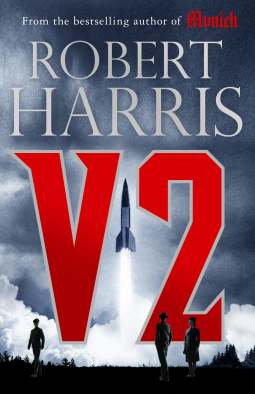
Mostly written during the 2020 virus lockdown, V2 by Robert Harris is a World War Two thriller like no other I have read – and I’ve read a few. I’ve been a Harris fan since the beginning with Fatherland. V2 is different because it tells two stories – the technical development of the V2 rockets, and five days in November 1944 when the lives of a German rocket engineer and British spy are changed by this weapon. Robert HarrisHarris skilfully handles truth, fiction, engineering details and mathematical calculations, adding two fictional characters to create a page turning story. The V2 rocket is placed firmly at the centre of this book. Without it, there would be no story. Originally conceived by scientists as a space project, the V2 was a hateful weapon that inspired fear. Unlike its predecessor the V1 which could be seen and heard before it descended giving time to take cover, the V2 hit without warning. It was also highly unreliable, going off-target, exploding at launch, crashing at sea, killing the people who built it – slave labourers – and launch crews.
The story opens as rocket engineer Dr Graf is trying to concentrate on pre-launch missile checks on the Dutch coast at Scheveningen. He is interrupted by the arrival of a Nazi officer. The rocket is launched. In London, WAAF officer Kay Caton-Walsh emerges from a bathroom wrapped in a towel. Her assignation with her married lover ends when the V2 lands on their building. Harris’s tightly plotted story sees Kay moved from London-based photo reconnaissance, studying launch sites of the rockets, to Mechelen in Belgium. There she and a team of female mathematicians calculate the flight trajectory of the rocket, tracking it backwards to identify the launch site for Allied fighter-bombers to target. As Dr Graf is pressured to launch rockets more frequently than is safe, Kay can’t shake the feeling she is being followed through the strange shadowy streets of Mechelen.
Occasionally the technical details get in the way of the story but what is most fascinating are the portrayals of the German and British leadership at a time when the end of the war seemed to be approaching. Doubts and regrets by some on the German side are balanced by fanatical demands and obsessive management from the SS. In London, key decisions about the defence of the nation are influenced by an extra-marital affair. On both sides, the men at the top making the decisions seem apart from real life. An excellent read, it is a race against time as Kay and her colleagues try to identify the launch locations and Dr Graf is questioned by the Gestapo. I raced through it.
I was fascinated to read the Author’s Note at the end, explaining the inspiration behind the book. In September 2016, Harris read an obituary in The Times of 95-year old Eileen Younghusband, formerly a WAAF officer at Mechelen.

Read my reviews of these other thrillers, also by Robert Harris:-
AN OFFICER AND A SPY
MUNICH

If you like this, try:-
The Accident’ by Chris Pavone
The Second Midnight’ by Andrew Taylor
The Farm’ by Tom Rob Smith

And if you’d like to tweet a link to THIS post, here’s my suggested tweet:
#BookReview V2 by @Robert_Harris https://wp.me/p5gEM4-4Rs via @SandraDanby

#BookReview ‘Transcription’ by Kate Atkinson #WW2

Few of the characters in Transcription by Kate Atkinson are who they seem to be. A novel of the Second World War, Transcription suggests that the ripples of wartime secrecy spread out through the following years so that outstanding lies and betrayals are eventually repaid. Many years later. Kate AtkinsonIn 1940, Juliet Armstrong intends to join one of the women’s armed forces when she receives a letter on government notepaper and is summoned to an interview. After being informed by telegram that she has got the, still unspecified, job, Juliet boards a bus which takes her to Wormwood Scrubs prison, now converted into government offices. There she works in Registry, shuffling files around, until Perry Gibbons says, ‘I need a girl’ and Juliet finds herself working for Perry’s MI5 counter-fascism team at a flat in Dolphin Square.
Told across two timelines, 1940 and 1950 – with a brief glimpse at 1981 in the prologue and epilogue – Transcription has a huge cast of characters, most of whom I confused and, I suspect, Atkinson wishes me to confuse. Some characters are spies with cover names, some are only described and have no name while others seem innocent, too innocent to actually be innocent. If this is all confusing, it is meant to be. That is Atkinson’s point. This is a story about the importance of truth and how lies, which seem pragmatic and normal in wartime, are still lies. And that the most obvious traitors are not always the ones to be worried about.
The 1940 storyline covers the MI5 operation. At first, Juliet’s job is type up transcripts of bugged conversations between fascist supporters in the next door flat; later she takes on the persona of Iris to infiltrate a group of fascist agitators. Sometimes she fluffs her lines, sometimes she is impulsive and gets into trouble. At all times she feels isolated and unsure of the value of what she is doing. She is also a young woman and looks for signs of interest from the men surrounding her. In 1950, while working in the Schools Department of the BBC making educational radio programmes with titles such as ‘Can I Introduce You To?’ and ‘Have You Met?’, she sees familiar faces from her wartime days and the past revisits her.
Atkinson excels at the small detail which makes these workplaces convincing, creating believable relationships between Juliet and radio engineer Cyril at Dolphin Square, and with junior programme engineer Lester Pelling at the BBC. I enjoyed this book but wouldn’t describe it as a page turner. I’m not sure I liked Juliet but she held enough fascination for me as I tried to figure out what she did and didn’t believe in. I was never totally sure if I believed in her.
The Author’s Note at the end of the book is fascinating and perhaps would have served better as a Foreword. So, in summary, not my favourite Atkinson novel but not a bad one either.

Click the title to read my reviews of these other books by Kate Atkinson:-
A GOD IN RUINS
LIFE AFTER LIFE
BIG SKY #5JACKSONBRODIE
DEATH AT THE SIGN OF THE ROOK #6JACKSONBRODIE
NORMAL RULES DON’T APPLY
SHRINES OF GAIETY

If you like this, try:-
The Heat of the Day’ by Elizabeth Bowen
After the Party’ by Cressida Connolly
Shelter’ by Sarah Franklin

And if you’d like to tweet a link to THIS post, here’s my suggested tweet:
#BookReview TRANSCRIPTION by Kate Atkinson https://wp.me/p5gEM4-4cx via @SandraDanby

#BookReview ‘The Last Protector’ by @AndrewJRTaylor #Historical

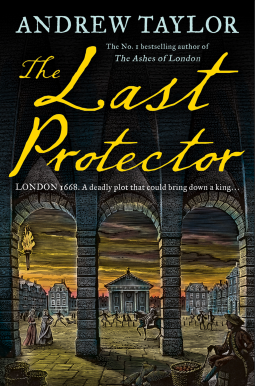
Fourth in the 17th century crime series by Andrew Taylor, The Last Protector sees the return to London of Richard, Oliver Cromwell’s son, and last Protector of England before the restoration of the king in 1660. And it also heralds the central plot return of Cat Lovett. Ever since the first book in the series, I have waited for Cat to have a key role in the plot again. Andrew TaylorThe story begins as James Marwood, clerk to the Under secretary of State to Lord Arlington, is sent to secretly observe a duel between two lords. Meanwhile Cat, now Mistress Hakesby and married to a frail elderly architect, meets a childhood acquaintance in the street. This is Elizabeth Cromwell, daughter of Richard. Remembering their friendship as a fleeting thing, Cat is confused by Elizabeth’s eagerness to rekindle their relationship. Until, visiting Elizabeth at her godmother’s house, she is introduced to a fellow guest John Cranmore. But a peculiar habit of tapping a finger on the table brings back memories for Cat, to the time when she and her father moved in elevated political circles, and she realizes Cranmore is a false name. Elizabeth, it becomes clear, is seeking a precious object hidden by her grandmother. The object is hidden in the Whitehall sewers beneath The Cockpit, site of the cockfighting pit, theatre and jumble of additional buildings. The Hakesbys have the architectural drawings and Elizabeth needs Cat’s help to instigate her search.
In the bigger picture, Easter holiday riots attacking brothels seem to be politically motivated. Holidays are notorious times for brawls by apprentices, but these riots by the Levellers seem encouraged by bawdy newssheets of questionable origin. The Levellers shout ‘we have been servants, but we will be masters now’. Marwood is attacked and chased around the back alleys of the City while Cat, helping Elizabeth retrieve the mysterious package, is chased and escapes with the help of Ferrus, a mazer scourer, the lowest of the low who clears blockages in the sewers.
Marwood and Cat share little page time but their separate stories and chases become entwined as the troublesome history of Cat’s dissenter father puts her in grave danger. And affecting everything are the political machinations and arguments between crown and government.
An excellent page-turner.
CLICK HERE TO READ MORE ABOUT THIS BOOK AT AMAZON

Read my reviews of the other books in this series:
THE ASHES OF LONDON #FIREOFLONDON1… and try the first paragraph of THE ASHES OF LONDON.
THE FIRE COURT #FIREOFLONDON2
THE KING’S EVIL #FIREOFLONDON3
THE ROYAL SECRET #FIREOFLONDON5
THE SHADOWS OF LONDON #FIREOFLONDON6

And a World War Two novel by the same author:-
THE SECOND MIDNIGHT

If you like this, try:-
The Wicked Cometh’ by Laura Carlin
The Mermaid and Mrs Hancock’ by Imogen Hermes Gowar
‘The Winter Garden’ by Nicola Cornick

And if you’d like to tweet a link to THIS post, here’s my suggested tweet:
#BookReview THE LAST PROTECTOR by @AndrewJRTaylor https://wp.me/p5gEM4-4tI via @SandraDanby

#BookReview ‘The Secrets We Kept’ by @laraprescott #Cold War #Pasternak

The Secrets We Kept by Lara Prescott is a mixture of Cold War thriller, romance and the true story of the publication of Dr Zhivago by Boris Pasternak. Set in the 1950s, this novel is about the power of the written word. So powerful that two nations try to outwit the other as a big new novel is set to be published; neither has any regard for the effects of their plans on the author. Lara PrescottThe two worlds are radically different, Prescott builds both convincingly. I can see Pasternak’s vegetable garden at his dacha, I can hear the typewriters in the Typing Pool at The Agency on National Mall in Washington DC. It is important to note that this is a blend of real events, real people and total fiction.
Irina is American, a first generation Russian-American, her father left behind in the Soviet Union as his pregnant wife departed for a new life in America. Irina’s Mama is a dressmaker, speaking Russian to Irina at home while making elaborate dresses for Russian immigrants. Irina never meets her father. Always an outsider, when she goes for a job interview in a typing pool Marla wears a skirt made for her by Mama. She gets the job in the Typing Pool at The Agency (the CIA) because she has something different to offer; she is trained for extra duties in the evening, acting as a messenger and learning tradecraft to avoid detection. Her job is at The Agency’s Soviet Russia Division, the ‘SR’.
In Moscow, Boris Pasternak is writing a novel and reading it aloud to his lover, Olga. One day Pasternak, deemed a threat by the authorities, is sent a warning: Olga is sent to a work camp for three years. When she returns home, his novel is finished. It is Dr Zhivago.
The Secrets We Kept is a fascinating read, a glimpse into the true story of Dr Zhivago’s publication and the role of the CIA in disseminating it to Soviet citizens. Structurally the pace did not hold up and slowed each time the story moved to Boris and Olga. But some interesting areas are covered – the treatment of homosexuals in the workplace and sexual manipulation between the ranks, the assimilation of first generation Americans, and the American obsession with communism.
Set at the time of Sputnik, Prescott is good at the contemporary culture, politics and the atmosphere of rivalry and impending threat of the Soviet Union. The clothes, the food, the films, the parties. The typists see and hear but don’t repeat, but are as capable of analysing and doing the jobs that the men are doing.
The ending fizzled out, perhaps because the book tries to do so much, possibly too much.
CLICK HERE TO READ MORE ABOUT THIS BOOK

If you like this, try:-
An Officer and a Spy’ by Robert Harris
‘The Translation of Love’ by Lynne Kutsukake
The Museum of Broken Promises’ by Elizabeth Buchan

And if you’d like to tweet a link to THIS post, here’s my suggested tweet:
#BookReview THE SECRETS WE KEPT by Lara Prescott https://wp.me/p5gEM4-4tg via @SandraDanby