Tag Archives: thriller

#BookReview ‘Transcription’ by Kate Atkinson #WW2

Few of the characters in Transcription by Kate Atkinson are who they seem to be. A novel of the Second World War, Transcription suggests that the ripples of wartime secrecy spread out through the following years so that outstanding lies and betrayals are eventually repaid. Many years later. Kate AtkinsonIn 1940, Juliet Armstrong intends to join one of the women’s armed forces when she receives a letter on government notepaper and is summoned to an interview. After being informed by telegram that she has got the, still unspecified, job, Juliet boards a bus which takes her to Wormwood Scrubs prison, now converted into government offices. There she works in Registry, shuffling files around, until Perry Gibbons says, ‘I need a girl’ and Juliet finds herself working for Perry’s MI5 counter-fascism team at a flat in Dolphin Square.
Told across two timelines, 1940 and 1950 – with a brief glimpse at 1981 in the prologue and epilogue – Transcription has a huge cast of characters, most of whom I confused and, I suspect, Atkinson wishes me to confuse. Some characters are spies with cover names, some are only described and have no name while others seem innocent, too innocent to actually be innocent. If this is all confusing, it is meant to be. That is Atkinson’s point. This is a story about the importance of truth and how lies, which seem pragmatic and normal in wartime, are still lies. And that the most obvious traitors are not always the ones to be worried about.
The 1940 storyline covers the MI5 operation. At first, Juliet’s job is type up transcripts of bugged conversations between fascist supporters in the next door flat; later she takes on the persona of Iris to infiltrate a group of fascist agitators. Sometimes she fluffs her lines, sometimes she is impulsive and gets into trouble. At all times she feels isolated and unsure of the value of what she is doing. She is also a young woman and looks for signs of interest from the men surrounding her. In 1950, while working in the Schools Department of the BBC making educational radio programmes with titles such as ‘Can I Introduce You To?’ and ‘Have You Met?’, she sees familiar faces from her wartime days and the past revisits her.
Atkinson excels at the small detail which makes these workplaces convincing, creating believable relationships between Juliet and radio engineer Cyril at Dolphin Square, and with junior programme engineer Lester Pelling at the BBC. I enjoyed this book but wouldn’t describe it as a page turner. I’m not sure I liked Juliet but she held enough fascination for me as I tried to figure out what she did and didn’t believe in. I was never totally sure if I believed in her.
The Author’s Note at the end of the book is fascinating and perhaps would have served better as a Foreword. So, in summary, not my favourite Atkinson novel but not a bad one either.

Click the title to read my reviews of these other books by Kate Atkinson:-
A GOD IN RUINS
BIG SKY #5JACKSONBRODIE
DEATH AT THE SIGN OF THE ROOK #6JACKSONBRODIE
LIFE AFTER LIFE
NORMAL RULES DON’T APPLY
SHRINES OF GAIETY
… and try the #FirstPara of EMOTIONALLY WEIRD

If you like this, try:-
The Heat of the Day’ by Elizabeth Bowen
After the Party’ by Cressida Connolly
Shelter’ by Sarah Franklin

And if you’d like to tweet a link to THIS post, here’s my suggested tweet:
#BookReview TRANSCRIPTION by Kate Atkinson https://wp.me/p5gEM4-4cx via @SandraDanby
#BookReview ‘The Last Protector’ by @AndrewJRTaylor #Historical

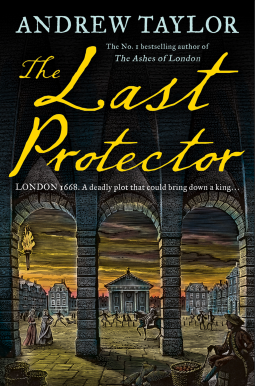
Fourth in the 17th century crime series by Andrew Taylor, The Last Protector sees the return to London of Richard, Oliver Cromwell’s son, and last Protector of England before the restoration of the king in 1660. And it also heralds the central plot return of Cat Lovett. Ever since the first book in the series, I have waited for Cat to have a key role in the plot again. Andrew TaylorThe story begins as James Marwood, clerk to the Under secretary of State to Lord Arlington, is sent to secretly observe a duel between two lords. Meanwhile Cat, now Mistress Hakesby and married to a frail elderly architect, meets a childhood acquaintance in the street. This is Elizabeth Cromwell, daughter of Richard. Remembering their friendship as a fleeting thing, Cat is confused by Elizabeth’s eagerness to rekindle their relationship. Until, visiting Elizabeth at her godmother’s house, she is introduced to a fellow guest John Cranmore. But a peculiar habit of tapping a finger on the table brings back memories for Cat, to the time when she and her father moved in elevated political circles, and she realizes Cranmore is a false name. Elizabeth, it becomes clear, is seeking a precious object hidden by her grandmother. The object is hidden in the Whitehall sewers beneath The Cockpit, site of the cockfighting pit, theatre and jumble of additional buildings. The Hakesbys have the architectural drawings and Elizabeth needs Cat’s help to instigate her search.
In the bigger picture, Easter holiday riots attacking brothels seem to be politically motivated. Holidays are notorious times for brawls by apprentices, but these riots by the Levellers seem encouraged by bawdy newssheets of questionable origin. The Levellers shout ‘we have been servants, but we will be masters now’. Marwood is attacked and chased around the back alleys of the City while Cat, helping Elizabeth retrieve the mysterious package, is chased and escapes with the help of Ferrus, a mazer scourer, the lowest of the low who clears blockages in the sewers.
Marwood and Cat share little page time but their separate stories and chases become entwined as the troublesome history of Cat’s dissenter father puts her in grave danger. And affecting everything are the political machinations and arguments between crown and government.
An excellent page-turner.
CLICK HERE TO READ MORE ABOUT THIS BOOK AT AMAZON

Read my reviews of the other books in this series:
THE ASHES OF LONDON #FIREOFLONDON1… and try the first paragraph of THE ASHES OF LONDON.
THE FIRE COURT #FIREOFLONDON2
THE KING’S EVIL #FIREOFLONDON3
THE ROYAL SECRET #FIREOFLONDON5
THE SHADOWS OF LONDON #FIREOFLONDON6

And a World War Two novel by the same author:-
THE SECOND MIDNIGHT

If you like this, try:-
The Wicked Cometh’ by Laura Carlin
The Mermaid and Mrs Hancock’ by Imogen Hermes Gowar
‘The Winter Garden’ by Nicola Cornick

And if you’d like to tweet a link to THIS post, here’s my suggested tweet:
#BookReview THE LAST PROTECTOR by @AndrewJRTaylor https://wp.me/p5gEM4-4tI via @SandraDanby

#BookReview ‘The Secrets We Kept’ by Lara Prescott #Cold War #Pasternak

The Secrets We Kept by Lara Prescott is a mixture of Cold War thriller, romance and the true story of the publication of Dr Zhivago by Boris Pasternak. Set in the 1950s, this novel is about the power of the written word. So powerful that two nations try to outwit the other as a big new novel is set to be published; neither has any regard for the effects of their plans on the author. Lara PrescottThe two worlds are radically different, Prescott builds both convincingly. I can see Pasternak’s vegetable garden at his dacha, I can hear the typewriters in the Typing Pool at The Agency on National Mall in Washington DC. It is important to note that this is a blend of real events, real people and total fiction.
Irina is American, a first generation Russian-American, her father left behind in the Soviet Union as his pregnant wife departed for a new life in America. Irina’s Mama is a dressmaker, speaking Russian to Irina at home while making elaborate dresses for Russian immigrants. Irina never meets her father. Always an outsider, when she goes for a job interview in a typing pool Marla wears a skirt made for her by Mama. She gets the job in the Typing Pool at The Agency (the CIA) because she has something different to offer; she is trained for extra duties in the evening, acting as a messenger and learning tradecraft to avoid detection. Her job is at The Agency’s Soviet Russia Division, the ‘SR’.
In Moscow, Boris Pasternak is writing a novel and reading it aloud to his lover, Olga. One day Pasternak, deemed a threat by the authorities, is sent a warning: Olga is sent to a work camp for three years. When she returns home, his novel is finished. It is Dr Zhivago.
The Secrets We Kept is a fascinating read, a glimpse into the true story of Dr Zhivago’s publication and the role of the CIA in disseminating it to Soviet citizens. Structurally the pace did not hold up and slowed each time the story moved to Boris and Olga. But some interesting areas are covered – the treatment of homosexuals in the workplace and sexual manipulation between the ranks, the assimilation of first generation Americans, and the American obsession with communism.
Set at the time of Sputnik, Prescott is good at the contemporary culture, politics and the atmosphere of rivalry and impending threat of the Soviet Union. The clothes, the food, the films, the parties. The typists see and hear but don’t repeat, but are as capable of analysing and doing the jobs that the men are doing.
The ending fizzled out, perhaps because the book tries to do so much, possibly too much.

If you like this, try:-
An Officer and a Spy’ by Robert Harris
‘The Translation of Love’ by Lynne Kutsukake
‘The Museum of Broken Promises’ by Elizabeth Buchan

And if you’d like to tweet a link to THIS post, here’s my suggested tweet:
#BookReview THE SECRETS WE KEPT by Lara Prescott https://wp.me/p5gEM4-4tg via @SandraDanby

#BookReview ‘Hitler’s Secret’ by Rory Clements #thriller #WW2

Fourth in the Tom Wilde World War Two spy mysteries, Hitler’s Secret by Rory Clements hits the ground running and keeps the pages turning. The secret in question is a ten-year old girl who may or may not be the love child of Hitler. Klara has a false identity and is hidden but is now in imminent danger of exposure and murder. Rory ClementsWilde travels to Berlin disguised as a German-American motorcycle manufacturer in search of a business deal. His cover enables him to meet allies and search for Klara. Unsure of his mission from the beginning, Wilde imagines that everyone can see through his false identity, everyone is planning to kill him. Clements tells the story at breakneck speed, flicking from viewpoint to viewpoint. Martin Bormann, Hitler’s gatekeeper wants Klara dead and despatches a henchman, Otto Kalt. But it seems everyone touched by Klara’s story is at risk of death. As Wilde closes in on Klara’s hiding place, so do her killers. What ensues is a tense chase north across Germany towards the promised sanctuary of Sweden. And at all times it is assumed Hitler is unaware of the girl’s existence. But who else knows the secret?
At the heart of this story is trust. Believing loyalty expressed at time of war can be a treacherous decision and at times Tom feels everyone has an agenda except him. Even his allies have their own motivations, their own friends and loyalties. Expecting to collect a ‘package’ in Berlin, he is horrified to find he is collecting a girl; he feels duped and used by his spy chiefs. And as Tom runs, it is impossible for him to identify his pursuers. His judgement is seriously challenged and he trusts no-one. What is on the surface a matter of shaming the perfect Adolf Hitler, so popular with his German female citizens, is at the same time a fight between the most elite of German officials.
Familiar characters from earlier books in the series recur: Tom’s partner Lydia, American diplomat Jim Vandenberg and Wilde’s contact at British intelligence, Philip Eaton. History professor Wilde is an affecting amateur spy, diligently learning the role he is assigned but relying on his instincts to get him out of trouble. Of course, the best laid plan can go wrong but this time the plan is not organised in advance and Tom is on his own. He will sink or swim and the few he trusts do not know if he is alive or dead.

Click the title to read my reviews of the other books in the Tom Wilde series:-
CORPUS #1TOMWILDE
NUCLEUS #2TOMWILDE
NEMESIS #3TOMWILDE

A PRINCE AND A SPY #5TOMWILDE
THE MAN IN THE BUNKER #6TOMWILDE
THE ENGLISH FUHRER #7TOMWILDE
A COLD WIND FROM MOSCOW #8TOMWILDE

And from the Sebastian Wolff series:-
MUNICH WOLF #1SEBASTIANWOLFF
EVIL IN HIGH PLACES #2SEBASTIANWOLFF

If you like this, try:-
The Ways of the World’ by Robert Goddard #1WIDEWORLD
Munich’ by Robert Harris
Five Days of Fog’ by Anna Freeman

And if you’d like to tweet a link to THIS post, here’s my suggested tweet:
#BookReview HITLER’S SECRET by Rory Clements https://wp.me/p5gEM4-47r via @SandraDanby

#BookReview ‘The Museum of Broken Promises’ by Elizabeth Buchan @elizabethbuchan #thriller #spy

The Museum of Broken Promises by Elizabeth Buchan is a disjointed story of Cold War romance and its lingering after-effects decades later. Promises are made and broken, by everyone. The title is misleading, as the sections at the museum in present day in Paris act as bookends to the crucial story in Eighties story in Czechoslovakia. Elizabeth BuchanIt is 1985, Prague. After the death of her father, student Laure takes a job as an au pair in Paris moving to Prague with her employers. It is the Cold War and the once beautiful city is shabby and grey, an unsettling place to live where the threat of imprisonment or violence always lingers. Laure cares for two small children while their father Petr works, he is an official at a pharmaceuticals company and in a privileged position enabling him to bring a foreigner to work in the country, and their mother Eva is ill. Gradually Laure explores the streets and finds a marionette theatre. There she is enchanted by the folklore tales of the puppets; and she meets Tomas, lead singer in a rock band.
Resistance against the repressive regime in Czechoslovakia is low key, expressed through the arts. In this way, the book reminded me of Tom Stoppard’s play Rock and Roll which tells the story of rock band The Plastic People of the Universe. The Museum of Broken Promises is a story of a young student who falls in love with a bad boy who describes himself as a ‘rock soldier making war on the party’. But these words – soldier, war – are used in a student resistance sense, not actual war. This is quiet resistance rather than terrorism, but is none the weaker for this. Songs and marionettes can spread important messages of defiance, as Laure finds  when she goes to a rock concert. Singing and dancing can be subversive. As someone says, it is ‘giving into forbidden yearning and loyalties. Tasting resistance like wine on the tongue’. Laure’s time in Prague echoes throughout her later life and leads her to open her museum in Paris, inviting mementoes from strangers, objects that represent broken promises.
The Museum of Broken Promises is a slow moving contemplative story, without the pace of a thriller despite its Cold War setting and the constant threat to anyone who speaks or behaves out of turn. This lack of propulsion makes it seem a longer book than it is and I wanted it to have some bite. The story moves back and forth from Prague to Paris and more than once I wasn’t sure where Laure was. This adds to the sense that nothing is what it seems.
Laure is an innocent who is sometimes stupidly naïve, unknowingly putting other people in danger. It is an example of the idealism and irreverence of youth ignoring advice. As she is warned on her arrival in Prague, don’t ask questions, don’t answer questions.

If you like this, try:-
‘If I Knew You Were Going to be This Beautiful, I Never Would Have Let You Go’ by Judy Chicurel
The Bone Church’ by Victoria Dougherty
Hangover Square’ by Patrick Hamilton

And if you’d like to tweet a link to THIS post, here’s my suggested tweet:
#BookReview THE MUSEUM OF BROKEN PROMISES by Elizabeth Buchan @elizabethbuchan https://wp.me/p5gEM4-4sA via @SandraDanby

#BookReview ‘The Second Midnight’ by Andrew Taylor @AndrewJRTaylor #WW2

In The Second Midnight, Andrew Taylor unpicks the connections between a group of people – a dysfunctional family, spies, ordinary people – before, during and after World War Two in England and Czechoslovakia. Essentially it is a novel of relationships wrapped up in the parcel of wartime spying, lies and romance. In its scope it reminds me of Robert Goddard’s Wide World trilogy, except Taylor covers the subject in one book rather than three. Andrew TaylorIt is 1939 and twelve year old Hugh Kendall is bullied by his father, sighed over by his harried mother, ignored by his older brother and manipulated by his older sister. Hugh retreats into imaginative games with his toy soldiers. His father, failing glass importer Alfred Kendall, is recruited by the Secret Services as a courier on a glass-buying trip to Czechoslovakia. In tow is Hugh, recently expelled from school, a nuisance to his father. Alfred is not a natural spy, though he thinks he is. When things get sticky and Alfred must return to England, the Czech Resistance keeps Hugh as collateral to ensure his father’s quick return. But Hugh finds himself alone in Prague after the German invasion, unsure who to trust, unsure if he will be rescued. He quickly learns to live on his wits. This for me was the best section of the book.
The thing that makes this story stand apart for me is Hugh. He makes an uncanny narrator, giving us a view of life in an occupied country, stranded from everything that is safe and familiar. Adept at languages, Hugh quickly becomes familiar with Czech and German allowing him to assume a false identity as Rudi Messner, a Czech-Hungarian boy.  Cared for by a German officer, Colonel Helmut Scholl, Hugh works as the gardener’s boy at Scholl’s mansion in Prague and meets the colonel’s children, Heinz and Magda. These relationships weave across the years and the pages into the post-war years and the fight against communism.
The significance of the title left me wondering if I had missed something. It is set up with an intriguing connection between two characters, then abandoned. The connection with the Prologue was also lost on me as it is only mentioned again at the end and I had forgotten what happened; ends neatly tied without adding understanding. Taylor knows how to tell a page turning story, I read this quickly. This is a fascinating read over a complex time period, but an enormous subject; I wish it had been given the space of three books to explore fully.

Read my reviews of Andrew Taylor’s ‘Marwood & Lovett’ series that starts on the night of the Great Fire of London:-
THE ASHES OF LONDON #FIREOFLONDON1… and read the first paragraph of THE ASHES OF LONDON.
THE FIRE COURT #FIREOFLONDON2
THE KING’S EVIL #FIREOFLONDON3
THE LAST PROTECTOR #FIREOFLONDON4
THE ROYAL SECRET #FIREOFLONDON5
THE SHADOWS OF LONDON #FIREOFLONDON6

If you like this, try:-
Corpus’ by Rory Clements #1TOMWILDE
The Ways of the World’ by Robert Goddard #1WIDEWORLD
Five Days of Fog’ by Anna Freeman

And if you’d like to tweet a link to THIS post, here’s my suggested tweet:
#BookReview THE SECOND MIDNIGHT by Andrew Taylor @AndrewJRTaylor https://wp.me/p5gEM4-4gC via @SandraDanby

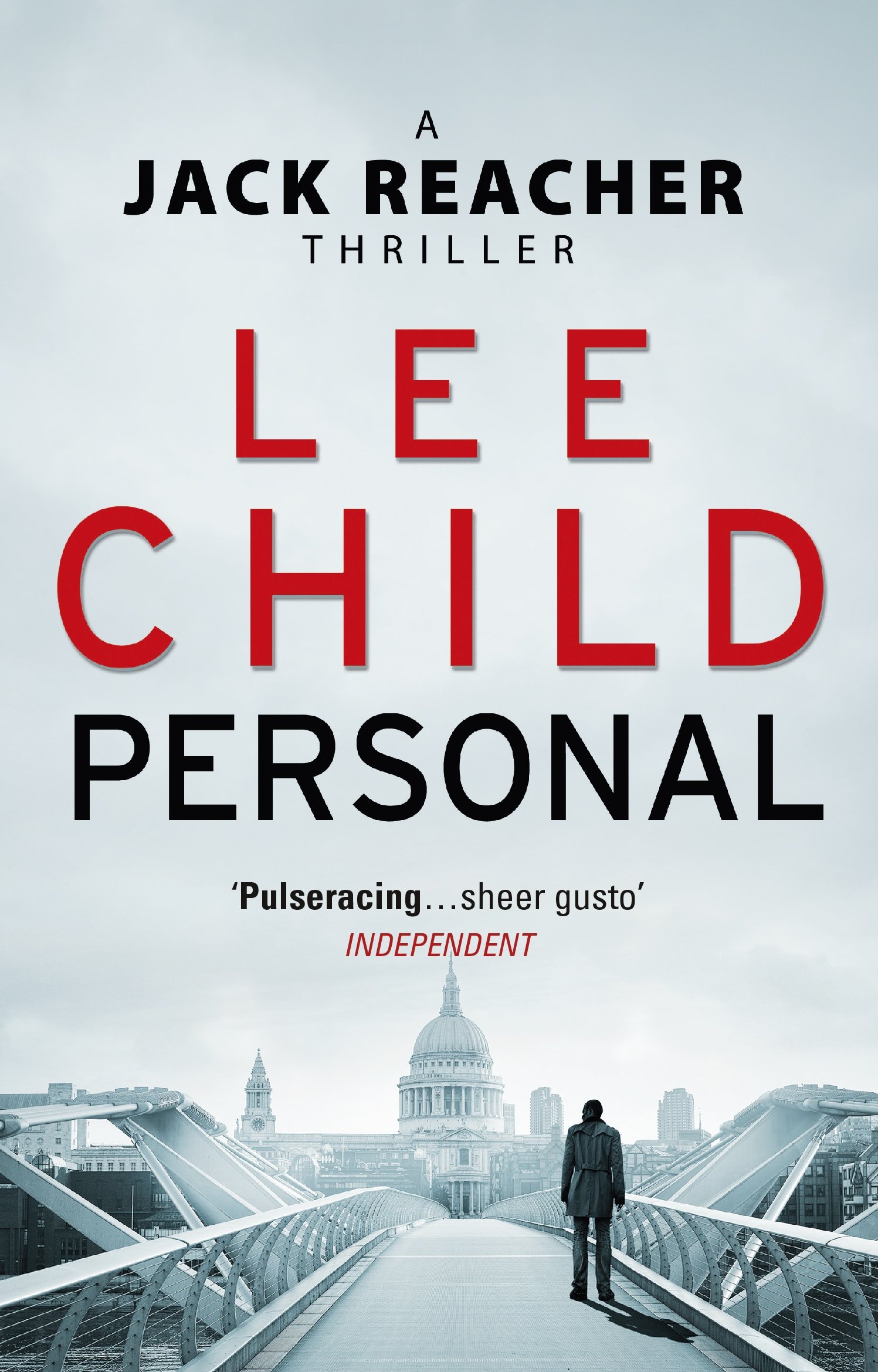
Great Opening Paragraph 117… ‘Personal’ #amreading #FirstPara

‘Eight days ago my life was an up and down affair. Some of it good. Some of it not so good. Most of it uneventful. Long slow periods of nothing much, with occasional bursts of something. Like the army itself. Which is how they found me. You can leave the army, but the army doesn’t leave you. Not always. Not completely.’
Lee ChildFrom ‘Personal’ by Lee Child

Try one of these #FirstParas & discover a new author:-
‘Sea Glass’ by Anita Shreve
‘The Curious Incident of the Dog in the Night-Time’ by Mark Haddon
‘American Psycho’ by Brett Easton Ellis

And if you’d like to tweet a link to THIS post, here’s my suggested tweet:
#Books #FirstPara PERSONAL by @LeeChildReacher https://wp.me/p5gEM4-3gI via @SandraDanby

#BookReview ‘Munich’ by Robert Harris @Robert___Harris #spies #WW2 #thriller

Robert Harris is a classy thriller writer at the top of his game. Munich is his re-telling of the September 1938 meetings between British Prime Minister Neville Chamberlain and German Chancellor Adolf Hitler. Both had public, and private, objectives. Chamberlain was a pragmatist; though he sought peace, he was prepared to accept a delay of war to enable our woefully-equipped armed forces to prepare. Hitler wanted all of Europe for Aryans, which meant war. All of this is well-documented. But Harris takes two fictional characters and places them into this real history, splicing their personal stories into the political drama. Robert HarrisHugh Legat and Paul von Hartmann met at Oxford in the early Thirties. In 1938, Legat is a junior private secretary to Chamberlain. Hartmann holds a similar position in the German government; he is also part of the anti-Hitler movement. They two men have not spoken or seen each other since a holiday in Munich with a girlfriend. We do not know why. Everyone in this story faces a personal decision of conscience: whether to be loyal to country, self, and family, or betray them. The costs are different for each person. For some; death. For others; isolation, loss of job, loss of family, loss of self-respect.
Chamberlain and Hitler meet in Munich with Mussolini and Daladier to settle the fate of the Sudetenland in Czechoslovakia. We are party to a fascinating game of chess as the diplomats and civil servants behind each of the leaders struggle to find a way through the opposition’s refusals and disagreements. The subtle tensions and pettiness within the teams, the one-upmanship, the jealousies, the cliques – which anyone who has worked in management will recognise – remind us that these politicians are ordinary people with an extra-ordinary job to do. If they fail, millions will die. Chamberlain is portrayed as a dedicated, workaholic who is desperate to avoid another war less than twenty years after the end of the Great War.
I read this over a weekend, the last pages flew by as Legat and Hartmann sneak around Munich, hiding secret documents and running from the Gestapo. This is a meticulously-researched literary thriller where the tension comes partly from our own knowledge of the outcome and our understanding that, whatever words the British present, Hitler’s mind is made up. Chamberlain will give his ‘peace in our time’ speech. But to find out what happens to the fictional Hugh and Paul, we must read to the end.

Read my reviews of these other thrillers, also by Robert Harris:-
AN OFFICER AND A SPY
PRECIPICE
V2

and try the #FIRSTPARA of THE GHOST, also by Robert Harris

If you like this, try:-
‘The Travelers’ by Chris Pavone
‘Darktown’ by Thomas Mullen
‘The Long Drop’ by Denise Mina

And if you’d like to tweet a link to THIS post, here’s my suggested tweet:
#BookReview MUNICH by Robert Harris @Robert___Harris https://wp.me/p5gEM4-357 via @SandraDanby

#BookReview ‘Five Days of Fog’ by Anna Freeman #thriller #crime

Five Days of Fog by Anna Freeman about the queen of a female crime syndicate coming out of prison reminds me of Martina Cole’s books. It is 1952 and as Florrie Palmer waits for her mother Ruby to return home, she must make a decision about the direction of her own life. Anna FreemanLondon remains in the grip of ruins from the war and Florrie is firmly embedded in the family gang, donning disguises to steal, feeling secure in the circle of women who support each other. But she also applies for a job as a telephonist, carefully practising her accent.
The action is framed by five days of fog, both physical and perceived. So dense is visibility that cars crash, chemicals cause lung infections and people are coughing up dirt. The fog offers opportunities for thieves but it also disguises the truth and lies told to each other by the gang as they face a turning point. Old lies are perpetuated, new lies told with a smile, some members are out for their own benefit; others are tired of the secrets and politicking, and just want to get back to what they do best. Freeman’s fog is based on the real Great Smog of 1952 when an anticyclone pushed down all the filth in the air from industry, motor vehicle fumes and smoke from coal fires; it was followed in 1956 by the Clean Air Act.
The Palmer women form the Cutters, a fictional women’s gang named for The New Cut, a London market where the first group of women, tired of poverty and scrubbing floors, started shoplifting. When queen Ruby comes out of jail on early release, she has TB. As jostling begins in anticipation of the crowning of a new queen, there is a potentially bigger problem risking the survival of the Cutters and the male gang, the Goddens [the Palmer girls marry Godden boys, keeping the two gangs linked by DNA]; someone is grassing them up to the police. Trust is fractured, suspicious run rife, knives are carried, somewhere there is a gun. The story is told from multiple viewpoints – Florrie, Ruby, Nell, Ted – possibly too many. Is Florrie the grass? After all, she has dreams of going straight and marrying Nell’s son Ted, her quiet second cousin. If Ruby dies, Florrie will be in line to take over as queen. Or will Ruby’s blustering be-ringed sister Maggie take over? What about Ada, Ruby’s elderly aunt? Or is Harry Godden the queenmaker? Florrie and Ted are drawn into the gang by the family’s tentacles that keep the gang strong, safe and in the family.
I finished this book with mixed feelings. I admire the writing but don’t like any of the women and don’t feel convinced by the world created, though I can’t pin down why. I continued reading through the jumble of family background and names in the first half because I was curious about the identity of the grass. For me, the book took off in the second half as Nell’s story ignites. But the star of this book for me is Freeman’s masterful use of the fog.
If you are a fan of Freeman’s debut, The Fair Fight, be prepared for something completely different.

Read my review of THE FAIR FIGHT, also by Anna Freeman.

If you like this, try:-
Beginnings’ by Helen Christmas #1SAMEFACEDIFFERENTPLACE
Hangover Square’ by Patrick Hamilton
‘Never’ by Ken Follett

And if you’d like to tweet a link to THIS post, here’s my suggested tweet:
#BookReview FIVE DAYS OF FOG by Anna Freeman https://wp.me/p5gEM4-3U7 via @SandraDanby

#BookReview ‘Nemesis’ by Rory Clements #thriller #WW2

Nemesis by Rory Clements is the third in his Tom Wilde series which sees the American-born Cambridge professor tangle with more spies as Britain enters the Second World War. It is a page-turning read that I galloped through despite a few moments of confusion about who was double-crossing who; to the point where I started to distrust everyone except Tom. Rory ClementsIt is September 1939 and a strange time, the pause before war starts when sandbags are filled and the propaganda starts. Wilde, on holiday in southern France with girlfriend Lydia, negotiates the release of a former student, a brilliant chorister, from an internment camp. Marcus Marfield fought for the International Brigade in the Spanish Civil War and seems to be suffering from PTSD. Wilde returns him to Cambridge though feeling uneasy about the circumstances of Marcus’s release. Marcus’s behaviour is worrying. Clements includes many of the characters featured in the earlier two books, including British spy Philip Eaton, doctor Rupert Weir and fellow don Horace Dill.
Critical at this stage of the war was America joining the Allies but two unrelated incidents spread bad PR in the US; the ambassador in Paris escapes assassination and a British ship The Athenia, carrying American civilians, is sunk. On board are the wife and children of Jim Vandenberg, Tom’s contact at the US Embassy. As Jim waits for news of his wife and sons, strange things start to happen around Marcus Marfield and Tom is pulled into the investigation. Though unqualified, he has a skill for spying and takes to it eagerly, always riding his distinctive Rudge motorcycle.
This is a fun, gripping series set at a fascinating time in Britain’s history when each side was plotting to win the propaganda war and influence America. It tempts me to start reading Clements’ Elizabethan spy novels.

Click the title to read my reviews of the other books in the Tom Wilde series:-
CORPUS #1TOMWILDE
NUCLEUS #2TOMWILDE
HITLER’S SECRET #4TOMWILDE

A PRINCE AND A SPY #5TOMWILDE
THE MAN IN THE BUNKER #6TOMWILDE
THE ENGLISH FUHRER #7TOMWILDE
A COLD WIND FROM MOSCOW #8TOMWILDE

And from the Sebastian Wolff series:-
MUNICH WOLF #1SEBASTIANWOLFF
EVIL IN HIGH PLACES #2SEBASTIANWOLFF

If you like this, try:-
A Hero in France’ by Alan Furst
An Officer and a Spy’ by Robert Harris
Day’ by AL Kennedy

And if you’d like to tweet a link to THIS post, here’s my suggested tweet:
#BookReview NEMESIS by Rory Clements https://wp.me/p5gEM4-3PU via @SandraDanby