Tag Archives: World War Two

#BookReview ‘The Secret History of Audrey James’ by Heather Marshall #WW2

The Secret History of Audrey James by Heather Marshall sat for some time on my Kindle before I read it. It’s a World War Two story, a period which fascinates me, so why did I delay? On reflection I think it was because the story of Audrey James is inspired by historical fact. I’ve been disappointed in the past by novels where a fictional story is unexplored because the author sticks too close to the truth. I needn’t have worried. Heather MarshallAudrey James is based on a real woman but Audrey herself is fictional. Marshall uses the truth as inspiration to creative a novel that’s impossible to put down. I read this, at times harrowing, novel quickly. It is told in two timelines, Germany in 1938-1945 and Alnwick, England 2010. In 1945 at the end of the war, a troop of Canadian soldiers have just liberated a Dutch village. As they play cards, they notice a bedraggled woman walking towards them, her dress is torn, she is missing a shoe. This is Audrey James and this is the story of her war and her role in the German resistance which fought against Hitler.
In pre-war Berlin, British teenage pianist Audrey is living with her German friend Ilse Kaplan while she studies at the conservatory. On one day, their world changes. Ilse’s family are arrested and the house is requisitioned by two Nazi officers. Without anywhere else to go and no money, the two girls must react quickly. Ilse, who is Jewish, hides in the attic while Audrey becomes housekeeper for the two men. As war approaches, Audrey’s father in England writes telling her to come home. But Audrey is unable to leave Ilse despite being in danger herself.
In London in 2010, Kate Mercer is packing up her possessions. She and her husband are divorcing and, after the recent loss of her parents, Kate is seeking a new start. Drawn to a hotel in the North of England where her parents went on honeymoon, Kate puts the dog in the car and drives to Alnwick. She has a new job, as assistant administrator at the Oakwood Hotel. Very quickly Kate knows she’s made a mistake. The elderly owner of the hotel is grumpy, unwelcoming and very old. The two women are alone in the house during winter, both are secretive and defensive. Why does Kate feel guilty? And who is her elderly employer?
The twists and turns of this story are unpredictable and that’s what kept me reading. Audrey is prepared to do anything to keep Ilse safe. When she has the opportunity to join the Red Orchestra, a resistance group, she doesn’t hesitate. Her bravery is breathtaking. Audrey’s story is told in two phases, woven into Kate’s modern-day life. There are universal themes of love and loss, forgiveness and survival, both during wartime and many decades after.
This is a fascinating portrayal of the role of women in wartime, their bravery, ingenuity and determination. Canadian writer Marshall also writes about the strength of women in her previous novel Looking for Jane, which is now added to my To-Read list.
Excellent.

If you like this, try:-
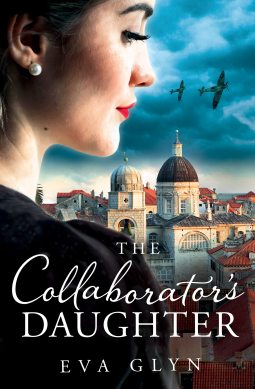
The Collaborator’s Daughter’ by Eva Glyn
Homeland’ by Clare Francis
The Last Lifeboat’ by Hazel Gaynor

And if you’d like to tweet a link to THIS post, here’s my suggested tweet:
#BookReview THE SECRET HISTORY OF AUDREY JAMES by Heather Marshall https://wp.me/p2ZHJe-8pv via @SandraDanby

COMING SOON… THE NEXT BOOK I REVIEW WILL BE:- Mary Horlock

#BookReview ‘My Father’s House’ by Joseph O’Connor #WW2 #thriller

My Father’s House by Joseph O’Connor starts with great tension. Nazi-occupied Rome in 1943. A diplomat’s wife, a priest, an injured man are driving madly through the empty city streets. It is ‘119 hours and 11 minutes before the mission.’ Joseph O'ConnorThis is the story of five days in the life of the resistance members of The Choir, including a priest based in the neutral Vatican City and in neighbouring Rome a collection of Italian and foreign partisans. Hundreds of Allied soldiers are hidden around the city, awaiting movement to safety, risking daily capture. Gestapo boss Paul Hauptmann is obsessed with arresting and torturing the leader, Monsignor Hugh O’Flaherty, who ‘had three doctorates and was fluent in seven languages, his mind was like a lawnmower blade, he’d shear through any knot and see a solution.’
Based on a true story, the author’s caveat at the end emphasizes that real incidents have been condensed, characters amalgamated and invented. Terror comes to the holy city. Barriers are erected across St Peter’s Square in Vatican City and the special Vatican troops are issued with sub-machine guns.
The premise is fascinating, its an area of World War Two history I haven’t read about before; a great premise that takes detours away from the main storyline. Tension ebbs and flows because the objective of the ‘rendimento,’ the mission, is never really clear. The story is told in a combination of voices featuring retrospective post-war interviews with some of the Choir and the 1943 narratives of O’Flaherty, Hauptmann and D’Arcy Osborne, UK ambassador to the Holy See and in refuge in the holy city.
There is some beautiful description of the grandiose settings, sometimes too much if I’m honest. It is a difficult balance to strike, maintaining the tension, the threat and the danger, while enriching the atmosphere and setting. Get it wrong, and it distracts from the main thrust of the story. One example of beautiful description which adds to the story is O’Flaherty in the scriptorium, his workplace. From the darkest corner he removes a hefty book, ‘Illuminated grinning evangelists, scarlet dragons, silver gryphons, the rook-black of the text, the black of burned coal. Then a carnival of ornamented capitals wound in eagles and serpents, the haloes of archangels forming ivory O’s, to the hollow where the middle quires have been patiently razored out in which eleven folded pieces of architectural paper are hidden… Names, contacts, hiding places, dates.’
This is a hybrid literary thriller about a fascinating subject. I wanted slightly less of the architecture, art and memories of times past, and more about The Choir and the individuals involved. This is the first of the Rome Escape Line series. Book two, The Ghosts of Rome is next.

If you like this, try:-
‘The Garden of Angels ‘ by David Hewson
While Paris Slept’ by Ruth Druart
A Hero in France’ by Alan Furst

And if you’d like to tweet a link to THIS post, here’s my suggested tweet:
#BookReview MY FATHER’S HOUSE by Joseph O’Connor https://wp.me/p2ZHJe-7UB via @SandraDanby

COMING SOON… THE NEXT BOOK I REVIEW WILL BE:- Helena Dixon

#BookReview ‘Sisters Under the Rising Sun’ by Heather Morris #WW2

Sisters Under the Rising Sun by Heather Morris tells the story of a group of women imprisoned in a Japanese camp in Indonesia during World War Two. Morris is a new author for me. I chose the book because of the subject matter and my memory of Tenko on television in the Eighties, which made a big impression on me. Only later did I discover the same author wrote The Tattooist of Auschwitz. Heather MorrisAs the Japanese army invades Singapore in 1942, families and nurses flee on ships only to be attacked, shipwrecked and washed up on a remote Indonesian island. There are two main groups of women, Sister Nesta and her group of Australian nurses, and English sisters Norah and Ena and other civilian women and children. All arrive at the camp traumatised, weak, dehydrated, under-nourished and terrified. Loved ones missing or drowned or shot, isolation from everything familiar, fearing death at any moment. This is a traumatic tale and I stuck with it early on as the subject is interesting despite, emotionally, feeling a step away from what was happening. The third-person viewpoint is distant, wandering from Nesta to Norah and quickly back again when I really wanted to know their inner thoughts, the things they weren’t saying out loud.
The women are separated from the men and Norah’s sick husband John is taken to a different camp. Their daughter Sally was evacuated earlier from Singapore and Norah can only hope Sally is safe with her aunt. This is a story of female support, friendship, bravery and determination in the face of despair, cruelty, deprivation, filth and disease. The women get settled into a camp, organise, clean, work out systems to survive and to support each other, but no sooner are they settled than without warning they are moved again to another rat-infested filthy camp. The story is linear which, given we know the outcome and timeline of the war, is natural, but there was little suspense about the outcome of key characters. I particularly enjoyed the musical sections about Norah’s voice orchestra and would have appreciated more of this, particularly from individual singers.
I’ve read many novels now that are ‘based on a true story’ which have left me feeling vaguely disappointed. Does true history in some way shackle the writer’s imagination? This only seems to happen with novels based on relatively recent true history, as if there is a sub-conscious duty to tell the truth at the sacrifice of fiction. It doesn’t seem to happen with historical fiction that is based centuries ago.
A fascinating subject, the true story of these women really was horrendous.
CLICK HERE TO READ MORE ABOUT THIS BOOK AT AMAZON

If you like this, try:-
‘Our Friends in Berlin’ by Anthony Quinn
Day’ by Al Kennedy
The Bird in the Bamboo Cage’ by Hazel Gaynor

And if you’d like to tweet a link to THIS post, here’s my suggested tweet:
#BookReview SISTERS UNDER THE RISING SUN by Heather Morris https://wp.me/p2ZHJe-7zB via @SandraDanby

COMING SOON… THE NEXT BOOK I REVIEW WILL BE:- CJ Sansom
#BookReview ‘The Secret Shore’ by @liz_fenwick #WW2 #romance

It was only when I finished reading The Secret Shore by Liz Fenwick that I read the Author’s Note at the back and discovered it is based on real people and events in the Second World War from 1942-1945. What a cracking wartime romance this is, shedding light on the rarely mentioned mapmakers who enabled the military to plan and execute operations. Liz FenwickMerry, Dr Meredith Tremayne, was a geography lecturer at Oxford University before becoming a mapmaker in the War Office in London. In the first chapter there is a rather nice ‘meet cute’ with an American officer, involving a dropped copy of Gaudy Night by Dorothy L Sayers. This romantic suspense story parallels Merry’s experiences as a woman in a man’s world when even the course of wartime flirtation doesn’t run smoothly.
When Elise, Merry’s widowed French mother goes missing, she returns home to Cornwall, to Kestle, the family home on the Helford estuary. Her boss Commander Fleming has transferred her temporarily to a small seaborne unit operating out of a house called Ridifarne, on the opposite side of the Helford river to Kestle. She will train with them to learn what they require from maps when in enemy territory, experience she hopes to use when making maps later in the war. Still confident her artist mother has simply gone on an impromptu painting trip, Merry is disturbed to hear local gossip that Elise is a spy. Maps, as always for Merry, provide clues, answers and solace. ‘When things didn’t add up, I turned to maps. From the age of eight, I’d been mapping my life day by day since my father first taught me how to draw one.’ Like Sayers’ heroine Harriet Vane, Merry has a mystery to solve.
As a member of a university rowing crew, Merry fits easily into the male banter of the flotilla crew at Ridifarne who recover quickly from their mistaken expectation that Dr Tremayne would be male. Amongst the officers is an American, Jake Russell, the man Merry met over the dropped copy of Gaudy Night. Once they understand Merry’s knowledge of Helford, competence in a boat, fluency in French, Breton and reading maps, she is accepted. Flirtation with Jake is a light relief from the horror of war and the plight of her mother.
Merry is a strong woman who knows what she wants from life, even if at the beginning of the novel she doesn’t truly understand what she will be giving up. When that becomes apparent to her, the war has darkened and she has seen danger and death. She’s a great character – both Merry and Jake are fictional – her no-nonsense exterior drives the plot from training to active duty, from Cornwall to London and back again. Although surrounded by secrecy it becomes clear to Merry that the crew is sailing to Brittany with supplies for the Resistance, returning with men. This new knowledge makes her flirtation with Jake seem irresponsible in wartime so, in what seems quite a ‘male’ decision, she decides to live in the day, have fun and not worry about the future. But all the time a shadow is cast by the mysterious disappearance of her mother.
The cast of characters is rather long and at times I would have appreciated a list of names, ditto a map of the Helford River. I enjoyed the description of Cornwall, its nature, people and traditions, and the Sayers references. I expect to spot more of these on a second reading.
Atmospheric, full of tension and period detail, I really enjoyed The Secret Shore. It’s the first book I’ve read by this author, and will now explore the others.

If you like this, try:-
Life after Life’ by Kate Atkinson
One Moonlit Night’ by Rachel Hore
‘At Mrs Lippincote’s’ by Elizabeth Taylor

And if you’d like to tweet a link to THIS post, here’s my suggested tweet:
#BookReview THE SECRET SHORE by @liz_fenwick https://wp.me/p2ZHJe-7ek via @SandraDanby

COMING SOON… THE NEXT BOOK I REVIEW WILL BE:- Stef Penney

#BookReview ‘My Brother Michael’ by Mary Stewart #mystery #WW2

‘Nothing ever happens to me,’ writes Camilla Haven on a postcard at the beginning of My Brother Michael by Mary Stewart. Longing for excitement on her solitary holiday in Greece, the inevitable happens. A case of mistaken identity takes Camilla to Delphi where statues of gods are found around every corner and ghostly lights move at night on the hills of Mount Parnassus. Mary StewartStewart has written a page-turning tale of death, art, handsome Greek gods [alive and stone], caves and smuggling. At the root of it all is what happened on these hills during the Second World War when Greek partisans were fighting the Nazis, and each other. Published in 1959, the story is set fourteen years after the war ended. This is pre-tourism Greece with goatherds on the slopes and donkeys following hillside tracks that have been used for thousands of years at a time, but when war’s mark is still evident daily. This is not a political post-war novel about a trouble, divided country, instead Stewart focuses on the people, their motivations and how history, ancient and recent, should never be forgotten.
Camilla is a cautious character in the first few chapters but as she, and we the readers, are drawn into adventure and mystery, her sense of right and wrong leads her onward towards risk and violence.
What a magical tale of mystery this is by a master storyteller. I read this first in the Seventies and this time around was just as gripped, reading into the night.
CLICK HERE TO READ MORE ABOUT THIS BOOK AT AMAZON

Click the title to read my reviews of other Mary Stewart novels:-
THE GABRIEL HOUNDS
THE IVY TREE
THIS ROUGH MAGIC
THORNYHOLD
TOUCH NOT THE CAT

If you like this, try these:-
‘THE COLLABORATOR’S DAUGHTER’ BY EVA GLYN
‘THOSE WHO ARE LOVED’ BY VICTORIA HISLOP
THE CAMOMILE LAWN’ BY MARY WESLEY

And if you’d like to tweet a link to THIS post, here’s my suggested tweet:
#BookReview MY BROTHER MICHAEL by Mary Stewart https://wp.me/p2ZHJe-789 via @SandraDanby

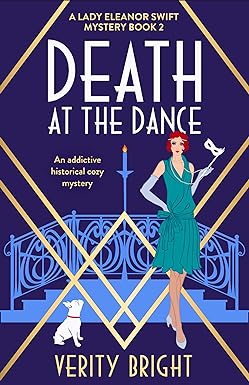
COMING SOON… THE NEXT BOOK I REVIEW WILL BE:- Verity Bright
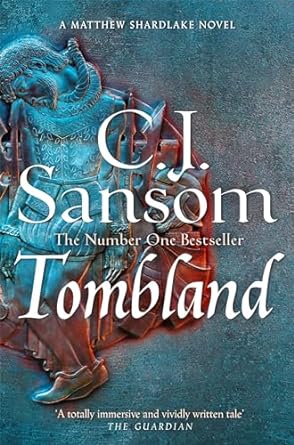
#BookReview ‘The Girl Who Escaped’ by Angela Petch #WW2

World War Two drama The Girl Who Escaped by Angela Petch is a heartbreaking slow-burner that had me reading late at night to finish it. Angela PetchThe story about four friends in the small Italian town of Urbino begins with a Prologue set in 1988. Enrico, waiting for a reunion with his childhood friends, looks at a photograph of them taken fifty years earlier, before the war, on a mountain hike. Young. Carefree. Unsuspecting.
In 1940 in Urbino, 20-year-old medical student Devora Lassa is struggling to accept how her movements, as a Jew, are now limited by law. She is unable to study, is seen as different. Sabrina Merli, who has a long-standing crush on Conte Enrico di Villanova, is jealous at a party when Enrico greets Devora with a kiss on both cheeks. Luigi Michelozzi, a civil servant, watches, quiet and thoughtful.
After the party, Devora’s world is thrown into chaos when her father explains the hard truth. Tomorrow, Italy will enter the war on the side of Germany and the racial laws applying to Jewish people will again be changed. Her parents, who were born in Germany but are Italian citizens, must leave in the morning for an internment camp near Arezzo. Their Jewish neighbours, not Italian citizens, are being deported. As Devora and her two younger twin brothers were born in Italy they are able to stay in the family home in Urbino but now Devora, helped by their maid Anna Maria, must become parents to the boys.
This the story of Devora, whose life within a matter of hours changes out of all recognition. She is the girl who escapes a multitude of times, but in wartime Italy it is difficult to know where is safe, who is trustworthy, strangers who help, friends who change sides, neighbours who spy, Italians who are fascists or partigianos (resistance fighters), German soldiers who are fascists and torturers or world-weary soldiers missing their own families. Every decision Devora makes affects not just herself but those closest to her. When Luigi warns her to leave Urbino, the three siblings are reunited with their parents at Villa Oliveto, the internment camp turned into a Jewish community by its inmates, with gardening, theatre, medical treatment. But is anywhere safe?
Devora runs and runs again, and comes to hate herself for not turning and fighting. When she joins the resistenza, she needs every ounce of bravery, ingenuity and intelligence to survive. But in Urbino, no-one can predict who will betray you, who wants to help, who is setting a trap. She is a fantastic heroine, we live with her day-by-day as she begins to understand what is happening to her country, as she grows from indignant student to strong fighter. She must learn to move in the shadows, how to act a role, when to keep quiet and when step forwards. Her character development is compelling. Luigi is fascinating too, his job registering births and deaths allows him to falsify records to protect people. We see a little of Enrico, an arrogant, flashy personality who I had no time for, and even less of Sabrina. I needed to know more about Sabrina’s behaviour throughout the war, to understand her experiences. She blows with the wind, supporting whoever she thinks will be of advantage to her, her loyalty is an enigma. Some people fight to survive, others stay quiet and collaborate.
The Girl Who Escaped portrays the reality of wartime Italy, focussing on one town and the four friends. At times its not an easy read, the plight of ordinary people persecuted for no other reason than their religion is not new but Petch maintains the suspense to the end so we don’t know who betrays who.

Here are my reviews of other novels also by Angela Petch:-
THE POSTCARD FROM ITALY
THE TUSCAN SECRET

If you like this, try:-
Day’ by AL Kennedy
The Garden of Angels’ by David Hewson
The Bird in the Bamboo Cage’ by Hazel Gaynor

And if you’d like to tweet a link to THIS post, here’s my suggested tweet:
#BookReview THE GIRL WHO ESCAPED by Angela Petch https://wp.me/p2ZHJe-74A via @SandraDanby

COMING SOON… THE NEXT BOOK I REVIEW WILL BE:- Ray Bradbury
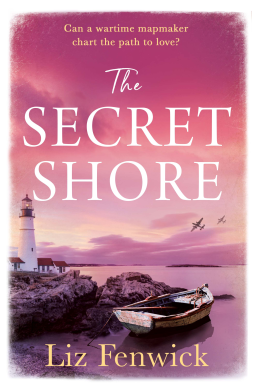
#BookReview ‘The Collaborator’s Daughter’ by Eva Glyn @JaneCable #WW2 #Croatia

Modern-day grief and the turmoil of a wartime past are entangled for Fran in The Collaborator’s Daughter by Eva Glyn. Looking for a new start after the death of her beloved adoptive father, Fran leaves wintery England for the warmer streets of Dubrovnik. Feeling alone, vulnerable and anxious, Fran searches for the strength to look for answers. Eva GlynBrought from Yugoslavia to England as a baby at the end of the Second World War, Fran was raised by her mother to believe her father was a war hero. But Fran has recently discovered the name of Branko Milisic on a list of Nazi collaborators executed by partisan fighters in 1944. Unable to rationalise her gentle, loving mother Dragica as having loved a Nazi, Fran visits Croatia for the first time, taking small steps in discovering the history of the city where she was born. Her life is drifting. Having nursed her mother then father in their last years, raised her son and cared for grandchildren, Fran now realises she needs time for herself. But after a life of caring, being selfish is not as easy as it sounds. In her sixties, she lacks confidence and feels old, unattractive and shy.
Fran’s rebirth as an independent woman unfolds slowly, sometimes tortuously, as she treads the warm streets of Dubrovnik, shyly meeting the locals, learning their language, baking local delicacies and plucking up the courage to ask questions about her mysterious father. Fran is an introspective character and she spends a lot of time re-examining her motives, asking what-if, worrying about what she will find, summoning courage to take the next step, to ask the next question. As the grief at the recent loss of her father begins to lessen, she becomes bolder, finding strength with the new friends she has made in the beautiful city. Glyn’s descriptions of Dubrovnik are pictorial, so much so that the city almost becomes a character with a personality.
This is a compassionate telling of an emotional story about grief, about the fear of the past and ultimately about forgiveness. The truth about Branko and Dragica’s life during the Second World War seems deeply hidden, impossible to find, records lost, witnesses dead. As Fran struggles with the idea that her father was a traitor, perhaps a murderer, she is introduced to a local man who fought in the more recent Balkan War. Jadran knows what war is really like, the fear, the shame, the horror, the impossible choices, the loyalties and betrayals. Glyn cleverly juxtaposes the different wartime experiences as Fran tries to forgive a father who possibly did terrible things.
At times Fran is overcome with the enormity of what she is attempting. But with the help of her new Croatian friends, and bolstered by rallying Skype sessions with best friend Parisa back home in England, she investigates the truth, one small step at a time.
An original storyline in a country whose wartime story is read little in fiction.

Read my review of THE MISSING PIECES OF US, also by Eva Glyn.

Eva Glyn is the pen name of author Jane Cable, here are my reviews of some of Jane’s other novels:-
ANOTHER YOU
ENDLESS SKIES
THE CHEESEMAKER’S HOUSE

If you this, try:-
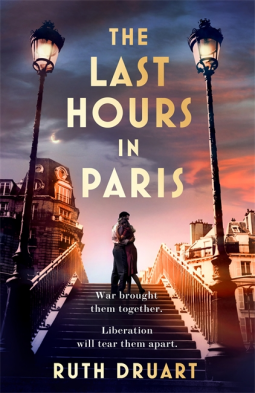
‘The Last Hours in Paris’ by Ruth Druart
The Book of Lies’ by Mary Horlock
The Camomile Lawn’ by Mary Wesley

And if you’d like to tweet a link to THIS post, here’s my suggested tweet:
#BookReview THE COLLABORATOR’S DAUGHTER by Eva Glyn @JaneCable https://wp.me/p2ZHJe-6Zl via @SandraDanby

COMING SOON… THE NEXT BOOK I REVIEW WILL BE:- Joanna Trollope

#BookReview ‘The Hidden Palace’ by @DinahJefferies #WW2 #Malta

The Hidden Palace by Dinah Jefferies, second in the ‘Daughters of War’ trilogy, wasn’t quite what I expected. I felt disconnected from the first book which means it’s perfectly possible to be read as a standalone novel. Dinah JefferiesFlorence Baudin, one of the three Baudin sisters featured in Daughters of War, first in the series, has fled France leaving her sisters behind. It is 1944 and she is in England at the isolated Devon cottage of Jack, the English SOE agent who led her through France and Spain to safety. Florence is finally reunited with her mother Claudette who had stayed in England for the war. As sharp and feisty as ever, Claudette doesn’t make her daughter feel welcome but has a surprising request. Will Florence find her younger sister Rosalie who ran away from the family home in Paris in 1925? Florence, desperate to be closer to her mother, agrees despite the absence of clues, despite it being wartime.
This is a dual timeline story. 1944 with Florence, and 1925 with Rosalie Delacroix who flees Paris and goes to Malta where she finds work as a dancer. Rosalie is a more dynamic character than Florence, she makes things happen. Rosalie swaps career from dancer to journalist, publishing editor to campaigner, not all of which felt natural for her character. This is a novel of two separate stories – of aunt and niece, two decades apart – linked by genes but not impacting on each other.
Basically this tells of the search for a missing person. From the book blurb I anticipated a story set during the WW2 siege of Malta but it was late coming; at 70% through the novel Rosalie was still in 1930s. When war does come, I wanted to know more about Malta at this time. It was such a dramatic period in history and is seldom written about in fiction. Rosalie’s work as a plotter in the underground control centre during the defence of Malta is good, but slim pickings. Jefferies contrasts well the beauty of Malta with a darker underlying menace, prostitution, trafficking of women. This is an island invaded and settled by foreigners over many centuries with the looming threat of another world war. The hidden palace of the book’s title is a mesmerising maze of a building, like something out of an exotic Mary Stewart suspense novel. Is it a sanctuary or a prison. It’s a mysterious setting I was hoping would be used as a sanctuary during the war or perhaps a secret military headquarters.
The theme of unity and divisions between sisters shows how misunderstandings, if not addressed, can become impenetrable division. The deepest of bad feelings are better aired and faced, than deeply buried. Running away does not leave the old trouble behind, but also causes new problems.
I like to be immersed in characters and prefer long sections so I become emotionally involved. This story jumps around a lot between timelines which can be disorientating. The use of a cliffhanger at the end of each chapter is meant to add tension to keep the reader reading, but there needs to be a worthy pay-off each time. When chunks of years were skipped in Rosalie’s story, I wanted to know what was missing. It was like looking at a family photo album with pages torn out.
So, a bit of a curate’s egg. It didn’t advance the story of the three Baudin sisters, as I was expecting. But Rosalie’s story in Malta kept my attention.

Here are my reviews of the other books in the series:-
DAUGHTERS OF WAR #1DAUGHTERSOFWAR
NIGHT TRAIN TO MARRAKECH #3DAUGHTERSOFWAR

And here are my reviews of some of Dinah Jefferies’ other novels:-
THE TEA PLANTER’S WIFE
THE SAPPHIRE WIDOW
THE TUSCAN CONTESSA

If you like this, try:-
The Gabriel Hounds’ by Mary Stewart
The Postcard from Italy’ by Angela Petch
The Last Hours in Paris’ by Ruth Druart

And if you’d like to tweet a link to THIS post, here’s my suggested tweet:
#Books THE HIDDEN PALACE by @DinahJefferies https://wp.me/p2ZHJe-63n via @SandraDanby

COMING SOON… THE NEXT BOOK I REVIEW WILL BE:- SD Sykes

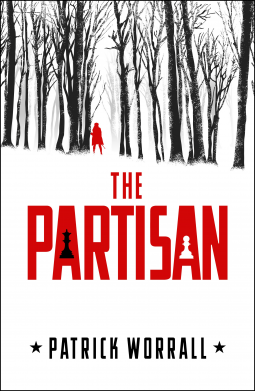
#BookReview ‘The Partisan’ by Patrick Worrall #thriller #ColdWar #spy

The key protagonist in The Partisan by Patrick Worrall is a female Lithuanian resistance fighter who becomes a Cold War assassin. How nice to read a thriller set in the Baltic States, a fresh take on war and how to survive it. At the heart of the story is Greta, the partisan. I admired her, and feared her. Patrick WorrallAn ambitious timeline ranges from the Spanish Civil War to the Sixties Cold War as Greta turns from wartime fighting, one of the Three Sisters, to post-war vengeance tracking down the war criminals on her list and eliminating them. Greta’s story intersects in 1963 with Yulia and Michael, Soviet and English teenage chess champions respectively, and a Soviet plot to win the Cold War. The 1963 chess sub-plot got in the way. Greta is the fascinating character, I wanted to read about her. Her story is thrilling enough.
I couldn’t help but wonder if a more limited reach would help the story’s rhythm. The story jumps around a bit. In the first half I would prefer spending longer with each character to understand them, before the pace picks up as tension rises and point of view gets snappier. I wanted to read about Greta’s story in one long narrative thread instead of a timeline jumping between 1940s and 1963. I particularly enjoyed Greta’s interviews with journalist Indrė in 2004 and was unable to get beyond the jumping around when I wanted to settle in with one character. The character list is long with many similar names to remember – who is on which side, who is double-crossing who – and this took me out of the story.
I’m always partial to a good thriller and like to find debut authors, so I’ll be watching out for the next book from Patrick Worrall. It’s different, try it.

If you like this, try:-
The Diamond Eye’ by Kate Quinn
A Hero in France’ by Alan Furst
V2’ by Robert Harris

And if you’d like to tweet a link to THIS post, here’s my suggested tweet:
#BookReview THE PARTISAN by Patrick Worrall https://wp.me/p2ZHJe-5T8 via @SandraDanby

#BookReview ‘The Last Hours in Paris’ by Ruth Druart #WW2

The Last Hours in Paris by Ruth Druart is a different kind of Second World War romance. At times it is a tough read, the hatred is visceral and uncompromising. It feels real. Ruth DruartThis is the story of three people in the last days of occupied Paris and the years following when repercussions continued and the war, though never spoken of, remained tangled in the roots of daily life. Those who fought the Germans, those who stayed behind and lived under German dictatorship. In peacetime everyone must live alongside each other again. The different memories, experiences, losses, are difficult to assimilate.
In Paris 1944 Élise Chevalier a bank clerk by day, secretly helps to smuggle Jewish children from the city. ‘Paris was no longer Paris. It was an occupied city, and even the buildings seemed to be holding their breath, waiting.’ No longer her familiar city, Paris is sinister, threatening, frightening. One day in her favourite bookshop Élise is threatened by two French policemen and is defended by another customer, a German soldier. And so begins the story of Élise and Sébastian Kleinhaus and the terrifying, impossible time in which they live.
In 1963 in rural Brittany, eighteen-year old Joséphine Chevalier uncovers a story about her mother that she could never have imagined. She fears it is impossible to truly know someone. ‘From now on, she’ll always be wondering what part of themselves people are hiding.’
A slow burn to start, Druart takes her time, allowing us to feel connected to the characters as she gradually raises the emotional temperature. The peripheral characters are well drawn, particularly Élise’s younger sister Isabelle, bookshop owner Monsieur le Bolzec and Breton farmer Soizic. Each brings their own experience, judgement and dignity to what is an impossible, unbearable situation for everyone. The definition of family and home, love, protection and separation. ‘Maybe home wasn’t a place at all, but the people you wanted to be with.’
Whatever you may think of what happened in Paris at this time, Druart tells this sensitive story of young people, inexperienced, naive and hopeful, living in a time of such violence and betrayal, of secrets, survival, moralising and vengeance. After surviving the hardships, violence and deprivations of war, how can they adapt to find a new life of possibilities. How can they forgive the secrets and betrayals and move on.
A strongly emotional interpretation of life in occupied Paris that is hardly an obvious setting for a story about love. But this is a love more than romance. It is a love of family, responsibility, truth, sacrifice, forgiveness, of letting go of past hurts and wrongs and looking to the future.
Highly recommended.

Click the title to read my review of WHILE PARIS SLEPT, another World War Two story by Ruth Druart.

If you like this, try:-
Midnight in Europe’ by Alan Furst
The Book of Lies’ by Mark Horlock
After the Bombing’ by Clare Morrall

And if you’d like to tweet a link to THIS post, here’s my suggested tweet:
#BookReview THE LAST HOURS IN PARIS by Ruth Druart https://wp.me/p2ZHJe-5T2 via @SandraDanby