Tag Archives: World War Two

#BookReview ‘The Diamond Eye’ by @Kate_Quinn #WW2

What a wonderful book is The Diamond Eye by Kate Quinn. The fictionalised story of a real Soviet female sniper fighting in what is now Ukraine in the early years of the Second World War, this is a novel I didn’t want to put down. Kate QuinnThe life of Kiev resident Mila Pavlichenko, young mother and history student, changes when the Nazis invade. Already an accomplished shot with a rifle, she leaves her young son Slavka with her mother and goes off to war. In the 18 months of her time on the frontline as a sniper, the real Mila scored 309 official ‘kills’. She is injured fighting in Sevastapol and, once recovered, is ordered to join a diplomatic mission to the USA to persuade the Americans to join the European war. The action in America is probably the most fictionalised part of The Diamond Eye which is based in part on Mila’s memoir. Quinn states in her Author’s Note that parts of the memoir are clearly Mila’s own voice, other entries seem like Soviet propaganda.
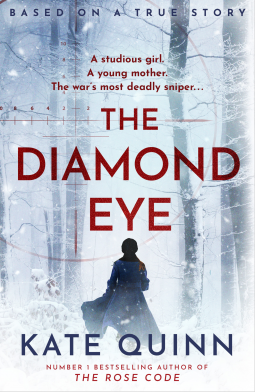
This is not just a war story with guns and death and trenches. Quinn tells the story of a young woman, torn from all that is familiar, who finds strength inside herself and with her comrade snipers, to do what must be done. Some of her fellow soldiers have brief times at her side; others, the most skilled snipers, survive. She discovers how difficult it is, when you know you may die tomorrow, to open yourself up to friendship, or love. She acquires a nickname, ‘Lady Death,’ and spurns the frequent attentions of her senior officers. Her girlfriends also volunteer, her estranged husband turns up as a combat surgeon, but there are few light moments in her life. Her primary motivation is to defend her homeland, that is the only thing keeping her away from home. Between missions she gathers leaves and sends them to Slavka, she carries her dissertation with her and takes it from her backpack to read to remember the life she once had. Quinn alternates the dark story of Mila’s fighting, first at Odesa and then at Sevastapol, with her later trip to Washington in 1942 plus excerpts from the diary of the First Lady, Eleanor Roosevelt, who Mila met on that trip.
This is a shocking story and a compelling one. The sections about sniper technique and tactics are not for the faint-hearted but the current war in Ukraine adds a reality check and there are light-hearted moments in Washington as Mila meets the American press, not alerting her hosts to the fact that she can speak English. Also lightly woven through the fighting sections are snippets of Russian folklore, a reminder that Mila’s country has roots and traditions much older than the Soviet Union.
Quinn creates a heroine we care for. Brave and determined with a sharp edge of sarcasm, this is Mila’s story as imagined by the author. The two parts of the story – the fighting, the subsequent trip to America – are key to the growth of an unusual and exceptional young woman. So what if the final section lurches into ‘thriller’ territory, it made the pages turn even faster.
Highly recommended.

Here are my reviews of other novels by Kate Quinn:-
THE BRIAR CLUB
THE ROSE CODE

If you like this, try:-
‘The Bear and the Nightingale’ by Katherine Arden #1WINTERNIGHT
Midnight in Europe’ by Alan Furst
Corpus’ by Rory Clements #1TOMWILDE

And if you’d like to tweet a link to THIS post, here’s my suggested tweet:
#BookReview THE DIAMOND EYE by @Kate_Quinn https://wp.me/p5gEM4-5QW via @SandraDanby
#BookReview ‘The Postcard from Italy’ by Angela Petch #WW2

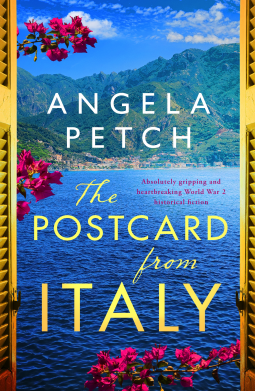
I’ve never been to Puglia in Italy, the south-eastern coast down to the heel, except in the pages of The Postcard from Italy by Angela Petch. Vividly she brings to life the coastline, the stone-built trulli houses, the caves. It is a magical setting. Stretching backwards from today to the closing months of the Second World War, this is an enthralling family story of love and separation.  Recognising love when it’s there, but also understanding when it’s absent. Angela PetchIn 1945, Puglia, a young man awakes, injured, disorientated. He doesn’t know who he is or how he came to be in a trullo, a rural stone house, cared for by strangers. The teenage boy Anto explains how his grandfather Domenico saw him fall from a warplane. Called ‘Roberto’ by his rescuers, his memory stubbornly refuses to return. He can speak English and Italian but knows nothing about fishing or farming. As he helps them in their daily routines, gathering food, catching fish, tending vegetables, repairing the trullo, his nights are full of confusing dreams.
In present day Hastings, England, Susannah mourns the recent death of her father Frank and the descent of her grandmother, Elsie, into the clouds of dementia. Clearing Elsie’s house, Susannah finds a yellowing postcard of a beautiful farmhouse in Puglia and a message of love. Realising this is the same farmhouse in a painting by her father but unaware of family links with Italy, she can’t reconcile this message of love with her brittle, acidic grandmother who always preferred Susannah’s blonde-haired younger sister Sybil. So, while a friend looks after her antique bric-a-brac shop at home, Susannah takes a holiday in Puglia. Determined to find the house in her father’s painting, she learns to heal herself, to speak a little Italian and in so doing falls for two handsome men.
Petch uses conventional wartime story themes – amnesia, separation of loved ones, the vulnerability of loneliness and grief, and the fear of those who exploit war for gain – and adds the twists and turns of flirting and love. Petch has written four novels set in Tuscany, so Puglia is a new setting for her but her knowledge of Italy shines on every page. Susannah’s holiday is extended as she turns detective but the clues, when she finds them, bring more questions rather than answers.
Susannah is the spine of the story but my favourite character was Anto, so complex, so brave, so intriguing. This is a wonderful book to sink into, a perfect holiday or weekend read.

Here are my reviews of other novels also by Angela Petch:-
THE GIRL WHO ESCAPED
THE TUSCAN SECRET

If you like this, try:-
Another You’ by Jane Cable
The War Child’ by Renita d’Silva
The Tuscan Contessa’ by Dinah Jefferies

And if you’d like to tweet a link to THIS post, here’s my suggested tweet:
#BookReview THE POSTCARD FROM ITALY by Angela Petch https://wp.me/p5gEM4-5Qk via @SandraDanby

#BookReview ‘Dear Mrs Bird’ by AJ Pearce #WW2 #romance

Sometimes I hear about a book when it is launched but somehow miss the tide. Dear Mrs Bird by AJ Pearce was published in 2018 and two weeks later became a Sunday Times top ten bestseller. In 2019 it was selected for the Richard and Judy Book Club. The first few pages are fresh and engaging, light humour at a time when people when people were living day to day in the Blitz. My only doubt was that I would find the jolly tone too much if it continued for the whole novel. AJ PearceIt is 1941 in London and Emmy Lake applies for a job as a war correspondent and  instead finds herself typing up letters for the problem page of a distinctly faded women’s magazine, Woman’s Friend. The premise is fascinating. The tone is full-on jolly which at times is irritating. The strength of the book for me lies in the second half.
Emmy lives with her friend Bunty on the top floor of Bunty’s grandmother’s house. Both girls have daytime war jobs and volunteer in the evenings. Emmy is frustrated by her boss Mrs Bird’s dismissive rules about letters from emotional young women and starts to reply directly to the women, hiding the letters and posting her replies in secret. When she doesn’t get found out, she becomes bolder, and prints one of her replies in the magazine. Dumped by telegram by her boyfriend, Emmy agrees to go out with Bunty and her boyfriend William and finds herself set up with a blind date. As Emmy’s love life takes a turn for the better, the girls’ friendship is tested as it has never been tested before. Inevitably, Emmy’s letter writing catches up with her in spectacular fashion and she is sent home.
The book is at its best when examining the relationship between Emmy and Bunty, the depth of their loyalty, and what happens when cracks begin to appear. This is a lightweight, cozy war romance which takes a serious tone towards the end. An easy weekend read.

If you like this, try:-
Please Release Me’ by Rhoda Baxter
You’ll Never See Me Again’ by Lesley Pearse
One Step Too Far’ by Tina Seskis

And if you’d like to tweet a link to THIS post, here’s my suggested tweet:
#BookReview DEAR MRS BIRD by AJ Pearce https://wp.me/p5gEM4-49f via @SandraDanby

#BookReview ‘Daughters of War’ by @DinahJefferies #WW2 #adventure

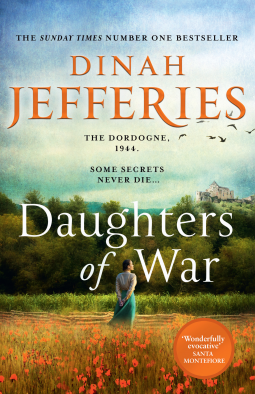
It’s a while since I read a book in gulps, not wanting to put it down, not wanting to leave the story. Daughters of War by Dinah Jefferies is the first of a World War Two trilogy about three sisters. And what characters they are, each individual, quirky, vulnerable, stubborn, brave and refreshing. I lurched from having one favourite, then another. At the end I was equally drawn to each. Dinah JefferiesIn the Dordogne live three sisters – Hélène, Élise and Florence – alone in their mother’s house during the German occupation. Hélène is the eldest, a nurse, the mother hen, the worrier. Élise is the rebel, helping the Resistance, disappearing at night. Florence, the youngest, is a gardener, a cook, a nature lover. They are tired of the war, terrified by the Germans and their increasingly violent and indiscriminate reprisals, desperate for a normal life without remembering what that might be.
Backstory is important and there are many mysteries, unspoken memories and fears, which can only by explained when something happens to trigger understanding. We see the girls’ mother Claudette, in England for the war, only through their memories but she is a pivotal character nonetheless.
The story opens in spring 1944 when the girls’ quiet life at their stone cottage in the woods is altered by two arrivals. Jack, a British Special Operations soldier, has parachuted in with orders to train the Resistance in preparation for the invasion. Tomas, a young German soldier, has deserted and is found hiding in their garden shed. What follows is a tale of innocence, love, bravery, cruelty, loyalty and honour.
Jefferies’ descriptions of the French countryside – the trees, the birds, the wildflowers, the Dordogne scenery, coupled with the descriptions of Florence’s cooking – work as a shocking juxtaposition to the horror of war in this oh so beautiful tranquil place.
A page-turner.

Here are my reviews of the next books in the series:-
THE HIDDEN PALACE #2DAUGHTERSOFWAR
NIGHT TRAIN TO MARRAKECH #3DAUGHTERSOFWAR

Read my reviews of these standalone novels by Dinah Jefferies:-
THE SAPPHIRE WIDOW
THE TEA PLANTER’S WIFE
THE TUSCAN CONTESSA

If you like this, try these:-
Dangerous Women’ by Hope Adams
The Blue Afternoon’ by William Boyd
Birdcage Walk’ by Helen Dunmore

And if you’d like to tweet a link to THIS post, here’s my suggested tweet:
#BookReview DAUGHTERS OF WAR by @DinahJefferies https://wp.me/p5gEM4-5vI via @SandraDanby

#BookReview ‘The War Child’ by @RenitaDSilva #WW2 #historical

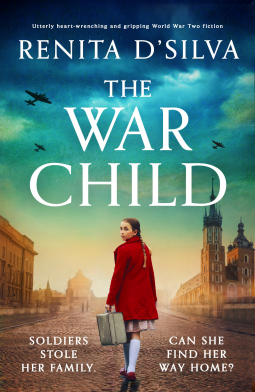
Two women, two generations apart. In The War Child, Renita D‘Silva explores the connections between a mother and child, through danger and separation, self-sacrifice, unstoppable events and the pressures of modern life. Renita D‘SilvaD’Silva tells the dual timeline stories of Clara and Indira over many decades, setting the strength and promise of women across four decades against the twentieth century prejudices of chauvinism and racism. In London, 1940, teenager Clara is woken by her mother as their home is bombed. Her mother presses into Clara’s hand a necklace, a St Christopher’s medal, with the promise that it will always protect her. Orphaned, Clara is taken in by her aunt and begins helping at a local hospital treating injured soldiers. When nurses and doctors ignore a wounded Indian soldier because of the colour of his skin, Clara nurses him to health. When the war ends, she decides to fulfil a long-held promise to herself. Inspired by sitting on her father’s knee and listening to his stories of India, Clara takes a job as nurse companion to a delicate boy whose parents are re-locating to India. And there, she falls in love.
In India, 1995, 33-year old Indira is chairing a board meeting when she gets a message to ‘go to the hospital’. Fearing her young son is dying – he is in hospital for a minor surgical procedure – she finds her husband and son both well. The message refers to Indira’s father who has had a heart attack. Indira returns home to her parents, somewhere she hasn’t been much of late as she seeks to avoid their simplistic boring life, resenting their dissatisfaction with her life choices.
Sometimes raw and painful, always emotionally complex with surprising twists that make you gasp, The War Child is another brilliant book by my first-choice author for Indian historical romance. D’Silva is such a visual writer that India is a real place on the page, the colours and scents are both beautiful and challenging, her descriptions as full of contrasts as fresh guava sprinkled with chilli powder.

Read my reviews of these other novels by Renita D’Silva:-
A DAUGHTER’S COURAGE
A MOTHER’S SECRET
BENEATH AN INDIAN SKY
THE GIRL IN THE PAINTING
THE ORPHAN’S GIFT
THE SPICE MAKER’S SECRET

If you like this, try:-
The Tea Planter’s Wife’ by Dinah Jefferies
Call of the Curlew’ by Elizabeth Brooks
The Sapphire Widow’ by Dinah Jefferies

And if you’d like to tweet a link to THIS post, here’s my suggested tweet:
#BookReview THE WAR CHILD by @RenitaDSilva https://wp.me/p5gEM4-5mW via @SandraDanby

#BookReview ‘The Man in the Bunker’ by Rory Clements #thriller #WW2

The Man in the Bunker by Rory Clements gripped me from beginning to end. It starts at the end of the Second World War when spy Tom Wilde thinks real life is beginning again. But the dilemma is in the book’s title. Who was the dead man in the bunker in Berlin? Were the burnt remains really that of Hitler? If not, where is he? Rory ClementsThis is the sixth in Clements’ thriller series about American historian-turned-spy Wilde who spends the war working for the English and American secret services, and each of them has been unputdownable. It is now late summer 1945 and the European war is over. Germany is defeated, in ruins, starving and with millions of Holocaust survivors, displaced people and refugees. The country has been carved up between the allied forces to bring security and discipline but it is a world in which it is easy to disappear, to reinvent yourself. It is a world in which lies are told for survival. As in the previous Wilde books, it is difficult to know who is telling the truth, who is lying and why. Clements is a consummate thriller writer who writes with emotional depth, political intrigue and historical research.
The action starts at a running pace and never stops. Two men are killed on a remote road in southern Bavaria. In Cambridge, history professor Tom Wilde is anticipating the arrival of new undergraduates and his wife Lydia is applying to study medicine. Then three visitors arrive with an incredible request. Wilde must find Adolf Hitler. At first Wilde laughs, then he refuses. That night, Lydia says he will regret refusing. The next day Wilde changes his mind. First, he questions some German scientists who are imprisoned near Cambridge, their rooms bugged, their conversations and gossip recorded. A clue leads Wilde to Garmisch where he teams up with the unpredictable Lieutenant Mozes Heck, a Dutch Jew who hates the Nazis. As they identify Nazis who were close to Hitler, their progress is continually impeded by the conditions in defeated Germany; starvation, bomb damage, medical crisis and the flood of Holocaust survivors and misplaced citizens. And by Heck’s secret, personal mission.
The ending is particularly intriguing. Is The Man in the Bunker the final book of the Tom Wilde story or will it morph into a Cold War series?

Click the title to read my reviews of the other books in the Tom Wilde series:-
CORPUS #1TOMWILDE
NUCLEUS #2TOMWILDE
NEMESIS #3TOMWILDE

HITLER’S SECRET #4TOMWILDE
A PRINCE AND A SPY #5TOMWILDE
THE ENGLISH FUHRER #7TOMWILDE

And from the Sebastian Wolff series:-
MUNICH WOLF #1SEBASTIANWOLFF

If you like this, try:-
Exposure’ by Helen Dunmore
V2’ by Robert Harris
The Second Midnight’ by Andrew Taylor

And if you’d like to tweet a link to THIS post, here’s my suggested tweet:
#BookReview THE MAN IN THE BUNKER by Rory Clements https://wp.me/p5gEM4-5o5 via @SandraDanby

#BookReview ‘The Camomile Lawn’ by Mary Wesley #WW2

It’s many years since I first read The Camomile Lawn by  Mary Wesley. I remember liking it, and that one of the characters is called Calypso, but nothing else. So it was with delight that I read the wartime story of Calypso and her four cousins – Oliver, Polly, Walter and Sophy. It renewed my intention to re-read all Wesley’s novels. Mary WesleyThe story is enrichened by the mode of telling. It starts in Cornwall in the summer of 1939 as the cousins of assorted ages gather for what will be the last time. There is a poignancy hanging in the air as the run their ritual race, The Terror Run, along the clifftop path, joined by their neighbours, the Floyer twins.
The cousins are the children of the three Cuthbertson siblings – we see the parents only fleetingly, if not at all – but they are gathered at their Uncle Richard’s house and picnic on the camomile lawn. What follows are the piecemeal stories of individuals and how they overlap with each other as the war progresses. Overlaid, are short passages from the Eighties as they travel independently to Cornwall for a funeral. Drawn into the cousins’ stories are their neighbours, in Cornwall and London, wartime acquaintances, lovers, and refugees Max and Monika. Amidst the bombings, the rationing and the worries about loved ones fighting, Wesley tells a story of a family both united and separated, as individuals strike out on their own, liberated by wartime urgencies. There are affairs, unexpected babies, hints of underage sex, all without accusations of blame or betrayal. Each makes assumptions about the others, assumptions the reader may know are misplaced given we are privileged to see into the minds of each cousin, and sometimes assumptions which are proven right or wrong only at the very end of the novel.
Paths cross, diverge and cross again. Not everyone is nice, not everyone is honest. They are people getting through the war, trying to keep things together; some turn to drink and partying, one keeps guinea pigs, most feel emboldened by the openings presented to them by war. And all the time, fear lurks in the pit of their stomachs. And through it all, the house in Cornwall and memories of that last party on the camomile lawn, remind us of pre-war normality. At a time when ‘normal’ ceases to exist.
Very different from other wartime novels. Now a classic.

Read the first paragraph of THE CAMOMILE LAWN.

If you like this, try:-
‘The Guernsey Literary and Potato Peel Pie Society’ by Mary Ann Shaffer & Annie Barrows
Half of the Human Race’ by Antony Quinn
My Dear, I Wanted to Tell You’ by Louisa Young 

And if you’d like to tweet a link to THIS post, here’s my suggested tweet:
#BookReview THE CAMOMILE LAWN by Mary Wesley https://wp.me/p5gEM4-48g via @SandraDanby

#BookReview ‘The Guernsey Literary & Potato Peel Pie Society’ #romance #WW2

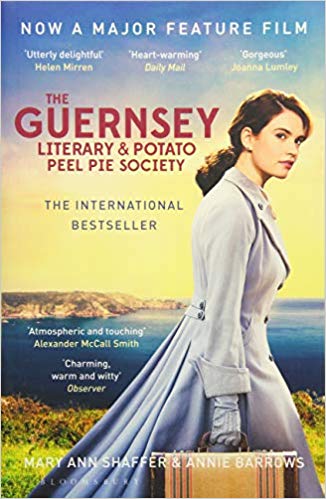
I prefer to come to a book without reading reviews so I can make up my own mind. But sometimes there is a book that I missed in its early days but which goes onto be hugely popular. The Guernsey Literary & Potato Peel Pie Society by Mary Ann Shaffer & Annie Barrows is such a book. Mary Ann Shaffer & Annie BarrowsThe story is told in letter form, a structure I admit to having doubts about before I started reading. But the manner in which the letters flow and the information is dripped in means there are no information gaps, no repetitions. It is 1946 and writer Juliet Ashton receives a letter from a man in Guernsey who by chance owns a book that once belonged to her. And so begins Juliet’s correspondence with Dawsey Adams and his fellow members of the Guernsey Literary and Potato Peel Pie Society. Dawsey encourages other members to write to Juliet with their own experiences of the German occupation of the island. And so we hear from the nice, and not-so-nice characters.
What could be a superficial account of the islanders’ lives becomes a cleverly managed tale of a community that survives by mutual support, generosity, toughness, bravery and above all kindness. As letter after letter arrives from different people, we build up full pictures of the incidents that happened. Although there is a romantic thread to this tale – the rather full-of-himself Mark Reynolds – this is really a story about the survival of an island community throughout a time of unimagined difficulty.
At first Juliet is entranced by the islanders’ stories but as they write more letters she wants to meet them in person, both to put faces to her correspondents and to scout the possibility of writing a book about their experiences. The book is split into two parts; in part one, Juliet is in London; in part two she travels to Guernsey. The story takes places during nine months of 1946; this feels a tight time span for some of the emotional relationships to develop and at times the familiarity and trust seemed to progress in leaps rather than steps, but perhaps this is understandable post-war when people grasped at chances of normality and happiness.
The title suggests this is a nice, quirky read – and it places it did make me chuckle – but it also tells of brutality, torture and death and the lasting after-effects of war.
I was left wishing I hadn’t read it yet and that I had it to look forward to. Just the book to re-read when your spirit needs a lift.
CLICK HERE TO READ MORE ABOUT THIS BOOK AT AMAZON

Read why novelist and poet Claire Dyer chooses THE GUERNSEY LITERARY & POTATO PEEL PIE SOCIETY as her ‘Porridge & Cream’ comfort read.

If you like this, try:-
Pattern of Shadows’ by Judith Barrow
After the Party’ by Cressida Connolly
The Book of Lies’ by Mary Horlock

And if you’d like to tweet a link to THIS post, here’s my suggested tweet:
#BookReview THE GUERNSEY LITERARY & POTATO PEEL PIE SOCIETY by Mary Ann Shaffer & Annie Barrows https://wp.me/p5gEM4-47C via @SandraDanby

#BookReview ‘While Paris Slept’ by Ruth Druart #WW2

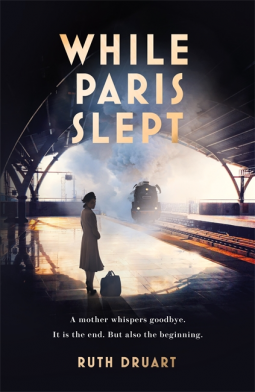
While Paris Slept by Ruth Druart is a World War Two story with a difference. It focusses on the lives of two couples and how one incident, a decision made in seconds, challenges the four people involved to define their own perception of true, selfless love and the heart-wrenching sacrifices this may mean. Ruth DruartThis is a dual-timeline story. It starts in 1953, California. One morning the police call at the home of Jean-Luc Beauchamp and take him in for questioning. He is unsurprised. His wife Charlotte and son Sam do not know what is happening.
Interleaved with the story unfolding in 1953, we see Jean-Luc as a young man in occupied Paris, 1944. He is conscripted as a rail maintenance worker based at the Drancy station from where French Jews were transported to Auschwitz. At weekends he travels home to see his mother in Paris but does not admit the things he sees and suspects. Ashamed that people may think he is a collaborator, he determines to do his part. He is injured in an attempt to damage the rail track and is taken to the German hospital where he is nursed by a young French girl, Charlotte. Charlotte, who took the job at the urging of her mother to do something useful, also wants to fight back against the occupiers. Then one day at Drancy a young woman on her way to Auschwitz, suspecting the fate awaiting her and her husband, thrusts her newborn baby into Jean-Luc’s arms. She says his name is Samuel. What follows is an exploration of the lengths people will go to for the true love of defenceless child. And at the heart of it all, subjected to the decisions made by adults, is Samuel.
It is a detailed story, slow to build, as the early pages add to the definition of the later events. At times I wanted to stay in one timeline for longer, rather than swapping between 1953 and 1944, but this is a powerful emotional story that is worth sticking with.
A strong story that doesn’t turn away from difficult issues; the rights, the wrongs and the hazy bits in between.

Click the title to read my review of THE LAST HOURS IN PARIS, another World War Two story by Ruth Druart.

If you like this, try:-
The Heat of the Day’ by Elizabeth Bowen
The Aftermath’ by Rhidian Brook
White Chrysanthemum’ by Mary Lynn Bracht

And if you’d like to tweet a link to THIS post, here’s my suggested tweet:
#BookReview WHILE PARIS SLEPT by Ruth Druart https://wp.me/p5gEM4-5cY via @SandraDanby

#BookReview ‘A Prince and a Spy’ by Rory Clements #thriller #WW2

Rory Clements is fast becoming an author I turn to when I need a page-turning read to relax into. A Prince and a Spy is fifth in his Tom Wilde Second World War series and it doesn’t disappoint. Woven into true history of the conflict – the fatal crash in Scotland of the Duke of Kent’s plane, the holocaust – Clements adds real and fictional characters, intrigue and competing spies, to make this an enjoyable read. Rory ClementsWhen history professor Wilde returns by train home to Cambridge he bumps into a former student. Cazerove seems distracted, distressed, munching on a bag of sweets. Before the train reaches its destination, Cazerove dies of poisoning. So begins a typical Clements thriller – strong characters, true history and a string of unrelated incidents. When the Duke of Kent’s plane crashes on a remote hill in Scotland, the public is told his plane came down in heavy fog when taking off for Iceland on operational duties. In the world of A Prince and a Spy, the flying boat was returning from a secret diplomatic mission in Sweden where the Duke met his German cousin, a former member of the Nazi party. Wilde, working for the newly-established American secret intelligence service, OSS, is sent to Scotland to sniff around at the crash site and ask questions on behalf of his president. FDR wants to know why the plane crashed, was Prince George at the controls, was it shot down, and how did one person survive?
A keynote of this series is the multi-layering of rival spy agencies in the UK – the British, the Americans – the infiltration of Nazi agents, Soviet agitators and, in this book, a secret society. Clements is excellent at showing history through the eyes of fictional characters, a challenging task, and I particularly liked the Scottish segment with fisherman Jimmy Orde. A continuing thread from book to book is Wilde’s relationship with his partner Lydia, and Philip Eaton, the British spy who first involved Wilde in espionage. Clements twists reality in this book so Wilde doesn’t know who to trust, who to believe, and who is spying on him. So much so that at times, I lost track too.
An excellent weekend read.

Click the title to read my reviews of the other books in the Tom Wilde series:-
CORPUS #1TOMWILDE
NUCLEUS #2TOMWILDE
NEMESIS #3TOMWILDE

HITLER’S SECRET #4TOMWILDE
THE MAN IN THE BUNKER #6TOMWILDE
THE ENGLISH FUHRER #7TOMWILDE

And from the Sebastian Wolff series:-
MUNICH WOLF #1SEBASTIANWOLFF

If you like this, try:-
Life After Life’ by Kate Atkinson
The Aftermath’ by Rhidian Brook
Midnight in Europe’ by Alan Furst

And if you’d like to tweet a link to THIS post, here’s my suggested tweet:
#BookReview A PRINCE AND A SPY by Rory Clements https://wp.me/p5gEM4-574 via @SandraDanby