Tag Archives: World War Two

#BookReview ‘Fatal Inheritance’ by Rachel Rhys #romance #glamour

Fatal Inheritance by Rachel Rhys is a mystery set in the South of France three years after the end of World War Two. This is a glamorous place of sun and colours and beauty but which hides wartime shade and recriminations, canker beneath the luxury and smiles. Rachel RhysWhen Eve Forrester receives a solicitor’s letter promising ‘something to her advantage’, she leaves her husband in England and travels to Cap d’Antibes. Clifford disapproves of her journey, he thinks it inappropriate, a waste of time, doubts the veracity of the will of this mysterious Mr Guy Lester who Eve does not know. But Eve defies her husband and goes anyway, curious, listening to the inner voice which tells her there is more to life. This is a novel where you want to shout to the heroine, to encourage her onwards, to have strength to take a new path.
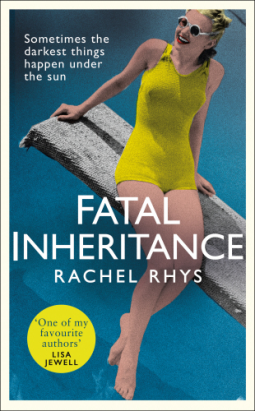
Eve inherits a part-share in the Villa La Perle at Cap d’Antibes, near neighbours are the Duke and Duchess of Windsor. Eve, in her ‘make do and mend’ clothing, is thrown into a glamorous social whirl of people she finds awkward, dismissive and arrogant. Rhys draws a layered picture of society where obvious wealth may hide troubled finances, make up and lipstick covers bruises, and smiles hide venom. It is a place where the locals avoid people and businesses which ‘helped’ the German occupiers, where memories of the war are fresh. In the middle of this, Eve struggles to understand her inheritance while delaying Guy Lester’s family from signing papers to sell the villa. And all the time, Eve wonders what Clifford is doing at home, knowing he disapproves of her being there, knowing he worries about the cost.
An entertaining novel in a beautiful, flawed setting – neatly mirroring the flawed people – not quite suspense, not quite a romance in the conventional sense. Rhys writes about women particularly well, not just Eve but the housekeeper Mrs Finch, actress Gloria Hayes, and fellow tourist Ruth Collett. I liked Eve, disliked her husband, and chuckled when the ‘love interest’ switched between surly to over-attentive. If I have one query, it is the solution to the mystery which comes rather out of left-field and left me feeling a little cheated. The ending, though, is unbelievably poignant. A great beach read.

And here’s my review of MURDER UNDER THE TUSCAN SUN, also by Rachel Rhys

If you like this, try:-
‘The Night Child’ by Anna Quinn
‘The Audacious Mendacity of Lily Green’ by Shelley Weiner
‘The Paying Guests’ by Sarah Waters

And if you’d like to tweet a link to THIS post, here’s my suggested tweet:
#BookReview FATAL INHERITANCE by Rachel Rhys https://wp.me/p5gEM4-3qA via @SandraDanby
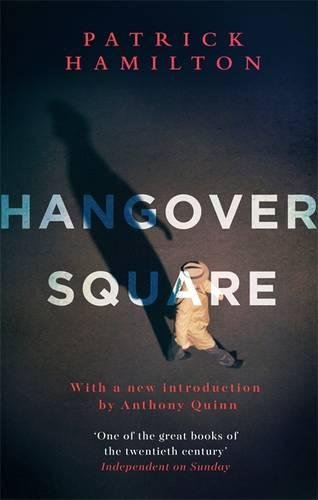
#BookReview ‘Hangover Square’ by Patrick Hamilton #WW2 #historical

Hangover Square by Patrick Hamilton, first published in 1941, is deservedly being re-discovered as a perceptive portrayal of people getting-by, living in the low rent district of Earls Court, London, months before war is declared. It is the mournful tale of one man’s hopeless love for a woman who exploits him relentlessly, his inability to see her for what she is, and the battle of his psyche, half of which is telling him to commit murder. Patrick HamiltonGeorge Harvey Bone loves Netta Longdon despite, or perhaps because of, her disdain for him. ‘When she had finished making up, she went into the sitting room to change her shoes, and he followed her. He was always following her, like her shadow, like a dog.’ This is a novel about love, about living on the edge, and schizophrenia, and about the underbelly of a city paused on the brink of war.
The story flicks back and forth in George’s head between his lucid moments planning a new life in Maidenhead when he will stop drinking, and what happens after the ‘click’ in his head – a blackout or loss of sense of time and place – when he realizes the only solution is to kill Netta. George is put-upon by Netta and her circle of friends, he buys drinks, brings food, and they tolerate his company only when he can contribute something. Netta goes to Brighton with George, not to be with him but because she hopes he can introduce her to someone useful. George, bless him, fails to see this. ‘She was wildly, wildly, lovely that night. He looked across the table at her, and she was violets and primroses again.’ Netta and her heartless group of friends exploit George mercilessly and he allows them to do it.
Hamilton’s Earls Court is a seedy place where people get-by on little money, living in rented rooms or boarding houses, scrounging off others, seemingly without jobs to go to. Netta goes to bed in the small hours, rises at eleven in the morning with a hangover – the Hangover Square of the title – then navigates her day via pubs, bars and restaurants or drinking from a bottle of gin provided by a friend. Brighton – London-by-the-Sea – brings a breath of fresh air but, as is always the way, George’s problems follow him there. There is a lovely section when he plays golf, a successful round which gives him the confidence to woo Netta. ‘He wasn’t going to get drunk. She could drink if she wanted to, but he wasn’t going to – at least only a little. He was going to keep his head.’ The irony, of course, is that George is schizophrenic and has another psychotic episode.
This novel is very funny in places, in others the action can seem slow to progress, but I found myself willing George to tell Netta where to go. He is the sort of character you want to take by the hand. Of course, he is unable to stand up to Netta’s rude and ungrateful behaviour and it is the uncertainty of what he will do, where he will go, and whether his schizophrenic murder plans will come to fruition, which made this such an absorbing read.

Read my review of THE SLAVES OF SOLITUDE, another World War Two novel by the same author, and click here to try the #FirstPara of THE SLAVES OF SOLITUDE.

If you like this, try:-
The Heat of the Day’ by Elisabeth Bowen
Midnight in Europe’ by Alan Furst
At Mrs Lippincote’s’ by Elizabeth Taylor

And if you’d like to tweet a link to THIS post, here’s my suggested tweet:
#BookReview HANGOVER SQUARE by Patrick Hamilton http://wp.me/p5gEM4-2EQ via @SandraDanby 

#BookReview ‘Our Friends in Berlin’ by Anthony Quinn #WW2

Our Friends in Berlin by Anthony Quinn tells a story of London in World War Two seldom told. It is a spy novel but not a thriller. It focuses on the individuals concerned and has a deceptive pace which means the threats, when they come, are more startling. Jack Hoste is not who he seems to be. He is not a tax inspector; he is not looking for a wife. He is a special agent who tracks down Nazi spies. And at night he is an ARP warden. Anthony Quinn The juxtaposition of Hoste’s life of secrets is set nicely against that of Amy Strallen who works at the Quartermaine Marriage Bureau. Ordinary life does go on in London during the Luftwaffe bombing and Amy must match clients together, a matter of instinct rather than calculation. In order to be matched with the right person, clients are asked to tell the truth about what they are seeking, truths which may have been disguised or hidden until now. Client requests include ‘a lady with capital preferred’ and ‘not American’. Then one day she meets a new client who seems oddly reluctant to explain what he is looking for. The client is Jack Hoste and he doesn’t want a wife, he is searching for Marita Pardoe, a suspected Nazi sympathiser and friend of Amy in the Thirties. What unfolds is a story of spying, gentle romance, betrayal, fanaticism and the life of living in a bombed city.
Jack and Amy seem to run on parallel tracks, veering towards and then away from each other, both romantically unsure, both allow the real world to get in the way. And get in the way it does, in the shape of Marita. Quinn is excellent at building characters, he makes you care for them and that’s what keeps you reading. In a time of war, decisions are often made recklessly but Jack and Amy draw back from doing this. Both are people of honour, making the secrets they must keep and the lies they must tell all the more pertinent. The nature of truth is a theme wriggling its way through every page.
Anthony Quinn is a favourite author of mine, his novels are each quite different and I will read everything he writes. I read this one quickly.

Read my reviews of these other novels also by Anthony Quinn:-
CURTAIN CALL
FREYA
HALF OF THE HUMAN RACE
MOLLY & THE CAPTAIN
THE RESCUE MAN
THE STREETS

If you like this, try:-
‘Mrs Sinclair’s Suitcase’ by Louise Walters
‘The Paying Guests’ by Sarah Waters
‘The Heat of the Day’ by Elizabeth Bowen

And if you’d like to tweet a link to THIS post, here’s my suggested tweet:
#BookReview OUR FRIENDS IN BERLIN by Anthony Quinn https://wp.me/p5gEM4-3pl via @SandraDanby

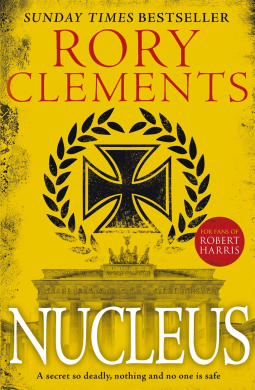
#BookReview ‘Nucleus’ by Rory Clements #thriller #WW2

Summer 1939. Germany has invaded Czechoslovakia. Jews desperate to flee Nazi persecution queue outside embassies in Berlin in the hope of getting a visa, while sending their children on Kindertransport to Britain. In the UK, the IRA’s bombing campaign continues. Scientists in Europe and America are researching atomic fission, and also at the Cavendish Laboratory in Cambridge. It is a vulnerable, combustible time. This is the setting for Nucleus by Rory Clements, second in his trilogy of history professor and amateur spy, Tom Wilde. Rory ClementsIn the first book in the series, Corpus, Tom Wilde was more amateur detective than spy. In Nucleus, the stakes are higher, war is imminent, spies are everywhere and so are traitors. The problem is, they look like friends. Asked by none other than the US president Franklin D Roosevelt to be a ‘clear and unbiased voice’ for him on research at the Cavendish, Wilde is drawn into a world of American millionaires, a Hollywood actress, champagne, tennis parties and horseracing. And then one of the Cavendish physicists, a withdrawn, complicated genius due to move to the USA to work with Oppenheimer, is found drowned in the River Cam. Was he killed because he had unlocked the answer to converting atomic fission into a bomb capable of destroying a city?
Meanwhile, Wilde’s girlfriend and neighbour, Lydia Morris, goes to Berlin on a mercy mission to search for the disappeared eight-year old son of Jewish scientist, Eva Haas, now in England. Could Albert have been kidnapped by the Gestapo to put pressure on his mother? And who is the mysterious German, Baumgarten, who helps Eva and her uncle, physicist Arnold Lindberg, escape to Austria. Tom Wilde, a specialist on Francis Walsingham, spymaster to Queen Elizabeth I, is an interesting protagonist; at times reckless but capable of analysis and leaps of faith.
Corpus was a slow read, at times lightly plotted, but Nucleus an emotional rollercoaster that continues until the last page. Clements avidly recreates the atmosphere of Britain on the brink of war; a summer where parties abound, people approach life with a reckless abandonment, where fear and paranoia combine with a ‘let’s get on with it’ attitude. I enjoyed Corpus but Nucleus is better. The plot twists and turns with all disparate elements connected together by the end. This is a compelling read which I devoured on a plane, sitting up to read it while others slept around me.

Click the title to read my reviews of the other books in the Tom Wilde series:-
CORPUS #1TOMWILDE
NEMESIS #3TOMWILDE
HITLER’S SECRET #4TOMWILDE

A PRINCE AND A SPY #5TOMWILDE
THE MAN IN THE BUNKER #6TOMWILDE
THE ENGLISH FUHRER #7TOMWILDE

And from the Sebastian Wolff series:-
MUNICH WOLF #1SEBASTIANWOLFF

If you like this, try:-
‘The Farm’ by Tom Rob Smith
‘Last Light’ by Alex Scarrow
‘Dominion’ by CJ Sansom

And if you’d like to tweet a link to THIS post, here’s my suggested tweet:
#BookReview NUCLEUS by Rory Clements https://wp.me/p5gEM4-3iZ via @SandraDanby

SaveSave

SaveSave

#BookReview ‘Corpus’ by Rory Clements #thriller #WW2

It is 1936. The Spanish civil war is in full swing. A constitutional crisis looms as Edward VIII considers abdicating in order to marry the woman he loves. Corpus by Rory Clements starts in Berlin as a young Englishwoman slips away from a friend to deliver a secret package to an unnamed man. Soon after, Nancy Hereward is dead. Rory ClementsIt is Nancy’s death which makes Cambridge history professor Tom Wilde ask questions, awkward questions which lead him to uncover conspiracy, lies, and pre-war positioning by Stalin and Hitler.
Wilde makes an interesting amateur detective. For one, he is American with a different reading of human nature; he sits on the fence and observes. For another, he is a professor of history; he analyses and looks for proof rather than opinion. And third, he has a cool motorcycle that he uses to cross the fens and investigate isolated country houses. The story starts rather slowly as Clements fleshes out various groups involved without letting the reader know how these people are connected, and who is traitorous. There is one out-and-out baddie, another who looks like a baddie but possibly isn’t, and a journalist who may or not be a spy or a traitor. The reader’s confusion reflects Tom Wilde’s muddle as he and Nancy’s friend Lydia, both disillusioned with official efforts to explain Nancy’s death, unite to investigate. I particularly enjoyed the description of Cambridge in the 1930s, college life, the city and surrounding fens. The portrayal of Cambridge dons is rather polarised, they all seem to be either fascists or communists, reflecting the political jockeying that went on pre-war.
The plot features twist upon twist as Wilde, and the reader, doesn’t know who to trust: is that policeman really honest, or in the pay of the fascists or communists? Perhaps there is one twist too many as Clements manipulates history to fit his plotline. I have a few minor quibbles, knowing that this is the first book of a series. Some of the loose ends were tied off conveniently at the end with minimal or no explanation. The gold plot was lightly sketched and lacked significance. And the budding romance seemed rather one-sided.
A good read, not a great read, but it left me liking Tom Wilde and anticipating the next novel in this spy series.

Click the title to read my reviews of the other books in the Tom Wilde series:-
NUCLEUS #2TOMWILDE
NEMESIS #3TOMWILDE
HITLER’S SECRET #4TOMWILDE

A PRINCE AND A SPY #5TOMWILDE
THE MAN IN THE BUNKER #6TOMWILDE
THE ENGLISH FUHRER #7TOMWILDE

And from the Sebastian Wolff series:-
MUNICH WOLF #1SEBASTIANWOLFF

If you like this, try:-
‘An Officer and a Spy’ by Robert Harris
‘The Ways of the World’ by Robert Goddard
‘The Bone Church’ by Victoria Dougherty

And if you’d like to tweet a link to THIS post, here’s my suggested tweet:
#BookReview CORPUS by Rory Clements https://wp.me/p5gEM4-3cu via @SandraDanby

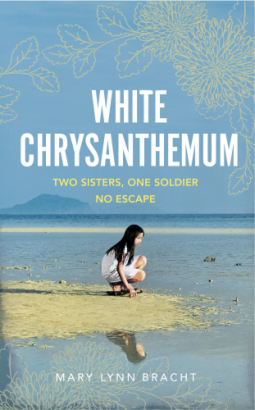
#BookReview ‘White Chrysanthemum’ by Mary Lynn Bracht‪ #WW2

It’s not often that I find myself using the words ‘delightful’ and ‘harrowing’ in the same book review, but here they are. White Chrysanthemum by Mary Lynn Bracht is the harrowing story of two Korean sisters separated during World War Two; one snatched to become a ‘comfort woman’ for Japanese soldiers, the other saved by her older sister’s actions. Mary Lynn BrachtIt is difficult to read of the violence, the arrogance, the misuse of power and the humiliation of this piece of war history – still being publicised and discussed – but this is leavened by the magical water sequences. Sixteen-year old Hana is a haenyeo, a female diver of the sea, she is taught by her mother, in the family tradition, to dive deep, hold her breath and withstand the cold. When she is abused, she retreats to her memories. She is a tough cookie.
One day, she and her mother are diving, their father is away fishing, and her younger sister Emiko sits on the beach, guarding the buckets that contain their day’s catch from interested seagulls; then Japanese soldiers arrive. Desperate to stop them taking her sister to a life of captivity, Hana races out of the water and distracts them. Throughout Hana’s capture and enforced slavery, at the most horrific moments of fear and violation, the thing that anchors her to the idea of survival is the thought of her sister, learning to dive, the memory of the water, the smell of the sea. “Hana is lying on the bottom of the ocean, looking upward at the sunlight shimmering above the surface. The great ocean’s heartbeat pulses against her eardrums. The current caresses her skin. A heaviness on her chest is an old ship’s anchor she has found. She hugs it close to weigh her down.”
Emi, Hana’s eleven-year old sister, is too young to understand what is happening when Hana is taken away. It is Emi’s story, told looking back when she is herself a grandmother, which brings contemporary perspective to the microscopic detail of Hana’s story. The complicated war history of this region is clarified as we learn of Emi’s silence about her experiences in World War Two and the Korean War which followed. Such is her shame she has never told her two children that they had an aunt. But once a year Emi travels to Seoul to take part in the Wednesday Demonstration to demand official recognition for the ‘comfort women’.
The bibliography at the end of the book is testament to the author’s research but this never weighs heavily in the story. When a little historical exposition is necessary, Bracht adds it with a light hand. This is a solemn book with flashes of beauty and love which give you hope to read to the end. I admired Hana’s strength and honour. And I did not guess the ending. A delightful read.

If you like this, try:-
‘The Translation of Love’ by Lynne Kutsukake
‘The Aftermath’ by Rhidian Brook
‘The Gift of Rain’ by Tan Twan Eng

And if you’d like to tweet a link to THIS post, here’s my suggested tweet:
#BookReview WHITE CHRYSANTHEMUM by Mary Lynn Bracht‪ https://wp.me/p5gEM4-3hH via @SandraDanby

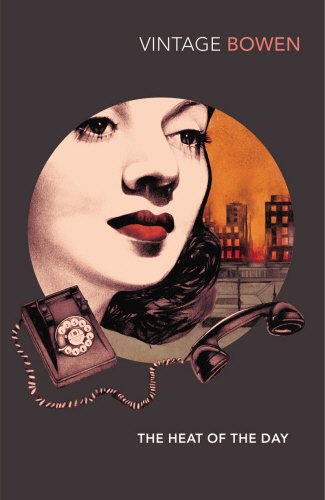
#BookReview ‘The Heat of the Day’ by Elizabeth Bowen #WW2

For readers, this novel is a definite case for remembering to ‘trust the author.’ The Heat of the Day by Elizabeth Bowen, published in 1949, is now recognised as a classic novel about the Second World War. Elizabeth BowenStella Rodney has relationships with two men, her lover Robert and Harrison, the man who suspects Robert of selling secrets to the enemy and sees this as a way of winning Stella’s love. This is not a spy novel, rather its threads and tentacles of story are woven as intricately as the lives of the three principal characters overlap with the bigger-scale events of war.
War is at the centre of it all, brooding over every minute, every decision, every pause. London, emptied of evacuees and people fleeing for safety, becomes a smaller place where strangers wish each other good luck in anticipation of that night’s bombing, where you awake in the morning and realize you are still alive. ‘Out of mists of morning charred by the smoke from ruins each day rose to a height of unmisty glitter; between the last sunset and first note of the siren the darkening glassy tenseness of evening was drawn fine. From the moment of waking you tasted the sweet autumn not less because of an acridity on the tongue and nostrils; and as the singed dust settled and smoke diluted you felt more and more called upon to observe the daytime as a pure and curious holiday from fear.’ On the whole though, the war is absent from the page. This is a story about people in extra-ordinary times.
The storyline is at times perplexing and vague and it is at those moments that I remembered to trust Elizabeth Bowen and enjoy to her language. This is the first of her novels I have read. Her stated interest was in the contrasts between life ‘with the lid on’ and what happens ‘when the lid comes off’. In The Heat of the Day, war causes the lid to be lifted. The theme of time runs throughout the novel. Daily life in London goes on but as if time is suspended from normality. Shackles have been removed and people behave differently, carelessness is common. It is in this vacuum that Stella, who lives in a rented furnished apartment with few things of her own, is given an ultimatum by Harrison. Louie, another displaced woman living in London waiting for her soldier husband who may or may not come home, appears in the first chapter as she listens to a band play in a park. Both women lie to the men in their lives, both have sex outside their monogamous relationships. Neither Robert or Harrison are as they seem. Harrison’s job is never explained, and Robert’s supposed treachery remains ill-defined.
This is a novel of shadows, appropriate as most of the novel happens at night during the blackout when the way is lit by torchlight and people blunder into furniture in darkened rooms. A very different read.

If you like this, try:-
‘The Slaves of Solitude’ by Patrick Hamilton
‘At Mrs Lippincote’s’ by Elizabeth Taylor
‘The Paying Guests’ by Sarah Waters

And if you’d like to tweet a link to THIS post, here’s my suggested tweet:
#BookReview THE HEAT OF THE DAY by Elizabeth Bowen http://wp.me/p5gEM4-2OV via @SandraDanby

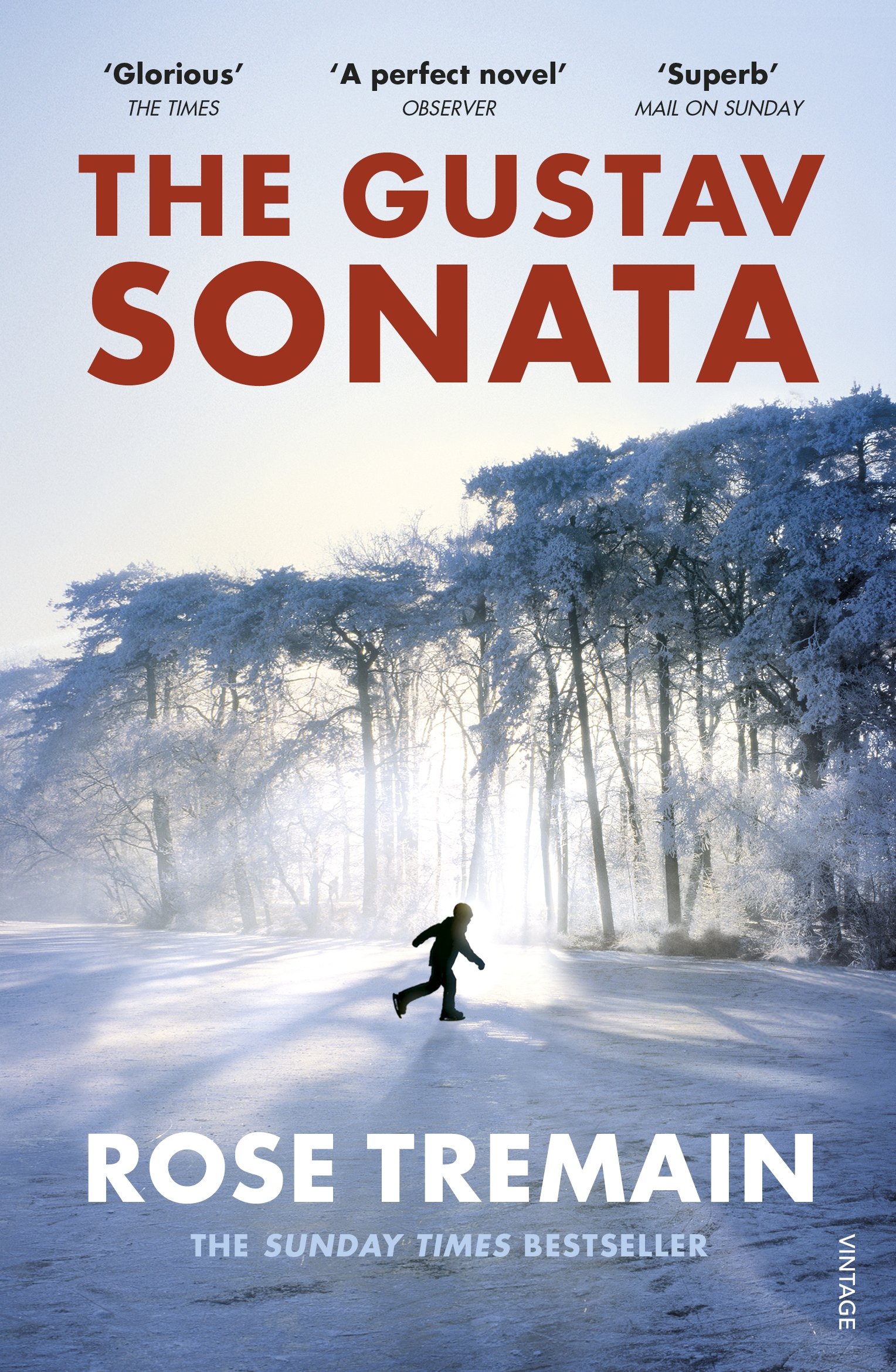
#BookReview ‘The Gustav Sonata’ by Rose Tremain #historical

The Gustav Sonata by Rose Tremain is a remedy. If you have been reading too many fast-moving, cliff-hanging, emotionally-wringing new novels which don’t give you time to breathe, now sink into this. Rose TremainThe Gustav Sonata is a sensitive portrayal of the friendship of two boys who meet at kindergarten and form a lifelong on-off friendship. Gustav and Anton are the products of their parents and upbringing, and the baggage they inherit. All of this is complicated by post-war Switzerland. The war seems, to them, irrelevant, but in fact it frames their whole lives.
Gustav lives with his widowed mother Emilie in a small town in Switzerland. Money is tight and Emilie juggles jobs to manage. As a lonely toddler who misses a father he barely remembers, Gustav longs for more warmth from an emotionally-distant mother. She encourages him to ‘master himself’, his behaviour, his emotions, his ambitions. He accompanies her to her cleaning job at the local church, he helps by cleaning rubbish from beneath the grating; instead of throwing it away, he keeps it carefully in a tin. The only person with whom he shares these treasures is Anton, his first real friend. Visiting Anton’s home and meeting his parents, Gustav comes to realize that his own lifestyle is not the norm and that other people live and love in different ways. He starts to question his mother, her distance, her lack of love, and why she will not talk about Gustav’s father, Erich. Anton, Gustav soon understands, is emotionally vulnerable and unable to master himself. This makes him feel protective of his friend, especially when it becomes clear to Gustav that his mother dislikes Anton. The reasons why are hinted at but not understood until the story of Erich is told.
This is a slow-paced novel about friendship, love, and how and where these connect and disconnect. It is about the expectations of relationships and how these can run afoul when any hopes and ambitions are hidden. And it is about conscience: when to do the right thing; what is the right thing; when to remain silent and when to speak out. Decisions taken based on conscience can haunt an individual all their life and affect everyone around them forever. The conflicts faced by the two boys and their parents reflect the moral dilemmas faced by Switzerland during World War Two and afterwards, long after the two boys have become men.
The story is told in three parts. Gustav’s childhood to the age of five. The story of Emilie and Erich’s romance and early married life. And finally Gustav and Anton as men in their fifties. Facts are slowly revealed which explain Emile’s coldness, and Erich’s failure as a police officer. But some things remain a secret until Gustav himself is nearing retirement and his mother is no longer there to question. Anton’s hoped-for high-flown career as a concert pianist morphs into the underwhelming one of music teacher in his hometown. Gustav opens a hotel and concentrates on creating comfort for his guests. A comfort he never felt in his own home: warmth, soft beds, roaring fires, exquisite food. Both men are products of their childhood but lack the self-awareness to change things mid-life. At the heart of it all is Mitteland, their ordinary hometown.
Mitteland in itself is an indication of how Tremain spins a compelling story out of everyday ingredients. There is nothing glamorous about The Gustav Sonata. There is depression, privation and jealousy. But there is also love and hope. The scenes in Davos when the two boys play make-believe, running a sanatorium for imaginary sufferers of TB, are delicate and touching. Rose Tremain is an author whose books vary considerably from each other. The breadth of her understanding of human nature, and the diversity of history and settings she writes about, is humbling. She is never a boring author.

Read my reviews of these other novels by Rose Tremain:-
ISLANDS OF MERCY
LILY

If you like this, try:-
‘Birdcage Walk’ by Helen Dunmore
‘Ghost Moth’ by Michèle Forbes
‘The Ballroom’ by Anna Hope

And if you’d like to tweet a link to THIS post, here’s my suggested tweet:
#BookReview THE GUSTAV SONATA by Rose Tremain https://wp.me/p5gEM4-35k via @SandraDanby

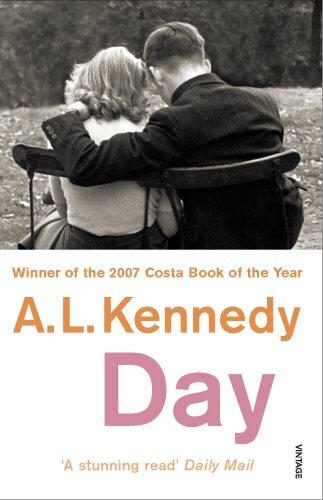
#BookReview ‘Day’ by AL Kennedy @Writerer #WW2

Day, the title of this novel by AL Kennedy, does not refer to a period of twenty-four hours, but to Alfred Francis Day. Alfie. Rear gunner in a Lancaster in World War Two and now extra on the set of a war film. Past and present are mingled together as he starts to remember things he would rather forget. The passages in the bomber are electrifying, in their detail and understanding. The cold, the smell, the fear, how the professionalism of their training kicks in when the action starts. It is totally believable. AL KennedyThe timelines are mixed here as Alfred’s memories are inter-mingled: when Alfred was a member of the bomber crew; his time in a prisoner-of-war camp; and as a film extra in 1949. Where the novel is not so clear, for me, is the intermingling of these three timelines, though after fifty pages everything started to clarify. If you find this, persist and everything will fall into place.
Through Alfred’s memories and his conversations with Ivor, his post-war employer at a bookshop, his bomber crew and the other film extras, we start to piece together the story of his life. It is particularly poignant when he falls in love, heavily, after a fleeting encounter during a bombing raid in London. He meets Joyce in a shelter and from then on she fills his head, when his head should be concentrating on shooting down enemy fighters as his crew drops bombs on Hamburg. ‘Turning his head and turning his head while the heath beyond him dreams, his head pressing back in his pillow and eyes closed and no clear memory he can see, only the wonder that her heartbeat was everywhere in her skin.’
Alfie is a complex character. He is a small man who reads to educate himself. He is nicknamed ‘Boss’ by his flight crew even though he is not the skipper. In flight training, he asks Sergeant Hartnell to show him how to fight and win. ‘Look, son… You’re not the first. Happens quite often in fact. Lads come along and they ask me for help… help with an argument they’ve got to settle back home…’ He tells Alfred his best bet is to hit them from behind with a bit of pipe, but when Alfred gets his chance he throws bricks.
We learn most about him as he remembers his mother and father, both of whom die during the war. In Alfred’s head, his mother and Joyce seem connected and he learns that memories are fickle, the things we would rather forget are the ones that return. ‘Some memories, the ones you’d rather keep – the more you tried to look at them, the more they wore away.’
CLICK HERE TO READ MORE ABOUT THIS BOOK AT AMAZON

And click the title to read my reviews of these other AL Kennedy books:-
ALL THE RAGE
ON WRITING
SERIOUS SWEET

If you like this, try:-
‘The Paying Guests’ by Sarah Waters
‘The Slaves of Solitude’ by Patrick Hamilton
‘Wake’ by Anna Hope

And if you’d like to tweet a link to THIS post, here’s my suggested tweet:
#BookReview DAY by AL Kennedy @Writerer via @SandraDanby http://wp.me/p5gEM4-2C6

#BookReview ‘The Slaves of Solitude’ by Patrick Hamilton #WW2 #wartimefamily

Patrick Hamilton is a new author for me. The Slaves of Solitude, published in 1947, is a novel about wartime in which war is deep background. The setting is Thames Lockden, a small town in the Home Counties, which Hamilton based on Henley-upon-Thames. It tells the story of Miss Roach – Enid, though hardly anyone knows this is her first name – and her life at a boarding house, The Rosamund Tea Rooms. Patrick HamiltonThis is a war novel with a difference, focussing on the people at home, not fighting but getting on with their lives in a world turned upside down, managing on a day-to-day basis, life is dreary and bare. Miss Roach, former schoolmistress, is single, 39, and fiercely independent. She has been bombed out of her London flat and has fled from the bombing. Life is dark. ‘The earth was muffled from the stars; the river and the pretty eighteenth-century bridge were muffled from the people; the people were muffled from each other. This was war late in 1943.’
Hamilton is a wonderful observer of human behaviour, he shows the nasty politeness between the residents at The Rosamund Tea Rooms, the bullying, the toadying, the power struggles and how the quiet ones are trampled over by the arrogant bullies. It is fascinating to see how the war makes things which seemed impossible before the war, possible. Miss Roach is a quiet, gentle woman, who over-thinks situations and constantly revisits things that happened and what she might have said. She is bullied at her shared dining room table by the odious Mr Thwaites who dislikes her democratic values, mistreated by ‘her’ American, the inept Lieutenant Pike, and stabbed in the back by her supposed ‘friend’ Vicki Kugelmann. Mr Thwaites is a clever portrayal of a man secure in the knowledge that he is always right and everyone else is wrong and inferior, reinforcing this position by snide comments to Miss Roach which, not wanting a confrontation, she sidesteps. The appearance in her life of the Lieutenant briefly gives Miss Roach’s confidence a boost, until she realizes that his compliments are always spoken in moments of drunkenness. She so longs to believe his protestations but is wary of his inconsequence so, when Vicki sets her sights on the Lieutenant, Miss Roach doesn’t know whether to be jealous or relieved.
Hamilton is a fine writer. He writes about the detail of everyday boring life and enlivens it with observations of human behaviour which are spot-on. The ending is satisfying and realistic.

For a taster of this novel, click here to read the first paragraph of THE SLAVES OF SOLITUDE.

Read my review of HANGOVER SQUARE by the same author.

If you like this, try:-
‘The Paying Guests’ by Sarah Waters
‘At Mrs Lippincote’s’ by Elizabeth Taylor
‘The Heat of the Day’ by Elisabeth Bowen

And if you’d like to tweet a link to THIS post, here’s my suggested tweet:
#BookReview THE SLAVES OF SOLITUDE by Patrick Hamilton http://wp.me/p5gEM4-2AH via @SandraDanby