Monthly Archives: June 2018

Great Opening Paragraph 108… ‘The Corrections’ #amreading #FirstPara

“The madness of an autumn prairie cold front coming through. You could feel it: something terrible was going to happen. The sun low in the sky, a minor light, a cooling star. Gust after guest of disorder. Trees restless, temperatures falling, the whole northern religion of things coming to an end. No children in the yards here. Shadows lengthened on yellowing zoysia. Red oaks and pin oaks and swamp white oaks rained acorns on houses with no mortgage. Storm windows shuddered in the empty bedrooms. And the drone and hiccup of a clothes dryer, the nasal contention of a leaf blower, the ripening of local apples in a paper bag, the smell of the gasoline with which Alfred Lambert had cleaned the paintbrush from his morning painting of the wicker love seat.”
Jonathan FranzenFrom ‘The Corrections’ by Jonathan Franzen

Read my review of PURITY, also by Jonathan Franzen.
And here’s the #FirstPara of FREEDOM.

Try one of these #FirstParas & discover a new author:-
‘The Collector’ by John Fowles
‘Room’ by Emma Donoghue
‘The Crying of Lot 49’ by Thomas Pynchon

And if you’d like to tweet a link to THIS post, here’s my suggested tweet:
#Books #FirstPara THE CORRECTIONS by Jonathan Franzen http://wp.me/p5gEM4-2xx via @SandraDanby

#BookReview ‘The Last of the Greenwoods’ by Clare Morrall #contemporary

Clare Morrall is so good at writing about people on the margins. In The Last of the Greenwoods, Johnny and Nick Greenwood are estranged brothers who live separately in two abandoned, adjacent railway carriages; with shared kitchen and bathroom. They are adept at avoiding each other. Clare MorrallNick lives in Aphrodite on the right, Johnny in Demeter on the left. Aphrodite has horizontal blinds at the windows, open at a slant so someone inside can look out but no-one outside can see in. Demeter’s windows are unknowable with permanently drawn curtains. The carriages sit amidst trees and shrubs, hidden from the main road in Bromsgrove, West Midlands. They have been the brother’s world since they were boys. Until one day, into the lives of these emotionally separated but geographically close brothers comes a letter which reignites haunted memories. “The floor is vibrating under his feet, there’s a sensation of motion, as if the train has started to move. What’s happening? Is he slipping backwards, losing his place in the present and tumbling back to the past? How can this be?”
The letter is from their older sister, Debs; the sister who was murdered when the boys were children. As the brothers consider whether the letter is real, a fake, or a joke we learn more about their background via Zohra, the postwoman who delivered the letter. Zohra has a past of her own which she tries to forget. What brings together these seemingly disparate story strands? Trains? And what effects change in the lives of the Greenwoods and Zohra? Trains.
Slowly, with exquisite and often humorous detail, Morrall unravels the mysteries of the past, building a picture of these people’s lives. They are ordinary people but in telling their story she makes them extraordinary, reminding us that the life of each of us has a story to tell and that elements of life can be repetitive. “Are they doomed to repeat the same mistakes over and over again – play, replay, round and round on an endless loop?”
Running throughout is the question of verifiable identity: the woman who returns could be Deb, or Deb’s friend Bev pretending to be Debs; and who are the girls who harassed Zohra on social media, did they use their real names or not? The brothers consider how they can accept Debs, do they need evidence, DNA proof, or can they trust their instincts? And why are the two brothers not talking?
Another masterful Morrall novel.
CLICK HERE TO READ MORE ABOUT THIS BOOK AT AMAZON

Click the title to read my reviews of these other novels by Clare Morrall:-
AFTER THE BOMBING
NATURAL FLIGHTS OF THE HUMAN MIND
THE LANGUAGE OF OTHERS
THE MAN WHO DISAPPEARED
THE ROUNDABOUT MAN

Read the first paragraph of ASTONISHING SPLASHES OF COLOUR here.

If you like this, try:-
‘If I Knew You Were Going to be This Beautiful, I Never Would Have Let You Go’ by Judy Chicurel
‘The Lie of the Land’ by Amanda Craig
‘Skin Deep’ by Laura Wilkinson

And if you’d like to tweet a link to THIS post, here’s my suggested tweet:
#BookReview THE LAST OF THE GREENWOODS by Clare Morrall https://wp.me/p5gEM4-3iT via @SandraDanby

A poem to read in the bath… ‘Along the field as we came by’

Best known for A Shropshire Lad, the poems of AE Housman reflect the dooms and disappointments of youth in the English countryside. Popular throughout the Victorian and Edwardian periods running up to the Great War, this two stanza poem by Housman transitions from first romantic love to death and grief, followed by hope and new love. It was his simplicity of style that appealed, and his nostalgic nature settings.

Here is the first verse.

‘Along the field as we came by
A year ago, my love and I,
The aspen over stile and stone
Was talking to itself alone.
‘Oh, who are these that kiss and pass?
A country lover and his lass;
Two lovers looking to be wed;
And time shall put them both to bed,
But she shall lie with earth above,
And he beside another love.’


‘The Picador Book of Funeral Poems’ ed. by Don Paterson [UK: Picador]

Read these other excerpts, and perhaps find a new poet to love:-
‘Cloughton Wyke I’ by John Wedgwood Clarke
‘Elegy’ by Carol Ann Duffy
‘Sometimes and After’ by Hilda Doolittle

And if you’d like to tweet a link to THIS post, here’s my suggested tweet:
A #poem to read in the bath: ‘Along the field as we came by’ by AE Housman https://wp.me/p5gEM4-3dN via @SandraDanby

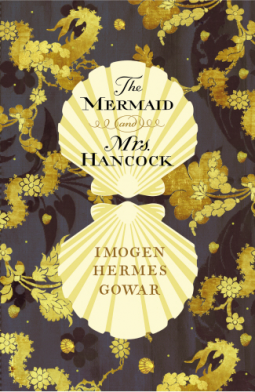
#BookReview ‘The Mermaid and Mrs Hancock’ by Imogen Hermes Gowar #historical

Quite a few things in The Mermaid and Mrs Hancock by Imogen Hermes Gowar are not as they seem. The mermaid, which may or not be real, is actually dead and quite gruesome. And the story starts with shipping merchant Mr Hancock, not Mrs. He is a widower. Imogen Hermes GowarThis story about London in 1785 is a full-on feast for the senses and at first is a bit overwhelming: wind ‘sings’, raindrops ‘burst’, skin is ‘scuffed and stained’, a face is ‘meaty’. But then I fell into the life of Jonah Hancock and wondered when the mermaid, and Mrs Hancock, would appear. Soon the captain of the Calliope, one of Jonah’s ships, returns homes without the ship but with a mermaid.
The Mermaid and Mrs Hancock overflows with contrasts: Deptford and Mary-le-Bone are villages outside London, whales are dismembered and rendered beside the river but in nearby Blackheath the air is to be treasured. It seems unlikely that the path of Jonah, conservative, hard-working, will intersect with Angelica Neal, a former upper class prostitute. But thanks to the mermaid, they meet and their lives take different turns as a result. Gowar juxtaposes sumptuous silks, satins and pearls of the girls at Mrs Chappell’s high-class brothel, where they are tutored at some expense in dancing and singing, performing masques for their high-paying clientele; with the potatoes peeled and stockings darned by Jonah’s niece Sukie and maid Bridget. The beauty of the whores, the ugliness of the mummified mermaid. Contrasts are everywhere.
The story is slow to build and I admit to skipping some paragraphs of description, many dedicated to situations and characters with no bearing on the main storyline. But then I would stop and admire a sentence like this, ‘Overnight, Deptford’s heady miasma had begun to settle, like silt in a puddle, but sunrise stirs it back up again and Mr Hancock stumps through that great rich stink of baking bread and rotten mud and old blood and fresh-sawn wood with the cat trotting on her tiptoes beside him.’ Over-stuffed with imagery, but beautifully written. I enjoyed the final third but was left regretting threads and characters left dangling that could have enriched the story; Tysoe Jones and Polly particularly.
This is a bawdy morality tale set in Georgian London that issues the warning to be careful what you wish for and compares inner and outer beauty, man’s treatment of women and the exploitation of a mermaid for money. The story is predictable, given the tradition of mermaids, and because of this the pacing would benefit from more audacious plot twists and turns. I liked Jonah and wanted to shout to him, ‘have nothing to do with her.’ He is simply too nice.

If you like this, try:-
‘The Quick’ by Lauren Owen
‘An Appetite for Violets’ by Martine Bailey
‘The Wicked Cometh’ by Laura Carlin

And if you’d like to tweet a link to THIS post, here’s my suggested tweet:
#BookReview THE MERMAID AND MRS HANCOCK by Imogen Hermes Gowar https://wp.me/p5gEM4-3lK via @SandraDanby

SaveSave

SaveSave

SaveSave

My Porridge & Cream read: Simon Fairfax

Today I’m delighted to welcome spy novelist Simon Fairfax. His ‘Porridge & Cream’ read is Heller with a Gun by Louis L’Amour.

“The book is called Heller with a Gun by Louis L’Amour. His books number 192 and 46 were made into films. Simon Fairfax“I first read it when I was about fifteen. I have always loved westerns, but this is probably the best western I have ever read. I bought it because I like the author’s style and stories. He is above all a great storyteller. I bought it in the winter and thoroughly enjoyed it. It has a great sense of ‘place’ with writing truly evocative of a cold, frozen climate. I read it every winter and never tire of it. It would in reality be strange to read it in the summer.

“The lead is a great character and typifies a dying breed, with strong values, pitting himself against the wilderness and evil. Living by a code of honour that will one day fade as he inevitably will. The writing style is perfect and you can imagine exactly all the circumstances and places that the book takes you to. Everything he writes about exists and he inspired me to adopt the same approach in my novels. Simon FairfaxThe plot: “King Mabry, an aging gunfighter and cattleman, is travelling to Cheyenne across frozen wastes and is being hunted for what he knows and the gold he is carrying. Thwarting his pursuer, he comes across a troupe of players (being led astray by outlaws), he is attracted to one of troupe and returning to help against his better judgement, tracks them and tries to help. Wounded, he is aided by one of the troupe who escapes. Travelling together they fight Indians, the weather and finally the outlaws in a tense action filled showdown. It is a perfect story of relationships, growth of spirit, survival and romance.”

Simon Fairfax’s Bio
A chartered surveyor for nearly 35 years, I have always loved crime thrillers, growing up devouring Ian Fleming and Dick Francis novels and a TV diet of The Saint, Persuaders, The Sweeney and The Professionals. I have seen first-hand what goes on in this world of multi-million pound deals and can attest to the fact that it has its fair share of characters, heroes and villains. I write about a world I know and enjoy with a spy twist, full of intrigue, great characters and set against world events that really happened and influenced markets and deals. I have enjoyed my characters, bringing them to life and continue to do so: I hope that you enjoy them too!

Simon Fairfax’s links
Website
Hursley Park Book Fair, June 23-24 2018

Simon Fairfax’s latest book
Simon FairfaxRupert Brett is back and it is 1995, with the property markets raging and the Sub-Prime madness just beginning. The Irish Sea, a shipment of drugs is intercepted, the IRA lose the cocaine and their most feared enforcer, Tir Brennan, is captured. Deauville, a wealthy French aristocrat has a terrible accident with far reaching consequences. Bogota, the head of the old drug cartels is dead and Ballesteros is now running new routes to the US and beyond. The events are all linked and somehow drugs are being smuggled with impunity across the globe. With a source originating in Palm Beach, US, Rupert Brett is again asked to go undercover, with SAS Sergeant Chris Adams as protection. They must find out how the drugs are being smuggled into the corporate world of property, polo and high finance. The answers run deeper than either could imagine and a dangerous former nemesis returns, throwing their lives into turmoil.
‘A Deal with the Devil’ by Simon Fairfax [UK: S Fairfax]


What is a ‘Porridge & Cream’ book? It’s the book you turn to when you need a familiar read, when you are tired, ill, or out-of-sorts, where you know the story and love it. Where reading it is like slipping on your oldest, scruffiest slippers after walking for miles. Where does the name ‘Porridge & Cream’ come from? Cat Deerborn is a character in Susan Hill’s ‘Simon Serrailler’ detective series. Cat is a hard-worked GP, a widow with two children and she struggles from day-to-day. One night, after a particularly difficult day, she needs something familiar to read. From her bookshelf she selects ‘Love in A Cold Climate’ by Nancy Mitford. Do you have a favourite read which you return to again and again? If so, please send me a message here.

Simon Fairfax

Heller with a Gun’ by Louis L’Amour[UK: Bantam]

Discover the ‘Porridge & Cream’ books of these authors:-
Jane Lambert
Carol Cooper
Shelley Weiner

And if you’d like to tweet a link to THIS post, here’s my suggested tweet:
Why does spy novelist Simon Fairfax re-read HELLER WITH A GUN by Louis L’Amour? #books https://wp.me/p5gEM4-3pw via @SandraDanby

SaveSave

SaveSave

SaveSave

SaveSave

SaveSave

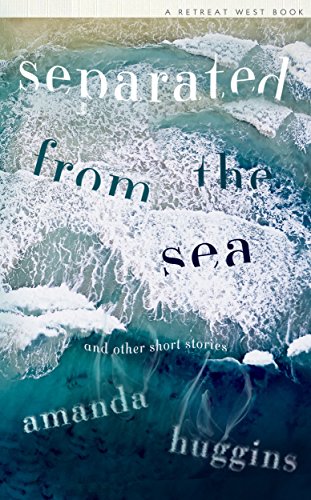
#BookReview ‘Separated from the Sea’ by Amanda Huggins @troutiemcfish #shortstories

About love, loss, partings and freedom. About yearning for a connection with another person but sometimes recognising it is better to walk away. Separated from the Sea by Amanda Huggins is a collection of poignant stories that cannot fail to touch you. Some of the stories spoke to me personally because of the Yorkshire settings, but locations range from Japan to America and Europe. Huggins has mastered the form; just enough detail, just enough emotion to pull you in and a well-disguised twist at the end. Amanda HugginsI have chosen three stories to focus on. In ‘Whatever Speed She Dared’ a woman drives on an empty motorway across the Pennines in the dark of night. She is tempted by what lies ahead, a new future. But an encounter with a skittish rabbit gives her pause for thought.
In ‘Sea Glass’ two children walk on the beach. Alife tells Cathy that pieces of blue sea glass are the souls of fishermen lost at sea. Another two pieces, he says, are the eyes of ships’ cats swept overboard. ‘If you match a pair of eyes, and sleep with them under your pillow, then the cat’ll find his way back to land.’ A melancholic longing for love and belonging that cuts to the heart.
In ‘Already Formed’, a woman watches a boy arrive at the holiday cottage next door and his presence prompts memories of her son Rory. A child that never was but still exists in the core of the heart, more true than a true love that was a mirage. A sad story, totally believable.
Huggins is a highly accomplished writer who uses language both beautiful and at the same time sparing, there are no indulgent passages of prose to detract from the main message. Every word is weighed before inclusion. A delight.

Read my reviews of other work by Amanda Huggins, including another novella, collections of short stories & poetry:-
ALL OUR SQUANDERED BEAUTY
AN UNFAMILIAR LANDSCAPE
BRIGHTLY COLOURED HORSES
EACH OF US A PETAL
CROSSING THE LINES
SCRATCHED ENAMEL HEART
THE BLUE OF YOU
THE COLLECTIVE NOUN FOR BIRDS

If you like this, try:-
Normal Rules Don’t Apply’ by Kate Atkinson
Staying Afloat’ by Sue Wilsea
‘Last Stories’ by William Trevor

And if you’d like to tweet a link to THIS post, here’s my suggested tweet:
#BookReview SEPARATED FROM THE SEA by Amanda Huggins @troutiemcfish https://wp.me/p5gEM4-3qn via @SandraDanby

#BookReview ‘The Believers’ by Zoe Heller #contemporary

The Believers by Zoe Heller is the story of a New York family and how serious illness challenges each person to consider in what they believe. The Litvinoffs are a Jewish family used by Heller as a prism to question our beliefs, not just religious but also motherhood, fidelity and politics. Zoe HellerThe story starts with the meeting of English student Audrey and American lawyer Joel, at a party in London in the Sixties. The action then shifts swiftly to 2002. Audrey and Joel live in New York, he is a prominent and outspoken radical lawyer, she does good works. They have two daughters, Rose and Karla, and adopted son Lenny. On the day he is due to appear in court representing a controversial defendant, Joel has a stroke. As he lays in a coma, Heller shows each of the family confronting the situation, its impact on their own lives, or not as the case may be. None of the characters are particularly likeable, and the storyline can be difficult in places, but I found the pages turned quickly as I wanted to know the ending. Of course, like life, there is no neat finale only more life to follow as the stories of the family continue.
Audrey is a deliciously outspoken and brutal mother to her daughters, though she mollycoddles her son to a ridiculous degree. Rosa is re-discovering her Jewish roots, having been raised in a non-observant Jewish family. We follow her exploration of the oddities of Orthodoxy, as she wrestles with the concept of accepting things she doesn’t understand. Karla, unhappily married and trying for a baby, is the recipient most frequently of Audrey’s caustic tongue. Not looking for an affair, she nevertheless stumbles into one, and has difficulty believing and accepting her suitor could possibly be attracted to her. Lenny is a drug addict who believes in nothing except his next hit. Meanwhile, Joel in his hospital bed is the cog of the wheel around which they all move.
I was left loving Heller’s writing, she has a wonderful turn of phrase. ‘Depression, in Karla’s experience, was a dull, inert thing – a toad that squatted wetly on your head until it finally gathered the energy to slither off. The unhappiness she had been living with for the last ten days was quite a different creature. It was frantic and aggressive. It had fists and fangs and hobnailed boots. It didn’t sit, it assailed. It hurt her.’
But, I finished the book dissatisfied with the story. Audrey’s Englishness did not come into play, except in the first chapter which feels unrelated to the rest of the book, and she seems unnecessarily harsh and unfair without real justification. What made her so bitter? Something which happened between the Prologue in 1962, and the main story in 2002? The big surprise, when it comes, is perhaps predictable to everyone except Audrey.

Read the opening paragraph of NOTES ON A SCANDAL, also by Zoe Heller.

If you like this, try:-
Purity’ by Jonathan Franzen
‘A Spool of Blue Thread’ by Anne Tyler
‘A Little Life’ by Hanya Yanagihara

And if you’d like to tweet a link to THIS post, here’s my suggested tweet:
#BookReview THE BELIEVERS by Zoe Heller http://wp.me/p5gEM4-2BZ via @SandraDanby 

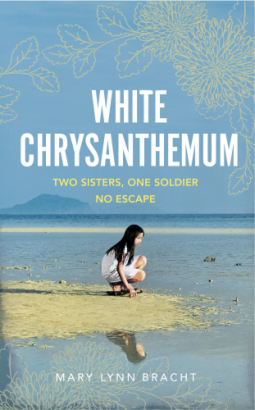
#BookReview ‘White Chrysanthemum’ by Mary Lynn Bracht‪ #WW2

It’s not often that I find myself using the words ‘delightful’ and ‘harrowing’ in the same book review, but here they are. White Chrysanthemum by Mary Lynn Bracht is the harrowing story of two Korean sisters separated during World War Two; one snatched to become a ‘comfort woman’ for Japanese soldiers, the other saved by her older sister’s actions. Mary Lynn BrachtIt is difficult to read of the violence, the arrogance, the misuse of power and the humiliation of this piece of war history – still being publicised and discussed – but this is leavened by the magical water sequences. Sixteen-year old Hana is a haenyeo, a female diver of the sea, she is taught by her mother, in the family tradition, to dive deep, hold her breath and withstand the cold. When she is abused, she retreats to her memories. She is a tough cookie.
One day, she and her mother are diving, their father is away fishing, and her younger sister Emiko sits on the beach, guarding the buckets that contain their day’s catch from interested seagulls; then Japanese soldiers arrive. Desperate to stop them taking her sister to a life of captivity, Hana races out of the water and distracts them. Throughout Hana’s capture and enforced slavery, at the most horrific moments of fear and violation, the thing that anchors her to the idea of survival is the thought of her sister, learning to dive, the memory of the water, the smell of the sea. “Hana is lying on the bottom of the ocean, looking upward at the sunlight shimmering above the surface. The great ocean’s heartbeat pulses against her eardrums. The current caresses her skin. A heaviness on her chest is an old ship’s anchor she has found. She hugs it close to weigh her down.”
Emi, Hana’s eleven-year old sister, is too young to understand what is happening when Hana is taken away. It is Emi’s story, told looking back when she is herself a grandmother, which brings contemporary perspective to the microscopic detail of Hana’s story. The complicated war history of this region is clarified as we learn of Emi’s silence about her experiences in World War Two and the Korean War which followed. Such is her shame she has never told her two children that they had an aunt. But once a year Emi travels to Seoul to take part in the Wednesday Demonstration to demand official recognition for the ‘comfort women’.
The bibliography at the end of the book is testament to the author’s research but this never weighs heavily in the story. When a little historical exposition is necessary, Bracht adds it with a light hand. This is a solemn book with flashes of beauty and love which give you hope to read to the end. I admired Hana’s strength and honour. And I did not guess the ending. A delightful read.

If you like this, try:-
‘The Translation of Love’ by Lynne Kutsukake
‘The Aftermath’ by Rhidian Brook
‘The Gift of Rain’ by Tan Twan Eng

And if you’d like to tweet a link to THIS post, here’s my suggested tweet:
#BookReview WHITE CHRYSANTHEMUM by Mary Lynn Bracht‪ https://wp.me/p5gEM4-3hH via @SandraDanby

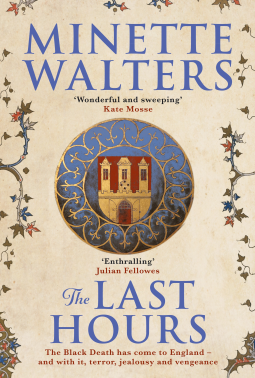
#BookReview ‘The Last Hours’ by Minette Walters #historical

I cannot remember when I last read a novel by Minette Walters although her psychological crime thrillers occupy a considerable section of my bookshelf. As soon as I read the blurb for The Last Hours, I was fascinated. What could  Walters do with a historical drama based on the Black Death of 14th century England? I wasn’t disappointed. Minette WaltersThe Last Hours tells the story of the Develish demesne in Devon in 1348 when infectious illness spread rapidly and threatened to wipe out the 200 bonded serfs, servants and family. What did take me by surprise is that The Last Hours is only the first instalment of the story, so there is the unexpected anticipation of the next book now to enjoy.
The first character we meet, pre-infection, is Eleanor. The only daughter of Sir Richard and Lady Anne of Develish, she watches preparations for the departure of her father and his retinue as they travel to meet the neighbouring lord to whose son Eleanor is promised. Eleanor seems at once fascinated by and repelled by a serf, Thaddeus Thurkell, who she distains for his illegitimacy. As a first chapter it sets up the relationships and future action in such a detailed way, I found myself re-reading it for clues. Because, though this is a historical novel, never forget it is written by Walters, author of The Scold’s Bridle and The Ice House.
Mystery, deceit, betrayal, lies and gruesome horror are a part of the story of how Lady Anne marshalls the population of Develish, family, stewards, servants and serfs alike, to survive when infection threatens to engulf them. Thaddeus is a key character, educated, tough and inspiring, he becomes a key figure when Sir Richard’s party returns from its visit to the neighbouring Bradmayne estate. Facing disease, Lady Anne must decide how to save the lives of the majority. Her knowledge of basic medical practices and herbal remedies, gleaned for her girlhood in a nunnery, enable her to reorganise Develish for survival. Walters does not lighten her descriptions of the Black Death; its symptoms, the corpses and infection are explicitly described but not in a sensationalist way, instead they add tension to the plot. Can this group of people possibly survive when whole Devonshire villages are dead and packs of wild dogs roam the countryside? How can you protect yourself from infection when the source of the disease is unknown and there is no help from outside?
The storyline is handled with expert timing. Just at the point where I wondered where the next threat would come from, Walters splits the storyline in two. After a suspicious death of a teenage boy, Thaddeus takes a group of five youths across the moat to explore the surrounding countryside to assess the threat from bandits and disease, and search for food. Meanwhile Eleanor’s behaviour is becoming more extreme, her hatred for her mother and the serfs make daily life difficult for all in such a confined space. Indulged by her father, Eleanor has grown to be a selfish, arrogant, ungrateful young woman who believes in her own superiority and expects special treatment even in such abnormal times.
As well as a historical study of the disease, The Last Hours also examines the social changes of the time, as serfs become educated and, encouraged by Lady Anne, consider a life independent of the feudal system. Walters has written two Black Death novels, the second is The Turn of Midnight.

Read my reviews of two other historical novels by Minette Walters:-
THE TURN OF MIDNIGHT #2BLACKDEATH
THE PLAYERS
THE SWIFT AND THE HARRIER

If you like this, try:-
‘Gone are the Leaves’ by Anne Donovan
‘At the Edge of the Orchard’ by Tracy Chevalier
‘The Taxidermist’s Daughter’ by Kate Mosse

And if you’d like to tweet a link to THIS post, here’s my suggested tweet:
#BookReview THE LAST HOURS by Minette Walters https://wp.me/p5gEM4-35D via @SandraDanby

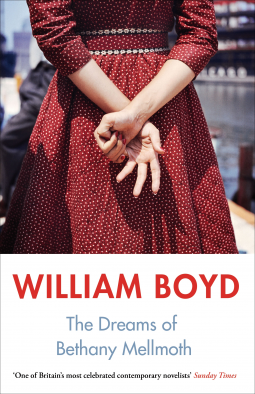
#BookReview ‘The Dreams of Bethany Mellmoth’ by William Boyd #shortstories

Partly good and partly disappointing: The Dreams of Bethany Mellmoth, the latest collection of short stories by William Boyd, is a bit of a curate’s egg. The shorter the stories, the more satisfying. William BoydOrganised in three parts, the first comprises seven short stories. If asked for my favourite from Part 1, I would say the first, ‘The Man Who Liked Kissing Women’. Ludo Abernathy is an art dealer who has foresworn affairs, his previous dalliances having finished three marriages. Now, he sticks to kissing women. Except when he can’t resist the temptation of making a killing on a Lucien Freud painting.
The title story, the longest in the anthology, makes up Part 2. It is more novella than short story, and I almost wish Boyd had developed it as such with a full plotline rather than letting Bethany Mellmoth drift from scene to scene. Bethany is a naïve twenty-something who drifts from boyfriend to boyfriend, dreaming of what she can do with her life but failing to make it happen. Each time it goes wrong, she gives up and moves back with her mother. It was a pleasant read but I’m unclear of Boyd’s central message – perhaps, the over-reliance of young drifters on parents rather than being truly independent – which meant I felt no urgency to read to the end. Of course I did. Bethany’s drifting started to annoy me; perhaps that was Boyd’s point?
Part 3 comprised one story, ‘The Vanishing Game: An Adventure’ which stopped abruptly. It starts off well: Alec Dunbar is an actor who keeps being called to auditions, mistakenly for Alexa Dunbar. His bad day improves when an actress who is waiting for an audition for the same film, offers him £1000 to deliver a package for her to Scotland. Dunbar’s road journey is peppered with references to the various films he has appeared in, and this is humorous. But the action becomes increasingly oddball, and the ending was disappointing. I prefer stories and novels that don’t tie up all the loose ends, but this one finished with too much remaining unexplained.

Read my reviews of:
ANY HUMAN HEART
LOVE IS BLIND
NAT TATE: AN AMERICAN ARTIST 1928-1960
ORDINARY THUNDERSTORMS
SWEET CARESS
THE BLUE AFTERNOON
TRIO
WAITING FOR SUNRISE
… and try the first paragraph of ARMADILLO

If you like this, try:-
‘All the Rage’ by AL Kennedy
‘The Story’ ed. Victoria Hislop
‘The Milk of Female Kindness’ ed. Kasia James

‘The Dreams of Bethany Mellmoth’ by William Boyd [UK: Viking]

And if you’d like to tweet a link to THIS post, here’s my suggested tweet:
#BookReview THE DREAMS OF BETHANY MELLMOTH by William Boydhttps://wp.me/p5gEM4-3jD via @SandraDanby

SaveSave

SaveSave

SaveSave

SaveSave