Category Archives: book reviews

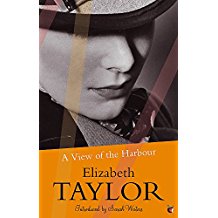
#BookReview ‘A View of the Harbour by Elizabeth Taylor #historical

Set in Newby, a small seaside town, just after the Second World War, A View of the Harbour by Elizabeth Taylor is an ensemble novel focussing on a small cast of characters. There is love and betrayal, friendship and duty, loneliness and death. Not a great deal happens, in terms of action, but the shifts in relationships in this place where everything seems to revolve around the harbour are what kept me reading. Elizabeth TaylorThere are seven key characters whose lives impact on each other in positive and negative ways. A middle-aged doctor, Robert, and his wife Beth seem to get through life without taking too much notice of each other. Their neighbour, divorcee Tory, is Beth’s best friend and Robert’s lover. A fact Beth seems unaware of, though their elder daughter Prudence knows and resents. Invalid and gossip Mrs Bracey makes hell of the lives of her two daughters, Maisie and Iris, but somehow knows everything that is happening. War widow Lily Wilson lives above the creepy, dusty Waxworks Exhibition, she used to run with her husband. Like much of Newby the museum is closed for the off-season, waiting the new life, energy and money expected by the arrival of springtime visitors.  Into this midst comes Bertram Hemingway, an out of season visitor, amateur artist, and something of a hit with the local ladies.
Each character is lonely, bereft, in a place where war is still evident; in absences, in debris washed up on the shore, in the general shabbiness of everything and everyone. Everything seems to happen slowly in Newby, like the lapping of the waves against the shore. Taylor introduces Prudence as she sits at her bedroom window looking out at her view of the harbour, “… various lights spread out over the cobblestones, the lamp above the door of this house, the doctor’s house, and the pavement shining red under the serge-draped windows of the Anchor; nearer the sea wall, lamps cast down circles of greenish light encompassed by blackness. And always there was the sound she no longer heard, since she had been hearing it from the beginning, water lapping unevenly against stone, swaying up drunkenly, baulked, broken, retreating.” Taylor uses this limited geography – plus the pub, the Braceys’ secondhand clothes shop and the museum – to show women surviving, often without men. First published in 1947, Taylor shows a community of women who get by because of, and sometimes despite, each other and in this it reminded by of Pat Barker’s Union Street, not published until 1982.
A View of the Harbour is both a bleak read and a funny one. I particularly enjoyed the letters written to Tory by her son, Edward, who is at boarding school; and the gauche awkward meetings between Prudence and her bookish beau Geoffrey.
CLICK HERE TO READ MORE ABOUT THIS BOOK AT AMAZON

Read my reviews of other books by Elizabeth Taylor:-
ANGEL
A WREATH OF ROSES
AT MRS LIPPINCOTE’S
IN A SUMMER SEASON
THE SLEEPING BEAUTY

If you like this, try:-
‘Hangover Square’ by Patrick Hamilton
‘Fred’s Funeral’ by Sandy Day
The Vanishing of Audrey Wilde’ by Eve Chase

And if you’d like to tweet a link to THIS post, here’s my suggested tweet:
#BookReview A VIEW OF THE HARBOUR by Elizabeth Taylor https://wp.me/p5gEM4-3OW via @SandraDanby

My Porridge & Cream read… Ivy Logan #books #YA #supernatural

Today I’m delighted to welcome Young Adult supernatural author Ivy Logan. Her ‘Porridge & Cream’ read is Reckless by Cornelia Funke.

“The book I enjoy reading is Reckless by Cornelia Funke. It’s a part of the Reckless series but the book is pretty special to me. I first discovered Cornelia Funke because of the Inkworld series but it was Jacob Reckless who went on to become the person with the power to draw me back again and again. Ivy Logan“Jacob is a human who has found his way to a magical world called the Mirrorworld. He keeps coming back to it and moves between two worlds. Despite his nomadic life Jacob always puts family first and he is willing to do anything, sacrifice anything to save his brother who is slowly turning into stone. The characters that flow from Cornelia’s imagination are so very real and they draw you and hold your attention.”
Ivy Logan

BUY


Ivy’s Bio
Ivy Logan has a lifetime of stories in her head. She has always loved reading and watching movies. And she sees stories in everything and in everyone. She was already a storyteller before she actually sat down and decided to become one. Writing is to Ivy about narrating a story, pulling the reader in and ensuring that her tale has elements of surprise that will either build shock, happiness or anger, even irritation towards her characters in the mind of the reader. She writes fantasy but based on an element of truth. To explain;Metamorphosisis set against the background of blood diamonds and a country ruled by a dictator.Brokenis based on the relationship of a mother with her children and the instinctive nature of a mother to protect the child she believes is the weaker one. Broken explores the idea, without painting the mother as a villain. All her stories cast the female MC as the heroes, even if they are less than perfect, because all young girls need someone to believe that we rescue ourselves, not a prince on a white steed. Currently in addition to the final book in her series, Redemption, Ivy also has a clean romance suspense, A Second Chance, in WIP.

Ivy’s links
Author website
Blog
Facebook
Twitter

Ivy’s latest book
Ivy Logan Amelia, Peradora’s teenage heiress is a fashionista and boasts of 6 million followers on Twitter. In reality she is a bit of an introvert, a prisoner in a golden cage and her ‘it girl’ image is nothing but a carefully crafted, elaborate P.R. plan, masterminded by  her guardian, Liam, the dictator of Peradora.   As secrets from her past dodge her at every turn, can Amelia choose between Adrian, the adventure junkie, her first love and Noah, the handsome bodyguard, and her best friend? Do they have secrets of their own they’re keeping from her?  Now Peradora, her beloved nation is in trouble, and a sorceress ancestor, grants Amelia the ability to shape shift. Will it prove to be a curse or a boon? Will the power be too much for Amelia to handle? And can it truly change who she is inside, a frightened girl, quite out of her depth?    As a stunning set of events unfold, will the truth set Amelia free or will she learn that some secrets are best buried in the past?
Check the advance reviews at Goodreads and add Metamorphosis to your To-Read list.

What is a ‘Porridge & Cream’ book? It’s the book you turn to when you need a familiar read, when you are tired, ill, or out-of-sorts, where you know the story and love it. Where reading it is like slipping on your oldest, scruffiest slippers after walking for miles. Where does the name ‘Porridge & Cream’ come from? Cat Deerborn is a character in Susan Hill’s ‘Simon Serrailler’ detective series. Cat is a hard-worked GP, a widow with two children and she struggles from day-to-day. One night, after a particularly difficult day, she needs something familiar to read. From her bookshelf she selects ‘Love in A Cold Climate’ by Nancy Mitford. Do you have a favourite read which you return to again and again? If so, please send me a message.
Discover the ‘Porridge & Cream’ books of these authors:-
Graeme Cumming’s choice is ‘Eagle in the Sky’ by Wilbur Smith
Linda Huber chooses ‘A Cry in the Night’ by Mary Higgins Clark
Do Androids Dream of Electric Sheep’ by Philip K Dick is chosen by Lisa Devaney

And if you’d like to tweet a link to THIS post, here’s my suggested tweet:
Why does YA supernatural writer @Ivyloganauthor re-read RECKLESS by @CorneliaFunke #books https://wp.me/p5gEM4-3Wu via @SandraDanby

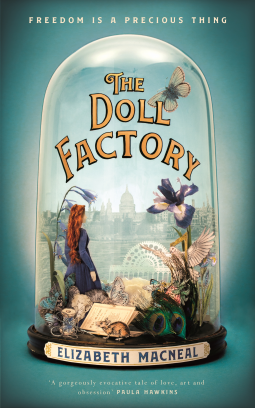
#BookReview ‘The Doll Factory’ by Elizabeth Macneal @esmacneal #historical #thriller

What a creepy tale is The Doll Factory by Elizabeth Macneal. It is a strange and compelling mixture of creepy taxidermy, the painting of doll’s faces and the Pre-Raphaelite Brotherhood artists, combined with stalking and kidnapping. I finished it not sure whether I liked it or not. Some parts are beautiful, some are horrifying. Elizabeth Macneal It is London 1850. Queen Victoria is on the throne, the Great Exhibition is being built in Hyde Park and a team of men are searching for wonders to display. Iris and her sister Rose work at The Doll Factory shop, painting personalised faces onto dolls, and sleeping in the attic. They survive but can only dream of having enough money to open their own shop. Iris is desperate to be a real artist. Silas Reed’s Shop of Curiosities Antique and New is popular with Victorian ladies buying dried butterflies and artists wanting stuffed mammals and rodents that can be copied and incorporated into their art. Silas and Iris are linked by Arnie, a young boy who scratches a living by sewing dolls clothes for The Doll Factory, and sourcing recently dead animals for Silas to stuff. When Iris meets Louis Frost, PRB artist, the circle is complete and the threat becomes darker. A two-headed dog, Silas’s most prized handiwork, is selected for display at the Great Exhibition. Meanwhile Iris leaves The Doll Factory to model for Louis, receiving free art lessons from him in lieu of payment. Albie suspects Silas of unnatural interest in Iris and tries to warn her but she doesn’t take him seriously.
I could have done with more of the art, less of the taxidermy and dead animals; but’s that’s just me. It was a long build up to the attack, which made me wonder if this started life as a historical novel about Victorian artists with the distinctly modern psychological thriller narrative layered on top at a later date. But it is a thought-provoking book about the unfairness of poverty and the blithe lifestyle of the rich; about women’s rights and lack of opportunities; and about the power of love and how obsession can turn into possession. The beautiful cover does not hint at the darkness and often gruesome writing inside.
CLICK HERE TO READ MORE ABOUT THIS BOOK

If you like this, try these:-
Blackberry and Wild Rose’ by Sonia Velton
The Mermaid and Mrs Hancock’ by Imogen Hermes Gowar
The Fair Fight’ by Anna Freeman

And if you’d like to tweet a link to THIS post, here’s my suggested tweet:
#BookReview THE DOLL FACTORY by @esmacneal https://wp.me/p5gEM4-3WM via @SandraDanby

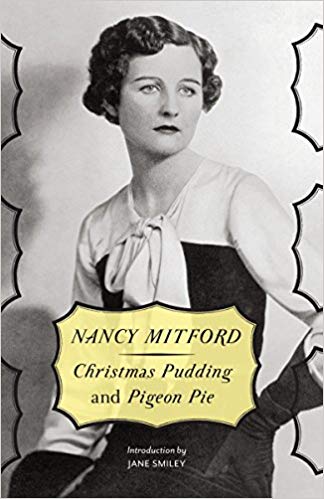
#BookReview ‘Pigeon Pie’ by Nancy Mitford #satire #historical

Pigeon Pie, the fourth novel of Nancy Mitford, was first published in 1940 by Hamish Hamilton. This was a serious error by its publisher given that Mitford wrote this light-hearted satire about wartime spying just before World War Two broke out in 1939. Not surprisingly, it was a commercial miss. Which is a shame. It is a funny, more tightly-plotted and disciplined novel than her first three and is a transition between her pre-war and post-war novels. Nancy MitfordAt the outbreak of war, Lady Sophia Garfield enrols at her nearest First Aid Post and is put in charge of the office, folding and counting laundry and taking telephone calls. As the book is set during the first few months of war, the Phoney War, not a lot happens for Sophia except endless first aid drills. She teases an acquaintance, Olga – who poses in the press as a mysterious Mata Hari figure – and lunches with inept friends Ned and Fred who work at the Ministry of Information. Then Sophia stumbles on a nest of spies; or counter-spies, or counter-counter spies, she’s not sure which.
Although her characters seem of a type with those of her first three novels – Mitford has a reputation for writing about the upper class, their extravagant and thoughtless lifestyles – in Pigeon Pie they are less cartoonish. Sophia particularly is interesting, drawn as she is into different worlds: her husband Luke’s enthusiasm for a new American religion, the Boston Brotherhood, brings new friends to dinner and a lodger upstairs; her godfather Sir Ivor King, aka The King of Song, disappears; journalist Rudolph Jocelyn enlists; and Sister Wordsworth at the Post is jolly and efficient about bandages and disinfectants and such like. Mitford weaves a plot of spies, kidnapping, bombs, code and general sneaking around, despite Sophia being unable to remember Morse Code and seeing codes in innocent messages.
This had me chuckling aloud.
CLICK HERE TO READ MORE ABOUT THIS BOOK

Read my reviews of these other novels by Nancy Mitford:-
CHRISTMAS PUDDING
HIGHLAND FLING
LOVE IN A COLD CLIMATE
THE BLESSING
THE PURSUIT OF LOVE
WIGS ON THE GREEN

Read the first paragraph of THE PURSUIT OF LOVE here.

If you like this, try these:-
‘The Paying Guests’ by Sarah Waters
‘The Heat of the Day’ by Elizabeth Bowen
‘The Slaves of Solitude’ by Patrick Hamilton

And if you’d like to tweet a link to THIS post, here’s my suggested tweet:
#BookReview PIGEON PIE by Nancy Mitford https://wp.me/p5gEM4-3h2 via @SandraDanby

#BookReview ‘Five Days of Fog’ by Anna Freeman #thriller #crime

Five Days of Fog by Anna Freeman about the queen of a female crime syndicate coming out of prison reminds me of Martina Cole’s books. It is 1952 and as Florrie Palmer waits for her mother Ruby to return home, she must make a decision about the direction of her own life. Anna FreemanLondon remains in the grip of ruins from the war and Florrie is firmly embedded in the family gang, donning disguises to steal, feeling secure in the circle of women who support each other. But she also applies for a job as a telephonist, carefully practising her accent.
The action is framed by five days of fog, both physical and perceived. So dense is visibility that cars crash, chemicals cause lung infections and people are coughing up dirt. The fog offers opportunities for thieves but it also disguises the truth and lies told to each other by the gang as they face a turning point. Old lies are perpetuated, new lies told with a smile, some members are out for their own benefit; others are tired of the secrets and politicking, and just want to get back to what they do best. Freeman’s fog is based on the real Great Smog of 1952 when an anticyclone pushed down all the filth in the air from industry, motor vehicle fumes and smoke from coal fires; it was followed in 1956 by the Clean Air Act.
The Palmer women form the Cutters, a fictional women’s gang named for The New Cut, a London market where the first group of women, tired of poverty and scrubbing floors, started shoplifting. When queen Ruby comes out of jail on early release, she has TB. As jostling begins in anticipation of the crowning of a new queen, there is a potentially bigger problem risking the survival of the Cutters and the male gang, the Goddens [the Palmer girls marry Godden boys, keeping the two gangs linked by DNA]; someone is grassing them up to the police. Trust is fractured, suspicious run rife, knives are carried, somewhere there is a gun. The story is told from multiple viewpoints – Florrie, Ruby, Nell, Ted – possibly too many. Is Florrie the grass? After all, she has dreams of going straight and marrying Nell’s son Ted, her quiet second cousin. If Ruby dies, Florrie will be in line to take over as queen. Or will Ruby’s blustering be-ringed sister Maggie take over? What about Ada, Ruby’s elderly aunt? Or is Harry Godden the queenmaker? Florrie and Ted are drawn into the gang by the family’s tentacles that keep the gang strong, safe and in the family.
I finished this book with mixed feelings. I admire the writing but don’t like any of the women and don’t feel convinced by the world created, though I can’t pin down why. I continued reading through the jumble of family background and names in the first half because I was curious about the identity of the grass. For me, the book took off in the second half as Nell’s story ignites. But the star of this book for me is Freeman’s masterful use of the fog.
If you are a fan of Freeman’s debut, The Fair Fight, be prepared for something completely different.

Read my review of THE FAIR FIGHT, also by Anna Freeman.

If you like this, try:-
Beginnings’ by Helen Christmas #1SAMEFACEDIFFERENTPLACE
Hangover Square’ by Patrick Hamilton
‘Never’ by Ken Follett

And if you’d like to tweet a link to THIS post, here’s my suggested tweet:
#BookReview FIVE DAYS OF FOG by Anna Freeman https://wp.me/p5gEM4-3U7 via @SandraDanby

#BookReview ‘The House Across the Street’ by @LesleyPearse #historical #mystery

This is the first book I have read by Lesley Pearse. The House Across the Street is a slow build as Pearse takes time to build the characters and the Sixties setting. This is a difficult book to describe: part-mystery, part-romance, part-thriller. Lesley Pearse.The house of the title is in Bexhill-on-Sea. Twenty-three year old Katy Speed is fascinated by Gloria, her fashionable neighbour, who owns a dress shop in town. Katy is also fascinated by some odd comings and goings; a black car arrives, bringing women and sometimes children to the house. Katy’s mother Hilda disapproves of Gloria, thinking there may be something illegal going on. Then one night Gloria’s house burns down and Katy’s father Albert is arrested for murder. It is at this point that the story really takes off.
The 1965 setting is well portrayed. It is a time of social change. Katy and her friend Jilly dream of escaping boring Bexhill to live and work in London. Hilda is something of a mystery; moody, cold, traditional. Mother and daughter mirror the changing times and sexual freedoms of the time. The backbone of the story is domestic violence and the lack of help available for victims in the Sixties.The House Across the Street is a novel sympathetic to the Sixties, showing the transition after World War Two as the older generation shaped by their war experiences clash with their children who want to grab their new freedoms. Pearse contrasts the awkward marriage of Hilda and Albert, and Katy’s new friendship with a barrister at her new job, to demonstrate the changing lives of women. Katy has more opportunities than her mother, but the laws protecting women remain inadequate. At the heart of the novel lays brutality but also kindness and a sense of justice.
The second half of the book flew by as Pearse expertly handles the increasing intrigue.

Here’s my review of YOU’LL NEVER SEE ME AGAIN, also by Lesley Pearse.

If you like this, try:-
‘The Beekeeper’s Daughter’ by Santa Montefiore
‘Beside Myself’ by Ann Morgan
Good Me Bad Me’ by Ali Land

And if you’d like to tweet a link to THIS post, here’s my suggested tweet:
#BookReview THE HOUSE ACROSS THE STREET by @LesleyPearse https://wp.me/p5gEM4-3yv via @Sandra Danby

#BookReview ‘Amy Snow’ by @AuthorTracyRees #historical

When eight-year old Aurelia Vennaway runs outside to play in the snow on a January day in 1831, she finds a baby, blue, abandoned and barely alive. She takes the baby home and, despite opposition from her parents, demands they keep the baby. Aurelia really is that precocious. She names the baby Amy. Amy Snow by Tracy Rees is about two lost girls, each lost in different ways who through their friendship find strength to face the lot given to them by life at a time when women had few individual rights. Tracy ReesThis is the story of a secret, well-hidden and unveiled by a series of letters. The two girls grow up together. Aurelia lives a privileged life and Amy stays on in the large house, first as a servant and then companion to her friend. She is treated harshly by Aurelia’s parents, but is looked after by Cook and under-gardener Robin. The two girls support each other as they grow up. Amy gains an education and learns how to be a lady, but when Aurelia faints, a weak heart is diagnosed. When Aurelia dies in her early twenties, Amy is thrown out of the house where she was discovered in the snow. ‘Staying here where you were not welcome. Schemer! Vagabond! Baseborn!’ shouts Lord Vennaway.
But Aurelia has not abandoned Amy. In a package entrusted to the keeping of the local schoolteacher and given to her after the funeral, Any finds money, a green silk stole and a letter. It is the first of many. In a recreation of the treasure trails she invented for her young friend when they were children, Amy must now follow Aurelia’s trail of clues. The subterfuge is necessary, Aurelia insists in her first letter, but does not explain why. So Amy travels to London and looks for a mysterious bookshop, trying to second-guess Aurelia’s clues, unsure where the path will lead, knowing only she must find the next letter. What is the secret Aurelia is protecting and why can’t she confide in Amy while she is alive? Each letter apologises for giving no answers. The trail takes Amy from London to Twickenham, Bath and York. The nature of the secret becomes obvious well before Amy realizes it, but this doesn’t stop the urge to read to the end.
There is some lovely description of the houses and the fashions of the time, and I particularly liked Ariadne Riverthorpe who was much more than she seemed. In contrast the family in Twickenham, the Wisters, are idealised. As the story progressed, the letter device came to see rather false. Also, given the title of the book, I expected the main narrative to be about Amy’s origins so when these are briefly explained at the end, it seems like a bit of an afterthought.
CLICK HERE TO READ MORE ABOUT THIS BOOK

Click the title below to read my reviews of other novels by Tracy Rees:-
DARLING BLUE
THE ELOPEMENT
THE HOUSE AT SILVERMOOR
THE ROSE GARDEN

If you like this, try:-
‘After Leaving Mr Mackenzie’ by Jean Rhys
‘Angel’ by Elizabeth Taylor
‘The Distant Hours’ by Kate Morton

And if you’d like to tweet a link to THIS post, here’s my suggested tweet:
#BookReview AMY SNOW by @AuthorTracyRees http://wp.me/p5gEM4-2TL via @SandraDanby

First Edition: ‘1984’ by George Orwell #oldbooks #firstedition

A novel which needs no introduction, 1984 by George Orwell [below], first published in the UK in 1949, has populated modern culture with its terms. Big Brother. Doublethink. Thoughtcrime. Newspeak. Room 101. Memory Hole. It regularly features in Best Of lists.

A first UK edition green jacket is for sale at Peter Harrington [above] for £4,000; the first impression was issued in either green or red jackets. Another UK first edition is also for sale, £9,750, owned and inscribed by friends of Eric Blair [Orwell], Eleanor and Dennis Collings.
George Orwell The current UK Penguin edition [above] dates from 2004. Buy

The story
The year is 1984.  Airstrip One is a province of Oceania, one of three totalitarian super states that rule the world. It is ruled by the ‘Party’, its ideology is ‘Ingsoc’, its leader is ‘Big Brother’. The people must conform to the system, spied on by the ‘Thought Police’ using two-way telescreens. Winston Smith is a member of the middle class Outer Party, he rewrites historical records to conform to the state’s vision. Winston has an affair with Julia, something which is an act of rebellion as the Party insists sex should only take place for reproductive purposes. Winston suspects his boss, O’Brien, may be a member of a secret underground resistance called the ‘Brotherhood’.

The film
Not an easy film to watch but, at the same time, impossible to turn away from. In the 1984 film, Winston Smith is played by a young John Hurt with Richard Burton, in his last screen appearance, as Inner Party member O’Brien. George Orwell It remains chilling to this day. Watch this scene, the first meeting of O’Brien [Burton] and Winston [Hurt].

Other editions
Although I read Orwell’s Animal Farm for the first time as an eleven-year old, I didn’t read 1984 until university when the year itself was rapidly approaching. I still have my copy, it’s the 1974 Penguin edition [below]. George Orwell

Read the first paragraph of 1984.

If you like old books, check out these:-
‘Lord of the Flies’ by William Golding
‘Jurassic Park’ by Michael Crichton
‘The Hobbit’ by JRR Tolkien

And if you’d like to tweet a link to THIS post, here’s my suggested tweet:
First Edition: 1984 by George Orwell #oldbooks https://wp.me/p5gEM4-3GW via @SandraDanby

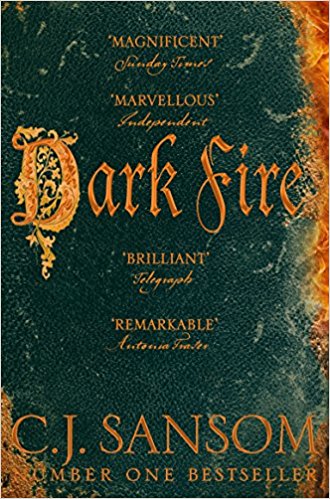
#BookReview ‘Dark Fire’ by CJ Sansom #Tudor #detective

Dark Fire by CJ Sansom is a story of political intrigue, whodunit and a Tudor weapon of mass destruction. Second in the series about Tudor lawyer Matthew Shardlake, Dark Fire combines two criminal mysteries; the appearance and subsequent disappearance of the alchemical formula to make an ancient terrifying weapon, and the impending trial and expected sentencing of a young woman to death by pressing. CJ SansomDespite a tenuous connection between the two cases, and a somewhat meandering pace at times, I enjoyed this book for its further development of Shardlake, first seen in Dissolution. It is 1540, King Henry VIII wishes to anul his marriage to Anne of Cleves, recommended to him by Thomas Cromwell, and marry instead the teenager Catherine Howard. At the beginning of the book Cromwell’s relationship with Henry is weakening and this imposes time pressure on both the novel and on Shardlake. As the novel opens, the lawyer is defending Elizabeth Wentworth, a teenage girl accused by her family of killing her cousin by pushing him down a well. She languishes in the Hole in the cellars of Newgate Prison and refuses to speak. Shardlake, though convinced of her innocence, despairs of being able to help her.
The alchemical formula for Greek Fire, the legendary substance with which the Byzantines destroyed the Arab navies, has been lost for centuries but is discovered in the library of a closed monastery in London by a government official. Cromwell decides to present it to the king as a demonstration of his fealty. He charges Shardlake with finding the Greek Fire within two weeks; to ease this he instructs the postponement of Elizabeth’s case for two weeks. As in Dissolution, Shardlake is once again living every minute under threat of Cromwell’s demands and bad temper. When Shardlake tracks down the official and his alchemist brother, he is too late; both men are dead and the formula is missing. So starts a chase across London.
As always with Sansom, the historical setting is convincingly written with vivid descriptions of the lives of rich and poor, the divisions between them and the melting pot that is the City and its surroundings in Tudor London. As this is the second book of the series, the community around Shardlake is becoming clearer and we see a small group of people who are different. Shardlake with his hunched back; Brother Guy, Moor and apothecary, who is stared at on the streets because of the colour of his skin; Jack Barak, Cromwell’s assistant who is sent to work with Shardlake, is threatened because of his Jewish heritage. Shardlake seems a modern interpretation of a sixteenth century lawyer; he has enlightened views of both race and the role of women, and is becoming disillusioned with religion. These loyalties and views potentially cause trouble for him, adding to the vulnerability that makes him appealing.
A pleasure to read, I am hooked on this series.
CLICK HERE TO READ MORE ABOUT THIS BOOK AT AMAZON

And here are my reviews of other novels by CJ Sansom:-
DOMINION
DISSOLUTION #1SHARDLAKE
SOVEREIGN #3SHARDLAKE
REVELATION #4SHARDLAKE
HEARTSTONE #5SHARDLAKE
LAMENTATION #6SHARDLAKE

If you like this, try:-
The Western Wind’ by Samantha Harvey
The Wicked Cometh’ by Laura Carlin
The French Lesson’ by Hallie Rubenhold

And if you’d like to tweet a link to THIS post, here’s my suggested tweet:
#BookReview DARK FIRE by CJ Sansom https://wp.me/p5gEM4-3Ne via @SandraDanby

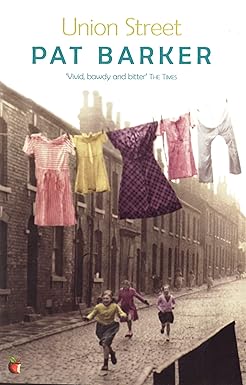
#BookReview ‘Union Street’ by Pat Barker #motherhood #women

Uncompromising, unbelievably sad and harsh, Union Street by Pat Barker does not hide the uncomfortable truths of poverty in North-East industrial England. This is the story of eight women who live on Union Street from teenager Kelly Brown to Alice Bell in her eighties and though each story is told individually, like the lives of the women, the stories interweave. An honest book about women struggling to hold life, family and home together, while retaining pride and some of their own individuality. Some succeed in this, others don’t. Pat Barker This is not a book about idealised motherhood. It is about putting bread on the table for your children no matter how you do it; including beating your husband to get his pay packet before he spends it on booze. These women are tough because they have to be; the choices are the cake factory, charring, and prostitution. Many marry young to feckless husbands because they are pregnant. This is not a light read; it features scenes of rape and backstreet abortion that somehow make the prostitution a lighter route. The language is often strong and some of the descriptions are difficult to read; but it is an honest book, bleak and realistic.
The spine throughout the book is Iris King, she appears in each story and is the one most aware of other women’s lives and offers support and a word of kindness when needed. But Iris is the toughest woman in the street. Three weeks after marrying Ted, he knocks her around because she is ironing his shirts when he gets home from work when he was expecting his supper. “After he’d gone, she sat down and took stock… When he came back she was waiting for him behind the door with the meat chopper in her hand. The blow glanced off him, though there was enough blood around to scare the pair of them stiff. It didn’t stop him hitting her again, but it did free her from the fear. She never lost her self-respect.” It is that self-respect which separates Iris from the other women.
This is the first novel by Booker Prize winner Barker, but such is the excellence of the prose

For my reviews of other Pat Barker novels, click the title below:-
ANOTHER WORLD
BLOW YOUR HOUSE DOWN
DOUBLE VISION
LIFE CLASS #1LIFECLASS
TOBY’S ROOM #2LIFECLASS
NOONDAY #3LIFECLASS
THE SILENCE OF THE GIRLS #1WOMENOFTROY
THE WOMEN OF TROY #2WOMENOFTROY
If you like this, try:-
‘Orphans of the Carnival’ by Carol Birch
‘In the Midst of Winter’ by Isabel Allende
‘These Dividing Walls’ by Fran Cooper

And if you’d like to tweet a link to THIS post, here’s my suggested tweet:
#BookReview UNION STREET by Pat Barker https://wp.me/p5gEM4-3rH via @SandraDanby