Category Archives: book reviews

My Porridge & Cream read: Julie Christine Johnson

Today I’m delighted to welcome novelist Julie Christine Johnson. Her ‘Porridge & Cream’ read is Pride and Prejudice by Jane Austen.

“Several years ago I created an annual tradition for myself: in December, as the light fades earlier each day and I retreat from the expectations and demands of modern commercial holidays, longing only for the renewal of Solstice, I soothe my tired and cold spirit with a reread of a work by one of my most treasured authors, Jane Austen. Her six completed novels — Sense and Sensibility, Pride and Prejudice, Mansfield Park, Emma, Northanger Abbey, Persuasion — form a canon of comfort and delight on my bookshelves.

Julie Christine Johnson

Julie’s copy of ‘Pride and Prejudice’

Among all these timeless treasures, it is that charming and soulful comedy of manners, Pride and Prejudice, I most anticipate. Truthfully, I rotate it in every couple of years. Each time I read the opening line, “It is a truth universally acknowledged, that a single man in possession of a good fortune, must be in want of a wife” my entire being relaxes into a smile of familiarity and joy.

Pride and Prejudice is the story of intelligent, independent Elizabeth Bennet, the eldest daughter of five in a family of modest means, and the inscrutable and cranky Fitzwilliam Darcy, an aristocrat newly arrived in their Hertfordshire neighbourhood. In Regency England, class and manners rule the day, but between these two remarkable young people, love could overcome pride and prejudice if they could just get out of their own ways.

It is these characters, their vivacity, strong wills, and fabulous repartee, which enthral me anew each time. Austen’s crisp and vivid writing charms on the surface, but also reveals a darker side of Georgian society: the devastating effects of class consciousness, the subjugation of women, the travesty of the slave trade. I remain ever in awe of Jane Austen’s ability to craft a flawless narrative, and ever in love with Elizabeth and Mr Darcy.”

Julie Christine Johnson’s Bio
Julie is the award-winning author of the novels In Another Life (Sourcebooks, 2016) and The Crows of Beara (Ashland Creek Press, 2017). Her short stories and essays have appeared in several journals, including Emerge Literary Journal; Mud Season Review; Cirque: A Literary Journal of the North Pacific Rim; Cobalt; River Poets Journal, in the print anthologies Stories for Sendai; Up, Do: Flash Fiction by Women Writers; and Three Minus One: Stories of Love and Loss; and featured on the flash fiction podcast No Extra Words. She holds undergraduate degrees in French and Psychology and a Master’s in International Affairs. Julie leads writing workshops and seminars and offers story/developmental editing and writer coaching services. A hiker, yogi, and wine geek, Julie makes her home on the Olympic Peninsula of northwest Washington state.

Julie Christine Johnson’s links
Website
Facebook
Twitter
Goodreads
Pinterest

Julie Christine Johnson’s latest book
Julie Christine JohnsonWhen Annie Crowe travels from Seattle to a small Irish village to promote a new copper mine, her public relations career is hanging in the balance. Struggling to overcome her troubled past and a failing marriage, Annie is eager for a chance to rebuild her life. Yet when she arrives on the remote Beara Peninsula, Annie learns that the mine would encroach on the nesting ground of an endangered bird, the Red-billed Chough, and many in the community are fiercely protective of this wild place. Guided by ancient mythology and challenged by modern problems, Annie must confront the half-truths she has been sent to spread and the lies she has been telling herself. Most of all, she must open her heart to the healing power of this rugged land and its people. Beautifully crafted with environmental themes, a lyrical Irish setting, and a touch of magical realism, The Crows of Beara is a breathtaking novel of how the nature of place encompasses everything that we are.
‘The Crows of Beara’ by Julie Christine Johnson [UK: Ashland Creek Press]

What is a ‘Porridge & Cream’ book? It’s the book you turn to when you need a familiar read, when you are tired, ill, or out-of-sorts, where you know the story and love it. Where reading it is like slipping on your oldest, scruffiest slippers after walking for miles. Where does the name ‘Porridge & Cream’ come from? Cat Deerborn is a character in Susan Hill’s ‘Simon Serrailler’ detective series. Cat is a hard-worked GP, a widow with two children and she struggles from day-to-day. One night, after a particularly difficult day, she needs something familiar to read. From her bookshelf she selects ‘Love in A Cold Climate’ by Nancy Mitford. Do you have a favourite read which you return to again and again? If so, please send me a message here.

Julie Christine Johnson


‘Pride and Prejudice’ by Jane Austen [UK: Penguin Classics]

Discover the ‘Porridge & Cream’ books of these authors:-
Rosie Dean
Laura Wilkinson
Graeme Cumming

Read about some valued first editions of Pride and Prejudice here.

And if you’d like to tweet a link to THIS post, here’s my suggested tweet:
Why does author @JulieChristineJ re-read PRIDE AND PREJUDICE by Jane Austen? #books https://wp.me/p5gEM4-3id via @SandraDanby
SaveSave

SaveSave

SaveSave

SaveSave

SaveSave

SaveSave

SaveSave

SaveSave

SaveSave

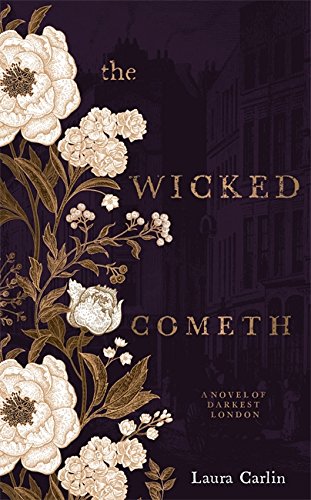
#BookReview ‘The Wicked Cometh’ by Laura Carlin #historical #suspense

In the dark alleyways of London, in 1831, people are disappearing; the vulnerable poor, children, elderly, homeless. Missing posters line the streets. But none are found. The Wicked Cometh by Laura Carlin is a 19th century crime thriller with two women, divided by class and background, who are determined to find the truth but who never once suspect the depth of wickedness they will uncover. Laura CarlinWhen 18-year old Hester White is hit by a carriage, physician Calder Brock takes her to his London home. Cared for by his servants, he questions Hester about her birth. Ashamed of her bad luck – growing up at a country parsonage, she was orphaned and taken in by her parents’ servants whose own income declined so now they live in an East End slum – Hester hides her education with a deftly-adopted London accent. Brock rescues her as an experiment in educating the poor. He takes Hester to Waterford, his childhood home in the country, where he lives with his sister Rebekah and their Uncle Septimus. Rebekah is to be Hester’s tutor. What follows is a story of lies laid upon more lies, murder, theft, friendship and love. As the women set out to discover what happened to Hester’s missing cousin, and two servants who worked for Rebekah, they enter into an underworld neither guessed exists. Being female hinders their attempts to investigate and they put themselves into increasingly dangerous situations in their efforts to gather evidence.
This is a melodramatic rollercoaster which in places grew so convoluted that I at first re-read passages, but then simply skipped paragraphs. It would benefit from some robust editing. At its heart is a gruesome Victorian murder mystery and the love of two women. The answer to the mystery that Hester and Rebekah set out to solve – and I started with high hopes of the two female investigators – is perhaps predictable but the details are dense and colourful though at times needlessly confusing. Some of the descriptions are unbelievably gory, unnecessarily so.
There are two endings, difficult to describe without giving spoilers. Suffice to say I found the final ending unsatisfactory; too neat and tidy for me. The part of the book I enjoyed the most was the beginning, with the development of Hester’s character, her stop-start relationship with Rebekah, and the whispers that unsettle Hester so she doesn’t know who to trust. The London setting is well-written; the filth so real you can smell it. The medical detail is gruesome so be warned, a few pages require a strong stomach. Another positive is the two strong female protagonists.
I particularly liked Rebekah. All of this is well done. What let it down for me? It simply didn’t hold my attention in places.

If you like this, try:-
‘The Quick’ by Lauren Owen
‘The Secrets of Gaslight Lane’ by MRC Kasasian #4GOWERDETECTIVE
‘The Taxidermist’s Daughter’ by Kate Mosse

And if you’d like to tweet a link to THIS post, here’s my suggested tweet:
#BookReview THE WICKED COMETH by Laura Carlin https://wp.me/p5gEM4-35y via @SandraDanby

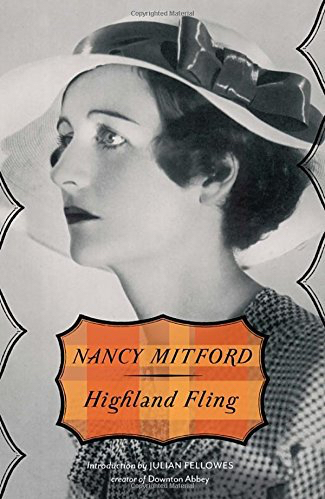
#BookReview ‘Highland Fling’ by Nancy Mitford #satire #historical

First published in 1931, Highland Fling is the first novel by Nancy Mitford and the first I have read, determined to read them in order. What a breath of fresh air it was after reading two detailed historical novels, this light frothy concoction made me chuckle. Nancy MitfordAn amusing observer of manners, Mitford excels at that peculiar type of incomplete conversation between two people gossiping about mutual acquaintances in which each completes the other’s sentences. This is a novel of its time, upperclass wealth, upperclass lack of wealth, centuries of families and traditions the roots of which have been forgotten, and the juxtaposition of bluff country old-timers with Bright Young Things from London. Highland Fling is set in a Scottish castle, a closed-room setting, loved by crime writers, which Mitford uses mercilessly to compare and contrast. It is a world with which the author knows well and at which she gently pokes fun.
Young artist Alfred Gates returns from Paris to London and visits his newly-married friends Walter and Sally. Sally’s parents are called away and the three friends go to Scotland to host the parent’s shooting party. As well as the shooting guests, including stodgy old-fashioned military and aristocratic types, the younger guests include Jane Dacre who fancies herself in love with the effete Albert. Albert, who dresses in brightly-coloured flamboyant clothing which offends the traditionalists, searches Dalloch Castle for examples of Victorian decorative accessories which he photographs for his book. While the shooting guests are up at dawn and tramp around the moorland, the youngsters rise at midday and drink champagne for breakfast. Teasing, of old by young, is inevitable with the hapless victims suspicious but unable to produce proof of their tormenters. Mitford mines the humour by placing both groups in close proximity and letting them clash, on a shoot, and a visit to the local highland games.
As a first novel this gave me a taster of Mitford’s acerbic wit and observation of social manners, acute in its sharpness of both old and young, wealthy and not, though crude in some instances.
CLICK HERE TO READ MORE ABOUT THIS BOOK

Read my reviews of these other novels by Nancy Mitford:-
CHRISTMAS PUDDING
LOVE IN A COLD CLIMATE
PIGEON PIE
THE BLESSING
THE PURSUIT OF LOVE
WIGS ON THE GREEN

Read the first paragraph of THE PURSUIT OF LOVE here.

If you like this, try:-
‘Curtain Call’ by Anthony Quinn
‘Miss Pettigrew Lives for a Day’ by Winifred Watson
‘Quartet’ by Jean Rhys

And if you’d like to tweet a link to THIS post, here’s my suggested tweet:
#BookReview HIGHLAND FLING by Nancy Mitford http://wp.me/p5gEM4-2TH via @SandraDanby

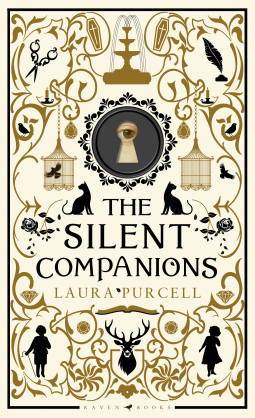
#BookReview ‘The Silent Companions’ by Laura Purcell #historical #mystery

How to describe this novel? Spooky, mysterious? A tale of witchcraft and trickery or malicious exploitation and fraud? The Silent Companions by Laura Purcell starts with a woman in an asylum. Mute, she is given chalk and a slate with which to communicate. What follows is her account of the Bainbridge family and their country home, The Bridge. Laura PurcellFrom the beginning until the end, we do not know who to believe. The story is told in three strands – a woman in an asylum, accused of murder; a young widow who arrives at her husband’s family home, pregnant and vulnerable; and a couple excitedly prepare for a royal visit by Charles I. What unfolds is a complicated story. Purcell handles the many threads well although I would have preferred a clear delineation with each new section marked by date.
Elsie, the daughter of a match factory owner in London, is a survivor. She supported her mother after her father was killed in a ghastly workplace accident, she supported her younger brother Jolyon as their mother also fell ill. And when Jolyon brings a new investor for the factory the siblings, now jointly own, Elise marries Rupert Bainbridge. Odd things start to happen after Rupert dies soon after the marriage and Elsie goes for the first time to The Bridge. Exploring the rundown dusty house when she hears a noise at night, Elsie finds a locked door and in the room behind is a wooden stand-up figure of a girl. From this point, odd things start to happen, getting odder and more frequent as the tale progresses. The reader doesn’t know who to believe or who to trust. It feels as if everyone might be lying for their own ends, or perhaps the villagers are right and the house is riddled with witchcraft. But concrete things keep happening which cannot be denied.
This is a strange, unsettling read.

If you like this, try:-
The Night Child’ by Anna Quinn
‘The Penny Heart’ by Martine Bailey
‘The Witchfinder’s Sister’ by Beth Underdown

And if you’d like to tweet a link to THIS post, here’s my suggested tweet:
#BookReview THE SILENT COMPANIONS by Laura Purcell http://wp.me/p5gEM4-2Tn via @SandraDanby

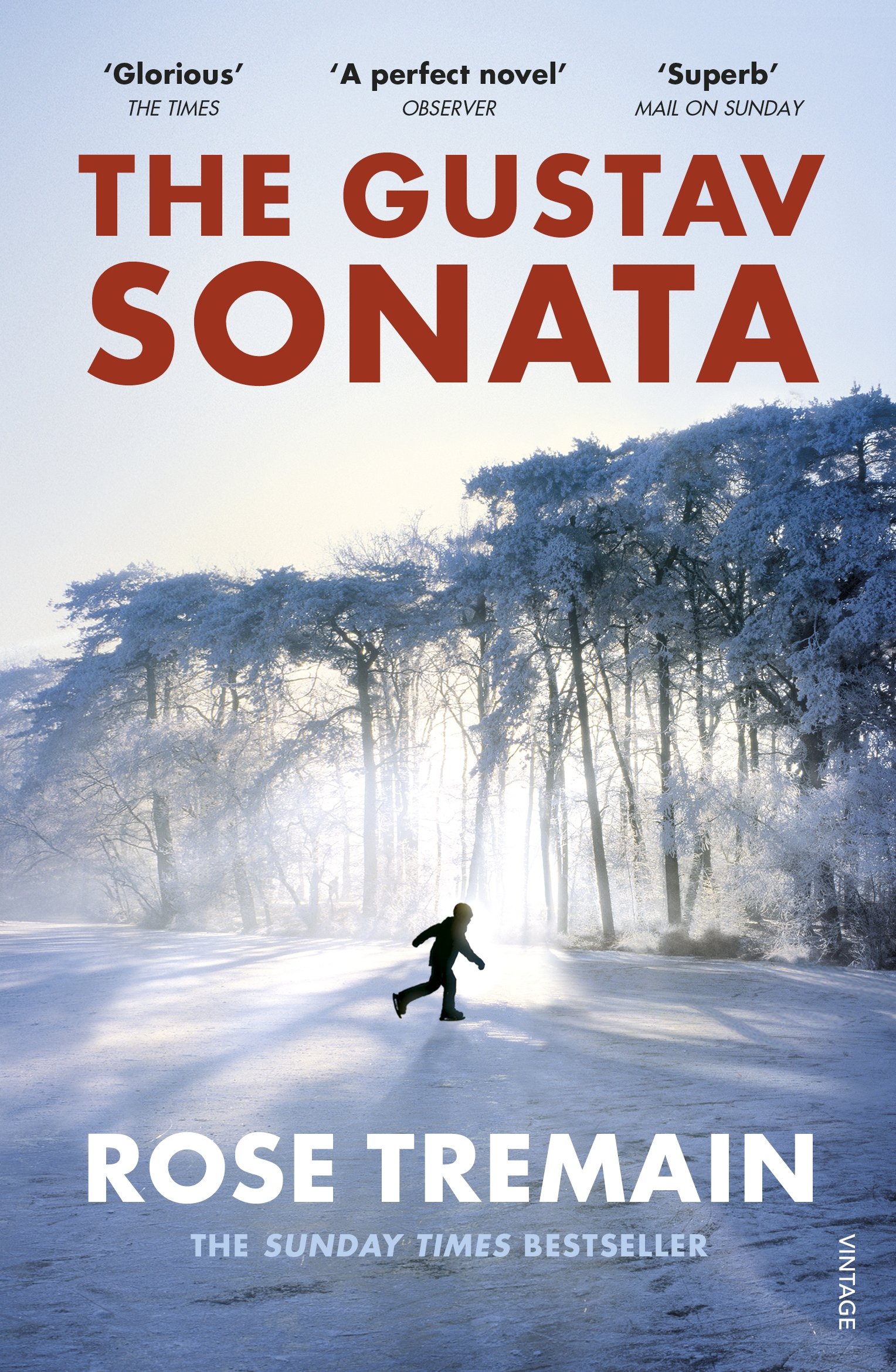
#BookReview ‘The Gustav Sonata’ by Rose Tremain #historical

The Gustav Sonata by Rose Tremain is a remedy. If you have been reading too many fast-moving, cliff-hanging, emotionally-wringing new novels which don’t give you time to breathe, now sink into this. Rose TremainThe Gustav Sonata is a sensitive portrayal of the friendship of two boys who meet at kindergarten and form a lifelong on-off friendship. Gustav and Anton are the products of their parents and upbringing, and the baggage they inherit. All of this is complicated by post-war Switzerland. The war seems, to them, irrelevant, but in fact it frames their whole lives.
Gustav lives with his widowed mother Emilie in a small town in Switzerland. Money is tight and Emilie juggles jobs to manage. As a lonely toddler who misses a father he barely remembers, Gustav longs for more warmth from an emotionally-distant mother. She encourages him to ‘master himself’, his behaviour, his emotions, his ambitions. He accompanies her to her cleaning job at the local church, he helps by cleaning rubbish from beneath the grating; instead of throwing it away, he keeps it carefully in a tin. The only person with whom he shares these treasures is Anton, his first real friend. Visiting Anton’s home and meeting his parents, Gustav comes to realize that his own lifestyle is not the norm and that other people live and love in different ways. He starts to question his mother, her distance, her lack of love, and why she will not talk about Gustav’s father, Erich. Anton, Gustav soon understands, is emotionally vulnerable and unable to master himself. This makes him feel protective of his friend, especially when it becomes clear to Gustav that his mother dislikes Anton. The reasons why are hinted at but not understood until the story of Erich is told.
This is a slow-paced novel about friendship, love, and how and where these connect and disconnect. It is about the expectations of relationships and how these can run afoul when any hopes and ambitions are hidden. And it is about conscience: when to do the right thing; what is the right thing; when to remain silent and when to speak out. Decisions taken based on conscience can haunt an individual all their life and affect everyone around them forever. The conflicts faced by the two boys and their parents reflect the moral dilemmas faced by Switzerland during World War Two and afterwards, long after the two boys have become men.
The story is told in three parts. Gustav’s childhood to the age of five. The story of Emilie and Erich’s romance and early married life. And finally Gustav and Anton as men in their fifties. Facts are slowly revealed which explain Emile’s coldness, and Erich’s failure as a police officer. But some things remain a secret until Gustav himself is nearing retirement and his mother is no longer there to question. Anton’s hoped-for high-flown career as a concert pianist morphs into the underwhelming one of music teacher in his hometown. Gustav opens a hotel and concentrates on creating comfort for his guests. A comfort he never felt in his own home: warmth, soft beds, roaring fires, exquisite food. Both men are products of their childhood but lack the self-awareness to change things mid-life. At the heart of it all is Mitteland, their ordinary hometown.
Mitteland in itself is an indication of how Tremain spins a compelling story out of everyday ingredients. There is nothing glamorous about The Gustav Sonata. There is depression, privation and jealousy. But there is also love and hope. The scenes in Davos when the two boys play make-believe, running a sanatorium for imaginary sufferers of TB, are delicate and touching. Rose Tremain is an author whose books vary considerably from each other. The breadth of her understanding of human nature, and the diversity of history and settings she writes about, is humbling. She is never a boring author.

Read my reviews of these other novels by Rose Tremain:-
ISLANDS OF MERCY
LILY

If you like this, try:-
‘Birdcage Walk’ by Helen Dunmore
‘Ghost Moth’ by Michèle Forbes
‘The Ballroom’ by Anna Hope

And if you’d like to tweet a link to THIS post, here’s my suggested tweet:
#BookReview THE GUSTAV SONATA by Rose Tremain https://wp.me/p5gEM4-35k via @SandraDanby

#BookReview ‘Birdcage Walk’ by Helen Dunmore #historical

Birdcage Walk is the last novel by the incomparable Helen Dunmore who moved between subjects and periods with ease, setting the dramatic minutiae of people’s lives against the huge social events of the time. War, spies and, in Birdcage Walk, the French Revolution and how its impacts on a family in Bristol. Helen DunmoreThe novel opens as a walker and his dog discover a hidden grave in the undergrowth of a derelict graveyard. He reads the inscription to Julia Elizabeth Fawkes but subsequent research finds no information about her. This is followed by a short night-time scene in 1789 of a man burying a body in woods. We do not know the location, his identity or that of the body. How are these two things connected? For the first half of the book, I forgot these two short scenes until growing menace made me recall it and read faster.
It is 1792. This is the story of young wife Lizzie Fawkes, new wife of Bristol builder John Diner Tredevant and daughter of writer Julia Fawkes. Diner, as he is known, is developing a grand terrace of houses on the cliffs at Clifton Gorge, a development for which he specifies the best, borrowing against the potential sales. He is not keen on the company kept by his wife’s mother, seeing them as seditious socialists agitating in support of the French revolutionaries. He is aware of the potential cost to England, and his ambitious development, if the trouble in France turns into war. Lizzie is torn between two worlds, loyal to her Mammie and cautious about Augustus, her step-father and political pamphleteer, but aware her husband is under financial pressure. Diner is derided as a capitalist by Augustus and his writer friends. But Lizzie is proud, she chose her husband and remains loyal to him. But that loyalty and her young impressionable love for him are challenged. As news from Paris gets grimmer, Diner’s mood darkens. He must lay off workers, creditors chase payment, and he has night sweats. Insistent that independent Lizzie is his now, that he owns her and everything of hers, he is almost overpowering in his need to keep her close. She begins to fear he is having her followed and so disguises herself as she walks about town, lying about her visits home. And then there is the mystery of Diner’s first wife, Lucie, who died in France but of whom he does not speak. Lizzie fears he still loves Lucie.
This is a gently-written novel about tumultuous times in Europe, when the shadow of the unknown and fear – from the horrors in Paris to Diner’s secrets and his dark brooding nature – cannot be escaped. When the moment to run arrives, will Lizzie recognise it? If she does run, where to and who with? And will she know if she is running towards more danger? This is an expertly-written historical novel, rich in period detail, although the title is mentioned fleetingly and not referred to again.

Read my reviews of two other novels by Helen Dunmore:-
EXPOSURE
THE LIE

If you like this, try:-
‘The Walworth Beauty’ by Michèle Roberts
‘The Quick’ by Lauren Owen
‘The French Lesson’ by Hallie Rubenhold

And if you’d like to tweet a link to THIS post, here’s my suggested tweet:
#Bookreview BIRDCAGE WALK by Helen Dunmore http://wp.me/p5gEM4-2T2 via @SandraDanby

My Porridge & Cream read: Julie Stock

Today I’m delighted to welcome romance author Julie Stock. Her ‘Porridge & Cream’ read is Jane Eyre by Charlotte Bronte.

“My ‘Porridge and Cream’ book is Jane Eyre by Charlotte Brontë. The first time I read it was at secondary school, when I was about 14 years old, in the late 1970s. I went to a girls’ school and romantic love seemed very elusive and also illusory. What captivated me about the story was that it seemed so real. My school was nothing like Jane’s experience, thank goodness, although I might have felt like it was at the time but I appreciated the truth of the story, like the author was treating the reader with respect by drawing characters to whom life had not been kind, who were quite ordinary in their way, but had the potential to be extraordinary by their actions.

Julie Stock

Julie’s copy of ‘Jane Eyre’

It was many years before I picked the book up again but I find myself moved to reread it regularly these days, especially when the real world becomes a bit too superficial and I need an escape to a world where people rose above their suffering and survived despite it because of the power of love. I love Jane most of all. I feel sorry for her, but I also admire her for surviving all the awful things life throws at her. And even at the last, when anyone else would be weeping with despair, she is happy to find Mr. Rochester again. What a woman!

The plot: Jane Eyre – an average woman of low means, destined to live her life alone but with a determination to make something of her situation.

Edward Rochester – a bitter man, whose wealth has brought him no advantages. Can he be saved by the love of a good woman?

This is an epic love story that will show you how love can overcome all obstacles, and save even the most desperate souls.”

Julie Stock’s Bio
Julie Stock is an author of contemporary romance from around the world: novels, novellas and short stories.Julie StockShe indie published her debut novel, From Here to Nashville [above], in February 2015 and published her second novel, The Vineyard in Alsace in March 2017. A follow-up novella to From Here to Nashville is also in progress, as well as the next novel. Julie is a proud member of the Romantic Novelists’ Association, The Society of Authors and The Alliance of Independent Authors.

Julie Stock’s links
Website
Facebook
Twitter
Pinterest

Julie Stock’s latest book
Julie Stock The Vineyard in Alsace is a contemporary romance, telling the story of Fran and Didier who have a second chance at love when she goes for a job on his vineyard. When fate throws them together again, will they be able to put the past behind them and forgive each other enough to build a new life together?
‘The Vineyard in Alsace’ by Julie Stock [UK: Clued Up Publishing]

Julie Stock

What is a ‘Porridge & Cream’ book? It’s the book you turn to when you need a familiar read, when you are tired, ill, or out-of-sorts, where you know the story and love it. Where reading it is like slipping on your oldest, scruffiest slippers after walking for miles. Where does the name ‘Porridge & Cream’ come from? Cat Deerborn is a character in Susan Hill’s ‘Simon Serrailler’ detective series. Cat is a hard-worked GP, a widow with two children and she struggles from day-to-day. One night, after a particularly difficult day, she needs something familiar to read. From her bookshelf she selects ‘Love in A Cold Climate’ by Nancy Mitford. Do you have a favourite read which you return to again and again? If so, please send me a message here.

Julie Stock


‘Jane Eyre’ by Charlotte Bronte [UK: Penguin Classics]

Discover the ‘Porridge & Cream’ books of these authors:-
Tracey Sinclair
Laura Wilkinson
Rachel Dove

And if you’d like to tweet a link to THIS post, here’s my suggested tweet:
Why does #romance author @wood_beez48 re-read JANE EYRE? https://wp.me/p5gEM4-3d2 via @SandraDanby #books

#BookReview ‘The Last Day’ by Claire Dyer @ClaireDyer1 #contemporary

Love is complicated, modern families are complicated, and a line cannot be drawn before and after. Whenever there is a last day, there is a first day too. That’s the theme of The Last Day by Claire Dyer, a deftly managed part-study of grief and mourning, part-teaser about how past events always affect the present. Claire DyerBoyd and Vita were married, now separated; Boyd owns an estate agency, Vita paints portraits of pets. Both have new relationships. Added to the mix is Boyd’s elderly mother irascible mother. When Boyd has a big tax bill, he and his girlfriend move back in with Vita. The collision of these three people has unforeseen results. So much of what we see at the beginning of this novel is unexplained, unravelling as the pages turn. It is tightly written with a minimal cast of characters. When you think you’ve got it worked out, there is another twist. Everyone is hiding something.
At the heart of the book is Honey Mayhew, except that’s not her real name. She is the catalyst of change. Wearing charity shop clothes and a smiling assured attitude, she goes for an interview at Harrison’s Residential and gets the job. Her connection with Boyd, as they sit in the car as it goes through a car wash, is transforming. Dangling in front of her is the temptation of a new life with an older man. Conformity. Security. Love. But Honey, addicted to horoscopes and superstition, a young twenty-seven year old, is mercurial. At times she seems more like the feisty troublesome teenager she was not so long ago. What happens to Honey as she is thrown into the very adult world of Boyd and Vita’s romance/marriage/separation/amicable friendship changes everything; it wouldn’t be a novel if it didn’t.
Living together, none of the three have bargained for the re-stirring of old memories in the house, and the tugging of anger and regret. Honey, because she is young and inexperienced; Boyd, because he is emotionally blocked; and Vita, because she considers she has moved on with her painting and her convenient relationship with Colin next door. Dyer is good at portraying the small details, the daily things. How Honey sits upstairs in bed in the morning, hearing Boyd and Vita reassume their old morning habit of coffee and crossword clues. How Boyd buys his mother some handkerchiefs for Christmas. How Vita watches families play in the park, and her bones feel heavy in her body.

Read my review of Dyer’s THE PERFECT AFFAIR and her poetry anthology YIELD.

If you like this, try:-
‘The Last Days of Rabbit Hayes’ by Anna McPartlin
‘Etta and Otto and Russell and James’ by Emma Hooper
‘Please Release Me’ by Rhoda Baxter

And if you’d like to tweet a link to THIS post, here’s my suggested tweet:
#BookReview THE LAST DAY by Claire Dyer @ClaireDyer1 https://wp.me/p5gEM4-38t via @SandraDanby

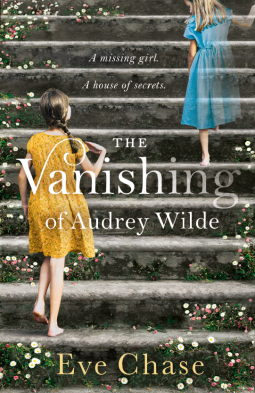
#BookReview ‘The Vanishing of Audrey Wilde’ by Eve Chase #mystery

A tale of sisters, secrets and the teenage years of confusion and temptations on the brink of adulthood. The Vanishing of Audrey Wilde by Eve Chase is about two groups of sisters, unrelated, who live decades apart in the Cotswold house of Applecote Manor. Overhanging everything is the mysterious disappearance of a twelve-year-old girl, Audrey Wilde, from the same house in the Fifties. Eve ChaseJessie and Will move to Applecote Manor, a rundown doer-upper, with their toddler Romy and Will’s teenage daughter Bella. Jessie is seeking a country life, Will hopes to step back from his logistics business. Almost as soon as they arrive, things change. Will’s business partner leaves and causes the sale of the company so, while he negotiates this, Jessie is left in the run-down house with the two girls. Romy fearlessly explores the potentially dangerous land, including river, pool, woods and well. Bella sullenly resents Jessie for not being her own mother, who was killed in a road accident. And then they learn about the disappearance of Audrey Wilde.
Is there something intrinsically wrong with the house and the land surrounding it? Why are the neighbours shunning Jessie and her two daughters? Who is the woman with the two black dogs who often stops and stares at the house? Why don’t local labourers want to work there? There are lots of things going on in this book, almost too many.
The second story strand focuses on four cousins of Audrey who, years after her disappearance, spend the summer of 1959 at Applecote Manor with their still grieving aunt and uncle. The girls, who are knitted together as a tight unit when they arrive, are teased apart by the arrival of two local boys, Harry and Tom. As the flirting and laden glances become more meaningful, the story darkens and some of the truth is revealed.
I enjoyed this book despite the occasionally dense plotting. There are many twists and turns, some of which could have been stripped out to give air to the central mystery. I particularly enjoyed the 1959 section and the inter-action of the four sisters, shadowed at every step by their memories of Audrey. The message: if you don’t face up to tragedy when it happens, it can reverberate through the years and never dies.

Click the title below to read my reviews of two other novels by Eve Chase:-
THE BIRDCAGE
THE GLASS HOUSE

If you like this, try:-
‘Freya’ by Anthony Quinn
‘Shelter’ by Sarah Franklin
‘The Distant Hours’ by Kate Morton

And if you’d like to tweet a link to THIS post, here’s my suggested tweet:
#BookReview THE VANISHING OF AUDREY WILDE by Eve Chase http://wp.me/p5gEM4-2T9 via @SandraDanby

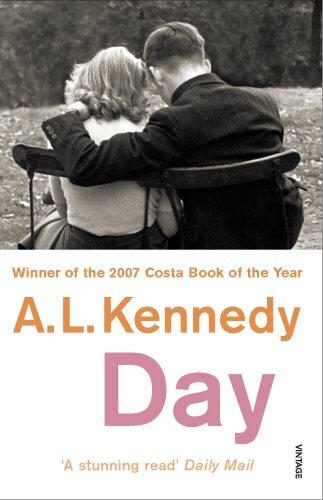
#BookReview ‘Day’ by AL Kennedy @Writerer #WW2

Day, the title of this novel by AL Kennedy, does not refer to a period of twenty-four hours, but to Alfred Francis Day. Alfie. Rear gunner in a Lancaster in World War Two and now extra on the set of a war film. Past and present are mingled together as he starts to remember things he would rather forget. The passages in the bomber are electrifying, in their detail and understanding. The cold, the smell, the fear, how the professionalism of their training kicks in when the action starts. It is totally believable. AL KennedyThe timelines are mixed here as Alfred’s memories are inter-mingled: when Alfred was a member of the bomber crew; his time in a prisoner-of-war camp; and as a film extra in 1949. Where the novel is not so clear, for me, is the intermingling of these three timelines, though after fifty pages everything started to clarify. If you find this, persist and everything will fall into place.
Through Alfred’s memories and his conversations with Ivor, his post-war employer at a bookshop, his bomber crew and the other film extras, we start to piece together the story of his life. It is particularly poignant when he falls in love, heavily, after a fleeting encounter during a bombing raid in London. He meets Joyce in a shelter and from then on she fills his head, when his head should be concentrating on shooting down enemy fighters as his crew drops bombs on Hamburg. ‘Turning his head and turning his head while the heath beyond him dreams, his head pressing back in his pillow and eyes closed and no clear memory he can see, only the wonder that her heartbeat was everywhere in her skin.’
Alfie is a complex character. He is a small man who reads to educate himself. He is nicknamed ‘Boss’ by his flight crew even though he is not the skipper. In flight training, he asks Sergeant Hartnell to show him how to fight and win. ‘Look, son… You’re not the first. Happens quite often in fact. Lads come along and they ask me for help… help with an argument they’ve got to settle back home…’ He tells Alfred his best bet is to hit them from behind with a bit of pipe, but when Alfred gets his chance he throws bricks.
We learn most about him as he remembers his mother and father, both of whom die during the war. In Alfred’s head, his mother and Joyce seem connected and he learns that memories are fickle, the things we would rather forget are the ones that return. ‘Some memories, the ones you’d rather keep – the more you tried to look at them, the more they wore away.’
CLICK HERE TO READ MORE ABOUT THIS BOOK AT AMAZON

And click the title to read my reviews of these other AL Kennedy books:-
ALL THE RAGE
ON WRITING
SERIOUS SWEET

If you like this, try:-
‘The Paying Guests’ by Sarah Waters
‘The Slaves of Solitude’ by Patrick Hamilton
‘Wake’ by Anna Hope

And if you’d like to tweet a link to THIS post, here’s my suggested tweet:
#BookReview DAY by AL Kennedy @Writerer via @SandraDanby http://wp.me/p5gEM4-2C6