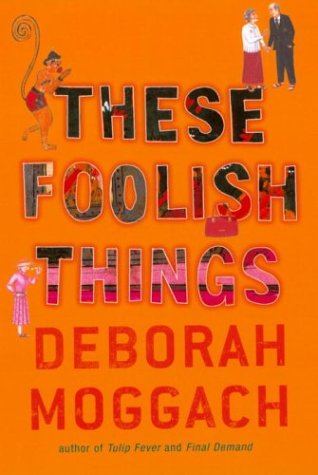
Great opening paragraph 50… ‘These Foolish Things’ #amreading #FirstPara

“Muriel Donnelly, an old girl in her seventies, was left in a hospital cubicle for forty-eight hours. She had taken a tumble in Peckham High Street and was admitted with cuts, bruises and suspected concussion. Two days she lay in A&E, untended, the blood stiffening on her clothes.” Deborah Moggach From ‘These Foolish Things’ by Deborah Moggach  [now published as ‘The Best Exotic Marigold Hotel’]

Read my review of these other novels by Deborah Moggach:-
SOMETHING TO HIDE
THE BLACK DRESS
THE CARER
TULIP FEVER

Try one of these #FirstParas & discover a new author:-
‘A Farewell to Arms’ by Ernest Hemingway
‘Back When We Were Grown Ups’ by Anne Tyler
‘Time Will Darken It’ by William Maxwell

And if you’d like to tweet a link to THIS post, here’s my suggested tweet:
#Books #FirstPara THESE FOOLISH THINGS by Deborah Moggach http://wp.me/p5gEM4-mA via @SandraDanby

Great Opening Paragraph… 50

deborah moggach - these foolish things 10-6-13 [1 pic]“Muriel Donnelly, an old girl in her seventies, was left in a hospital cubicle for forty-eight hours. She had taken a tumble in Peckham High Street and was admitted with cuts, bruises and suspected concussion. Two days she lay in A&E, untended, the blood stiffening on her clothes.”
‘These Foolish Things by Deborah Moggach

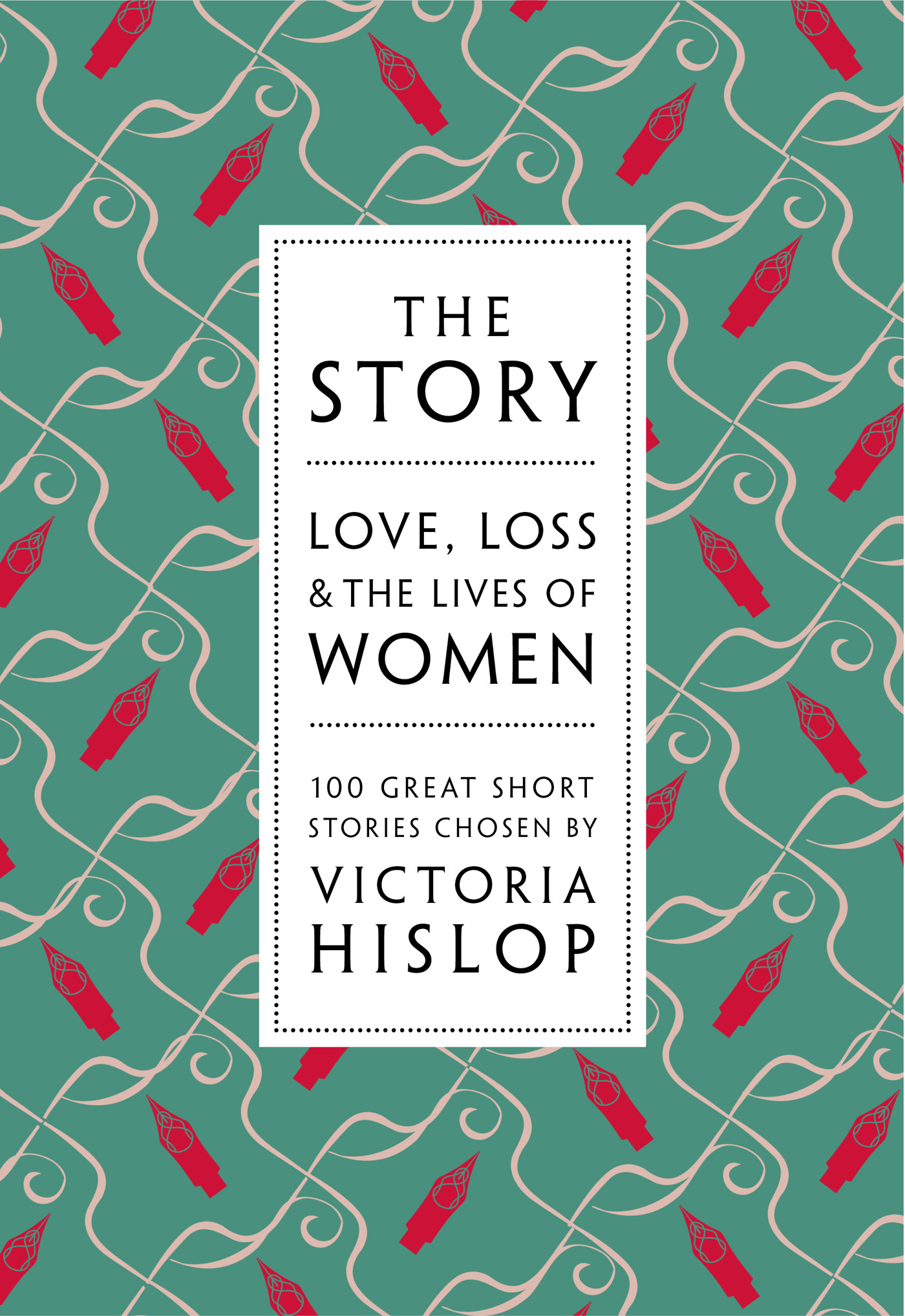
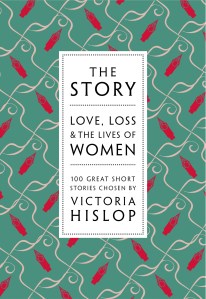
#BookReview ‘The Story’ by Victoria Hislop @VicHislop #shortstories

I read The Story: Love, Loss & the Lives of Women, edited by novelist Victoria Hislop, on my Kindle, without really appreciating just how much reading was involved for 100 stories. It’s not like holding a hefty book. But I enjoyed every single one of them. Some of the authors were well-known, others were new to me. Some made me laugh out loud (I’m thinking of Dorothy Parker here), others stopped my breath with sadness. I discovered authors I want to explore further: one of the reasons I have always loved short stories.Victoria HislopThe short story form is fascinating. As a reader I am very demanding, like anthology editor Victoria Hislop I want to be instantly grabbed by a story. “Readers are allowed to be impatient with short stories,” she writes. “My own patience limit for a novel which I am not hugely enjoying may be three or four chapters. If it has not engaged me by then, it has lost me and is returned to the library or taken to a charity shop. With a short story, three or four pages are the maximum I allow (sometimes they are only five or six pages long in any case). A short story can entice us in without preamble or background information, and for that reason it had no excuse. It must not bore us even for a second.”
So, my favourite stories? Hislop has divided her selection into three sections so I have chosen three from each.

LOVE:
Jeanette Winterson’s ‘Atlantic Crossing’ – the gentle story of love and longing at a distance. My favourite story of all, I think.

Dorothy Parker’s ‘A Telephone Call’ – the stream of consciousness dialogue of waiting for a telephone call is an everywoman story.

‘The Artist’ by Maggie Gee is about Emma, an unfulfilled wife who employs an East European, Boris, as an odd-job man/builder. He says he is an artist, she doesn’t believe him.

LOSS:
‘The First Year of My Life’ by Muriel Spark. It starts, “I was born on the first day of the second month of the last year of the First World War, a Friday.” An account of war seen through the innocent but at the same time all-knowing eyes of an infant.

‘The Pill Box‘ by Penelope Lively is about the flexibility of imagination. A male teacher and writer is haunted by the past, remembering, wondering how the world would be now if things had happened differently when he was young.

‘The Merry Widow’ by Margaret Drabble tells the story of Elsa Palmer who, after the death of her husband Philip, goes on the summer holiday they had planned together. Grief overcomes her, but in an unconventional way.

THE LIVES OF WOMEN:
‘G-String’ by Nicola Barker is about the triumph of the modern knicker. This made me laugh out loud.

‘Betty’ is the woman who captivates the teenage narrator of Margaret Atwood’s tale. “From time to time I would like to have Betty back, if only for an hour’s conversation.”

‘A Society’ by Virginia Woolf, about a group of young women on the verge of the Great War who make themselves into a “society for asking questions. One of us was to visit a man-of-war; another was to hide herself in a scholar’s study; another was to attend a meeting of business men; while all wee to read books, look at pictures, go to concerts, keep our eyes open on the streets, and ask questions perpetually.”

Read my reviews of other these books by Victoria Hislop:-
THE FIGURINE
THE SUNRISE
THOSE WHO ARE LOVED

If you like this, try:-
‘The Duchess’ by Wendy Holden
‘Anderby Wold’ by Winifred Holtby
‘All the Rage’ by AL Kennedy

And if you’d like to tweet a link to THIS post, here’s my suggested tweet:
#BookReview THE STORY by Victoria Hislop @VicHislop http://wp.me/p5gEM4-N5 via @SandraDanby

#BookReview ‘Mrs Sinclair’s Suitcase’ by @Louisewalters12 #romance #WW2

rs Sinclair’s Suitcase by Louise Walters is a gentle mystery of a love affair during war and its consequences for the following generations. Louise Walters We follow the stories of two women: Dorothy Sinclair in 1940, and today Roberta who works at The Old and New Bookshop. Roberta is particularly fond of the secondhand stock, treasuring the notes and letters she finds hidden within their pages, wondering about the stories of the writer and the addressee. Each chapter starts with an excerpt from such a note.
The letter which starts Chapter One is dated 1941 and addressed to “My dear Dorothea” from Jan Pietrykowski in which he writes he “cannot forgive” her for “what you do, to this child, to this child’s mother, it is wrong.” The letter makes no sense to Roberta as it was written by her grandfather to her grandmother, and dated 1941 when Jan died in 1940. This is the puzzle which Roberta must unravel. What woman does Jan refer to, and what child?
Dorothy’s story starts with a plane crash. She lives on the edge of an airfield deep in the quiet Lincolnshire countryside, alone in her cottage [her husband is away at war] which she shares with two land girls. The plane crash brings the Polish pilot to her door. Nervous, Dorothy serves afternoon tea. She “watched Jan take a bite from a sandwich. His teeth were small, even and white. She noticed the way his fingers curved lightly around the sandwich. He was an elegant man… She watched him eat and he seemed unabashed, eating under her scrutiny. She, for her part, always ate guardedly. She hated the way eating contorted her face, and it made her feel exposed.” From their first meeting, he unsettles her. She is so buttoned-up; he is open, curious and confident.
There is a lot of sensuality in this tale. Despite herself, Dorothy wonders about the pilot. She does not miss her husband. When Jan visits the cottage again, she notices his “brown, lean, strong forearms and realizes how she feels… His arms were poetry.” But there is grief too, as this is wartime and what happened in the 1940s knocks on down the decades to affect Roberta, her father and her grandmother Babunia.

Here’s my review of A LIFE BETWEEN US, also by Louise Walters.

If you like this, try:-
At Mrs Lippincote’s’ by Elizabeth Taylor
The Paying Guests’ by Sarah Waters
After the Bombing’ by Clare Morrall

And if you’d like to tweet a link to THIS post, here’s my suggested tweet:
#BookReview MRS SINCLAIR’S SUITCASE by @Louisewalters12 http://wp.me/p5gEM4-Na via @SandraDanby

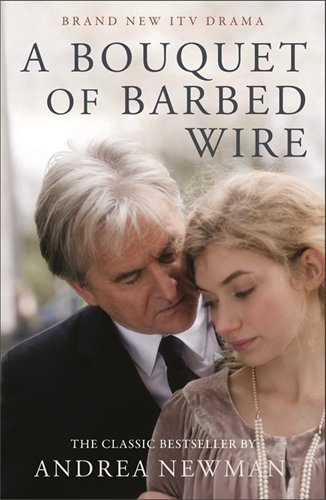
Great Opening paragraph 49… ‘A Bouquet of Barbed Wire’ #amreading #FirstPara

“It began to rain as he entered the park, but not hard enough to make him look round for a taxi. Emerging from the station, he had been tempted by a pale gleam of sunshine, sufficient to convince him of the physical benefits of walking. He needed exercise, he had decided, just as he needed fewer cigarettes and less alcohol: it was pathetic how the habits of sloth and self-indulgence crept up unnoticed, along with middle age, that unbecoming state which you did not even recognize until events brought it sharply and unkindly home to you. And now the fine spring rain, for her first day back. He pictured her with painful tenderness, suntanned and shivering, getting ready for college in the unfamiliar flat. Was he too late? Would she still be there by the time he was able to phone? He had left home an hour ahead, under Cassie’s indulgent eyes, to catch an earlier train, feeling he could only telephone properly from the office, yet not knowing what he could possibly find to say that would be sufficiently casual when he finally heard her voice.”
Andrea NewmanFrom ‘A Bouquet of Barbed Wire’ by Andrea Newman

Try one of these #FirstParas & discover a new author:-
‘The Road’ by Cormac McCarthy 
Notes on a Scandal’ by Zoe Heller
‘Armadillo’ by William Boyd

And if you’d like to tweet a link to THIS post, here’s my suggested tweet:
#Books #FirstPara A BOUQUET OF BARBED WIRE by Andrea Newman http://wp.me/p5gEM4-mG via @SandraDanby

Great Opening Paragraph… 49

andrea newman - a bouquet of barbed wire 10-6-13“It began to rain as he entered the park, but not hard enough to make him look round for a taxi. Emerging from the station, he had been tempted by a pale gleam of sunshine, sufficient to convince him of the physical benefits of walking. He needed exercise, he had decided, just as he needed fewer cigarettes and less alcohol: it was pathetic how the habits of sloth and self-indulgence crept up unnoticed, along with middle age, that unbecoming state which you did not even recognize until events brought it sharply and unkindly home to you. And now the fine spring rain, for her first day back. He pictured her with painful tenderness, suntanned and shivering, getting ready for college in the unfamiliar flat. Was he too late? Would she still be there by the time he was able to phone? He had left home an hour ahead, under Cassie’s indulgent eyes, to catch an earlier train, feeling he could only telephone properly from the office, yet not knowing what he could possibly find to say that would be sufficiently casual when he finally heard her voice.”
‘A Bouquet of Barbed Wire’ by Andrea Newman

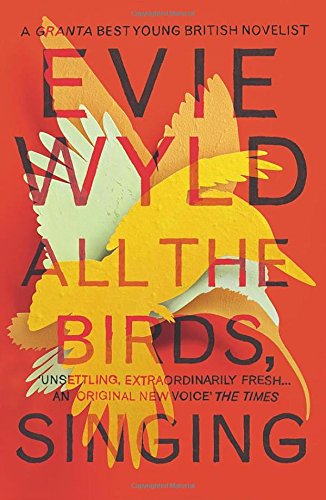
#BookReview ‘All the Birds, Singing’ by Evie Wyld #mystery

All the Birds, Singing by Evie Wyld is about secrets, now, in the past, in Australia, in England. The opening is shocking, a mutilated sheep, no description spared. Jack Whyte, a man’s name but a female character, feels threatened, fears the attack on the sheep is meant as a message for her. Evie Wyld And from here the rollercoaster starts, as we follow Jack’s current grey existence with her sheep, somewhere anonymous in England, and a dog called Dog. This story is told in alternating chapters, switching between England now, and Australia then. The story in the present goes forward, in linear time, normal time. Jack’s back story in Australia, the reasons she is where she is, is told backwards. This seemed strange to start with, but the author handles this structure elegantly and it suits the sinister tone. I didn’t guess Jack’s secret, didn’t know how it would all end.
There is a deep sense of foreboding throughout this book. Something happened: Jack is running from something, from someone, but what?  Are local children in England attacking her sheep, or is there a huge animal which roams at night? Why does she shun the locals? Why is she in England, so far from home? And is it all in her head? Should we believe her fears?
She has come from a hard world in Australia, a man’s world of sheep stations, sheep shearing, where she is the only woman, she does press-ups and has biceps to rival the men she works alongside. It feels as if she is trapped by her situation, by her life, by the sinister men which she seems to attract. At one point in Australia she moves the animals’ pen onto some thin grass so the pathetic sheep can eat “but they just stand there, a silent little group, I try to move them about, but they’re not scared of me. Resigned is what they are, and I tell them, ‘You can move around if you want to,’ waving my arms and jumping about, but they just sway a little in the hot fly air.” For a while, Jake acts like these sheep; staying where she is, swaying in the heat. But the reader knows she is in England now, so she must have run: when, where, why?
In England a neighbour advises her to go to the pub once in a while, get to know the other farmers. Don says:  “Some things you just can’t do on your own… That’s why farmers need to know each other, you help them, they help you, that’s just how it goes… because sooner or later I’m going to hit the post and be dead and then what’ll you do? Starve to death I suppose.” Yes, I believed she would rather starve.

If you like this, try:-
Restless Dolly Maunder’ by Kate Grenville
‘The Bear’ by Claire Cameron
‘Summer House with Swimming Pool’ by Herman Koch

And if you’d like to tweet a link to THIS post, here’s my suggested tweet:
#BookReview ALL THE BIRDS, SINGING by Evie Wyld http://wp.me/p5gEM4-MK via @SandraDanby 

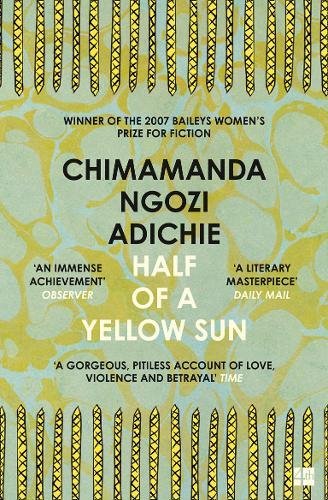
Great Opening paragraph 48… ‘Half of a Yellow Sun’ #amreading #FirstPara

“Master was a little crazy; he had spent too many years reading books overseas, talked to himself in his office, did not always return greetings, and had too much hair. Ugwu’s aunty said this in a low voice as they walked on the path. ‘But he is a good man,’ she added. ‘And as long as you work well, you will eat well. You will even eat meat every day.’ She stopped to spit; the saliva left her mouth with a sucking sound and landed on the grass.”
Chimamanda Ngozi AdicheFrom ‘Half of a Yellow Sun’ by Chimamanda Ngozi Adiche

Try one of these #FirstParas & discover a new author:-
‘Lucky You’ by Carl Hiassen
‘After You’d Gone’ by Maggie O’Farrell
‘Family Album’ by Penelope Lively

And if you’d like to tweet a link to THIS post, here’s my suggested tweet:
#Books #FirstPara HALF OF A YELLOW SUN by Chimamanda Ngozi Adiche http://wp.me/p5gEM4-mJ via @SandraDanby

Great Opening Paragraph… 48

Chimamanda Ngozi Adiche - half of a yellow sun 10-6-13“Master was a little crazy; he had spent too many years reading books overseas, talked to himself in his office, did not always return greetings, and had too much hair. Ugwu’s aunty said this in a low voice as they walked on the path. ‘But he is a good man,’ she added. ‘And as long as you work well, you will eat well. You will even eat meat every day.’ She stopped to spit; the saliva left her mouth with a sucking sound and landed on the grass.”
‘Half of a Yellow Sun’ by Chimamanda Ngozi Adiche

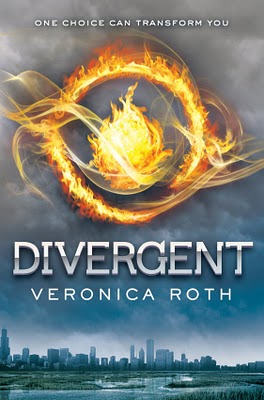
#BookReview ‘Divergent’ by Veronica Roth #YA #fantasy

Divergent by Veronica Roth is a book that had passed me by until I read online reviews, which prompted my Kindle purchase of the trilogy. Veronica RothI wonder what percentage of Young Adult [YA] fiction currently published features a dystopian world. Are our teens disenchanted with their own real world and so want to read fantasy? Certainly Suzanne Collins and Stephanie Meyer have a lot of responsibility for this, their two series have dominated the bookshelves and cinema screens. And they are all entertaining, in different ways.
Divergent is set in a city which was once Chicago where every citizen belongs to one of five factions. Each faction represents a human virtue: Candor [honesty], Amity [kindness], Dauntless [fearlessness], Abnegation [selflessness], Erudite [searching for knowledge]. At 16, teenagers are assessed for their affinity to the factions and can choose the faction they will be for the rest of their life. Anyone whose test results are inconclusive is labelled ‘divergent’. Tris, the protagonist, is divergent. This is her story and is the first of a trilogy.
Tris embraces her non-conformity. She is brave enough to be true to herself even though at times she is not sure what that is. She learns to be suspicious of labels, not to pre-judge people. But for me some factions verge on cliches. In particular, the fearlessness of the Dauntless verges on stupidity, danger for the sake of it. It is that particular computer-game type of violence that doesn’t hurt on the page but would seriously damage/kill in real life.
I’d like to see more character development, none of the depth here of The Hunger Games, but this is the first book of the trilogy so there is a world to set-up. Also I’d worked out the ending before I got there. It’s not that I didn’t enjoy the book but just that it seems superficial in comparison with The Hunger Games, which from page one gives you the sense of the deep back story. My expectations are set high.

Click the title to read my reviews of the other books in this series:-
INSURGENT #2DIVERGENT
ALLEGIANT #3DIVERGENT

If you like this, try:-
Gregor the Overlander’ by Suzanne Collins #1UNDERLANDCHRONICLES
The Queen of the Tearling’ by Erika Johansen #1TEARLING
The Magicians’ by Lev Grossman #1THEMAGICIANS

And if you’d like to tweet a link to THIS post, here’s my suggested tweet:
#BookReview DIVERGENT by Veronica Roth http://wp.me/p5gEM4-Jq via @SandraDanby