Tag Archives: book review

#BookReview ‘Tainted Tree’ by @jackieluben #saga #romance

American Addie Russell was adopted at birth after her single mother died. Always happy with her adoptive parents in Boston, USA, advertising copywriter Addie starts to ask questions when she inherits a house from a stranger in England. Tainted Tree by Jacquelynn Luben is an adoption mystery combined with romance,  threading together genealogical search and US/English differences with the joy and abandonment of teenage love. Jacquelynn Luben Addie arrives in England at the house she has inherited. Glad to cross the Atlantic and escape her job and the boss which whom she had an affair, she is determined to find out more about her birth mother Adrienne and perhaps identify her birth father. But the local lawyer handling the estate is cold and stand-offish, sending mixed signals that Addie doesn’t understand. Undeterred, she does her own research and traces her maternal grandparents but is shocked that they rejected her when she was born. Why did they hate her so?
The action moves back and forth between Addie’s new house in Surrey and the West Country, where her mother grew up. Although this story has a fair amount of romance, both in the modern story and that of Adrienne, it also has a dark streak of abuse and violence. There are some wonderful minor characters, Ada became a favourite. Luben is good at creating atmosphere and darker, threatening personalities.
I did want to see more of Adrienne’s viewpoint directly, rather than simply reading about Addie reading Adrienne’s diary entries. Her teenage love affair in the Sixties rang true and Luben populates the story with well-drawn supporting characters, particularly the three Amerys and the Graingers.
There were times in the first third when I felt bogged down with information overload and I got a couple of the historical characters muddled up, but as the middle section took off it started to become clearer. The action scenes really move things along though the pace does vary as Addie spends a fair amount of time reviewing what she knows and doesn’t know. Luben carefully handles a complex story, allowing Addie to discover contradictions and dead ends, unhelpful personalities and unexpected curve balls.
CLICK HERE TO READ MORE ABOUT THIS BOOK

If you like this, try:-
A Daughter’s Hope’ by Margaret Kaine
File Under Family’ by Geraldine Wall
The Letter’ by Kathryn Hughes

And if you’d like to tweet a link to THIS post, here’s my suggested tweet:
#BookReview TAINTED TREE by @jackieluben https://wp.me/p5gEM4-4WL via @SandraDanby
#BookReview ‘While Paris Slept’ by Ruth Druart #WW2

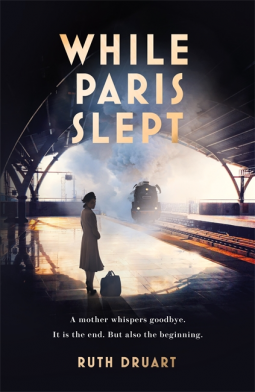
While Paris Slept by Ruth Druart is a World War Two story with a difference. It focusses on the lives of two couples and how one incident, a decision made in seconds, challenges the four people involved to define their own perception of true, selfless love and the heart-wrenching sacrifices this may mean. Ruth DruartThis is a dual-timeline story. It starts in 1953, California. One morning the police call at the home of Jean-Luc Beauchamp and take him in for questioning. He is unsurprised. His wife Charlotte and son Sam do not know what is happening.
Interleaved with the story unfolding in 1953, we see Jean-Luc as a young man in occupied Paris, 1944. He is conscripted as a rail maintenance worker based at the Drancy station from where French Jews were transported to Auschwitz. At weekends he travels home to see his mother in Paris but does not admit the things he sees and suspects. Ashamed that people may think he is a collaborator, he determines to do his part. He is injured in an attempt to damage the rail track and is taken to the German hospital where he is nursed by a young French girl, Charlotte. Charlotte, who took the job at the urging of her mother to do something useful, also wants to fight back against the occupiers. Then one day at Drancy a young woman on her way to Auschwitz, suspecting the fate awaiting her and her husband, thrusts her newborn baby into Jean-Luc’s arms. She says his name is Samuel. What follows is an exploration of the lengths people will go to for the true love of defenceless child. And at the heart of it all, subjected to the decisions made by adults, is Samuel.
It is a detailed story, slow to build, as the early pages add to the definition of the later events. At times I wanted to stay in one timeline for longer, rather than swapping between 1953 and 1944, but this is a powerful emotional story that is worth sticking with.
A strong story that doesn’t turn away from difficult issues; the rights, the wrongs and the hazy bits in between.

Click the title to read my review of THE LAST HOURS IN PARIS, another World War Two story by Ruth Druart.

If you like this, try:-
The Heat of the Day’ by Elizabeth Bowen
The Aftermath’ by Rhidian Brook
White Chrysanthemum’ by Mary Lynn Bracht

And if you’d like to tweet a link to THIS post, here’s my suggested tweet:
#BookReview WHILE PARIS SLEPT by Ruth Druart https://wp.me/p5gEM4-5cY via @SandraDanby

#BookReview ‘Magpie Murders’ by Anthony Horowitz @AnthonyHorowitz #crime

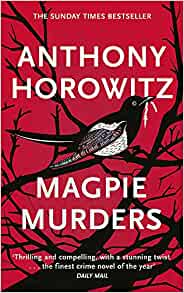
In the tradition of the theatrical play-within-a-play, Magpie Murders by Anthony Horowitz is a detective-mystery-within-a-detective-mystery. First in the Susan Ryeland series, more of her later, Horowitz has written a page-turner laced intricately with clues, delivered by a fictional detective in the Poirot tradition. Anthony HorowitzSusan Ryeland is head of fiction at Cloverleaf Books whose star writer is Alan Conway, author of the hugely successful Atticus Pünd crime series. Reading the manuscript of his latest submission, Magpie Murders, Susan is surprised to find the last chapters are missing. The murderer remains unnamed. Worse, Alan Conway has committed suicide. If Ryeland and her boss Charles Clover don’t find the missing chapters they can’t publish the book. And with no future books to come from Conway, the company may go bust.
The first half of the book is dedicated to Conway’s story of his fictional private detective, Pünd, who investigates one accidental death and one murder which take place in the same West Country village within days of each other. The victims knew each other. There must be a connection. In classic Agatha Christie style, the possibilities, lies and secrets are discovered by Pünd but he keeps his conclusions to himself.
The second half of the book tells how Ryeland first sets out to find the missing part of the manuscript. But increasingly puzzled by inconsistencies and lies in those surrounding Conway, she begins to suspect his death was not suicide. And that the answer lies in the manuscript of Magpie Murders. Did Conway fear for his life, and did he leave clues behind for his killer to be brought to justice.
This is such a clever beginning to what is a new detective series from Horowitz, who has written extensively for television including Midsomer Murders and Poirot. All the tropes of the classic detective novel are here – family arguments, a crook going straight, injustice, jealousy and rivalry, mixed up with the tensions of a local community where everyone knows everyone else’s secrets… or do they? Why is the vicar so hesitant when answering Pünd’s questions? Why did a son tell his mother he wished she were dead? Who stole a dangerous drug from the GP’s surgery and what did they do with it?
I’ve read some good books recently but none that kept me reading into the dark of the night until my eyes drooped. Oh, and I guessed wrong the wrong murderer.
Good fun.

Read my review of MOONFLOWER MURDERS, second in the Susan Ryeland crime series.

If you like this, try:-
A Death in the Dales’ by Frances Brody #7KATESHACKLETON
The Art of the Imperfect’ by Kate Evans #1SCARBOROUGHMYSTERIES
The Guest List’ by Lucy Foley

And if you’d like to tweet a link to THIS post, here’s my suggested tweet:
#BookReview MAGPIE MURDERS by Anthony Horowitz @AnthonyHorowitz https://wp.me/p5gEM4-5bC via @SandraDanby

#BookReview ‘Unsettled Ground’ by Claire Fuller #contemporary

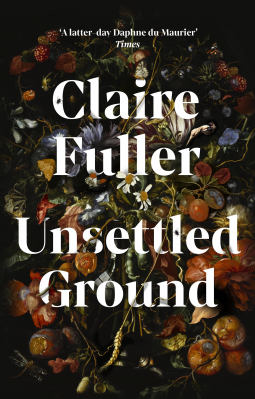
The title is well chosen. From the first page, Unsettled Ground by Claire Fuller is unsettling. An eclectic mixture of setting and detail make the timeframe difficult to pin down, it seems other-worldly. An ordinary world, but not quite. This is a world of Google and internet banking, of smartphones and digital life. Claire FullerFuller writes about twins Julius and Jeanie who, aged 51, still live with their mother in a remote rural cottage. They scratch a living, cash-in-hand earned from odd jobs, vegetables and eggs sold at the garden gate and the local deli, money kept in a tin rather than a bank account. Everything changes when their mother, Dot, dies suddenly and they realise how she protected them and kept them safe. But with Dot gone, their familiar world collapses. Their routines don’t work, the difficulties their mother smoothed are now rocky, and they are evicted from their home.
This is a novel about relationships – sibling, parental and with the local community – both supportive and dismissive. As the twins attempt to cope with the paperwork following their mother’s death, their isolation from modern society becomes evident to them. Many people step aside from their helplessness, finding them strange and ignorant, people make assumptions and take the easy option of turning away. Jeanie is mortified to find out that other people know more about her life and family history than she does, how neighbours silently colluded in a scenario either from a sense of helplessness, a misguided assumption they are helping, or malicious sniggering. Unsettled Ground is an uncomfortable but at the same time uplifting read.
As Julius and Jeanie confront each revelation about the life they have been living, they begin to question each other’s loyalty. Jeanie finds emotional strength she didn’t know she had, despite a heart complaint she’s had since childhood. She sneaks back home and finds solace in the abandoned garden, harvesting vegetables. This is an uncomfortable depiction of modern poverty in a society where money exchange is cashless and application for help depends on literacy. Both find a way to cope but inevitably they need each other despite their grumbles and disagreements. At times of stress, they pick up their guitars and sing folk songs as their parents taught them.
When the truth slowly emerges about their father’s accidental death and Dot’s subsequent struggle as a single mother, they realise that deep down they had always had suspicions. This is a powerful story about the strength of human nature and the bonds of family, about fighting back against bullies and finding light in the future.

If you like this, try:-
The Midnight Library’ by Matt Haig
In the Midst of Winter’ by Isabel Allende
The Lie of the Land’ by Amanda Craig

And if you’d like to tweet a link to THIS post, here’s my suggested tweet:
#BookReview UNSETTLED GROUND by Claire Fuller https://wp.me/p5gEM4-5a0 via @SandraDanby

#BookReview ‘The Fine Art of Invisible Detection’ by Robert Goddard #thriller

I always look forward to a new Robert Goddard book but wasn’t sure what to expect from his latest, The Fine Art of Invisible Detection. Partly, I think, because the blurb seemed more a detective novel than a thriller. Actually, this is both. Goddard has creative a heart-warming, realistic new hero, Umiko Wada, known simply as Wada. I raced through this book, full of Goddard’s clever twisty plotting, emotional dilemmas, should-I-shouldn’t-I moments. Robert GoddardWada is a 47-year-old secretary at a detective agency in Tokyo, making tea, writing reports for her technology-incompetent boss Kodaka. Widowed after her husband was killed in the Sarin gas attack on the Tokyo subway in 1995, Wada is quiet, efficient and invisible. But burning deep is a sense of righteousness. So when her boss asks for her help with a new case, she agrees to go to London to pose as the client who wants to find out if her father really committed suicide almost three decades earlier, or if he was murdered. From this point on, Wada’s life becomes unpredictable and her talent for being invisible becomes a lifesaver. Her boss dies in a car accident. The man she is due to meet in London has gone missing. Always logical, she follows the one clue she has.
Nick Miller is also due to meet the same man in London. Nick, a 41-year-old Londoner, is hoping to learn more about the father he has never met. Nick and Wada’s paths keep missing each other as they separately follow the trail of mystifying clues about the past. The action moves from Tokyo to London, Rekyjavik and the wilds of Iceland to Cornwall. There is a high-technology fraud, plus hints of terrorism and Japanese gang warfare, but this is not a violent read.
Wada is at the heart of this novel. Her logic and calm reasoning drive the narrative forward in that just-one-more-chapter way that makes this book a quick and fulfilling read. She is ordinary but extraordinary. I hope she returns in another novel.

Read my reviews of Goddard’s other books:-
PANIC ROOM
THE WAYS OF THE WORLD #1 THE WIDE WORLD TRILOGY
THE CORNERS OF THE GLOBE #2 THE WIDE WORLD TRILOGY
THE ENDS OF THE EARTH #3 THE WIDE WORLD TRILOGY
THIS IS THE NIGHT THEY COME FOR YOU #1SUPERINTENDENTTALEB

If you like this, try:-
Exposure’ by Helen Dunmore
The Accident’ by Chris Pavone
The Second Midnight’ by Andrew Taylor

And if you’d like to tweet a link to THIS post, here’s my suggested tweet:-
#BookReview THE FINE ART OF INVISIBLE DETECTION by Robert Goddard https://wp.me/p5gEM4-5as via @SandraDanby

#BookReview ‘The Evening and the Morning’ by @KMFollett #historical

I absolutely loved The Evening and the Morning by Ken Follett. It is thirty years since Follett published his monster hit The Pillars of the Earth and this novel is his prequel to what became the Kingsbridge series. Set in Southern England in the year 997 at the end of the Dark Ages – so called because the lack of historical documents and archaeological remains from the time means our knowledge of the era is thin – it was a period of unrest and war. Viking raids, skirmishes with the Welsh, the law allows violence against slaves while power-hungry local rulers disobey the rules of King Ethelred. Ken FollettThe story is told by three principal characters – a French noblewoman, a young English boatbuilder and an English monk. Each is smart, ambitious and honest but they are confronted by violence, cruelty, law-breaking, jealousy and betrayal.
In the west country village of Combe, eighteen-year old boatbuilder Edgar waits on the beach for his true love. She is married and the pair are going to run away together. But as Edgar waits, he sees the arrival of a Viking ship and his life changes. The town is destroyed. Three powerful brothers arrive to examine the damage – Wilwulf, ealdorman of local region Shiring; Bishop Wynstan of Shiring; and Wilgelm, thane of Combe – each will lose income because of the raid. It is decided a visit to Normandy is necessary to ask for support from Count Hubert, a Norman lord in Cherbourg who has influence with the Vikings.
In Normandy, Hubert receives two English visitors, a monk and a priest. The monk, Brother Aldred, has a chest of books he has bought in a French abbey. His plan is to create a library, a scriptorium, at Shiring Abbey. Hubert’s daughter Ragna is under pressure from her parents to marry a local lord she dislikes. She wishes Guillaume was educated like Aldred who, being a monk, is celibate. But when English lord Wilwulf arrives, she quickly falls in love.
Ragna travels to England where she will marry Wilfulf. En route she arrives at Dreng’s Ferry and meets Edgar. His family now lives on a farm at this, a poor, lawless place where the local dean and clergy live life to their own rules.  This is the beginning of a long friendship that will last many years. Though life as the wife of an English ealdorman is not what she expected, Ragna is supported by the presence in Shiring of Aldred who also becomes a friend.
This is an endlessly fascinating story, with so many twists and turns, achievements and horrific setbacks for the three friends that it’s easy to get lost in the ups and downs of their lives. The structure of the story may be predictable at times but the characters are strongly written, the historical setting is believable and the themes of friendship and perseverance are uplifting.
As soon as I finished reading it – and it’s a long book, 832 pages – I wanted to start at the beginning again. The last time I felt like that was when I finished The Pillars of the Earth.

Click the titles to read my reviews of other Follett novels:-
THE PILLARS OF THE EARTH #1KINGSBRIDGE
WORLD WITHOUT END #2KINGSBRIDGE
A COLUMN OF FIRE #3KINGSBRIDGE
THE ARMOUR OF LIGHT #4KINGSBRIDGE
NEVER

If you like this, try:-
The Almanack’ by Martine Bailey
Days Without End’ by Sebastian Barry
The Signature of All Things’ by Elizabeth Gilbert

And if you’d like to tweet a link to THIS post, here’s my suggested tweet:
#BookReview THE EVENING AND THE MORNING by @KMFollett https://wp.me/p5gEM4-59F via @SandraDanby

#BookReview ‘Yield’ by @ClaireDyer1 #poetry #gender

Yield is the third poetry collection by poet and novelist Claire Dyer. An essentially personal examination of a mother and son as the son becomes a daughter. Incredibly honest, Dyer conjures up scenes of private moments from birth to clinic visits, sorting clothes, tea at the Ritz, the parental pain of feeling unable to help, the parental pride in a child’s courage and honesty. Claire DyerThe word honest is key to this experience, shared with us by poet and mother. When I finished reading this slim collection I was left with a sense of the overwhelming love of a family and individuals where gender at the same time matters totally, and not at all. What matters are child and parent.
My favourite three poems? For exuberance, ‘Doing Cartwheels at the Ritz’. For heart-rending practicality, ‘Wardrobe’. For the goblin, ‘Body Clock III’.
And the line that stayed with me for days afterwards… ‘If I’d been braver, wiser, kinder…’ which features in the series of ‘Clinic’ poems. Isn’t that the best of poetry, when it echoes in our thoughts, when it brings previously undiscovered perspectives on life, when it puts us into someone else’s shoes for just a moment.
A powerful, moving, sometimes startling collection which opens a privileged window for us into the world of a private transformation. Joyous, difficult, full of love.

Read my reviews of Claire Dyer’s novels, THE PERFECT AFFAIR and THE LAST DAY.

If you like this, try:-
Sentenced to Life’ by Clive James
Ghost Pot’ by John Wedgwood Clarke
Hold Your Own’ by Kate Tempest

And if you’d like to tweet a link to THIS post, here’s my suggested tweet:
#BookReview YIELD by @ClaireDyer1 https://wp.me/p5gEM4-58l via @SandraDanby

#BookReview ‘The Killings at Kingfisher Hill’ by Sophie Hannah @sophiehannahCB1 #crime

Red herrings, twists and turns, lots of lies, confusing motivations and a long list of characters make The Killings at Kingfisher Hill by crime writer Sophie Hannah the type of book you need to read when fully alert. Fourth in Hannah’s series of continuation Hercule Poirot mysteries, I finished it with mixed feelings. Sophie Hannah Direct comparisons of Hannah and Christie seem unfair as these are continuation novels. Christie was a highly accomplished author who balanced likeable characters with dense but ultimately solveable crimes, while at the same time making the novels appealingly comfortable to read. If The Killings at Kingfisher Hill were a standalone novel featuring an unknown detective, it would be free of these comparisons. I enjoyed The Mystery of Three Quarters, third of Hannah’s Poirot novels, and will continue to read this series. It has also given me renewed impetus to re-read the Christie originals.
The complications start at the beginning. Poirot and Inspector Edward Catchpool are about to board a char-a-banc for Surrey and the exclusive Kingfisher Hill development, when they encounter not one but two women passengers behave strangely. One fears she is about to be murdered on the bus if she sits in a specific seat. The second woman confesses she has killed someone. Christie’s novels always have options – for victim, and murderer – but the options here did seem rather full-on with numerous characters introduced or mentioned in quick succession with none fully-formed in my mind. At one point I felt as Inspector Catchpool does, ‘My mind blurred, then went blank.’ So many possibilities in quick succession made me long for Christie’s more leisurely pace. True to character, Poirot is totally in charge of his investigation. He tells Catchpool, ‘Once one has a point of focus, all of the other details start to arrange themselves around it.’
Throughout I felt two steps away from the action because the murder has happened before the book begins. We are told the story of Poirot’s investigation by Catchpool and hear much of the necessary information as told to Poirot by third parties. Hearsay. I longed to be in the moment as it actually happened, or at the very least immediately afterwards – I think here of Poirot in Murder on the Orient Express, Evil Under the Sun and Death on the Nile.
The Killings at Kingfisher Hill wasn’t quite what I expected.

And here are my reviews of other Poirot books by Sophie Hannah:-
THE MONOGRAM MURDERS #1POIROT
THE MYSTERY OF THREE QUARTERS #3POIROT

If you like this, try:-
No Other Darkness’ by Sarah Hilary #2MARNIEROME
Cover Her Face’ by PD James #1ADAMDALGLIESH
The Secrets of Gaslight Lane’ by MRC Kasasian #4GOWERDETECTIVE

And if you’d like to tweet a link to THIS post, here’s my suggested tweet:
#BookReview THE KILLINGS AT KINGFISHER HILL by Sophie Hannah @sophiehannahCB1 https://wp.me/p5gEM4-58W via @Sandra Danby

#BookReview ‘Slow Horses’ by Mick Herron #spy #thriller

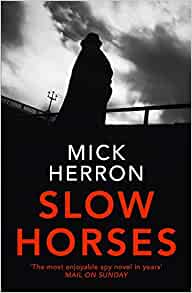
Always on the lookout for a new thriller series to sink into, I am a late discoverer of the Jackson Lamb books by Mick Herron. Soon to be filmed as ‘Slough House’ and starring Gary Oldman as Lamb, it seemed a good time to start with book one, Slow Horses. Mick HerronLamb is the quixotic leader of Slough House, the place where British spies go when they have messed up. They work in a scruffy non-descript building doing boring, repetitive, desk-based jobs and dream of going on ‘ops.’ The reason for each person’s banishment is not spoken by some pact of olvidado but they are all intensely curious about each other. Very much on the outside, they are derided at the Park, the Regent’s Park MI5 headquarters run by ‘dogs’ and ‘achievers.’ The book is littered with spy language, at first confusing, but soon accepted without a second thought.
As always, the first book in a series can be slow to progress, given the need to establish characters, setting and world. And there are a lot of characters, some of whom were cardboard cut-outs with names. The action really gets moving with Hassan, a student who has been kidnapped by three white racists. His beheading is scheduled to take place live and be broadcast on the internet. Members of Slough House are pulled into an op which threatens to go badly wrong, not helped by the intense secrecy and rivalry of everyone involved. Not to mention lots of chips on shoulders. This is not a team and Lamb is not a leader, instead he sits in his top-floor office and is rarely seen.
Slow Horses features a bunch of dysfunctional characters who are unattractive and secretive and the link of the spies to Hassan’s plight is slow to appear. When it does, the story takes off as the team are yanked from their torpidity, told to use their initiative and become the spies they were trained to be. I can’t say I ended the book feeling I had access to Lamb’s character but then he is a spy and so inaccessible, opaque, contradictory. He is also irreverent, funny, disgusting, authority-hating, rude and strangely likeable. Interesting characters I want to see more of include Slough House agent River Cartwright, his grandfather the ‘OB’ who is retired and lives in Tonbridge, and slimy politician PJ who has a wonderful basement kitchen.
Next in the seven-book ‘Slough House’ series is Dead Lions which I will read soon in the expectation that Jackson Lamb’s past will be revealed.

Click the title to read my reviews of the other books in the Slough House series:-
DEAD LIONS #2SLOUGHHOUSE
REAL TIGERS #3SLOUGHHOUSE
SPOOK STREET #4SLOUGHHOUSE
LONDON RULES #5SLOUGHHOUSE
JOE COUNTRY #6SLOUGHHOUSE
SLOUGH HOUSE #7SLOUGHHOUSE
BAD ACTORS #8SLOUGHHOUSE

If you like this, try:-
Panic Room’ by Robert Goddard
The Travelers’ by Chris Pavone
The Farm’ by Tom Rob Smith

And if you’d like to tweet a link to THIS post, here’s my suggested tweet:
#BookReview SLOW HORSES by Mick Herron https://wp.me/p5gEM4-57J  via @SandraDanby

#BookReview ‘A Prince and a Spy’ by Rory Clements #thriller #WW2

Rory Clements is fast becoming an author I turn to when I need a page-turning read to relax into. A Prince and a Spy is fifth in his Tom Wilde Second World War series and it doesn’t disappoint. Woven into true history of the conflict – the fatal crash in Scotland of the Duke of Kent’s plane, the holocaust – Clements adds real and fictional characters, intrigue and competing spies, to make this an enjoyable read. Rory ClementsWhen history professor Wilde returns by train home to Cambridge he bumps into a former student. Cazerove seems distracted, distressed, munching on a bag of sweets. Before the train reaches its destination, Cazerove dies of poisoning. So begins a typical Clements thriller – strong characters, true history and a string of unrelated incidents. When the Duke of Kent’s plane crashes on a remote hill in Scotland, the public is told his plane came down in heavy fog when taking off for Iceland on operational duties. In the world of A Prince and a Spy, the flying boat was returning from a secret diplomatic mission in Sweden where the Duke met his German cousin, a former member of the Nazi party. Wilde, working for the newly-established American secret intelligence service, OSS, is sent to Scotland to sniff around at the crash site and ask questions on behalf of his president. FDR wants to know why the plane crashed, was Prince George at the controls, was it shot down, and how did one person survive?
A keynote of this series is the multi-layering of rival spy agencies in the UK – the British, the Americans – the infiltration of Nazi agents, Soviet agitators and, in this book, a secret society. Clements is excellent at showing history through the eyes of fictional characters, a challenging task, and I particularly liked the Scottish segment with fisherman Jimmy Orde. A continuing thread from book to book is Wilde’s relationship with his partner Lydia, and Philip Eaton, the British spy who first involved Wilde in espionage. Clements twists reality in this book so Wilde doesn’t know who to trust, who to believe, and who is spying on him. So much so that at times, I lost track too.
An excellent weekend read.

Click the title to read my reviews of the other books in the Tom Wilde series:-
CORPUS #1TOMWILDE
NUCLEUS #2TOMWILDE
NEMESIS #3TOMWILDE

HITLER’S SECRET #4TOMWILDE
THE MAN IN THE BUNKER #6TOMWILDE
THE ENGLISH FUHRER #7TOMWILDE
A COLD WIND FROM MOSCOW #8TOMWILDE

And from the Sebastian Wolff series:-
MUNICH WOLF #1SEBASTIANWOLFF

If you like this, try:-
Life After Life’ by Kate Atkinson
The Aftermath’ by Rhidian Brook
Midnight in Europe’ by Alan Furst

And if you’d like to tweet a link to THIS post, here’s my suggested tweet:
#BookReview A PRINCE AND A SPY by Rory Clements https://wp.me/p5gEM4-574 via @SandraDanby