Tag Archives: book review

#BookReview ‘The Orphan Twins’ by @LesleyEames #saga #historical

Lily and Artie are ten-year old twins in Bermondsey. It is 1910. After the death of their parents, brother and sister are brought up by their laundress grandmother. Out of the blue, a benefactor gives Artie the chance of a proper education. Then Gran gets ill. The Orphan Twins by Lesley Eames is a story of how chances were different from girls and boys in the 1900s. Lesley EamesLily is at the core of this story both in terms of narrative and emotional heart. When Gran dies, the twins are tugged further apart. Lily encourages Artie to take his chance, seeing him educated in a way she can only dream of, watching as his accent and dress change and he looks more middle-class. Eames gives us a positive story about the changing role of women at the turn of the twentieth century. Deemed not worth educating, pragmatic Lily instead decides to work hard and gain as much experience as she can so at some point in the future she can fulfil her dream. Not yet sure what that dream is, she gains comfort from seeing Artie do well. It’s impossible not to love Lily, through all her wobbles and setbacks, she sets her shoulders straight and moves on. Until war threatens.
Told completely through Lily’s eyes, we see the country – and the opportunities for women – changing. The trio of best friends – Lily, Phyllis and Elsie – are inseparable despite having to make their own way in the world. Each has a talent that shines through. Facing difficulties and challenges, the girls encourage each other. Into their world come people they meet through work. The three girls, Artie, Hilda and Marion Tibbs, and Mr Bax become an extended family, supporting each other through shared love, loss and fear. Throughout the toughest of times, Lily and Artie show how perseverance, self-belief and hard work enable social mobility.
Reading this book was like snuggling into a blanket on a cold day. The Orphan Twins is full of emotion. It’s the first book I have read by Lesley Eames, now I want to explore the others.

If you like this, try:-
Pattern of Shadows’ by Judith Barrow
A Daughter’s Hope’ by Margaret Kaine
The Orphan’s Gift’ by Renita D’Silva

And if you’d like to tweet a link to THIS post, here’s my suggested tweet:
#BookReview THE ORPHAN TWINS by @LesleyEames https://wp.me/p5gEM4-4SO via @SandraDanby
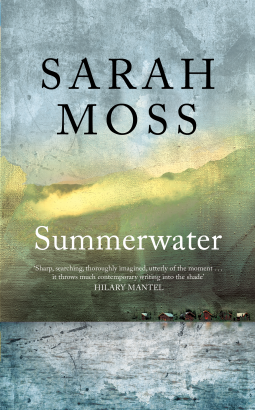
#BookReview ’Summerwater’ by Sarah Moss #contemporary

Twenty-four hours in the Scottish countryside, twelve people are staying in holiday cabins beside an isolated loch. Summerwater by Sarah Moss starts off with strangers concerned with the minutiae of their own lives and ends with a tragedy. Sarah MossThis is beautifully written with sly humour coupled with sensory description of the place which puts you right there. The pace is slow and contemplative, taking time to plait together the observations by characters and the actual names, so carefully building together a picture of a temporary community. At first, they make assumptions and generalisations about each other. A retired couple sit and look out at the rain, reminiscing about the previous years they spent in this cabin. A young mother runs in all weathers and at all times of day, leaving her husband to look after the children. A teenager escapes the boredom of his bedroom by kayaking around the loch. The Romanian family, who party all night and don’t know how to behave, are the only ones seeming to have fun on holiday. They are also the only ones whose viewpoint we don’t hear, setting them apart from the rest. While at night a shadow stands in the woods, watching.
I never did get the identity of some characters straight in my head and the building of tension – the shadow in the woods – didn’t convince me. I didn’t feel it was necessary as I quickly became fascinated by the setting and the gradual interaction of characters. The constant rain acts as a claustrophobia device keeping everyone inside, feeling trapped, looking out and watching others, making judgements.
Summerwater is also darkly funny. Don’t miss the chuckle-out-loud scene when Milly and Josh are having sex but she’s thinking about a cup of tea and a bacon butty. The chapters about people are alternated with short sections about the natural world – a deer and fawn, the geology of the rocks, the origin of water flowing into the loch, bats, birds waiting for the rain to stop. These briefly pause the story – most are two paragraphs long – but add to the sense of place.
Most definitely not a page-turner in the thriller sense, Summerwater ends abruptly. It is however thick with atmosphere. The rain, the wet vegetation, the finger-chilling cold, the sense of the holiday park, the loch and earth being much older than the visitors. It is a book about a day in which not a lot happens, showing how small things become big when you are bored, and how we are all inter-connected.

And here’s my review of another novel by Sarah Moss:-
GHOST WALL

If you like this, try:-
Akin’ by Emma Donoghue
These Dividing Walls’ by Fran Cooper
Anderby Wold’ by Winifred Holtby

And if you’d like to tweet a link to THIS post, here’s my suggested tweet:
#BookReview SUMMERWATER by Sarah Moss https://wp.me/p5gEM4-4SD via @SandraDanby

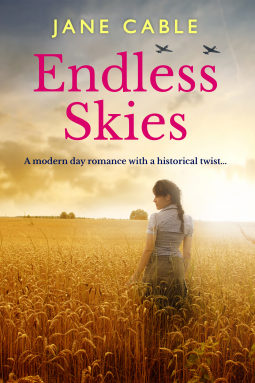
#BookReview ‘Endless Skies’ by @JaneCable #contemporary #romance

Jane Cable writes with a great sense of place and her latest novel, Endless Skies, is set in North Lincolnshire, a place of wide horizons, mists and endless views. Her books always have an element of the supernatural and Endless Skies doesn’t disappoint, from shadowy figures in a field to the lingering scent of lily-of-the-valley. Jane CableRachel Ward, an archaeology lecturer, leaves her old job after a disastrous workplace affair and moves to Lincoln University. Living in a soulless box of a flat, she makes friends with Jem who lives on a barge moored on the nearby canal. Jem is a solid steady character and becomes a mentor, almost father-like figure for Rachel who has made bad choices in the past and seems set to repeat the pattern. Jem’s new lodger, student Ben, tempts Rachel’s newly sworn promise to foreswear men. Meanwhile she takes on a freelance contract for property developer Jonathan Daubney. As she researches her report on a prospective development site at an old wartime airbase, Rachel and Jonathan fall into an instant ‘hate’ relationship.
The past is ever-present in this story which explores how what has gone before is never absent from our everyday lives, whether by actions in our lifetime or events that happened long ago. Markers are there to be seen, most clearly evident in Rachel’s fieldwalking on the old airfield where pieces of old metal are scattered. As they may belong to a wartime bomber that crashed and exploded in this place, Rachel must consult a ballistics expert and dig test pits. And so the past delays the present, as Jonathan is unable to proceed with his property plans until Rachel’s report is finished. Cable handles well the personal and work conflicts between Rachel and Jonathan. Both are emotionally damaged in ways which are gradually revealed.
My favourite character was Esther, an elderly resident at the care home run by Jonathan’s mother. As a teenager in the war, Esther worked at the laundry on the airbase and she is key to our understanding of the book. As Rachel teases out Esther’s memories, the interlinked past and the present starts to make sense.
This is a contemporary romance and is firmly rooted in the present day but I would love to know more about the wartime story of Freddie, Teo and Esther. It was so uplifting to read about a firmly-rooted friendship between two women, Rachel and Esther – one young, the other elderly – and see how they enrich each other’s lives.

Read my reviews of Jane Cable’s other books:-
ANOTHER YOU
THE CHEESEMAKER’S HOUSE

Also by Jane Cable, writing as Eva Glyn:-
THE COLLABORATOR’S DAUGHTER
THE CROATIAN ISLAND LIBRARY
THE MISSING PIECES OF US

If you this, try:-
Please Release Me’ by Rhoda Baxter
The Perfect Affair’ by Claire Dyer
My Dear, I Wanted to Tell You’ by Louisa Young

And if you’d like to tweet a link to THIS post, here’s my suggested tweet:
#BookReview ENDLESS SKIES by @JaneCable https://wp.me/p5gEM4-4RQ via @SandraDanby

#BookReview ‘Love in a Cold Climate’ by Nancy Mitford #satire #historical

A companion novel to The Pursuit of Love, Love in a Cold Climate by Nancy Mitford is a tale of a group of aristocratic families, told by narrator Fanny Wincham. Both novels are stories about other people, rather than about Fanny herself. Love in a Cold Climate is about Lady Leopoldina ‘Polly’ Hampton and, like all Mitford’s novels, there is a satire in her portrayal of the whims and foibles of the English upper class. It is like reading of a lost world though the satire in this novel is less biting than her earlier novels. Nancy MitfordMitford does create unforgettable characters. Not Fanny who, like Nick Carraway in The Great Gatsby, is something of a transparent uncomplicated observer, but Lady Montdore and Cedric are both memorable, especially when seen together. The novel finally takes off with the appearance of Cedric but there is quite a lot of background to set up before this point is reached. In a modern novel, the background would be slipped in carefully so allowing the story’s conflict to be quickly addressed.
Eighteen-year old Fanny lives with relatives due to the absence of her separated parents. Among her neighbours are the Montdores of Hampton near Oxford, recently returned from India where Lord Montdore was viceroy. Polly, also eighteen, reflects on the differing nature of love in a hot, and a cold climate. In the early pages Polly’s mother Lady Montdore despairs of her daughter ever falling in love with a young man and giving birth to the next heir of the Montdore fortune. Unfortunately for them, their only child Polly falls in love with an unsuitable older man. A family rift ensues, Polly is disinherited and flees abroad with her new husband. Into this vacuum arrives the new heir, a distant relative from the Canadian branch of the family. Cedric is something of a surprise and Fanny, expecting the Montdores to hate him on sight, watches with amazement as the foppish outrageous Cedric wins a place in their hearts. When Polly returns from Sicily, she finds a changed world.
This is not a plot-driven novel which at times was frustrating, leaving me with the feeling that the narrative was drifting along. This is remedied with the arrival of conflict, ie Cedric, who comes alive off the page. I did long to hear the internal monologues of Cedric and Lady Montdore; not of Polly though, who remains a rather flat uninspiring character. I started reading the novel thinking it was Polly’s story, but finishing it thinking it was about her mother and Cedric. Not as laugh-out-loud as Mitford’s earlier novels.
CLICK HERE TO READ MORE ABOUT THIS BOOK

Read my reviews of these other novels by Nancy Mitford:-
CHRISTMAS PUDDING
HIGHLAND FLING
PIGEON PIE
THE BLESSING
THE PURSUIT OF LOVE
WIGS ON THE GREEN

Read the first paragraph of THE PURSUIT OF LOVE here.

If you like this, try these:-
Half of the Human Race’ by Anthony Quinn
The Long View’ by Elizabeth Howard
Amy Snow’ by Tracy Rees 

And if you’d like to tweet a link to THIS post, here’s my suggested tweet:
#BookReview LOVE IN A COLD CLIMATE by Nancy Mitford https://wp.me/p5gEM4-3U2 via @SandraDanby

#BookReview ‘V2’ by @Robert_Harris #WW2 #thriller

Mostly written during the 2020 virus lockdown, V2 by Robert Harris is a World War Two thriller like no other I have read – and I’ve read a few. I’ve been a Harris fan since the beginning with Fatherland. V2 is different because it tells two stories – the technical development of the V2 rockets, and five days in November 1944 when the lives of a German rocket engineer and British spy are changed by this weapon. Robert HarrisHarris skilfully handles truth, fiction, engineering details and mathematical calculations, adding two fictional characters to create a page turning story. The V2 rocket is placed firmly at the centre of this book. Without it, there would be no story. Originally conceived by scientists as a space project, the V2 was a hateful weapon that inspired fear. Unlike its predecessor the V1 which could be seen and heard before it descended giving time to take cover, the V2 hit without warning. It was also highly unreliable, going off-target, exploding at launch, crashing at sea, killing the people who built it – slave labourers – and launch crews.
The story opens as rocket engineer Dr Graf is trying to concentrate on pre-launch missile checks on the Dutch coast at Scheveningen. He is interrupted by the arrival of a Nazi officer. The rocket is launched. In London, WAAF officer Kay Caton-Walsh emerges from a bathroom wrapped in a towel. Her assignation with her married lover ends when the V2 lands on their building. Harris’s tightly plotted story sees Kay moved from London-based photo reconnaissance, studying launch sites of the rockets, to Mechelen in Belgium. There she and a team of female mathematicians calculate the flight trajectory of the rocket, tracking it backwards to identify the launch site for Allied fighter-bombers to target. As Dr Graf is pressured to launch rockets more frequently than is safe, Kay can’t shake the feeling she is being followed through the strange shadowy streets of Mechelen.
Occasionally the technical details get in the way of the story but what is most fascinating are the portrayals of the German and British leadership at a time when the end of the war seemed to be approaching. Doubts and regrets by some on the German side are balanced by fanatical demands and obsessive management from the SS. In London, key decisions about the defence of the nation are influenced by an extra-marital affair. On both sides, the men at the top making the decisions seem apart from real life. An excellent read, it is a race against time as Kay and her colleagues try to identify the launch locations and Dr Graf is questioned by the Gestapo. I raced through it.
I was fascinated to read the Author’s Note at the end, explaining the inspiration behind the book. In September 2016, Harris read an obituary in The Times of 95-year old Eileen Younghusband, formerly a WAAF officer at Mechelen.

Read my reviews of these other thrillers, also by Robert Harris:-
AN OFFICER AND A SPY
MUNICH

If you like this, try:-
The Accident’ by Chris Pavone
The Second Midnight’ by Andrew Taylor
The Farm’ by Tom Rob Smith

And if you’d like to tweet a link to THIS post, here’s my suggested tweet:
#BookReview V2 by @Robert_Harris https://wp.me/p5gEM4-4Rs via @SandraDanby

#BookReview ‘The Woman of Substance’ by Piers Dudgeon #biography

The Woman of Substance by Piers Dudgeon is in part an authorised biography of A Woman of Substance writer Barbara Taylor Bradford, and part analysis of how Barbara’s own family history features in her books. The story of Emma Harte’s journey from Edwardian kitchen maid to globally successful businesswoman is well known. Less known perhaps are the connections with Barbara’s own family history. Connections she did not know herself. Piers DudgeonStarting with a meeting at the Bradfords’ New York apartment at which he is surrounded by the great and the famous, eating amidst the glittering décor, Dudgeon realises this is the world of the successful Emma Harte at the height of her powers. And then he tells Barbara’s story from her birth in 1933 in Upper Armley near Leeds, born not into the family of a kitchen maid like Emma Harte, but a tidy working class family who were neat and always made ends meet. Barbara is an only child and spoilt by her mother who takes her at every available opportunity to visit the Studley Royal estate where she learns this history of the house, the estate and the family. ‘My mother exposed me to lots of things,” said Barbara. ‘She once said ‘I want you to have a better life than I’ve had.’’ Barbara did well at school and, wanting to write books, decided her best chance was to train as a typist and find a job as a journalist. Which she did, joining the typing pool at the Yorkshire Evening Post and then, through dogged perseverance, moving to the women’s page.
At each significant point throughout Barbara’s story, Dudgeon provides a reference from one of her novels of fiction mirroring fact. A case of Barbara’s sub-conscious curiosity about her own origins finding their way into the backstory of her novels. It is an encyclopedic exercise of genealogy which lovers of the Harte series will enjoy. It is many years since I read the novel, but it made me want to revisit it. At the time when Piers Dudgeon was writing this book, Barbara did not know the true story of her grandmother Edith’s life or the mystery surrounding the birth of her own mother, Freda.
This is a long book which could have been made shorter by cutting some of the extraneous history and for that reason I gave it 4* rather than 5*. But if you are a writer interested in how your real life sneaks into your own novels, you will be fascinated.

If you like this, try:-
Ammonites and Leaping Fish’ by Penelope Lively
‘Jane Austen: A Life’ by Claire Tomalin
‘Charlotte Bronte: A Life’ by Claire Harman

And if you’d like to tweet a link to THIS post, here’s my suggested tweet:
#BookReview THE WOMAN OF SUBSTANCE by Piers Dudgeon https://wp.me/p5gEM4-4xX via @SandraDanby

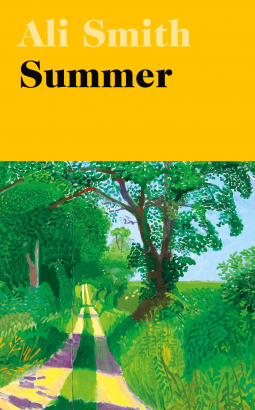
#BookReview ‘Summer’ by Ali Smith #SeasonalQuartet #contemporary

And so Ali Smith’s Seasonal Quartet comes full circle with Summer. What a journey these four books have been – experimental fiction at its best written in the moment at a time of political and social upheaval. Challenging, sometimes grating, often uplifting, so many of the loose threads left dangling in the first three books are reconnected in this finale. Ali SmithAli Smith is a challenging author to read. You get comfortable with one story and a couple of characters who she then abandons to tell you about someone else who seems completely disconnected. At times there are passages which seem to belong to no character, where the authorial voice shows through. It can feel as if the manuscripts for two or three novels have been thrown in the air and landed randomly on your Kindle. But then, as you come close to the end of this fourth book, all the disparate stories start to connect. Read Summer, the last in Smith’s Seasonal Quartet, when your brain is in full gear otherwise you will miss so much.
The story starts in Brighton with Sacha and Robert Greenlaw, teenage siblings, precocious, curious, competitive, committed and awkward. Following a trick Robert plays on his sister, two strangers visit the home where they live with their mum Grace. The strangers, Charlotte and Arthur, are the first characters from previous books to reappear. And so begins a journey to Norfolk, inspired by Einstein, motivated by a promise, towards answers, towards mystery, no one seems to really know.
Smith says summer is ‘heading towards both light and dark. Because summer isn’t just a merry tale. Because there’s no merry tale without darkness.’ Smith’s tales always feature darkness and here it is the wartime stories of Daniel Gluck and his father interned on the Isle of Man and of Daniel’s sister in France. How, I wondered as I read, will Smith connect the Greenlaws, Charlotte, Arthur and the Glucks? That is what kept me reading, to discover the meaning of summer in this story and to these particular characters. Smith says ‘summer’s surely really all about an imagined end. We head for it instinctually like it must mean something.’ There is so much depth in her exploration of theme – paralleling The Winter’s Tale, for example, and her own summer tale via the remembered summer of Grace when a young Shakespearean actress – more than I can explain here. You have to read it for yourself.
I do wish for old-fashioned punctuation, speech marks and clearly delineated changes of voice, the lack of which interrupts the flow of my reading and takes me away from the story – surely that can’t be the conscious objective of any author.
I will re-read this quartet back-to-back, without pause, hoping to gain more understanding and nuance. Individually, the novels are challenging and at times mystifying. Collectively, they become something else entirely. I suspect in years to come I will see a different interpretation.

Click the title to read my reviews of other books by Ali Smith:-
AUTUMN #1SeasonalQuartet
WINTER #2SeasonalQuartet
SPRING #3SeasonalQuartet
COMPANION PIECE #5SeasonalQuartet
HOW TO BE BOTH

If you like this, try:-
The Only Story’ by Julian Barnes
Amnesia’ by Peter Carey
The Testimony of Taliesin Jones’ by Rhidian Brook

And if you’d like to tweet a link to THIS post, here’s my suggested tweet:
#BookReview SUMMER by Ali Smith https://wp.me/p5gEM4-4Qi via @SandraDanby

#BookReview ‘Transcription’ by Kate Atkinson #WW2

Few of the characters in Transcription by Kate Atkinson are who they seem to be. A novel of the Second World War, Transcription suggests that the ripples of wartime secrecy spread out through the following years so that outstanding lies and betrayals are eventually repaid. Many years later. Kate AtkinsonIn 1940, Juliet Armstrong intends to join one of the women’s armed forces when she receives a letter on government notepaper and is summoned to an interview. After being informed by telegram that she has got the, still unspecified, job, Juliet boards a bus which takes her to Wormwood Scrubs prison, now converted into government offices. There she works in Registry, shuffling files around, until Perry Gibbons says, ‘I need a girl’ and Juliet finds herself working for Perry’s MI5 counter-fascism team at a flat in Dolphin Square.
Told across two timelines, 1940 and 1950 – with a brief glimpse at 1981 in the prologue and epilogue – Transcription has a huge cast of characters, most of whom I confused and, I suspect, Atkinson wishes me to confuse. Some characters are spies with cover names, some are only described and have no name while others seem innocent, too innocent to actually be innocent. If this is all confusing, it is meant to be. That is Atkinson’s point. This is a story about the importance of truth and how lies, which seem pragmatic and normal in wartime, are still lies. And that the most obvious traitors are not always the ones to be worried about.
The 1940 storyline covers the MI5 operation. At first, Juliet’s job is type up transcripts of bugged conversations between fascist supporters in the next door flat; later she takes on the persona of Iris to infiltrate a group of fascist agitators. Sometimes she fluffs her lines, sometimes she is impulsive and gets into trouble. At all times she feels isolated and unsure of the value of what she is doing. She is also a young woman and looks for signs of interest from the men surrounding her. In 1950, while working in the Schools Department of the BBC making educational radio programmes with titles such as ‘Can I Introduce You To?’ and ‘Have You Met?’, she sees familiar faces from her wartime days and the past revisits her.
Atkinson excels at the small detail which makes these workplaces convincing, creating believable relationships between Juliet and radio engineer Cyril at Dolphin Square, and with junior programme engineer Lester Pelling at the BBC. I enjoyed this book but wouldn’t describe it as a page turner. I’m not sure I liked Juliet but she held enough fascination for me as I tried to figure out what she did and didn’t believe in. I was never totally sure if I believed in her.
The Author’s Note at the end of the book is fascinating and perhaps would have served better as a Foreword. So, in summary, not my favourite Atkinson novel but not a bad one either.

Click the title to read my reviews of these other books by Kate Atkinson:-
A GOD IN RUINS
BIG SKY #5JACKSONBRODIE
DEATH AT THE SIGN OF THE ROOK #6JACKSONBRODIE
LIFE AFTER LIFE
NORMAL RULES DON’T APPLY
SHRINES OF GAIETY
… and try the #FirstPara of EMOTIONALLY WEIRD

If you like this, try:-
The Heat of the Day’ by Elizabeth Bowen
After the Party’ by Cressida Connolly
Shelter’ by Sarah Franklin

And if you’d like to tweet a link to THIS post, here’s my suggested tweet:
#BookReview TRANSCRIPTION by Kate Atkinson https://wp.me/p5gEM4-4cx via @SandraDanby

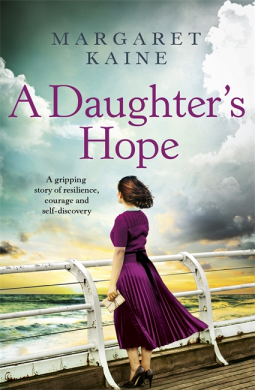
#BookReview ‘A Daughter’s Hope’ by @MargaretKaine #saga #romance

The daughter mentioned in the title of A Daughter’s Hope by Margaret Kaine is Megan Cresswell, strictly-raised, religious, sheltered, young, dowdy. Set in the post-WW2 Potteries district around Stoke-on-Trent still suffering from continued wartime poverty and hardship, Megan is free after the death of her mother to make her own way in life. But the harsh reality of being an adult and enduring a hand-to-mouth existence soon makes her realise she must she find a husband to survive. Margaret Kaine Ever the realist, pragmatic Megan allows her friends to give her a makeover of hair, clothes and make up, before setting off to visit nearby churches on Sundays in search of a suitable husband. Along the way, Megan meets new friends and learns things about herself. As she explores the real world, she wonders why her strict father trapped her in such a narrow world and why her mother didn’t protest on her daughter’s behalf. And she begins to question whether finding a husband is her only option. As she explores beyond the geographical and social bubble in which she was raised, Megan begins to question her place in the world and to confront the puzzles of her childhood.
Romance is not my normal genre – and there is a handsome love interest who looks set to break Megan’s heart – but this book is so much more. Kaine’s portrayal of her native Potteries comes alive off the page. It is not often that a novel is set in an industrial setting; it reminded me of The House at Silvermoor by Tracy Rees which is set in a South Yorkshire coal mining village. Kaine’s description of the hand painting at the potbank, and the production methods, is a fascinating insight into pottery manufacturing in the Fifties. Kaine is a skilled portrayer of character; I particularly enjoyed Megan’s fellow workers on the potbank and the household dynamics of Celia Bevington, who becomes something of a fairy godmother.
This is the first novel by Margaret Kaine that I have read and I will seek out more.
A Daughter’s Hope was previously published as Song for a Butterfly.

If you like this, try:-
The Heat of the Day’ by Elizabeth Bowen
Pattern of Shadows’ by Judith Barrow
The House at Silvermoor’ by Tracy Rees

And if you’d like to tweet a link to THIS post, here’s my suggested tweet:
#BookReview A DAUGHTER’S HOPE by @MargaretKaine https://wp.me/p5gEM4-4MJ via @SandraDanby

#BookReview ‘The Guest List’ by Lucy Foley #crime #thriller

The Guest List by Lucy Foley is a cracking crime mystery set on an isolated Irish island. The guests are there for the wedding of the year – magazine entrepreneur Jules Keegan is marrying reality TV star Will Slater. What follows is a closed room mystery recognisable from Agatha Christie novels. From the beginning you wonder, who in this group of thirty-somethings is going to be killed? Who is the killer and why? Lucy FoleyFoley expertly plays with our expectations, manipulating our first impressions of the characters as they are introduced. Old friends. Family. School days rituals. Hidden jealousies. Secret wrongs. The atmosphere on the exposed windswept island with its treacherous bogs, cliffs, caves and haunting churchyard is cranked up to full notch. We experience the weekend wedding almost hour by hour as each key character tells their own story, with the narrative chopping forwards to the present during the ceremony and reception. This switching of viewpoint and timeframe can be very sudden but it does ramp up the tension. The murder takes place quite late in the timeline making this more a psychological thriller, building up to the killing you know will happen.
The basic plot questions are – how well does Jules know her husband-to-be? What exactly happened on the stag weekend? What were the rituals at the public school attended by the groom and ushers? And why is Olivia, Jules’s sister and bridesmaid, clearly not coping with life? The options for victim and murderer are extended beyond the bridal group with Charlie, Jules’ best friend, and his wife Hannah; and bridal organiser and host Aoife and chef husband Freddie. Foley presents lots of hints about the past and secret resentments, I guessed a couple quite early on but this didn’t stop me turning the pages.
Read this over a weekend when you need an easy-to-read distraction.

Read my reviews of these other Lucy Foley novels:-
THE INVITATION
THE PARIS APARTMENT

If you like this, try:-
The Animals at Lockwood Manor’ by Jane Healey
Chosen Child’ by Linda Huber
Summer House with Swimming Pool’ by Herman Koch

And if you’d like to tweet a link to THIS post, here’s my suggested tweet:
#BookReview THE GUEST LIST by Lucy Foley https://wp.me/p5gEM4-4M2  via @SandraDanby