Tag Archives: book review

#BookReview ‘Scratched Enamel Heart’ by Amanda Huggins @troutiemcfish #shortstories

Scratched Enamel Heart, the latest collection by award-winning short story writer Amanda Huggins, does not disappoint. Featuring ‘Red’, the story shortlisted for the 2019 Costa Short Story Award, the other stories include some gems. Amanda HugginsThere are three stories that stayed with me, returning to me at unexpected moments when I had moved on to another book.
‘Light Box’ is about Alice, a daughter grieving for the loss of her father but glad to be free of the stepmother she never liked, who had tried to wipe the house and their memories clear of Alice’s mother. Huggins has a wonderful simplicity of description that feels just right, such as the beach, ‘a slip of a thing, a nail clipping of pale sand beneath a wide sky.’
With a darker tone than any other story by Huggins that I recall reading before, ‘Uncanny’ is unsettling. When I remember it, it leaves a sense of discomfort. Like looking over your shoulder when walking in the dark, clutching your bag to your side. Perhaps she should try writing suspense fiction. Alan eats every night in the same café where Carol is a waitress. It starts when she comments that a blue shirt would suit him, would go with the colour of his eyes. He buys five.
The last story in this collection, ‘This Final Perfect Thing’ is unbearably poignant. A perfect, short, short story. This is what Huggins excels at, distilling human emotion into two pages that anyone can read and feel deeply too.
Huggins is a consummate story writer, as comfortable with the long form as with the briefest of flash fictions and poetry. Her settings vary from India to Japan, Istanbul to the English seaside and she makes each location real, real for her characters and real for me as I read.

Read my reviews of other work by Amanda Huggins:-
Novellas
ALL OUR SQUANDERED BEAUTY
CROSSING THE LINES
THE BLUE OF YOU
Short stories
AN UNFAMILIAR LANDSCAPE
BRIGHTLY COLOURED HORSES
EACH OF US A PETAL
SEPARATED FROM THE SEA
Poetry
THE COLLECTIVE NOUNS FOR BIRDS

If you like this, try:-
Staying Afloat’ by Sue Wilsea
The Dreams of Bethany Mellmoth’ by William Boyd
All the Rage’ by AL Kennedy

And if you’d like to tweet a link to THIS post, here’s my suggested tweet:-
#BookReview SCRATCHED ENAMEL HEART by Amanda Huggins @troutiemcfish https://wp.me/p5gEM4-4ZY via @SandraDanby

#BookReview ‘The Bird in the Bamboo Cage’ by Hazel Gaynor @HazelGaynor #WW2

What an engrossing story this is if you’re looking for a world to lose yourself in, a world more horrific and frightening than we can ever imagine. A war story that is at times both traumatic and heart-warming, The Bird in the Bamboo Cage by Hazel Gaynor tells the story of a teacher and pupil interned in China during World War Two, a story often forgotten and seldom told. Hazel GaynorBased on the true story of a real school – the China Inland Mission’s Chefoo School in Yantai, Shandong province in northern China – as the Japanese army invades and school life is changed overnight. Gaynor tells her fictionalised story through the viewpoints of teacher Elspeth Kent and pupil Nancy ‘Plum’ Plummer. Elspeth is struggling to write a letter of resignation, intending to return home and join the war effort, when war arrives at the school gates. At first Chefoo School proudly continues to operate under armed guard but after the Japanese attack of Pearl Harbour in December 1941 and the entry of America into the war, the school is moved to Temple Hill internment camp and later to Weihsien. At each step, privations, hardships, hunger, threat and sexual exploitation threaten teachers, pupils and the wider camp community.
Elspeth and Plum offer different perspectives on what is happening and we see the growing friendship and respect between the two women, because Plum starts off a child and grows as a woman unable to remember her mother, unsure if she will ever see her parents again. The teachers truly are ‘in loco parentis’ when the school is relocated and the children learn to support each other, to endure hardship by recognising there is always someone worse off than you and that everyone is a person in their own right [pupils, teachers, guards, fellow internees, night soil women] with their own hopes, dreams and fears. They face hunger, theft and personal attack. Gaynor portrays the school’s protestant ethic with a light hand, instead making Elspeth Brown Owl of Chefoo’s Guides and using the Girl Guide Handbook’s mottos as a thematic skeleton. For each new challenge they meet there is a guiding motto to help them face what must be done.
I am not a lover of all ends being neatly tied and certainly this book is not perfect – chunks of time pass in brief summary paragraphs and at times the action seems delayed with detail of the school day – but Gaynor has created a world of prisoners and enemy that made me want to read on. Of course, we know how the war ended but we so want to know what happens to each pupil and teacher.
Essentially this is a novel about the strength and value of friendship and loyalty, the love that binds people together and enables them to survive horrific situations.

Read my reviews of these other novels by Hazel Gaynor:-
THE COTTINGLEY SECRET
THE LAST LIFEBOAT … and try the #FirstPara of THE LAST LIFEBOAT.

If you like this, try:-
White Chrysanthemum’ by Mary Lynn Bracht
The Translation of Love’ by Lynn Kutsukake
The Gift of Rain’ by Tan Twan Eng

And if you’d like to tweet a link to THIS post, here’s my suggested tweet:
#BookReview THE BIRD IN THE BAMBOO CAGE by Hazel Gaynor @HazelGaynor https://wp.me/p5gEM4-4ZN via @SandraDanby

#BookReview ‘How to Belong’ by Sarah Franklin #contemporary

How to Belong by Sarah Franklin considers what it is to belong – in a place, and within a family – and how not belonging affects one’s wellbeing. Like Franklin’s successful debut novel Shelter, How to Belong is set in the Forest of Dean, at times a stifling woodland location where community seems set beneath a magnifying glass in which everyone knows everyone else’s business and they rub along together. Except, they don’t if you don’t belong. Sarah FranklinThis is the story of two women who don’t belong; one believes she does, the other thinks she is too different. Jo Porter grew up in the forest, daughter of the local butcher, and close friends with Liam whose single mum sometimes struggled to cope. Liam grew up learning to recognise his mum’s good and bad times and what to do when the bad periods happened, knowing there was always sanctuary provided by Jo’s parents. When Jo leaves the forest for university and then to work as a lawyer, Liam stays at home, marries Kirsty and has two daughters.
Tessa is a farrier, loving her solitary job in the open air, working with horses. When her romance in Bristol with Marnie turns sour, Tessa retreats to the country and into herself, blaming her fainting fits, her memory losses and secretly afraid she is ill.
When Jo’s parents retire, Jo surprises everyone by leaving London and the law to return to the Forest and take over her parents’ business. She rents a room in Tessa’s remote cottage. Things don’t go as Jo expected. Butchering is not her natural occupation despite having practically grown up in the shop at her parents’ knees, her landlady proves herself silent and uncommunicative, and worst of all Liam seems to be giving her the cold shoulder. Meanwhile, Tessa has crashed her van and is earning barely enough to feed herself. When Jo tries to help diagnose Tessa’s illness, things don’t go according to plan. While Tessa keeps her secrets to herself, Jo doesn’t understand her own motivation in wanting to help her landlady. Neither woman appreciates the effect that their actions have on others, neither feels comfortable in the role of landlady/lodger perhaps because they are unsure of their own identity. It’s difficult to fit into a place if you’re not sure why you are there, whether you should be there, and if you are running towards or away from something.
The contemporary setting is very different from the wartime story of Shelter. This is a character study of two women lacking self-awareness who begin to understand themselves through their new friendship. When awareness arrives, it is raw and uncompromising. At times I grew impatient with each of them, perhaps because the author had to withhold some information about them in order to maintain the mysteries from their past until the end is reached. The end, when it came, felt like a rather quick shutting of the door.
The cover of How to Belong is one of my favourites of this year, but then I love trees.

Read my review of SHELTER also by Sarah Franklin.

If you like this, try:-
We Are All Completely Beside Ourselves’ by Karen Joy Fowler
Offshore’ by Penelope Fitzgerald
The Lost Lights of St Kilda’ by Elisabeth Gifford

And if you’d like to tweet a link to THIS post, here’s my suggested tweet:
#BookReview HOW TO BELONG by Sarah Franklin https://wp.me/p5gEM4-4Qb via @SandraDanby

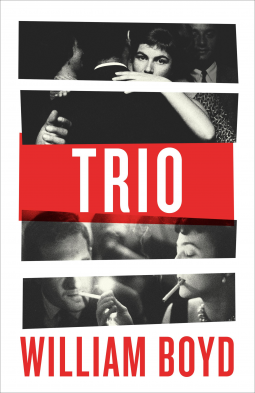
#BookReview ‘Trio’ by William Boyd #humour #Brighton

It is 1968. In Paris, students are rioting. The Vietnam war continues while in America, Robert Kennedy and Martin Luther King have been assassinated. This is the timeframe of Trio, the very readable latest novel from William Boyd. William Boyd.Set in Brighton where a film crew is shooting Emily Bracegirdle’s Extremely Useful Ladder to the Moon, the leading lady, Anny Viklund, is in bed with her co-star, pop singer Troy Blaze. The director’s wife, Elfrida Wing, is partaking of vodka from her secret stash in a Sarsons white vinegar bottle, rather than getting on with writing her next novel. The producer, Talbot Kydd, lays in his bath and tries to remember the dream he was having about a young man, pale and limber.
The story follows these three characters, each of which is living a life of pretence. Talbot has a wife in Chiswick and a secret apartment in Primrose Hill. Elfrida, once lauded as ‘the next Virginia Woolf’, writes lists of book titles but no more. Anny has an unfortunate taste in older men and when her ex-husband goes on the run, she finds herself questioned by the FBI. Day by day, Boyd weaves together the twists and turns of these three people, set against the filming of Ladder, the title of which incidentally no one understands. Sub-plots abound. When the film’s accountant warns Talbot that someone is stealing film stock, he employs an eccentric local detective. Meanwhile Elfrida, in search of the real Virginia, traces Woolf’s footsteps on the last day of her life. Anny, who cushions herself from the real world with a succession of uppers and downers, seems impossibly young. The film is the motif which unites the three but we see their individual character arcs develop in unexpected ways.
An entertaining quick read from a master of characterisation and humour who draws a recognisable picture of Brighton’s contradictions, style and sleaziness by the sea. Boyd has been a favourite of mine since A Good Man in Africa in 1981 and Trio reminds me of his early novels which showed the ability to combine a light comic touch with a darker, deeper emotional storyline.

Here are my reviews of other William Boyd books:-
ANY HUMAN HEART
LOVE IS BLIND
NAT TATE: AN AMERICAN ARTIST 1928-1960
ORDINARY THUNDERSTORMS
SWEET CARESS
THE BLUE AFTERNOON
THE DREAMS OF BETHANY MELLMOTH
WAITING FOR SUNRISE
… and try the first paragraph of ARMADILLO

If you like this, try these:-
How to Stop Time’ by Matt Haig
Wigs on the Green’ by Nancy Mitford
The Only Story’ by Julian Barnes

And if you’d like to tweet a link to THIS post, here’s my suggested tweet:
#BookReview TRIO by William Boydhttps://wp.me/p5gEM4-4XP via @SandraDanby

#BookReview ‘The Tuscan Contessa’ by @DinahJefferies #WW2

The Tuscan Contessa by Dinah Jefferies is a story of women at war where trust, between women, between strangers, is at the core of everything. Although the book’s title refers to Contessa Sofia de’ Corsi this is also the story of Italian-American Maxine, recruited by English special services to the fight against fascism in Tuscany. Once there and charged with assessing the ability and armaments of Italian partisans, Maxine she finds the fight is not only against the Germans but between Italian groups suspicious of each other. Dinah JefferiesIt is 1943 and in the exquisitely beautiful Tuscan countryside, trust is in short supply. Strangers may be spies or escaping Allied soldiers, the penalty for helping enemies has been followed by retaliation – massacres of villagers by the Nazis. Maxine, with her odd sounding Italian accent, must prove her worth if she is to do her job. She must also learn who to trust. When Maxine’s radio engineer James is wounded, he is sheltered by Sofia in her isolated castello. And so though very different characters, Maxine and Sofia find themselves on the same side; one is young, energetic and full of zeal, the other more cautious and concerned with protecting her husband’s legacy and castello. Neither can imagine the horrors they will see, and the risks they must take, before the war is ended.
The power of Jefferies’ story comes from the juxtaposition of the brutality and blood of war with the beauty of the Italian countryside. The stately villas of Sofia – Castello de’Corsi and in Florence – contribute both atmospherically and practically to the story, offering glimpses into the pre-war and wartime life, as well as hiding places and storage for contraband. And while the women hide their bottled fruit and vegetables, and knit secretly at night – jumpers and socks to keep the partisans warm throughout winters spent hidden in forests and caves – there is the uneasy feeling that some villagers continue to support the fascist cause and inform to the Germans. While Maxine goes on increasingly perilous missions with the partisans, Sofa must handle the unwelcome attention of a German officer whose smiles glint with the promise of sadism.
The book is the result of copious research and visits to locations and gives a clear and often difficult-to-read portrayal of real Tuscan villages during the German occupation. Jefferies shows the complicated moral dilemmas for Italians fighting first one enemy and then another, as the enemy hated at the beginning of the war becomes by 1943 the only hope of salvation. Every woman lives in a constant state of ‘not knowing’; not knowing who to trust, not knowing if a loved one is away fighting, injured, captured or dead. And meanwhile, daily life continues. Children are loved, babies are beget, love is declared and food is made and eaten. In the background is the gossip of reprisals and villagers killed, while in the foreground the women of Castello de’ Corsi continue to exist. As spring arrives with blue skies and beautiful wildflowers, the killing continues.
A moving story of women in wartime facing impossible odds, finding hidden courage and a dash of recklessness in order to fight the enemy. And the recognition of the line which, when crossed, means that your own life ceases to matter when the death of an enemy is preferable. Trust, between women, between strangers, is at the heart of everything.

And here are my reviews of some of Dinah Jefferies’ other novels:-
DAUGHTERS OF WAR #1DAUGHTERSOFWAR
THE HIDDEN PALACE #2DAUGHTERSOFWAR
NIGHT TRAIN TO MARRAKECH #3DAUGHTERSOFWAR

And these standalone novels:-
THE SAPPHIRE WIDOW
THE TEA PLANTER’S WIFE

If you like this, try these:-
The Burning Chambers’ by Kate Mosse
In Another Life’ by Julie Christine Johnson
The Tuscan Secret’ by Angela Petch

And if you’d like to tweet a link to THIS post, here’s my suggested tweet:
#BookReview THE TUSCAN CONTESSA by @DinahJefferies https://wp.me/p5gEM4-4Xa via @SandraDanby

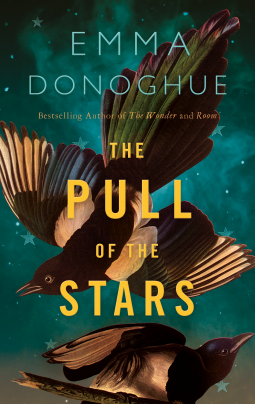
#BookReview ‘The Pull of the Stars’ by Emma Donoghue #historical

In Dublin, 1918, it is a time of immense global and social change. Emma Donoghue’s latest novel The Pull of the Stars takes place almost exclusively in a cramped three-bed fever ward in an understaffed hospital. All patients are pregnant and quarantined while the world is racked by war and influenza. Both of these are unpredictable, killing at random, lasting longer than predicted and classless. This is an at times breath-taking, touching and emotional novel that sucks you into a feverish dream so you want to read on and on.Emma Donoghue

Taking place over three days, Nurse Power arrives for work to find herself temporarily in charge. Donoghue excels at the ordinary detail of Julia’s life, her journey to work, the arbitrary rules of the matron, the needs at home of her war-damaged soldier brother Tim who is now mute. On the day the story stars, Julia’s only help comes from an untrained young volunteer, Bridie McSweeney, who acts as a runner to find doctor or orderly as required. The figure of three recurs – three beds, three days, three key characters. The third, Doctor Kathleen Lynn, is a real person, her history documented. She was arrested during the 1916 Easter Rising and in The Pull of the Stars is wanted by the police as a rebel. Power and McSweeney are Donoghue’s inventions. Every character, major and minor, is touched by the twin enemies of war and flu.
Gradually we fall under the spell of Donoghue’s story as Julia and Bridie attend to the needs of their patients in the room with its handwritten note on the door, Maternity/Fever. As temperatures rise and coughs hack, labour pains rise and fall. Donoghue doesn’t skimp on the detail of labour, this isn’t for the squeamish, but she writes with such skill that makes you care for her patients too.
This novel pulls you into its drama and won’t let you go until the end. The ebb and flow of each patient’s condition, Julia’s never-ending fight to help them despite the lack of support, the joy of birth and grief of death, the irreverence and youth brought into the room by Bridie, the quiet and resolute calm of Doctor Lynn, are woven together to create a micro portrayal in this small room of the world in 1918. And bound into every page is the strength and hope of love. I read this book in two sittings.
Researched and written prior to Covid-19, this book is an eerie glimpse into how the Spanish Flu epidemic ravaged through a world at war a century ago, distracted and ill-equipped to deal with it.
A small grumble – I find the lack of speech marks jarring.

Read my reviews of these books by Emma Donoghue:-
AKIN
FROG MUSIC
THE WONDER

And read the first paragraph of ROOM.

If you like this, try:-
A Single Thread’ by Tracy Chevalier
Life Class’ by Pat Barker
A Long Long Way’ by Sebastian Barry

And if you’d like to tweet a link to THIS post, here’s my suggested tweet:
#BookReview THE PULL OF THE STARS by Emma Donoghue https://wp.me/p5gEM4-4Ub via @SandraDanby

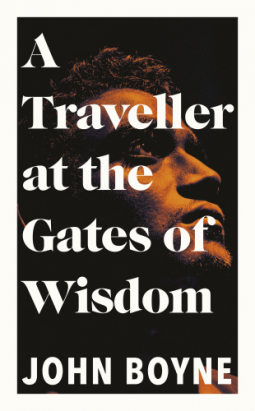
#BookReview ‘A Traveller at the Gates of Wisdom’ by @JohnBoyneBooks #historical

Where to start? A Traveller at the Gates of Wisdom by John Boyne is like no other book I’ve read. It’s a historical, classical, contemporary mash-up which takes a group of characters on a journey through the centuries, starting with Palestine in AD1 and ending in AD2080 living in a colony in space. The same group of characters feature in each chapter, advancing in time and moving location, each time with different names though always starting with the same letter. John Boyne In Palestine we first hear the voice of our, in the beginning, unnamed sole protagonist. This is his story told in soundbite chapters. He starts with his own origins, the meeting of his father Marinus and mother Floriana and progresses across two thousand years to the near future. At times there is violence, much against women but also brutal murder, torture and random killing. There is betrayal, cruelty, prejudice, foolhardiness and bravery, love and loyalty. Essentially it is the story of one family – mother, father, two brothers and a sister. One brother has the strength and brutality of his father, the other has the creativity of his mother.
As the decades pass and the story progresses, the brothers progress through childhood to adults, they fight, argue, divide, meet and divide again. Each chapter offers a snapshot of a place and time in history, sometimes set against the backdrop of real events and people. And always the family is placed at the centre of the action, with a supporting cast of recognisable characters who re-appear.
To explain the story here is too complex and would contain too many spoilers. Read it for yourself but prepare to be challenged. The print book is 407 pages long. I read it on Kindle and it seemed longer than that. Some chapters whizz by, others creep. Each new time/setting includes a little recap from the end of the previous chapter, a device essential in the first third of the book but I think dispensable once the structure and device is familiar to the reader.
Such an ambitious project, I read it with a spirit of adventure, never knowing what was coming next.

Read my reviews of these other novels by John Boyne:-
A HISTORY OF LONELINESS
A LADDER TO THE SKY
ALL THE BROKEN PLACES
STAY WHERE YOU ARE AND THEN LEAVE
THE HEART’S INVISIBLE FURIES… Curious? Read the first paragraph of THE HEART’S INVISIBLE FURIES here.
WATER #1ELEMENTS
EARTH #2ELEMENTS

If you like this, try:-
‘How to Stop Time’ by Matt Haig
The Pillars of the Earth’ by Ken Follett
Barkskins’ by Annie Proulx

And if you’d like to tweet a link to THIS post, here’s my suggested tweet:
#BookReview A TRAVELLER AT THE GATES OF WISDOM by @JohnBoyneBooks https://wp.me/p5gEM4-4TK via @SandraDanby

#BookReview ‘The Pillars of the Earth’ by Ken Follett @KMFollett #historical

Why have I never discovered this book before? When I mentioned to friends I was reading it I was told ‘oh yes, it’s fantastic’. And fantastic it is. The Pillars of the Earth by Ken Follett holds up a mirror to modern times. It is a historical thriller about the building of a twelfth century cathedral. The politics, governmental and religious, civil war, families torn asunder, romance, loss, courage and hope. It left me with a yearning to walk around a cathedral and study its architecture, better to understand the feat accomplished at Kingsbridge. Ken FollettThe Pillars of the Earth tells the story of stonemason Tom Builder and his family, who in 1135 are on the verge of starvation. When they meet Philip, prior of Kingsbridge, so begins a relationship which lasts all their lives. Philip is a pragmatic monk. He knows his poor town must find a way to survive and decides to build a cathedral. Tom becomes his master builder. But there are enemies who want to thwart this ambition, greedy, ruthless men who change political sides with will, who pillage and rape, who store riches while their peasants starve. The differences are not just political and royal, they are between brothers too.
This is a long novel and for not one moment did that matter. If you like novels that create a world for you to lose yourself in, then this will suit you. This is the medieval world; when the crown is disputed by King Stephen and Maud, when a father abandons a baby because he cannot feed it, when outlaws live wild in the forests, when the wealthy and titled can rape and steal and get away with it. Through this morally thin time, there are beacons of light. Prior Philip is quiet, gentle and Machiavellian. Determined not to be beaten by bullies, that his town and citizens shall not lose their livelihoods, he motivates his villagers so they have the belief to stand up for their rights.
Don’t be put off because this book is about a cathedral. The cathedral is the glue that holds the community of Kingsbridge together, it gives the book its narrative drive. Ken Follett packs in so much historical detail and it is all relevant to the plot; despite its 1104 pages, this is a quick read. Highly recommended.
This is the first of the Kingsbridge trilogy, next is World Without End.

Click the titles to read my reviews of other Follett novels:-
THE EVENING AND THE MORNING #PREQUELKINGSBRIDGE
WORLD WITHOUT END #2KINGSBRIDGE
A COLUMN OF FIRE #3KINGSBRIDGE
THE ARMOUR OF LIGHT #4KINGSBRIDGE
NEVER

If you like this, try:-
‘The Last Hours’ by Minette Walters
‘Gone are the Leaves’ by Anne Donovan
‘The Ashes of London’ by Andrew Taylor #1FIREOFLONDON

And if you’d like to tweet a link to THIS post, here’s my suggested tweet:
#BookReview THE PILLARS OF THE EARTH by @KMFollett https://wp.me/p5gEM4-3BF via @SandraDanby

#BookReview ‘The Orphan Twins’ by @LesleyEames #saga #historical

Lily and Artie are ten-year old twins in Bermondsey. It is 1910. After the death of their parents, brother and sister are brought up by their laundress grandmother. Out of the blue, a benefactor gives Artie the chance of a proper education. Then Gran gets ill. The Orphan Twins by Lesley Eames is a story of how chances were different from girls and boys in the 1900s. Lesley EamesLily is at the core of this story both in terms of narrative and emotional heart. When Gran dies, the twins are tugged further apart. Lily encourages Artie to take his chance, seeing him educated in a way she can only dream of, watching as his accent and dress change and he looks more middle-class. Eames gives us a positive story about the changing role of women at the turn of the twentieth century. Deemed not worth educating, pragmatic Lily instead decides to work hard and gain as much experience as she can so at some point in the future she can fulfil her dream. Not yet sure what that dream is, she gains comfort from seeing Artie do well. It’s impossible not to love Lily, through all her wobbles and setbacks, she sets her shoulders straight and moves on. Until war threatens.
Told completely through Lily’s eyes, we see the country – and the opportunities for women – changing. The trio of best friends – Lily, Phyllis and Elsie – are inseparable despite having to make their own way in the world. Each has a talent that shines through. Facing difficulties and challenges, the girls encourage each other. Into their world come people they meet through work. The three girls, Artie, Hilda and Marion Tibbs, and Mr Bax become an extended family, supporting each other through shared love, loss and fear. Throughout the toughest of times, Lily and Artie show how perseverance, self-belief and hard work enable social mobility.
Reading this book was like snuggling into a blanket on a cold day. The Orphan Twins is full of emotion. It’s the first book I have read by Lesley Eames, now I want to explore the others.

If you like this, try:-
Pattern of Shadows’ by Judith Barrow
A Daughter’s Hope’ by Margaret Kaine
The Orphan’s Gift’ by Renita D’Silva

And if you’d like to tweet a link to THIS post, here’s my suggested tweet:
#BookReview THE ORPHAN TWINS by @LesleyEames https://wp.me/p5gEM4-4SO via @SandraDanby

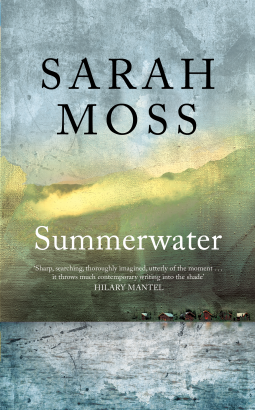
#BookReview ’Summerwater’ by Sarah Moss #contemporary

Twenty-four hours in the Scottish countryside, twelve people are staying in holiday cabins beside an isolated loch. Summerwater by Sarah Moss starts off with strangers concerned with the minutiae of their own lives and ends with a tragedy. Sarah MossThis is beautifully written with sly humour coupled with sensory description of the place which puts you right there. The pace is slow and contemplative, taking time to plait together the observations by characters and the actual names, so carefully building together a picture of a temporary community. At first, they make assumptions and generalisations about each other. A retired couple sit and look out at the rain, reminiscing about the previous years they spent in this cabin. A young mother runs in all weathers and at all times of day, leaving her husband to look after the children. A teenager escapes the boredom of his bedroom by kayaking around the loch. The Romanian family, who party all night and don’t know how to behave, are the only ones seeming to have fun on holiday. They are also the only ones whose viewpoint we don’t hear, setting them apart from the rest. While at night a shadow stands in the woods, watching.
I never did get the identity of some characters straight in my head and the building of tension – the shadow in the woods – didn’t convince me. I didn’t feel it was necessary as I quickly became fascinated by the setting and the gradual interaction of characters. The constant rain acts as a claustrophobia device keeping everyone inside, feeling trapped, looking out and watching others, making judgements.
Summerwater is also darkly funny. Don’t miss the chuckle-out-loud scene when Milly and Josh are having sex but she’s thinking about a cup of tea and a bacon butty. The chapters about people are alternated with short sections about the natural world – a deer and fawn, the geology of the rocks, the origin of water flowing into the loch, bats, birds waiting for the rain to stop. These briefly pause the story – most are two paragraphs long – but add to the sense of place.
Most definitely not a page-turner in the thriller sense, Summerwater ends abruptly. It is however thick with atmosphere. The rain, the wet vegetation, the finger-chilling cold, the sense of the holiday park, the loch and earth being much older than the visitors. It is a book about a day in which not a lot happens, showing how small things become big when you are bored, and how we are all inter-connected.

And here’s my review of another novel by Sarah Moss:-
GHOST WALL

If you like this, try:-
Akin’ by Emma Donoghue
These Dividing Walls’ by Fran Cooper
Anderby Wold’ by Winifred Holtby

And if you’d like to tweet a link to THIS post, here’s my suggested tweet:
#BookReview SUMMERWATER by Sarah Moss https://wp.me/p5gEM4-4SD via @SandraDanby