Tag Archives: book review

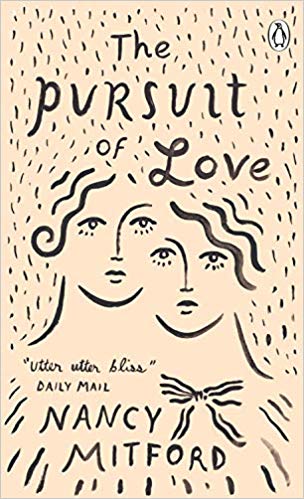
#BookReview ‘The Pursuit of Love’ by Nancy Mitford #romance

A slower, more meditative pace inhabits The Pursuit of Love by Nancy Mitford, less frenetic than her earlier novels. More fond, less satirical. Fanny Logan narrates this story of the Radlett family and, in particular, her cousin Linda’s pursuit of love. Nancy MitfordThe teenage Linda and sisters, and cousin Fanny who visits the Radletts at the fading freezing family pile, Alconleigh in the Cotswolds, want to grow up now. They are obsessed by sex and romance whilst being woefully ignorant of the practicalities. The reality, however, is more difficult and less romantic than they imagined. They form a secret society The Hons. When not out hunting, The Hons spend hours in a large warm cupboard gossiping about love and Fanny’s disreputable mother, ‘The Bolter’, who abandoned her daughter to pursue love. Fanny, raised by her Aunt Emily and stepfather Davey, spends all her holidays at Alconleigh with Uncle Matthew and Aunt Sadie and their family.
As with all Mitford novels there are many laugh-out-loud moments. Alconleigh is an eccentric world where Uncle Matthew rules his staff and family; he despises foreigners, Catholics, the nouveaux riche and people who say ‘perfume’ instead of ‘scent’. Desperate to find true love and not follow the family black sheep – The Bolter – into leapfrogging from affair to affair, the cousins are woefully naïve and unprepared for meeting men. Linda sums up true love, ‘it was like seeing somebody in the street who you think is a friend, you whistle and wave and run after him, and it is not only not the friend, but not even very like him. A few minutes later the real friend appears in view, and then you can’t imagine how you ever mistook that person for him.’
Published in 1945, the story starts in the Thirties and runs through the Spanish Civil War and the start of World War Two and The Blitz. The Radletts may be ‘hons’ but they suffer and slings and arrows of fortune in love. Fanny is the narrator of the family’s story and we are treated to occasional morsels about her own love and life. Like Nick Carraway in The Great Gatsby, the story therefore includes Fanny’s own interpretation of affairs as well as her recounting of Linda’s own stories.
This is a tale of lost aristocracy, and the levelling effects of love and war. Funny, witty and sharp featuring an absent parenting style completely alien today, The Pursuit of Love has at its heart a strong streak of sadness and tragedy. No matter who you are, love cannot always be found; if found, it cannot always be retained.
CLICK HERE TO READ MORE ABOUT THIS BOOK AT AMAZON

Read the first paragraph of THE PURSUIT OF LOVE here.

Read my reviews of these other novels by Nancy Mitford:-
CHRISTMAS PUDDING
HIGHLAND FLING
LOVE IN A COLD CLIMATE
PIGEON PIE
THE BLESSING
WIGS ON THE GREEN

If you like this, try these:-
‘Miss Pettigrew Lives for a Day’ by Winifred Watson
‘The Ballroom’ by Anna Hope
‘My Dear, I Wanted to Tell You’ by Louisa Young

And if you’d like to tweet a link to THIS post, here’s my suggested tweet:
#BookReview THE PURSUIT OF LOVE by Nancy Mitford https://wp.me/p5gEM4-3kq via @SandraDanby

#BookReview ‘The Girl at the Window’ by Rowan Coleman #paranormal #mystery

The Girl at the Window by Rowan Coleman is a glorious mixture of ghosts, grief and the Yorkshire moors of the Brontës. With three timelines to juggle, the novel’s structure is held together by a real house, Ponden Hall, and its true links to Emily Brontë. Mixing historical fact with flights of imagination – the letters of a 17th century servant Agnes – there is a lot going on. Central are the themes of grief, the different types of love and mother/child relationships. Rowan ColemanTrudy Heaton’s husband Abe is missing presumed dead after a plane crash in South America, so she takes their son Will to her childhood home, Ponden Hall in Yorkshire. Tru’s return is wondrous and difficult, a return to the old house and moors she loved near Haworth, home to the Brontës; but also an awkward reunion with Ma, with whom she has not spoken for 16 years. When Tru finds a loose page from a diary written by Emily Brontë, who visited the house and used its library, and some 17th century documents by an Agnes Heaton, she starts a hunt for the truth. At the same time she must renovate the almost derelict house, and help Will negotiate his new life without his father in a strange place. Will likes Ponden Hall, the Granny he has never met before, and Mab the old retriever, but he acquires an imaginary friend. Also hovering on the scene is Marcus Ellis, house restorer and Brontë addict, who arrives to assess the repairs needed and grants available to save Ponden Hall. Ma doesn’t like Marcus’s neat blue jeans, Tru finds him unsettlingly calm, and Will likes the computer games and wi-fi at Marcus’s ultra-modern home.
And all the time, Will expects his father to return and asks his mother why she stopped looking for him. As both mother and son process their grief, the losses, brutality and bereavements of other generations at Ponden Hall are uncovered. Has Tru found a story previously uncovered only by Emily Brontë, and did Emily leave an unfinished second novel hidden somewhere at Ponden Hall?
The adventure and excitement of a bookish girl, searching for real… ‘the existence of a childhood dream come true, almost like finding a snowy forest at the back of a wardrobe.’
Another immersive read on holiday for me, 4* rather than 5* because of some unbelievable elements and impracticalities which took me away from the world on the page and made me wonder… ‘but’. To avoid spoilers I can’t be more specific but they are not ghost or Brontë-related.

Here are my reviews of four historical mystery novels by Rowan Coleman, writing as  Bella Ellis:-
THE VANISHED BRIDE #1BRONTEMYSTERIES
THE DIABOLICAL BONES #2BRONTEMYSTERIES
THE RED MONARCH #3BRONTEMYSTERIES
A GIFT OF POISON #4BRONTEMYSTERIES

If you like this, try:-
Yuki Chan in Brontë Country’ by Mick Jackson
Wakenhyrst’ by Michelle Paver
Love and Eskimo Snow’ by Sarah Holt

And if you’d like to tweet a link to THIS post, here’s my suggested tweet:
#BookReview THE GIRL AT THE WINDOW by Rowan Coleman https://wp.me/p5gEM4-460 via @SandraDanby

#BookReview ‘The Second Midnight’ by @AndrewJRTaylor #WW2

In The Second Midnight, Andrew Taylor unpicks the connections between a group of people – a dysfunctional family, spies, ordinary people – before, during and after World War Two in England and Czechoslovakia. Essentially it is a novel of relationships wrapped up in the parcel of wartime spying, lies and romance. In its scope it reminds me of Robert Goddard’s Wide World trilogy, except Taylor covers the subject in one book rather than three. Andrew TaylorIt is 1939 and twelve year old Hugh Kendall is bullied by his father, sighed over by his harried mother, ignored by his older brother and manipulated by his older sister. Hugh retreats into imaginative games with his toy soldiers. His father, failing glass importer Alfred Kendall, is recruited by the Secret Services as a courier on a glass-buying trip to Czechoslovakia. In tow is Hugh, recently expelled from school, a nuisance to his father. Alfred is not a natural spy, though he thinks he is. When things get sticky and Alfred must return to England, the Czech Resistance keeps Hugh as collateral to ensure his father’s quick return. But Hugh finds himself alone in Prague after the German invasion, unsure who to trust, unsure if he will be rescued. He quickly learns to live on his wits. This for me was the best section of the book.
The thing that makes this story stand apart for me is Hugh. He makes an uncanny narrator, giving us a view of life in an occupied country, stranded from everything that is safe and familiar. Adept at languages, Hugh quickly becomes familiar with Czech and German allowing him to assume a false identity as Rudi Messner, a Czech-Hungarian boy.  Cared for by a German officer, Colonel Helmut Scholl, Hugh works as the gardener’s boy at Scholl’s mansion in Prague and meets the colonel’s children, Heinz and Magda. These relationships weave across the years and the pages into the post-war years and the fight against communism.
The significance of the title left me wondering if I had missed something. It is set up with an intriguing connection between two characters, then abandoned. The connection with the Prologue was also lost on me as it is only mentioned again at the end and I had forgotten what happened; ends neatly tied without adding understanding. Taylor knows how to tell a page turning story, I read this quickly. This is a fascinating read over a complex time period, but an enormous subject; I wish it had been given the space of three books to explore fully.
CLICK HERE TO READ MORE ABOUT THIS BOOK AT AMAZON

Read my reviews of Andrew Taylor’s ‘Marwood & Lovett’ series that starts on the night of the Great Fire of London:-
THE ASHES OF LONDON #FIREOFLONDON1… and read the first paragraph of THE ASHES OF LONDON.
THE FIRE COURT #FIREOFLONDON2
THE KING’S EVIL #FIREOFLONDON3
THE LAST PROTECTOR #FIREOFLONDON4
THE ROYAL SECRET #FIREOFLONDON5
THE SHADOWS OF LONDON #FIREOFLONDON6

If you like this, try:-
Corpus’ by Rory Clements
The Ways of the World’ by Robert Goddard
Five Days of Fog’ by Anna Freeman

And if you’d like to tweet a link to THIS post, here’s my suggested tweet:
#BookReview THE SECOND MIDNIGHT by @AndrewJRTaylor https://wp.me/p5gEM4-4gC via @SandraDanby

#BookReview ‘The Sleeping Beauty’ by Elizabeth Taylor #classic #love

Reading this novel is like taking a long deep breath of air when your lungs are bursting. The Sleeping Beauty by Elizabeth Taylor is about beauty and is loosely based on the fairy story – a man rescuing a woman – but with real people who have faults, irritations, fantasies and vanities, whose prejudices and past lives inconveniently do not go away. Elizabeth Taylor In the small seaside town of Seething, Vinny Tumulty visits an old friend, Isabella, whose husband has recently died. He wants to support her through difficult times, but Isabella fancies she is falling in love with him. Vinny, however, sees a stranger walking on the beach and, without seeing her clearly, knows she is beautiful. We learn later that Emily’s face has been reconstructed, plastic surgery necessary after a car accident caused by her drunken brother-in-law. Emily’s widowed sister Rose tells Vinny that, since her accident, Emily looks and behaves like a completely different person. To Rose, Emily’s face is untrue; to Vinny, it is beautiful.  He becomes obsessed with her. ‘My plans for today are to hang about hoping for a glimpse of her, to have my heart eaten away by the thought of her; to feel my blood bounding maddeningly, ridiculously, like a young boy’s; to despair; to realise the weight of my misery and hunger with each step I take.’
Vinny is in his fifties but behaves as if this is his first love. In contrast, Isabella’s son twenty-something Laurence picks up a girl at the cinema. Not knowing how to make the first move and kiss her, he experimentally takes Betty’s hand. ‘Her skin was rough, her nails so short that he wondered if she bit them, and hoped she did. He did not want a young lady too tranquil, too defined.’ This scene is mirrored later when Emily is top-and-tailing gooseberries; she puts her hand into the basket as Vinny does too, and they touch. ‘He felt the involuntary tremor before the tension, the shocked leap of her blood which she could not control. ‘Even her arms are blushing,’ he thought.’
Is Laurence falling in love with reality, and Vinny with an image? Neither knows the woman he is courting, has hardly had a conversation with her. It is halfway through the novel before Emily says more than a single sentence at a time. Taylor shows the gradual, patient steps that Vinny takes towards Emily; brief words exchanged, moments of silence stretching ahead. It is a cautious middle-aged love where hope of finding love has long passed. There is a sensuality, a thin seedling struggling to grow despite the aridity of the earth.
As usual, Taylor is excellent on everyday detail of people and things. ‘The streets were almost empty. An obviously betrothed couple stood looking in at the lighted window of a furniture shop at a three-piece suite labelled ‘Uncut Moquette’.’ And I loved the scene where Isabella and her friend Evalie are checking the racing results and doing tapestry badly, with their faces covered with clay face packs; and Laurence enters the room, bemused. This is a slow, contemplative novel, beautifully written, which in places made me stop and smile.
CLICK HERE TO READ MORE ABOUT THIS BOOK AT AMAZON

Read my reviews of other books by Elizabeth Taylor:-
A VIEW OF THE HARBOUR
A WREATH OF ROSES
ANGEL
AT MRS LIPPINCOTE’S
IN A SUMMER SEASON

If you like this, try:-
‘Mobile Library’ by David Whitehouse
‘A Life Between Us’ by Louise Walters
‘The Gustav Sonata’ by Rose Tremain

And if you’d like to tweet a link to THIS post, here’s my suggested tweet:
#BookReview THE SLEEPING BEAUTY by Elizabeth Taylor https://wp.me/p5gEM4-3ru via @SandraDanby

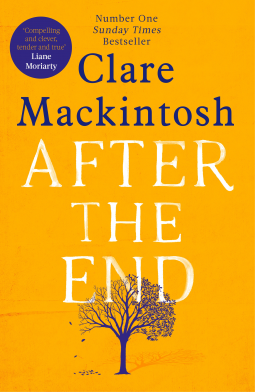
#Bookreview ‘After The End’ by Clare Mackintosh #drama #contemporary

I read After the End by Clare Mackintosh in one day on holiday, it is compulsive reading. It begins in a courtroom as everyone awaits the verdict of the judge. Leila, and at this point we do not know what role she plays in this story, watches two parents hold hands as they await the verdict on their son’s fate. Clare MackintoshThis is a book of two halves. The first is compelling, telling the story of how Max and Pip Adams find themselves in the courtroom described in the Prologue. Their two and a half year old son Dylan has a terminal brain tumour, surgery has removed only part of the tumour. Max and Pip are a strong couple, committed to each other and to Dylan. So far, they have coped. That is, until the hospital says it recommends no further treatment as Dylan has no quality of life. The reactions of Max and Pip to this advice are different and traumatic. Should Dylan be allowed to die peacefully without further painful, disruptive medical intervention? Or should he be taken to America for cutting edge medical treatment which his NHS consultants warn is not suitable for him? As the court case approaches, trust is broken, a pro-life group gets involved, secrets are told to the media, and Pip and Max are on all the front pages.
Part two centres on what happens after the court case and this, for me, is the weaker half. In a kind of ‘Sliding Doors’ approach, Mackintosh alternates chapters for two different outcomes of the court case. For me the technique was confusing, perhaps better signposting in chapter headings might have helped. I realise she is making a comment about the randomness of life but the ‘after’ story would be emotionally stronger if one option was told.
The community of Dylan’s PICU unit was so well drawn it felt real. Reading the Author’s Note afterwards, it becomes clear that Mackintosh experienced her own real life tragedy. The small details make it oh so believable. The specialist nurses, the parents of other patients, and doctor Leila Khalili are so well drawn. In a novel so emotional and at times polarised, I think it was important to include the viewpoint of Leila. Mackintosh is so good at showing the emotions of people on the edge, living in an abnormal world centred on the four walls of a hospital room, separate from the outside world operating as normal.
Understandably this book has been a word-of-mouth hit but it comes with an advance warning for anyone suffering grief at the illness or loss of a child. At times it is difficult to read, but its bare honesty is refreshing.
CLICK HERE TO READ MORE ABOUT THIS BOOK

If you like this, try:-
Smash All The Windows’ by Jane Davies
The Warlow Experiment’ by Alix Nathan
The Children Act’ by Ian McEwan

And if you’d like to tweet a link to THIS post, here’s my suggested tweet:
#BookReview AFTER THE END by Clare Mackintosh https://wp.me/p5gEM4-45M via @SandraDanby

#BookReview ‘Spring’ by Ali Smith #SeasonalQuartet #contemporary

Spring is the third in the Seasons quartet by Ali Smith and the most experimental of the books so far. Set in today’s disorientating, chaotic times, Spring is at times both disorientating and chaotic. The most political of the three, it felt at times like the author was shouting. It left me feeling rather flat, which I didn’t expect as I am an Ali Smith fan. Ali SmithThe book is rather difficult to summarize, partly because so soon after reading it the story disappeared from my mind. Two story strands start off independently, inevitably merging and impacting on each other. In between are passages of social media language, phrases listed, nasty, full of bile and hatred; I can imagine Smith trawling Twitter, pencil in hand, making notes.
Richard Lease, a film producer, is contracted to make a film about Katharine Mansfield and Rainer Maria Rilke, but is struggling with the script. He holds imaginary conversations with his – professional, and sometime romantic – partner Paddy who died recently. Richard also holds conversations with an imaginary daughter. Both women test him with awkward questions about his behaviour.
Brittany is an officer at an SA4A immigrant detention centre, a predictable, challenging job in a depressing place. And then she meets Florence, a kind of wonder child. Florence is 12 years old. She achieves mythical status, of a kind with Greta Thunberg, by persuading the centre director to steam clean all the toilets. No one knows where she came from; is she a detainee, did she blag her way into the building? Brit and Florence go on a road trip to Scotland where they meet Richard Lease and Alda, driver of a coffee van, possibly member of an underground movement to rescue detainees from immigrant detention centres, possibly Florence’s mother. These four key characters meet in Edinburgh and agree to go to Culloden.
I was left feeling that Smith’s political message would be stronger if it wasn’t so confusing. She vents her anger and the words on the page read as if they poured from her mind without sub-editing. This interrupts the flow of Richard and Brittany’s stories, taking my mind off the page and away from the book. I didn’t feel close to any of the characters and consequently didn’t care about them.
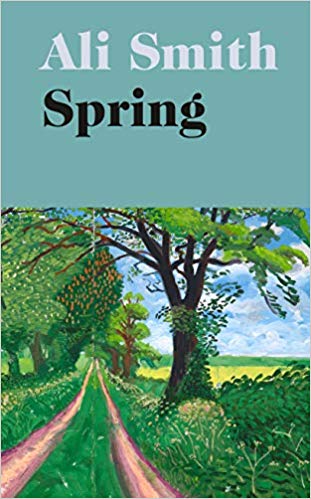
Ali Smith is one of the freshest, experimental voices we have today; reading one of her novels is not an easy read for the beach, they need concentration. So I will re-read Spring and hope for a smoother read. I await Summer, wondering if it will bring enlightenment on Spring’s storyline but not expecting it. To date, each novel is completely independent of each other. The only context for calling it a quartet are the titles, the seasonal themes. It is a difficult thing Smith is doing with this quartet; writing about a country in the process of cataclysmic political change – the anger, the depression, the fear – and writing quickly without the usual gap of years between writing and publication which allow a book to mellow. For me, Spring does not quite work. But I do love the Hockney cover art.

Click the title to read my reviews of other books by Ali Smith:-
AUTUMN #1SeasonalQuartet
WINTER #2SeasonalQuartet
SUMMER #4SeasonalQuartet
COMPANION PIECE #5SeasonalQuartet
HOW TO BE BOTH

If you like this, try:-
A Sudden Light’ by Garth Stein
A Thousand Acres’ by Jane Smiley
All My Puny Sorrows’ by Miriam Toews

And if you’d like to tweet a link to THIS post, here’s my suggested tweet:
#BookReview SPRING by Ali Smith https://wp.me/p5gEM4-44W via @SandraDanby

#BookReview ‘Touch Not The Cat’ by Mary Stewart #romance #suspense

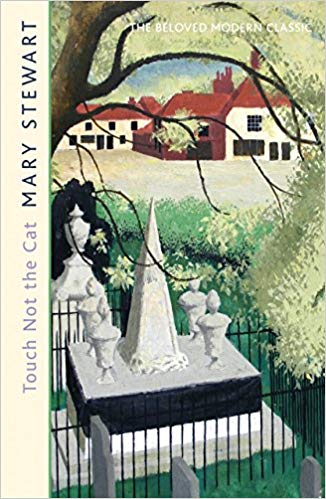
Published in 1976 – around the time I was borrowing my mother’s copies of Mary Stewart’s The Moon-Spinners and My Brother Michael and reading them voraciously – I had never read Touch Not the Cat until now. Like all Stewart’s novels, there is adventure and romance with a slice of the supernatural. I can’t think of any other novels like them. The Ashley family in Touch Not the Cat own Ashley Court and have an unusual gift running through the generations: they are telepathic with each other. Mary Stewart Narrator Bryony is working at a hotel in Madeira when she receives a telepathic message from her anonymous ‘lover’ to go to her father who is staying at a clinic in Germany. When Bryony arrives her father is dead, killed in a hit-and-run road accident. His last words to a friend, who wrote them down verbatim, are a warning to Bryony. ‘Tell Bryony. The cat, it’s in the cat on the pavement. The map. The letter. In the brook. Tell Bryony. My little Bryony to be careful. Danger.’ She returns home to Ashley Court in England to look for the answers but finds surprises and danger. I found the beginning an odd introduction to the Ashley family, the house, the history, coupled with a diary excerpt at the end of each chapter, dating from the nineteenth century. The significance of this becomes clear later, but for a long while I read it without getting a lot from it. There are a lot of mysteries, lies and contradictions to unravel. Even Bryony is not certain of the identity of her telepathic lover, though she knows it must be a blood relative so guesses it is one of her three cousins; twins Ellory and James, or their younger brother Francis. As Bryony unravels the meaning of her father’s warning, she realises the twins are not beyond committing murder in order to steal her inheritance. Could one of them be her telepathic lover?
The title of the novel is an old Scottish motto which Stewart gives to the fictional Ashley family. The cat is relevant but I didn’t guess the significance until the very end. A well-written novel; old-fashioned in that it starts slowly and builds gradually, but deserves patience. It includes gothic features such as churchyard scenes, shadowy figures, storm and flooding; which Bryony mocks, ‘Robed nuns and ancient houses and secret passages, the paraphernalia that Jane Austen had laughed at in Northanger Abbey.’ An unusual romantic mystery that makes me want to re-read all Stewart’s books, including the Arthurian series.
CLICK HERE TO READ MORE ABOUT THIS BOOK AT AMAZON

Click the title to read my reviews of other Mary Stewart novels:-
MY BROTHER MICHAEL
THE IVY TREE
THE GABRIEL HOUNDS
THIS ROUGH MAGIC
THORNYHOLD

If you like this, try these:-
The Vanishing of Audrey Wilde’ by Eve Chase
The Wicked Cometh’ by Laura Carlin
The Last of Us’ by Rob Ewing

And if you’d like to tweet a link to THIS post, here’s my suggested tweet:
#BookReview TOUCH NOT THE CAT by Mary Stewart https://wp.me/p5gEM4-3Vc via @SandraDanby

#BookReview ‘The Pearl Sister’ by Lucinda Riley #romance

I really enjoyed The Pearl Sister, the fourth in Lucinda Riley’s Seven Sisters adoption mysteries. While Maia, Ally and Star have already investigated their birth stories, Celaeno, CeCe, has shown no interest in her own. She is feeling sorry for herself, alone now that Star has become independent. Until her curiosity is piqued. Pa Salt’s lawyer tells her about a bequest, a large sum of money, and a photograph of two unidentified men. He advises CeCe to investigate Kitty Mercer from Broome in Australia. Lucinda RileyOn her journey to Australia, CeCe stops off in Thailand, staying at Railey Beach where she has holidayed in the past with Star. As she wonders why she is there alone, feeling envious of Star’s new home and new love in England, she meets a mysterious man on the beautiful beach. They bond over the morning sunrise, both are hurting – CeCe is missing Star and feeling betrayed by her sister’s newfound life, while Ace is hiding a big secret he cannot, or will not, explain. Riley hints that behind the beauty of Railey Beach there is a dark, sordid side. Could Ace be involved in drugs? Then when CeCe steps off the plane in Australia, she discovers Ace has been arrested and believes CeCe betrayed him to the press. As the journalists identify CeCe’s name and location, she runs away to Broome.
As with all the earlier novels in the series, the story of The Pearl Sister is told in two strands. CeCe is in 2008, Kitty Mercer’s story starts in 1906. The eldest daughter of a Edinburgh preacher, Kitty goes on a nine month trip to Australia as companion to the wealthy Mrs McCrombie. It changes Kitty’s life. She drinks alcohol for the first time, kisses a man, and acts immodestly in ways that would shock her clergyman father. Two men, twin brothers, pay attention to her. Drummond is the dangerous brother, the one who kisses her. But Kitty reverts to type by marrying the steady, safe, Andrew Mercer, and moves to Broome where he runs the family’s pearl fishing company for his father.
I found Kitty’s story enthralling, she is a true rebel at a time when women were finding their feet and their voices. She has a way of identifying people needing help. Along her life’s journey she collects waifs and strays, rescuing them from hunger, mistreatment, poverty and racism, giving them opportunities, security and winning their loyalty. Each of them comes to play a critical role in Kitty’s life; from Camira, the pregnant Aboriginal servant girl thrown from the house by her master, to Sarah, the fifteen year old orphan met on a boat from England who has a gift with the sewing needle.
Australia the country and the lives and customs of its Aboriginal people are a dominant presence throughout this novel. Be warned, it will make you want to visit. Throughout it all runs the enticing descriptions of Aboriginal art, by real artists such as Albert Namatjira who lived and worked at the Hermannsburg Lutheran Mission outside Alice Springs, which CeCe visits.
The loose ends come together in the end though Riley did keep me guessing on a couple of the links. The significance of Ace and CeCe’s time in Thailand was one such puzzle. These are all hefty books, but I read this one quickly. It’s my favourite of the series so far which seems to get better with every book.

Read my reviews of some of the other novels in Lucinda Riley’s ‘Seven Sisters’ series:-
THE SEVEN SISTERS #1SEVENSISTERS
THE STORM SISTER #2SEVENSISTERS
THE SHADOW SISTER #3SEVENSISTERS
THE MOON SISTER #5SEVENSISTERS
THE SUN SISTER #6SEVENSISTERS
THE MISSING SISTER #7SEVENSISTERS

… plus my reviews of these standalone novels, also by Lucinda Riley:-
THE BUTTERFLY ROOM
THE GIRL ON THE CLIFF
THE LOVE LETTER

If you like this, try:-
On a Night Like This’ by Barbara Freethy
You’ll Never See Me Again’ by Lesley Pearse
Fair Exchange’ by Michèle Roberts

And if you’d like to tweet a link to THIS post, here’s my suggested tweet:
#BookReview THE PEARL SISTER by Lucinda Riley https://wp.me/p5gEM4-45G via @SandraDanby

#BookReview ‘Staying Afloat’ by @SueWilsea #shortstories

Staying Afloat, the first anthology of short stories by Hull-based writer Sue Wilsea, has as its sub-text her experience teaching English in schools, colleges, prisons, libraries and community centres and this breathes life into her stories. She writes about lost children, bereaved children, struggling parents and struggling teachers with sincerity and a touch of humour. Sue WilseaI’ve chosen three of the 19 stories in Staying Afloat. You can read more of Wilsea’s stories in her second anthology, Raw Materials.
‘Shapes. Colours’ is the story of Stephen who loves his teacher Miss Anderson dearly but avoids her gaze every morning when she points to the thermometer chart and asks how everyone is feeling today. Stephen has a Worry that started “as just a tiny spider of anxiety, scuttling around in his head at night when he couldn’t sleep.” To avoid attention in class, Stephen usually chooses yellow or orange rather than a dark colour.
In ‘Two Ophelias and Me’, first published in QWF magazine, an unnamed narrator thinks of two friends, Lin and Lyndsey, who jumped off the Humber Bridge. “I like to think of their hair and clothes streaming out like twin Ophelias (the three of us went to see Hamlet once. I thought I wouldn’t understand a word and actually I didn’t, but it was brilliant all the same) as they drift down deep, deep onto the riverbed.”
‘Lost’ is a heart breaking story about loss and memory. It starts “I’d lost my mother and was therefore in somewhat of a tizz.” When her mother is not in her room at her care home or wandering around the garden, Alice takes to the streets to check her mother’s haunts. It is a short, poignant story with an unexpected ending.
The settings for Wilsea’s tales are primarily the North of England and East Yorkshire, her characters including a vicar who discovers his true vocation in his forties; and a schoolteacher whose mischievous and disruptive pupil uncannily echoes her own son. ‘Paper Flowers’ won a BBC radio competition and was read on air by Judi Dench.

If you like this, try these:-
‘The Story’ ed. Victoria Hislop
Scratched Enamel Heart’ by Amanda Huggins
‘Last Stories’ by William Trevor

And if you’d like to tweet a link to THIS post, here’s my suggested tweet:
#BookReview STAYING AFLOAT by @SueWilsea #shortstories https://wp.me/p5gEM4-3gu via @SandraDanby

#Bookreview ‘The Irish Inheritance’ by @WriterMJLee #history #genealogy

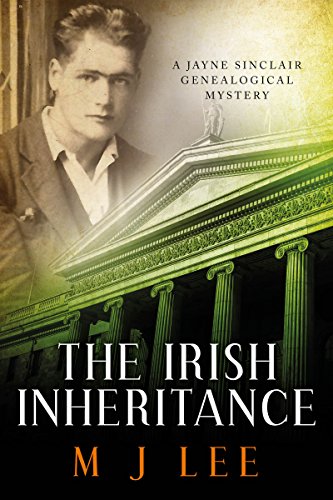
In 1921, a British soldier is killed on a hillside outside Dublin. In 2015, former police detective Jayne Sinclair, turned genealogy investigator, takes on a new client. The Irish Inheritance by MJ Lee is the first in the Jayne Sinclair series, weaving together stories of the Easter Rising in 1916 and the subsequent Irish War of Independence, with the unravelling of secrets kept for a century. MJ Lee Jayne’s client, John Hughes, was adopted and raised happily in America. Now elderly, frail and dying, he is desperate to find the truth about his birth and adoption. The key piece of evidence he has kept all his life, is a book; but he doesn’t know how he came to possess it. He kept it knowing it was a link to his birth family. Jayne must dig deep into records and think outside the box to put together the threads of John’s story. Meanwhile she is having problems at home, John Hughes’s nephew is pressuring her for results, and she has the odd feeling she is being watched.
The strongest part of this story is the Irish strand and the mystery increases as we see Jayne in 2015 researching one mundane document after another, and then read the 1920s strand telling the true story of the Irish people she is trying to discover. The questions of how war pits family and friends against each other, retained guilt, apologising for war misdeeds, truth and forgiveness, run throughout.
I wasn’t totally convinced by the threat to Jayne, it felt rather shoehorned in to add a ‘crime’ element. Perhaps not surprisingly, after the Jayne Sinclair series MJ Lee has gone on to write the Inspector Danilov series of historical crime fiction.
CLICK HERE TO READ MORE ABOUT THIS BOOK

If you like this, try:-
‘Beside Myself’ by Ann Morgan
‘The Indelible Stain’ by Wendy Percival
‘Deerleap’ by Sarah Walsh

And if you’d like to tweet a link to THIS post, here’s my suggested tweet:
#BookReview THE IRISH INHERITANCE by @WriterMJLee https://wp.me/p5gEM4-3Ex via @SandraDanby