Tag Archives: book review

#BookReview ‘The Convenient Marriage’ by Georgette Heyer #Regency #Romance

This is my first Georgette Heyer novel and I thoroughly enjoyed it. The Convenient Marriage is a standalone Regency romance although Heyer wrote many historical romances and detective fiction; some as one-off novels others as series. I didn’t know what to expect from The Convenient Marriage but right from the off I loved Horry Winwood. She is cheeky and clever, charming and brave. Georgette HeyerThe story starts with the three Winwood sisters. The eldest Elizabeth has agreed to receive the attentions of Lord Rule, knowing he intends to propose. But Lizzie wants to marry her impoverished soldier beau Lieutenant Edward Heron. The Winwood family is destitute due to the gambling habit of their brother Pelham and Lizzie knows the marriage will save the family. Her sister Charlotte will not consider marrying Rule and Horatia, or Horry, is too young being only seventeen. Until Horry, so named after her godfather Horace Walpole, uses her initiative and visits Rule. She proposes that she marry him so Lizzie is free to marry Edward. And so the convenient marriage takes place.
The real story is what happens next. Horry is a bit of a minx, getting into trouble, playing cards and generally doing things a wife shouldn’t do. And despite always expecting the disapproval of Rule, she cannot seem to stop getting into trouble. Motivated by gossip about Rule’s mistress, Horry takes more risks but her gallant brother Pel is on hand to help.
If you like fizzing, humorous romances tossed together with convincing Regency details, you will love this; the dresses, the hair styles, the wigs, the manners, the food. Regency London seems full of chaotic parties with dancing, music, cards and flirting. An exuberant escapist book, ideal for transporting you to another time far away from your everyday life.

If you like this, try these:-
‘Christmas Pudding’ by Nancy Mitford
‘An Appetite for Violets’ by Martine Bailey
The Wicked Cometh’ by Laura Carlin

And if you’d like to tweet a link to THIS post, here’s my suggested tweet:
#BookReview THE CONVENIENT MARRIAGE by Georgette Heyer https://wp.me/p5gEM4-3zU via @SandraDanby

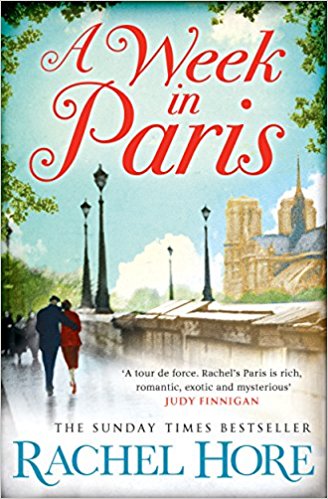
#BookReview ‘A Week in Paris’ by Rachel Hore @Rachelhore #mystery #WW2

I really enjoyed this book but can’t help feeling the title did it no favours. A Week in Paris by Rachel Hore is a story of hidden secrets, wartime Paris, resistance, collaboration, bravery and music. Because of the title I was expecting something more cosy and romantic; although there is a romantic strand to the story, this book is worth reading for so much more. Rachel HoreThe week in Paris in question happens in 1956 when teenager Fay goes on a school trip to Paris. Two significant things happen to her there. She meets a fanciable boy, Adam, and has a strange fainting episode triggered by the ringing of the bells at Notre Dame. Back home, she questions her mother Kitty who denies that Fay has ever been to Paris. But Fay cannot shake off the feelings of familiarity.
In 1961 Fay, now a professional violinist, has the chance to go to Paris for a series of performances. However her mother, always emotionally vulnerable, has taken an accidental overdose and is in St Edda’s Hospital. Before she leaves for Paris, Fay visits her mother who tells her to look at the bottom of a locked trunk at home. In it, Fay finds a small canvas rucksack. Attached to it is a label. On one side is written ‘Fay Knox, Southampton’, on the reverse, ‘Convent Ste-Cécile, Paris.’
‘She sat staring at the label for some time, while the faintest glimmer of a memory rose in her mind. Sunshine falling on flagstones, the blue robes of a statuette, and… but no, it was gone. It was as though a door had opened, just a chink, in her mind, before it shut again.’
The story is told in two strands, World War Two and afterwards, from the viewpoints of Kitty and Fay. Gradually the mysteries are unveiled. Fay has the unsettling feeling that her mother is keeping secrets, while Kitty knows she must some day explain everything to her daughter. For a long time, the reader keeps guessing.
In Paris, Fay sets off to find the convent mentioned on the label. There she slowly unravels the truth. How, despite denying to Fay that she has ever been to France, Kitty went to Paris in 1937 to study piano at the Conservatoire. What follows is an unveiling of a secret life during the Second World War, a time when Fay was a toddler, a time her mother told her they lived in a pretty cottage in Richmond. The real story of Kitty’s pre-war life in Paris, her meeting and love affair with Fay’s father Eugene, and what happened next, is fascinating. Again, Fay experiences feelings of déjà vu but this time she is old enough to seek the answers. She never imagined the truth she discovers.
I found myself picking up the book at every opportunity, just to read another couple of pages. It is a fascinating study of wartime secrets being kept from the next generation, not in an attempt to deny but as a way of pushing away the pain, grief and shame of what happened in an occupied city.

Click the title to read my reviews of other books by Rachel Hore:-
A BEAUTIFUL SPY
ONE MOONLIT NIGHT
THE HIDDEN YEARS
THE LOVE CHILD

If you like this, try these:-
‘The Ballroom’ by Anna Hope
‘The Book of Lies’ by Mary Horlock
‘In Another Life’ by Julie Christine Johnson

And if you’d like to tweet a link to THIS post, here’s my suggested tweet:
#BookReview A WEEK IN PARIS by @Rachelhore http://wp.me/p5gEM4-2RH via @SandraDanby

#BookReview ‘Munich’ by @Robert___Harris #spies #WW2 #thriller

Robert Harris is a classy thriller writer at the top of his game. Munich is his re-telling of the September 1938 meetings between British Prime Minister Neville Chamberlain and German Chancellor Adolf Hitler. Both had public, and private, objectives. Chamberlain was a pragmatist; though he sought peace, he was prepared to accept a delay of war to enable our woefully-equipped armed forces to prepare. Hitler wanted all of Europe for Aryans, which meant war. All of this is well-documented. But Harris takes two fictional characters and places them into this real history, splicing their personal stories into the political drama. Robert HarrisHugh Legat and Paul von Hartmann met at Oxford in the early Thirties. In 1938, Legat is a junior private secretary to Chamberlain. Hartmann holds a similar position in the German government; he is also part of the anti-Hitler movement. They two men have not spoken or seen each other since a holiday in Munich with a girlfriend. We do not know why. Everyone in this story faces a personal decision of conscience: whether to be loyal to country, self, and family, or betray them. The costs are different for each person. For some; death. For others; isolation, loss of job, loss of family, loss of self-respect.
Chamberlain and Hitler meet in Munich with Mussolini and Daladier to settle the fate of the Sudetenland in Czechoslovakia. We are party to a fascinating game of chess as the diplomats and civil servants behind each of the leaders struggle to find a way through the opposition’s refusals and disagreements. The subtle tensions and pettiness within the teams, the one-upmanship, the jealousies, the cliques – which anyone who has worked in management will recognise – remind us that these politicians are ordinary people with an extra-ordinary job to do. If they fail, millions will die. Chamberlain is portrayed as a dedicated, workaholic who is desperate to avoid another war less than twenty years after the end of the Great War.
I read this over a weekend, the last pages flew by as Legat and Hartmann sneak around Munich, hiding secret documents and running from the Gestapo. This is a meticulously-researched literary thriller where the tension comes partly from our own knowledge of the outcome and our understanding that, whatever words the British present, Hitler’s mind is made up. Chamberlain will give his ‘peace in our time’ speech. But to find out what happens to the fictional Hugh and Paul, we must read to the end.

Read my reviews of these other thrillers, also by Robert Harris:-
AN OFFICER AND A SPY
V2

If you like this, try:-
‘The Travelers’ by Chris Pavone
‘Darktown’ by Thomas Mullen
‘The Long Drop’ by Denise Mina

And if you’d like to tweet a link to THIS post, here’s my suggested tweet:
#BookReview MUNICH by @Robert___Harris https://wp.me/p5gEM4-357 via @SandraDanby

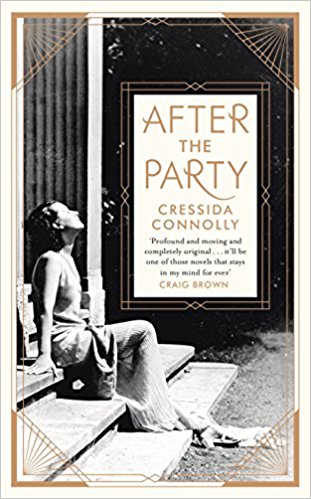
#BookReview ‘After the Party’ by Cressida Connolly #historical #Thirties

After the Party by Cressida Connolly is set in a difficult period of British history. It starts gently, lulling you into a sense that it is about three sisters, which it is, but it is also an uncomfortable story of pre-World War Two politics. From the first page, we know that Phyllis Forrester was in prison. In 1979, Phyllis looks back cryptically at what happened to her and her sisters, Patricia and Nina, in the Thirties. Why she was imprisoned is the question that made me keep reading. All we know is that someone died. Cressida ConnollyIn 1938, Phyllis and her husband Hugh return to live in England after years working abroad. They settle in West Sussex near Nina and Patricia. At a loose end, Phyllis is drawn into the peace camps organised by Nina; it is something to do over the summer, there are educational talks to attend and activities for the children. Nina is an organiser with a clipboard. Phyllis revels in their rented house at Bosham beside the sea, until Hugh buys a patch of land on which to build a house. At a dinner party thrown by Patricia, Phyllis meets a new friend, Sarita Templeton. “She said her ‘esses’ softly, so that ‘crazy’ sounded like ‘craissy’ and ‘is like ‘iss’.” Phyllis and Hugh are drawn into the circle of The Party, which the author has still not named. It is only the appearance of ‘The Leader’ or the ‘Old Man’ that tells us what we suspect, this is Oswald Mosley and The Party is the British Union of Fascists. Sarita does not appear much, but she is a key influence on Phyllis.
All is not well with the sisters, demonstrated by Connolly with concise words and a slight of hand. The three women have driven from Sussex to Buckinghamshire to visit their father who is in hospital after a fall, his future is uncertain as is that of their weak dependant mother. “Before they arrived at the hospital Patricia brought out her lipstick and compact and dabbed her nose with powder. Even from the back of her head Phyllis could tell that this small display of vanity was annoying to Nina. ‘Will I do?’ she asked Phyllis, turning her head. ‘No smudges?’ In actual fact she had applied the powder more thickly on one side of her nose, but Phyllis did not say so.”
The titular party is held by Sarita and Fergus Templeton. Sarita loves parties, Phyllis hasn’t been to one for years and Hugh, her husband, hates them. So a scene of conflict approaches, set amongst a background of Oswald Mosley and the British Union of Fascists. Why is Phyllis in prison? Did she murder someone? One of her sisters? Her husband? Mosley?
This is not a thriller but there are obfuscations which are misleading, especially at the beginning, which affect the pace of the story and left the second half slower to read. Is the delay in mentioning Oswald Mosley intended to add tension, or because the author feared it may deter people from reading the novel? The light hand with which the British Union of Fascists is portrayed was difficult to read, partly because I never understood Phyllis’ motivation for joining The Party. She seems to drift into it, but could she really be that naïve? Much better I think to address it head-on rather than have Phyllis refer to ugly incidents in passing.
I expected to enjoy After the Party more than I did. Perhaps the time was so vile that writing about it in an entertaining way is impossible. The novel is awkward but perhaps that reflects the character of Phyllis, as she is our narrator. It does make you think ‘what would I have done if I was her?’ The ending, though is an anti-climax, given the stakes were raised so high on the second page. “Had it not been for my weakness, someone who is now dead could still be alive. This is what I believed and consequently lived with every day in prison.”
A thought-provoking novel.

If you like this, try:-
‘Wigs on the Green’ by Nancy Mitford
‘Corpus’ by Rory Clements
‘Our Friends in Berlin’ by Anthony Quinn 

And if you’d like to tweet a link to THIS post, here’s my suggested tweet:
#BookReview AFTER THE PARTY by Cressida Connolly https://wp.me/p5gEM4-3sU via @SandraDanby

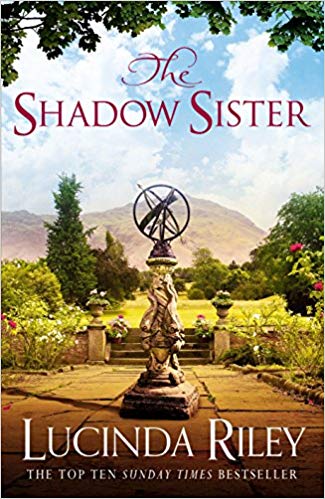
#BookReview ‘The Shadow Sister’ by Lucinda Riley #romance

Star d’Aplièse, the third of the six adopted sisters in Lucinda Riley’s dual-timeline adoption mystery series is the subject of The Shadow Sister. Riley excels at combining a contemporary mystery with a related historical story and so far in the series Star has been something of an enigma. Almost twinned to CeCe, her nearest sister in age, she is the quiet unassuming one in this flamboyant family. In The Shadow Sister, she steps out of the shadows and discovers a past involving Beatrix Potter, Mrs Keppel and the King of England. Lucinda Riley When their adopted father Pa Salt dies, he leaves each girl a letter and clue about their birth. Star’s journey takes her first to Kensington, London, to an eccentric rare bookseller where, Star, grieving and feeling adrift in life, takes a job as bookshop assistant. She soon proves herself irreplaceable to shop owner Orlando who invites her to his family home in Kent. There she meets his surly brother Mouse – who Star thinks of as ‘The Sewer Rat’ – and delightful nephew Rory. As Star becomes caught up in the turmoil of the Vaughan family, distance grows between herself and CeCe. Slowly Star recognises that in order to work out who she is, she must be separate from her sister.
This novel is not just the contemporary story of Star ‘finding herself’ it is also the story of her ancestry. The historical strand takes us back to 1909 to Flora MaNichol who lives at Esthwaite Hall in the Lake District, and is a neighbour to Beatrix Potter. Flora’s family life is enigmatic, although she is the older sister it is the younger Aurelia who is given a London season and engagement to Archie, destined to be Lord Vaughan, encouraged. Flora would rather run wild on the fells, drawing animals and plants, avoiding her censorious father. Her life takes a turn when she too must live in London, at the house of Mrs Keppel, notorious mistress to the King. Star’s clue hints at a wealthy inheritance, a small onyx animal figurine named ‘Panther’. How can this be connected to Flora; why is she feted as a guest by Mrs Keppel, and what are the connections to Star a century later?
One issue I have with the series is that rather than actually being about the sisters’ mysterious parentage and how Pa Salt came to adopt them, they tell a historical story set two or three generations earlier. So far I have enjoyed all three of the historical stories; I am reading the series in order. The historical strands are linked to each relevant sister, but I am left feeling slightly short-changed about the truth of their birth. I want to know more about the birth parents and how Pa Salt came to adopt them. However in this book, more than the first two, his shadow is more evident so perhaps his story will be unveiled in the seventh book of the series.

Read my reviews of some of the other novels in Lucinda Riley’s ‘Seven Sisters’ series:-
THE SEVEN SISTERS #1SEVENSISTERS
THE STORM SISTER #2SEVENSISTERS
THE PEARL SISTER #4SEVENSISTERS
THE MOON SISTER #5SEVENSISTERS
THE SUN SISTER #6SEVENSISTERS
THE MISSING SISTER #7SEVENSISTERS

… plus my reviews of these standalone novels, also by Lucinda Riley:-
THE BUTTERFLY ROOM
THE GIRL ON THE CLIFF
THE LOVE LETTER

If you like this, try:-
House of Grace’ by Patricia M Osborne #1 House of Grace
In Another Life’ by Julie Christine Johnson
Fair Exchange’ by Michèle Roberts

And if you’d like to tweet a link to THIS post, here’s my suggested tweet:
#BookReview THE SHADOW SISTER by Lucinda Riley https://wp.me/p5gEM4-3XO via @SandraDanby

#BookReview ‘A View of the Harbour by Elizabeth Taylor #historical

Set in Newby, a small seaside town, just after the Second World War, A View of the Harbour by Elizabeth Taylor is an ensemble novel focussing on a small cast of characters. There is love and betrayal, friendship and duty, loneliness and death. Not a great deal happens, in terms of action, but the shifts in relationships in this place where everything seems to revolve around the harbour are what kept me reading. Elizabeth TaylorThere are seven key characters whose lives impact on each other in positive and negative ways. A middle-aged doctor, Robert, and his wife Beth seem to get through life without taking too much notice of each other. Their neighbour, divorcee Tory, is Beth’s best friend and Robert’s lover. A fact Beth seems unaware of, though their elder daughter Prudence knows and resents. Invalid and gossip Mrs Bracey makes hell of the lives of her two daughters, Maisie and Iris, but somehow knows everything that is happening. War widow Lily Wilson lives above the creepy, dusty Waxworks Exhibition, she used to run with her husband. Like much of Newby the museum is closed for the off-season, waiting the new life, energy and money expected by the arrival of springtime visitors.  Into this midst comes Bertram Hemingway, an out of season visitor, amateur artist, and something of a hit with the local ladies.
Each character is lonely, bereft, in a place where war is still evident; in absences, in debris washed up on the shore, in the general shabbiness of everything and everyone. Everything seems to happen slowly in Newby, like the lapping of the waves against the shore. Taylor introduces Prudence as she sits at her bedroom window looking out at her view of the harbour, “… various lights spread out over the cobblestones, the lamp above the door of this house, the doctor’s house, and the pavement shining red under the serge-draped windows of the Anchor; nearer the sea wall, lamps cast down circles of greenish light encompassed by blackness. And always there was the sound she no longer heard, since she had been hearing it from the beginning, water lapping unevenly against stone, swaying up drunkenly, baulked, broken, retreating.” Taylor uses this limited geography – plus the pub, the Braceys’ secondhand clothes shop and the museum – to show women surviving, often without men. First published in 1947, Taylor shows a community of women who get by because of, and sometimes despite, each other and in this it reminded by of Pat Barker’s Union Street, not published until 1982.
A View of the Harbour is both a bleak read and a funny one. I particularly enjoyed the letters written to Tory by her son, Edward, who is at boarding school; and the gauche awkward meetings between Prudence and her bookish beau Geoffrey.
CLICK HERE TO READ MORE ABOUT THIS BOOK AT AMAZON

Read my reviews of other books by Elizabeth Taylor:-
ANGEL
A WREATH OF ROSES
AT MRS LIPPINCOTE’S
IN A SUMMER SEASON
THE SLEEPING BEAUTY

If you like this, try:-
‘Hangover Square’ by Patrick Hamilton
‘Fred’s Funeral’ by Sandy Day
The Vanishing of Audrey Wilde’ by Eve Chase

And if you’d like to tweet a link to THIS post, here’s my suggested tweet:
#BookReview A VIEW OF THE HARBOUR by Elizabeth Taylor https://wp.me/p5gEM4-3OW via @SandraDanby

#BookReview ‘Five Days of Fog’ by Anna Freeman #thriller #crime

Five Days of Fog by Anna Freeman about the queen of a female crime syndicate coming out of prison reminds me of Martina Cole’s books. It is 1952 and as Florrie Palmer waits for her mother Ruby to return home, she must make a decision about the direction of her own life. Anna FreemanLondon remains in the grip of ruins from the war and Florrie is firmly embedded in the family gang, donning disguises to steal, feeling secure in the circle of women who support each other. But she also applies for a job as a telephonist, carefully practising her accent.
The action is framed by five days of fog, both physical and perceived. So dense is visibility that cars crash, chemicals cause lung infections and people are coughing up dirt. The fog offers opportunities for thieves but it also disguises the truth and lies told to each other by the gang as they face a turning point. Old lies are perpetuated, new lies told with a smile, some members are out for their own benefit; others are tired of the secrets and politicking, and just want to get back to what they do best. Freeman’s fog is based on the real Great Smog of 1952 when an anticyclone pushed down all the filth in the air from industry, motor vehicle fumes and smoke from coal fires; it was followed in 1956 by the Clean Air Act.
The Palmer women form the Cutters, a fictional women’s gang named for The New Cut, a London market where the first group of women, tired of poverty and scrubbing floors, started shoplifting. When queen Ruby comes out of jail on early release, she has TB. As jostling begins in anticipation of the crowning of a new queen, there is a potentially bigger problem risking the survival of the Cutters and the male gang, the Goddens [the Palmer girls marry Godden boys, keeping the two gangs linked by DNA]; someone is grassing them up to the police. Trust is fractured, suspicious run rife, knives are carried, somewhere there is a gun. The story is told from multiple viewpoints – Florrie, Ruby, Nell, Ted – possibly too many. Is Florrie the grass? After all, she has dreams of going straight and marrying Nell’s son Ted, her quiet second cousin. If Ruby dies, Florrie will be in line to take over as queen. Or will Ruby’s blustering be-ringed sister Maggie take over? What about Ada, Ruby’s elderly aunt? Or is Harry Godden the queenmaker? Florrie and Ted are drawn into the gang by the family’s tentacles that keep the gang strong, safe and in the family.
I finished this book with mixed feelings. I admire the writing but don’t like any of the women and don’t feel convinced by the world created, though I can’t pin down why. I continued reading through the jumble of family background and names in the first half because I was curious about the identity of the grass. For me, the book took off in the second half as Nell’s story ignites. But the star of this book for me is Freeman’s masterful use of the fog.
If you are a fan of Freeman’s debut, The Fair Fight, be prepared for something completely different.

Read my review of THE FAIR FIGHT, also by Anna Freeman.

If you like this, try:-
Beginnings’ by Helen Christmas #1SAMEFACEDIFFERENTPLACE
Hangover Square’ by Patrick Hamilton
‘Never’ by Ken Follett

And if you’d like to tweet a link to THIS post, here’s my suggested tweet:
#BookReview FIVE DAYS OF FOG by Anna Freeman https://wp.me/p5gEM4-3U7 via @SandraDanby

#BookReview ‘The House Across the Street’ by @LesleyPearse #historical #mystery

This is the first book I have read by Lesley Pearse. The House Across the Street is a slow build as Pearse takes time to build the characters and the Sixties setting. This is a difficult book to describe: part-mystery, part-romance, part-thriller. Lesley Pearse.The house of the title is in Bexhill-on-Sea. Twenty-three year old Katy Speed is fascinated by Gloria, her fashionable neighbour, who owns a dress shop in town. Katy is also fascinated by some odd comings and goings; a black car arrives, bringing women and sometimes children to the house. Katy’s mother Hilda disapproves of Gloria, thinking there may be something illegal going on. Then one night Gloria’s house burns down and Katy’s father Albert is arrested for murder. It is at this point that the story really takes off.
The 1965 setting is well portrayed. It is a time of social change. Katy and her friend Jilly dream of escaping boring Bexhill to live and work in London. Hilda is something of a mystery; moody, cold, traditional. Mother and daughter mirror the changing times and sexual freedoms of the time. The backbone of the story is domestic violence and the lack of help available for victims in the Sixties.The House Across the Street is a novel sympathetic to the Sixties, showing the transition after World War Two as the older generation shaped by their war experiences clash with their children who want to grab their new freedoms. Pearse contrasts the awkward marriage of Hilda and Albert, and Katy’s new friendship with a barrister at her new job, to demonstrate the changing lives of women. Katy has more opportunities than her mother, but the laws protecting women remain inadequate. At the heart of the novel lays brutality but also kindness and a sense of justice.
The second half of the book flew by as Pearse expertly handles the increasing intrigue.

Here’s my review of YOU’LL NEVER SEE ME AGAIN, also by Lesley Pearse.

If you like this, try:-
‘The Beekeeper’s Daughter’ by Santa Montefiore
‘Beside Myself’ by Ann Morgan
Good Me Bad Me’ by Ali Land

And if you’d like to tweet a link to THIS post, here’s my suggested tweet:
#BookReview THE HOUSE ACROSS THE STREET by @LesleyPearse https://wp.me/p5gEM4-3yv via @Sandra Danby

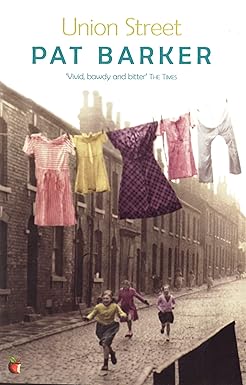
#BookReview ‘Union Street’ by Pat Barker #motherhood #women

Uncompromising, unbelievably sad and harsh, Union Street by Pat Barker does not hide the uncomfortable truths of poverty in North-East industrial England. This is the story of eight women who live on Union Street from teenager Kelly Brown to Alice Bell in her eighties and though each story is told individually, like the lives of the women, the stories interweave. An honest book about women struggling to hold life, family and home together, while retaining pride and some of their own individuality. Some succeed in this, others don’t. Pat Barker This is not a book about idealised motherhood. It is about putting bread on the table for your children no matter how you do it; including beating your husband to get his pay packet before he spends it on booze. These women are tough because they have to be; the choices are the cake factory, charring, and prostitution. Many marry young to feckless husbands because they are pregnant. This is not a light read; it features scenes of rape and backstreet abortion that somehow make the prostitution a lighter route. The language is often strong and some of the descriptions are difficult to read; but it is an honest book, bleak and realistic.
The spine throughout the book is Iris King, she appears in each story and is the one most aware of other women’s lives and offers support and a word of kindness when needed. But Iris is the toughest woman in the street. Three weeks after marrying Ted, he knocks her around because she is ironing his shirts when he gets home from work when he was expecting his supper. “After he’d gone, she sat down and took stock… When he came back she was waiting for him behind the door with the meat chopper in her hand. The blow glanced off him, though there was enough blood around to scare the pair of them stiff. It didn’t stop him hitting her again, but it did free her from the fear. She never lost her self-respect.” It is that self-respect which separates Iris from the other women.
This is the first novel by Booker Prize winner Barker, but such is the excellence of the prose

For my reviews of other Pat Barker novels, click the title below:-
ANOTHER WORLD
BLOW YOUR HOUSE DOWN
DOUBLE VISION
LIFE CLASS #1LIFECLASS
TOBY’S ROOM #2LIFECLASS
NOONDAY #3LIFECLASS
THE SILENCE OF THE GIRLS #1WOMENOFTROY
THE WOMEN OF TROY #2WOMENOFTROY
If you like this, try:-
‘Orphans of the Carnival’ by Carol Birch
‘In the Midst of Winter’ by Isabel Allende
‘These Dividing Walls’ by Fran Cooper

And if you’d like to tweet a link to THIS post, here’s my suggested tweet:
#BookReview UNION STREET by Pat Barker https://wp.me/p5gEM4-3rH via @SandraDanby

#BookReview ‘Smash All the Windows’ by @janedavisauthor #contemporary

Thought-provoking, sometimes difficult, always moving, Smash All The Windows by Jane Davis starts at a run as we are pitched straight into emotional turmoil, grief, anger and betrayal. Jane DavisAn inquest investigates an accident thirteen years earlier, it is the undoing of a miscarriage of justice. In turn we meet the survivors, and the relatives of the victims. Davis follows the paths of each person to their own resolution; there is no self-help book to follow, they must each must work it out for themselves. We see flashbacks to the days and hours before the accident as Davis unravels the real truth of what happened.
This is a complex story with legal twists and turns, misunderstandings and minute step-by-step detail of what happened on that day, thirteen years ago, when over-crowding at St Botolph and Old Billingsgate tube stations in London ended in death. For thirteen years, blame has been thrown around, scapegoats have been targeted, the media has dug for dirt. This is an imaginary accident but with echoes of so many disasters – Hillsborough, Grenfell, Kings Cross – that it can’t help but be affecting.
There are a lot of victims and survivors, a lot of relatives. The high number of characters causes initial confusion: who is who, who is alive and who is dead, what was the actual accident. As I read the first quarter of the book, I longed for a short summary of what happened. But as the story progressed I understood that my confusion mirrors the confusion of an accident as it happens, the disorientation of victims, the powerlessness of the loved ones who are waiting. It is a purposeful obfuscation by the author to reflect the opacity of what happens, the difficulty of finding the truth in any inquest or public enquiry, and ultimately the slippery nature of memory.
The survivors and relatives of victims are now living fractured lives. Gina lost her son. Her daughter Tamsin has grown into a young woman, still living at home to support her mother after Gina’s husband left, as husband and wife dealt with grief in different ways. Gina often forgets in the bottom of a glass. Donovan lost his pregnant daughter, her partner and his unborn grandchild; grief has caused his wife to withdraw into her own world, agoraphobic she stays at home. Maggie lost her daughter, newly-promoted station supervisor Rosie; Rosie is the scapegoat and Maggie receives hate mail. She understands the need of people to blame someone, and tries to deal with the anger and bitterness thrown her way, but is unable to ‘move on’ as her husband can. Jules lost his wife and is raising his young son alone. None of these people were there on the day but they are also victims. Add to this mix the two lawyers, Eric and Sorrel. It is Eric’s cussedness, his determination to unravel the truth, to read obscure documents about operating procedures and identify the failings, that makes the new inquest possible. He proves that accidents happen because of an unpredictable collision of small things.  I found Eric’s sections about the minutae of the accident, the legal arguments, the leaden language of official documents, to be a slow read that interupts the flow of emotions as Gina, Tamsin, Donovan, Maggie and Jules process their grief.
Ultimately, Jules is the catalyst for resolution. Transformed from plumber to artist, his reputation has gradually grown. Now a commission from the Tate Modern to produce a collection of art about the disaster allows ‘the 59’ to achieve a form of public resolution to their grief. The story came alive for me with Jules and his art. He takes the story of each survivor or relative and uses small items to tell a huge story, about their grief, their anger, the need to hit out, the need to be recognised.
Davis writes well about the powerful emotion unleashed by the accident, and its lasting effects. This book is about the nature of victimhood and how it is possible to shake it off if you have the will to do so. But that does not mean forgetting. Davis shows the transition of remembering; at the beginning, the second inquest has refreshed the trauma anew; but at the end, memories are welcomed in.

If you like this, try:-
In the Midst of Winter’ by Isabel Allende
The Bone Church’ by Victoria Dougherty
The Little Red Chairs’ by Edna O’Brien

And if you’d like to tweet a link to THIS post, here’s my suggested tweet:
#BookReview SMASH ALL THE WINDOWS by @janedavisauthor https://wp.me/p5gEM4-3TP via @SandraDanby