Tag Archives: book review

#BookReview ‘The Silence of the Girls’ by Pat Barker #historical #myths

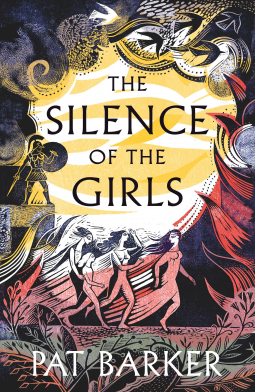
What a tumult of emotions this book unleashes. The Silence of the Girls by Pat Barker is a re-telling of the Trojan War from the viewpoint of Briseis, a captured Trojan queen who is enslaved in the Greek camp and claimed by Achilles as a prize of war. No matter that he killed her husband and brothers; that was the way things worked. Women were chattels without a voice, without feelings. Pat BarkerThis is not a simple retelling of a myth, it is a comment on the danger of male-dominated warfare fuelled by anger, hate and a sense of competition while the women are treated as possessions. The first action of a conquering army was to slaughter all babies and pregnant women, to prevent more males being born which may be future enemies. Barker has long written about war, and about women; now she combines the two with a microscopic focus on Briseis. It is an emotional story, overwhelming at times. Some women adapt, others collapse; some fall in love with their captors. The details of daily life are steeped in realism – the butchering, the piss, the blood – and Barker makes you believe it all.
Structurally, the [albeit, short] sections that didn’t work for me were those told by Achilles. I was disappointed to leave Briseis and resented the intrusion of a male voice. In preference I would have preferred to hear from other women – Hecamede perhaps, Ritsa or Iphis – in the style of Barker’s first novel Union Street where the stories of the women intertwine so by the end of the book you have a full picture.
At the beginning I worried about getting my Homer and classical history references straight, but realised this was taking me away from Briseis’s story. As soon as I stopped trying to remember The Iliad, I became entirely wrapped up in the book. Pat Barker never disappoints. She writes with passion, anger and earthiness about war and is a writer who never shirks from the difficult stuff.
This is the first book in the Women of Troy trilogy.

Read my reviews of other Pat Barker novels:-
THE WOMEN OF TROY #2WOMENOFTROY
LIFE CLASS #1LIFECLASS
TOBY’S ROOM #2LIFECLASS
NOONDAY #3LIFECLASS
ANOTHER WORLD
BLOW YOUR HOUSE DOWN
DOUBLE VISION
UNION STREET

If you like this, try:-
‘The House of Names’ by Colm Tóibín
‘Glorious Exploits’ by Ferdia Lennon
‘White Chrysanthemum’ by Mary Lynn Bracht

And if you’d like to tweet a link to THIS post, here’s my suggested tweet:
#BookReview THE SILENCE OF THE GIRLS by Pat Barker https://wp.me/p5gEM4-3An via @SandraDanby
#BookReview ‘The Only Story’ by Julian Barnes #love #romance

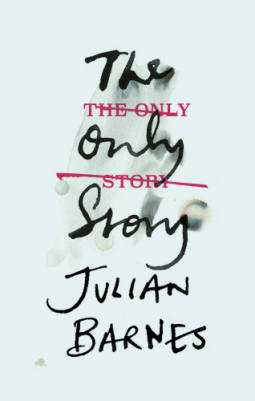
I seem to be developing a Marmite relationship with Julian Barnes. I loved his early work and The Sense of an Ending but had difficulty with his last novel The Noise of Time. So I approached The Only Story with trepidation. Julian BarnesMy stomach sank as I read the first page. The first paragraph poses a question: ‘Would you rather love the more, and suffer the more; or love the less, and suffer the less? That is, I think, finally, the only real question.” A pertinent question to which each of us has our own private answer. My difficulty with the first few pages is the lack of characterization; because it is told in the first person, we do not know who is speaking, there is no context. That of course comes later, and a few pages in its starts to warm up with the description of a tennis match. But ultimately I could not shake the perception that it was Julian Barnes the man speaking, not a fictional character, in the way American authors such as Wolfe and Roth seem to become characters in their own novels.
But this is a lesson in patience. I read on and the story started to come alive as the relationship of Paul and Susan unfolds. A teenager and a woman in her forties; it is first love for Paul but, as The Only Story is told completely from his perspective, we don’t know what it is to Susan. We only know what she tells him, not what she thinks. It is telling that one day after finishing the book, I could remember the name of his character but not hers.
The story is told in three parts: in the first flush of love; in the difficult times that follow, and as Paul looks back in later life. Barnes changes narrative voice from the immediate first person for nineteen-year old Paul, to a combination of first and second in the middle section; and the more distant third person in the final part, symbolic of the passing years and perhaps of pushing emotions and guilt away. The turning points in the novel are the turning points in the relationship, as love turns to familiarity, to duty and becomes a burden. I think the author intends The Only Story as a rumination on the nature of love, when in fact it is an account of a teenager learning that young love does not stay young love.
The writing is beautiful to read, as always with Barnes, but as the story progressed the pace slackened and I grew tired of repetition. I finished it wishing I had felt more engaged with the other characters in the story; Susan’s husband is a peripheral character who behaves oddly, and I would have loved to see more from her caustic friend Joan.
A sad story, but not a new one.

Click here to read my review of THE NOISE OF TIME, also by Julian Barnes.

If you like this, try:-
‘Curtain Call’ by Anthony Quinn
‘Fair Exchange’ by Michèle Roberts
‘The Roundabout Man’ by Clare Morrall

And if you’d like to tweet a link to THIS post, here’s my suggested tweet:
#BookReview THE ONLY STORY by Julian Barnes https://wp.me/p5gEM4-3pO via @SandraDanby

SaveSave

SaveSave

SaveSave

SaveSave

SaveSave

SaveSave

#BookReview ‘The Love Letter’ by Lucinda Riley #romance #suspense

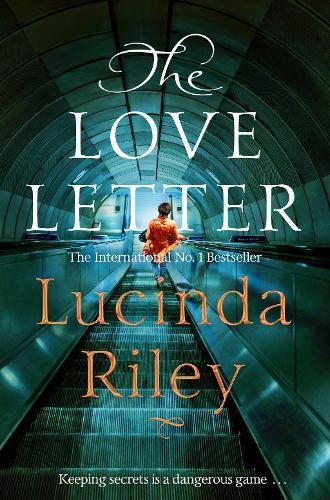
The Love Letter by Lucinda Riley is a tightly written combination of mystery and romance unravelling the truths of a long ago love affair. Nothing and no one are as they first seem. As one secret is unveiled, so is another mystery. Lucinda RileyWhen 95-year old actor Sir James Harrison dies, journalist Joanna Haslam attends the memorial service where an incident with a frail elderly lady sets this story in motion. When a few days later Joanna receives a package from the lady, Rose, she visits her to ask questions only to find Rose has died. Is there a story here to write which will win her promotion on her tabloid newspaper? Untangling the truth from the lies turns out to be much more complicated and dangerous than Jo could ever have imagined.
Meanwhile Zoe Harrison, the actor’s grand-daughter, carer, and now facing life as a single mother with her son Jamie, receives a call from the former love of her life, Art. It is a while before the storylines of Jo and Zoe combine. The real identity of Art remains secret for quite a while though I had guessed before the reveal. Jo meanwhile has little luck in love and, after past betrayals, has difficulty trusting. There is a fully coloured-in cast of supporting characters – just enough, not too many – including Jo’s editor Alec and childhood friend Simon. Needless to say, everyone is pulled into the plot by the end.
About two-thirds of the way through what I thought was the plot solution turned out to be wrong and there was still a way to go. Although a bit confusing in parts as the intricate story flits from London to Ireland and France, I thoroughly enjoyed the spy element and the theatrical musical background of Sir James plus two good female leads in Jo and Zoe. More than just a romance, even if the plot gets slightly silly by the end. Definitely a page turner, I read it in two days on holiday.

Read my reviews of the first six novels in Lucinda Riley’s ‘Seven Sisters’ series:-
THE SEVEN SISTERS #1SEVENSISTERS
THE STORM SISTER #2SEVENSISTERS
THE SHADOW SISTER #3SEVENSISTERS
THE PEARL SISTER #4SEVENSISTERS
THE MOON SISTER #5SEVENSISTERS
THE SUN SISTER #6SEVENSISTERS
THE MISSING SISTER #7SEVENSISTERS

… plus my reviews of these standalone novels, also by Lucinda Riley:-
THE BUTTERFLY ROOM
THE GIRL ON THE CLIFF

If you like this, try:-
Vanishing Acts’ by Jodi Picoult
The House at the Edge of the World’ by Julia Rochester
Angel’ by Elizabeth Taylor

And if you’d like to tweet a link to THIS post, here’s my suggested tweet:
#BookReview THE LOVE LETTER by Lucinda Riley https://wp.me/p5gEM4-3xJ via @SandraDanby

#BookReview ‘The Burning Chambers’ by @katemosse #historical

The story starts in winter, 1562, in the South of France. In a prison in Toulouse, a man is being tortured, while in Carcassonne a young woman awakes from a bad dream, a sad memory. The Burning Chambers by Kate Mosse is heavy on atmosphere and historical detail and, like Mosse’s Languedoc trilogy, is slow to start. Despite my confusion, and I admit to being confused in parts for two-thirds of the book, I read on because Mosse is an expert storyteller who spins a tale and reels you in so you sit up late at night reading just one more chapter. Sometimes though, I wished she would cut some of the detail. Kate MosseThis is a story of religious war, of prejudice and violence, of loyalty and love, and principally a woman and a man who find themselves on opposite sides of the religious divide. Minou Joubert is a Catholic, the daughter of a bookseller who believes in selling books of all faiths for everyone to buy freely. When she receives an anonymous letter, sealed with a family insignia she does not recognize and comprising only five words ‘SHE KNOWS THAT YOU LIVE’, she is mystified. That same day, fate crosses her path as Huguenot convert Piet Reydon flees capture. And so starts this spiraling and twisting story of a fight for control of Toulouse between Catholics and Huguenots, the mysterious quest of Minou’s fragile father Bernard, Minou’s mysterious letter, a Bible, traitors who smile and friends who are taciturn. Letter forgotten, Minou and her young brother Aimeric are sent to Toulouse for their safety. There they stay with their mother’s aunt but find themselves in a bad-tempered house where Huguenots are hated and their uncle is a political agitator. Toulouse seems more dangerous than Carcassonne or is the danger following Minou?
Minou is a great heroine and I await the next installment of the series with curiosity. The Prologue and Epilogue hint that this is not a standalone book, set in 1862 in South Africa, a woman is seeking answers in a graveyard. Is this the beginning of book two?
CLICK HERE TO READ MORE ABOUT THIS BOOK

And here are my reviews of other novels by Kate Mosse:-
CITADEL [#3LANGUEDOC]
THE CITY OF TEARS #2JOUBERT
THE TAXIDERMIST’S DAUGHTER

If you like this, try:-
‘In Another Life’ by Julie Christine Johnson
Fair Exchange’ by Michèle Roberts
The French Lesson’ by Hallie Rubenhold

And if you’d like to tweet a link to THIS post, here’s my suggested tweet:
#BookReview THE BURNING CHAMBERS by @katemossehttps://wp.me/p5gEM4-3wV via @SandraDanby

#BookReview ‘Gilead’ by Marilynne Robinson #classic #Americanwriters

Gilead by Marilynne Robinson is a read like no other. A slow, contemplative journey through the memories of one man’s life, as he waits to die. In 1956, the Reverend John Ames writes a letter to his young son. It tugs the heartstrings. Marilynne Robinson Robinson writes with a clear unadorned style drawing heavily on biblical texts but it is not a religious tract, it is the story of a man’s life, his memories, his regrets and loves. The first few lines grabbed me and didn’t let me go. Do not start reading this book if you are feeling impatient. Some passages are easy and quick to read, others deserve more thought. It unwinds slowly like a length of thread, telling us the story of John Ames, his father and grandfather, the legacy of the Ames family which has been inherited by the Reverend’s seven-year old son.
I am not religious and some of the references will have passed me by. In the first half of the novel, I would think ‘oh no not another section about religion’, but as I read deeper into the book I became drawn into the stories of John Ames and his forebears and how their beliefs shaped their lives. I wanted to know what happened to John Ames Boughton, the troublesome son of his best friend and fellow reverend. I wanted to know how the Reverend Ames met his second wife. Some of the questions posed are not answered until the very end.
It is a peaceful novel, set against the backdrop of Fifties Iowa, which draws on local history including the Underground Railroad. Robinson draws a picture of the Gilead community, the people, their kindnesses, their grievances. She paints a clear picture. ‘We were very pious children from pious households in a fairly pious town.’
At times, the writing was so sublime I re-read. For example, ‘Sometimes I have loved the peacefulness of an ordinary Sunday. It is like standing in a newly planted garden after a warm rain. You can feel the silent and invisible life.’
Gilead, the second novel by Marilynne Robinson, won two prizes in 2005: the Pulitzer Prize for Fiction, the National Book Critics Circle Award. I came to it with trepidation, having respected the writing style of her first novel, Housekeeping but struggled with the pace of the narrative.
CLICK HERE TO READ MORE ABOUT THIS BOOK AT AMAZON
Try the #FirstPara of GILEAD here.

Read my reviews of Robinson’s other novels:-
HOME
HOUSEKEEPING
JACK

If you like this, try:-
‘Barkskins’ by Annie Proulx
‘Did You Ever Have a Family?’ by Bill Clegg
‘The Past’ by Tessa Hadley

And if you’d like to tweet a link to THIS post, here’s my suggested tweet:
#BookReview GILEAD by Marilynne Robinson via @SandraDanby http://wp.me/p5gEM4-2Cb

#BookReview ‘The Fire Court’ by @AndrewJRTaylor #historical

In order to fully appreciate The Fire Court by Andrew Taylor, you need to read The Ashes of London first. Otherwise, references and subtleties will pass you by. This is definitely a trilogy to read in order. The threats and risks are not always clear on the page and I had a couple of ‘oh, now I get it’ moments. But as with the first book, Taylor writes about post-Fire London with all the smoke, heat and rotting smells vivid on the page. Andrew TaylorThe first chapter sets up the central mystery to be solved. James Marwood’s elderly confused father wanders in the city and follows a woman he believes to be Rachel, his deceased wife. He is brought home by a kindly roadsweeper. Marwood listens to his father’s confused ramblings and fears his wits are disappearing. The next day, Nathaniel Marwood is dead and his son attempts to recreate his father’s movements to see if there was truth in his ramblings; into the heart of the rookery at Clifford’s Inn to see if there really is a chamber of the ant and inside it, a sinful woman. Instead he meets an objectionable man called Gromwell.
Two women are key to Marwood’s story. Jemima, Lady Limbury, stays close to the house and struggles to be familiar with her husband Philip who is busy with affairs of business. Except the wealth of the marriage belongs to Jemima and Philip unfortunately lets money slip through his fingers. Jemima dislikes the company he keeps, particularly a slimy lascivious man called Gromwell. The second woman is Catherine Lovett, my favourite character from The Ashes of London. We first see her sitting in the chamber at the Fire Court, the chamber set up to resolve legal, property and construction issues between freeholders, leaseholders and tenants with the aim of rebuilding London fast. Cat is taking shorthand notes, practicing her skill, though really she longs to design buildings for her mentor, the infirm Simon Hakesby. Jemima and Cat do not meet for most of the novel when the two sides of the mystery finally become entangled. I admit to being impatient about this, I found Jemima’s storyline less than captivating though at the end I wished I had grasped her significance a little earlier. Taylor’s novels move fast but are dense with detail and I need to read both these books again before attempting the third.
At the centre of the story is the rebuilding of London after the Great Fire. Amongst the rubble there is destitution, opportunity, greed and hopelessness. It is a toxic mix, a dangerous place in which to start asking awkward questions. Which is exactly what James Marwood does. In the first book he was asking questions for two masters, in The Fire Court he seeks answers to his father’s puzzle. And when his life is in danger, he realises there must truth woven in his father’s nonsense words after all.
No word yet on when book three will follow, but I will definitely be reading it. Taylor is a new author for me and I look forward to exploring his other books. He is a historical writer rich in his period but with the twists and turns of a thriller. He creates mysteries that you want to puzzle out.

Read my reviews of the other books in this series:
THE ASHES OF LONDON #FIREOFLONDON1… and try the first paragraph of THE ASHES OF LONDON.
THE KING’S EVIL #FIREOFLONDON3
THE LAST PROTECTOR #FIREOFLONDON4
THE ROYAL SECRET #FIREOFLONDON5
THE SHADOWS OF LONDON #FIREOFLONDON6

And a World War Two novel by the same author:-
THE SECOND MIDNIGHT

If you like this, try:-
‘The Last Hours’ by Minette Walters
‘Dark Aemilia’ by Sally O’Reilly
‘Under a Pole Star’ by Stef Penney

And if you’d like to tweet a link to THIS post, here’s my suggested tweet:
#BookReview THE FIRE COURT by @AndrewJRTaylor https://wp.me/p5gEM4-3re via @SandraDanby

#BookReview ‘A Ladder to the Sky’ by @JohnBoyneBooks #ambition #plagiarism

Maurice Swift is one of life’s takers. A Ladder to the Sky by John Boyne is the story of his life, told mostly by a series of people he meets, spends time with, has relationships with. Note that I don’t say ‘and who he loves’, because Maurice Swift loves only himself. John BoyneMaurice is single-minded and does what he needs to do to get on and get what he wants; he wants to be a major novelist and, oddly for such a self-obsessed person, a father. I read the book in a strange state of tension wondering to what lows he would next sink, waiting for him to get his just desserts.
Boyne’s novels are always thought-provoking and this is no different. But I found it a difficult novel to read in that Maurice is not the sort of person you want to know. He lies, dissembles, steals, discriminates, copies, exploits and basically sucks dry a person until, when he has got all he needs, he moves on. We first encounter Maurice in West Berlin in 1988. The sixth novel of sixty six year old Erich Ackermann has won a prize and, on the subsequent publicity tour, he notices a young waiter in the hotel bar. Maurice introduces himself as a fan and mentions he wants to be a writer too. He becomes Ackermann’s assistant for six months as they travel Europe on Ackermann’s book tour. Maurice allows Erich to look longingly at him but does not allow him to touch, instead he encourages Erich to tell a story from his youth. As Erich says, “This was a part of my life that I’d locked away for many decades, never confiding the story in a single person.”
A short Interlude follows Part One, told by Gore (later revealed as American author Gore Vidal) from his Italian villa La Rondinaia. By now Maurice’s debut novel has been published and well received. But Gore is wiser than Erich and sends Maurice on his way. Part Two moves forward a few years and Maurice is married. This is Edith’s story. She has published her first novel to much acclaim, is writing a second and is a creative writing tutor department in Norwich. In contrast, her husband is struggling to complete a new novel and reacts badly to pointed questioning by Edith’s students. Maurice does not handle failure well and Edith fears his mood swings and cold reactions to her. She does not share her novel, her ideas or her drafts but is sensitive to his mood swings. Until one day his mood changes. Given Maurice’s history, I knew what was going to happen but how it happened was unexpected. Boyne has created a nasty villain, arrogant, with a sense of entitlement; but believable. Haven’t we all known a bully who sees what he wants and takes it as of right?
We don’t see directly inside Maurice’s head until well into the second half of the novel. Now living in New York with his son Daniel, he is editor and owner of Stori, an exclusive literary magazine dedicated to short stories. Given the publicity with his latest novel, The Tribesman, Maurice and Stori are fashionable and many unproven writers submit their stories to him. When he is called to his son’s school because seven-year-old Daniel has hit a girl who kissed him, for the first time we hear a story from Maurice’s schooldays and the beginnings of his plagiarism. The ending is brilliant, and most unexpected.
This is a novel about plagiarism, theft, honour or rather the lack of it, and writing, wrapped up in a plot that will make you gasp out loud as the psychological twists tighten.

Read my reviews of these other novels by John Boyne:-
A HISTORY OF LONELINESS
A TRAVELLER AT THE GATES OF WISDOM
ALL THE BROKEN PLACES
STAY WHERE YOU ARE AND THEN LEAVE
THE HEART’S INVISIBLE FURIES… Curious? Read the first paragraph of THE HEART’S INVISIBLE FURIES here.
WATER #1ELEMENTS
EARTH #2ELEMENTS

If you like this, try:-
‘Amnesia’ by Peter Carey
Purity’ by Jonathan Franzen
Autumn’ by Ali Smith

And if you’d like to tweet a link to THIS post, here’s my suggested tweet:
#BookReview A LADDER TO THE SKY by @JohnBoyneBooks https://wp.me/p5gEM4-3wm via @SandraDanby

#BookReview ‘Three Sisters, Three Queens’ by Philippa Gregory #Tudor

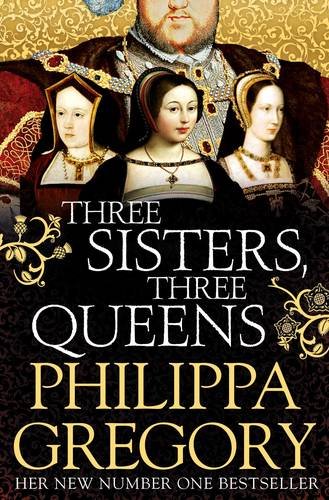
‘What is the point of love if it does not make us kind?’ Three Sisters, Three Queens by Philippa Gregory is a story of three women, princesses all, who marry for duty, for their country but who long to marry for love. It is a not a tale of sisterly love, more of sisterly rivalry, envy and spitefulness. The three women become sisters of England, Scotland and France but each knows despair and great unhappiness, they are alternately supportive to each other and shamelessly selfish. Philippa GregoryThe three women are Margaret, older sister of Henry VIII; Mary, his younger sister; and Katherine of Aragon, his first wife. All women have been raised to do their duty, to behave correctly, to smile when in pain, to nod to their husband when they disagree, and to always put themselves second. It is a story of English and Scottish politics, the switching of allegiances, the lies and flattery, the convenient silences. The story is told by Margaret, married young to James IV of Scotland, who is horrified after their wedding to be presented with a mob of children, his illegitimate sons and daughters. She appeals to Katherine for advice who tells her to swallow her anger and humiliation and get on with being a good queen to her husband.
The novel tends to repetition and could be shorter, and it is true that in the early pages Margaret is rather mean-spirited and complains repetitively about what she wants and what her sisters have that she doesn’t. But as the pages turned I got more involved in her story, the twists and turns, riches and poverty, love and betrayal, lies and more lies. It is not Gregory’s best Tudor novel, but it is still a fascinating account of a little known queen and sheds a light on complicated Scottish politics of the time. That, and the manipulation of the English/Scottish borders by Henry VIII and his lords, makes modern politics look lily white.
I did expect the viewpoints of each of the three sisters, which the title does imply, but in fact the story is told completely by Margaret aided by letters she receives from her sisters.

Read my reviews of these other Philippa Gregory novels:-
THE LADY OF THE RIVERS
THE LITTLE HOUSE

Read the #FirstPara of THE OTHER BOLEYN GIRL, also by Philippa Gregory.

If you like this, try these:-
The Leviathan’ by Rosie Andrews
Kings and Queens’ by Terry Tyler #1LANCHESTER
The Lady of the Ravens’ by Joanna Hickson #1QUEENSOFTHETOWER

And if you’d like to tweet a link to THIS post, here’s my suggested tweet:
#BookReview THREE SISTERS, THREE QUEENS by Philippa Gregory http://wp.me/p5gEM4-2yg via @SandraDanby 

#BookReview ‘The America Ground’ by Nathan Dylan Goodwin #familyhistory #crime #genealogy

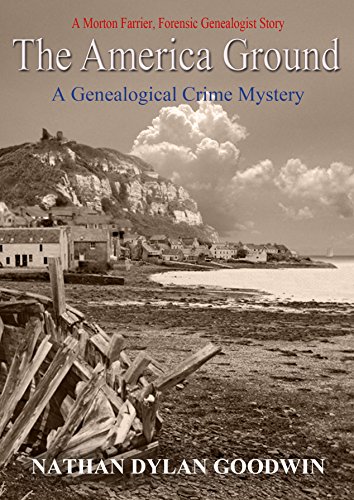
The America Ground by Nathan Dylan Goodwin is based on a fascinating piece of local history, indeed Goodwin’s own family history, and made into a historical thriller. On April 28, 1827, a woman is murdered in her bed. Eliza Lovekin is the second to be killed, Amelia Odden is to be next. This is the story of Eliza, her daughter Harriet and a piece of ground in Hastings, East Sussex, which for a short period of time was claimed as a piece of the United States of America. Nathan Dylan GoodwinForensic genealogist Morton Farrier is on the trail of his own adoption story, the identity of his birth father. But a visit to his adoptive father seeking answers sets him instead on the trail of a new mystery. The portrait of a woman from the 1800s: ‘Eliza Lovekin, Hastings, 1825’. Morton’s client is the proprietor of an antiques business who wants a potted family history of Eliza to add value to the painting before it goes up for sale at auction. Initially resenting time away from researching his own family, Morton is soon captivated by Eliza’s story. In the 1827 story strand, we follow Harriet Lovekin, teenage daughter of Eliza, as she longs to be treated as an adult. Unfortunately the day arrives when she is, and she doesn’t like it.
The build towards the climax is deftly handled, though the book starts slowly and I would have liked a more even balance between historical exposition and action in the first half. Originally I was unsure why we were following Harriet’s viewpoint rather than Eliza’s, but all becomes clear towards the end. There is one point when, in order to maintain the secret as long as possible, the author goes back a couple of days; that jolted me out of the story.
I particularly liked Goodwin’s use of local dialect with a light touch: ‘a low fubsy moon’, ‘a-going’ and ‘a-hurting’. As a genealogist and local historian, he knows his East Sussex locations well. As the action moves around the county, I found myself wishing there was a map to refer to.
Morton Farrier is a great protagonist – thoughtful, brave but scared too, a bit of a geek who has a sharp edge – though as my father used to say about Jim Rockford, it’s dangerous being around him; everyone he knows gets threatened, murdered, attacked or abused. And Morton’s own adoption heritage story continues from book to book.

Read my reviews of the next books in the Morton Farrier series:-
HIDING THE PAST #1MORTONFARRIER
THE LOST ANCESTOR #2MORTONFARRIER
THE ORANGE LILIES #3MORTONFARRIER

If you like this, try:-
‘Blood-Tied’ by Wendy Percival #1ESMEQUENTIN
‘Hangover Square’ by Patrick Hamilton
‘Days Without End’ by Sebastian Barry

And if you’d like to tweet a link to THIS post, here’s my suggested tweet:
#BookReview THE AMERICA GROUND by Nathan Dylan Goodwin https://wp.me/p5gEM4-3r5 via @SandraDanby

My Porridge & Cream read: Kelly Clayton

Today I’m delighted to welcome crime author Kelly Clayton.  Her ‘Porridge & Cream’ read is Naked in Death by JD Robb, pen name of Nora Roberts.

“I first read Naked In Death over 15 years ago. I was reading a considerable number of books a week and was a regular visitor to the local library. I read most genres but was buried deep in a Nora Roberts phase at the time. I was searching through the Nora books when I realised I had read them all. Panic! So I kept looking along the alphabetical shelf, and almost the next author was JD Robb [Nora Roberts’ pen name for her crime series]. Kelly Clayton
The book, Naked In Death, was the first of a series and it sounded good – set slightly in the future, it followed a New York homicide detective, Eve Dallas. I borrowed it as part of that week’s haul and headed home. I was back at the library the next day for the following two books in the series. The In Death books cover crime, slight sci-fi element (but very subtle), romance, friendship, the destructive nature of humans and how the past doesn’t have to define us. Eve Dallas is a tortured kick-ass heroine with a horrific past. It’s about survival. Enter a gorgeous billionaire with a shady background and the glamour ramps up. There are now almost fifty books in the series, and I have read nearly every one.

I have re-read the original trilogy, which is Naked In Death, Glory In Death and Immortal in Death too many times to recall. I reach out for it to lose myself in a fascinating world. If I could be a fictional character, then it would be Eve, yes, even with her horrific past.  I love the characters, old friends you look forward to reconnecting with. I adore how we see Eve, damaged and mistrusting, grow and blossom but never, ever losing her most ragged edges.
I want to reread them – right now!”

Kelly Clayton’s Bio
Kelly Clayton has lived on the Channel Island of Jersey for most of her life but is originally from Scotland. She lives in a house overlooking the sea with her husband and 3 cats. Kelly is the author of the ‘Jack Le Claire Mystery’ series and, under her penname of Julia Hardy, Fortune’s Hostage.

Kelly Clayton’s links
Author website
Amazon Author page
Facebook
Twitter

Kelly Clayton’s latest book
Kelly Clayton England, 1813 Greed, deception and lust. Miss Eloise Camarthon is no ordinary debutante, she wants to live her life on her own terms. But Eloise is wealthy in her own right and a target for those with her fortune in their sights. Benedict Warrington, the Earl of Rothsea, has come to London in search of answers to a family tragedy. He meets the beguiling Eloise, and a dangerous chain of events is set in motion. Circumstances force an ultimatum, which threatens to change the course of Eloise’s future. Benedict is on the trail of a vicious murderer but finds more than he bargained for as the deaths mount up. Can he protect Eloise, or will one of them be the killer’s next victim?
Fortune’s Hostage’ by Julia Hardy [UK: Stanfred Publishing]

What is a ‘Porridge & Cream’ book? It’s the book you turn to when you need a familiar read, when you are tired, ill, or out-of-sorts, where you know the story and love it. Where reading it is like slipping on your oldest, scruffiest slippers after walking for miles. Where does the name ‘Porridge & Cream’ come from? Cat Deerborn is a character in Susan Hill’s ‘Simon Serrailler’ detective series. Cat is a hard-worked GP, a widow with two children and she struggles from day-to-day. One night, after a particularly difficult day, she needs something familiar to read. From her bookshelf she selects ‘Love in A Cold Climate’ by Nancy Mitford. Do you have a favourite read which you return to again and again? If so, please send me a message.

Kelly Clayton‘Naked in Death’ by JD Robb [UK: Piatkus]

Discover these ‘Porridge & Cream’ books:-
Simon Fairfax chooses ‘Heller With A Gun’ by Louis L’Amour
Caroline James re-reads ‘The Old Wives’ Tale’ by Arnold Bennett
Claire Dyer loves ‘The Guernsey Literary and Potato Peel Society’ by Mary Ann Shaffer and Annie Burrows

And if you’d like to tweet a link to THIS post, here’s my suggested tweet:
Why does crime writer @kellyclayton01 re-read NAKED IN DEATH by JD Robb each year#books https://wp.me/p5gEM4-3xC via @SandraDanby