Tag Archives: book review

#BookReview ‘Elmet’ by Fiona Mozley #contemporary

A powerful book about the nature of family in today’s society, Elmet by Fiona Mozley is also about our relationship with the earth, nature, and existence without the trappings of modern life. Except it is impossible to escape completely. Fiona MozleyThe narrator, fourteen-year-old Daniel Oliver, is walking north in pursuit of an unnamed someone. As Daniel walks on, we see flashbacks to what happened before he set off on his journey. Danny’s life with his sister Cathy is split into two parts: living with Granny Morley beside the seaside where their father and mother are, separately, occasional visitors to the house; then later, living in a wood with Daddy, in a house hand-built, foraging off the land. At the beginning the descriptions of the rural landscape made me think this was a historical setting but Elmet is set today, making the circmstances of the family more disturbing. They live off the land and the money earned bare knuckle fighting by Daddy, John Smythe. They live on the margins; the children are home-schooled, and receive payment in kind [a carton of orange juice from the milkman, chops from the butcher] for favours done. Daniel and Cathy visit a neighbour’s house each morning for lessons, though it is not clear how Vivien knows John or what favour he has done her. It is a story of hints and implications, expecting the reader to wonder and explore possible gaps in the children’s history without knowing all the facts. Sometimes this worked, at other times I felt it made me miss some of the subtleties.
The story gathers pace as the odious Mr Price, a local landowner, appears on the scene with his two equally odious sons. His mistreatment of the Smythe family is echoed by the exploitation of farmworkers and tenants not only by Price but by other local farmers and landlords. As the downtrodden gather together at the Smythe house in the woods, a plan is devised to face up to the bullies. Watching it all are Smythe’s two teenage children, almost but not quite adults, understanding some of what is happening but not the implications or cost. Both are still discovering their own identities and there is a degree of gender confusion; while Cathy prefers the outdoors and reacts first with fists flying, Daniel is the homemaker.
While some of the characters are thinly-drawn – Price, Vivien – Mozley writes poetically about the wilderness of nature, the trees, plants and animals, the passing of the seasons. She creates a visual picture of the house in the woods, of Cathy plucking a mallard, of Daniel cooking eggs and bacon. But for me the plot stumbles rather than flows and would have been helped by a little more exposition about the children’s mother and why their father is determined to take them away from their regular lives. Though Daniel’s observations are beautiful he is an unconvincing narrator, his voice too mature and sophisticated for a home-educated teenager. The transition from his thoughts – “It was as if Daddy and I had sprouted from a clot of mud and splintered roots and they had oozed from pure minerals in crystalline sequence” – to vernacular dialogue and the use of ‘wandt’, dindt’ and ‘doendt’ jarred.
The book closes without a natural ending, simply a pause in proceedings, as life meanders its course for Daniel. An elegiac read, beautiful if flawed, it covers a lot of moral questions for today. Families living on the margins of society and their right to choose to live how they want, the exploitation of the poor by the wealthy, family love and loyalty when faced with extreme threat, and what happens when you take justice into your own hands. A promising debut. Shortlisted for the 2017 Booker Prize.

If you like this, try:-
‘Himself’ by Jess Kidd
‘Reservoir 13’ by Jon McGregor
‘The Western Wind’ by Samantha Harvey

And if you’d like to tweet a link to THIS post, here’s my suggested tweet:
#BookReview ELMET by Fiona Mozley https://wp.me/p5gEM4-3qF via @SandraDanby
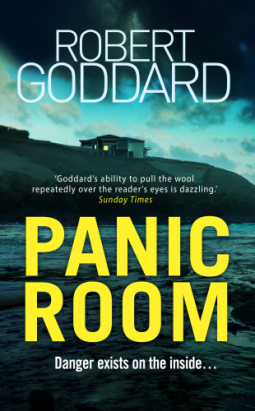
#BookReview ‘Panic Room’ by Robert Goddard #thriller

Panic Room by Robert Goddard starts in the voice of someone unnamed, someone who feels safe in a beautiful, calm place, who wants to stay there forever but who knows that is unrealistic. It made me ask so many questions: who is the speaker, where is this safe place and why isn’t it forever? Robert GoddardIt’s a while before we learn the identity of the first speaker. We are next introduced to Don Challenor, an ordinary middle-aged bloke, an estate agent who has been sacked, who is given a temporary job by his ex- wife Fran. To prepare for sale a multi-million property, Wortalleth West in Cornwall, for a client of Fran’s. Don jumps in his vintage MG to drive west, not realising how his life will change.
In the house he sets about his job, taking photos and measurements in order to prepare the sales brochure. Except the dimensions of one room don’t make sense. There is a mystery void. A steel door which cannot be opened. Is it a panic room? Why is it there? What’s in it? Is it dangerous? Could someone be inside, watching? Or are they trapped? Why not simply ask the owner of the house? Of course, nothing is that straightforward. And so the search to solve the riddle begins.
This is a cracking thriller which starts slowly and winds up and winds up as all the disparate threads of story begin to fall into place. It is an old-fashioned thriller with a conflicted but strong heroine, a disillusioned male hero who rediscovers his strength and guile, an arch villain who cannot be fathomed because he seems too nice and reasonable, and a couple of thugs who don’t worry about the trail they leave. Add in a Cornish witch, a kidnapping and a disappearing teenager, and you begin to wonder how on earth it will all make sense.
Goddard draws a beautiful picture of the Cornish coastline, it will make you want to go there… just not to Wortalleth West. You don’t have to work hard, just sit back and let this master thriller writer take you on a journey of family lies and disappearance, manipulation and fraud, big finance, global warming and cutting edge science. It will not be what you expected.

Read my reviews of Goddard’s other books:-
THE FINE ART OF INVISIBLE DETECTION #1UMIKOWADA
THE WAYS OF THE WORLD #1WIDEWORLDTRILOGY
THE CORNERS OF THE GLOBE #2WIDEWORLDTRILOGY
THE ENDS OF THE EARTH #3 WIDEWORLDTRILOGY
THIS IS THE NIGHT THEY COME FOR YOU #1SUPERINTENDENTTALEB

If you like this, try:-
‘An Officer and a Spy’ by Robert Harris
‘The Travelers’ by Chris Pavone
‘Purity’ by Jonathan Franzen

And if you’d like to tweet a link to THIS post, here’s my suggested tweet:
#BookReview PANIC ROOM by Robert Goddard https://wp.me/p5gEM4-3iz via @SandraDanby

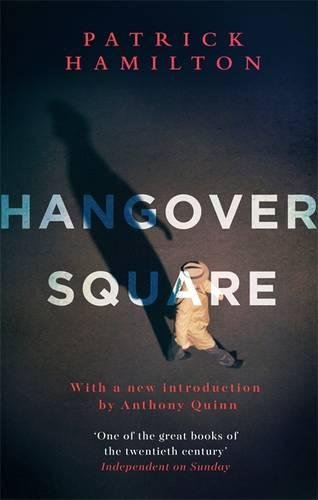
#BookReview ‘Hangover Square’ by Patrick Hamilton #WW2 #historical

Hangover Square by Patrick Hamilton, first published in 1941, is deservedly being re-discovered as a perceptive portrayal of people getting-by, living in the low rent district of Earls Court, London, months before war is declared. It is the mournful tale of one man’s hopeless love for a woman who exploits him relentlessly, his inability to see her for what she is, and the battle of his psyche, half of which is telling him to commit murder. Patrick HamiltonGeorge Harvey Bone loves Netta Longdon despite, or perhaps because of, her disdain for him. ‘When she had finished making up, she went into the sitting room to change her shoes, and he followed her. He was always following her, like her shadow, like a dog.’ This is a novel about love, about living on the edge, and schizophrenia, and about the underbelly of a city paused on the brink of war.
The story flicks back and forth in George’s head between his lucid moments planning a new life in Maidenhead when he will stop drinking, and what happens after the ‘click’ in his head – a blackout or loss of sense of time and place – when he realizes the only solution is to kill Netta. George is put-upon by Netta and her circle of friends, he buys drinks, brings food, and they tolerate his company only when he can contribute something. Netta goes to Brighton with George, not to be with him but because she hopes he can introduce her to someone useful. George, bless him, fails to see this. ‘She was wildly, wildly, lovely that night. He looked across the table at her, and she was violets and primroses again.’ Netta and her heartless group of friends exploit George mercilessly and he allows them to do it.
Hamilton’s Earls Court is a seedy place where people get-by on little money, living in rented rooms or boarding houses, scrounging off others, seemingly without jobs to go to. Netta goes to bed in the small hours, rises at eleven in the morning with a hangover – the Hangover Square of the title – then navigates her day via pubs, bars and restaurants or drinking from a bottle of gin provided by a friend. Brighton – London-by-the-Sea – brings a breath of fresh air but, as is always the way, George’s problems follow him there. There is a lovely section when he plays golf, a successful round which gives him the confidence to woo Netta. ‘He wasn’t going to get drunk. She could drink if she wanted to, but he wasn’t going to – at least only a little. He was going to keep his head.’ The irony, of course, is that George is schizophrenic and has another psychotic episode.
This novel is very funny in places, in others the action can seem slow to progress, but I found myself willing George to tell Netta where to go. He is the sort of character you want to take by the hand. Of course, he is unable to stand up to Netta’s rude and ungrateful behaviour and it is the uncertainty of what he will do, where he will go, and whether his schizophrenic murder plans will come to fruition, which made this such an absorbing read.

Read my review of THE SLAVES OF SOLITUDE, another World War Two novel by the same author, and click here to try the #FirstPara of THE SLAVES OF SOLITUDE.

If you like this, try:-
The Heat of the Day’ by Elisabeth Bowen
Midnight in Europe’ by Alan Furst
At Mrs Lippincote’s’ by Elizabeth Taylor

And if you’d like to tweet a link to THIS post, here’s my suggested tweet:
#BookReview HANGOVER SQUARE by Patrick Hamilton http://wp.me/p5gEM4-2EQ via @SandraDanby 

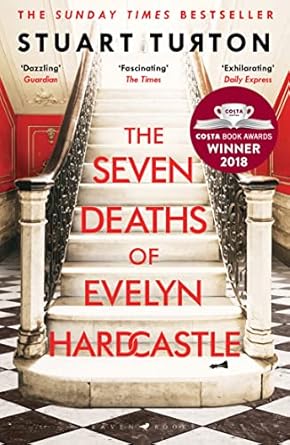
#BookReview ‘The Seven Deaths of Evelyn Hardcastle’ by Stuart Turton #crime #thriller

The Seven Deaths of Evelyn Hardcastle by Stuart Turton is a whodunnit version of Groundhog Day set at a country house party. There is a twist: the Bill Murray character must live each day in a different body, a host, and solve a murder or never escape back to his normal life. I found this to be a tortuous, convoluted and mystifying plot, impossible to review without giving away clues (intentionally or not), but I will have a go. Stuart TurtonIf you like conventional detective stories which follow the rules of crime fiction, presenting a challenge to be solved, this may not be for you. If you like going on a mystery journey where nothing is as it seems, you will like it. Mysteries work when the reader has something to cling onto, to make them identify with a character, to make them care, to give them someone to root for. This story has so many unknowns I spent most of the story in a state of confusion. Like Coco Chanel dressing for the evening and then removing two elements to ensure she wasn’t over-dressed, I finished this book wishing the author had undertaken a similar cutting exercise. The solution to the murder, and the fate of the protagonist were not the elements I found most fascinating; I enjoyed the challenge faced by Aiden – if that is his true name – when he inhabits the body of a host, a stranger. The obese body but sharp mind of Lord Ravencourt; the over-excited Jonathan Derby who acts without thinking and molests the chambermaids; the beaten-up butler who knows a lot but lays in bed drifting in and out of consciousness.
The list of characters is so long – with too many similar names, Millicent/Madeline, Daniel/Donald – plus others who are simply unnamed background extras, I couldn’t remember which each one was. This is complicated by the fact that the hero – whose name might be Aiden Bishop – doesn’t know who is who either. He doesn’t know who can he trust, who has he already met at Blackheath House, and who he knew before arriving at the party – as he also has amnesia about his real identity and previous life. Two/three other people are also experiencing this mobile bodied state, and Aiden is competing with them to solve the crime. Because only one, he is told by the mysterious fancy dress Plague Doctor, will survive. Oh and there’s a mysterious footman too who may or may not be trying to kill Aiden. Oddly, none of the other time-trapped people appear in Aiden’s body.
By a quarter through I was seriously confused and becoming seriously irritated. Is this a story best read in one sitting, so you are better able to remember all the twists and obfuscations? But the book is not short, 528 pages. Or could it be that there is just too much going on? A closed room mystery, each day repeating itself, a hero with amnesia who must relive each day in a different host body and be influenced by the stranger’s body and personality, a murder that happens every night meaning the victim cannot be rescued, a competition to solve the murder in order to survive, obtuse threats from sinister unidentifiable figures, key characters introduced rather late in the game. There is no doubting the planning skills of the author but at times I did suspect he set out to wilfully confuse rather than tease the reader. I ran through various scenarios: is it a game show, is it a wind-up like Candid Camera, is Aiden the murderer and doesn’t know it, is Aiden the murderer and cleverly duping everyone?
Ambitious, overwhelming, fantastical, mysterious, I can’t help but admire the ambition of the author and the scope of his story. Hidden beneath the machinations are two serious questions: how far will a person go in order to escape an intolerable situation, and is it ever possible to escape your own past? A Marmite book: love it or hate it.

If you like this, try these:-
‘Himself’ by Jess Kidd
‘The Last of Us’ by Rob Ewing
‘Curtain Call’ by Anthony Quinn

And if you’d like to tweet a link to THIS post, here’s my suggested tweet:
#BookReview THE SEVEN DEATHS OF EVELYN HARDCASTLE by Stuart Turton https://wp.me/p5gEM4-3kf via @SandraDanby

#BookReview ‘The Ashes of London’ by @AndrewJRTaylor #Historical

1666 and a fire starts in London, soon to devastate the medieval City of London. Watching the flames, a young man notices a boy in a ragged shirt who is standing so close as to risk to his life. When he pulls the boy to safety, he finds it is not a boy but a young woman. She bites him and escapes, though he intends only to help. And so are introduced the two key characters in The Ashes of London by Andrew Taylor. Andrew TaylorThis is not a novel about the Fire of London, rather a political mystery involving murder in the turbulent years following the execution of King Charles I, the English Civil War, the Commonwealth and subsequent Restoration of King Charles II. In the ruins of St Paul’s a body is found, differing from other mortalities for its thumbs tied together behind the man’s back. This is the sign of those who committed Regicide by signing the death warrant of Charles I. Though in hiding, these traitors are still active, lurking in the shadows.
The account of London burning is written vividly, so vivid I could imagine myself there, smell the charred timber and smoke. We see it through the eyes of two people. James Marwood, clerk, son of a traitor, is required by his superiors to investigate on their behalf. Catherine Lovett, a wealthy young woman lodges with the family of her mother but secretly searches for her father, a Regicide. Her position becomes precarious when her uncle seeks to marry her to a suitable man, one she detests. She flees and, at risk of discovery, Cat hides her identity with a false name. She is a bright woman who adapts to her changing circumstances, has a great presence of mind and is not afraid to defend herself when threatened. I particularly enjoyed her interest in architecture, something which brings her into the wider circle of Master Hakesby and Dr (Christopher) Wren as the new design for St Paul’s takes shape. She has a skill of fine draughtsmanship, and helps Master Hakesby who suffers from the ague.
We learn the story as seen by Marwood and Cat; the author controls what we know and don’t know. As they are aware of other things happening outside their circle, but not of the detail – of surviving traitors helping each other, of powerful men borrowing and lending money, of the scientifically-minded Charles II and his circle of influencers – so the reader realizes more is going on behind the scenes than is written on the page. Which adds to the mystery. This was a complex political time. We watch Marwood tread a delicate path as he tries to protect his elderly weak-witted Regicide father from persecution whilst also obeying his employer, Master Williamson, editor of The London Gazette. It is a time of whispers, gossip in the coffee houses, of secret meetings and spies standing behind screens the better to eavesdrop.
The paths of Marwood and Cat almost cross a number of times and as neither knows the true identity or intentions of the other, the reader is in a privileged position. When they do meet, the outcome is unexpected.
This is not a page-turning thriller or a crime novel, more a historical mystery. Taylor takes time to develop his characters and to show his location, the Restoration context is fascinating. Though a slow-burn I read this book quickly, finishing it and wanting to read its sequel, The Fire Court. That is always a good sign.
CLICK HERE TO READ MORE ABOUT THIS BOOK AT AMAZON

Try the first paragraph of THE ASHES OF LONDON here.

Read my reviews of the next books in this series:
THE FIRE COURT #FIREOFLONDON2
THE KING’S EVIL #FIREOFLONDON3
THE LAST PROTECTOR #FIREOFLONDON4
THE ROYAL SECRET #FIREOFLONDON5
THE SHADOWS OF LONDON #FIREOFLONDON6

And a World War Two novel by the same author:-
THE SECOND MIDNIGHT

If you like this, try:-
‘The Witchfinder’s Sister’ by Beth Underdown
‘The Last Hours’ by Minette Walters
‘The Western Wind’ by Samantha Harvey

And if you’d like to tweet a link to THIS post, here’s my suggested tweet:
#BookReview THE ASHES OF LONDON by Andrew Taylor https://wp.me/p5gEM4-3p2 via @SandraDanby

#BookReview ‘Our Friends in Berlin’ by Anthony Quinn #WW2

Our Friends in Berlin by Anthony Quinn tells a story of London in World War Two seldom told. It is a spy novel but not a thriller. It focuses on the individuals concerned and has a deceptive pace which means the threats, when they come, are more startling. Jack Hoste is not who he seems to be. He is not a tax inspector; he is not looking for a wife. He is a special agent who tracks down Nazi spies. And at night he is an ARP warden. Anthony Quinn The juxtaposition of Hoste’s life of secrets is set nicely against that of Amy Strallen who works at the Quartermaine Marriage Bureau. Ordinary life does go on in London during the Luftwaffe bombing and Amy must match clients together, a matter of instinct rather than calculation. In order to be matched with the right person, clients are asked to tell the truth about what they are seeking, truths which may have been disguised or hidden until now. Client requests include ‘a lady with capital preferred’ and ‘not American’. Then one day she meets a new client who seems oddly reluctant to explain what he is looking for. The client is Jack Hoste and he doesn’t want a wife, he is searching for Marita Pardoe, a suspected Nazi sympathiser and friend of Amy in the Thirties. What unfolds is a story of spying, gentle romance, betrayal, fanaticism and the life of living in a bombed city.
Jack and Amy seem to run on parallel tracks, veering towards and then away from each other, both romantically unsure, both allow the real world to get in the way. And get in the way it does, in the shape of Marita. Quinn is excellent at building characters, he makes you care for them and that’s what keeps you reading. In a time of war, decisions are often made recklessly but Jack and Amy draw back from doing this. Both are people of honour, making the secrets they must keep and the lies they must tell all the more pertinent. The nature of truth is a theme wriggling its way through every page.
Anthony Quinn is a favourite author of mine, his novels are each quite different and I will read everything he writes. I read this one quickly.

Read my reviews of these other novels also by Anthony Quinn:-
CURTAIN CALL
FREYA
HALF OF THE HUMAN RACE
MOLLY & THE CAPTAIN
THE RESCUE MAN
THE STREETS

If you like this, try:-
‘Mrs Sinclair’s Suitcase’ by Louise Walters
‘The Paying Guests’ by Sarah Waters
‘The Heat of the Day’ by Elizabeth Bowen

And if you’d like to tweet a link to THIS post, here’s my suggested tweet:
#BookReview OUR FRIENDS IN BERLIN by Anthony Quinn https://wp.me/p5gEM4-3pl via @SandraDanby

#BookReview ‘Tulip Fever’ by Deborah Moggach #historical

Amsterdam in the 17th century was a time when commerce was king and the sale of tulip bulbs made some people very rich and others bankrupt. This is the setting for Tulip Fever by Deborah Moggach, when Rembrandt and Vermeer painted some of the most-recognised art of our time. Sophia’s husband Cornelis is rich, thanks to tulips, and he celebrates his wealth by commissioning a joint portrait to be painted. It is a decision which changes their lives. Deborah MoggachThe deft switching of viewpoints – and each chapter is a single voice, Sophia, Cornelis, Jan [the painter], Maria [their servant] and Willem [Maria’s lover] – allows for a new take on each situation. The plot moves quickly, things are hinted at and passed over but relevant later. It is the sort of novel which seems simple but has hidden depths. The language can be so sensual. “Jacob van Loos is not painting the old man’s mouth. He is painting Sophia’s lips. He mixes pink on his palette – ochre, grey and carmine – and strokes the paint lovingly on the canvas. She is gazing at him. For a moment, when the old man was talking, her lips curved into a smile – a smile of complicity. He paints the ghost of this, though it is now gone.”
The reader must remain vigilant to catch everything. After four chapters I realised the significance of the quotation at the head of each chapter, and went back to the beginning again. They shed fresh light on the story being told. For example, “‘Trust not to appearances.’ Jacob Cats, Moral Emblems, 1632.” And, another chapter heading, by the same author, ‘Stolen waters are sweet, and bread eaten in secret places is pleasant.’
In places, Moggach’s description echoes Dutch paintings of the period: “Sophia stands at the window. She is reading the letter. Through the glass, sunlight streams on to her face. Her hair is pulled back from her brow. Tiny pearls nestle in her headband; they catch the light, winking at the severity of her coiffure. She wears a black bodice, shot with lines of velvet and silver. Her dress is violet silk; its pewtery sheen catches the light.” Certainly an understanding of art of the period will help a reader get more from the text.

Read my review of these other novels by Deborah Moggach:-
SOMETHING TO HIDE
THE BLACK DRESS
THE CARER

Read the first paragraph of THESE FOOLISH THINGS [now THE BEST EXOTIC MARIGOLD HOTEL] here.

If you like this, try:-
‘The Miniaturist’ by Jessie Burton
An Appetite for Violets’ by Martine Bailey
‘Girl in Hyacinth Blue’ by Susan Vreeland

And if you’d like to tweet a link to THIS post, here’s my suggested tweet:
#BookReview TULIP FEVER by Deborah Moggach via @SandraDanby http://wp.me/p5gEM4-2sv

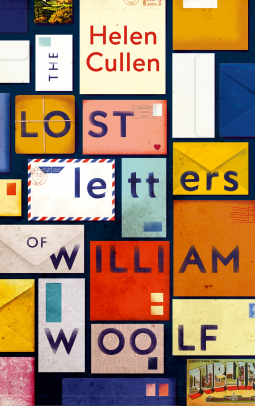
#BookReview ‘The Lost Letters of William Woolf’ by Helen Cullen @wordsofhelen #romance

I admit to loving the premise of this book when I first heard about it. A Dead Letter Depot where researchers reunite lost letters with senders and recipients. The Lost Letters of William Woolf by Helen Cullen left me wishing for more. It promised to be a novel about letters and mystery and turned into one focussed on a struggling marriage, which was not what I expected. Helen CullenWilliam’s marriage to Clare has gone stale and to avoid confronting what must change, he becomes obsessed by his work at the Dead Letter Depot and in particular the letters from someone called Winter addressed to ‘My Great Love’. In his vulnerable state, William begins to imagine that he may be that person and sets out to find her. Interspersed with this task we see William correctly fulfil his role, taking a lost fossil to the correct museum for example.
I switched between liking the character of William with being frustrated at his unrealistic romanticism, and could understand Clare’s frustrations. Ditto, she seemed impatient and too inclined to throw stones in a glasshouse. Clearly they were not communicating, ironic in a book about writing letters, and neither completely held my sympathy.
So what kept me reading? The lost letters, the mystery of Winter’s identity and to whom she was writing. And there lies one disappointment: the solution to Winter’s was such an anti-climax I had to flick back through the book to find an earlier reference in order to appreciate the revelation. I had two other disappointments. As much as I loved the concept of the Dead Letter Depot, a small voice in my head kept saying: it isn’t real, it wouldn’t get funding, it should be one man at a desk not a department with enough staff or budget for a Fancy Dress Fundraiser, and shouldn’t the lost letters be old not recently posted. I was also unclear of the timeline of the story. William and Clare feel like a 21st century couple living in the 1980s, pre-mobiles, pre-tablets. Something jarred and it would not go away.
This novel could have been so much more if there was less about the fragile relationship between William and Clare and more about the Dead Letter Depot, William’s fellow workers and the cases they worked on. But it is nicely written and if you are looking for an easy-to-read romance for your holiday, you will probably love it.

If you like this, try:-
‘Butterfly Barn’ by Karen Power
‘Forever Fredless’ by Suzy Turner
‘Girl in Trouble’ by Rhoda Baxter

And if you’d like to tweet a link to THIS post, here’s my suggested tweet:
#BookReview THE LOST LETTERS OF WILLIAM WOOLF by Helen Cullen @wordsofhelen https://wp.me/p5gEM4-3oH via @SandraDanby

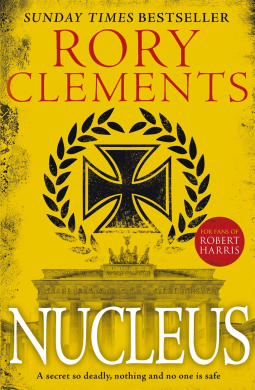
#BookReview ‘Nucleus’ by Rory Clements #thriller #WW2

Summer 1939. Germany has invaded Czechoslovakia. Jews desperate to flee Nazi persecution queue outside embassies in Berlin in the hope of getting a visa, while sending their children on Kindertransport to Britain. In the UK, the IRA’s bombing campaign continues. Scientists in Europe and America are researching atomic fission, and also at the Cavendish Laboratory in Cambridge. It is a vulnerable, combustible time. This is the setting for Nucleus by Rory Clements, second in his trilogy of history professor and amateur spy, Tom Wilde. Rory ClementsIn the first book in the series, Corpus, Tom Wilde was more amateur detective than spy. In Nucleus, the stakes are higher, war is imminent, spies are everywhere and so are traitors. The problem is, they look like friends. Asked by none other than the US president Franklin D Roosevelt to be a ‘clear and unbiased voice’ for him on research at the Cavendish, Wilde is drawn into a world of American millionaires, a Hollywood actress, champagne, tennis parties and horseracing. And then one of the Cavendish physicists, a withdrawn, complicated genius due to move to the USA to work with Oppenheimer, is found drowned in the River Cam. Was he killed because he had unlocked the answer to converting atomic fission into a bomb capable of destroying a city?
Meanwhile, Wilde’s girlfriend and neighbour, Lydia Morris, goes to Berlin on a mercy mission to search for the disappeared eight-year old son of Jewish scientist, Eva Haas, now in England. Could Albert have been kidnapped by the Gestapo to put pressure on his mother? And who is the mysterious German, Baumgarten, who helps Eva and her uncle, physicist Arnold Lindberg, escape to Austria. Tom Wilde, a specialist on Francis Walsingham, spymaster to Queen Elizabeth I, is an interesting protagonist; at times reckless but capable of analysis and leaps of faith.
Corpus was a slow read, at times lightly plotted, but Nucleus an emotional rollercoaster that continues until the last page. Clements avidly recreates the atmosphere of Britain on the brink of war; a summer where parties abound, people approach life with a reckless abandonment, where fear and paranoia combine with a ‘let’s get on with it’ attitude. I enjoyed Corpus but Nucleus is better. The plot twists and turns with all disparate elements connected together by the end. This is a compelling read which I devoured on a plane, sitting up to read it while others slept around me.

Click the title to read my reviews of the other books in the Tom Wilde series:-
CORPUS #1TOMWILDE
NEMESIS #3TOMWILDE
HITLER’S SECRET #4TOMWILDE

A PRINCE AND A SPY #5TOMWILDE
THE MAN IN THE BUNKER #6TOMWILDE
THE ENGLISH FUHRER #7TOMWILDE
A COLD WIND FROM MOSCOW #8TOMWILDE

And from the Sebastian Wolff series:-
MUNICH WOLF #1SEBASTIANWOLFF

If you like this, try:-
‘The Farm’ by Tom Rob Smith
‘Last Light’ by Alex Scarrow
‘Dominion’ by CJ Sansom

And if you’d like to tweet a link to THIS post, here’s my suggested tweet:
#BookReview NUCLEUS by Rory Clements https://wp.me/p5gEM4-3iZ via @SandraDanby

SaveSave

SaveSave

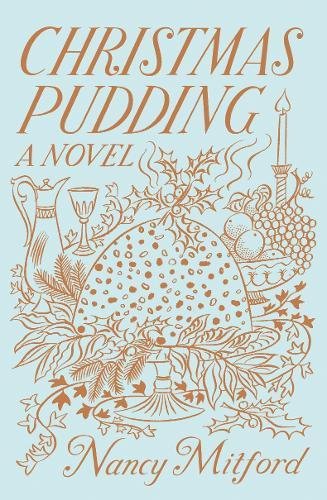
#BookReview ‘Christmas Pudding’ by Nancy Mitford #satire #historical

Christmas Pudding is another between-the-wars comedy of manners by Nancy Mitford. With scathing observation at times as sharp as Jane Austen, Mitford introduces a new character, Lord Lewes: ‘He was tall, very correctly dressed in a style indicating the presence of money rather than of imagination, and had a mournful, thin, eighteenth-century face.’ This is her second novel and features some of the personalities featured in her first, Highland Fling, though familiarity with the first is not essential for enjoyment. Nancy MitfordThe action takes place over one month around Christmas, the pudding of the title refers to Mitford’s mixture of personalities in two house parties in the Cotswold countryside. Paul Fotheringay, whose debut literary novel has been heralded as a comic farce, is desperate to escape London and find inspiration for his next book. Wanting to be taken seriously as an author, he settles on a biography of Victorian poet, Lady Maria Bobbin. When he is refused access to the diaries by the current Lady Bobbin he conjures a plot with her teenage son Bobby to masquerade as Bobby’s tutor over the Christmas holidays and so gain secret access to the diaries. And so Paul becomes part of a love triangle at the Bobbin’s home Compton Bobbin, involving Bobby’s sister Philadelphia and the honest, boring but reliable Lord Michael Lewes. The second house party, at the rather kitsch over-furnished Mulberrie Farm, is held by former prostitute and now society lady Amabelle Fortescue. Mitford’s characters move in the same overlapping social circles so it is inevitable that Amabelle and her guests Sally and Walter Monteath will socialize with some of the guests at Compton Bobbin.
Love is the central theme, true love, idealised love, upper-class arranged marriage and marriage for pragmatic facing-old-age reasons. As has always occurred in aristocratic circles, marriage is approached with a healthy dose of pragmatism making romantic love seem frothier and more idealised than ever.
This is light-hearted fiction and limited in its observation of characters; there is no upstairs/downstairs contrast here, which would enrich the social commentary. But the old and young are perfectly capable of condemning themselves out of their own mouths. Reading this novel will not change your life, but it will amuse you and the ending is not the easy way-out you may expect. My one criticism is that there are slightly too many peripheral characters with their own strings of plot.

Read my reviews of these other novels by Nancy Mitford:-
HIGHLAND FLING
LOVE IN A COLD CLIMATE
PIGEON PIE
THE BLESSING
THE PURSUIT OF LOVE
WIGS ON THE GREEN

Read the first paragraph of THE PURSUIT OF LOVE here.

If you like this, try these:-
‘Sweet Caress’ by William Boyd
‘A Death in the Dales’ by Frances Brody
‘Mothering Sunday’ by Graham Swift

And if you’d like to tweet a link to THIS post, here’s my suggested tweet:
#BookReview CHRISTMAS PUDDING by Nancy Mitford http://wp.me/p5gEM4-2UO via @SandraDanby