Tag Archives: book review

#BookReview ‘The Dreams of Bethany Mellmoth’ by William Boyd #shortstories

Partly good and partly disappointing: The Dreams of Bethany Mellmoth, the latest collection of short stories by William Boyd, is a bit of a curate’s egg. The shorter the stories, the more satisfying. William BoydOrganised in three parts, the first comprises seven short stories. If asked for my favourite from Part 1, I would say the first, ‘The Man Who Liked Kissing Women’. Ludo Abernathy is an art dealer who has foresworn affairs, his previous dalliances having finished three marriages. Now, he sticks to kissing women. Except when he can’t resist the temptation of making a killing on a Lucien Freud painting.
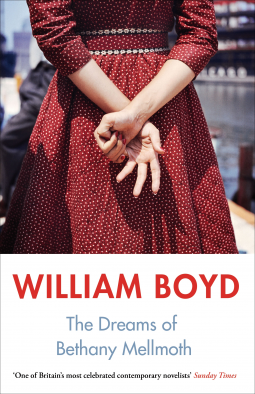
The title story, the longest in the anthology, makes up Part 2. It is more novella than short story, and I almost wish Boyd had developed it as such with a full plotline rather than letting Bethany Mellmoth drift from scene to scene. Bethany is a naïve twenty-something who drifts from boyfriend to boyfriend, dreaming of what she can do with her life but failing to make it happen. Each time it goes wrong, she gives up and moves back with her mother. It was a pleasant read but I’m unclear of Boyd’s central message – perhaps, the over-reliance of young drifters on parents rather than being truly independent – which meant I felt no urgency to read to the end. Of course I did. Bethany’s drifting started to annoy me; perhaps that was Boyd’s point?
Part 3 comprised one story, ‘The Vanishing Game: An Adventure’ which stopped abruptly. It starts off well: Alec Dunbar is an actor who keeps being called to auditions, mistakenly for Alexa Dunbar. His bad day improves when an actress who is waiting for an audition for the same film, offers him £1000 to deliver a package for her to Scotland. Dunbar’s road journey is peppered with references to the various films he has appeared in, and this is humorous. But the action becomes increasingly oddball, and the ending was disappointing. I prefer stories and novels that don’t tie up all the loose ends, but this one finished with too much remaining unexplained.

Read my reviews of:
ANY HUMAN HEART
LOVE IS BLIND
NAT TATE: AN AMERICAN ARTIST 1928-1960
ORDINARY THUNDERSTORMS
SWEET CARESS
THE BLUE AFTERNOON
TRIO
WAITING FOR SUNRISE
… and try the first paragraph of ARMADILLO

If you like this, try:-
‘All the Rage’ by AL Kennedy
‘The Story’ ed. Victoria Hislop
‘The Milk of Female Kindness’ ed. Kasia James

‘The Dreams of Bethany Mellmoth’ by William Boyd [UK: Viking]

And if you’d like to tweet a link to THIS post, here’s my suggested tweet:
#BookReview THE DREAMS OF BETHANY MELLMOTH by William Boydhttps://wp.me/p5gEM4-3jD via @SandraDanby

SaveSave

SaveSave

SaveSave

SaveSave

#BookReview ‘The Cursed Wife’ by Pamela Hartshorne #historical

London 1590. The Cursed Wife by Pamela Hartshorne starts with two un-named women in a room; one alive, one dead. And then follows the story of two women who meet as children, Cat and Mary, mistress and maid. Page by twisting page the story of Cat and Mary unfolds as, you can’t help but wonder, which one dies and which lives. Pamela HartshorneMistress Mary Thorne sometimes forgets she is cursed. It is 1590 and she steps out into the rain to buy herbs for an ill maid, little knowing her life will be changed. Two stories are told in parallel; from 1562 when the two girls first meet, and 1590 when their paths cross again in London. There is a tug of power between the two as fortunes rise and fall; Cat is envious of what Mary has, while Mary feels guilt at every small slight she has made in her life.
In 1562, Mary is a gentleman’s daughter; orphaned by sickness, she is put into a cart to be taken to the house of a distant cousin where she has been offered shelter. Her solace is Peg, the small wooden doll given to her by her father. When a mob of urchins sets on the cart, one girl grabs Peg and in her haste Mary pushes her. The girl falls and dies. An old woman who sees it happen, curses Mary saying the truth of what she has done will haunt her for the rest of her life. Mary arrives at Steeple Tew, the manor of her relations, and there meets the daughter of the house, Cat. Mary is to be her maid. The two girls become companions, though a pecking order is retained as they grow into young women, until sickness again enforces a change of circumstances.
This is a novel about social mobility, up as well as down, and adjusting to life’s events. It is about destiny; making your own, or expecting it as a right. Cat is an over-indulged child who becomes a spoiled young woman used to everything in life. Though is too simplistic to say Cat is selfish and Mary a saint, you do feel that Cat will always be dissatisfied with her lot. Mary thinks, “Cat sees the world not through a window as others do, but in a looking glass that reflects back what she wishes to see.”
A dark tale of bitterness, blame, jealousy and resentment, the two girls are mirror images of each other, but inverted. Both start as gentleman’s daughters, both are brought low by circumstances, one adapts, the other does not. This is a curiously modern novel with a young woman confident of her entitlement, regardless of her actions and choices. Everyone, the story makes clear, has choices and must live by those, accepting responsibility for one’s own life.
Hartshorne is a brilliant writer of atmosphere. When Cat marries George, the two girls move to Haverley Court. Though it is newly-built, Mary sees threats everywhere. “To me, the house was a living creature, watching me slyly. Its shadows tiptoed behind me as I walked through it. I would feel them like a breath on the back of my neck and my skin would prickle.” Adding to the haunted atmosphere is the doll Peg, a kind of bellwether, whose painted face changes its expression forewarning of events happening to Mary.
The Elizabethan setting is full of wonderful detail from food to under-garments, but there were times when it became a little too much.

If you like this, try:-
‘The Penny Heart’ by Martine Bailey
‘At First Light’ by Vanessa Lafaye
‘The Knife with the Ivory Handle’ by Cynthia Bruchman

And if you’d like to tweet a link to THIS post, here’s my suggested tweet:
#BookReview THE CURSED WIFE by Pamela Hartshorne https://wp.me/p5gEM4-3i1 via @SandraDanby

#BookReview ‘The Western Wind’ by Samantha Harvey #historical

In 15th century Somerset, a village is isolated between high ground and a river. Various attempts to find funding and the skills to build a bridge have foundered, and with it the village’s hopes of prosperity. Then in the early hours of Shrove Saturday, the body of a villager is swept away by the river and everyone looks to the priest for answers. The Western Wind by Samantha Harvey is a contemplative, slow burn about John Reve, the priest, his care for the villagers of Oakham, and the persistent questions of his visiting rural dean about the death of Thomas Newman. Samantha HarveyThe story timeline is chopped up and told backwards, which adds to the mystery. The novel starts with the sighting of the body and the finding of a green shirt in the bulrushes. This is a sign, Reve says, that Newman’s soul has crossed into heaven. Only at the end, do we find out the truth of what really happened. The dean is a threat; we never know his name, and only at the end are we given a physical description of him. He suggests to Reve that as this is the season of confession, a pardon be issued to anyone confessing in the next three days. This, he hopes, will enable him to tell the archdeacon that the death was investigated and the village is full of church-going people who are faithful penitents. He tells Reve: ‘You’re the parish priest – your word weighs a hundred times a normal man’s, two hundred times a woman’s, three hundred times a child’s. Your word is a silver weight in the palm. Your word is worth trading money for. It would cut like a stone through water.’ But what is a parish to do if a priest fails in his office and then compounds that failure with lies; and worse, encourages a parishioner to lie. Everyone in the village is affected by what has happened. Reve has a privileged position, he listens to the confessions of all the villagers; he knows their secrets. But to whom does he tell his own secrets? Unsure of his actions and feeling threatened by the dean’s relentless questions, he asks God to send the western wind as a sign of approval and to blow away the spirits.
There are all sorts of themes going on here. The fine line between religion and superstition. The hypocrisy and lies of religion and its priests. The honesty and doggedness of the rural poor and their willingness to believe in symbols and spirits as well as God. It considers the practice of confession, that allows a person to sin in the knowledge that they will be blessed by the priest afterwards.
This is a careful, restrained novel – as fitting its contemplative clerical narrator – rich in descriptive detail. But at times I wishes it moved a little faster or was a little shorter. Told entirely from Reve’s point of view, it might perhaps have benefited from another voice. I also found the ending rather abrupt.

If you like this, try:-
‘Reservoir 13’ by John McGregor
‘Master of Shadows’ by Neil Oliver
‘Under a Pole Star’ by Stef Penney

And if you’d like to tweet a link to THIS post, here’s my suggested tweet:
#BookReview THE WESTERN WIND by Samantha Harvey https://wp.me/p5gEM4-37m via @SandraDanby

Great Opening Paragraph 107… ‘Such a Long Journey’ #amreading #FirstPara

“The first light of morning barely illuminated the sky as Gustad Noble faced eastwards to offer his orisons to Ahura Mazda. The hour was approaching six, and up in the compound’s solitary tree the sparrows began to call. Gustad listened to their chirping every morning while reciting his kusti prayers. There was something reassuring about it. Always, the sparrows were first; the cawing of the crows came later.”
Rohinton Mistry From ‘Such a Long Journey’ by Rohinton Mistry 

Try one of these #FirstParas & discover a new author:-
‘The Adventures of Huckleberry Finn’ by Mark Twain
‘Illywhacker’ by Peter Carey
‘The Bell Jar’ by Sylvia Plath

And if you’d like to tweet a link to THIS post, here’s my suggested tweet:
#Books #FirstPara SUCH A LONG JOURNEY by Rohinton Mistry via http://wp.me/p5gEM4-2xt @SandraDanby

#BookReview ‘Brightly Coloured Horses’ by Amanda Huggins @troutiemcfish #shortstories

‘Twenty-seven very short human stories’ it says on the cover of Brightly Coloured Horses by Mandy Huggins. Many of them are competition winners. This is the first anthology by this Yorkshire writer, but these are not the stories of a beginner. She is a talented writer of the human state of mind who chooses every single word with care, and makes every single word work hard to convey its meaning. It has to in a flash fiction story; there is no space for indulgence on the part of the writer. Amanda HugginsWomen, and men, fall in love, out of love, they grieve for what they have lost or never had, their attraction is instant, fading or lustful opportunity, they feel cherished, desired or neglected. I’ve chosen three stories to discuss. Huggins is excellent on the many shades of the human relationship and the titular ‘Brightly Coloured Horses’ is a key example. Marielle and Hugh arrive in Paris for a romantic weekend. ‘The food was mediocre: the bread was yesterday’s and their omelettes were overcooked. She smiled, and said it was fine, and they both drank too much wine because they knew it wasn’t.’ Their disengagement with each other is familiar to anyone whose relationship has broken down. Marielle knows what is happening, wills it not to, wonders why they are in Paris and decides to make her own memories of the city.
My favourites in this collection were often the shortest. ‘Flight Path’ is barely 100 words but conjures up such a clear picture of a place and a moment in time. To describe it is to spoil its effect, so I won’t. It is the first story in the collection, quite rightly.
I chose ‘Kisses’ as my third story, based purely on its opening line: ‘Kevin Healey’s kisses tasted like dunked biscuits.’ Julie is in Tesco when she sees a man she last saw, and kissed, at a teenage Christmas party. Huggins explores the memory of lost teenage years, the yearning promise of something that never was, the hesitant wonder if it could be again.

Read my reviews of other work by Amanda Huggins:-
Novellas
ALL OUR SQUANDERED BEAUTY
CROSSING THE LINES
THE BLUE OF YOU
Short stories
AN UNFAMILIAR LANDSCAPE
EACH OF US A PETAL
SCRATCHED ENAMEL HEART
SEPARATED FROM THE SEA
Poetry
THE COLLECTIVE NOUNS FOR BIRDS

If you like this, try:-
‘The Story’ ed. by Victoria Hislop
‘All the Rage’ by AL Kennedy
Normal Rules Don’t Apply’ by Kate Atkinson

And if you’d like to tweet a link to THIS post, here’s my suggested tweet:
#BookReview BRIGHTLY COLOURED HORSES by Amanda Huggins @troutiemcfish https://wp.me/p5gEM4-3lS via @SandraDanby

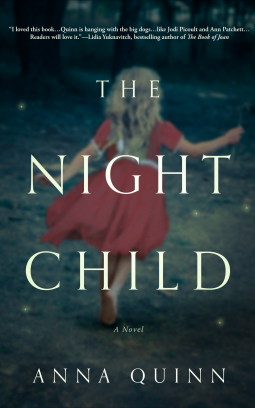
#BookReview ‘The Night Child’ by Anna Quinn #mystery

The Night Child by Anna Quinn caught me by surprise and took off racing from the first page so that I read half the book at my first sitting. But it is not a thriller, it was simply that I didn’t want to stop reading. I confess to selecting the book on my Kindle having forgotten the book blurb; perhaps I should do that more often. Anna QuinnNora Brown teaches teenagers about Shakespeare and poetry; so she knows about the imagination, imagery and dreams. Then one day at work, floating in front of her she sees the face of a blue-eyed girl, a face without a body. Quinn writes about Nora’s fear, panic, guilt, shame, with an insight into the private mind and this made me believe Nora from page one. Seeking answers, she talks to a psychiatrist and so starts an unravelling of Nora’s past, a past buried so deep she had no idea of its existence. As the revelations pick up pace, she must deal with a damaged teenager at school, decide whether to confront her unfaithful husband Paul, and reassure her six-year-old daughter Fiona. Stress layered on top of stress, which makes the child’s face appear more often. Soon she hears the accompanying voice too.
Why have Nora’s difficulties started now? Is there a connection with Fiona, who has just celebrated her sixth birthday? Is the trigger to do with Nora’s own sixth birthday? At the root of it all, perhaps not surprisingly, is the death of her mother and the subsequent abandonment by her father. The only constant in her life is her younger brother James. Raised by their grandfather in Ireland, Irish myths and Catholic saints are woven throughout Nora’s story. The present day action takes place between Thanksgiving in November 1996 and February 1997.
This is the sort of book which makes you think ‘please not that’ and turn the page to see if you have guessed correctly. The subject is not new but Quinn approaches it from a fresh angle which shows how the impact of childhood unhappiness can be repressed only to reappear with a vengeance decades later. I liked Nora. She is not a victim. At first she is afraid she is going ‘crazy’. Her primal instinct is to protect her own child, she constantly reassures Fiona that she loves her ‘beyond the stars and back’. But as the memories begin to return thick and fast in her sessions with psychiatrist David, things also unravel at home as Paul accuses her of being ‘a zombie’. David reminds her that she is in control but to ‘be careful not to scare yourself’. Where will the memories lead her and will she be able to cope?
I really enjoyed this book. It came as a bolt out of the blue after having read a series of historical novels. It is a powerful and sensitive portrayal of emotional damage and a person’s capacity to face it and recover. This is a debut, but I would never have guessed, it is written with a steady hand and full heart. The juxtaposition of Quinn’s beautiful prose, and her subject matter, is startling.
CLICK HERE TO READ MORE ABOUT THIS BOOK

If you like this, try:-
‘The Hoarder’ by Jess Kidd
‘The Crows of Beara’ by Julie Christine Johnson
‘Something to Hide’ by Deborah Moggach

And if you’d like to tweet a link to THIS post, here’s my suggested tweet:
#BookReview THE NIGHT CHILD by Anna Quinn https://wp.me/p5gEM4-36G via @SandraDanby

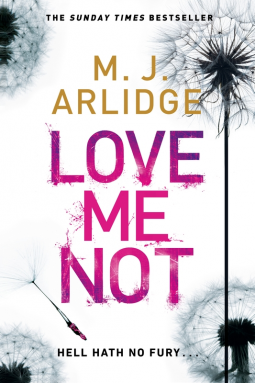
#BookReview ‘Love Me Not’ by @mjarlidge #crimefiction

Every book in the Helen Grace series by MJ Arlidge is fast-moving, but Love Me Not is the fastest of them all. The action happens, almost exclusively, in one day. It starts in the early morning when a commuter is shot on a rural road. Why kill a respectable wife and mother who has a socially-responsible job? As the day progresses there are more shootings around Southampton, each victim seems completely different from the others. Where is the pattern? MJ ArlidgeThis story is different in that the action is not focussed so much on Helen Grace and, with the exception of a few references to previous books, can be read as a standalone story. There is a gunman on the loose, shooting people at random. Or is it two gunmen? As the victims start to pile-up, a pattern begins to emerge. Will the police identify the shooters in time to stop another murder? Why are the killers staying so close to Southampton? The point-blank callousness of the murders is chilling. When the answers are found, they are unfortunately all too believable. The reader, unlike the police, knows the who but not the why and that’s what keeps the pages turning.
As always with this series, the hunt for a killer is underlain by tensions within the police team. Some of these tensions are caused by Helen herself, as always a challenging, flawed but dynamic character. It is good to see continuing characters such as Charlie Brooks and Emilia Garanita.
I read this in 24 hours.

Read my reviews other books in this series:-
EENY MEENY #1HELENGRACE
POP GOES THE WEASEL #2HELENGRACE
THE DOLL’S HOUSE #3HELENGRACE
LIAR LIAR #4HELENGRACE
LITTLE BOY BLUE #5HELENGRACE
HIDE AND SEEK #6HELENGRACE
DOWN TO THE WOODS #8 HELENGRACE

If you like this, try:-
‘Darktown’ by Thomas Mullen
‘Jellyfish’ by Lev D Lewis
‘A Mind to Murder’ by PD James

And if you’d like to tweet a link to THIS post, here’s my suggested tweet:
#BookReview LOVE ME NOT by @mjarlidge http://wp.me/p5gEM4-2PL via @SandraDanby

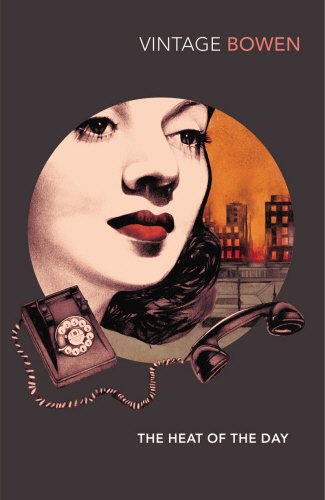
#BookReview ‘The Heat of the Day’ by Elizabeth Bowen #WW2

For readers, this novel is a definite case for remembering to ‘trust the author.’ The Heat of the Day by Elizabeth Bowen, published in 1949, is now recognised as a classic novel about the Second World War. Elizabeth BowenStella Rodney has relationships with two men, her lover Robert and Harrison, the man who suspects Robert of selling secrets to the enemy and sees this as a way of winning Stella’s love. This is not a spy novel, rather its threads and tentacles of story are woven as intricately as the lives of the three principal characters overlap with the bigger-scale events of war.
War is at the centre of it all, brooding over every minute, every decision, every pause. London, emptied of evacuees and people fleeing for safety, becomes a smaller place where strangers wish each other good luck in anticipation of that night’s bombing, where you awake in the morning and realize you are still alive. ‘Out of mists of morning charred by the smoke from ruins each day rose to a height of unmisty glitter; between the last sunset and first note of the siren the darkening glassy tenseness of evening was drawn fine. From the moment of waking you tasted the sweet autumn not less because of an acridity on the tongue and nostrils; and as the singed dust settled and smoke diluted you felt more and more called upon to observe the daytime as a pure and curious holiday from fear.’ On the whole though, the war is absent from the page. This is a story about people in extra-ordinary times.
The storyline is at times perplexing and vague and it is at those moments that I remembered to trust Elizabeth Bowen and enjoy to her language. This is the first of her novels I have read. Her stated interest was in the contrasts between life ‘with the lid on’ and what happens ‘when the lid comes off’. In The Heat of the Day, war causes the lid to be lifted. The theme of time runs throughout the novel. Daily life in London goes on but as if time is suspended from normality. Shackles have been removed and people behave differently, carelessness is common. It is in this vacuum that Stella, who lives in a rented furnished apartment with few things of her own, is given an ultimatum by Harrison. Louie, another displaced woman living in London waiting for her soldier husband who may or may not come home, appears in the first chapter as she listens to a band play in a park. Both women lie to the men in their lives, both have sex outside their monogamous relationships. Neither Robert or Harrison are as they seem. Harrison’s job is never explained, and Robert’s supposed treachery remains ill-defined.
This is a novel of shadows, appropriate as most of the novel happens at night during the blackout when the way is lit by torchlight and people blunder into furniture in darkened rooms. A very different read.

If you like this, try:-
‘The Slaves of Solitude’ by Patrick Hamilton
‘At Mrs Lippincote’s’ by Elizabeth Taylor
‘The Paying Guests’ by Sarah Waters

And if you’d like to tweet a link to THIS post, here’s my suggested tweet:
#BookReview THE HEAT OF THE DAY by Elizabeth Bowen http://wp.me/p5gEM4-2OV via @SandraDanby

#BookReview ‘Offshore’ by Penelope Fitzgerald #contemporary

This is a slim, powerful novel about a small community of people living on houseboats on the River Thames at Battersea Reach in 1960s London. Anchored on the southern shore, next to the warehouses, brewery and rubbish disposal centre, they long to be positioned on the prosperous Chelsea shore opposite. In Offshore, Penelope Fitzgerald draws you into the world of Dreadnought, Grace, Maurice, Lord Jim and Rochester – those are the boats – and their occupants. Penelope FitzgeraldThey live in close, intimate proximity as the boats are tied to each other, only one is fastened to the wharf. Despite this, each person lives in an individual island of loneliness caused by marriage, poverty, sexuality, or just being different. Their lives are governed by tidal movement. ‘On every barge on the Reach a very faint ominous tap, no louder than the door of a cupboard shutting, would be followed by louder ones from every strake, timber and weatherboard, a fusillade of thunderous creaking, and even groans that seemed human. The crazy old vessels, riding high in the water without cargo, awaited their owner’s return.’
The people are inter-dependent but don’t know it until a crisis happens. The catalyst is Nenna, a young mother separated from her husband. She lives on Grace with her two children, Tilda and Martha, who run wild in the mud. One day, when they find antique painted tiles and sell them at an antiques shop on King’s Road, the two children seem more mature and capable than their mother. Nenna’s neighbours act as counsellors, offering marriage advice, boat help, and babysitting services. Richard, the de facto leader of the boat community, worries that his wife is bored and wants to retire to a house advertised in Country Life magazine. Meanwhile Willis, a struggling artist, who lives on Dreadnought, has a leak. This endangers his plan to sell the boat.
A beautifully-written thoughtful novel showing how very different people can rub along together.
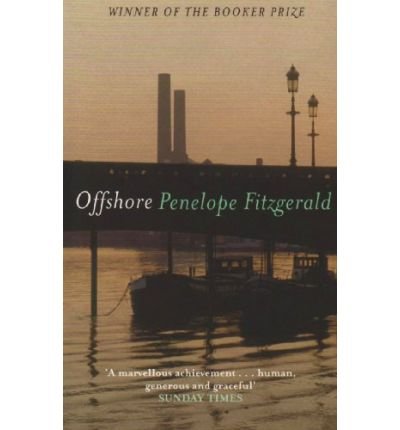
Offshore won the Booker Prize in 1979, a year sandwiched between Iris Murdoch in 1978 for The Sea The Sea, and Rites of Passage by William Golding in 1980. Fitzgerald had been shortlisted the previous year for The Bookshop and would be again in 1988 with The Beginning of Spring. What a golden time that was. Penelope FitzgeraldMy paperback copy of Offshore [above] is an old Fourth Estate edition with a moody photo of the River Thames at dusk.

Read my review of THE BLUE FLOWER, also by Penelope Fitzgerald.

If you like this, try these other Booker-winning novelists:-
Life Class’ by Pat Barker [won the Booker in 1995 with ‘The Ghost Road’]
Mothering Sunday’ by Graham Swift [won the Booker in 1996 for ‘Last Orders’]
The Children Act’ by Ian McEwan [won the Booker in 1998 with ‘Amsterdam’]

And if you’d like to tweet a link to THIS post, here’s my suggested tweet:
#BookReview OFFSHORE by Penelope Fitzgerald via @SandraDanby http://wp.me/p5gEM4-2n2

#BookReview ‘In the Midst of Winter’ by Isabel Allende #contemporary

In the Midst of Winter by Isabel Allende is the story of three ordinary-looking people, people you would not glance at if you passed by them in the street, and their extra-ordinary lives. Each has faced loss and trauma, each feels isolated, lonely. Isabel AllendeLaced throughout this deceptive novel are themes of dislocation, grief, human trafficking and the courage to free oneself of these bonds. Set in modern-day Brooklyn and Guatemala, and 1970s Chile and Brazil, it is the story of people relocated thousands of miles away from family to new countries with strange languages and customs where against the odds they must begin a new life.
Richard, Lucia and Evelyn are thrown together in Brooklyn, New York, during a momentous snowstorm. Evelyn, a young illegal immigrant from Guatemala, borrows her employer’s car and in the storm crashes into Richard. Richard is in his sixties, a loner, aesthete and reformed alcoholic, he lives his life according to routine. But when the car crash upsets his rigid ordered life, he is forced to halt his almost OCD existence and do unpredictable, often rash, things. When Evelyn turns up on his doorstep, hours after the crash, he is unable to understand her Spanish and asks Lucia, university colleague and tenant of the basement flat of his freezing cold Brooklyn brownstone, to come upstairs and help him with the hysterical girl.
The reason for Evelyn’s hysteria becomes clear the next morning. What they choose to do next constitutes In the Midst of Winter. It is a road trip with a difference as the trio set off in convoy in two cars, into a snowstorm, with a task to complete. Their choice dominates the book and, though I found it well-meaning, it seemed emotional and impractical. The journey is the technique by which Allende tells their stories; each is an unburdening, a confession of their guilt, shame, offences and regrets. I lost myself in each of these stories and came back to the modern day strand with a clunk, as I remembered the choice these three people made. It feels surrealistic, as if their horrific ‘problem’ [the reason for the road trip] doesn’t exist. The writing is beautiful, particularly the description of snow, though the stories of abuse are harrowing.
Essentially Allende tells two stories – the accident; and the historical stories of Richard, Lucia and Evelyn. They start as strangers and by the end of the trip they have shared more than a car, their experience bonds them together and shows them a life different from their own. The snowstorm has a double effect. It acts as a vacuum in which the outside world has zero presence, in which these three strangers must react to their discovery and decide what action to take. Perhaps this explains their out-of-the-real-world decision. It also focuses a magnifying glass on each individual as they confess their story, sometimes for the first time, offering themselves up to the other two strangers for rejection or redemption. In the first half I got the backstories of Lucia and Evelyn confused, but as the story went on this became clearer.
This is an unusual story exploring how ordinary people are affected by legal and illegal immigration from South America to the United States, of gang violence, trafficking and exploitation, of the American immigration rules, and of the perils of living outside the law. Which is a lot to handle in one novel. But most of all, it is the story of three people and how they struggle to overcome the challenges which life presents to them, finding friendship at the end.

If you like this, try:-
‘Crow Blue’ by Adriana Lisboa
‘Something to Hide’ by Deborah Moggach
‘Summer House with Swimming Pool’ by Herman Kock

And if you’d like to tweet a link to THIS post, here’s my suggested tweet:
#BookReview IN THE MIDST OF WINTER by Isabel Allende https://wp.me/p5gEM4-36C via @SandraDanby