Tag Archives: novels set in WW2

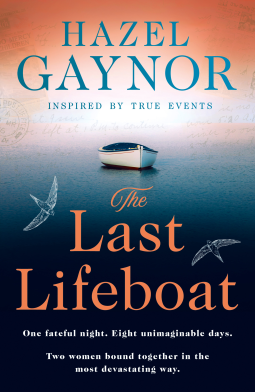
#BookReview ‘The Last Lifeboat’ by Hazel Gaynor @HazelGaynor #WW2

What an emotional rollercoaster this book is. I’ve read a lot of fiction set during World War Two but The Last Lifeboat by Hazel Gaynor is a new take on wartime conflict and its effect on ordinary people. Children are being evacuated on ships, sent to safety in Canada, travelling in convoy across the Atlantic where German u-boats wait to attack. When the worst happens, Gaynor asks what does it take to survive?Hazel GaynorEngland 1940. After a short first chapter set in the lifeboat immediately after the u-boat attack, the story tracks back four months earlier. Alice King is a schoolteacher-now-librarian in Kent, a quiet job in a quiet place, but she longs to do something with her life. In London, widow Lily Nicholls considers the hard decision to send her two children, Georgie ten and younger brother Arthur, on an evacuation ship to Canada. Invasion threatens and the Blitz is just beginning. Lily struggles with competing fears, that her children may be killed in the bombing expected in London or that having sent them away for their safety they may die en-route or stay in Canada so she will never see them again. Lily is a daily help at a household in Richmond. Her employer Mrs Carr has already sent her two eldest children privately to Canada and the third, Molly, will go as soon as she’s recovered from a horse-riding accident. Deciding to register Georgie and Arthur and decide nearer the time, Lily queues next to a woman who introduces herself as mother of five Ada Fortune.
When Lily says goodbye to her children, she hands them into the care of ‘Auntie Alice,’ an escort with the Children’s Overseas Reception Board [CORB]. It is Alice’s first journey and she is excited, nervous, and worried about her pregnant sister Kitty left home alone. When the ship is torpedoed at night by a German u-boat there is enormous confusion. It is dark, disorientating, most people are asleep, distress drills forgotten. Alice finds herself the lone woman in a lifeboat of men and seven children, some from her own group, others are strangers. Thirty-five souls.
The story unfolds – and we already know Alice will be adrift in a lifeboat – through the eyes of Alice and Lily. It’s a slow mover at first as the scene is set but after the sinking, both women are waiting. One is hoping for rescue not daring to think of the alternative, the other hopeful then despairing, finally angry. Gaynor is especially good at writing the children, their characters, their influence on the adults, their bravery and ability to look beyond the horrible present up to the stars in the sky.
Inspired by the real life sinking in September 1940 of a vessel carrying ‘seavacuees,’ child refugees, Gaynor has brought new air to a story that made headlines and generated many letters of complaints when it happened, but is unfamiliar today. I’ve not been disappointed by a novel by Hazel Gaynor yet, she’s fast becoming one of my must-read authors.

Try the #FirstPara of THE LAST LIFEBOAT.

Read my reviews of these other novels by Hazel Gaynor:-
THE BIRD IN THE BAMBOO CAGE
THE COTTINGLEY SECRET

If you like this, try:-
The Collaborator’s Daughter’ by Eva Glyn
The Garden of Angels’ by David Hewson
A Beautiful Spy’ by Rachel Hore

And if you’d like to tweet a link to THIS post, here’s my suggested tweet:
#BookReview THE LAST LIFEBOAT by Hazel Gaynor @HazelGaynor https://wp.me/p2ZHJe-7au via @SandraDanby

COMING SOON… THE NEXT BOOK I REVIEW WILL BE:- Suzanne Collins

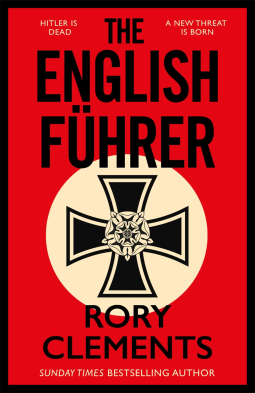
#BookReview ‘The English Führer’ by Rory Clements #thriller #WW2

It is autumn 1945 and Cambridge history professor Tom Wilde, American citizen, has returned to his daytime job. The war is over. Or is it. The English Führer, seventh in the Tom Wilde spy series by Rory Clements, hits the ground running as a Japanese submarine waits off the coast of Norfolk. Rory ClementsYet again, Tom and his wife Lydia are in danger. But Lydia is living in a hostel in London as she trains as a doctor – pretending to be a single woman in order to qualify for study – while Tom and Johnny have a new housekeeper at home in Cambridge. When the quiet Norfolk village next to an American airbase is subjected to a strange plague, its residents dead and dying, Wilde finds himself pulled back into the world of the security services. He calls on familiar faces – Philip Eaton of MI6, ‘Dagger’ Templeman of MI5, old friend and GP Rupert Weir and Bill Donovan, Wilde’s old boss of America’s wartime security service, Office of Strategic Services [OSS] – and new ones, some of whom may not be who they appear to be. As a spy during the war, Tom has grown used to dissembling but acting a role is a new territory for Lydia who must convincingly appear to be unmarried and not a mother, or be thrown out of St Ursula’s Hospital Medical School. New characters include Lydia’s fellow medical student, room-mate and addict of spy stories Miranda March; Danny Oswick, new history student with a dodgy moustache and even dodgier past; and widow Syliva Keane who moves into the Wilde house as Tom’s new housekeeper in Cambridge but who disappears once a week.
As previously, Wilde must work out who to trust, treading a fine line between wrong and right, to get to the heart of the truth. What is a Japanese biological weapon doing in England and who are the plotters? Japanese. Fascists. Communists. The clues are myriad and the web woven by Clements is at times impenetrable, the story telling is compelling.
A series that is so addictive that when you finish one book you want to start the next immediately.

Click the title to read my reviews of the other books in the Tom Wilde series:-
CORPUS #1TOMWILDE
NUCLEUS #2TOMWILDE
NEMESIS #3TOMWILDE

HITLER’S SECRET #4TOMWILDE
A PRINCE AND A SPY #5TOMWILDE
THE MAN IN THE BUNKER #6TOMWILDE
A COLD WIND FROM MOSCOW #8TOMWILDE

And from the Sebastian Wolff series:-
MUNICH WOLF #1SEBASTIANWOLFF
EVIL IN HIGH PLACES #2SEBASTIANWOLFF
INVITATION FROM A DICTATOR #3SEBASTIANWOLFF

If you like this, try:-
‘The Diamond Eye’ by Kate Quinn
The Partisan’ by Patrick Worrall
An Officer and a Spy’ by Robert Harris

And if you’d like to tweet a link to THIS post, here’s my suggested tweet:
#BookReview THE ENGLISH FÜHRER by Rory Clements https://wp.me/p2ZHJe-6tH via @SandraDanby

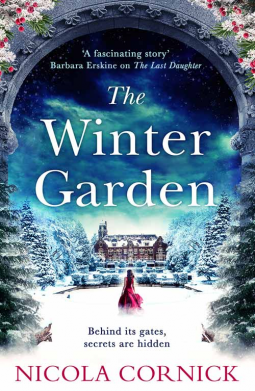
COMING SOON… THE NEXT BOOK I REVIEW WILL BE:- Nicola Cornick
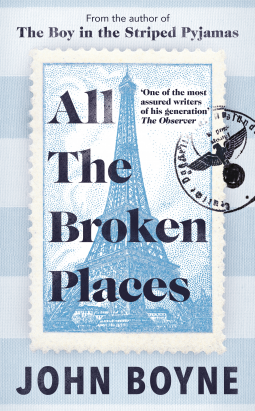
#BookReview ‘All the Broken Places’ by John Boyne @JohnBoyneBooks #WW2

John Boyne is a fine writer. All the Broken Places, his sequel to The Boy in the Striped Pyjamas, examines the nature of grief and guilt, of living a long life of secrets. Its some years since I read The Boy in the Striped Pyjamas but All the Broken Places stands on its own and can be read independently. John BoyneGretel Fernsby is ninety-one. It is London 2022 as she nervously awaits the new neighbours expected to move into the downstairs flat. She likes familiarity, routine, being anonymous. Gretel carries the guilt of something that happened in the war and which she has hidden, and lived with, for eighty years. The opening sentence sets up the story succinctly. ‘If every man is guilty of all the good he did not do, as Voltaire suggested, then I have spent a lifetime convincing myself that I am innocent of all the bad.’ Boyne explores the concepts of individual and collective guilt, of the sin of inaction, of the culpability of children and the offence of looking away.
Gretel’s younger brother was The Boy in the Striped Pyjamas, their father commandant at Auschwitz. She buried all memories of her brother, unable to speak his name or say it silently in her own head, but is unable to forget him. We follow her life after the war, to France and Australia and finally to England. Always, she lives a life of secrets. Until the past comes bursting forth when nine-year old Henry moves in downstairs and Gretel sees his tears, his bruises, his silences. The memories come flooding back. As she considers whether to step in and defend Henry, she must risk revealing what she has hidden for eighty years. Will Gretel find a kind of peace?
It’s the best book I’ve read so far in 2023. There are surprises at the end, some beautiful detail. Emotional but never sentimental, Boyne doesn’t shy away from the horror of the Holocaust. Powerful and uncomfortable.

Click the title to read my reviews of these other novels by John Boyne:-
A HISTORY OF LONELINESS
A LADDER TO THE SKY
A TRAVELLER AT THE GATES OF WISDOM
STAY WHERE YOU ARE AND THEN LEAVE
THE HEART’S INVISIBLE FURIES… Curious? Read the #FirstPara of THE HEART’S INVISIBLE FURIES here.
WATER #1ELEMENTS
EARTH #2ELEMENTS

If you like this, try:-
‘The Aftermath’ by Rhidian Brook
Inflicted’ by Ria Frances
The Bird in the Bamboo Cage’ by Hazel Gaynor

And if you’d like to tweet a link to THIS post, here’s my suggested tweet:
#BookReview ALL THE BROKEN PLACES by John Boyne @JohnBoyneBooks https://wp.me/p2ZHJe-646 via @SandraDanby

COMING SOON… THE NEXT BOOK I REVIEW WILL BE:-
Fiona Leitch

#BookReview ‘The Man in the Bunker’ by Rory Clements #thriller #WW2

The Man in the Bunker by Rory Clements gripped me from beginning to end. It starts at the end of the Second World War when spy Tom Wilde thinks real life is beginning again. But the dilemma is in the book’s title. Who was the dead man in the bunker in Berlin? Were the burnt remains really that of Hitler? If not, where is he? Rory ClementsThis is the sixth in Clements’ thriller series about American historian-turned-spy Wilde who spends the war working for the English and American secret services, and each of them has been unputdownable. It is now late summer 1945 and the European war is over. Germany is defeated, in ruins, starving and with millions of Holocaust survivors, displaced people and refugees. The country has been carved up between the allied forces to bring security and discipline but it is a world in which it is easy to disappear, to reinvent yourself. It is a world in which lies are told for survival. As in the previous Wilde books, it is difficult to know who is telling the truth, who is lying and why. Clements is a consummate thriller writer who writes with emotional depth, political intrigue and historical research.
The action starts at a running pace and never stops. Two men are killed on a remote road in southern Bavaria. In Cambridge, history professor Tom Wilde is anticipating the arrival of new undergraduates and his wife Lydia is applying to study medicine. Then three visitors arrive with an incredible request. Wilde must find Adolf Hitler. At first Wilde laughs, then he refuses. That night, Lydia says he will regret refusing. The next day Wilde changes his mind. First, he questions some German scientists who are imprisoned near Cambridge, their rooms bugged, their conversations and gossip recorded. A clue leads Wilde to Garmisch where he teams up with the unpredictable Lieutenant Mozes Heck, a Dutch Jew who hates the Nazis. As they identify Nazis who were close to Hitler, their progress is continually impeded by the conditions in defeated Germany; starvation, bomb damage, medical crisis and the flood of Holocaust survivors and misplaced citizens. And by Heck’s secret, personal mission.
The ending is particularly intriguing. Is The Man in the Bunker the final book of the Tom Wilde story or will it morph into a Cold War series?

Click the title to read my reviews of the other books in the Tom Wilde series:-
CORPUS #1TOMWILDE
NUCLEUS #2TOMWILDE
NEMESIS #3TOMWILDE

HITLER’S SECRET #4TOMWILDE
A PRINCE AND A SPY #5TOMWILDE
THE ENGLISH FUHRER #7TOMWILDE
A COLD WIND FROM MOSCOW #8TOMWILDE

And from the Sebastian Wolff series:-
MUNICH WOLF #1SEBASTIANWOLFF
EVIL IN HIGH PLACES #2SEBASTIANWOLFF
INVITATION FROM A DICTATOR #3SEBASTIANWOLFF

If you like this, try:-
Exposure’ by Helen Dunmore
V2’ by Robert Harris
The Second Midnight’ by Andrew Taylor

And if you’d like to tweet a link to THIS post, here’s my suggested tweet:
#BookReview THE MAN IN THE BUNKER by Rory Clements https://wp.me/p5gEM4-5o5 via @SandraDanby

#BookReview ‘The Camomile Lawn’ by Mary Wesley #WW2

It’s many years since I first read The Camomile Lawn by  Mary Wesley. I remember liking it, and that one of the characters is called Calypso, but nothing else. So it was with delight that I read the wartime story of Calypso and her four cousins – Oliver, Polly, Walter and Sophy. It renewed my intention to re-read all Wesley’s novels. Mary WesleyThe story is enrichened by the mode of telling. It starts in Cornwall in the summer of 1939 as the cousins of assorted ages gather for what will be the last time. There is a poignancy hanging in the air as the run their ritual race, The Terror Run, along the clifftop path, joined by their neighbours, the Floyer twins.
The cousins are the children of the three Cuthbertson siblings – we see the parents only fleetingly, if not at all – but they are gathered at their Uncle Richard’s house and picnic on the camomile lawn. What follows are the piecemeal stories of individuals and how they overlap with each other as the war progresses. Overlaid, are short passages from the Eighties as they travel independently to Cornwall for a funeral. Drawn into the cousins’ stories are their neighbours, in Cornwall and London, wartime acquaintances, lovers, and refugees Max and Monika. Amidst the bombings, the rationing and the worries about loved ones fighting, Wesley tells a story of a family both united and separated, as individuals strike out on their own, liberated by wartime urgencies. There are affairs, unexpected babies, hints of underage sex, all without accusations of blame or betrayal. Each makes assumptions about the others, assumptions the reader may know are misplaced given we are privileged to see into the minds of each cousin, and sometimes assumptions which are proven right or wrong only at the very end of the novel.
Paths cross, diverge and cross again. Not everyone is nice, not everyone is honest. They are people getting through the war, trying to keep things together; some turn to drink and partying, one keeps guinea pigs, most feel emboldened by the openings presented to them by war. And all the time, fear lurks in the pit of their stomachs. And through it all, the house in Cornwall and memories of that last party on the camomile lawn, remind us of pre-war normality. At a time when ‘normal’ ceases to exist.
Very different from other wartime novels. Now a classic.

Read the #FirstPara of THE CAMOMILE LAWN

… and here’s my review of JUMPING THE QUEUE also by Wesley.

If you like this, try:-
‘The Guernsey Literary and Potato Peel Pie Society’ by Mary Ann Shaffer & Annie Barrows
Half of the Human Race’ by Antony Quinn
My Dear, I Wanted to Tell You’ by Louisa Young 

And if you’d like to tweet a link to THIS post, here’s my suggested tweet:
#BookReview THE CAMOMILE LAWN by Mary Wesley https://wp.me/p5gEM4-48g via @SandraDanby

#BookReview ‘A Prince and a Spy’ by Rory Clements #thriller #WW2

Rory Clements is fast becoming an author I turn to when I need a page-turning read to relax into. A Prince and a Spy is fifth in his Tom Wilde Second World War series and it doesn’t disappoint. Woven into true history of the conflict – the fatal crash in Scotland of the Duke of Kent’s plane, the holocaust – Clements adds real and fictional characters, intrigue and competing spies, to make this an enjoyable read. Rory ClementsWhen history professor Wilde returns by train home to Cambridge he bumps into a former student. Cazerove seems distracted, distressed, munching on a bag of sweets. Before the train reaches its destination, Cazerove dies of poisoning. So begins a typical Clements thriller – strong characters, true history and a string of unrelated incidents. When the Duke of Kent’s plane crashes on a remote hill in Scotland, the public is told his plane came down in heavy fog when taking off for Iceland on operational duties. In the world of A Prince and a Spy, the flying boat was returning from a secret diplomatic mission in Sweden where the Duke met his German cousin, a former member of the Nazi party. Wilde, working for the newly-established American secret intelligence service, OSS, is sent to Scotland to sniff around at the crash site and ask questions on behalf of his president. FDR wants to know why the plane crashed, was Prince George at the controls, was it shot down, and how did one person survive?
A keynote of this series is the multi-layering of rival spy agencies in the UK – the British, the Americans – the infiltration of Nazi agents, Soviet agitators and, in this book, a secret society. Clements is excellent at showing history through the eyes of fictional characters, a challenging task, and I particularly liked the Scottish segment with fisherman Jimmy Orde. A continuing thread from book to book is Wilde’s relationship with his partner Lydia, and Philip Eaton, the British spy who first involved Wilde in espionage. Clements twists reality in this book so Wilde doesn’t know who to trust, who to believe, and who is spying on him. So much so that at times, I lost track too.
An excellent weekend read.

Click the title to read my reviews of the other books in the Tom Wilde series:-
CORPUS #1TOMWILDE
NUCLEUS #2TOMWILDE
NEMESIS #3TOMWILDE

HITLER’S SECRET #4TOMWILDE
THE MAN IN THE BUNKER #6TOMWILDE
THE ENGLISH FUHRER #7TOMWILDE
A COLD WIND FROM MOSCOW #8TOMWILDE

And from the Sebastian Wolff series:-
MUNICH WOLF #1SEBASTIANWOLFF
EVIL IN HIGH PLACES #2SEBASTIANWOLFF
INVITATION FROM A DICTATOR #3SEBASTIANWOLFF

If you like this, try:-
Life After Life’ by Kate Atkinson
The Aftermath’ by Rhidian Brook
Midnight in Europe’ by Alan Furst

And if you’d like to tweet a link to THIS post, here’s my suggested tweet:
#BookReview A PRINCE AND A SPY by Rory Clements https://wp.me/p5gEM4-574 via @SandraDanby

#BookReview ‘Transcription’ by Kate Atkinson #WW2

Few of the characters in Transcription by Kate Atkinson are who they seem to be. A novel of the Second World War, Transcription suggests that the ripples of wartime secrecy spread out through the following years so that outstanding lies and betrayals are eventually repaid. Many years later. Kate AtkinsonIn 1940, Juliet Armstrong intends to join one of the women’s armed forces when she receives a letter on government notepaper and is summoned to an interview. After being informed by telegram that she has got the, still unspecified, job, Juliet boards a bus which takes her to Wormwood Scrubs prison, now converted into government offices. There she works in Registry, shuffling files around, until Perry Gibbons says, ‘I need a girl’ and Juliet finds herself working for Perry’s MI5 counter-fascism team at a flat in Dolphin Square.
Told across two timelines, 1940 and 1950 – with a brief glimpse at 1981 in the prologue and epilogue – Transcription has a huge cast of characters, most of whom I confused and, I suspect, Atkinson wishes me to confuse. Some characters are spies with cover names, some are only described and have no name while others seem innocent, too innocent to actually be innocent. If this is all confusing, it is meant to be. That is Atkinson’s point. This is a story about the importance of truth and how lies, which seem pragmatic and normal in wartime, are still lies. And that the most obvious traitors are not always the ones to be worried about.
The 1940 storyline covers the MI5 operation. At first, Juliet’s job is type up transcripts of bugged conversations between fascist supporters in the next door flat; later she takes on the persona of Iris to infiltrate a group of fascist agitators. Sometimes she fluffs her lines, sometimes she is impulsive and gets into trouble. At all times she feels isolated and unsure of the value of what she is doing. She is also a young woman and looks for signs of interest from the men surrounding her. In 1950, while working in the Schools Department of the BBC making educational radio programmes with titles such as ‘Can I Introduce You To?’ and ‘Have You Met?’, she sees familiar faces from her wartime days and the past revisits her.
Atkinson excels at the small detail which makes these workplaces convincing, creating believable relationships between Juliet and radio engineer Cyril at Dolphin Square, and with junior programme engineer Lester Pelling at the BBC. I enjoyed this book but wouldn’t describe it as a page turner. I’m not sure I liked Juliet but she held enough fascination for me as I tried to figure out what she did and didn’t believe in. I was never totally sure if I believed in her.
The Author’s Note at the end of the book is fascinating and perhaps would have served better as a Foreword. So, in summary, not my favourite Atkinson novel but not a bad one either.

Click the title to read my reviews of these other books by Kate Atkinson:-
A GOD IN RUINS
BIG SKY #5JACKSONBRODIE
DEATH AT THE SIGN OF THE ROOK #6JACKSONBRODIE
LIFE AFTER LIFE
NORMAL RULES DON’T APPLY
OUR NOBLE SELVES
SHRINES OF GAIETY
… and try the #FirstPara of EMOTIONALLY WEIRD

If you like this, try:-
The Heat of the Day’ by Elizabeth Bowen
After the Party’ by Cressida Connolly
Shelter’ by Sarah Franklin

And if you’d like to share a link:
#BookReview TRANSCRIPTION by Kate Atkinson https://wp.me/p5gEM4-4cx via @SandraDanby

#BookReview ‘Hitler’s Secret’ by Rory Clements #thriller #WW2

Fourth in the Tom Wilde World War Two spy mysteries, Hitler’s Secret by Rory Clements hits the ground running and keeps the pages turning. The secret in question is a ten-year old girl who may or may not be the love child of Hitler. Klara has a false identity and is hidden but is now in imminent danger of exposure and murder. Rory ClementsWilde travels to Berlin disguised as a German-American motorcycle manufacturer in search of a business deal. His cover enables him to meet allies and search for Klara. Unsure of his mission from the beginning, Wilde imagines that everyone can see through his false identity, everyone is planning to kill him. Clements tells the story at breakneck speed, flicking from viewpoint to viewpoint. Martin Bormann, Hitler’s gatekeeper wants Klara dead and despatches a henchman, Otto Kalt. But it seems everyone touched by Klara’s story is at risk of death. As Wilde closes in on Klara’s hiding place, so do her killers. What ensues is a tense chase north across Germany towards the promised sanctuary of Sweden. And at all times it is assumed Hitler is unaware of the girl’s existence. But who else knows the secret?
At the heart of this story is trust. Believing loyalty expressed at time of war can be a treacherous decision and at times Tom feels everyone has an agenda except him. Even his allies have their own motivations, their own friends and loyalties. Expecting to collect a ‘package’ in Berlin, he is horrified to find he is collecting a girl; he feels duped and used by his spy chiefs. And as Tom runs, it is impossible for him to identify his pursuers. His judgement is seriously challenged and he trusts no-one. What is on the surface a matter of shaming the perfect Adolf Hitler, so popular with his German female citizens, is at the same time a fight between the most elite of German officials.
Familiar characters from earlier books in the series recur: Tom’s partner Lydia, American diplomat Jim Vandenberg and Wilde’s contact at British intelligence, Philip Eaton. History professor Wilde is an affecting amateur spy, diligently learning the role he is assigned but relying on his instincts to get him out of trouble. Of course, the best laid plan can go wrong but this time the plan is not organised in advance and Tom is on his own. He will sink or swim and the few he trusts do not know if he is alive or dead.

Click the title to read my reviews of the other books in the Tom Wilde series:-
CORPUS #1TOMWILDE
NUCLEUS #2TOMWILDE
NEMESIS #3TOMWILDE

A PRINCE AND A SPY #5TOMWILDE
THE MAN IN THE BUNKER #6TOMWILDE
THE ENGLISH FUHRER #7TOMWILDE
A COLD WIND FROM MOSCOW #8TOMWILDE

And from the Sebastian Wolff series:-
MUNICH WOLF #1SEBASTIANWOLFF
EVIL IN HIGH PLACES #2SEBASTIANWOLFF
INVITATION FROM A DICTATOR #3SEBASTIANWOLFF

If you like this, try:-
The Ways of the World’ by Robert Goddard #1WIDEWORLD
Munich’ by Robert Harris
Five Days of Fog’ by Anna Freeman

And if you’d like to tweet a link to THIS post, here’s my suggested tweet:
#BookReview HITLER’S SECRET by Rory Clements https://wp.me/p5gEM4-47r via @SandraDanby

#BookReview ‘The Second Midnight’ by Andrew Taylor @AndrewJRTaylor #WW2

In The Second Midnight, Andrew Taylor unpicks the connections between a group of people – a dysfunctional family, spies, ordinary people – before, during and after World War Two in England and Czechoslovakia. Essentially it is a novel of relationships wrapped up in the parcel of wartime spying, lies and romance. In its scope it reminds me of Robert Goddard’s Wide World trilogy, except Taylor covers the subject in one book rather than three. Andrew TaylorIt is 1939 and twelve year old Hugh Kendall is bullied by his father, sighed over by his harried mother, ignored by his older brother and manipulated by his older sister. Hugh retreats into imaginative games with his toy soldiers. His father, failing glass importer Alfred Kendall, is recruited by the Secret Services as a courier on a glass-buying trip to Czechoslovakia. In tow is Hugh, recently expelled from school, a nuisance to his father. Alfred is not a natural spy, though he thinks he is. When things get sticky and Alfred must return to England, the Czech Resistance keeps Hugh as collateral to ensure his father’s quick return. But Hugh finds himself alone in Prague after the German invasion, unsure who to trust, unsure if he will be rescued. He quickly learns to live on his wits. This for me was the best section of the book.
The thing that makes this story stand apart for me is Hugh. He makes an uncanny narrator, giving us a view of life in an occupied country, stranded from everything that is safe and familiar. Adept at languages, Hugh quickly becomes familiar with Czech and German allowing him to assume a false identity as Rudi Messner, a Czech-Hungarian boy.  Cared for by a German officer, Colonel Helmut Scholl, Hugh works as the gardener’s boy at Scholl’s mansion in Prague and meets the colonel’s children, Heinz and Magda. These relationships weave across the years and the pages into the post-war years and the fight against communism.
The significance of the title left me wondering if I had missed something. It is set up with an intriguing connection between two characters, then abandoned. The connection with the Prologue was also lost on me as it is only mentioned again at the end and I had forgotten what happened; ends neatly tied without adding understanding. Taylor knows how to tell a page turning story, I read this quickly. This is a fascinating read over a complex time period, but an enormous subject; I wish it had been given the space of three books to explore fully.

Read my reviews of Andrew Taylor’s ‘Marwood & Lovett’ series that starts on the night of the Great Fire of London:-
THE ASHES OF LONDON #1FIREOFLONDON… and read the #FirstPara of THE ASHES OF LONDON
THE FIRE COURT #2FIREOFLONDON
THE KING’S EVIL #3FIREOFLONDON
THE LAST PROTECTOR #4FIREOFLONDON
THE ROYAL SECRET #5FIREOFLONDON
THE SHADOWS OF LONDON #6FIREOFLONDON

If you like this, try:-
Corpus’ by Rory Clements #1TOMWILDE
The Ways of the World’ by Robert Goddard #1WIDEWORLD
Five Days of Fog’ by Anna Freeman

And if you’d like to tweet a link to THIS post, here’s my suggested tweet:
#BookReview THE SECOND MIDNIGHT by Andrew Taylor @AndrewJRTaylor https://wp.me/p5gEM4-4gC via @SandraDanby

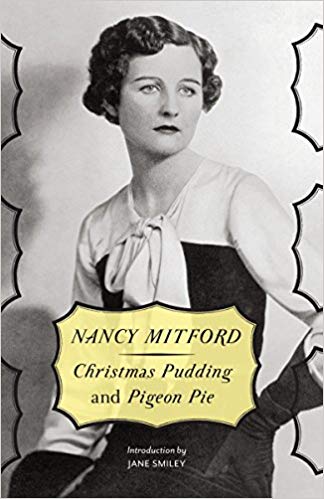
#BookReview ‘Pigeon Pie’ by Nancy Mitford #satire #historical

Pigeon Pie, the fourth novel of Nancy Mitford, was first published in 1940 by Hamish Hamilton. This was a serious error by its publisher given that Mitford wrote this light-hearted satire about wartime spying just before World War Two broke out in 1939. Not surprisingly, it was a commercial miss. Which is a shame. It is a funny, more tightly-plotted and disciplined novel than her first three and is a transition between her pre-war and post-war novels. Nancy MitfordAt the outbreak of war, Lady Sophia Garfield enrols at her nearest First Aid Post and is put in charge of the office, folding and counting laundry and taking telephone calls. As the book is set during the first few months of war, the Phoney War, not a lot happens for Sophia except endless first aid drills. She teases an acquaintance, Olga – who poses in the press as a mysterious Mata Hari figure – and lunches with inept friends Ned and Fred who work at the Ministry of Information. Then Sophia stumbles on a nest of spies; or counter-spies, or counter-counter spies, she’s not sure which.
Although her characters seem of a type with those of her first three novels – Mitford has a reputation for writing about the upper class, their extravagant and thoughtless lifestyles – in Pigeon Pie they are less cartoonish. Sophia particularly is interesting, drawn as she is into different worlds: her husband Luke’s enthusiasm for a new American religion, the Boston Brotherhood, brings new friends to dinner and a lodger upstairs; her godfather Sir Ivor King, aka The King of Song, disappears; journalist Rudolph Jocelyn enlists; and Sister Wordsworth at the Post is jolly and efficient about bandages and disinfectants and such like. Mitford weaves a plot of spies, kidnapping, bombs, code and general sneaking around, despite Sophia being unable to remember Morse Code and seeing codes in innocent messages.
This had me chuckling aloud.

Read my reviews of these other novels by Nancy Mitford:-
CHRISTMAS PUDDING
HIGHLAND FLING
LOVE IN A COLD CLIMATE
THE BLESSING
THE PURSUIT OF LOVE
WIGS ON THE GREEN

Read the #FirstPara of THE PURSUIT OF LOVE

If you like this, try these:-
‘The Paying Guests’ by Sarah Waters
‘The Heat of the Day’ by Elizabeth Bowen
‘The Slaves of Solitude’ by Patrick Hamilton

And if you’d like to tweet a link to THIS post, here’s my suggested tweet:
#BookReview PIGEON PIE by Nancy Mitford https://wp.me/p5gEM4-3h2 via @SandraDanby