Tag Archives: book review

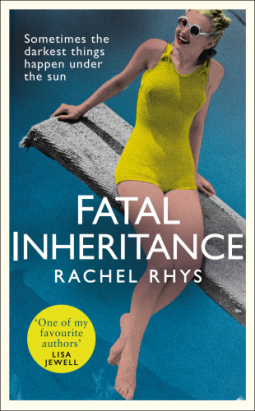
#BookReview ‘Fatal Inheritance’ by Rachel Rhys #romance #glamour

Fatal Inheritance by Rachel Rhys is a mystery set in the South of France three years after the end of World War Two. This is a glamorous place of sun and colours and beauty but which hides wartime shade and recriminations, canker beneath the luxury and smiles. Rachel RhysWhen Eve Forrester receives a solicitor’s letter promising ‘something to her advantage’, she leaves her husband in England and travels to Cap d’Antibes. Clifford disapproves of her journey, he thinks it inappropriate, a waste of time, doubts the veracity of the will of this mysterious Mr Guy Lester who Eve does not know. But Eve defies her husband and goes anyway, curious, listening to the inner voice which tells her there is more to life. This is a novel where you want to shout to the heroine, to encourage her onwards, to have strength to take a new path.
Eve inherits a part-share in the Villa La Perle at Cap d’Antibes, near neighbours are the Duke and Duchess of Windsor. Eve, in her ‘make do and mend’ clothing, is thrown into a glamorous social whirl of people she finds awkward, dismissive and arrogant. Rhys draws a layered picture of society where obvious wealth may hide troubled finances, make up and lipstick covers bruises, and smiles hide venom. It is a place where the locals avoid people and businesses which ‘helped’ the German occupiers, where memories of the war are fresh. In the middle of this, Eve struggles to understand her inheritance while delaying Guy Lester’s family from signing papers to sell the villa. And all the time, Eve wonders what Clifford is doing at home, knowing he disapproves of her being there, knowing he worries about the cost.
An entertaining novel in a beautiful, flawed setting – neatly mirroring the flawed people – not quite suspense, not quite a romance in the conventional sense. Rhys writes about women particularly well, not just Eve but the housekeeper Mrs Finch, actress Gloria Hayes, and fellow tourist Ruth Collett. I liked Eve, disliked her husband, and chuckled when the ‘love interest’ switched between surly to over-attentive. If I have one query, it is the solution to the mystery which comes rather out of left-field and left me feeling a little cheated. The ending, though, is unbelievably poignant. A great beach read.

And here’s my review of MURDER UNDER THE TUSCAN SUN, also by Rachel Rhys

If you like this, try:-
‘The Night Child’ by Anna Quinn
‘The Audacious Mendacity of Lily Green’ by Shelley Weiner
‘The Paying Guests’ by Sarah Waters

And if you’d like to tweet a link to THIS post, here’s my suggested tweet:
#BookReview FATAL INHERITANCE by Rachel Rhys https://wp.me/p5gEM4-3qA via @SandraDanby

My Porridge & Cream read: @janedavisauthor #books #literaryfiction

Today I’m delighted to welcome novelist Jane Davis. Her ‘Porridge & Cream’ read is The Prince of Tides by Pat Conroy.

“My list of favourite novels may change, but it is always topped by Pat Conroy’s, The Prince of Tides. Ignore the terrible film version – the book has everything. Family secrets, flawed characters, a doomed love affair.

“I read it for the first time many years before I contemplated writing, but it was books like this (and here I include the novels of John Irving and Michael Chabon) that must have sowed the seed.

“The first thing to say is that my choice is not your typical comfort read. The quote ‘We read to know that we are not alone’ is attributed to at least three different people. Perhaps that’s because it’s a universal truth. I find myself drawn to books about misfits and underdogs. (My latest ‘new favourite book’, Leonard and Hungry Paul by Ronan Hession, considers how gentle people survive in a world that is fast-paced and competitive.)

Jane Davis“The Prince of Tides has the power to transport the reader from the very first line.

My wound is geography. It is also my anchorage, my point of call.

“We know immediately that it is a novel about place. In fact, it’s a story where the setting is key. What unfolds in this epic and multi-layered family saga couldn’t have happened anywhere else. We know that a man is torn. Place is part of the narrator. It’s impossible for him to separate himself from it, and his family is part of its history. He is damaged, and it pains him to remain, but he cannot tear himself away.

I grew up slowly beside the tides and marshes of Colleton.

“To me, those lines are hypnotic. They seem to be saying, ‘Breathe. Pace yourself.’ Trust is established – or lost – so quickly. I can hear the narrator’s voice. He’s speaking directly to me. I don’t yet know the name Tom Wingo, but already I’m committed to accompanying him wherever his journey takes him. It is that simple.

“Because the story is told partly through conversations with Tom’s sister’s Savannah’s psychiatrist, it’s a story in which cause and effect is very much in evidence. In order to save his sister, Tom must break the promise that his mother extracted from her three children: never to reveal what happened on the island that night a man they refer to as “Callanwolde” escaped from prison. The call to action happens at a point when Tom has just learned that his wife is having an affair with a colleague, and so we meet him at what is already a low ebb. This may be a challenging read, but it’s also a story of survival, healing, honour and redemption. There is a sense that order is restored, and that is where the ‘comfort’ comes from.

“Odd though it may seem, I have never read another book by Pat Conroy. The Prince of Tides is so perfect, I’d be afraid of being disappointed. Instead, I return to it time and time again and never fail to uncover something that I’ve missed.”
Amazon UK

Jane Davis’s Bio
After her first novel Half-Truths and White Lies won an award established to find ‘the next Joanne Harris’, it took Jane a little while to work out that all she really wanted to be was a slightly shinier version of herself. Seven further novels followed, which straddle contemporary, historical, literary and women’s fiction genres, and have earned her comparisons to authors such as Kate Atkinson, Maggie O’Farrell and Jodi Picoult. Jane’s favourite description of fiction is ‘made-up truth’.

Jane Davis’s links
Website
Facebook 
Twitter
Pinterest
Get a FREE copy of her time-slip, photography-themed eBook, I Stopped Time, when you sign up to her mailing list

Jane Davis’s latest book
Jane DavisIt has taken conviction to right the wrongs.
It will take courage to learn how to live again.
For the families of the victims of the St Botolph and Old Billingsgate disaster, the undoing of a miscarriage of justice should be a cause for rejoicing. For more than thirteen years, the search for truth has eaten up everything. Marriages, families, health, careers and finances.

Finally, the coroner has ruled that the crowd did not contribute to their own deaths. Finally, now that lies have been unravelled and hypocrisies exposed, they can all get back to their lives.

If only it were that simple.
Amazon UK

What is a ‘Porridge & Cream’ book? It’s the book you turn to when you need a familiar read, when you are tired, ill, or out-of-sorts, where you know the story and love it. Where reading it is like slipping on your oldest, scruffiest slippers after walking for miles. Where does the name ‘Porridge & Cream’ come from? Cat Deerborn is a character in Susan Hill’s ‘Simon Serrailler’ detective series. Cat is a hard-worked GP, a widow with two children and she struggles from day-to-day. One night, after a particularly difficult day, she needs something familiar to read. From her bookshelf she selects ‘Love in A Cold Climate’ by Nancy Mitford. Do you have a favourite read which you return to again and again? If so, please send me a message.

Discover the ‘Porridge & Cream’ books of these authors:-
Rob V Biggs loves ‘Wind in the Willows’ by Kenneth Grahame
Linda Huber loves ‘A Cry in the Night’ by Mary Higgins Clark
Sue Moorcroft loves ‘A Town Like Alice’ by Nevil Shute

 And if you’d like to tweet a link to THIS post, here’s my suggested tweet:
Why does author @janedavisauthor re-read A PRINCE OF TIDES by PAT CONROY? #books https://wp.me/p5gEM4-3Br via @SandraDanby

#BookReview ‘The Turn of Midnight’ by Minette Walters #historical

You just know when the book you’ve just started reading is going to be 5*. For me, not many are. I read lots of good 3* and 4* books. I reserve 5* sparingly for the special ones. The Turn of Midnight by Minette Walters is one of those. It ticks so many boxes. Thriller, history, surprises, great characters and a tantalising bit of love from afar; Walters is a master storyteller. Minette Walters This is a story of a grim period in British history. The Black Death. Medieval England. Gruesome detail, and yet I stayed up late to finish it. Why, because she makes me love the characters and manages that delicate balancing act of giving me just enough historical detail to be interesting but not too much that it becomes tedious.
The Turn of Midnight is the sequel to The Last Hours which tells the story of the Black Death and its impact on the small Dorsetshire demesne of Develish. After the death of her husband from the plague his widow Lady Anne quarantines the demesne, introduces cleanliness routines and organises her healthy family, servants and serfs into a self-supporting and mutually-respectful society; unheard of in 1348. Woven into this story of survival is a romantic thread as Lady Anne and Thaddeus Thirkell, an illegitimate serf born on the demesne who Lady Anne has educated over the years to a standard of education greater than anyone else in the community excepting herself. Where The Last Hours is something of a closed room story with a tight-knit cast of characters and one location, The Turn of Midnight sees Thaddeus and a group of young men venture out into Dorsetshire to assess the dangers of the plague and the survival of other villages. When they return with a story of death, desertion and dereliction, a plan is formed to buy the neighbouring demesne of Pedle Hinton and so provide a home and farmland for the Develish citizens, the number of which has grown with the number of healthy wanderers they have adopted. But outside the demesne moat there are many enemies: bandits thieving and preying on the vulnerable, Norman soldiers who hate the English serfs, English serfs who hate anyone Norman, and corrupt priests, stewards and lords who swear they are acting in the name of God.
The plan is risky. Lady Anne and Thaddeus know that, although not robbing living people, they are taking possessions and gold which is not rightly theirs. It culminates in a struggle of religion, power and prejudice. Will common sense and the right of the people triumph? Whilst Lady Anne fights a battle against prejudice of her sex where she is better educated than the men who accuse her, Thaddeus similarly fights against prejudice of his worker roots and foreign tall dark physique.
Walters lives in Dorset and this shows in her sweeping creation of medieval Dorsetshire, she writes of the countryside, nature and the seasons with such surety you know she knows it well. This is a story of the first breaths of social mobility in a time of class hierarchy that prevented starving serfs from eating food meant for their lords, even though those lords are dead or have fled. Lady Anne’s common sense approach brings survival, health, basic education and hope for the future.
Excellent.

Read my reviews of these other historical novels by Minette Walters:-
THE LAST HOURS #1BLACKDEATH
THE PLAYERS
THE SWIFT AND THE HARRIER

If you like this, try:-
‘The French Lesson’ by Hallie Rubenhold
‘The Ashes of London’ by Andrew Taylor #1FIREOFLONDON
‘Foxlowe’ by Eleanor Wasserberg

And if you’d like to share a link:
#BookReview THE TURN OF MIDNIGHT by Minette Walters https://wp.me/p5gEM4-3xR via @SandraDanby

#Bookreview ‘The Marriage Plot’ by Jeffrey Eugenides #romance

The title of this, the third novel by Pulitzer Prize-winning author Jeffrey Eugenides, refers to the entanglements of three students and the plotting of Victorian romance novels. The Marriage Plot tells of the romantic, sexual, philosophical, religious and literary coming togethers/going aparts of a literature student Madeleine Hanna, scientist Leonard Bankhead and theology student Mitchell Grammaticus at Brown University in 1982 America. Jeffrey EugenidesIt is a tale of youthful assumptions, experimentations, dreams and disappointments. Perhaps it is a tale which will strike a chord with people of the same age as Madeleine, Leonard and Mitchell, rather than those who are older.
None of the three main characters are particularly likeable and at times the book gets bogged down in literary theory, philosophy, science and religious theory. Leonard is brilliant but a manic depressive, something which colours the entire book. The portrayal of his illness is convincing and shows the knife edge of pharmaceutical dosage needed to maintain a healthy mental balance. Leonard yo-yo’s back and forth, coping and not coping, at times allowing his manic tendencies to win. Madeleine accuses him of liking being depressed all the time. Mitchell is the idealistic one who goes to India to work for Mother Theresa’s Calcutta hospice and confronts some unpalatable truths. In comparison, Madeleine seems rather spoiled. Both men dote on her however and this is the spine which holds the story together: who will Madeleine finally choose?
Eugenides describes mundane things so beautifully. “Outside, the temperature, which had remained cold through March, had shot up into the fifties. The resulting thaw was alarming in its suddenness, drainpipes and gutters dripping, sidewalks puddling, streets flooded, a constant sound of water rushing downhill.” Simple writing at its best. But at other times the writing feels manic and not just in Leonard’s sections. There is an authorial indulgence with many clever asides from the plot and characters. I soon learned to read these parts slightly out-of-focus, not worrying for example that I didn’t grasp Leonard’s sections on yeast or Mitchell’s constant references to Something Beautiful for God, Malcolm Muggeridge’s book about Mother Theresa. The last third of the book passed much quicker than the first two.
The Marriage Plot is ambitious, as Middlesex was, and rightly so, but is perhaps the inevitable ‘difficult’ book after such a huge success. This will not deter me from reading Eugenides again.

Click the title to read the first paragraph of MIDDLESEX, also by Jeffrey Eugenides.

If you like this, try these:-
‘If I Knew You Were Going to Be This Beautiful, I Never Would Have Let You Go’ by Judy Chicurel
‘A Sudden Light’ by Garth Stein
‘Barkskins’ by Annie Proulx

And if you’d like to tweet a link to THIS post, here’s my suggested tweet:
#BookReview THE MARRIAGE PLOT by Jeffrey Eugenides via @SandraDanby http://wp.me/p5gEM4-2yP

#BookReview The Indelible Stain by Wendy Percival #genealogy #mystery

When the key character of a novel goes on holiday or visits a picturesque place, you know something is going to happen. Genealogist Esme Quentin in The Indelible Stain by Wendy Percival goes to Devon to help a friend archive the records of a local charity for underprivileged children. Second in the Esme Quentin genealogical mysteries, this is an enjoyable story of convict history set in a beautiful Devon location. But beneath that beauty lurk fraud, lies and revenge. Hatred and bitterness reach from the past to the current day. Wendy PercivalUp early on her first morning, Esme takes a walk on the wild beach and finds a body. The woman, just alive, seems to have fallen from the cliffs. Her last words, spoken to Esme, are key to the mystery which follows. “I lied,” she says. Beside her body is an old sepia photograph. The police don’t take seriously Esme’s concerns that the woman’s last words combined with the mystery photograph indicate foul play, so Esme decides to identify the family in the photograph.
Meanwhile, Neave Shaw is worrying about her mother who has disappeared after sending a confused, possibly drunken, email. Worried and not understanding her grandmother’s dismissive attitude to Bella’s disappearance, Neave presses for answers but is interrupted by a knock on the door. It is the police. Neave arrives in Warren Quay and asks Esme for help in understanding why her mother died. Esme quickly puts a name to one of the people in the sepia photograph: Sarah Baker, a thief who was transported as a convict in 1837. Sarah’s story adds a fascinating layer of history to this whodunnit and whydunnit mystery. But what is Sarah’s link to Neave’s dead mother? And did Bella fall or was she pushed? Esme’s research into Sarah’s convict history is helped by the presence of the Mary Ann, a restored nineteenth-century sailing ship with an on-board museum about the history of convict transportation.
The last few pages move at top speed as Esme discovers hidden identities and double-crossings and races to find Neave to warn her of danger. She knows that whoever killed Bella to protect the secret will not hesitate to kill again. I would have liked to read more about Sarah Baker’s journey on a convict ship to Australia and her life there, showing some of the facts rather than having Esme discover them in a dry record search. So much tantalising history lies beneath the surface of this story. I found some elements confusing at times as the story moves so fast and also because of the number of aliases and marriages; this might have been eased by merging or dropping some minor characters, for example Ruth/Maddy, Dan/Felix. But Percival’s characterisation of some minor characters was spot on; I particularly liked retired schoolteacher Miss Hodge and Neave’s irascible grandmother Gwen.
This is a well-paced genealogical thriller enriched by its Australian and Irish links and demonstrating how the resentment of wrongdoing can persevere across the generations.

Here’s my review of the first in the Esme Quentin series, BLOOD-TIED.

If you like this, try these:-
‘The Seven Deaths of Evelyn Hardcastle’ by Stuart Turton
‘Foxlowe’ by Eleanor Wasserberg
‘The Witchfinder’s Sister’ by Beth Underdown

And if you’d like to tweet a link to THIS post, here’s my suggested tweet:
#BookReview THE INDELIBLE STAIN by Wendy Percival https://wp.me/p5gEM4-3xs via @SandraDanby

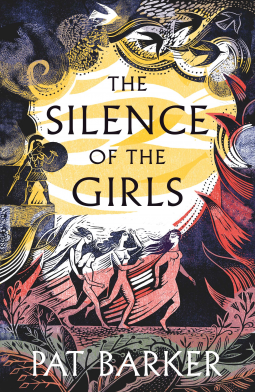
#BookReview ‘The Silence of the Girls’ by Pat Barker #historical #myths

What a tumult of emotions this book unleashes. The Silence of the Girls by Pat Barker is a re-telling of the Trojan War from the viewpoint of Briseis, a captured Trojan queen who is enslaved in the Greek camp and claimed by Achilles as a prize of war. No matter that he killed her husband and brothers; that was the way things worked. Women were chattels without a voice, without feelings. Pat BarkerThis is not a simple retelling of a myth, it is a comment on the danger of male-dominated warfare fuelled by anger, hate and a sense of competition while the women are treated as possessions. The first action of a conquering army was to slaughter all babies and pregnant women, to prevent more males being born which may be future enemies. Barker has long written about war, and about women; now she combines the two with a microscopic focus on Briseis. It is an emotional story, overwhelming at times. Some women adapt, others collapse; some fall in love with their captors. The details of daily life are steeped in realism – the butchering, the piss, the blood – and Barker makes you believe it all.
Structurally, the [albeit, short] sections that didn’t work for me were those told by Achilles. I was disappointed to leave Briseis and resented the intrusion of a male voice. In preference I would have preferred to hear from other women – Hecamede perhaps, Ritsa or Iphis – in the style of Barker’s first novel Union Street where the stories of the women intertwine so by the end of the book you have a full picture.
At the beginning I worried about getting my Homer and classical history references straight, but realised this was taking me away from Briseis’s story. As soon as I stopped trying to remember The Iliad, I became entirely wrapped up in the book. Pat Barker never disappoints. She writes with passion, anger and earthiness about war and is a writer who never shirks from the difficult stuff.
This is the first book in the Women of Troy trilogy.

Read my reviews of other Pat Barker novels:-
THE WOMEN OF TROY #2WOMENOFTROY
THE VOYAGE HOME #3WOMENOFTROY
LIFE CLASS #1LIFECLASS
TOBY’S ROOM #2LIFECLASS
NOONDAY #3LIFECLASS
ANOTHER WORLD
BLOW YOUR HOUSE DOWN
DOUBLE VISION
UNION STREET

If you like this, try:-
‘The House of Names’ by Colm Tóibín
‘Glorious Exploits’ by Ferdia Lennon
‘White Chrysanthemum’ by Mary Lynn Bracht

And if you’d like to share this post, try:
#BookReview THE SILENCE OF THE GIRLS by Pat Barker https://wp.me/p5gEM4-3An via @SandraDanby

#BookReview ‘The Only Story’ by Julian Barnes #love #romance

I seem to be developing a Marmite relationship with Julian Barnes. I loved his early work and The Sense of an Ending but had difficulty with his last novel The Noise of Time. So I approached The Only Story with trepidation. Julian BarnesMy stomach sank as I read the first page. The first paragraph poses a question: ‘Would you rather love the more, and suffer the more; or love the less, and suffer the less? That is, I think, finally, the only real question.” A pertinent question to which each of us has our own private answer. My difficulty with the first few pages is the lack of characterization; because it is told in the first person, we do not know who is speaking, there is no context. That of course comes later, and a few pages in its starts to warm up with the description of a tennis match. But ultimately I could not shake the perception that it was Julian Barnes the man speaking, not a fictional character, in the way American authors such as Wolfe and Roth seem to become characters in their own novels.
But this is a lesson in patience. I read on and the story started to come alive as the relationship of Paul and Susan unfolds. A teenager and a woman in her forties; it is first love for Paul but, as The Only Story is told completely from his perspective, we don’t know what it is to Susan. We only know what she tells him, not what she thinks. It is telling that one day after finishing the book, I could remember the name of his character but not hers.
The story is told in three parts: in the first flush of love; in the difficult times that follow, and as Paul looks back in later life. Barnes changes narrative voice from the immediate first person for nineteen-year old Paul, to a combination of first and second in the middle section; and the more distant third person in the final part, symbolic of the passing years and perhaps of pushing emotions and guilt away. The turning points in the novel are the turning points in the relationship, as love turns to familiarity, to duty and becomes a burden. I think the author intends The Only Story as a rumination on the nature of love, when in fact it is an account of a teenager learning that young love does not stay young love.
The writing is beautiful to read, as always with Barnes, but as the story progressed the pace slackened and I grew tired of repetition. I finished it wishing I had felt more engaged with the other characters in the story; Susan’s husband is a peripheral character who behaves oddly, and I would have loved to see more from her caustic friend Joan.
A sad story, but not a new one.

Click here to read my review of THE NOISE OF TIME, also by Julian Barnes.

If you like this, try:-
‘Curtain Call’ by Anthony Quinn
‘Fair Exchange’ by Michèle Roberts
‘The Roundabout Man’ by Clare Morrall

And if you’d like to tweet a link to THIS post, here’s my suggested tweet:
#BookReview THE ONLY STORY by Julian Barnes https://wp.me/p5gEM4-3pO via @SandraDanby

SaveSave

SaveSave

SaveSave

SaveSave

SaveSave

SaveSave

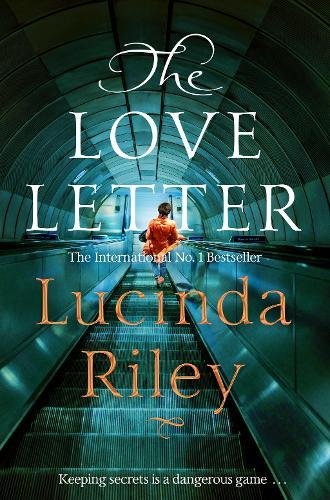
#BookReview ‘The Love Letter’ by Lucinda Riley #romance #suspense

The Love Letter by Lucinda Riley is a tightly written combination of mystery and romance unravelling the truths of a long ago love affair. Nothing and no one are as they first seem. As one secret is unveiled, so is another mystery. Lucinda RileyWhen 95-year old actor Sir James Harrison dies, journalist Joanna Haslam attends the memorial service where an incident with a frail elderly lady sets this story in motion. When a few days later Joanna receives a package from the lady, Rose, she visits her to ask questions only to find Rose has died. Is there a story here to write which will win her promotion on her tabloid newspaper? Untangling the truth from the lies turns out to be much more complicated and dangerous than Jo could ever have imagined.
Meanwhile Zoe Harrison, the actor’s grand-daughter, carer, and now facing life as a single mother with her son Jamie, receives a call from the former love of her life, Art. It is a while before the storylines of Jo and Zoe combine. The real identity of Art remains secret for quite a while though I had guessed before the reveal. Jo meanwhile has little luck in love and, after past betrayals, has difficulty trusting. There is a fully coloured-in cast of supporting characters – just enough, not too many – including Jo’s editor Alec and childhood friend Simon. Needless to say, everyone is pulled into the plot by the end.
About two-thirds of the way through what I thought was the plot solution turned out to be wrong and there was still a way to go. Although a bit confusing in parts as the intricate story flits from London to Ireland and France, I thoroughly enjoyed the spy element and the theatrical musical background of Sir James plus two good female leads in Jo and Zoe. More than just a romance, even if the plot gets slightly silly by the end. Definitely a page turner, I read it in two days on holiday.

Read my reviews of the novels in Lucinda Riley’s ‘Seven Sisters’ series:-
THE SEVEN SISTERS #1SEVENSISTERS
THE STORM SISTER #2SEVENSISTERS
THE SHADOW SISTER #3SEVENSISTERS
THE PEARL SISTER #4SEVENSISTERS
THE MOON SISTER #5SEVENSISTERS
THE SUN SISTER #6SEVENSISTERS
THE MISSING SISTER #7SEVENSISTERS
ATLAS: THE STORY OF PA SALT #8SEVENSISTERS

… plus my reviews of these standalone novels, also by Lucinda Riley:-
THE BUTTERFLY ROOM
THE GIRL ON THE CLIFF

… and by Lucinda Riley & Harry Whittaker:-
THE HIDDEN GIRL

If you like this, try:-
‘Vanishing Acts’ by Jodi Picoult
‘The House at the Edge of the World’ by Julia Rochester
‘Angel’ by Elizabeth Taylor

And if you’d like to tweet a link to THIS post, here’s my suggested tweet:
#BookReview THE LOVE LETTER by Lucinda Riley https://wp.me/p5gEM4-3xJ via @SandraDanby

#BookReview ‘The Burning Chambers’ by Kate Mosse #historical

The story starts in winter, 1562, in the South of France. In a prison in Toulouse, a man is being tortured, while in Carcassonne a young woman awakes from a bad dream, a sad memory. The Burning Chambers by Kate Mosse is heavy on atmosphere and historical detail and, like Mosse’s Languedoc trilogy, is slow to start. Despite my confusion, and I admit to being confused in parts for two-thirds of the book, I read on because Mosse is an expert storyteller who spins a tale and reels you in so you sit up late at night reading just one more chapter. Sometimes though, I wished she would cut some of the detail. Kate MosseThis is a story of religious war, of prejudice and violence, of loyalty and love, and principally a woman and a man who find themselves on opposite sides of the religious divide. Minou Joubert is a Catholic, the daughter of a bookseller who believes in selling books of all faiths for everyone to buy freely. When she receives an anonymous letter, sealed with a family insignia she does not recognize and comprising only five words ‘SHE KNOWS THAT YOU LIVE’, she is mystified. That same day, fate crosses her path as Huguenot convert Piet Reydon flees capture. And so starts this spiraling and twisting story of a fight for control of Toulouse between Catholics and Huguenots, the mysterious quest of Minou’s fragile father Bernard, Minou’s mysterious letter, a Bible, traitors who smile and friends who are taciturn. Letter forgotten, Minou and her young brother Aimeric are sent to Toulouse for their safety. There they stay with their mother’s aunt but find themselves in a bad-tempered house where Huguenots are hated and their uncle is a political agitator. Toulouse seems more dangerous than Carcassonne or is the danger following Minou?
Minou is a great heroine and I await the next installment of the series with curiosity. The Prologue and Epilogue hint that this is not a standalone book, set in 1862 in South Africa, a woman is seeking answers in a graveyard. Is this the beginning of book two?

And here are my reviews of other novels by Kate Mosse:-
CITADEL #3LANGUEDOC
THE CITY OF TEARS #2JOUBERT
THE TAXIDERMIST’S DAUGHTER

If you like this, try:-
‘In Another Life’ by Julie Christine Johnson
‘Fair Exchange’ by Michèle Roberts
‘The French Lesson’ by Hallie Rubenhold

And if you’d like to tweet a link to THIS post, here’s my suggested tweet:
#BookReview THE BURNING CHAMBERS by Kate Mosse https://wp.me/p5gEM4-3wV via @SandraDanby

#BookReview ‘Gilead’ by Marilynne Robinson #classic #Americanwriters

Gilead by Marilynne Robinson is a read like no other. A slow, contemplative journey through the memories of one man’s life, as he waits to die. In 1956, the Reverend John Ames writes a letter to his young son. It tugs the heartstrings. Marilynne Robinson Robinson writes with a clear unadorned style drawing heavily on biblical texts but it is not a religious tract, it is the story of a man’s life, his memories, his regrets and loves. The first few lines grabbed me and didn’t let me go. Do not start reading this book if you are feeling impatient. Some passages are easy and quick to read, others deserve more thought. It unwinds slowly like a length of thread, telling us the story of John Ames, his father and grandfather, the legacy of the Ames family which has been inherited by the Reverend’s seven-year old son.
I am not religious and some of the references will have passed me by. In the first half of the novel, I would think ‘oh no not another section about religion’, but as I read deeper into the book I became drawn into the stories of John Ames and his forebears and how their beliefs shaped their lives. I wanted to know what happened to John Ames Boughton, the troublesome son of his best friend and fellow reverend. I wanted to know how the Reverend Ames met his second wife. Some of the questions posed are not answered until the very end.
It is a peaceful novel, set against the backdrop of Fifties Iowa, which draws on local history including the Underground Railroad. Robinson draws a picture of the Gilead community, the people, their kindnesses, their grievances. She paints a clear picture. ‘We were very pious children from pious households in a fairly pious town.’
At times, the writing was so sublime I re-read. For example, ‘Sometimes I have loved the peacefulness of an ordinary Sunday. It is like standing in a newly planted garden after a warm rain. You can feel the silent and invisible life.’
Gilead, the second novel by Marilynne Robinson, won two prizes in 2005: the Pulitzer Prize for Fiction, the National Book Critics Circle Award. I came to it with trepidation, having respected the writing style of her first novel, Housekeeping but struggled with the pace of the narrative.

Try the #FirstPara of GILEAD here.

Read my reviews of Robinson’s other novels:-
HOME
HOUSEKEEPING
JACK

If you like this, try:-
‘Barkskins’ by Annie Proulx
‘Did You Ever Have a Family?’ by Bill Clegg
‘The Past’ by Tessa Hadley

And if you’d like to tweet a link to THIS post, here’s my suggested tweet:
#BookReview GILEAD by Marilynne Robinson via @SandraDanby http://wp.me/p5gEM4-2Cb