Tag Archives: book review

#BookReview ‘These Dividing Walls’ by Fran Cooper @FranWhitCoop #historical

A young man arrives in Paris seeking respite from his grief, surrounding himself in the solitude of an attic flat loaned from a friend. Alongside him, his neighbours are happy and unhappy, they are getting by, they are lying to loved ones, lying to themselves. These Dividing Walls by Fran Cooper is a multi-layered story of microcosm and macrocosm, of an apartment block in Paris and its inhabitants, of city-wide anti-immigrant protests. Fran CooperA wave of racist violence enters the centre of Paris and the unfolding events are told through the lives of the residents at Number 37. Their lives converge and depart from each other, some are socially-minded, others watch from behind curtains. The young mother stretched so thin in the care of her three young children that she fears she will break. The banker who lost his job but is too ashamed to tell his wife. The homeless man who sleeps in a doorway on the street nearby. The silver-haired seller of art books who mourns her dead son. A young couple, new residents at Number 37, lock their door and turn off the television. The lives of all these people are affected by the xenophobic hatred which enters their street.
These Dividing Walls is at once a tender story and a violent one. Cooper writes with a love for Paris, a city she knows well, and this knowledge is in every sentence. A fond familiarity with Paris shines off every page, gently done, without shouting. The best book I have read this year.

If you like this, try:-
‘Quartet’ by Jean Rhys
‘An Officer and a Spy’ by Robert Harris
‘Fair Exchange’ by Michèle Roberts

And if you’d like to tweet a link to THIS post, here’s my suggested tweet:
#BookReview THESE DIVIDING WALLS by Fran Cooper @FranWhitCoop http://wp.me/p5gEM4-2KC via @SandraDanby
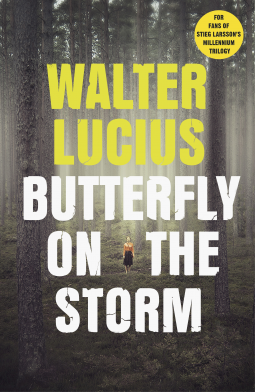
#BookReview ‘Butterfly on the Storm’ by Walter Lucius #thriller

This crime thriller is the first of a trilogy billed, as many thrillers are, as the new Millennium Trilogy. Butterfly on the Storm by Walter Lucius does feature horrific examples of abuse, it does feature a campaigning journalist, but for me it fell short of Stieg Larsson’s trilogy. Without that expectation, I would probably have enjoyed this thriller while at the same time being irritated that so much was crammed in. Walter LuciusThe action starts from page one and doesn’t stop to breathe. A young girl is the subject of a hit-and-run accident in the Amsterdam woods. In hospital, it becomes clear the girl is a young boy, dressed as a girl dancer and sexually abused by Afghan men now living in Holland. I found the portrayal of immigrant life in Holland fascinating and almost wish the author had examined this in more depth but the story spreads out to South Africa and Russia and its tentacles become confusing.
Accompanying the child to hospital is Dr Danielle Bernson who, following medical experience in Africa, is traumatized when she sees the child suffer. At the hospital, they meet journalist Farah Hafez, originally from Afghanistan, Farah’s identity was changed when she arrived as a child in Holland. She too has a lot of emotional baggage. Farah’s boss teams her with a more experienced journalist, Paul Chapelle, who she knew in Afghanistan. On the police side we have the pair of detectives assigned to the hit-and-run case, Joshua Calvino and Marouan Diba, a sort of young/old, idealistic/world-weary, good cop/bad cop pairing. There is a huge list of characters to accommodate the various storylines which include child trafficking, police corruption, political corruption, Russian violence and international terrorism. There is too much going on.
In the Millennium Trilogy, the first book had a clear distinctive story which allowed the reader to get to know the key characters which would move forward to book two. In Butterfly on the Storm, the first book feels like the episode of a television series where the ending has a hook to make you watch next week. This may work with television, but it left me feeling the novel was incomplete.

If you like this, try:-
‘Summer House with Swimming Pool’ by Herman Koch
‘The Long Drop’ by Denise Mina
‘The Accident’ by Chris Pavone

And if you’d like to tweet a link to THIS post, here’s my suggested tweet:
#BookReview BUTTERFLY ON THE STORM by Walter Lucius via @SandraDanby http://wp.me/p5gEM4-2Kf

#BookReview ‘New Boy’ by @Tracy_Chevalier #contemporary #Othello

When she arrives at school one day, Dee notices the new boy before anyone else and forsees he will have an impact on the world she lives in. Little does she know. This is Washington DC in the 1970s. A new black boy is starting his first day at an all-white school. New Boy: Othello Retold is not the usual novel you expect from Tracy Chevalier. Tracy ChevalierPart of the Hogarth Shakespeare collection of novels by contemporary writers re-telling Shakespeare’s most famous plays, it is thought-provoking, ambitious, but not totally successful. Modernising such a well-known classic drama is always going to be problematic, with readers who love or hate it. Othello, possibly Shakespeare’s most political of plays, is about love, jealousy, sexual bullying and manipulation. Difficult subjects for a school. Some reviewers think this book should be marketed to adolescents but for me, the novel’s flaw lies in its timeframe. The action takes place over one school day so the arrival of Osei and his relationship with Dee charges from flirting, friendship, commitment to caressing, whispering and hurtful jealousy between the hours of nine in the morning and four-ish in the afternoon. There is simply too much to cram into one day. I had less of a problem with the arc from flirting to jealousy, remembering the intense emotions of being pre-adolescent. However my perception of the world in which the story is set was not helped as, being English, I wasn’t aware that the top year of grade school means Dee, Osei, Ian and Mimi are 11-years old. I thought they were older.
How different it would have been to set it across Osei’s first week at school, allowing space for each character to be explored. The nastiness of bully Ian could be explored in depth, instead of passing references to his brothers whose examples of extortion he imitates, and his father who beats Ian for swearing. ‘His father had taken his belt to him early on to make clear that swearing was his domain, not his son’s.’ There is a deeper tale of manipulation & bullying trying to get out. But New Boy is shorter, at 192 pages, compared with Chevalier’s most recent novels – At the Edge of the Orchard, 305 pages; The Last Runaway, 353 pages – so no wonder the story feels constricted.

Read my reviews of Tracy Chevalier’s other novels:-
A SINGLE THREAD
AT THE EDGE OF THE ORCHARD
THE GLASSMAKER
THE LAST RUNAWAY

If you like this, try:-
‘Vinegar Girl: The Taming of the Shrew Retold’ by Anne Tyler [also part of the Hogarth Shakespeare series]
‘Foxlowe’ by Eleanor Wasserberg
‘The Lightning Tree’ By Emily Woof

And if you’d like to tweet a link to THIS post, here’s my suggested tweet:
#BookReview NEW BOY by @Tracy_Chevalier via @SandraDanby http://wp.me/p5gEM4-2JC

#BookReview ‘The Gift of Rain’ by Tan Twan Eng #WW2 #Malay

If you are searching for another world in which to immerse yourself, then this novel will fit the requirement. The Gift of Rain by Tan Twan Eng will suit anyone interested in the Malay Peninsula and its history in World War Two. It is at times tender, brutal, harsh and uplifting. It is a story of love, family, war, of defeat and acceptance. Tan Twan Eng The story opens as Philip Hutton, an elderly man living in a stately house on Penang, an island off the west coast of Malaysia. To his door comes an elderly, frail Japanese woman. They have never met before, but know one person who made an impact on their lives. Endo-san, a Japanese man, once lived on a tiny island near Istana, the Hutton family home. The Gift of Rain is the story of the relationship between Endo-san, a master, sensei, of aikijutsu, and his teenage pupil Philip immediately preceding the Japanese invasion of Malaya in 1941 and the following years of occupation.
There are many subtle layers to this tale which left me moved and thirsty for more facts about this period of history. It poses many difficult questions. Like the best novels dealing with war, it challenges you to be honest: what would I have done? It is easy to over-simplify war into ‘them and us’, ‘right and wrong’. At the heart of the story is the island of Penang and the transition of Georgetown, its major town, from a pre-war bustling multi-cultural port to an occupied territory at the mercy of torture and abuse by the Japanese. Some of it is difficult reading, all the more as the place seems alive. The traditions, the cultures, the nature are described vividly. The mix of nationalities on the island is at once its strength but, when war arrives, provide the cracks exploited by the occupiers. Philip is the youngest son of his father with his second wife, a Chinese woman. His two half-brothers and half-sister are English. Philip’s full name is Philip Arminius Choo-Hutton. This mix of races causes tensions, suspicion and betrayal throughout his life.
The Gift of Rain was longlisted for the Booker Prize in 2007. The Garden of Evening Mists by Tan Twan Eng, about the period in Penang shortly after the end of World War Two, was shortlisted for the Booker Prize in 2012.

Read the #FirstPara of THE GIFT OF RAIN here.

Here are my reviews of other books by Tan Twan Eng:-
THE GARDEN OF EVENING MISTS …and read the first paragraph HERE.
THE HOUSE OF DOORS

If you like this, try:-
‘The Translation of Love’ by Lynne Kutsukake
‘Moon Tiger’ by Penelope Lively
‘Exposure’ by Helen Dunmore

And if you’d like to tweet a link to THIS post, here’s my suggested tweet:
#BookReview THE GIFT OF RAIN by Tan Twan Eng via @SandraDanby http://wp.me/p5gEM4-2pW

#BookReview ‘The Ice’ by Laline Paull @LalinePaull #contemporary #thriller

The Ice by Laline Paull is a climate change thriller which takes place partly in the Arctic and partly in a courtroom in Canterbury. Sean and Tom met as students when Tom attended a meeting of the exclusive Lost Explorers’ Society and Sean was a waiter. They became friends because of their shared fascination for the Arctic. Both go on to forge careers revolving around the Arctic; Tom becomes an environmental campaigner, Sean a businessman. Their friendship, agreements and arguments are key to this novel. When, in chapter one, Tom’s body is revealed by an iceberg calving from a glacier it is the catalyst for all that follows. Laline PaullTom was known to be dead, having died in an accident in an ice cave on Svalbard three years earlier, an accident which Sean survived. An inquest is called, Sean’s business partners fly in to give evidence and to support Sean who is seeing visions of Tom around every corner. It becomes clear that Sean, now divorced and living with one of his investors, Martine, is not hands-on with his business in Svalbard. Midgard Lodge is an exclusive retreat where businessmen and politicians can meet to do deals. Sean’s upfront motivation is to encourage the capitalists to see the Arctic surrounding them, the polar bears, whales and glaciers, and convert them to environmentalism. With this in mind, he recruited Tom to the business. His partners however – the odious Joe Kingsmith and irritating Radiance Young – set my alarm bells ringing very early on. What exactly goes on at Midgard Lodge and why doesn’t Sean, supposedly the CEO, find out? And how could Tom not ask more questions before signing his contract?
There are some big topics touched on here: the opening of shipping channels over the North Pole, the political and military ramifications, the melting of the ice, the wealthy tourists who demand to see the polar bear they were promised in the holiday brochure, business executives who take the money and avoid asking difficult questions because that’s the easiest and most convenient thing to do. To reduce it to essentials, this is a novel about greed and love. How greed can destroy everything: not just business, but friendships, families and ultimately the ice.
I enjoyed The Ice but was left feeling vaguely dissatisfied. A day after I finished reading it, I realized why: it feels like it started out as a thoughtful novel about climate change, but at a later draft was turned into a thriller. The environmental message seemed preachy at times, the business sections were factual and dry, both of which took the edge off the suspense. Told from Sean’s viewpoint, the lack of Tom’s voice for me made the novel weaker. Perhaps it would have been more thrilling if various viewpoints had been juggled so the lies, risks, double-crossing and betrayals happen in real time, rather than the past.

Read my review of POD, also by Laline Paull.

If you like this, try:-
‘The Surfacing’ by Cormac James
‘Under a Pole Star’ by Stef Penney
‘Thin Air’ by Michelle Paver

And if you’d like to tweet a link to THIS post, here’s my suggested tweet:
#BookReview THE ICE by Laline Paull @LalinePaull http://wp.me/p5gEM4-2zZ via @SandraDanby

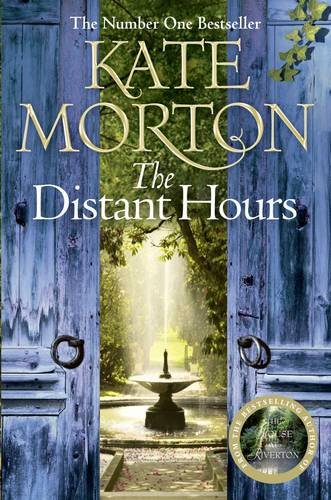
#BookReview ‘The Distant Hours’ by Kate Morton #historical #romance #WW2

If ever there was a novel in which a house plays the role of a character, this is it. The Distant Hours by Kate Morton is told in two strands, World War Two and the Nineties, involving the three Blythe sisters in Kent at Milderhurst Castle and a South London mother and daughter, Meredith and Edie. They all are connected by the war, the house, and the truth of what really happened when Juniper Blythe was abandoned by her lover in 1941. Kate Morton This is a brick of a book [678 pages], like Morton’s other novels. A little too long for me, the story meanders at times through past and present until it works towards the final mystery. What a mystery, an ingenious storyline and an unpredictable final twist. The story starts when a letter arrives for Edie’s mother, a letter lost for decades, a letter dating from wartime when Meredith was a schoolgirl evacuated to Kent. Edie is fascinated by her mother’s history, but her mother does not talk of it. They are not close, and Edie feels unable to press for information. So she sets off to investigate on her own.
At the centre of the story is the house, and what a house it is: beautiful, crumbling, representative of a time past. When Edie visits the castle in 1992 for the first time, she thinks: ‘Have you ever wondered what the stretch of time smells like? I can’t say I had, not before I set foot inside Milderhurst Castle, but I certainly know now. Mould and ammonia, a pinch of lavender and a fair whack of dust, the mass disintegration of very old sheets of paper. And there’s something else, too, something underlying it all, something verging on rotten or stewed but not. It took me a while to work out what that smell was, but I think I know now. It’s the past.’ Living there, Edie finds the three Blythe sisters, alone after the death of their father.
Morton writes brilliantly about the war years, conjuring up life at this vast castle and in the village of the same name. Running throughout is a mysterious, ghostly, spooky thread based on Raymond Blythe’s best-selling book The True History of the Mud Man. ‘The moat has begun to breathe. Deep, deep, mired in the mud, the buried man’s heart kicks wetly.’
Is the book set at Milderhurst Castle? Is the Mud Man based on a true story? The book is yet another connection between Edie and the castle, she loved it as a child after being given a library copy when ill by her mother. And so the concentric circles tighten.
CLICK HERE TO READ MORE ABOUT THIS BOOK AT AMAZON

And here’s my review of another novel by Kate Morton:-
THE CLOCKMAKER’S DAUGHTER

If you like this, try these books with atmospheric houses:-
‘A Sudden Light’ by Garth Stein
A Traveller at the Gates of Wisdom’ by John Boyne
‘The Other Eden’ by Sarah Bryant

And if you’d like to tweet a link to THIS post, here’s my suggested tweet:
#BookReview THE DISTANT HOURS by Kate Morton http://wp.me/p5gEM4-1YD  via @SandraDanby

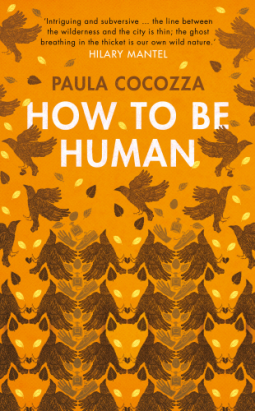
#BookReview ‘How to be Human’ by @CocozzaPaula #mystery #suspense

Paula Cocozza has written a strange but compelling novel about relationships. In How to Be Human, she questions where the lines lie between sanity and obsession, love and infatuation, delusion and self-awareness. Beneath the surface of our intellect, sophistication and technology, we are still animals. Paula CocozzaMary lives alone in a house in East London which backs onto woods, land which other neighbours complain is a unpalatable wilderness of weeds, rubbish and foxes. To Mary, it is the countryside. One day she sees a fox in her garden and believes he has visited her, that the gifts he leaves her are his way of communicating with her. She interprets his movements and snuffles as communication to her, and so validates her belief he understands her as no-one else does. As her relationship with the fox grows, her interactions with other people – her ex-boyfriend Mark, her neighbours Eric and Michelle, her mother, her boss – begin to disintegrate. At the beginning she has some semblance that her friendship with the fox is not usual but she persuades herself that animal specialists do talk to animals so she is not alone in doing this. It is other people who do not understand him. She experiments with different names for the fox – Red, Sunset – but finally abandons this attempt to humanize him.
This is a strange novel, part-psychological thriller, part-study of how wild and domesticated live side-by-side, part-portrayal of emotional disturbance [Mary’s breakdown and Michelle’s post-natal depression]. It is a portrayal of Mary’s two relationships, both controlling, both involving elements of stalking, both where one partner overwhelms the other with claustrophobic caring. Except one relationship is between a man and a woman, the other between a woman and a fox. Events are told mostly from Mary’s point of view and partly from the fox’s, though I found the latter unsatisfactory, stilted and romanticized. Significantly, the fox’s viewpoint disappears towards the end. Some passages of description were too long for me, too indulgent of Mary’s inner world, pushing the boundaries of her madness into psychotic episodes, pushing the boundaries of veracity. It is a strange, unsettling novel, like nothing else I have read. The slow descent of Mary into her fox world is at first believable while being weird but gets stranger as the story progresses. The story did take a while to get going, I almost abandoned it twice. It is a long time before the first line – ‘There was a baby on the back step’ – is explained, so long that its significance is muted and not what I first expected it to be.

If you like this, try:-
‘The Bear’ by Claire Cameron
‘The Ship’ by Antonia Honeywell
‘Pretty Is’ by Maggie Mitchell

And if you’d like to tweet a link to THIS post, here’s my suggested tweet:
#BookReview HOW TO BE HUMAN by @CocozzaPaula http://wp.me/p5gEM4-2HM via @SandraDanby

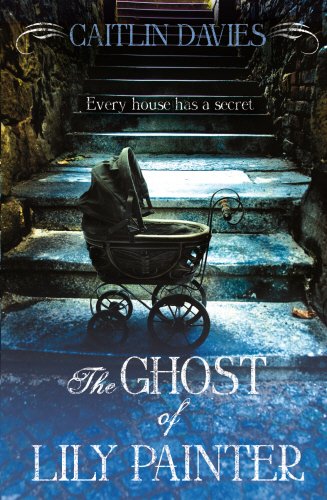
#BookReview ‘The Ghost of Lily Painter’ by Caitlin Davies #genealogy #mystery

Caitlin Davies blends fact and fiction in The Ghost of Lily Painter, an unusual story sparked from the author’s interest in her own house in Holloway, North London. In 2008, Annie Sweet moves into 43 Stanley Road with her husband and daughter. The house is chilly, the dog won’t stop barking, and her husband leaves her. Is there a bad spirit in the house which is bringing bad luck? Annie begins to explore the house’s history and discovers a music hall performer, Lily Painter, lived there briefly at the beginning of the twentieth century. What happened to her? Why does she disappear? Caitlin DaviesThis is a well-researched historical story about turn-of-the-century music hall, the dilemma facing unmarried pregnant women, baby farms and modern-day family history research. It’s a fascinating tangle of three viewpoints across a century: Annie Sweet and her actress daughter Molly, Inspector William George who lived at 43 Stanley Road in 1901; and one of his lodgers, Miss Lily Painter. The baby farms narrative is based on the real lives of Amelia Sach and Annie Walters, the first women to be hanged at Holloway Prison in 1902. They were baby farmers, women offering a lying-in service where women could deliver their babies then pay for their children to be adopted by ‘ladies’. Many of the babies never made it to their new homes. A terrible true story.
My only disappointment is that the ends are tied together rather too neatly, with a coincidence easily-spotted rather early in the story.

If you like this:-
‘A Sudden Light’ by Garth Stein
Shadow Baby’ by Margaret Forster
Pale as the Dead’ by Fiona Mountain

And if you’d like to tweet a link to THIS post, here’s my suggested tweet:
#BookReview THE GHOST OF LILY PAINTER by Caitlin Davies via @SandraDanby http://wp.me/p5gEM4-29C

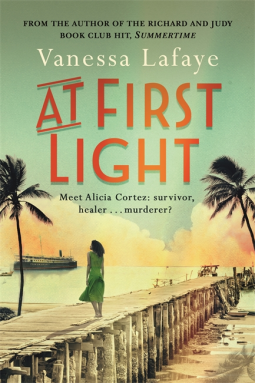
#BookReview ‘At First Light’ by Vanessa Lafaye #Florida #historical

Having loved Summertime, the debut novel of Florida-born Vanessa Lafaye, I was looking forward to reading At First Light. I was not disappointed. As with her first book, Florida in the period after the Great War is the setting. But the story starts with a bang in 1993 when an elderly Ku Klux Klan official is shot dead at a rally in Key West. The murderer is a 96-year old Cuban woman. At First Light is the story of Alicia Cortez. Vanessa LafayeThis is an intense story in many ways. Love, politics, racial hatred, prostitution and Prohibition. In 1919 Alicia arrives on a boat from Cuba, running from shame though for a while we don’t know the exact details. On the same day, John Morales disembarks from the troop ship which brought him from Europe where he fought with distinction in the Great War. Watching from the dock is fourteen-year-old Dwayne Campbell, who falls a little in love with Alicia, is in awe of John, and who becomes entangled in what is about to unfold. When John, a white man, a local man, is seen with a ‘brown’ stranger, Alicia, the newly established Klan of the Keys takes notice.
Although we know from page one that Alicia shoots someone, we do not know the identity of the victim. As she will not talk to the police, her motivation is unknown. So as the story of her arrival in Key West in 1919 unfolds, the guessing game begins as the Ku Klux Klan plans its attacks. This story segment takes place over a short few months and the speed at which events unfold is mesmerising. There are many thematic contrasts: the beauty of the location, the poverty and depravation; the global politics of war, the local politics run by corrupt men; the lack of women’s rights, the moral and emotional strength of women.
Inspired by a true story – the murder by the Ku Klux Klan of a white man in 1921 because he refused to end his relationship with a mixed-race woman – this is a novel about freedom. The freedoms fought for in war which are too often, and too rapidly, forgotten in daily life when hate is allowed to overcome tolerance and people become too quick to judge. And once a wrong is committed, who has the right to determine the nature of justice and how it should be implemented? Once the police cannot be trusted, the disintegration of society begins.
I read this book very quickly and didn’t want it to end. Second novels are often a disappointment, this one is not.

And here’s my review of SUMMERTIME, also by Vanessa Lafaye.

If you like this, try:-
‘The Ways of the World’ by Robert Goddard
‘Curtain Call’ by Anthony Quinn
‘Time Will Darken It’ by William Maxwell

And if you’d like to tweet a link to THIS post, here’s my suggested tweet:
#BookReview AT FIRST LIGHT by Vanessa Lafaye via @SandraDanby http://wp.me/p5gEM4-2zh

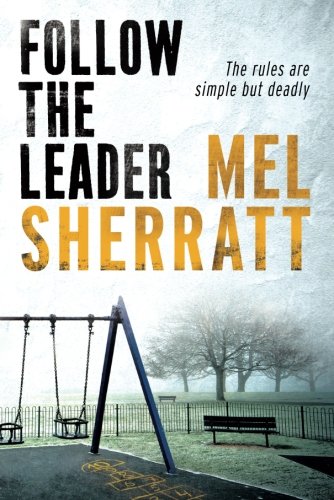
#BookReview ‘Follow the Leader’ by @writermels #crime

This police procedural is not about identifying the killer as the reader knows who it is from page one, but a chase against time. Will the police stop him before he completes his series of murders? Follow the Leader is the second in the DS Allie Shenton series by Mel Sherratt and, as well as being a story in its own right, it continues the thread of Allie’s story and of her sister Karen. So much so that the ending made me want to pick up book three and keep reading. Mel SherrattThe story is told in the present time from the viewpoint of the murderer, and Allie, plus flashbacks to schoolchildren in 1983. There is bullying, nastiness and violence at home. Patrick keeps his head down, hoping not to be noticed. Unfortunately for him, he has ‘victim’ written all over him. The schooldays segments are horribly realistic. The setting of Stoke-on-Trent is a critical part of this book and it is clear Sherratt is describing real places. The first body is found on the canal towpath. A man was walking his dog, in the same place, at the same time, as he always does. The next victim is a woman. Both have coloured magnetic letters left on the body.
The murders come thick and fast, the police are twisting and turning but the murderer has planned meticulously and remains one step ahead. There are many characters, most of which were at school in 1983, though the identities are muddled with the use of nicknames. As we see the former schoolfriends now, going about their daily life, we wonder who will be next.
Patrick is a difficult character to like or sympathize with despite his abusive childhood. Towards the end Sherratt does consider whether someone can change, can leave behind their violent past. Unfortunately the unthinking cruelty of teenagers to each other has consequences, but there is never an excuse for murder.
CLICK HERE TO READ MORE ABOUT THIS BOOK AT AMAZON

Read my reviews of more books in the Allie Shenton series:-
TAUNTING THE DEAD #1ALLIE SHENTON
ONLY THE BRAVE #3ALLIE SHENTON

If you like this, try:-
‘Good Me Bad Me’ by Ali Land
‘The Anarchist Detective’ by Jason Webster
‘Snow White Must Die’ by Nele Neuhaus

And if you’d like to tweet a link to THIS post, here’s my suggested tweet:
#BookReview FOLLOW THE LEADER by @writermels via @SandraDanby http://wp.me/p5gEM4-2v9