Tag Archives: book review

#BookReview ‘How To Stop Time’ by Matt Haig @matthaig1 #humour

How To Stop Time is another hugely inventive novel by Matt Haig with a thoughtful message about identity. Tom Hazard is a history teacher with a difference. He can talk authoritatively about the Great Fire of London, because he was there; about Shakespeare, because he met him; about witchfinders, because he was terrorised by one. Tom Hazard is 439 years old but he looks forty one. Matt HaigWhen he was thirteen, the process of ageing slowed down. Tom and his mother are protestant Huguenot refugees in England when their life falls apart; his impossibly youthful looks draw accusations of witchery. We see snapshots of Tom’s past life as he teaches history to bored teenagers in London. And all the time he struggles with the past, so much so that he is unable to live in the present. So he exists, rather than lives, changing his identity to survive and losing sight of who he is.
This is a fascinating study of humankind, our development through history and inability to learn from what went before. Tom encounters threats and suspicions in the 21st century. Is he safe? Is a sinister bio-tech company searching for albas – short for ‘albatross,’ ie. long-lived – to use for experiments? And is the mysterious Hendrich, founder of The Albatross Society, a mentor or a threat? At the core of the novel is Tom’s love for his wife Rose, a mayfly – ie. short-lived – who dies of the plague, and their daughter Marion, an alba. Where is Marion now? Will Tom become reconciled with his past enough to live his life to the full, whether it be a long life or short, and will he ever feel free enough to love again?
A philosophical novel about making the best of what you have now without dwelling on the past, which cannot be changed, or worrying about the future, which cannot be predicted.

Read my reviews of these other Matt Haig novels:-
THE HUMANS
THE MIDNIGHT LIBRARY

If you like this, try:-
‘Burial Rites’ by Hannah Kent
‘The Photographer’s Wife’ by Suzanne Joinson
‘Pod’ by Laline Paull

And if you’d like to tweet a link to THIS post, here’s my suggested tweet:
#BookReview HOW TO STOP TIME by Matt Haig @matthaig1 http://wp.me/p5gEM4-2Ts via @SandraDanby
#BookReview ‘Then She Was Gone’ by Lisa Jewell @lisajewelluk #thriller

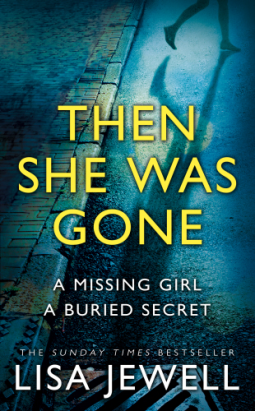
Then She Was Gone by Lisa Jewell is a delight, the page-turning story of a disappeared teenager whose experience was something I did not expect. An excellent un-thriller; that’s a phrase I use after giving it some thought. This is not a psychological thriller in that it is frightening. It didn’t make my pulse race with a sense of danger, but it did make me very curious. Lisa JewellEllie Mack is fifteen the day she fails to come home from the library, she is due to take her GCSE examinations the following week. She is a clever student, a golden girl. But she disappears, never to be seen again. Life goes on. Except it doesn’t for her family, each being trapped in some way by Ellie’s absence. Until ten years later when Ellie’s mum Lauren, now divorced, meets a nice bloke in a café. Her ex, Paul, has a new partner and so do Ellie’s siblings. Laurel is the one who is really stuck, visiting her elderly mother bed-ridden after a stroke. Then she meets Floyd and his daughters Poppy and SJ, and she blossoms.
I would like to say from the beginning I had unsettling feelings of the ‘that’s not quite right’ variety, but I didn’t. Instead the doubts crept in stealthily until the full truth dawned on me at 72% on my Kindle. And then it hit with a sledgehammer.
This is a clever book written by an author who has matured enormously over the years in the subjects she tackles.
Then She Was Gone doesn’t set out to be frightening, at least I don’t think that is the author’s primary intent. I think she started with a ‘what if’ scenario and let it unfold from there. It is a puzzle involving characters so real you feel you know them, that it could be happening to you; and that’s what makes it so powerful.

And here are my review of two other thrillers by Lisa Jewell:-
I FOUND YOU
THE GIRLS

If you like this, try:-
‘The Good Girl’ by Mary Kubica
‘Chosen Child’ by Linda Huber
‘Stolen Child’ by Laura Elliot

And if you’d like to tweet a link to THIS post, here’s my suggested tweet:
#BookReview THEN SHE WAS GONE by Lisa Jewell @lisajewelluk http://wp.me/p5gEM4-2Td via @SandraDanby

#BookReview ‘Anderby Wold’ by Winifred Holtby #historical

I was a teenager when I first read South Riding by Winifred Holtby but, until now, hadn’t read her earlier novels. Anderby Wold is her first; published in 1923 it is a portrayal of a Yorkshire Wolds village in the first years of the twentieth century. I was struck by the similarity to Jane Austen: both focus on the personalities, tensions, the pettiness, resentments and emotions of small communities, and both combine acute social observations with sharp humour. Winifred HoltbyThe novel opens with a family party at the farm, Anderby Wold, as Mary Robson and John, her husband of ten years and also her cousin, are celebrating a decade of hard work and penny pinching to clear the mortgage on the farm they had inherited. We are introduced to Mary and the family from the viewpoint of John’s sister, the spiteful Sarah. If ever there was a negative first chapter that makes you think the story is going to be full of unlikeable characters, this is it. It is, perhaps, a sign of its times; I am not sure a novel would be published today with such an ill-feeling introduction. But do persist, this novel is worth reading.
We are slowly introduced to each key character with their own viewpoint and take on their agricultural world, where hard toil, tough weather and difficult land unites – and separates – the community. Mary thinks of herself as a considerate benevolent mistress, she sits with sick people, visits the old, supports the school, and distributes gifts at Christmas. But she is unaware that some of the farm labourers resent what they see as her Mrs Bountiful role, a vision of her behaviour to which she is blind. She feels dissatisfaction with the minutiae of her life, dissatisfaction she pragmatically ignores. At a gathering of the village ladies, she listens to the gossip, ‘Mary shivered. They were as lifeless as the uprooted trees, carried from the wold side and laid in the back garden of the farm, awaiting destruction for firewood. Their talk was as meaningless as the rustle of dry leaves on brittle twigs.’
Into this fragile world where people speak bluntly and behaviour can be brusque, comes a writer from Manchester. He is researching the lot of the agricultural labourer with an eye on social change. When he comes into conflict with Mary, the beliefs and assumptions of both are challenged in an Austen-esque manner. As an outsider, David Rossitur is treated first with silence, then with suspicion. The innkeeper’s wife worries about his motivations, ‘Mrs Todd, being a personal of small imagination, had divided mankind into two classes, those who had designs on Victoria [her daughter], those who had designs on her Beer. Last night she had come to the regrettable conclusion that David had no true appreciation of Beer.’ A trade union for agricultural workers is formed, followed inevitably for a strike. At harvest time. Anderby Wold will be changed forever.

Click the title to read my review of POOR CAROLINE, also by Winifred Holtby.

If you like this, try:-
‘The Ballroom’ by Anna Hope
‘Time Will Darken It’ by William Maxwell
‘Under a Pole Star’ by Stef Penney

And if you’d like to tweet a link to THIS post, here’s my suggested tweet:
#BookReview ANDERBY WOLD by Winifred Holtby https://wp.me/p5gEM4-353 via @SandraDanby

#BookReview ‘The Escape’ by CL Taylor @callytaylor #thriller

The Escape by CL Taylor fairly gallops along without time to take a deep breath. It is a tale of escape, pursuit, lies, vulnerability, long-hidden secrets and selfishness. At times I didn’t know which character to believe and I didn’t particularly like any of them. I wanted to sit them down at the kitchen table with a mug of tea and a plate of biscuits, and bang their heads together. There appear to be so many lies it is difficult to sift out the truth, which became a little frustrating after a while. In the end, there are many types of escape. CL TaylorJo and Max have a toddler daughter Elise. Max, an investigative journalist, has just completed a long-running story which resulted in a conviction, and he is jubilant. Jo, who became agoraphobic after the loss of their first child Henry, lives from day to day, her small world surrounding Elise. Jo feels Max is less sympathetic to her condition than he used to be. Max tries to be patient but is finding it increasingly difficult. Into this fragile world steps Paula, a stranger, who threatens Jo and Elise. The first crack appears as Max doubts Jo’s judgement of the threat. Is she panicking again, exaggerating it, imagining it?
Faced with danger to her child, Jo runs. That is the escape of the title. The agoraphobia which made it a trial to take her daughter to nursery every day fades as, driven by her maternal defence mechanism, she packs Elise into her car and flees to Ireland. Ireland, we know vaguely, is where her mother came from years ago but of which she will not speak. More mystery. As she runs, Jo appears more unbalanced, sees threats on all sides and is forever planning escape routes. But where is the danger actually coming from? Is she seeing clearly, could it be that some of the lies which frighten her are actually the truth? And vice-versa. Is she a reliable witness? The need for flight seems to over-ride all historic connections of love and trust, she runs from the people who try to help her. So, is she misguided, confused? Or correct? And in escaping with Elise, in all good intentions to protect her daughter, is she putting her two-year-old daughter in further danger of her life?
This is a psychological thriller which asks some difficult questions. About how we react to stress, how our judgement of others can be influenced, and when to trust your own deep-seated instincts.

Read my reviews of these other thrillers by CL Taylor:-
THE ACCIDENT
THE LIE

If you like this, try:-
‘One Step Too Far’ by Tina Seskis
‘The Accident’ by Chris Pavone
‘The Last of Us’ by Rob Ewing

And if you’d like to tweet a link to THIS post, here’s my suggested tweet:
#BookReview THE ESCAPE by CL Taylor @callytaylor http://wp.me/p5gEM4-2Tj via @SandraDanby

#BookReview ‘Girl in Trouble’ by Rhoda Baxter @RhodaBaxter #romance

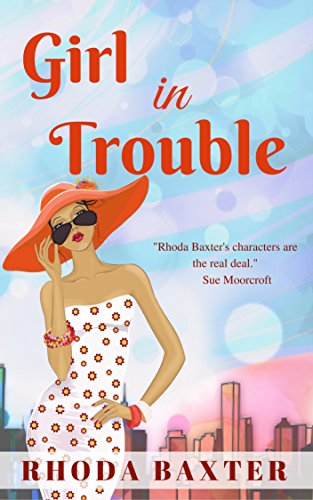
Funny, sad and believable: Girl in Trouble by Rhoda Baxter is the third in her Smart Girls series and, though some of the characters have cameo appearances throughout the series, can be read alone. Which is what I did, quickly, particularly enjoying the second half of the story. I was worried that the first chapter, in which we meet Olivia at a stag night, meant the book would be too chick lit for me but as the story progresses the themes become darker and complex. Rhoda BaxterOlivia is thirty, relationship-phobic and surrounded by friends. She is quite independent, thank you very much and does not need a man to look after her. She has never been in love, never allowed herself to be in love and knows this dislike/distrust of men can be traced back to her father who left her and her mother when she was a child. She also has a health issue that makes pregnancy a big risk, though to be honest I was a little in the dark about the specifics of this. Instead she is a serial one-night girlfriend. When she falls accidentally pregnant, Olivia thinks the decision to have an abortion is straightforward and sensible. Of course life gets in the way, in two ways. Firstly her absent landlord Walter, who lives in the upstairs flat, returns home and is hot and funny and makes her feel comfortable in a cosy sexy way; a first for Olivia. And then her absent father arrives on her doorstep.
This is a fast-paced well-written novel which runs the gamut of emotions from chuckles to tears to pain. Relationships within broken families, as the years pass, are not simple and Baxter explores the unresolved tension and anger of Olivia and her mother Liz towards her father Trevor. Graham, her stepfather, has been a calm and loving influence on Olivia since her teens, but she only starts to appreciate this once Trevor returns to the scene. The father/daughter theme is echoed also in Walter’s storyline. His divorced wife Charlotte is to remarry and take their daughter, Emily, to live in America. Walter, absent because of work through many of Emily’s baby years, realises what he has missed just as he is about to lose it.
If you like your girls to be girly then Olivia does not fit that profile. She keeps her thoughts to herself and is quite complex in her behaviour. She does not want children and, in discussions with her friend Ruchi, the for/against options for abortion are explored with Ruchi, at first, unhappy at her friend’s viewpoint. So although the cover design is bright and cheerful, Girl in Trouble touches on some serious topics in a balanced and thoughtful manner. I would have liked to know more about Olivia’s work life as a solicitor though, in fact Walter’s career as a marine biologist is explained in much more detail.
If you’re going on holiday, or a long train journey, you will devour this.

Read my review of PLEASE RELEASE ME, also by Rhoda Baxter.

If you like this, try:-
‘Butterfly Barn’ by Karen Power
‘One Step Too Far’ by Tina Seskis
‘Stormy Summer’ by Suzy Turner

And if you’d like to tweet a link to THIS post, here’s my suggested tweet:
#BookReview GIRL IN TROUBLE by Rhoda Baxter @RhodaBaxter http://wp.me/p5gEM4-2Wf via @SandraDanby

#BookReview ‘The Travelers’ by Chris Pavone #thriller

What a non-stop ride this is. I resented everything which made me put this book down. The Travelers by Chris Pavone is a spy thriller about an ordinary guy doing an ordinary job who finds himself in an extraordinary position. It reminded me a little of Robert Redford in the film Three Days of the Condor. Chris PavoneTravel writer Will works for New York-based Travelers, a luxury travel magazine. Married to Chloe, who works as a freelance for the same magazine, they live in a rundown money-pit in Brooklyn. Things change in a short space of time. On a press trip in France, Will flirts outrageously with an Australian journalist and goes home, relieved he didn’t succumb to temptation. But on his next press trip to the wine area of Argentina, Elle is there again and this time they do have sex. Except Elle isn’t what she says she is, her name isn’t Elle and she isn’t Australian. She gives Will a choice. Cooperate, supply information about his contacts and people he writes about, or else he will be exposed to his boss Malcolm and to Chloe. And so he cooperates.
The action is rapid. Some sections – identified only by the location, not the person – are only half a page and for the first third of the book this is disorientating. I couldn’t work out who was spying and who was being spied upon. A man in an office sits at a computer terminal and monitors targets, the flights they take, the hotels and rental cars they book. An un-named woman goes to Capri to kill a man. An American man wants to disappear. Malcolm has a hidden office with secret files.
The threads are tangled thoroughly. The answer is not one I predicted. It is impossible to explain the plot without giving away secrets, but the ending in Iceland will make a great action sequence in a film.

And here’s my review of another thriller by Chris Pavone:-
THE ACCIDENT

If you like this, try:-
‘Dominion’ by CJ Sansom
‘The Killing Lessons’ by Saul Black
‘An Officer and a Spy’ by Robert Harris

And if you’d like to tweet a link to THIS post, here’s my suggested tweet:
#BookReview THE TRAVELERS by Chris Pavone via @SandraDanby http://wp.me/p5gEM4-2lT

#BookReview ‘Autumn’ by Ali Smith #SeasonalQuartet #contemporary

Uplifting, enlightening, funny, clever, depressing, sad and heartwarming. The mischievous Autumn by Ali Smith is an ingenious novel, the first of the ‘Seasonal Quartet’ telling the story of the UK fragmented after the post-Brexit vote in 2016, when ugliness and prejudice rose to the surface setting brother against sister, friend against friend, dividing streets, neighbourhoods and towns, a binary split with each side convinced it is right and the other, wrong. Ali SmithDaniel Gluck is 101 years old and in a nursing home, we see from his wonderful lyrical dreams that he teeters on the edge of death. Smith builds her world around Mr Gluck and Elisabeth Demand who, with her mother Wendy, lived next door to Daniel when Elisabeth was a child. Their relationship starts in 1993. Elisabeth, aged eight, must interview a neighbour for a homework project. Her mother is not keen and tries to bribe her to invent a neighbour instead. The following day Elisabeth meets Mr Gluck and, despite her mother’s misgivings (single man, dodgy, must be gay, might be unsafe etc) they become firm friends. Now he is 101 and she tells a lie to the nursing home – yes, she is his grand-daughter – in order to gain a visitor’s pass. She sits by his bed and reads Brave New World.
Smith compares and contrasts modern life with past times in the twentieth-century, we see modern life through Elisabeth’s storyline countered by Daniel’s memories and dreams, and his interpretations of books, art and song for the child Elisabeth. The story wings its way through contemporary references from television antiques programmes and passport applications to celebrity Christine Keeler, sculptor Barbara Hepworth and pop artist Pauline Boty.
This is all very interesting but, with the lightest of hands, Smith gives a warning about the danger of nationalism, populism and the easy appeal of accepting political lies rather than asking difficult questions of the politicians and ourselves. One passage in particular underlines it all: Daniel’s younger sister Hannah is captured in Nice, France, in 1943 despite carrying papers which identify her as Adrienne Albert.
Running throughout are the themes of truth v lies [juxtaposed often, with lies often being throwaway and easy whilst truth can be awkward and difficult to say] and identity. There is a hilarious passage where Elisabeth tries to renew her passport application at the Post Office, an all-too-believable portrayal of officialdom. Some of the historical sections, particularly about Keeler and Boty, seemed rushed and I would have liked more of Daniel’s songwriting background which was mentioned fleetingly.
Short, at 272 pages, Autumn can be read in one sitting. It is a joy to read. Next in the quartet comes Winter.
Autumn was shortlisted for the 2017 Booker Prize.

Click the title to read my reviews of other books by Ali Smith:-
WINTER #2SEASONALQUARTET
SPRING #3SEASONALQUARTET
SUMMER #4SEASONALQUARTET
COMPANION PIECE #5SEASONALQUARTET
HOW TO BE BOTH

If you like this, try:-
‘Moon Tiger’ by Penelope Lively
‘Darktown’ by Thomas Mullen
‘Shelter’ by Sarah Franklin

And if you’d like to tweet a link to THIS post, here’s my suggested tweet:
#BookReview AUTUMN by Ali Smith http://wp.me/p5gEM4-2SX via @SandraDanby

#BookReview ‘After Leaving Mr Mackenzie’ by Jean Rhys #historicalfiction

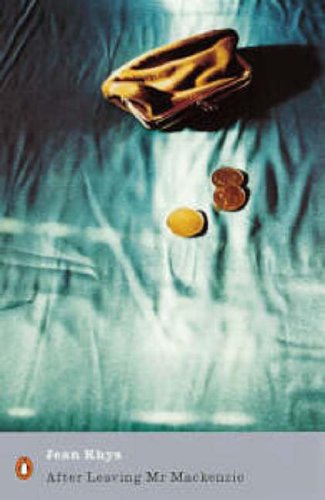
A slim novel, After Leaving Mr Mackenzie is the second novel by Jean Rhys, published in 1931. Semi-autobiographical, it tells the story of a young woman [if a woman in her mid-thirties can be called young] who faces up to the realities of life after a love affair ends. The title is not strictly true because Julia did not leave Mr Mackenzie, he left her. Jean Rhys She moves to a cheap hotel room where the furnishings are faded and the only decoration is a poor painting which she assumes must have been left in lieu of debt by a previous tenant. Where Rhys excels is her description of the small details, drawing a picture of Julia’s surroundings and her moods. ‘She found pleasure in memories, as an old woman might have done. Her mind was a confusion of memory and imagination. It was always places that she thought of, not people. She would like thinking of the dark shadows of houses in a street white with sunshine; or of trees with slender black branches and young green leaves, like the trees of a London square in spring; or of a dark-purple sea, the sea of a chromo or of some tropical country that she had never seen.’ Like the title of the novel, it is not always clear what is true and what is imagination.
After the death of her baby and the breakdown of her marriage, which is not really explained, Julia survives in Paris thanks to the men she dates. They give her cash, buy her clothes, pay for her lodging; in this, Julia is similar to Marya in Rhys’ first novel Quartet. This novel takes a step further in that when her maintenance payments stop, Julia takes action to help her situation. After unsuccessfully asking Mr Mackenzie for cash, she is helped by a stranger, Mr Horsfield. Julia buys new clothes and a train ticket to London where she visits her sister who cares for their dying mother.
This is a study of one woman’s desperate situation and her dependency on others. Julia is a sad woman with a past, shabby, as if wearing a sign around her neck saying ‘trouble’. The delight in reading this book is how Rhys tells Julia’s story, as much as the story itself.

Here’s my review of another novel by Jean Rhys:-
QUARTET

If you like this, try:-
‘Orphans of the Carnival’ by Carol Birch
‘Birdcage Walk’ by Helen Dunmore
‘The Duchess’ by Wendy Holden

And if you’d like to tweet a link to THIS post, here’s my suggested tweet:
#BookReview AFTER LEAVING MR MACKENZIE by Jean Rhys via @SandraDanby http://wp.me/p5gEM4-2d7 

#BookReview ‘The Blue Flower’ by Penelope Fitzgerald #historical

If ever there is a book to persevere with, to have patience with, and to go back and re-read again, it is The Blue Flower by Penelope Fitzgerald. When I bought it, I didn’t realize it was the last novel by the Booker prize winner; published five years before her death in 2000 aged 83. For someone about to read it, it can seem a trifle intimidating. Penelope FitzgeraldSet in 18th century Germany, Fitzgerald tells her imagining of the teenage story of real German poet and philosopher Fritz von Hardenberg, later called Novalis. He is a young man so self-contained, so absorbed in his thoughts, that I wondered where the drama would arise. But it does, because he falls in love.
The Blue Flower is a short novel, 223 pages. The chapters are concise [mostly only two or three pages each] and this encouraged me to ‘just read another’ and so, gradually, almost without realizing, I fell into the story. Fitzgerald recreates this particular time in German history with a delicacy that, despite the language and sometimes confusing names, makes the people become real.
It is 1794 and Fritz, an idealistic and passionate student of philosophy and writer of poems, stays with some family friends and meets their youngest daughter, Sophie von Kühn. Love is instant for Fritz and, despite a little bemusement on the part of Sophie, and astonishment by his siblings and friends, he proves himself constant.
It is the sort of novel that, when you are reading it you ‘get’ it but afterwards, when trying to describe it to someone else, you struggle to grasp it. I still do not really understand the meaning of the blue flower. But although the deeper meaning may elude me, there are passages I love. Particularly the opening chapter when a guest arrives at the Hardenberg house in Kloster Gasse; it is washday, the annual occasion for washing personal and household linen, and his arrival effects an introduction to the household. This starts a juxtaposition which runs throughout the novel, of the ordinary everyday mundanity of life alongside Fritz’s poetic sensibilities. He calls twelve-year old Sophie his Philosophy, his guardian spirit. Knowing he must wait for her, he trains as an official in the salt mines and Fitzgerald treats us to some of the practicalities and science of this industry.
This is not a lazy read. Be prepared to invest something into it yourself. Fitzgerald does not put it all onto the page, she expects the reader to think, to research, to work it out, as she did when writing. If each book is the visible bit of an iceberg above the waterline, with the research submerged, The Blue Flower is the snowball on top of the iceberg.

Read my review of OFFSHORE, also by Penelope Fitzgerald.

If you like this, try this:-
‘The Ballroom’ by Anna Hope
‘The Past’ by Tessa Hadley
‘Gone are the Leaves’ by Anne Donovan

And if you’d like to tweet a link to THIS post, here’s my suggested tweet:
#BookReview THE BLUE FLOWER by Penelope Fitzgerald https://wp.me/p5gEM4-2Zr via @SandraDanby

#BookReview ‘The Lie of the Land’ by @AmandaPCraig #contemporary

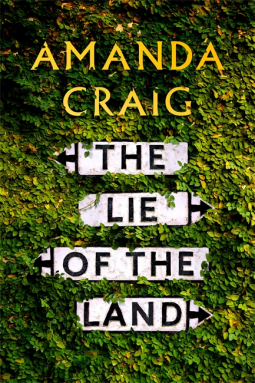
A simple yet deceptively nuanced story of modern times, The Lie of the Land by Amanda Craig is full of the contrasts and comparisons thrown up by ordinary life. The Bredins, Quentin and Lottie, have agreed to divorce after his infidelity but cannot afford to. Unable to sell their London house, they rent it out instead and move to Devon to a dank dark creepy farmhouse where they must manage to live together. Amanda CraigWhat happens over the next year is unexpected and changes all their lives forever. This is a funny, mysterious and sometimes sad story of a city family in the country where, instead of leaving their problems behind, they find they are magnified. There is truth in the old adage, you cannot run from your problems.
What happened to the previous tenant of Home Farm? Who is the mysterious tramp in the local pub? And is Lottie really having an affair with a local architect. Meanwhile, Quentin’s father is dying and his mother is stoically coping. Lottie’s son Xan works in the nearby pie factory where, as well as finding himself a Polish girlfriend, he makes friends with Dawn, the daughter of the Bredin’s cleaner. Dawn, who seems downtrodden, obese and introverted, can play the piano like an angel. Craig has written a character-driven novel with a community of characters to make Devon feel at once cozy and familiar while being secretive and insulated. Where contrasts are expected between urban and rural life, there are often likenesses. There are several sub-plots cleverly woven into the main family narrative, of caring for elderly parents, bullying, childlessness, rural phone and broadband reception, Polish workers and urban snobbishness about country life.
I particularly liked sheep farmer’s wife Sally Verity, whose job as a social worker sees her move around the countryside, cleverly knitting together people and stories. Lottie’s mother Marta, though she stays in London, is another link between generations, locations and storylines. Only when I had finished the book did I learn that some of the characters appear in other novels by Craig, something which did not affect my understanding or enjoyment of the book.

If you like this, try:-
‘Himself’ by Jess Kidd
‘My Husband the Stranger’ by Rebecca Done
‘Ghost Moth’ by Michèle Forbes

And if you’d like to tweet a link to THIS post, here’s my suggested tweet:
#BookReview THE LIE OF THE LAND by @AmandaPCraig http://wp.me/p5gEM4-2Pp via @SandraDanby