Tag Archives: book review

#BookReview ‘The Lost Girl’ by @SanguMandanna #scifi #YA

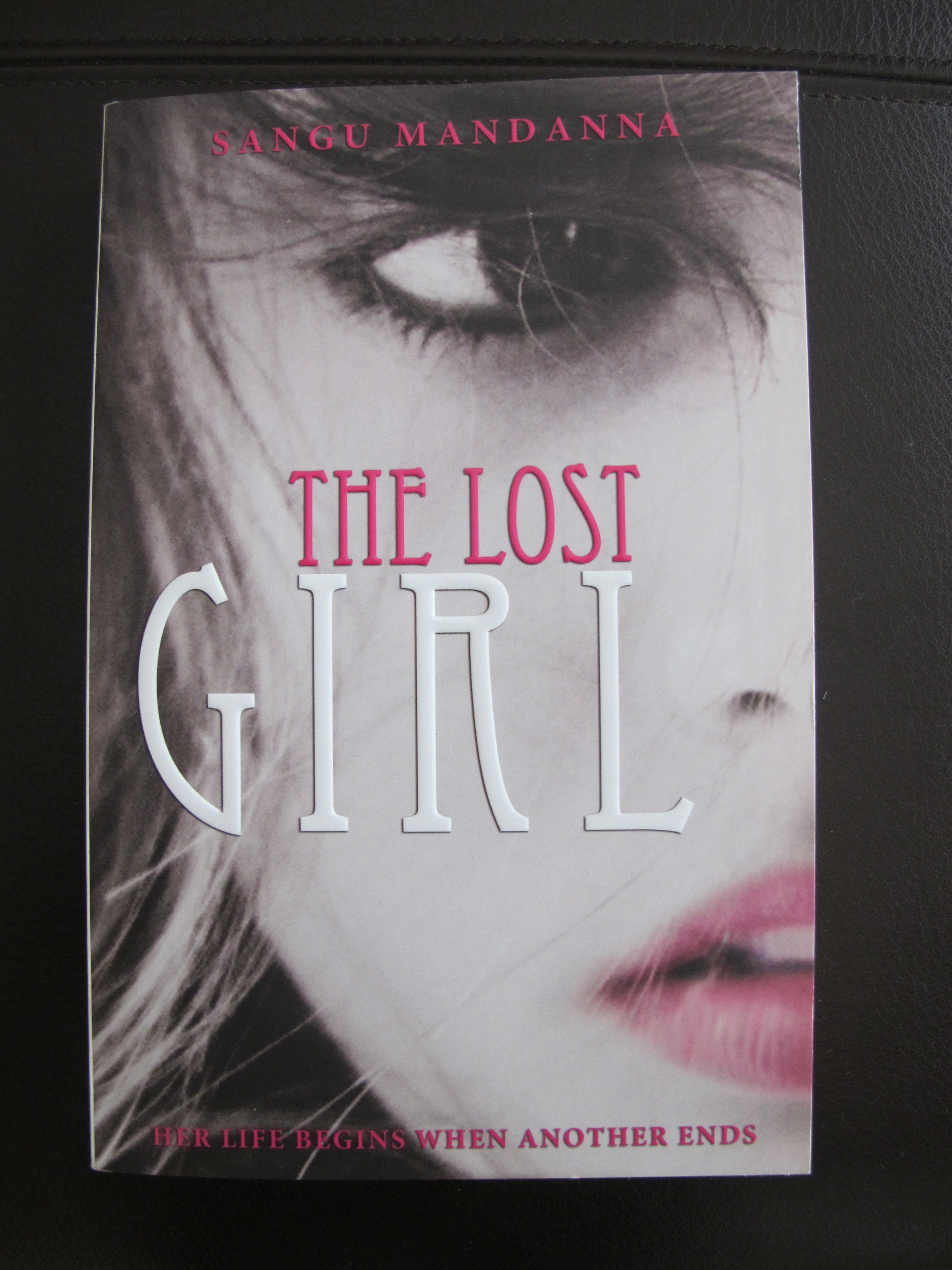
I admit to never having heard of The Lost Girl by Sangu Mandanna until seeing it mentioned in ‘favourite read’ lists on a few blogs. I ordered it purely on that basis and had no idea it was a YA novel. It is a romantic story of love and loss, grief and identity, set in the UK and India, with sinister echoes of Frankenstein. Sangu Mandanna Eva is an ‘echo’, a non-human ‘woven’ by a mysterious organization called The Loom which makes copies of real people for their family in case the loved one should die. The idea is that the ‘echo’ slips into the dead person’s shoes so minimising the family’s loss. Of course it is not that simple. Mandanna handles a difficult subject well, not avoiding the awkward moral issues which litter the dystopian story premise. The world is disturbingly almost normal, littered with everyday familiar references. Eva, who lives in the Lake District, is the echo for Amarra from Bangalore. I found it quite an emotional read, not just Eva’s situation but her guardians, her familiars, and Amarra’s friends in India. What seems a simple premise at the beginning, done with the best intentions, becomes increasingly dark as the story develops and the true horror of Eva’s situation is explained.
CLICK HERE TO READ MORE ABOUT THIS BOOK AT AMAZON

If you like this, try:-
‘The Bear and the Nightingale’ by Katherine Arden #1WinternightTrilogy
‘The Magicians’ by Lev Grossman #1TheMagicianstrilogy
‘The Queen of the Tearling’ by Erika Johansen #1Tearling

And if you’d like to tweet a link to THIS post, here’s my suggested tweet:
#BookReview THE LOST GIRL by @SanguMandanna via @SandraDanby https://wp.me/p2ZHJe-4b7
#BookReview ‘The Other Eden’ by Sarah Bryant #romance #historical

The Other Eden by Sarah Bryant is best described as a Gothic romance/horror story, interleaved with the American South setting in Louisiana and piano music it is an unusual mixture which produces quite a page-turner. Sarah BryantI admit to finding the two sisters Eve and Elizabeth confusing at times but that did not interfere with my enjoyment of the story. By the end of the book I was still unsure which sister was which.
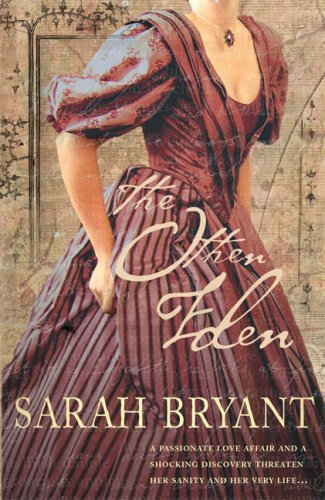
The descriptions of the two houses, Eden and the house on the hill, are luscious. My one quibble is that I found the characters oddly difficult to place in time. The prologue about the two sisters is dated 1905 which means the following story about Eleanor is set in the 1920s, but it seems more 19th century to me. Maybe that’s down to the old-fashioned Louisiana setting. I don’t think the cover of my edition helped that confusion, the style is oddly similar to Philippa Gregory. But don’t let my doubts put you off reading what is a rollicking Gothic mystery complete with faintings, dreams, symbolism, mysterious foreign men and beautiful piano music.

If you like this, try:-
‘Summertime’ by Vanessa Lafaye
‘Barkskins’ by Annie Proulx
‘Housekeeping’ by Marilynne Robinson

And if you’d like to tweet a link to THIS post, here’s my suggested tweet:
#BookReview THE OTHER EDEN by Sarah Bryant via @SandraDanby https://wp.me/p2ZHJe-4aY

#BookReview ‘The Quarry’ by Iain Banks #contemporary #death

I started reading The Quarry with my emotions running high, knowing Iain Banks had completed it so near to death. But I determined to be fair, not to like it just because he died. But I did like it. A lot. The story is full of imagery: the quarry, the actual hole in the ground is the unknown faced by the two key characters: Guy, who is facing death; and his son Kit, who faces life without his father. Both stand on the edge of emptiness. Iain BanksKit is the key narrator. Described as ‘a bit odd’ and ‘socially disabled’, I liked him straight away. As often with a young narrator, the author puts words of wisdom into the words of an innocent. Perhaps Kit has more self-awareness than his elders. He is certainly an innocent who is learning quickly. The action takes place over one weekend, the limited timespan and setting in the house and edge of quarry give it the feeling of a stage play at times.
A group of friends gathers at Guy’s house, to spend time with him as he dies. But there is always a feeling that the adults want something from Kit, that no-one is being honest , that they are looking for something. This leads Kit into the quarry, the brooding threat there all the time outside the house. As they wonder whether the hole of the quarry stretches beneath the house’s foundations, and if the house will fall into it, we learn about Kit’s disputed identity. Who is his mother? The assumptions he made as a child are now being challenged, the certainty of his childhood is dug from beneath his feet just as the rock in the quarry has been extracted.
It’s impossible to read Guy’s bitterness about his own mortality and not think of Banks’s illness. But this is a tightly-written novel that I defy anyone coming to it not knowing the author to guess that the author was dying. There was only one scene where the editor’s hand was needed, Kit’s climb down into the quarry does go on a bit. But this is a minor gripe.
A fitting finale to an illustrious bibliography.

If you like this, try:-
Etta and Otto and Russell and James’ by Emma Hooper
‘The Last Days of Rabbit Hayes’ by Anna McPartlin
Blow Your House Down’ by Pat Barker

And if you’d like to tweet a link to THIS post, here’s my suggested tweet:
#BookReview THE QUARRY by Iain Banks https://wp.me/p2ZHJe-4b2 via @SandraDanby 

Great opening paragraph…33

julian barnes - the sense of an ending 30-4-13“I remember, in no particular order:
– a shiny inner wrist;
– steam rising from a wet sink as a hot frying pan is laughingly tossed into it;
– gouts of sperm circling a plughole before being sluiced own the full length of a tall house;
– a river rushing nonsensically upstream, its wave and wash lit by half a dozen chasing torchbeams;
– another river, broad and grey, the direction of its flow disguised by a stiff wind exciting the surface;
– bathwater long gone cold behind a locked door.
This last isn’t something I actually saw, but what you end up remembering isn’t always the same as what you have witnessed.”
‘The Sense of an Ending’ by Julian Barnes

#BookReview ‘The Little House’ by Philippa Gregory #thriller #mystery

In The Little House by Philippa Gregory, Ruth’s story starts with Sunday lunch at the in-laws and builds slowly, pulling you in relentlessly until you can’t put the book down. Tension between Ruth and her mother-in-law, a newborn baby, a chilling tale of tension within a familyPhilippa GregoryIt is deceptive in its simplicity, at various points in the story I found myself thinking ‘but they couldn’t do that’ or ‘that would never happen.’ But it does and you believe it. The denouement is startling.
The Little House is very different from the historical novels by Philippa Gregory but shares the same aspects of a pageturner: you simply want to know what happens next.

Read my reviews of these two Tudor novels by Philippa Gregory:-
THE LADY OF THE RIVERS
THREE SISTERS THREE QUEENS

Read the #FirstPara of THE OTHER BOLEYN GIRL, also by Philippa Gregory.

If you like this, try:-
‘The Past’ by Tessa Hadley
‘Lord John and the Private Matter’ by Diana Gabaldon
‘The Knife with the Ivory Handle’ by Cynthia Bruchman

And if you’d like to tweet a link to THIS post, here’s my suggested tweet:
#BookReview THE LITTLE HOUSE by Philippa Gregory https://wp.me/p2ZHJe-4aQ via @SandraDanby 

Great opening paragraph…32

john McGahern - that they may face the rising sun 10-6-13“The morning was clear. There was no wind on the lake. There was also a great stillness. When the bells rang out for Mass, the strokes trembling on the water, they had the entire world to themselves.”
‘That They May Face the Rising Sun’ by John McGahern

#BookReview ‘The Man Who Disappeared’ by Clare Morrall #contemporary

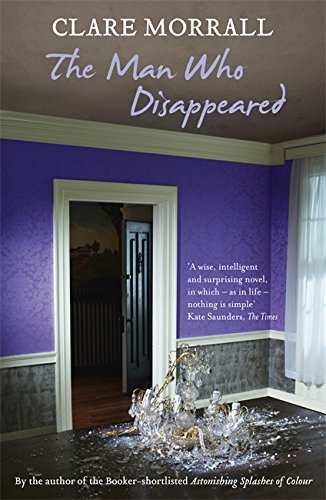
Felix Kendall longs for a family, as a boy he lost his own. From the first page of The Man Who Disappeared by Clare Morrall, where Felix stands in a dark street watching a family illuminated in their dining room, curtains open, you know Felix must be the ‘man who disappeared’ but you don’t know why. Clare Morrall The characters are believable and the pages turn quickly as we follow the stories of Felix, his wife Kate, son Rory and daughter Millie as they come to terms with what has happened. I expected this to be a slow indulgent read, lyrical, beautifully written, which it is, but I raced through it in the way I am accustomed to do with thrillers.
Clare Morrall is one of my favourite authors, I’ve been a fan since her first book Astonishing Splashes of Colour was shortlisted for the Booker Prize.
CLICK HERE TO READ MORE ABOUT THIS BOOK AMAZON

Click the title to read my reviews of these other novels by Clare Morrall:-
AFTER THE BOMBING
NATURAL FLIGHTS OF THE HUMAN MIND
THE LANGUAGE OF OTHERS
THE LAST OF THE GREENWOODS
THE ROUNDABOUT MAN

Read the first paragraph of ASTONISHING SPLASHES OF COLOUR here.

If you like this, try:-
‘The Love Song of Miss Queenie Hennessy’ by Rachel Joyce
‘Housekeeping’ by Marilynne Robinson
‘Ghost Moth’ by Michele Forbes

And if you’d like to tweet a link to THIS post, here’s my suggested tweet:
#BookReview THE MAN WHO DISAPPEARED by Clare Morrall via @SandraDanby https://wp.me/p2ZHJe-4aR

#BookReview ‘Dominion’ by CJ Sansom #WW2 #dystopian #thriller

You know that feeling, it happens once in a while, when you finish reading a book that was so good you want to go back to the beginning and start again? Well, it was like that for me with Dominion by CJ Sansom. CJ SansomIt was the premise that caught my attention as soon as I read the pre-publication reviews: an alternate history set in Britain in 1952, peace is made with Hitler in 1941 which changes the direction of World War Two. An alternative world. Previously I had read one Sansom novel, Winter in Madrid, which I enjoyed; three of his Matthew Shardlake mysteries sit on my to-read shelf. After Dominion, I will turn to them quickly.
The story focusses on four main characters, a scientist, a civil servant, the civil servant’s wife, and a Gestapo officer based at Senate House in London, the tall university building being the Gestapo’s London HQ with torture cells in the basement. This is a different Britain, where Jews are being rounded-up and transferred to camps in the country, where the Isle of Wight is occupied by the German army [which is still fighting in Russia], and where it is rumoured in Berlin that Hitler is either dead or dying.
To say more would risk spoiling the plot twists, of which there are plenty. The darkness of the time is shown symbolically by the Great Smog which actually happened in London, December 1952. It sheds a stifling blanket of choking fog which stops life and blinds everything more than a foot away. The smog is a metaphor of course for the blindness of the Government, and much of the population, who accept their situation with apathy and do nothing to aid the Resistance led, inevitably, by Churchill.
Sansom’s central message is about the danger of nationalism and xenophobia and what, in the extremes, they can lead to. A subject which, as he says in the Appendices, he fears is all too relevant in modern Europe.
A thought-provoking read.
CLICK HERE TO READ MORE ABOUT THIS BOOK AT AMAZON

And here are my reviews of CJ Sansom’s Shardlake detective series:-
DISSOLUTION #1SHARDLAKE
DARK FIRE #2SHARDLAKE
SOVEREIGN #3SHARDLAKE
REVELATION #4SHARDLAKE
HEARTSTONE #5SHARDLAKE
LAMENTATION #6SHARDLAKE

If you like this, try:-
‘The Aftermath’ by Rhidian Brook
‘Homeland’ by Clare Francis
The Bird in the Bamboo Cage’ by Hazel Gaynor

And if you’d like to tweet a link to THIS post, here’s my suggested tweet:
#BookReview DOMINION by CJ Sansom https://wp.me/p2ZHJe-4aP via @SandraDanby

Great Opening Paragraph… 30

lynne reid-banks - the L-shaped room 10-6-13“There wasn’t much to be said for the place, really, but it had a roof over it and a door which locked from the inside, which was all I cared about just then. I didn’t even bother to take in the details – they were pretty sordid, but I didn’t notice them so they didn’t depress me; perhaps because I was already at rock-bottom. I just threw my one suitcase on to the bed, took my few belongings out of it and shut them all into one drawer of the three-legged chest of drawers. Then there didn’t seem to be anything else I ought to do so I sat in the arm-chair and stared out of the window.”
‘The L-Shaped Room’ by Lynn Reid-Banks

Great opening paragraph… 29

pd james - the murder room 30-4-13“On Friday 25 October, exactly one week before the first body was discovered at the Dupayne Museum, Adam Dalgliesh visited the museum for the first time. The visit was fortuitous, the decision impulsive and he was later to look back on that afternoon as one of life’s bizarre coincidences which, although occurring more frequently than reason would expect, never fail to surprise.”
‘The Murder Room’ by PD James