Tag Archives: books

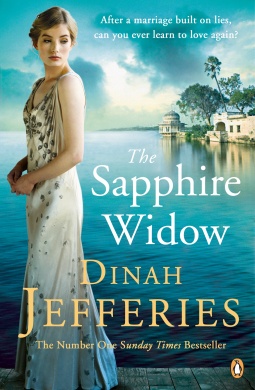
#Bookreview ‘The Sapphire Widow’ by @DinahJefferies #historical #romance

When Dinah Jefferies writes about Ceylon, you can smell it and sense it. The blossom, the flowers, the birds, she is excellent at evoking setting. The Sapphire Widow is not her strongest book, but it is nevertheless an enjoyable read. Whatever it may lack in plot – a weakness I think because the main character is the wronged one, rather than with a secret of her own to hide – it is a fascinating glimpse of mid-Thirties Ceylon and a beautiful seaside town. Dinah JefferiesIt is 1936 in Galle on the southernmost tip of Ceylon. Louisa Reeve and her husband Elliot seem to have it all except, after a series of miscarriages, a child. Louisa, who wonders if she will ever be a mother, is often alone as Elliot spends his spare time sailing with friends and on a cinnamon plantation in which he is an investor. But when tragedy hits Louisa discovers Elliot’s life, investments and hobbies were not as he told her. As she deals with one lie after another, Louisa continues to develop Sapphire, the retail emporium originally planned with Elliot and which provides the novel’s title.
Given the title I expected the gemstone business of Louisa’s father, and where Elliot worked, to be prominent in the plot. It is however lightly sketched and I felt rather short-changed. The description of the cinnamon plantation is fascinating though, as is the Galle setting, though at times it felt as if local history was being shoehorned in. Towards the end the plot went a little haywire, not what I was expecting. Frustrating, I was left feeling there was a deeper, more emotional story to be told.
An interesting read but not her finest.
CLICK HERE TO READ MORE ABOUT THIS BOOK

And here are my reviews of some of Dinah Jefferies’ other novels:-
DAUGHTERS OF WAR [#1 DaughtersOfWar]
THE HIDDEN PALACE [#2 DaughtersOfWar]

And these standalone novels:-
THE TEA PLANTER’S WIFE
THE TUSCAN CONTESSA

If you like this, try these:-
‘Beneath an Indian Sky’ by Renita d’Silva
The Gift of Rain’ by Tan Twan Eng
Quartet’ by Jean Rhys

And if you’d like to tweet a link to THIS post, here’s my suggested tweet:
#BookReview THE SAPPHIRE WIDOW by @DinahJefferies https://wp.me/p5gEM4-3xX via @SandraDanby

#BookReview ’Ghost Wall’ by Sarah Moss #contemporary #mystery

Ghost Wall by Sarah Moss is a beautifully written short novel, more a novella at 160 pages. Set in the Nineties it is the story of a re-enactment conducted by a family and a university professor and his students who live in the woods in Northumberland to recreate the lifestyle of Iron Age man. Class issues run throughout; accent, education, north/south, but it is also a time of changes embodied in the character and changing sensibilities of seventeen year old Silvie. Sarah MossTold completely through the viewpoint of Silvie it juxtaposes the harsh Iron Age life with her own upbringing by authoritarian self-taught father Bill and bland mother Alison who has surrendered to her husband’s will, with the life of the Iron Age bog people. In almost a closed room setting more familiar from crime fiction, the group is thrown into close proximity living in difficult conditions with minimal food. As the story progresses the group becomes divided. The two adult men disappear to work on their ‘projects’ while Silvie’s mum stays in camp to cook and sit around. This leaves the students to their own devices to forage, harvest mussels and skinny dip. It is a haunting story as Silvie tries to mollify her father, who demands exacting behaviour and manners, while student Molly struggles to understand Silvie’s subservience. Tensions grow as Molly encourages Silvie to defy her father. Bill is a traditionalist, he admires Britain’s distant past as a preferred alternative to the modern world.
Ghost Wall is a creeping tale as your nerves tauten waiting for Silvie to be in trouble again, at times I wished for more about her parallel Bog girl. There are clever moments of relief such as the girls’ visit to the local Spar shop for cake and ice cream to relieve the tedium of gruel and rabbit. I was left with the feeling that Moss tried to shoehorn too many issues into a small space – class, male chauvinism, racism, idealism, sexuality, even Brexit, so I was left feeling she had a list of things to mention.
This is an unusual novel, beautifully written. A chilling read. Tense, but not a thriller. The climax when it happens is over quickly and I was left wanting more; the last page came as a surprise and I felt rather disappointed.
CLICK HERE TO READ MORE ABOUT THIS BOOK AT AMAZON

And here’s my review of another novel by Sarah Moss:-
SUMMERWATER

If you like this, try:-
‘Elmet’ by Fiona Mozley
‘The Good People’ by Hannah Kent
‘The Western Wind’ by Samantha Harvey

And if you’d like to tweet a link to THIS post, here’s my suggested tweet:
#BookReview GHOST WALL by Sarah Moss https://wp.me/p5gEM4-3As via @SandraDanby

A poem to read in the bath… ‘My Mother’

I was hooked from the first line here, I think because of the familiarity of the cornflake cake. So what came next was a surprise, not something my mother said to me when I made her a cake! This is My Mother by Ruby Robinson [below] from Every Little Sound. Published in 2016, Robinson’s first collection of poems was shortlisted for the Felix Dennis Forward Prize for ‘Best First Collection’, and the TS Eliot Prize for ‘Best Collection’. Ruby Robinson

Here is the first stanza of My Mother. Because of copyright restrictions I am unable to reproduce the poem in full, but please search it out in an anthology or at your local library.

She said the cornflake cake made her day,
she said a man cannot be blamed for being
unfaithful: his heart is not in tune with his
extremities and it’s just the way his body
chemistry is. She said all sorts of things.’
Source: Poetry (October 2014)

Read more about Ruby Robinson here.

Ruby Robinson


‘Every Little Sound’ by Ruby Robinson [UK: Pavilion Poetry]

Read these other excerpts, and perhaps find a new poet to love:-
‘Runaways’ by Daniela Nunnari
‘Tulips’ by Wendy Cope
‘Cloughton Wyke I’ by John Wedgwood Clarke

And if you’d like to tweet a link to THIS post, here’s my suggested tweet:
A #poem to read in the bath: ‘My Mother’ by Ruby Robinson https://wp.me/p5gEM4-3eq via @SandraDanby

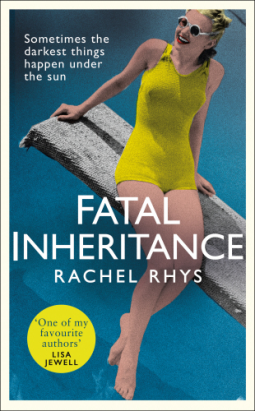
#BookReview ‘Fatal Inheritance’ by Rachel Rhys #romance #glamour

Fatal Inheritance by Rachel Rhys is a mystery set in the South of France three years after the end of World War Two. This is a glamorous place of sun and colours and beauty but which hides wartime shade and recriminations, canker beneath the luxury and smiles. Rachel RhysWhen Eve Forrester receives a solicitor’s letter promising ‘something to her advantage’, she leaves her husband in England and travels to Cap d’Antibes. Clifford disapproves of her journey, he thinks it inappropriate, a waste of time, doubts the veracity of the will of this mysterious Mr Guy Lester who Eve does not know. But Eve defies her husband and goes anyway, curious, listening to the inner voice which tells her there is more to life. This is a novel where you want to shout to the heroine, to encourage her onwards, to have strength to take a new path.
Eve inherits a part-share in the Villa La Perle at Cap d’Antibes, near neighbours are the Duke and Duchess of Windsor. Eve, in her ‘make do and mend’ clothing, is thrown into a glamorous social whirl of people she finds awkward, dismissive and arrogant. Rhys draws a layered picture of society where obvious wealth may hide troubled finances, make up and lipstick covers bruises, and smiles hide venom. It is a place where the locals avoid people and businesses which ‘helped’ the German occupiers, where memories of the war are fresh. In the middle of this, Eve struggles to understand her inheritance while delaying Guy Lester’s family from signing papers to sell the villa. And all the time, Eve wonders what Clifford is doing at home, knowing he disapproves of her being there, knowing he worries about the cost.
An entertaining novel in a beautiful, flawed setting – neatly mirroring the flawed people – not quite suspense, not quite a romance in the conventional sense. Rhys writes about women particularly well, not just Eve but the housekeeper Mrs Finch, actress Gloria Hayes, and fellow tourist Ruth Collett. I liked Eve, disliked her husband, and chuckled when the ‘love interest’ switched between surly to over-attentive. If I have one query, it is the solution to the mystery which comes rather out of left-field and left me feeling a little cheated. The ending, though, is unbelievably poignant. A great beach read.

And here’s my review of MURDER UNDER THE TUSCAN SUN, also by Rachel Rhys

If you like this, try:-
‘The Night Child’ by Anna Quinn
‘The Audacious Mendacity of Lily Green’ by Shelley Weiner
‘The Paying Guests’ by Sarah Waters

And if you’d like to tweet a link to THIS post, here’s my suggested tweet:
#BookReview FATAL INHERITANCE by Rachel Rhys https://wp.me/p5gEM4-3qA via @SandraDanby

My Porridge & Cream read: @janedavisauthor #books #literaryfiction

Today I’m delighted to welcome novelist Jane Davis. Her ‘Porridge & Cream’ read is The Prince of Tides by Pat Conroy.

“My list of favourite novels may change, but it is always topped by Pat Conroy’s, The Prince of Tides. Ignore the terrible film version – the book has everything. Family secrets, flawed characters, a doomed love affair.

“I read it for the first time many years before I contemplated writing, but it was books like this (and here I include the novels of John Irving and Michael Chabon) that must have sowed the seed.

“The first thing to say is that my choice is not your typical comfort read. The quote ‘We read to know that we are not alone’ is attributed to at least three different people. Perhaps that’s because it’s a universal truth. I find myself drawn to books about misfits and underdogs. (My latest ‘new favourite book’, Leonard and Hungry Paul by Ronan Hession, considers how gentle people survive in a world that is fast-paced and competitive.)

Jane DavisThe Prince of Tides has the power to transport the reader from the very first line.

My wound is geography. It is also my anchorage, my point of call.

“We know immediately that it is a novel about place. In fact, it’s a story where the setting is key. What unfolds in this epic and multi-layered family saga couldn’t have happened anywhere else. We know that a man is torn. Place is part of the narrator. It’s impossible for him to separate himself from it, and his family is part of its history. He is damaged, and it pains him to remain, but he cannot tear himself away.

I grew up slowly beside the tides and marshes of Colleton.

“To me, those lines are hypnotic. They seem to be saying, ‘Breathe. Pace yourself.’ Trust is established – or lost – so quickly. I can hear the narrator’s voice. He’s speaking directly to me. I don’t yet know the name Tom Wingo, but already I’m committed to accompanying him wherever his journey takes him. It is that simple.

“Because the story is told partly through conversations with Tom’s sister’s Savannah’s psychiatrist, it’s a story in which cause and effect is very much in evidence. In order to save his sister, Tom must break the promise that his mother extracted from her three children: never to reveal what happened on the island that night a man they refer to as “Callanwolde” escaped from prison. The call to action happens at a point when Tom has just learned that his wife is having an affair with a colleague, and so we meet him at what is already a low ebb. This may be a challenging read, but it’s also a story of survival, healing, honour and redemption. There is a sense that order is restored, and that is where the ‘comfort’ comes from.

“Odd though it may seem, I have never read another book by Pat Conroy. The Prince of Tides is so perfect, I’d be afraid of being disappointed. Instead, I return to it time and time again and never fail to uncover something that I’ve missed.”
Amazon UK

Jane Davis’s Bio
After her first novel Half-Truths and White Lies won an award established to find ‘the next Joanne Harris’, it took Jane a little while to work out that all she really wanted to be was a slightly shinier version of herself. Seven further novels followed, which straddle contemporary, historical, literary and women’s fiction genres, and have earned her comparisons to authors such as Kate Atkinson, Maggie O’Farrell and Jodi Picoult. Jane’s favourite description of fiction is ‘made-up truth’.

Jane Davis’s links
Website
Facebook 
Twitter
Pinterest
Get a FREE copy of her time-slip, photography-themed eBook, I Stopped Time, when you sign up to her mailing list

Jane Davis’s latest book
Jane DavisIt has taken conviction to right the wrongs.
It will take courage to learn how to live again.
For the families of the victims of the St Botolph and Old Billingsgate disaster, the undoing of a miscarriage of justice should be a cause for rejoicing. For more than thirteen years, the search for truth has eaten up everything. Marriages, families, health, careers and finances.

Finally, the coroner has ruled that the crowd did not contribute to their own deaths. Finally, now that lies have been unravelled and hypocrisies exposed, they can all get back to their lives.

If only it were that simple.
Amazon UK

What is a ‘Porridge & Cream’ book? It’s the book you turn to when you need a familiar read, when you are tired, ill, or out-of-sorts, where you know the story and love it. Where reading it is like slipping on your oldest, scruffiest slippers after walking for miles. Where does the name ‘Porridge & Cream’ come from? Cat Deerborn is a character in Susan Hill’s ‘Simon Serrailler’ detective series. Cat is a hard-worked GP, a widow with two children and she struggles from day-to-day. One night, after a particularly difficult day, she needs something familiar to read. From her bookshelf she selects ‘Love in A Cold Climate’ by Nancy Mitford. Do you have a favourite read which you return to again and again? If so, please send me a message.

Discover the ‘Porridge & Cream’ books of these authors:-
Rob V Biggs loves ‘Wind in the Willows’ by Kenneth Grahame
Linda Huber loves ‘A Cry in the Night’ by Mary Higgins Clark
Sue Moorcroft loves ‘A Town Like Alice’ by Nevil Shute

 And if you’d like to tweet a link to THIS post, here’s my suggested tweet:
Why does author @janedavisauthor re-read A PRINCE OF TIDES by PAT CONROY? #books https://wp.me/p5gEM4-3Br via @SandraDanby

#Book review ‘The Turn of Midnight’ by Minette Walters #historical

You just know when the book you’ve just started reading is going to be 5*. For me, not many are. I read lots of good 3* and 4* books. I reserve 5* sparingly for the special ones. The Turn of Midnight by Minette Walters is one of those. It ticks so many boxes. Thriller, history, surprises, great characters and a tantalising bit of love from afar; Walters is a master storyteller. Minette Walters This is a story of a grim period in British history. The Black Death. Medieval England. Gruesome detail, and yet I stayed up late to finish it. Why, because she makes me love the characters and manages that delicate balancing act of giving me just enough historical detail to be interesting but not too much that it becomes tedious.
The Turn of Midnight is the sequel to The Last Hours which tells the story of the Black Death and its impact on the small Dorsetshire demesne of Develish. After the death of her husband from the plague his widow Lady Anne quarantines the demesne, introduces cleanliness routines and organises her healthy family, servants and serfs into a self-supporting and mutually-respectful society; unheard of in 1348. Woven into this story of survival is a romantic thread as Lady Anne and Thaddeus Thirkell, an illegitimate serf born on the demesne who Lady Anne has educated over the years to a standard of education greater than anyone else in the community excepting herself. Where The Last Hours is something of a closed room story with a tight-knit cast of characters and one location, The Turn of Midnight sees Thaddeus and a group of young men venture out into Dorsetshire to assess the dangers of the plague and the survival of other villages. When they return with a story of death, desertion and dereliction, a plan is formed to buy the neighbouring demesne of Pedle Hinton and so provide a home and farmland for the Develish citizens, the number of which has grown with the number of healthy wanderers they have adopted. But outside the demesne moat there are many enemies: bandits thieving and preying on the vulnerable, Norman soldiers who hate the English serfs, English serfs who hate anyone Norman, and corrupt priests, stewards and lords who swear they are acting in the name of God.
The plan is risky. Lady Anne and Thaddeus know that, although not robbing living people, they are taking possessions and gold which is not rightly theirs. It culminates in a struggle of religion, power and prejudice. Will common sense and the right of the people triumph? Whilst Lady Anne fights a battle against prejudice of her sex where she is better educated than the men who accuse her, Thaddeus similarly fights against prejudice of his worker roots and foreign tall dark physique.
Walters lives in Dorset and this shows in her sweeping creation of medieval Dorsetshire, she writes of the countryside, nature and the seasons with such surety you know she knows it well. This is a story of the first breaths of social mobility in a time of class hierarchy that prevented starving serfs from eating food meant for their lords, even though those lords are dead or have fled. Lady Anne’s common sense approach brings survival, health, basic education and hope for the future.
Excellent.

Read my reviews of two other historical novels by Minette Walters:-
THE LAST HOURS #1BLACKDEATH
THE SWIFT AND THE HARRIER

If you like this, try:-
The French Lesson’ by Hallie Rubenhold
The Ashes of London’ by Andrew Taylor
Foxlowe’ by Eleanor Wasserberg

And if you’d like to tweet a link to THIS post, here’s my suggested tweet:
#BookReview THE TURN OF MIDNIGHT by Minette Walters https://wp.me/p5gEM4-3xR via @SandraDanby

First Edition: Ulysses

In 2009, a well-preserved first edition of Ulysses by James Joyce, first published in 1922, was sold for £275,000. It had hardly been read, except for the racy bits. The book had previously been lost, having originally been bought surreptitiously in a Manhattan bookshop despite it being banned in the USA. The book was banned throughout the 1920s in the UK and USA. Another first edition [below right] was defaced by a reader who condemned the book as pornographic; the book was still valued at €13,500. The novel was banned in the UK until 1936. James Joyce

Ulysses was first serialised in parts in the American journal The Little Review between March 1918 and December 1920, before being published in its entirety by Syliva Beach [above left] in Paris on February 2, 1922 [Joyce’s 40th birthday]. Ulysses is the Latinised name of Odysseus, the hero of Homer’s epic poem Odyssey. The novel has a number of parallels with the poem including structure, characters. Leopold Bloom echoes Odysseus; Molly Bloom/Penelope; Stephen Dedalus/Telemachus; taking place in the 20th century. James Joyce

A first edition dated 1922 [above] by Shakespeare & Company in Paris is for sale [at time of going to press] at Peter Harrington for £87,500. Number 136 of 150 copies, this is noted in Syliva Beach’s notebook as being one of three copies sent to James Whitall on March 28, 1922. It is signed and dated by Joyce

The story
Set in Dublin, June 16-17, 1904, the action starts at about 8am. Stephen Dedalus wakes up and talks with his two housemates, Buck Mulligan and student Haines. The action continues for 24 hours when Stephen, having politely refused lodgings at the home of two other principal characters, Leopold and Molly Bloom, discovers he is no longer welcome to stay with Mulligan and Haines. During the course of the day the characters move through their day in Dublin.

The film
James Joyce A 1967 film of Ulysses [above] starring Milo O’Shea as Leopold Bloom was nominated for an Oscar for Best Adapted Screenplay. Watch Molly Bloom’s soliloquy here.

In 2003, another film, Bloom [below] starred Stephen Rea. Watch the trailer here.

James Joyce

Other editions

James Joyce


‘Ulysses’ by James Joyce [UK: Wordsworth Classics]

If you like old books, check out these:-
The French Lieutenant’s Woman’ by John Fowles
‘The Sea The Sea’ by Iris Murdoch
‘Jane Eyre’ by Charlotte Bronte

And if you’d like to tweet a link to THIS post, here’s my suggested tweet:
First Edition: ULYSSES by James Joyce #oldbooks https://wp.me/p5gEM4-3aq via @SandraDanby

A poem to read in the bath… ‘The Unthinkable’

This poem grabbed me from the first line. It has action, it has colour, it has place. I could see the purple door, I could see the beach. And I wanted to write my own story about it. This is ‘The Unthinkable’ by Simon Armitage [below], included in his latest anthology The Unaccompanied. Simon Armitage

Here is the first stanza of The Unthinkable. Because of copyright restrictions I am unable to reproduce the poem in full, but please search it out in an anthology or at your local library.

A huge purple door washed up in the bay overnight,
its paintwork blistered and peeled from weeks at sea.
The town storyteller wasted no time in getting to work:
the beguiling, eldest girl of a proud, bankrupt farmer
had slammed that door in the face of a Freemason’s son,
who in turn had bulldozed both farm and family
over the cliff, except for the girl, who lived now
by the light and heat of a driftwood fire on a beach.’
Source: Poetry (May 2013)

Simon Armitage


‘The Unaccompanied’ by Simon Armitage [UK: Faber]

Read these other excerpts, and perhaps find a new poet to love:-
‘Digging’ by Seamus Heaney
‘Alone’ by Dea Parkin
‘A thousand years, you said’ by Lady Heguri

And if you’d like to tweet a link to THIS post, here’s my suggested tweet:
A #poem to read in the bath: ‘The Unthinkable’ by Simon Armitage https://wp.me/p5gEM4-3ek via @SandraDanby

#Bookreview ‘The Marriage Plot’ by Jeffrey Eugenides #romance

The title of this, the third novel by Pulitzer Prize-winning author Jeffrey Eugenides, refers to the entanglements of three students and the plotting of Victorian romance novels. The Marriage Plot tells of the romantic, sexual, philosophical, religious and literary coming togethers/going aparts of a literature student Madeleine Hanna, scientist Leonard Bankhead and theology student Mitchell Grammaticus at Brown University in 1982 America. Jeffrey EugenidesIt is a tale of youthful assumptions, experimentations, dreams and disappointments. Perhaps it is a tale which will strike a chord with people of the same age as Madeleine, Leonard and Mitchell, rather than those who are older.
None of the three main characters are particularly likeable and at times the book gets bogged down in literary theory, philosophy, science and religious theory. Leonard is brilliant but a manic depressive, something which colours the entire book. The portrayal of his illness is convincing and shows the knife edge of pharmaceutical dosage needed to maintain a healthy mental balance. Leonard yo-yo’s back and forth, coping and not coping, at times allowing his manic tendencies to win. Madeleine accuses him of liking being depressed all the time. Mitchell is the idealistic one who goes to India to work for Mother Theresa’s Calcutta hospice and confronts some unpalatable truths. In comparison, Madeleine seems rather spoiled. Both men dote on her however and this is the spine which holds the story together: who will Madeleine finally choose?
Eugenides describes mundane things so beautifully. “Outside, the temperature, which had remained cold through March, had shot up into the fifties. The resulting thaw was alarming in its suddenness, drainpipes and gutters dripping, sidewalks puddling, streets flooded, a constant sound of water rushing downhill.” Simple writing at its best. But at other times the writing feels manic and not just in Leonard’s sections. There is an authorial indulgence with many clever asides from the plot and characters. I soon learned to read these parts slightly out-of-focus, not worrying for example that I didn’t grasp Leonard’s sections on yeast or Mitchell’s constant references to Something Beautiful for God, Malcolm Muggeridge’s book about Mother Theresa. The last third of the book passed much quicker than the first two.
The Marriage Plot is ambitious, as Middlesex was, and rightly so, but is perhaps the inevitable ‘difficult’ book after such a huge success. This will not deter me from reading Eugenides again.

Click the title to read the first paragraph of MIDDLESEX, also by Jeffrey Eugenides.

If you like this, try these:-
‘If I Knew You Were Going to Be This Beautiful, I Never Would Have Let You Go’ by Judy Chicurel
‘A Sudden Light’ by Garth Stein
‘Barkskins’ by Annie Proulx

And if you’d like to tweet a link to THIS post, here’s my suggested tweet:
#BookReview THE MARRIAGE PLOT by Jeffrey Eugenides via @SandraDanby http://wp.me/p5gEM4-2yP

Great Opening Paragraph 112… ‘Affinity’ #amreading #FirstPara

“3 August 1873. I was never so frightened as I am now. They have left me sitting in the dark, with only the light from the window to write by. They have put me in my own room, they have locked the door on me. They wanted Ruth to do it, but she would not. She said ‘What, do you want me to lock up my own mistress, who has done nothing?’ In the end the doctor took the key from her & locked the door himself, then made her leave me. Now the house is full of voices, all saying my name. If I close my eyes & listen it might be any ordinary night. I might be waiting for Mrs Brink to come & take me down to a dark circle, & Madeleine or any girl might be there, blushing, thinking of Peter, of Peter’s great dark whiskers & shining hands.’
Sarah WatersFrom ‘Affinity’ by Sarah Waters

Here are two more #FirstParas by Sarah Waters:-
THE PAYING GUESTS
TIPPING THE VELVET

Read my review of THE PAYING GUESTS.

Try one of these #FirstParas & discover a new author:-
‘Illywhacker’ by Peter Carey
‘Sophie’s World’ by Jostein Gaarder
‘Goldfinger’ by Ian Fleming

And if you’d like to tweet a link to THIS post, here’s my suggested tweet:
#Books #FirstPara AFFINITY by Sarah Waters http://wp.me/p5gEM4-2qR via @SandraDanby