
A slim novel, After Leaving Mr Mackenzie is the second novel by Jean Rhys, published in 1931. Semi-autobiographical, it tells the story of a young woman [if a woman in her mid-thirties can be called young] who faces up to the realities of life after a love affair ends. The title is not strictly true because Julia did not leave Mr Mackenzie, he left her. 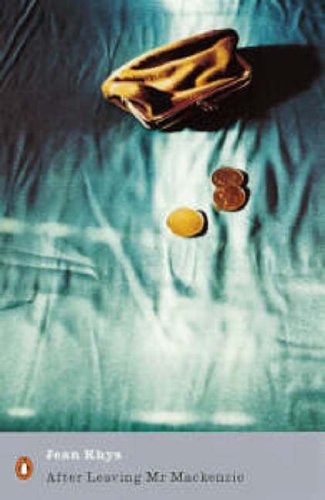 She moves to a cheap hotel room where the furnishings are faded and the only decoration is a poor painting which she assumes must have been left in lieu of debt by a previous tenant. Where Rhys excels is her description of the small details, drawing a picture of Julia’s surroundings and her moods. ‘She found pleasure in memories, as an old woman might have done. Her mind was a confusion of memory and imagination. It was always places that she thought of, not people. She would like thinking of the dark shadows of houses in a street white with sunshine; or of trees with slender black branches and young green leaves, like the trees of a London square in spring; or of a dark-purple sea, the sea of a chromo or of some tropical country that she had never seen.’ Like the title of the novel, it is not always clear what is true and what is imagination.
After the death of her baby and the breakdown of her marriage, which is not really explained, Julia survives in Paris thanks to the men she dates. They give her cash, buy her clothes, pay for her lodging; in this, Julia is similar to Marya in Rhys’ first novel Quartet. This novel takes a step further in that when her maintenance payments stop, Julia takes action to help her situation. After unsuccessfully asking Mr Mackenzie for cash, she is helped by a stranger, Mr Horsfield. Julia buys new clothes and a train ticket to London where she visits her sister who cares for their dying mother.
This is a study of one woman’s desperate situation and her dependency on others. Julia is a sad woman with a past, shabby, as if wearing a sign around her neck saying ‘trouble’. The delight in reading this book is how Rhys tells Julia’s story, as much as the story itself.
CLICK HERE TO READ MORE ABOUT THIS BOOK AT AMAZON
Here’s my review of another novel by Jean Rhys:-
QUARTET
If you like this, try:-
‘Orphans of the Carnival’ by Carol Birch
‘Birdcage Walk’ by Helen Dunmore
‘The Duchess’ by Wendy Holden
And if you’d like to tweet a link to THIS post, here’s my suggested tweet:
#BookReview AFTER LEAVING MR MACKENZIE by Jean Rhys via @SandraDanby http://wp.me/p5gEM4-2d7
 I do recall that my mother and I had recently arrived in the United States and were living in a studio apartment in Washington, DC, while she struggled to make ends meet. The book is a series of articles on Jean Kerr’s life as a playwright and parent, and each of the pieces made me roar with laughter at a time when real life wasn’t that funny. When I first read the book, I found it hugely entertaining on such subjects as diets, doctors, family, fashion, moving house, and the rest of everyday suburban life. It was only decades later that I could identify with Kerr’s situation as a writer working from home, and as the harassed mother of irrepressible boys.
 It’s the sweltering summer of 2013 and the lives of six Londoners get complicated. As the temperature soars, they’re grappling with money worries, whining children, ailing parents, panic attacks, relationship woes, and temptations along the way. Emotions rise to boiling point, forcing decisions they could regret.


 What if you discovered that everything you knew about yourself was a lie?

 “To be honest, I have more than one ‘Porridge and Cream’ book, and they’re all quite different, but the book I’d happily pick up when feeling ill or run down is Joanne Harris’ Chocolat – a delicious and delightful character-driven novel centred around single mother and chocolatier Vianne Rocher and her young daughter, Anouk. I first read it over a summer, not long after it had been published, so around 2000 or 2001. I’d recently moved in with my boyfriend (now husband) and we’d been to Greece together to meet his parents and the whole of his extended Greek family, so a book set in a French village that immersed its characters in local life with the focus being on food and delicious chocolate creations resonated with me and my first experiences of a Greek family and their abundance of delicious food.


 So I’m going with another choice: Dangerous Liaisons by Choderlos de Laclos – a book I love so much I named one of my characters after the author. I studied it at university in the 90s (it’s one of the few books I’ve read in French and English, back when I was capable of reading more than a menu in French!). The edition I prefer is the Penguin Classic, translated by PWK Stone. I probably go back to it every couple of years, more if I’m prompted by seeing the film on TV. I usually give myself long enough to forget the intricacies of the plot (which is far more complicated and satisfying than the movie) so I can enjoy its richness again. It’s a book to read when I want to be amused and distracted but perhaps a little more stimulated than when I turn to Pratchett (as I’ve read his so many times they nourish me, but all blur into one another slightly!).
 It isn’t easy to surprise Cassandra Bick. When you run a human-vampire dating agency, your colleague is a witch who is engaged to a shifter and your business partner is one of London’s most powerful (and sexiest) vampires, there’s no such thing as a normal day at the office. But when a mysterious Dark Dates client brings a dire warning of a new threat to the city’s supernatural community, Cass and her friends realise they are up against their deadliest foe yet – and that this time, the danger is far closer to home than they could ever have imagined.


 SANDRA DANBY'S BOOK REVIEWS